Search

fullybooked2017

Author

fullybooked2017

A retired Assistant Head Teacher, mad keen on guitars. Four grown-up sons, two delightful grandchildren. Enjoys shooting at targets, not living things. Determined not to go gently into that good night.

THE DISTANT DEAD . . . Between the covers

DD header

I was gifted this to review by Head of Zeus, so huge thanks to them. The Distant Dead is the eighth in a series by Lesley Thomson, so I am coming late to the party. What attracted me to the book? Two things, really. Firstly there was a mention of a WW2 element, and I am a sucker for anything war-related. Secondly, some of the action takes place in the Gloucestershire town of Tewksbury. Years ago now, a very dear friend of mine, Miles Amherst – long since gone,sadly – founded a choir school at Tewksbury Abbey. I had taught with him in Ely, but we had gone our separate ways. When the choir school was running, I was teaching in a Shropshire prep school, and I always had a half day on Mondays. It was a bit of a drive, but sometimes I used to motor down to Tewksbury, rehearse with the choir and help them sing Evensong. Afterwards was always beer, food – and an small-hours drive back to Salop.

So, happy memories, but what of the book? I am not the biggest fan of split time narratives, but many authors are, so it is what it is. In this case, at least, the connection between the narratives is clear. In Blitz-torn London, a young woman is found dead – strangled in an abandoned house. The pathologist called to the scene, and who later carries out the post mortem, is a man called Aleck Northcote. He tells the police investigating the case that the woman, Maple Greenhill was a common prostitute.
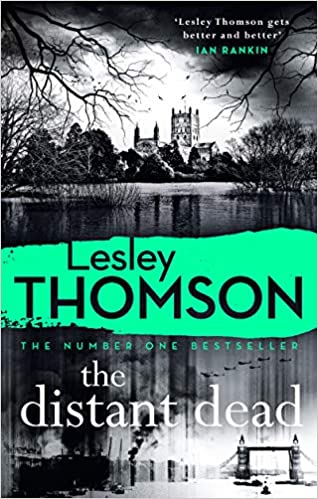
TDDYears later, Northcote has retired to Tewksbury, but is found dead. His wastrel son is convicted of his murder. Pretty much present day, Stella Darnell, the daughter of a policeman, now working as a contract cleaner in Tewksbury, meets a man named Roddy March who has produced a podcast about the 1963 murder of Northcote. Roddy investigates cases where he thinks the wrong person went to prison – or, in this case, the gallows. When Roddy is found murdered next to an ancient tomb in Tewksbury Abbey, Stella feels connected enough to find out the truth about how past and present have merged – with fatal consequences.

So, what exactly happened in 1940?. We know – from the prologue – that Maple Greenhill has gone into an empty house with a man friend, and that he strangles her. When her body is found, London copper George Cotton is called, but his investigation leads nowhere until a cigarette lighter is found at the scene. It is engraved with the initials AXN. Cotton puts two and two together, and assumes that the pathologist – Aleck Xavier Northcote – must have dropped it when he was called to look at the body. Then, in a separate breakthrough, a garment repair ticket is found in Maple’s coat. When Cotton visits the tailor, he is astonished to be joined by a woman who says she has lost the self-same ticket. The woman is Mrs Aleck Northcote.

Lesley Thomson switches the narratives very cleverly and poses important questions as the book progresses. Was Northcote Maple’s man-friend, and did he kill her? If he did, how then did he avoid prosecution and survive to be murdered in his own house twenty three years later? And if Giles Northcote – who had visited his father on than fateful evening to ask for money to pay off a gambling debt – didn’t kill his father, then who did? And was the killer somehow connected to the death of Maple Greenhill.

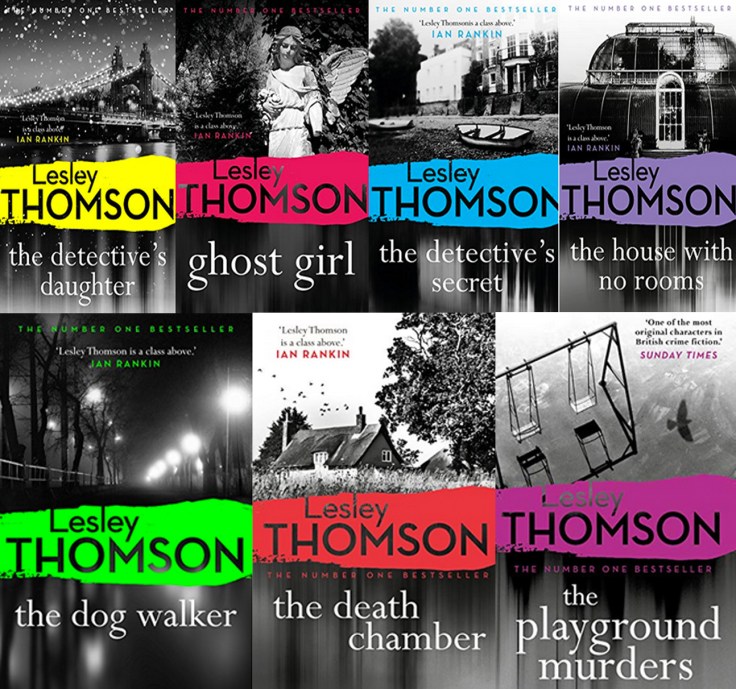
Obviously, I am not about to reveal the answer to the conundrum, but you will enjoy – as I did – how Lesley Thomson has Stella Darnell – and her companions –  searching for, and then finding, the truth. The actual solution to what turns out to be multiple murders is breathtakingly complex, but this a clever, literate and totally convincing murder mystery – and thoroughly, thoroughly English. People who follow the news know that Tewksbury is notoriously susceptible to flooding, standing as it does at the confluence of the rivers Severn and Warwickshire Avon, and Lesley Thomson uses the power of the river as it hurtles over weirs and beneath bridges as a very effective metaphor for the violence in human souls. The Distant Dead is available now, and the previous books in the series are pictured below. If you click the image, you will be taken to Lesley Thomson’s website.
DD series

THE POSTMAN DELIVERS . . . Lethal Response

lr spine015

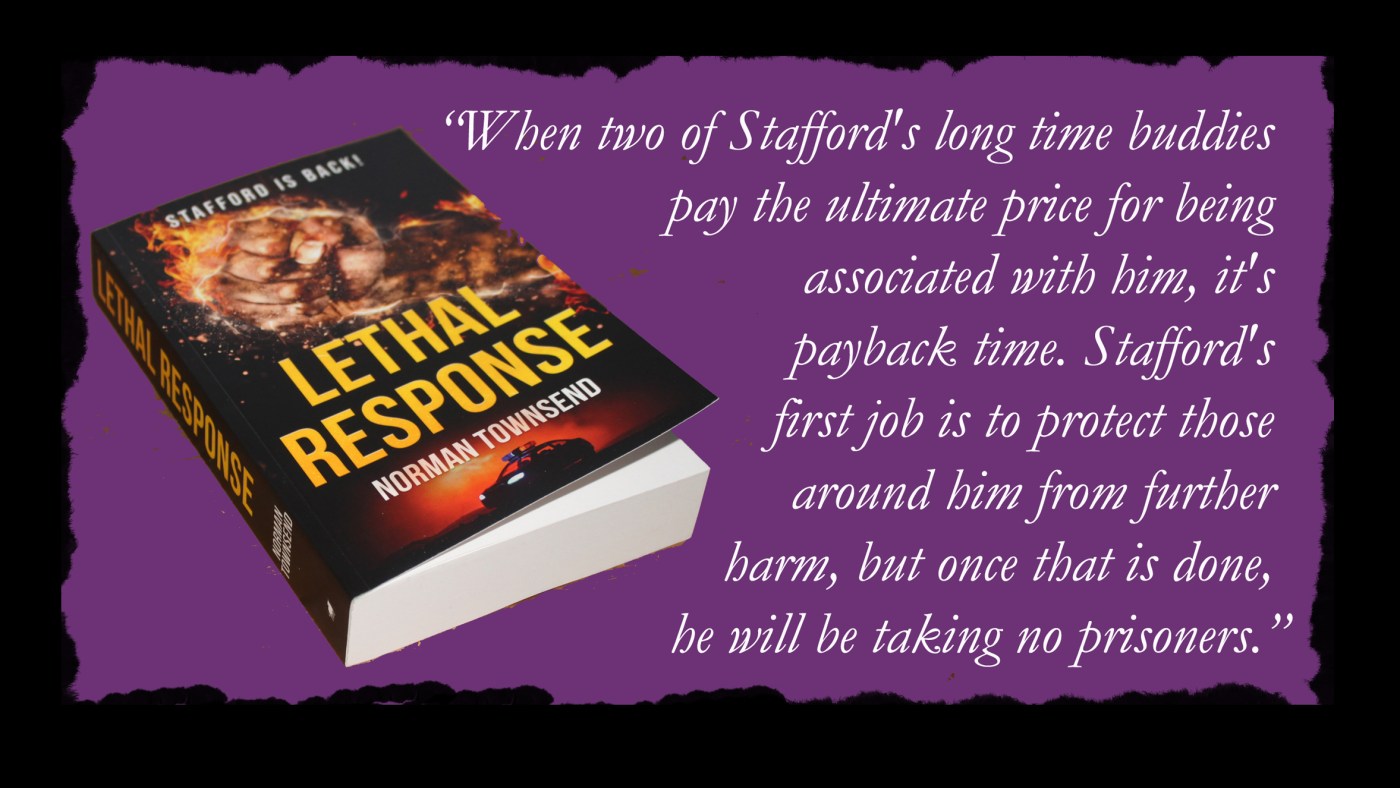
Readers first encountered Norman Townsend’s creation Paul Stafford back in 2018, in Trashed:

“Some ex-military men
find that civilian life is hard to deal with, but Paul Stafford is coping well. He has used his retirement pot to start a small recycling business and everything in the scrapyard seems to be rosy, until he wins a lucrative contract to run a further five sites. What should be a business triumph turns into a nightmare for Stafford when he realises that his new sites have been previously used by a powerful criminal organisation, and the bad guys do not take kindly to their work being interrupted. Murder and violence come as second nature to them, and when his own employees begin to feel the full clout of the gangsters, Stafford must stand and fight – both for them and his own integrity.

lr divider016

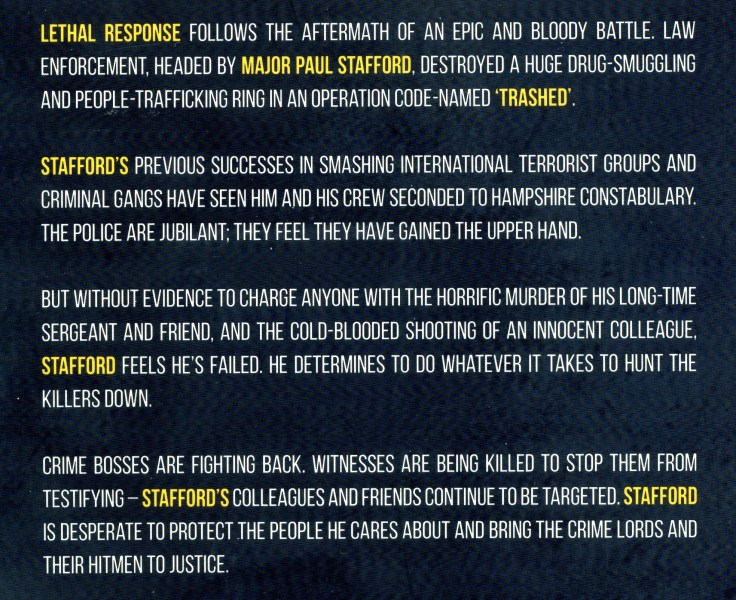
lr cover017Stafford’s triumph has won him some influential friends, but also some deadly enemies. You don’t take on powerful international criminal gangs without there being a downside, and when two of Stafford’s long time buddies pay the ultimate price for being associated with him, it’s payback time. Stafford’s first job is to protect those around him from further harm, but once that is done, he will be taking no prisoners.
Something about the author. Norman’s Amazon page says:

“I’ve worked as a photographer, milkman, salesman, warehouse manager. I’ve been self-employed, I’ve bought and sold trash! Worked in the waste industry for thirty years or so, and though now retired, still buy and sell stuff. TRASHED is my first novel, and it’s based around the waste industry, recycling centres, to be specific. I’ve tried to make it a fast paced, exciting read. Literary Fiction it ain’t, but it’s getting good reviews from real readers. Thank you folks, for that”

Lethal Response is published by Matador/Troubadour and is available now.
 

lr footer018

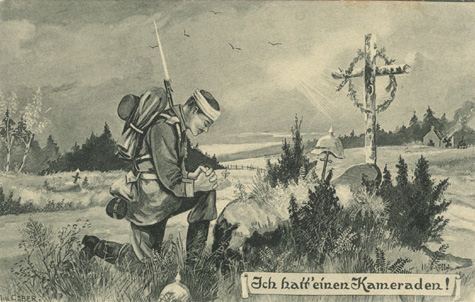
ICH HATT’ EINEN KAMERADEN

kameraden_2-karte
This is German, and some sources call it ‘Rommel’s Funeral March’. It may well have been played at his funeral, after he was forced to commit suicide by an increasingly unstable Hitler, but it predates the Nazi era by many, many years. Wikipedia says:

The text was written by German poet Ludwig Uhland in 1809. Its immediate inspiration was the deployment of Badener troops against the Tyrolean Rebellion. In 1825, the composer Friedrich Silcher set it to music, based on the tune of a Swiss folk song.

The words, in English, are:

I had a comrade,
You couldn’t find a better one.
The drum called to battle,
He walked by my side,
In the same pace and step.

A bullet came a-flying,
Was it aimed for me or you?
He was swept away,
He lies at my feet,
As if he were a part of me.

He reaches out for my hand,
While I was loading.
I cannot hold your hand,
Stay in eternal life
My good comrade!

I’ve included the score, below, for those who read music. I’ve scored it for brass ensemble and timpani.There are many versions of the song on YouTube, but if you want to listen to my version, click here. The sound is just synthesised, I’m afraid, but it will give you an idea of the solemn and impressive tune.


Screen Shot 2021-05-18 at 20.12.44Screen Shot 2021-05-18 at 20.12.58

PATHFINDERS . . . Between the covers

Wellington
I can’t think of a publishing event
over the last few years which has been more impressive than the republishing of WW2 novels by the Imperial War Museum. It has become an axiom that The Great War was identified with the poets, but what was the literary legacy of the war against Hitler? This series has confirmed that the dreadful six years of global conflict inspired some superb novels. I was born just after the war ended. My father served in the British Army throughout, and had many a tale to tell but, until recently, I had no idea of the breadth of novels written by men and women who took part in the conflict. Yes, I had read Waugh’s superb Sword of Honour trilogy and Len Deighton’s magisterial Bomber, but beyond those, very little. I have reviewed all the previous books in this series, and you can find my thoughts by clicking this link. The latest in the series is Pathfinders, first published in 1944.

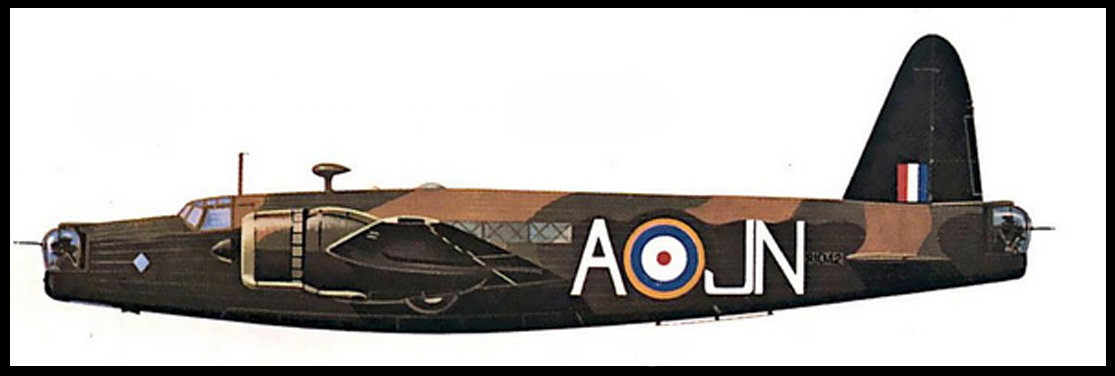
screen-shot-2021-05-10-at-10.46.53Cecil Lewis (left) was a combat pilot in the Great War, but returned to the colours as both an instructor and an active flier in WW2. Pathfinders tells the tale of the crew of a Wellington aircraft. Perhaps unjustly, the Wellington has not captured the public imagination as much as its big sister, the Lancaster, but the Wellington was a durable workhorse that played a vital role in the work of Bomber Command. The six men who flew the aircraft in this novel each have a specific job as the aircraft goes in ahead of a bombing raid to drop incendiary flares on the ground targets so that the following planes can see when and where to unload their bombs.

A Pathfinder crew comprised pilot, co-pilot, navigator, wireless operator, front gunner and rear-gunner. Lewis structures his book around a detailed examination of each of these men, and tells us what kind of people they are. He shows us their backgrounds, their history, their loves, their losses – and their relationship to one another. Relatively little of the text deals with the actual raid the men are involved in. Instead, we have six chapters which deal with, in turn:

Screen Shot 2021-05-10 at 10.45.35Peter Morelli, co-pilot. The American-Italian is suave, debonnaire, but is aware of the struggles and prejudice faced by immigrants in a new country.

Sam Dollar, front gunner. Raised in the brutish and fundamental wilderness of the Canadian forests, Dollar has little to say, but is determined and resolute.

Benjy Lukin, wireless operator. From a Jewish family, Lukin is well-read and erudite, In a former life he was a well-respected theatre critic.

Tom Cookson
, navigator. Born into a disfunctional English family, he was sent to live with relatives in New Zealand. In his late teens he built a sea-going yacht with his best friend, and survived hurricanes while sailing Dolphin from New Zealand to Suva.

‘Nobby’ Bligh, tail gunner. A London lad, he resolve to fight back against the Nazis after a Luftwaffe bomb demolished his father’s bakery, trapping and killing the older man beneath tons of collapsed masonry. At home, his wife is dying of leukemia.

Hugh Thornly, pilot. An Oxbridge man of genteel birth, he was determined to become either a philosopher or a politician, but then the war intervened. His wife Helen – the daughter of a distinguished General, is expecting their second child.

Pathfinders spine

After the biographies, though, Lewis returns – with devastating effect – to the matter in hand. The night raid on Kiel starts well, but then the German defences on the ground and in the air take their toll, and the final stages of the Wellington’s mission are as terrifying a description of the price of war as you will ever read.

Many will have read Lewis’s Sagittarius Rising, his classic account of the war in the air between 1914 and 1918. This wasn’t published until 1936, so there had been a considerable time lapse between his experiences and the book’s publication. Pathfinders is, by contrast, nearly contemporary. How do the two books compare? Does the unusual narrative structure of the later book work? I have to say that for the sheer white knuckle terror of flying flimsy and totally vulnerable aircraft, nothing could beat Sagittarius Rising for its sense of immediacy. As for the structure of Pathfinders, military history buffs may find the central section a rather long diversion from the matter in hand. Personally, I stuck with it, and felt that knowing the six men in person, as it were, made the eventual outcome even more poignant.

In the bitterest of ironies, the military part of Pathfinders begins and ends not in the air or on the runway from which P for Pathfinder took off and landed, but in the sea. To say more would be a spoiler, but I can say that this is a deeply moving and memorable account of brave men having to find a resolution between the horrific carnage their weapons were creating – and the greater long-term good. The only consolation, in human terms, that one can draw from this book, is that in the last few pages, we have a reversal of the solemn words of the Anglican burial sentences:

“In the midst of death we are in life”

Pathfinders is published by the Imperial War Museum and is out now.

CRIME FICTION QUIZ . . .

Quiz header

It’s like the middle of winter here in the Fens, so lets imagine a log fire crackling and a glass of something that both cheers AND inebriates close to hand. Here’s a little quiz to test your Cri-Fi knowledge. No prizes, except the smug feeling you’ll get when you answer the questions correctly. Click the big image above, and you will be whisked away to the quiz page.

THE ILLUSTRATED POLICE NEWS . . . 74 years of Murder and Mayhem

IPN header
In Britain today, the print media faces an uncertain future due to the intense competition from broadcast news and the immediacy of social media. We still have, according to some, what is known as the gutter press. Depending on your political convictions, you can name your own suspects, but there are only a couple of titles which are regularly – and genuinely – idiotic. The word ‘tabloid’ has come to be a term of disdain, but we would do well to remember that it is, technically, simply a name for the format of the paper – a compact rectangular shape rather than the much larger broadsheet form, now all but extinct in weekday editions.

unknown-broadside-B20071-77While newspaper coverage of politics diminishes the further you go down the journalistic food chain, one subject that can always find the front page is crime, and in 1864, enterprising publishers decided to capitalise on the public’s long-standing fascination with violent death and despicable deeds by producing The Illustrated Police News. The title suggests that it was something authorised by the police themselves, but it was nothing of the sort. Ever since printing became a cheap and practical way of spreading information, spectacular crimes and, most of all, executions, had been sensationalised by broadsides (left) – usually a one-sided sheet with a stylised illustration and perhaps a doggerel poem, or dramatic description. These would be sold for pennies to the crowds who gathered in their hundreds to watch murderers meet their maker. The Illustrated Police News was a rather more comprehensive version of those macabre souvenirs.
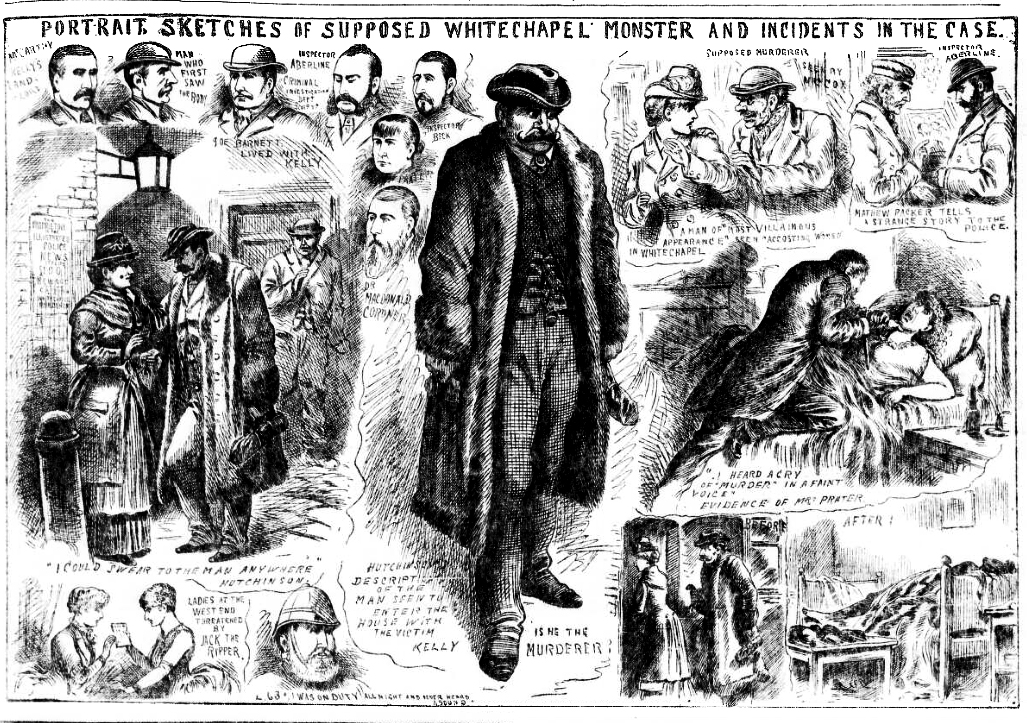
Key to the paper’s success was its visual impact. Bear in mind that photographs in newspapers were very primitive until well into the 20th century, so TIPN employed artists who drew their impressions of crime scenes and victims. These would then be made into etchings or engravings and the plates would be inserted into the set type.

The “Freddy Starr ate my hamster” school of journalism has a long and distinguished heritage, Here, in a front page from 1871, we have a perfect blend of lurid sexual sadism, suicide and a disaster in the peaceful Suffolk town of Stowmarket.

Screen Shot 2021-05-13 at 20.01.12

So how did TIPN treat crime cases which became nationally notorious? It had huge fun, of course, with the Whitechapel murders in 1888, and many of its illustrations have been used in books on Jack the Ripper over the years. The beauty of it, as far as TIPN was concerned, was that there was so much speculation and the police were so clueless that the artists could speculate away to their hearts’ content without fear of contradiction.

Ripper

What was to become known as The Tottenham Outrage took place on 23rd January 1909, when two Latvian anarchists ambushed a car carrying wages for factory workers in Tottenham. In the lengthy pursuit of the hijackers, a policeman was shot dead and a young boy died after being hit by a stray bullet. I have covered the incident here but, needless to say, TIPN were quickly on the case.

TO

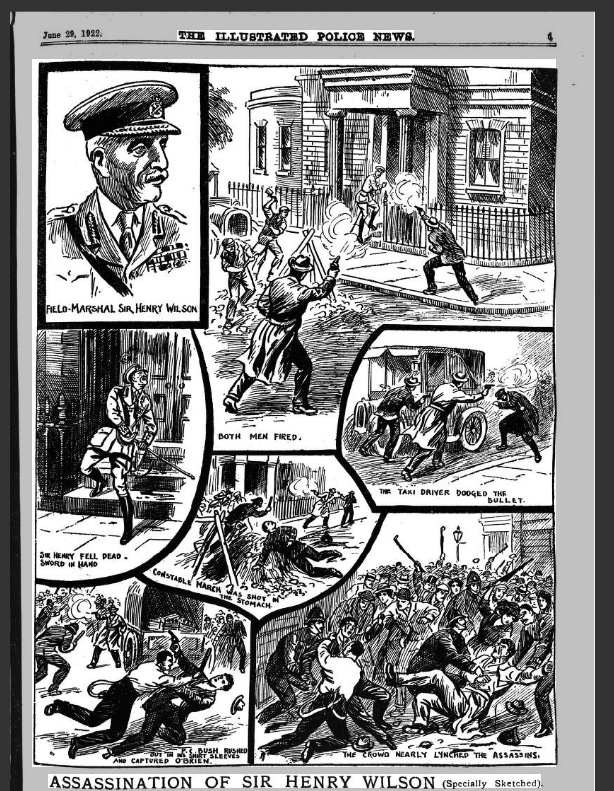
Field Marshal Sir Henry Wilson had been a senior member of the British high command in World War One, without ever having active service in the field. Born in Ireland, he was known to have Unionist sympathies, and when he was murdered by two IRA gunmen in 1922 TIPN, never less than patriotic, seized the moment.

Screen Shot 2021-05-13 at 21.19.48

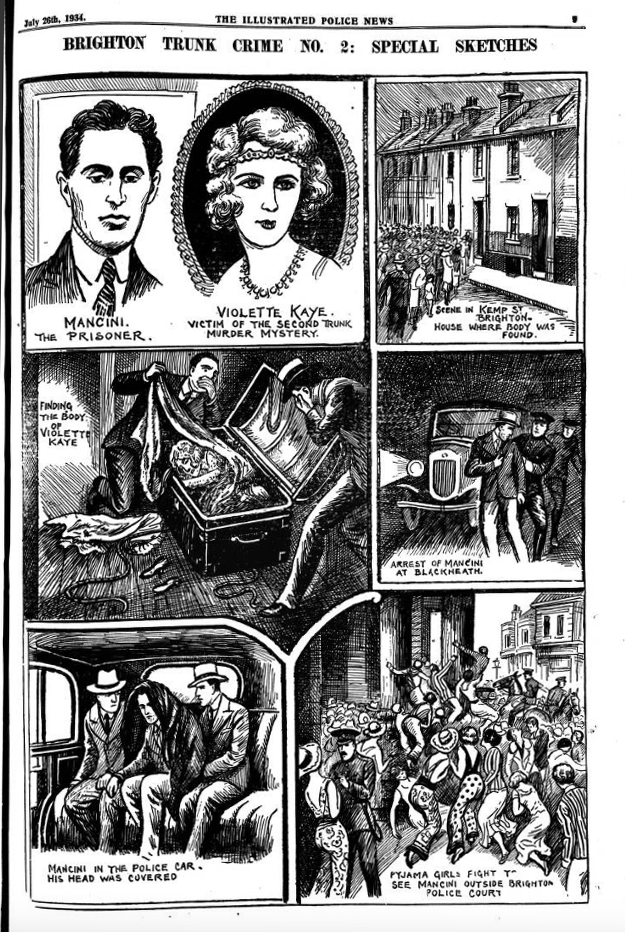
The front pages of TIPN were, of course, its main selling point, but the inside of the paper was pretty much solid reading, interspersed with occasional smaller illustrations. One of the classic full page illustrations inside the edition was in 1934 and covered what was known as The Brighton Trunk murder. A petty crook called Cecil Lewis England had adopted the name Tony Mancini, probably because it had gangsterish sound to it. He was in a relationship with a prostitute, Violette Kaye. On the 10th May she disappeared, having apparently sent a telegram to her sister in law saying that she had gone away to work in Paris. Eventually the police became suspicious and eventually discovered Kaye’s remains in a trunk owned by Mancini.

At his trial, he claimed that he had found her dead body, but concealed it, fearing he would be accused of her murder. Mancini was defended by two celebrity barristers, Quintin Hogg, better known as Lord Hailsham, and Norman Birkett, who would achieve lasting fame as the British judge at the Nuremberg trials after WW2. Astonishingly, the jury found Mancini not guilty, but In 1976 he confessed to a News of the World journalist. He explained that during a blazing row with Kaye, she had attacked him with the hammer he had used to break coal for their fire. He had wrestled the hammer from her, but when she had demanded it back, he had thrown it at her, hitting her on the left temple. A prosecution of Mancini for perjury was considered but rejected due to lack of corroboration.

Screen Shot 2021-05-14 at 10.06.45

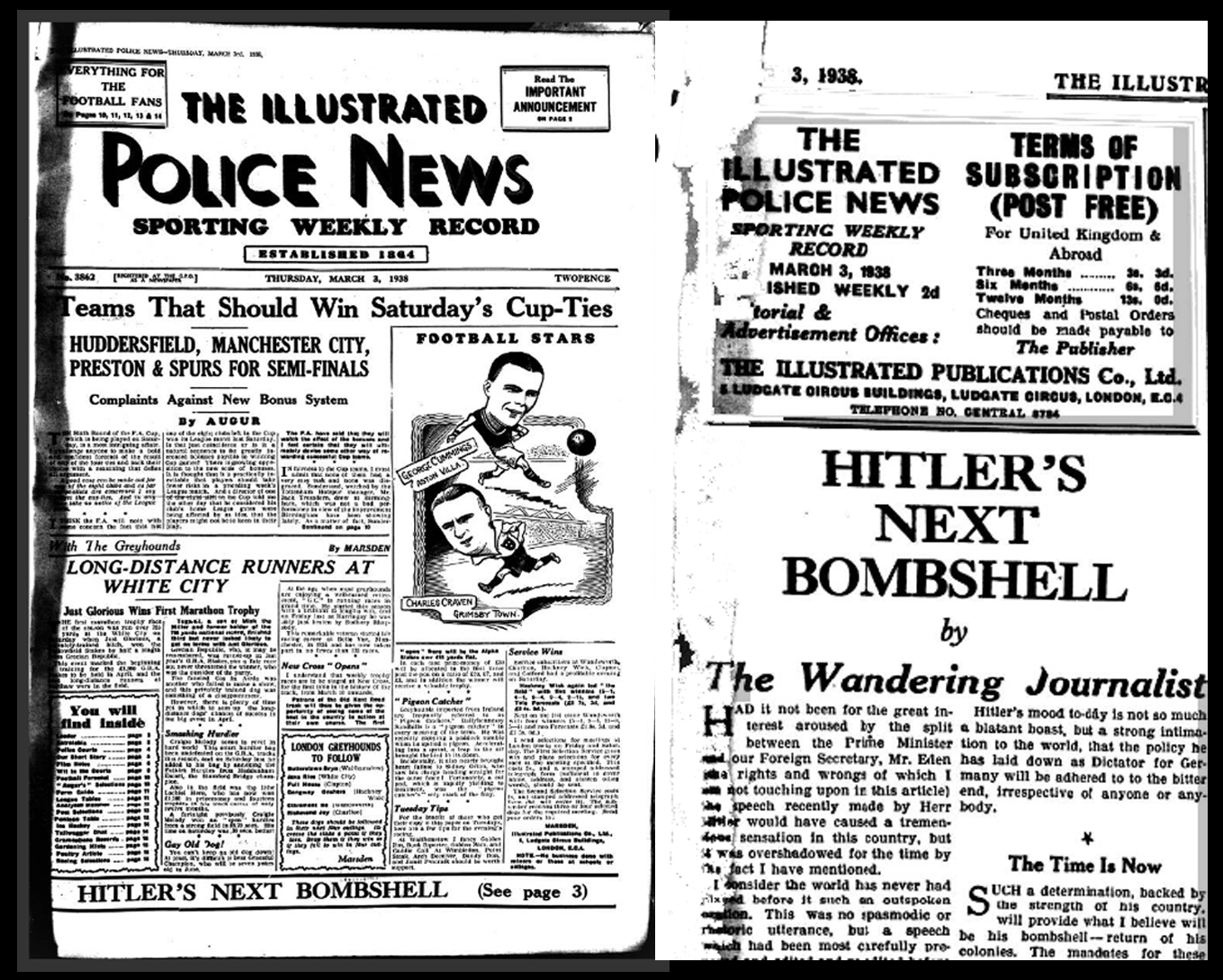
By 1938  TIPN had dramatically changed direction and had become more of a sports paper, with particular focus on racing (both horses and dogs) and football. It still had time and space, however, to report on the career of Herr Hitler. By the time Hitler plunged Europe into war in 1939 when he invaded Poland, The Illustrated Police News was itself no more, having become a victim of changing times and tastes.

IPN final

THE PERFECT LIE . . . Between the covers

When you read a Jo Spain stand-alone novel, you know you are going to be misled, made a fool of, and led up the garden path – all in the nicest possible way. Her Tom Reynolds police procedurals (see some reviews here are more straightforward and stick to the conventions of the genre, but when she spins a yarn outside of those confines, you learn to trust her narrators about as far as you can throw a grand piano.

Such is the case in The Perfect Lie. Erin Kennedy – an Irish lass – works in publishing in New York, is married to American cop Danny Ryan, and they live in Newport, Rhode Island. No, Danny is not a fellow Celt, despite his surname, but beautifully black, at least in Erin’s eyes. One morning, she answers the doorbell to their apartment and admits Danny’s cop colleague Ben – stern of face –  and a couple of fellow officers. Within seconds Danny, freshly showered and shaved for the day’s shift has walked to the  balcony and jumped to his death on the concrete four floors below.
What follows is a journey into a labyrinth of blind alleys and false assumptions. Erin learns that Danny was the subject of an internal police inquiry, and was about to be arrested for corruption. She later discovers that he had secret bank accounts containing tens of thousands of dollars. Two other significant characters are introduced; Cal Hawley,  the scion of a wealthy local family who has some connection with what Danny Ryan was involved in before his death, and Karla Delgado, a feisty lawyer who agrees to work for Erin pro-bono.

The split narratives of the book are not for complacent or inattentive readers. A couple of times I had to check back and make sure that I knew exactly what was going on. The viewpoints are these:

  • Erin on the morning of Danny’s death, and the weeks following.
  • The retrospective account of a young woman called Ally, a proctor at Harvard University.
  • Erin, over a year after Danny’s death, when she is in custody and in court being tried for her husband’s murder.

Bullet points one and three seem to be incompatible, so you might think that the obvious solution is that Danny did not die as we are told in the first few pages. The fact that Erin is not allowed to ID her husbands body, and that he is cremated in a closed casket suggests that something strange is going on, but what, exactly – and why? Eventually, the link between Ally, her mentee Lauren Gregory, and the Danny Ryan/ Erin Kennedy story is revealed. And Jo Spain has tricked us – well, I certainly fell for it –  into making a huge assumption.

Jo Spain has has created her own version of the classic locked room mystery. It happened, yet it is impossible that it could have happened. She is The Queen of The Night in terms of misdirection and she entices us into a  spider’s web where we thrash helplessly until she puts us out of our misery. In the end, however, she can put on her best innocent face and say’ “who…me?’ because when the penny drops we realise we have misled ourselves.This is another masterpiece from, in my opinion, Ireland’s finest contemporary writer. The Perfect Lie is published by Quercus, and is out today, 13th May.

My reviews of other books by Jo Spain can be found HERE

MURDER IN THE PARK . . . The tragedy of Doris and Walter Reeve (2)

DORIS HEADER

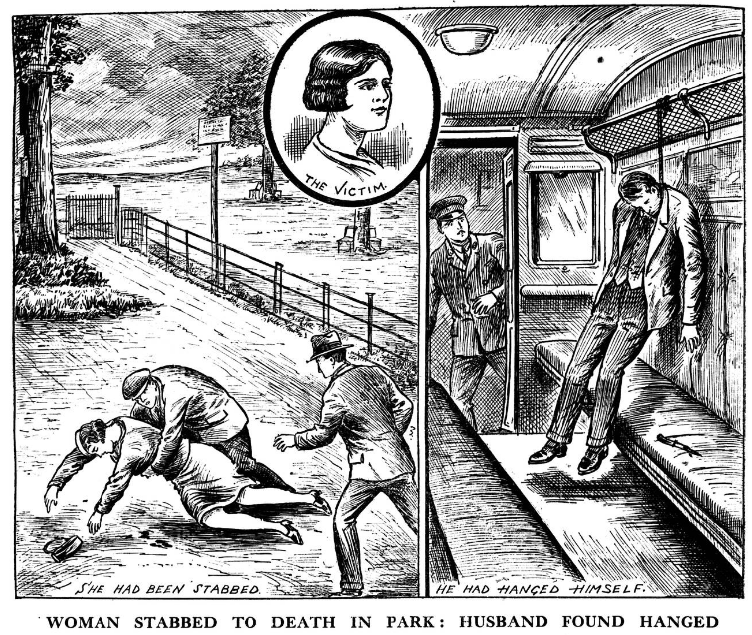
SO FAR – The murder-suicide of Doris and Walter Reeve in August 1933 has shocked Fenland and made the national newspapers. The Illustrated Police News – which had been publishing lurid accounts of crime since 1864 –  had great delight in producing an imaginative illustration of the double tragedy.

Screen Shot 2021-05-09 at 11.54.28

Back in Wisbech, the inquest continues to investigate the relationship between Doris Reeve and her husband.

On the Tuesday, Doris’s father went to Upwell to confront his son-in-law. Walter Reeve was aggressive when spoken to, and accused Mr Reeve senior of only coming round to provoke an argument. When Walter Reeve was accused of carrying on with another woman, he replied:

“I know I have, and I shall do again.”

Later, Doris revealed, that in addition to physically knocking her about, Walter had shown her a double barreled shotgun and threatened to first blow her head off, and then turn the gun on himself. Eventually, later in June, Doris left Walter for good. Walter paid several visits to the Clarence Road home and was in turn both threatening, and playing the part of the heart-broken husband. On one occasion, Doris’s father said to Walter:

“You have turned out a rotter.”
Walter replied:
“You will not let her come back, and you will regret this.”

The events of that Saturday evening, 26th August became clear as the case progressed. PC Howard, who had been called to the grim scene in the railway carriage told the inquest that he had been on duty in Wisbech early on the Saturday evening. He had seen Walter and Doris Reeve standing in the High Street. Walter Reeve had his hands in his pockets, and Doris did not seem to be upset or distressed in any way.

May Simpson, of Norwich Road Wisbech, had known Doris as a friend since January. The two were meant to meet in Wisbech at 7.00pm that Saturday evening, but Doris did not arrive on time. Miss Simpson began walking up Norfolk Street, and stopped outside a butchers’ shop to talk to another woman friend, when Doris Reeve came rushing up. This was about 7.10pm. Doris seemed to be in good spirits. The three women then went to the Empire Theatre, and came out at about 10.45pm. They stood outside talking for a while, and Doris still seemed cheerful, and said nothing about any matrimonial troubles. Doris and the third woman, Mrs Read, then walked towards the Lynn Road, going via the cannon on Nene Quay, rather than the dark and rather confined Scrimshaw’s Passage. They said goodnight by Ames Garage, and Doris the walked briskly off in the direction of her own home. That was the last time that anyone – with the exception of her husband – saw her alive.

What had Walter Reeve been up to on that fateful evening? The court was told that he had no history of mental health problems, and was a man of “considerable bodily vigour and health”. On the evening of the murder, he met with some friends in The Five Bells on Norfolk Street. They stayed there drinking until about 10.00pm, when they went to Wombwells, a fish and chip shop next to The Electric Theatre. After enjoying a fish supper, they left about 10.40pm in the direction of Blackfriars Bridge over the canal, where they parted company

One of the men with whom Walter Reeve had been drinking was asked by the court if Reeve had been the worse for wear. He replied that he had been rather quiet all evening, when he was normally quite jolly. The witness said that he knew divorce proceedings had been started between Doris and Walter, and that Reeve had been seeing another woman.

Ernest Martin Henson, a garage proprietor of Cannon Street, Wisbech, said that he had heard knocking on his door between 11.30pm and 11.45pm on the Saturday night. He answered the door, and the man, who gave his name as Reeve, said that he wanted to be taken to Upwell. Henson said:

“I suppose you know what the fare will be?”
Reeve answered:
“Four shillings.”
No, “ said Henson, “it will be twelve shillings and sixpence at this time of night.
In a very offhand manner, Reeve said, “Oh, alright then.

Henson took about five minutes to get dressed, and went and fetched the car. When he drove round to the front of the premises, there was no-one there. Henson waited for about forty five minutes, but when no-one came, he went back to bed.

Two men, itinerant fruit pickers who had been ‘dossing’ in the park on the Saturday night had an interesting tale to tell. One of the men, called Nesbitt, saw a figure standing by a gate, but the man was doing nothing to attract attention. Then Nesbitt heard groans, and said to his friend:

Come along – there is somebody there badly using a woman.
His friend replied that it might only be a couple in a domestic dispute, and so they decided to let discretion be the better part of valour. The next day, Nesbitt’s colleague said:
There’s been a woman murdered over there..” and Nesbitt replied that he must have been correct all along the previous night.

In the Coroner’s summing up, he said that it was clear that Walter Reeve had murdered his wife and then done away with himself. He raised the question of Reeve’ sanity, but said that there was no evidence of mental health issues with either Reeve himself or any members of his immediate family. He did refer, however, to the testimony of Reeve’s mother, who had said that even as a child, Walter had been possessed of a very violent temper. The Coroner reminded the jury that if they were prepared to say that Reeve was out of his mind when he killed himself, they could then hardly say that he was sane a little earlier when he had plunged the knife into his wife. He said that the reverse was also true.

The jury returned the obvious verdict of murder in the case of Doris Reeve, but asked that the archaic verdict of Felo de Se be placed on record. The Latin term literally translates as “felon of himself”, and in earlier times, English common law considered suicide a crime. A person found guilty of it, even though dead, was subject to punishment which might include forfeiture of property and being given a shameful burial.

If only in the personal column of the local newspaper, Doris and Walter Reeve were united in death.

Obit

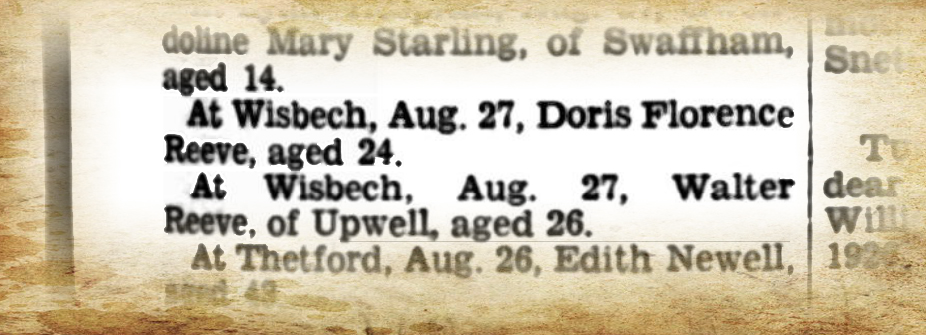
Regarding the burials of the two young people, shameful or otherwise, the Wisbech Advertiser had this to say in its edition of Friday 1st September:

FUNERAL 1

Just six miles away, however, a rather different interment was taking place.There will have been tears shed, but no-one sang hymns, and the police were not required to control the crowds.

Funeral 2

Screen Shot 2021-05-09 at 12.14.38

MURDER IN THE PARK . . . The tragedy of Doris and Walter Reeve (1)

DORIS HEADER

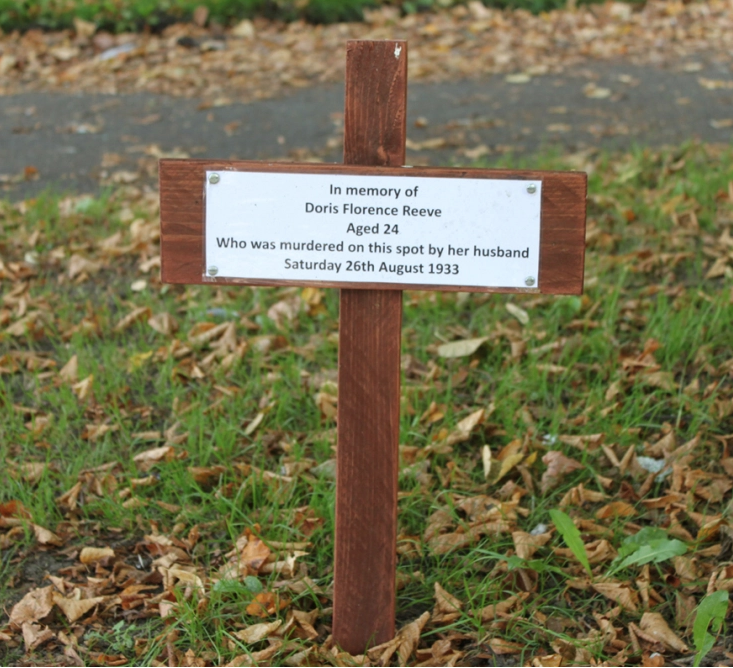
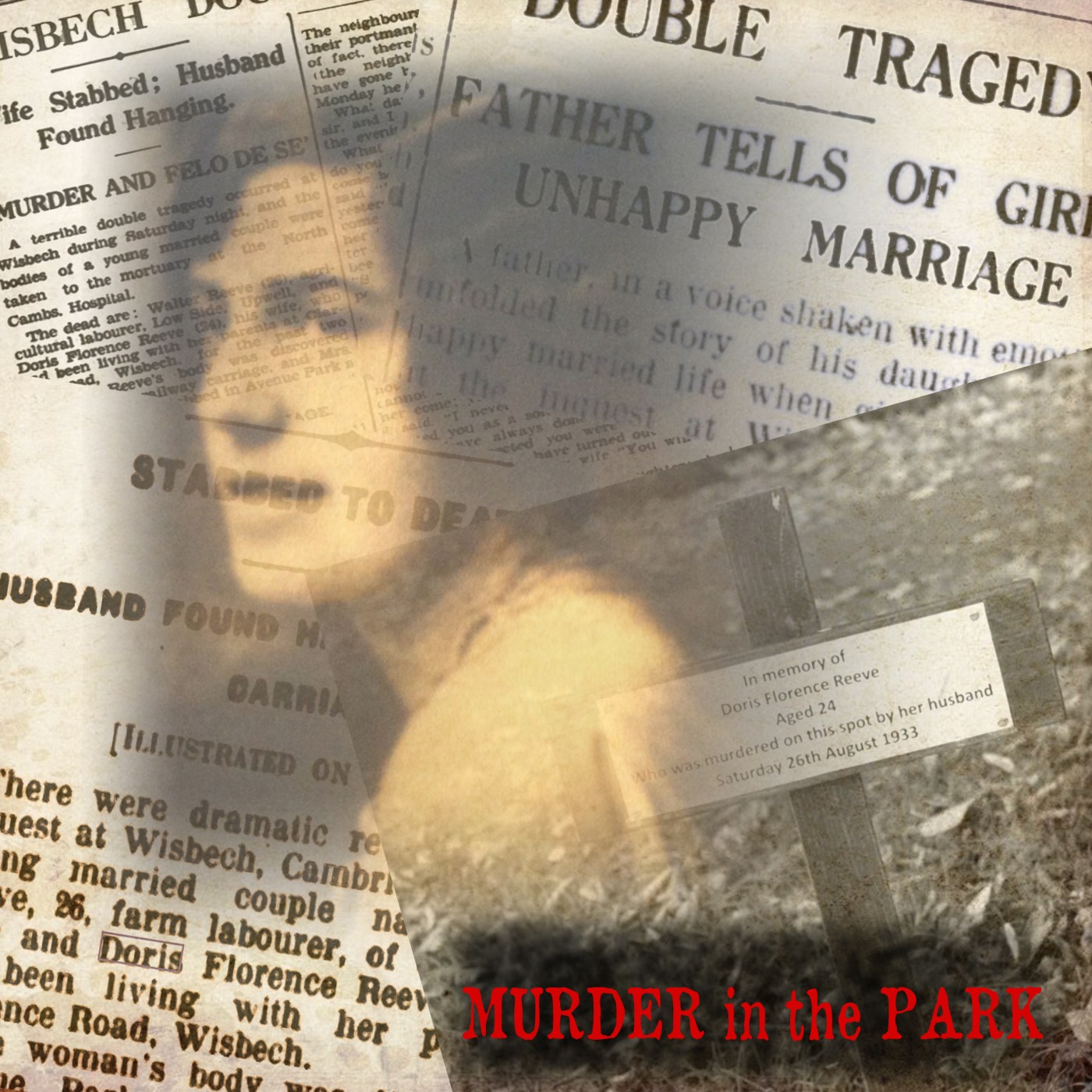
On the weekend of 13th and 14th September, 2014, something unusual surfaced on social media. On Facebook, someone reported a mysterious homemade memorial which had been placed on the grass at the edge of Wisbech Park. I went to have a look. It was a simple wooden cross, with a laminated printed message pinned to it.

Screen Shot 2021-05-09 at 11.51.11

Strangely, the sign was only there for a couple of days, but research in newspaper archives led me back over eighty years.

It is August, 1933. The hit song of the year was Stormy Weather, sung by Ethel Waters. In the cricket, England beat the West Indian touring side with ease. Ramsay MacDonald was Prime Minister, while Winston Churchill’s speeches warning of the dangers of Germany’s re-armament had been largely ignored. In Wisbech, meanwhile, the local papers were full of the latest speculation about the health of the forthcoming harvest, while the Advertiser and the Standard were running weekly updates on what looked like being a bumper year for Bramley apples. At The Electric Theatre in town, cinema audiences were preparing to be terrified by the forthcoming feature – The Mummy – starring Boris Karloff. But those Wisbech folk were to have a horror – of a genuine kind – delivered to their doorsteps very soon.

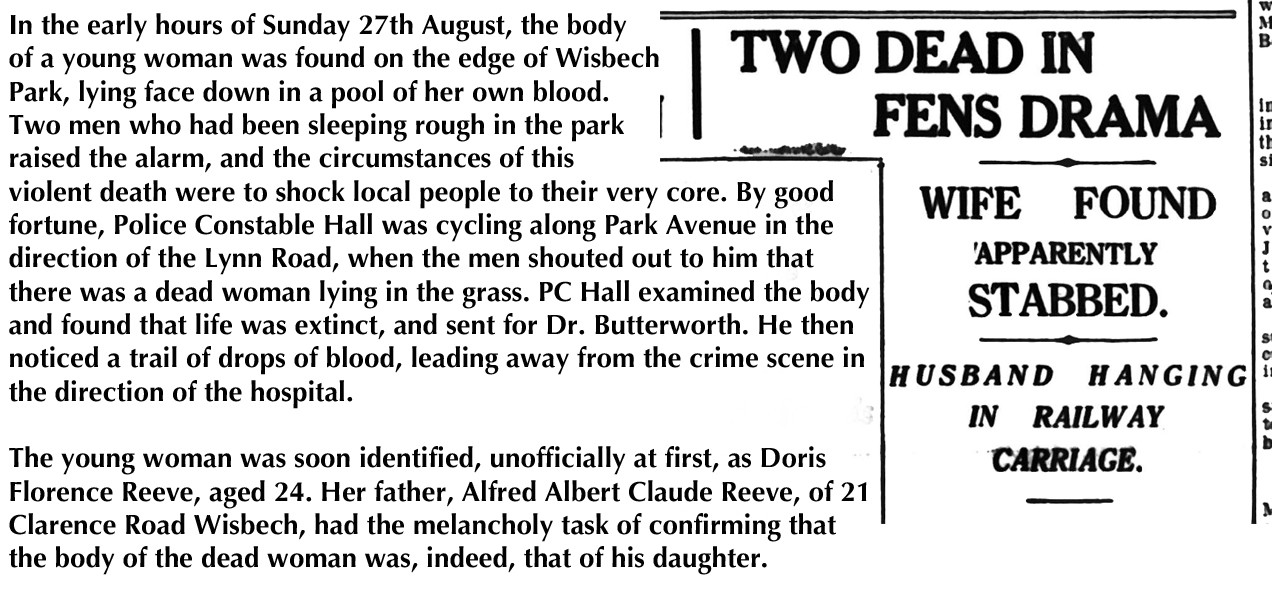
Body Text

Day broke, and as people gathered around the scene of the murder, none of them was to know that within a couple of hours, an equally macabre and disturbing discovery was to be made. Meanwhile, police had driven to the nearby village of Upwell, where Doris Reeve had been living with her husband Walter, aged 26. Getting no answer to their urgent knocking, the officers forced their way in, but found the house empty.

Another Wisbech Bobby, Police Constable Howard was called, at 10.30 am on that Sunday morning, and told that there was a man who appeared to have hanged himself in a railway carriage near Wisbech LNER station. When he went to investigate, he found that the carriage was the middle one of three, standing in a siding. and he was able to access the carriage without going through the station.he found a man hanging from a luggage rack, with a neck-tie and handkerchief used for the job. The man’s feet were dragging on the floor of the carriage, but his whole weight was on his neck. His right hand was resting on the seat, next to a knife, and his body was stiff and cold. He was wearing a pair of light grey flannel trousers, a vest and a shirt. Round his waist was a belt, with a sheath attached to it. His shirt was flecked with blood-stains and there was a knife wound on the left side of his chest. Cast to one side in the carriage compartment were a jacket, waistcoat and hat. In his possession were a wallet, ten shillings in small change, and a driver’s licence in the name of Walter Reeve, Low Side, Upwell.

The police now had two dead bodies on their hands, and people were able to reach their own conclusions about the circumstances of the deaths. It wasn’t until the inquest, however, that the full truth about the tragic events would be made public. The inquest was held at the North Cambridgeshire Hospital in Wisbech on Monday 28th August. By law, the deaths of Florence and Walter Reeve had to be considered separately. We can look at the evidence given in whichever order we choose. Firstly, the grim physical details of the deaths. Dr Butterworth, when he examined Doris Reeve, had found an incised wound, an inch long, over her third left rib, and another wound – of the same shape and size – more round to the side and between her eighth and ninth ribs. The wound over the third rib had been the fatal one, severing the pulmonary artery. The wounds had clearly been caused by a small – but very sharp – knife. Walter Reeve had died as a result of strangulation, but it also seemed that he had tried to inflict wounds on himself with the knife which was found on the seat beside his body. The doctor and the police were able to confirm that this knife was the one which had killed Doris Reeve.

In order to establish the state of the relationship between Doris and Walter Reeve, Doris’s father was called to the witness stand. He said that Doris had married Walter in January 1932, but the marriage was not one made in heaven. By June 1933 Doris had left their married home in Upwell, and moved back in with her parents at 21 Clarence Road, Wisbech. Doris’s father said that he had been largely unaware of events in his daughter’s life, because she was not n the habit of confiding in him. His first intimation that things were wrong was when he awoke from a nap one day to find Doris kneeling on the floor, with her head in her mother’s lap. Doris, however, would not tell him what had happened, but Mrs Reeve senior told him that Walter had knocked Doris down and taken money from her purse. He had only given her £1 for housekeeping that week rather than the usual thirty shillings. Doris returned briefly to Upwell, but she would come home each night to Wisbech, having been given the bus fare by her mother.

The double death in Wisbech made the national newspapers, and the Daily Mirror published this photograph of the murder site, but mistakenly sited Walter Reeve’s death to Upwell.

Murder site

IN PART TWO
Two funerals, and the inquest concludes

Blog at WordPress.com.

Up ↑