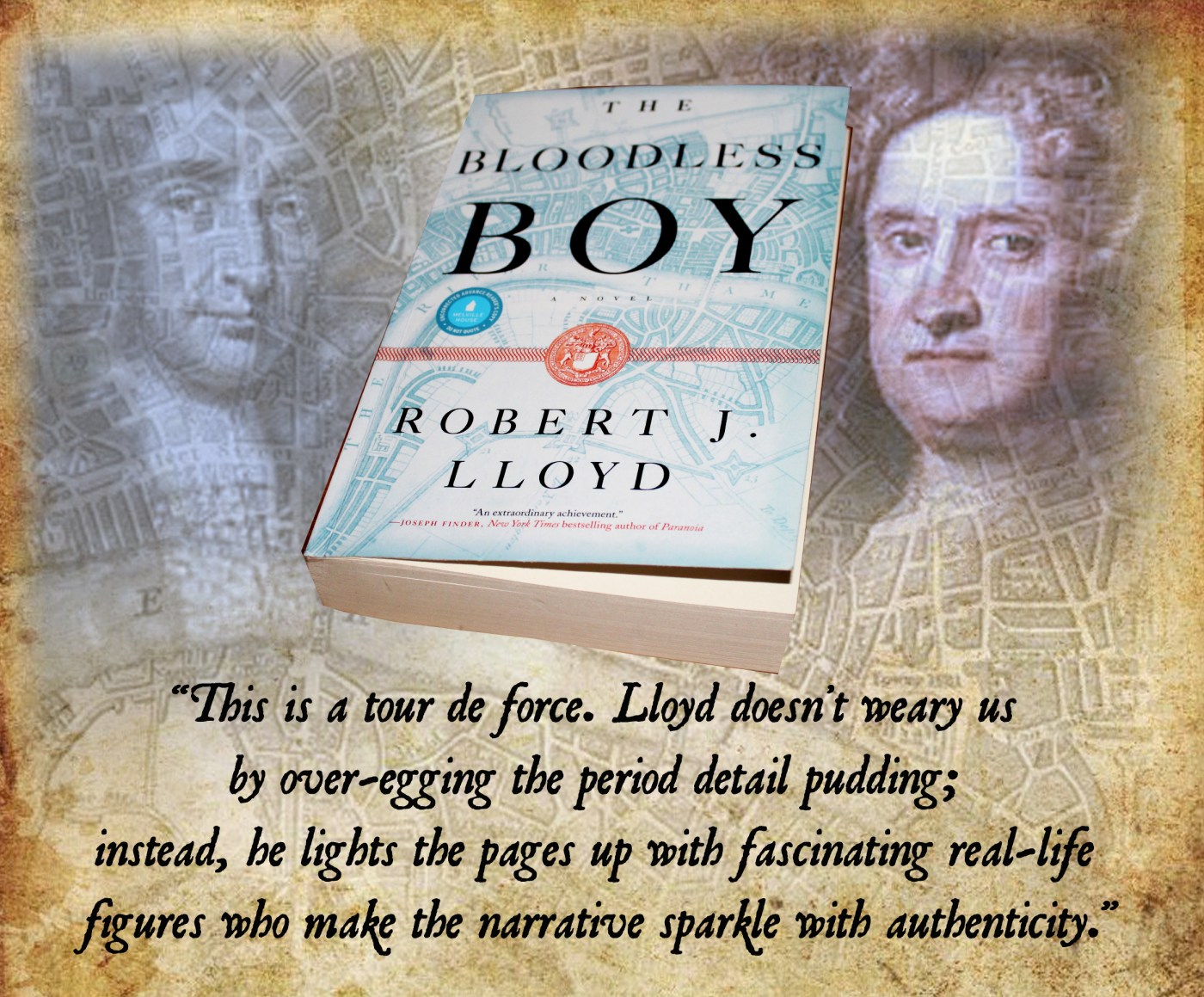

It is the first day of 1678, and snow is settling over a London that is mostly rebuilt after the great conflagration, but still has patches of nettle covered gaps where buildings used to be. Scientist Harry Hunt, assistant to the great polymath Robert Hooke, is summoned to his master’s side to attend what appears to be a a murder scene. On the muddy banks of the open sewer known as the Fleet River, an angler has found the dead body of a boy, perhaps two or three years of age. When examined by Hooke, a the behest of senior magistrate Sir Edmund Bury Godfrey, it is discovered that the boy has been expertly drained of blood. Found upon the body is a letter containing a single sheet of paper, a cypher consisting of numbers and letters arranged in a square.
 Thus begins a thoroughly intriguing murder mystery, steeped in the religious politics of the time. For over one hundred and fifty years, religion had defined politics. Henry VIII and his daughters had burned their ‘heretics’, and although the strife between Charles I and Parliament was mainly to do with authority and representation, many of Oliver Cromwell’s adherents were strident in their opposition to the ways of worship practiced by the Church if England. Now, Charles II is King. He is reputed to have sired many ‘royal bastards’ but none that could succeed to the throne, and the next in line, his brother James, has converted to Catholicism. In most of modern Britain the schism between Catholics and Protestants is just a memory, but we only have to look across the Irish Sea for evidence of the bitter passions that can still divide society.
Harry Hunt is charged with breaking the code, and learns that it is a cypher last used over twenty years early when the current King was smuggled out of the country after his defeat at the battle of Worcester. Hunt and Hooke have another mystery death on their hands, however. With this one, Robert J Lloyd departs from recorded history, in its pages tell us that Henry Oldenburg, the German-born philosopher, scientist, theologian – and Secretary of The Royal Society – died of an undisclosed illness in September 1677, but the author has him shooting himself through the head with an ancient pistol. Lloyd jiggles the facts again – and why not? – with the killing of Sir Edmund Bury Godfrey, whose corpse is found strapped to the fearsome Morice water wheel under London Bridge (below). Sir Edmund was actually found dead in a ditch near Primrose Hill, impaled with his own sword.

We find ourselves immersed in a plot of dazzling complexity which weaves together political and military history, a plot to kill the king, and a highly secret medical experiment undertaken with the best of intentions, but turning into something every bit as horrific as those carried out by Joseph Mengele centuries later. In the middle of the turmoil stands Harry Hunt – an admirable and courageous hero who is underestimated at every step and turn by the men involved in the conspiracy.
 How on earth this superb novel spent many years floating around in the limbo of ‘independent publishing’ is beyond reason. While not quite in the ‘Decca rejects The Beatles‘ class of short sightedness, it is still baffling. The Bloodless Boy has everything – passion, enough gore to satisfy Vlad Drăculea, a sweeping sense of England’s history, a comprehensive understanding of 17th century science and a depiction of an English winter which will have you turning up the thermostat by a couple of notches. The characters – both real and fictional – are so vivid that they could be there in the room with you as you read the book.
Looking back at my reviews over the last eighteen months, I see there is no shortage of novels set in 17th century London, but this is a tour de force. Lloyd (above right) doesn’t just rely on the period detail to bring the history to life, he lights the pages up with fascinating real-life figures who make the narrative sparkle with authenticity.


 There were nineteen B & M novels, beginning with Full Dark House in 2003, plus a quartet of graphic novels and short story collections. I say ‘were’, because although Christopher Fowler (left) is still with us, those who have read London Bridge Is Falling Down (2021) will know – and I am sorry if this is a spoiler – that old age and infirmity finally catches up with the venerable pair of detectives. Where to start to talk about this series? The author himself is, as far as I can judge, a modern and cosmopolitan fellow, but his love – and knowledge – of London is all embracing. Christopher Fowler is a one-off in contemporary writing, and completely individual, but speaking as an elderly chap with many years of reading behind me, I can best put him in context with great English writers of the last 150 years or so by looking at various aspects of the novels.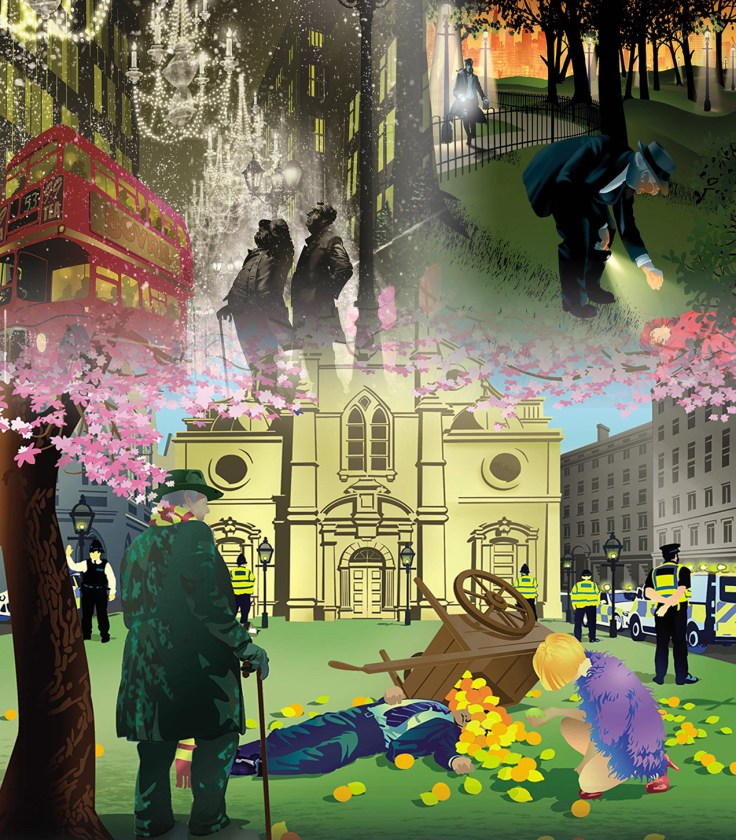



 MJ is alive and well, and still writing, and Peter Maxwell appeared as recently as 2020 with Maxwell’s Summer. The series started in 1994 with Maxwell’s House, a title which (if you were around in the 1960s) will give you some idea of MJ’s wonderful sense of English domestic history – and his inability to resist a pun. The books are highly enjoyable, but never cosy. There is a streak of melancholy never far from the surface, and we are reminded that Maxwell’s first wife died when the car they were in was involved in a fatal collision. Max has never driven since, and his trusty bicycle is a regular prop in the stories. Max eventually marries his policewoman girlfriend Jackie Carpenter, which is only right and fair, since she is the plot device that has given him a very convenient ‘in’ with local murder investigations. MJ Trow has several other CriFi series to his name, and I list them below.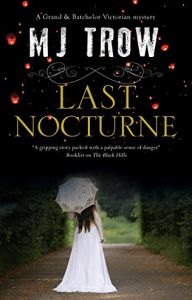
 Inspector Lestrade – in which Trow ‘rehabilitates’ the much maligned copper in the Sherlock Holmes stories. 17 novels, beginning in 1985.


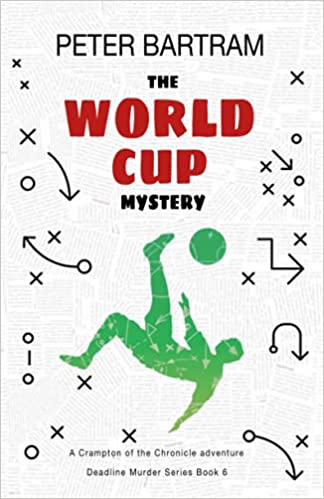 We are in Sicily, and it is the long hot summer of 1966. Brighton crime reporter Colin Crampton has taken his Aussie girlfriend Shirley Goldsmith abroad for a holiday. While the sun beats down, and gentle breezes blow in from the Mediterranean, Colin hopes to choose a romantic location – perhaps the ruin of a Greek temple – where he will go down on one knee and propose marriage to the beautiful Shirl. He has an expensive diamond ring in his pocket to help boost his case, but it is not to be.



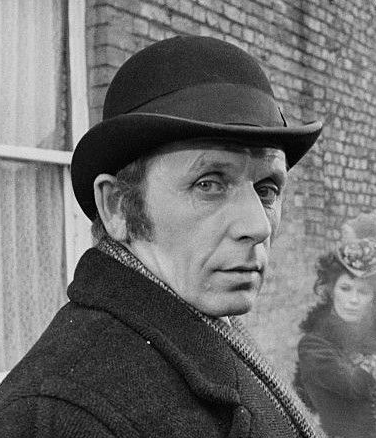 To Bath now, and a character created by (I think) Britain’s longest living (and still writing good books) crime author. Peter Lovesey was born in Middlesex in September 1936 and, after National Service and a career in teaching, he published his first novel in 1970. Wobble To Death was the first of a hugely successful series of historical novels featuring Sergeant Daniel Cribb and his assistant Constable Thackeray. Older readers will remember the superb BBC TV adaptations starring Alan Dobie (left) as Cribb. The stories were also dramatised by BBC radio.




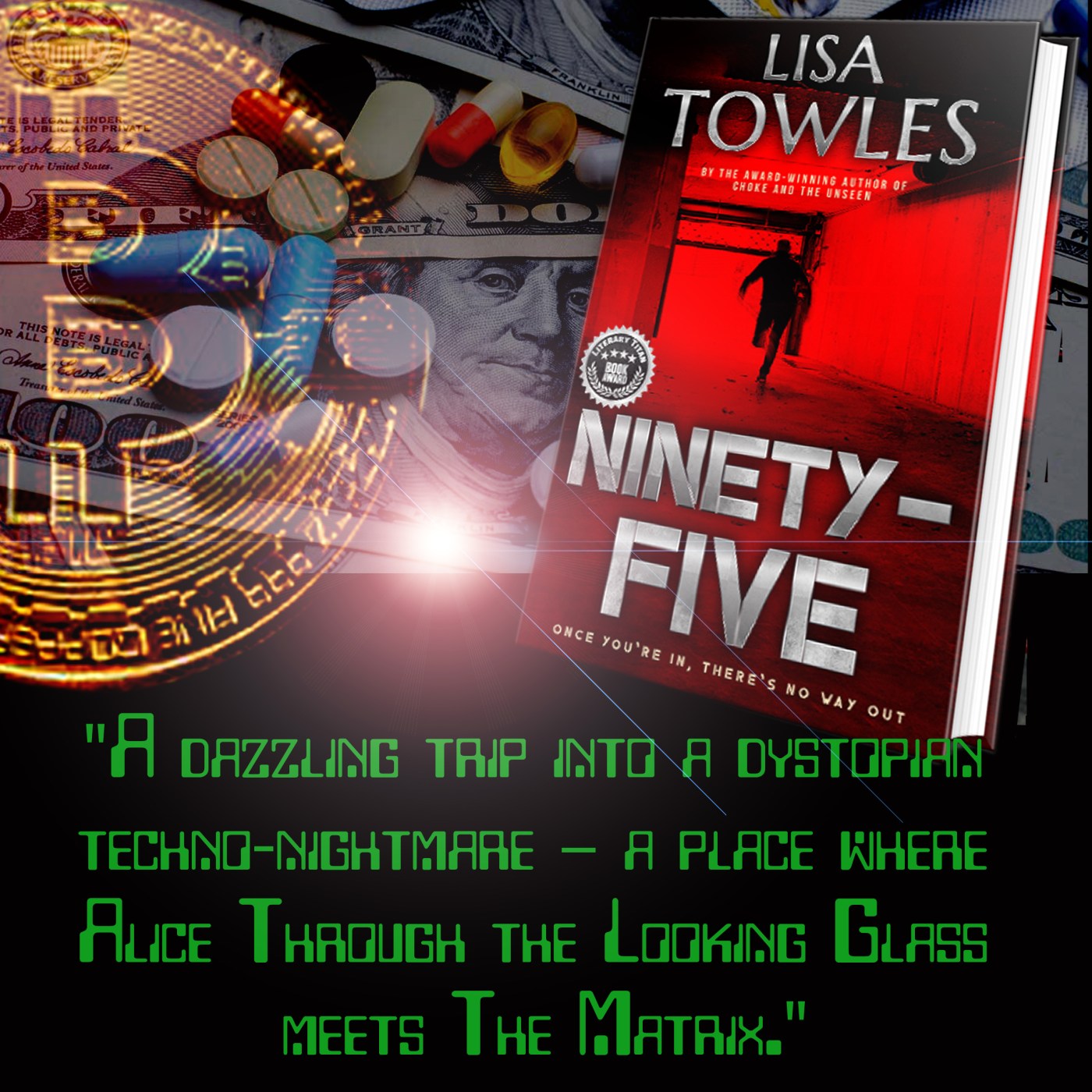

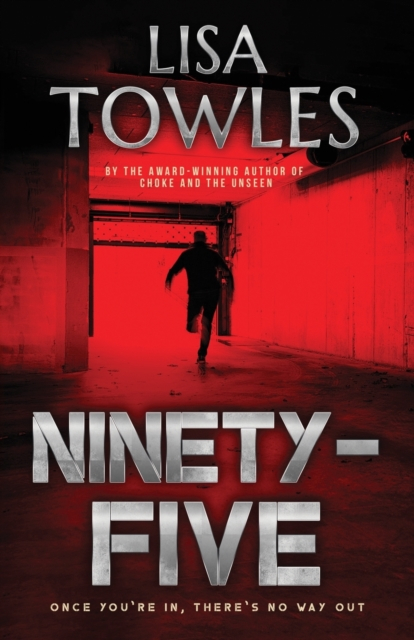 Zak Skinner is a pretty unremarkable guy in many ways. He’s bright enough, for sure – that’s why he is studying engineering at the University of Chicago. Why he moved there from NYU, we’re not sure at first, but we suspect that he lacks the essential ingredient of ‘stickability’. Or maybe he is running away from something? He and his old school buddy Riley room together, and Riley is most things that Zak is not. Like steady, reliable, unimaginative and not prone to destructive self analysis.


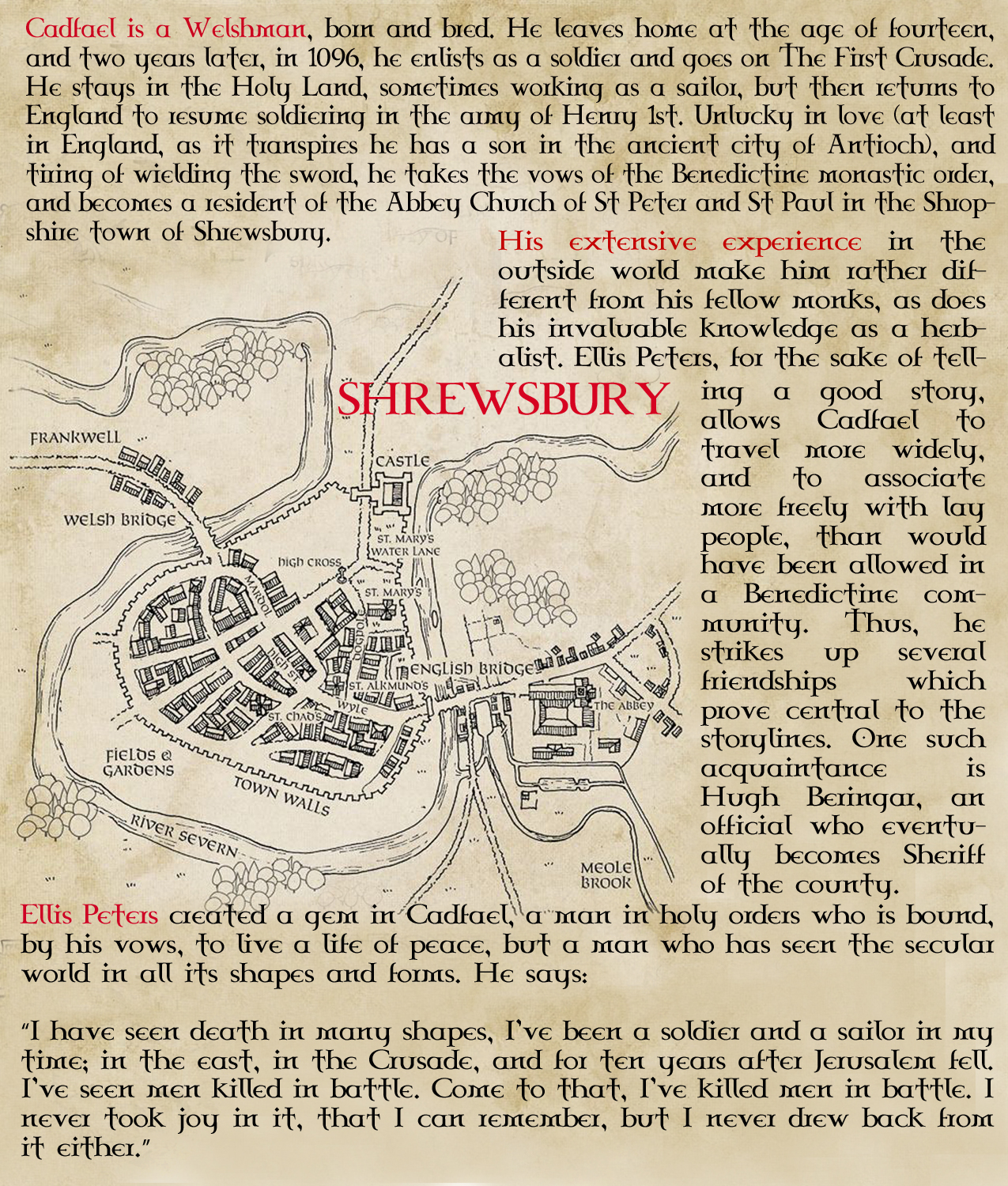

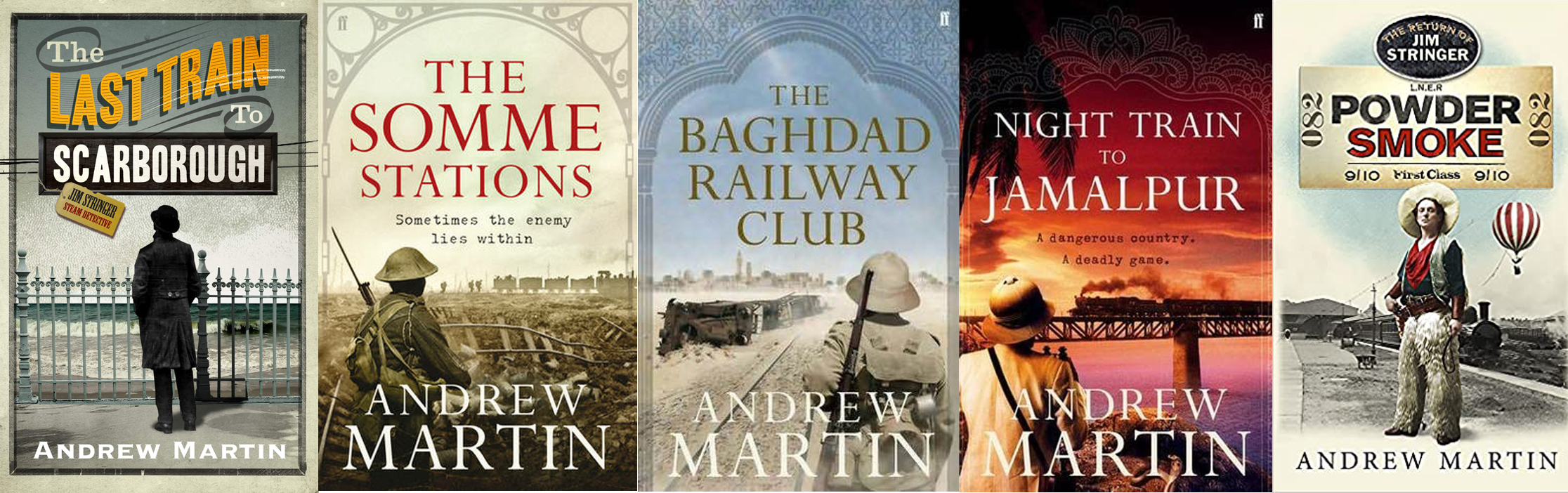
 Ever onwards, and ever northward to the ancient city of York. For all that it houses the magnificent medieval minster and has a history going back to the Eboracum of Roman times, fewer people remember that York was also a great railway city, and there can be no more appropriate place to house the National Railway Museum. Like many men now in the autumn of their years I was an enthusiastic trainspotter back in the days of steam, so it is – I hope – perfectly understandable that I have chosen the Jim Stringer novels by Andrew Martin for this stop on our trip. Martin introduced Stringer in The Necropolis Railway (2002) when Stringer is very much at the bottom of the railway hierarchy, and working in London, but by 2004 in The Blackpool Highflyer, Stringer has married his landlord’s daughter – the beautiful Lydia – and has been promoted to a job in York.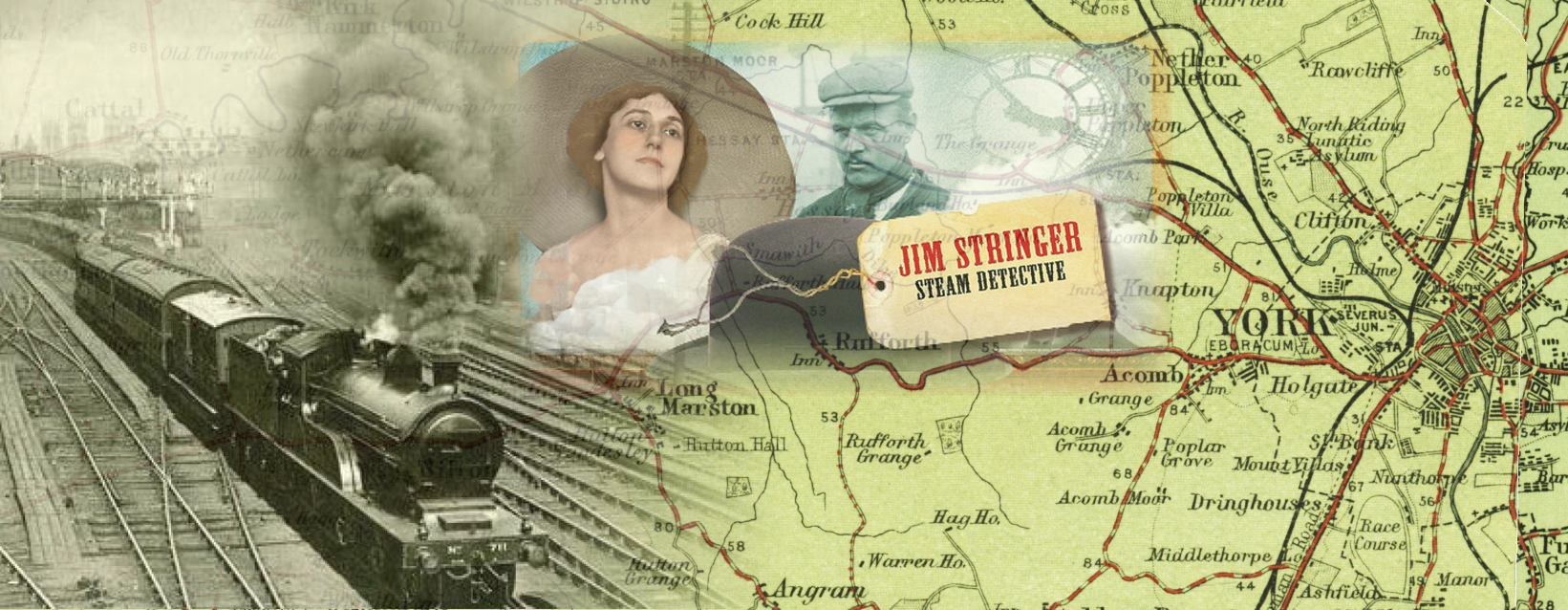

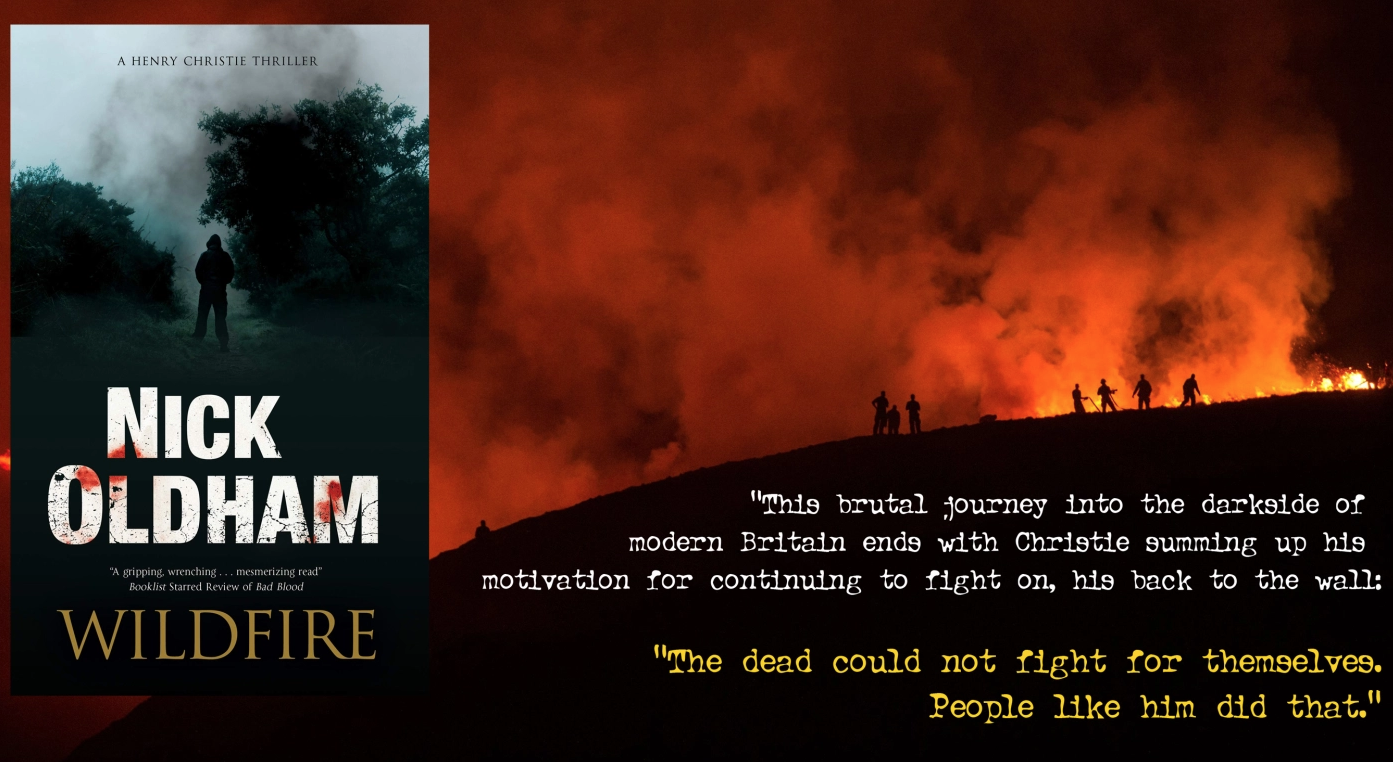
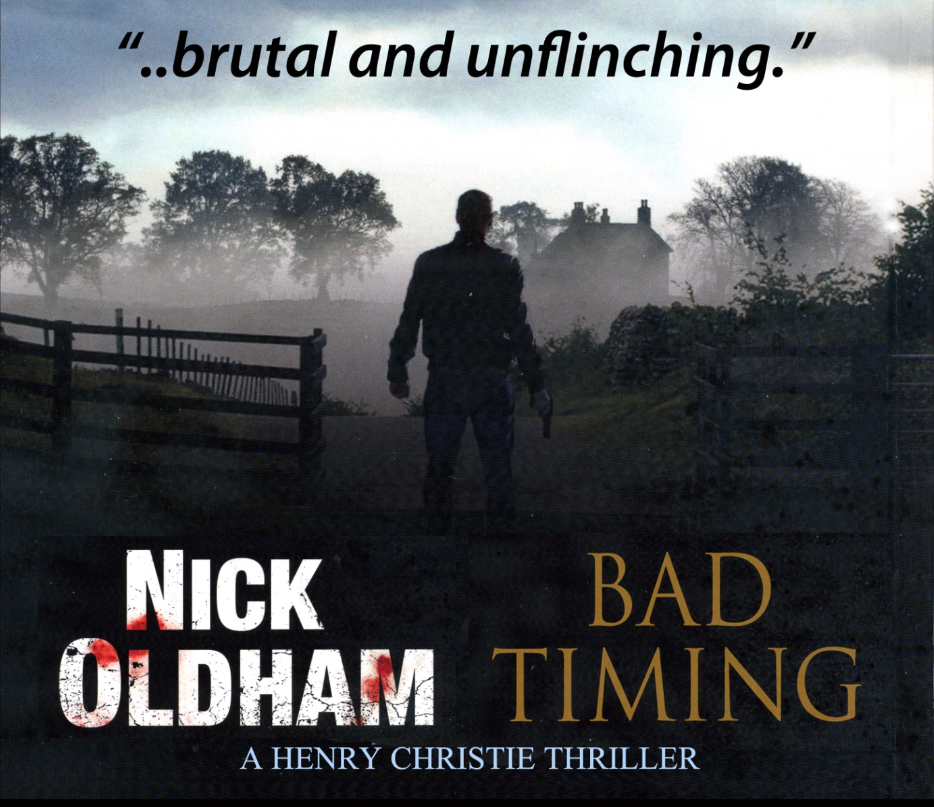
 His creator, Nick Oldham, knows of what he writes, as he is a former police officer, and the 29th book in this long running and successful series is due out at the end of November. So, what can readers expect from a Henry Christie story? It depends where you start, of course, because if you go back to the beginning in 1996, Peter Shilton was still in goal, but for Leyton Orient, England lost to Germany (on penalties, naturally) in the Euros semi-final, the trial of men accused of murdering Stephen Lawrence collapsed and John Major was in his second term as British Prime Minister. In A Time For Justice Christie is a relatively junior Detective Inspector – and someone who is seriously out of favour with his bosses, and has to tackle a cocky mafia hitman who thinks the English police are a joke. As the novels progress over the years, Christie rises through the ranks, but he is still someone who is viewed with some suspicion by the few officers who outrank him – the chief constables and their assistants.
 Henry Christie is always hands on, and he has the scars – mostly physical, but one or two mental lesions – to prove it. His personal life has been a mixture of love, passion, tragedy and disappointment. His geographical battle grounds are usually confined to the triangle formed of Preston, Lancaster and Blackpool. This is an area that Oldham (right) himself knows very well, of course, thanks to his years as a copper, but it is also very cleverly chosen, because it allows the author to play with very different human and geographical landscapes. The brooding moorland to the east is a wonderful setting for all kinds of wrong-doing, while the seaside town of Blackpool, despite the golden sands, donkey rides, candy floss and cheerful seaside ambience, houses one of the worst areas of deprivation in the whole country, with run-down and lawless former council estates controlled by loan sharks, traffickers and criminal families of the worst sort.


 fullybooked2017