

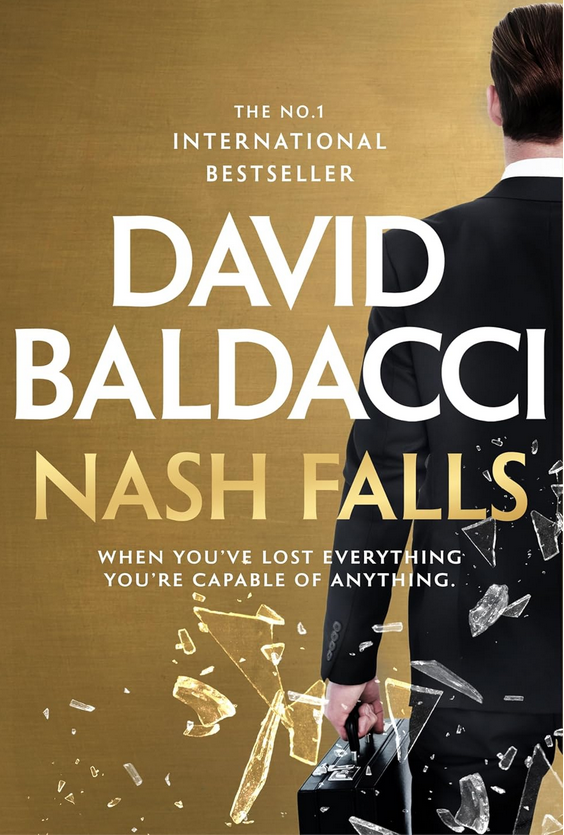
Wily veteran of scores of thrillers, Baldacci certainly builds down his central character in the first few pages. Walter Nash is a lanky, scrawny, rather uptight family man who only ever really loved his deceased pet dog. He is, however, thanks to his number crunching skills with a multinational company, prodigiously rich. And, after his fashion, he tries to be a good husband and father.
His own father, recently deceased, was a brawling and profane Harley-riding Vietnam vet who, to all intents and purposed, despised Walt for his prissy ways and lack of physical presence. One night, Walt has an unwelcome visitor in the shape of an FBI agent, and he has grim news to impart. Walt’s firm, coyly named Sybaritic, has been infiltrated (via one of its senior employees) by a criminal corporation connected to Chinese drug producers. The FBI people explain to Walt that the Chinese, unable to match the USA either militarily or economically, have chosen to inflict a slow death on America through the over-production and distribution of drugs like Fentanyl.
We learn that the ‘inside man’ on this operation is none other than Rhett Temple, the son of the firm’s founder. Then with customary narrative verve, Baldacci describes how Walt Nash’s near-perfect life is reduced to rubble by the perfect storm of an international criminal regime, corrupt cops and bent businessmen desperate to hang on to their wealth. Faced with false – but appalling – accusations, Nash is forced to go on the run, helped by one of his father’s old army buddies, a fearsome black man known as Shock.
What follows is, perhaps, the most implausible part of the story. It is a version of the old riff of a physically inept man who, by training and will power, is transformed into a formidable opponent. Under Shock’s watchful eye Nash is transformed from the puny guy who once had sand kicked in his face by beach bullies, to a remorseless killer. If you don’t get the sand reference, Google ‘Charles Atlas’. The internet will do the rest.
The portrayal of Nash, from his buttoned-down corporate executive days, via family tragedy through to his emergence from that chrysalis as someone quite different, is impressive. My last thoughts, are, I am afraid, something of a spoiler, but I always try to be honest. Walt Nash certainly undergoes a dramatic transformation and, motivated by a sense of vengeance, he rejoins the world from which he had been exiled, his true identity hidden from former acquaintances. However, those wishing for a conclusive resolution to the story must await the sequel, which is trailered at the end of this novel. Nash Falls is published by Macmillan and is out now.




















 fullybooked2017