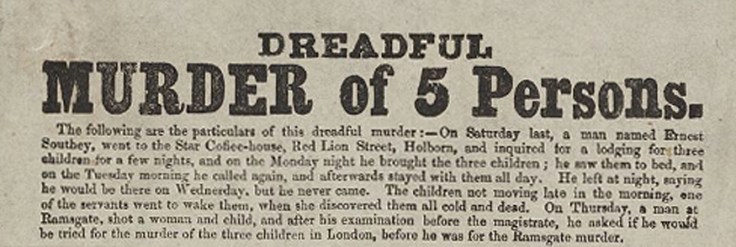
AUGUST, 1865. Queen Victoria was in the 28th year of her reign, but had become a virtual recluse after the death of Prince Albert in 1861. Palmerston was Prime Minister, and the Salvation Army had been founded in Whitechapel. In America, the Civil War was over, but Lincoln was dead, and Andrew Johnson ruled in his stead.
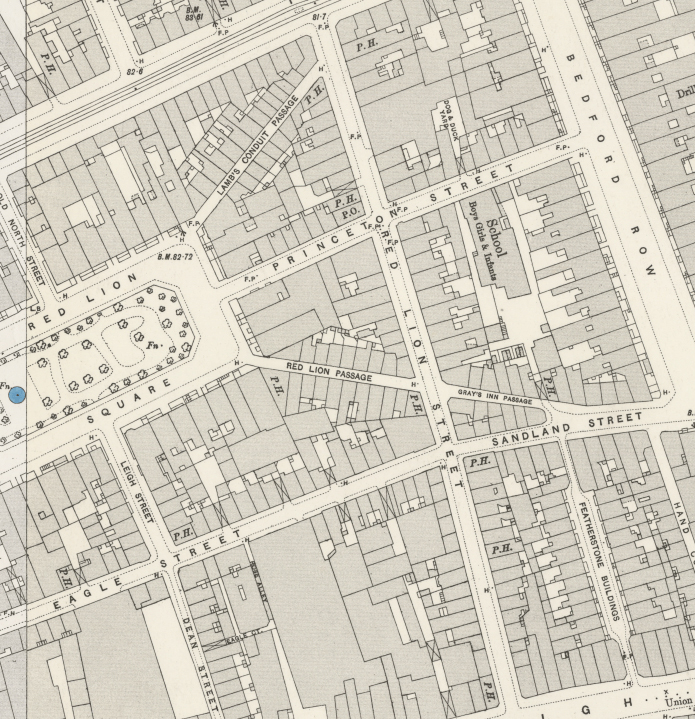
On the evening of Monday 7th August, a man brought three children, aged six, eight and ten, to the Star Coffee House and Hotel, Red Lion Street, Holborn, London. He had previously arranged accommodation, saying that they would all shortly be leaving for Australia. On the Tuesday evening, he put the children to bed and left the hotel, stating that he world return shortly. On the Wednesday morning, neither the man nor the children came down for breakfast. Sensing that something was wrong, the hotel manager entered the rooms occupied by the children, and found a terrible sight. All three were quite dead, and there was no sign of the man.
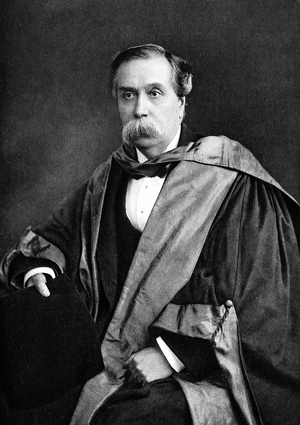
The testimony of Dr George Harley, physician, (below right) was this:
 “On the 9th of August last I was requested by Dr. ROBERTS, of Lamb’s Conduit-street to visit Star’s Hotel, where, as he informed me, three children were supposed to have been murdered, and that in case of so serious a nature he deemed it advisable to have a second opinion. On the third floor, in the front room, No. 6 of the above-named hotel I saw two boys lying on their backs in bed quite dead. The younger of the two, ALEXANDER WHITE, aged eight was near the back, the elder, THOMAS WILLIAM WHITE, aged nine years, toward the front part of the bed. The bodies of both were cold and stiff, and although their countenances wore the placidity of slumber they nevertheless bore the pallor of death. The eyes were half open; the pupils semi-dilated. On turning down the bedclothes both bodies presented a mottled appearance, from the extreme lividity of some parts, the deadly pallor of others. The attitude of the youngest child was that of a comfortable repose. The head slightly inclined to the left side. The hands were folded upon the abdomen. The legs gently crossed. The fingers of the right hand still retained within them a penny-piece, which fell from their stiffened grasp while the body was being turned upon its side, with the view of detecting marks of violence.”
He continued:
 “In the back bedroom, No. 8, of the same floor lay the dead body of a somewhat emaciated but handsomely featured boy, HENRY WILLIAM WHITE, aged ten years. The attitude and complexion of this child closely resembled that of his brothers. His expression was calm, the eyelids were closed, the pupils were natural, the face was deadly pale. A small quantity of fluid had flowed from the mouth on to the collar of his shirt, and that part of the left cheek in contact with it was mottled red and purple. The legs and toes were slightly bent the hands partially closed, the nails and finger tips intensely livid. A spot of feculent matter soiled the sheet. The rigidity of death was well marked in every l imb, and livid discolorations in all the depending parts of the body. No marks of violence were observable, but a slight odor was perceptible about the mouth. The whole chamber had a peculiar ethereal smell.”
He concluded:
“I have to add that the history of the cases, the appearance and attitudes of the bodies after death, the result of the post mortem examinations, and the chemical analysis lead me to the conclusion that Henry William White, Thomas William White, and Alexander White died from the mortal effects of a poisonous dose of prussic acid.”
The three dead children were identified as Henry White, aged ten years,Thomas White, aged eight years and Alexander White, aged six years. The parenting of these three children had been bizarre, to say the least. Their father – or at least the man who accepted them as his own – had been married to the boys’ mother, and by an awful coincidence was a schoolmaster in Featherstone Buildings, only a stone’s throw from the hotel where they died.
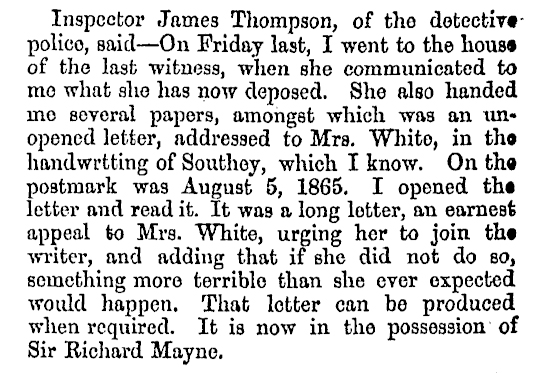
The boys’ mother had been living with a man called Ernest Southey, and the three lads had been passed backwards and forwards several times between Mr William Henry White and his wife. Finally, they had been ‘in the care’ of Southey and Mrs White, as it was put about that they intended to emigrate to Australia. Not only did Mr White’s description of Southey match that of the hotel staff, Southey was known to the police. Earlier in the year, Southey, who was, by occupation a billiard marker, had been involved in a strange case where Mrs White tried to inveigle money from a member of the aristocracy, and Southey had intervened on her behalf.
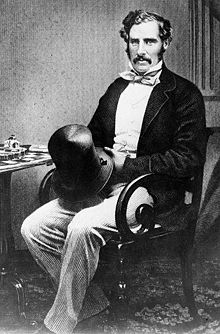 The Home Secretary, Sir George Grey (left), announced a £100 reward for the apprehension of Southey. It was to prove unnecessary. Having poisoned the three boys, the fugitive, who obviously subscribed to the old adage about sheep and lambs, had traveled down to the Kent seaside town of Ramsgate where, it transpired, his real wife and daughter lived. Having met them, and pleaded for their forgiveness for his long absence and neglect, he then shot them both dead with a pistol. He was caught red-handed, and gave himself up without a struggle.
At this point it became clear that Ernest Southey was none other than Stephen Forwood, his latest victims being Mary Ann Jemima Forward, and her daughter Emily. He was brought to the magistrate in Ramsgate, but then produced an astonishing document, apparently penned in the interval between his arrest and the court appearance. He proclaimed to the court;
“On Monday, the 7th instant, I took three children, whom I claim as mine by the strongest ties, to Starr’s Coffee-house, Red Lion-street, Holborn. I felt for these children all the affection a parent could feel. I had utterly worn out and exhausted every power of mind and body in my efforts to secure a home, training, and a future for those children, also the five persons I felt hopelessly dependent on me. I could struggle and bear up no longer, for the last support had been withdrawn from me. My sufferings were no longer supportable. My very last hope had perished by my bitter and painful experience of our present iniquitously-ineffective social justice, and for this I shall be  charged with murder, for criminal murders as well in the truest, strongest sense of the charge. I deny and repudiate the charge, and charge it back on many who have by their gross and criminal neglect brought about this sad and fearful crisis. I charge back the guilt of these crimes on those high dignitaries of the State, the Church, and justice who have turned a deaf ear to my heartbroken appeals, who have refused me fellow help in all my frenzied efforts, my exhausted struggles; who have impiously denied the sacredness of human life, the mutual dependence of man, and the fundamental and sacred principles on which our social system is based. Foremost among these I charge the Hon. D. Lord Palmerston, the Attorney General, Sir George Grey, the Hon. Mr. Gladstone, the Earl of Shaftesbury, Lord Ebury, Lord Townshend, Lord Elcho, Lord Brougham, Sir E. B Lytton, Mr Disraeli, Sir J. Packington, Earl Derby, Lord Stanley, Mr Crossley, and the Bishop of Bath and Wells. I Under all the terrible run of my life I have done for the best.”
 Whether the wretched man was exhibiting an early version of what we would come to know as The Blackadder Defence – wearing underpants on the head and sticking knitting needles up the nostrils, in the hope that he would be considered totally mad – we shall never know. Forward’s lawyer half-heartedly went for a plea of insanity, but his efforts were ignored.
The authorities in London wanted Forward returned to them, but the Kent police had him under lock and key, and they had no intention of letting him go. Regarding the murder of the boys, Forward’s trial produced evidence that Mrs White had grown tired of him, and he had threatened her with dire consequences should she not take him back. He was sentenced to death, and was eventually executed in January 1866. A local newspaper takes up the story.
On 11 January 1866, at the County Goal in Maidstone one of the most notorious murderers of Victorian Kent paid the final penalty for his crimes. This was Stephen Forwood (or Forwood) also known as Ernest Walter Southey. He was the last person to be publicly executed at Maidstone Goal (below)

A contemporary account tells us:
The morning of Thursday 11 January 1866, was very cold, a severe snow storm driven by a harsh wind prevailed and this kept the usual crowd that gathered for this occasion down to about 1500 persons. The execution was presided over by Mr. F Scudamore, the Under-Sheriff of the County of Kent accompanied by some of his officers.
 Arriving at the Gaol just before midday they immediately went to the cell where Forward was held. The executioner was Calcraft who acted as executioner at Stafford and in the “Midland Counties”. The prisoner asked for permission to speak and “exclaimed in an audible voice”, ” I desire to say in the presence of you who are now assembled, and in the presence of Almighty God, into whose immediate presence I am now about to depart, that I die trusting only to the merits of the God-man Jesus Christ”.
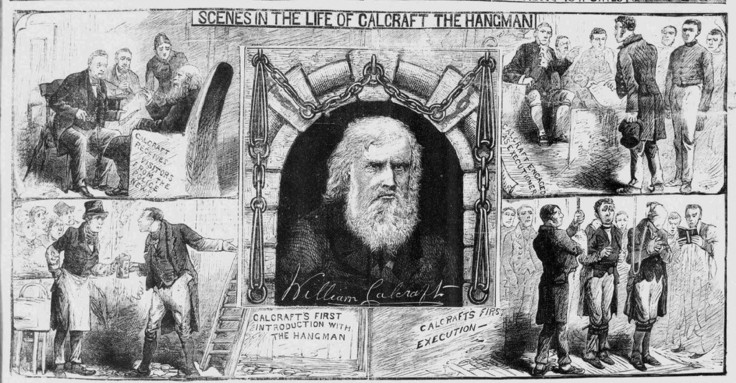
The prisoner was now “pinioned” by Calcraft (above) and as he was lead to the scaffold he could be heard praying loudly. Just before he was placed on the drop he shook hands with Major Bannister, the Governor of the Gaol, and with the chaplain. To the chaplain he made his last request that when he was upon the scaffold the chaplain would only utter the following prayer” Lord, into thy hands we commend the soul of this our brother, for thou hast redeemed him. Oh Lord, thou God of Troth.”
Forward said that his reason for this request was that he wished to “concentrate the whole powers of his soul and spirit into one mighty act of volition, and render himself up to God in the words mentioned.” The request was granted and as the chaplain began to speak, the drop opened and Forward “ceased to exist”.
The Maidstone and Kentish Journal describes the scene so:
The scaffold was hung round with black cloth to such a height that when the drop fell only just the top of the convict’s head was visible to the crowd. The body, after hanging an hour, was cut down and a cast of the head taken. In the afternoon the body was buried within the precincts of the gaol.
Edwin Ruck, the Registrar for the East Maidstone District, registered the death on Saturday 13 January 1866. The informant being the Governor of the Gaol, Major C W Bannister, the cause of death was stated as “Hanging for Murder’.
We cannot know if Stephen Forwood’s piety on the scaffold stood him in any stead in the place where he was heading, but we can state that it did absolutely no good to the four children and the woman for whose deaths he was responsible. Of the London sites connected with the case little or nothing remains. Where The Star Coffee House and Hotel once stood, at 21 Red Lion Street, we now find a nondescript, but doubtlessly very expensive block of flats. The Featherstone Buildings, where William White taught his grammar lessons, was totally destroyed by German bombs during the Blitz.
Just as tabloid newspapers, even in this digital age, still hope that a juicy headline will shift a few more copies, the ballad writers and hacks who turned out broadsides may have seen a temporary upsurge in sales, as they dramatised the terrible events of August 1865.


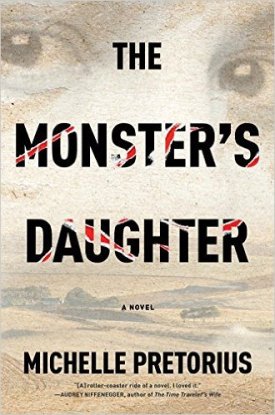 By this time in the novel, you will have had one or two diversions from the more-or-less present day (2010). The Boer War and its aftermath clearly play an important part in the narrative, and we look on queasily as a number of teenagers from the Afrikaans population are taken from their families and used in some kind of genetic experiments by an English doctor. As the century grows older two children, Tessa and Ben, who are the results of these experiments, strike up a relationship, but they then go their different ways.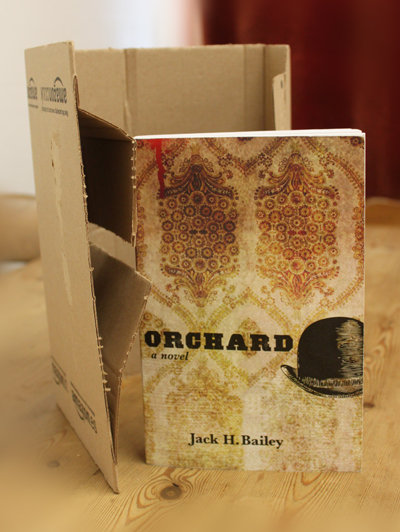

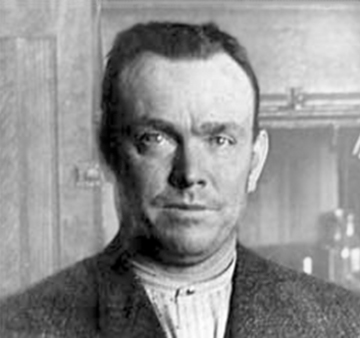 Orchard (right) had his mandatory death sentence commuted and he died in the state penitentiary in Boise, Idaho, on April 13, 1954, aged 88, over 48 years after his arrest. Jack Bailey’s novel is a fictionalised account of these momentous events, and will be available on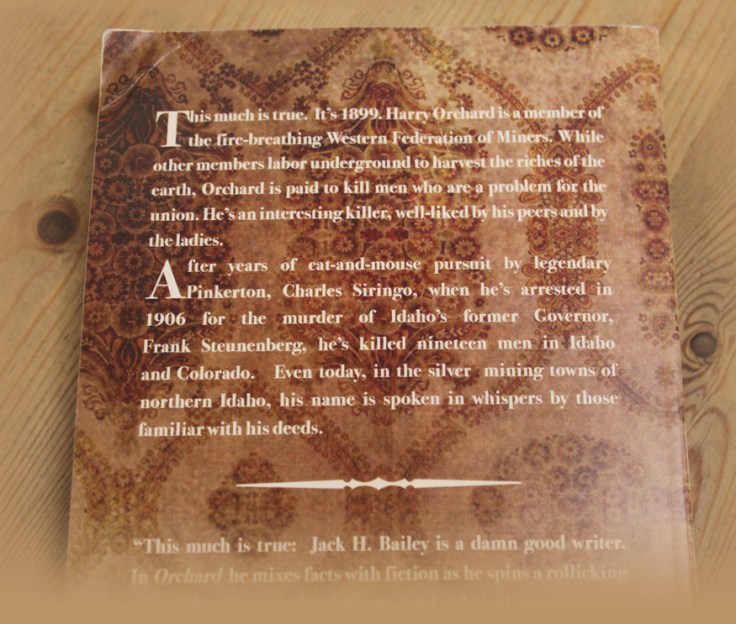
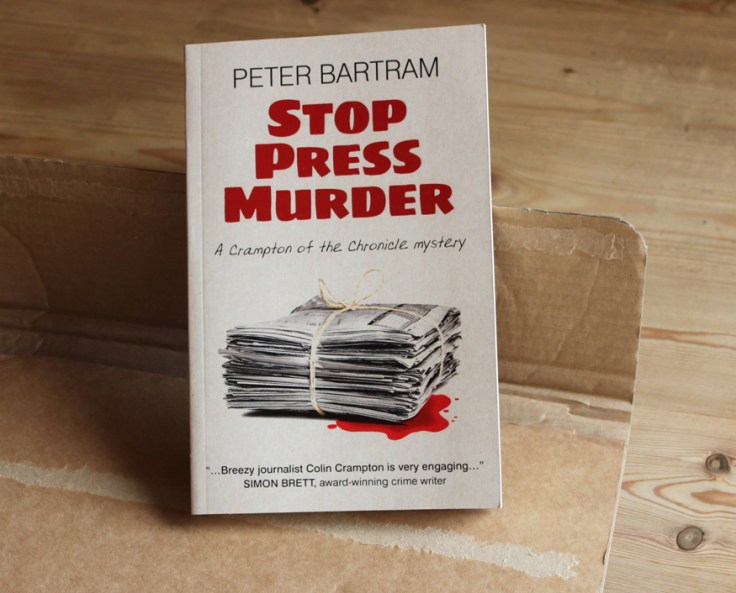

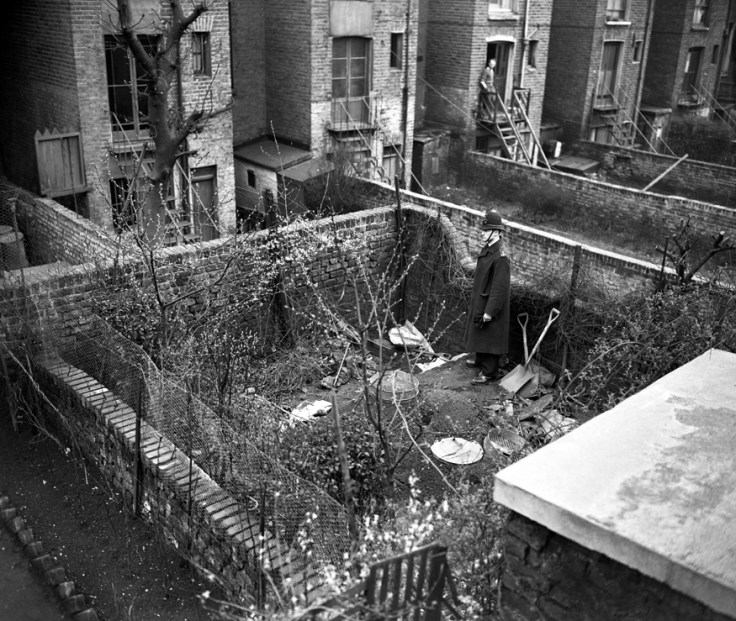
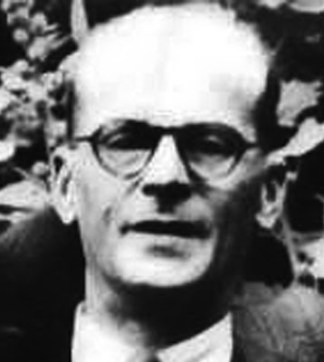 John Reginald Halliday Christie (left) moved to London in the 1920s, and developed into a career criminal, albeit of a petty sort. He had married Ethel Simpson in 1928, but they became estranged. They were reconciled, and set up home in a threadbare flat at 10 Rillington Place, Ladbroke Grove. It seems that Christie ticked a depressingly recurrent box on the checklist of serial killers. He was impotent under normal sexual circumstances, but seemed able to perform, after a fashion, with prostitutes.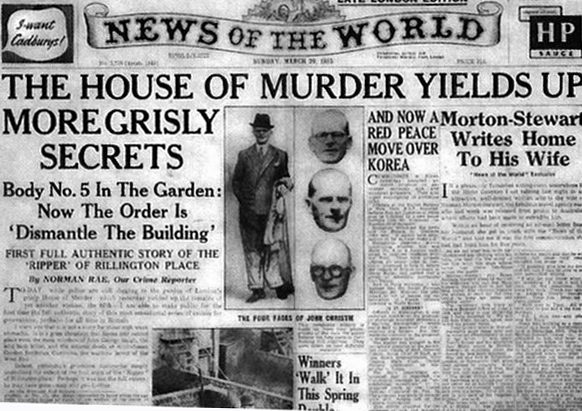


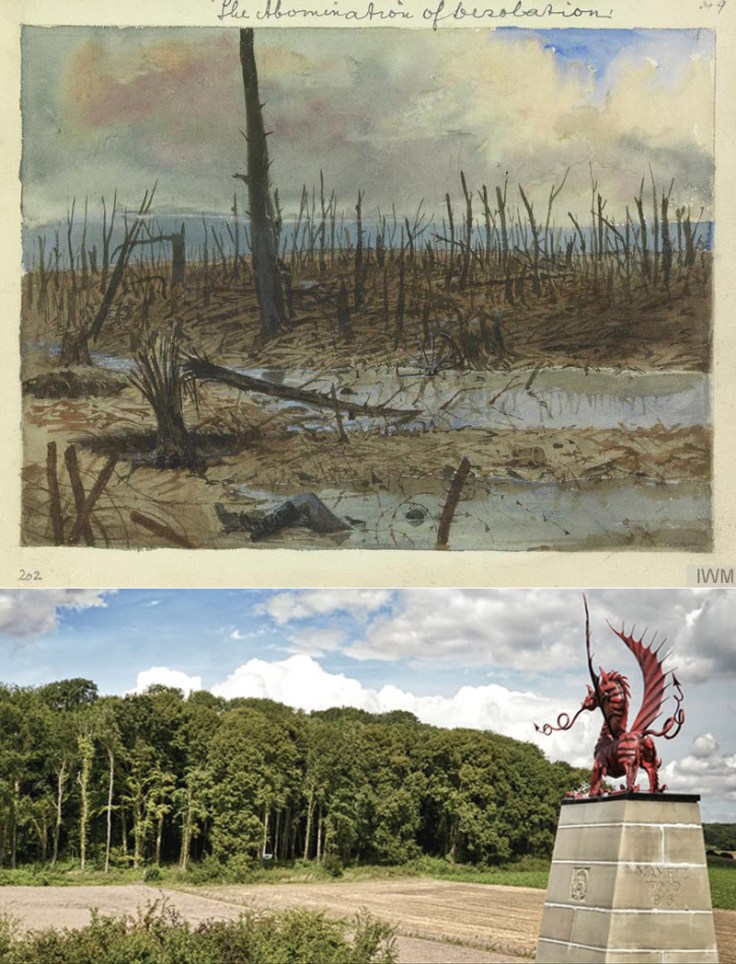
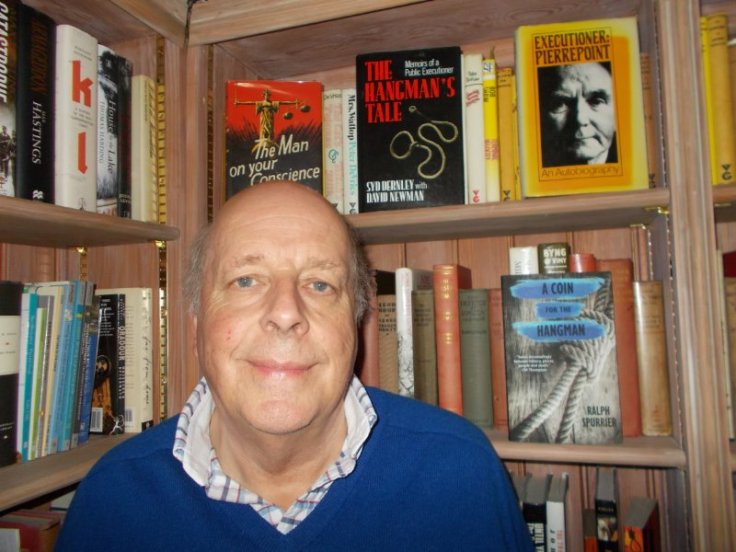
 A REAL LIFE SUSSEX BOOK DEALER called Ralph Spurrier has written a book. It starts in the present day, with a Sussex book dealer, name of – you guessed it – Ralph Spurrier, and Mr S has bought a job lot of books and bits. Their erstwhile owner is dead, and his bungalow and its contents are being sold at auction. The fictional Mr S – and probably his real-life doppelganger – make their livings by buying van-loads of books in the hope that somewhere in the pile of book club reprints and assorted dross there will be a first edition, something autographed, or another rarity which can be sold on to pay the bills.
 A LILY OF THE FIELD by John Lawton
 What noir enables me to do is isolate those genres and render them a little different, whether it be an homage to golden age comic books from the 1940s (Bullet Gal), or rebooting a medieval romance (Black Sails, Disco Inferno). The standards of noir – a certain sense of cynicism, the not-so-happy outcome, mood, drinks, and cutting dialogue – bring out the best in any such side-step.


 fullybooked2017