Search

fullybooked2017

Author

fullybooked2017

A retired Assistant Head Teacher, mad keen on guitars. Four grown-up sons, two delightful grandchildren. Enjoys shooting at targets, not living things. Determined not to go gently into that good night.

MURDER IN MT MARTHA … Between the covers

mimm-header


Some novels tread a well-worn path. The path is well-worn because it is safe, easy to follow, and will guarantee that the traveller arrives at his or her destination with the minimum of unnecessary effort. Crime fiction genres tend to operate like paths, with familiar landmarks and way points. Just occasionally a book comes along which jumps away from these genres and, in doing so, steps off the path and heads off into unknown territory.

jsMurder In Mt Martha is one such book. For those who have never visited Melbourne, Mount Martha is a town on the Mornington Peninsula, best known as what we Brits would call a seaside town. The ‘Mount’ is a shade over 500 ft, and is named after the wife of one of the early settlers. Author Janice Simpson (left)  has taken a real-life unsolved murder from the 1950s as one thread, and created another involving a present day post-grad student who is interviewing an old man about his early life in the post-war Victorian city. Simpson has woven the two threads together to create a fabric that shimmers, shocks and surprises.

Nick Szabo is a pleasantly feckless second-generation Australian, whose parents and grandparents were Hungarian. His source of anecdotes and atmosphere is the elderly Arthur Boyle. Arthur lives alone apart from his cat, and watches with a mixture of incomprehension and anger modern Melbourne streams past his window.
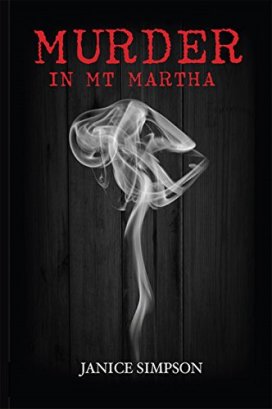
mimmSimpson keeps Szabo blissfully unaware that Arthur Boyle is a relative of Ern Kavanagh. Arthur only recalls him in fits and starts, believing that he was his uncle, but Simpson lets us into the secret as she describes Ern’s life over half a century earlier. The book opens with a graphic description of the brutal murder of an innocent teenager whose parents have reluctantly allowed her to travel alone to her first party. There is never any doubt in our minds that Ern Kavanagh killed the girl, but we are kept on a knife-edge of not knowing if he will get away with the murder.

I have to declare an interest and say that I lived and worked in Melbourne back in the day, and so the minutiae of suburban life, particularly the way people spoke, the obsession with horse-racing and, of course, the ‘footy’, struck a chord with me. I would like to think, however, that readers who have never been within a thousand miles of Australia will be convinced and drawn in by Simpson’s superb writing.

Aside from the murder mystery, there is a beguiling sub-plot involving Szabo, his determinedly Hungarian grandmother, and a visitor from Budapest who may be about to turn on its head their conception about their family tree. Again, history is embedded in the narrative. In 1956, when Melbourne hosted the Olympic Games, there was international turmoil when 48 Hungarian athletes chose not to return home. ‘Home’ was, of course, suffering under the brutal Soviet repression of a national uprising against communist rule.

The writing is beautifully nuanced throughout. The dialogue, whether it is contemporary or taking place in a suburban 1950s kitchen, zings with authenticity. This is not a long novel, being just short of 300 pages, but it is one that hooked me in very quickly, and I was genuinely sad to reach the end. That being said, there are few crime novels whose structure and substance allow them to be read through again at a later date, but I suspect that is one such novel.

Without, I hope, spoiling the conclusion to this remarkable book, it might be said that justice was eventually done, albeit in a roundabout sort of way. But then again, the last hanging in the state of Victoria was in 1967; depending on one’s views of capital punishment, a convincing argument could be therefore made that justice was not only blind, but bereft of its other senses too.


Murder in Mt Martha is already published and is available here.

ON MY SHELF … Redmond, Rickman and Tully

oms-december

redmondHighbridge, by Phil Redmond
To create one addictive TV soap might be considered just lucky. Creating two should evoke a few sharp intakes of breath. To be responsible for three…? Well. it ain’t gonna happen, is it? Yet it did, and with Grange Hill, Brookside and Hollyoaks under his creative belt, it was only a matter of time before write Phil Redmond (left) turned his hand to the crime fiction market. Set in the fictional town of Highbridge, Redmond spins a hypnotic yarn about two brothers who take different routes to avenge their sister’s death. Sean embeds himself in the cut-throat world of local politics where the law is ostensibly respected, but subverted in a hundred subtle ways. Joey goes Route One, and pursues his revenge within the criminal underworld where law and order are just random letters rearranged to make a word that no-one understands. Highbridge will be out in January, and you can pre-order here.

tulleyDown, But Not Out, by Gary Tulley
The first book in this series of crime novels set within the sweat and sawdust world of boxing was Seconds Out (March 2016) We were introduced to a gentleman – Paul Rossetti – who is described as “a plastic gangster”. The author (right) had a distinguished career as a coach and administrator in amateur boxing, but on retirement wrote two PI novels, Once Upon A Spook (2012) , and The Spook Who Flew Over The Cuckoo’s Nest (2013). He now follows up Seconds Out with another saga involving Paul Rossetti and a boxer described as ‘his nemesis’ – Ronnie Callaghan. The story bobs and weaves its way through the murky and arcane world of men who try to beat the living daylights out of each other – and the criminal types who control them outside the ring. Down, But Not Out is available now, and is published by Matador.

phil-rickmanAll Of A Winter’s Night, by Phil Rickman
I make no apologies about naming this as my biggest up-and-coming release. I have been hooked by the Merrily Watkins novels since public library days, when I first discovered The Wine Of Angels in 1998. I believe Rickman to be one of our finest writers, with his unrivalled sense of landscape and history, and his ability to scare the pants of me without resorting to cheap shocks. Rickman is a modest man and may demur at my comparing him to Hardy in his awareness of the power of landscape, but he must put his hand up and acknowledge that he is very much the equal of the great M R James in the way he conjures up dread and menace using everyday objects and happenings. The Reverend Watkins, Rector of Ledwardine and Diocesan Deliverance Consultant returns in a wintry tale, where she must cope with the unwelcome convergence of a bleak funeral and a gangland shooting. Expect shivers up your spine, more peril for Merrily’s vulnerable daughter Jane, and a story that combines ancient menace, modern crime, and a totally believable cast of characters. All Of A Winter’s Night will be out on 5th January.

THE VOICE BEHIND THE WORDS … Paige Elizabeth Turner

pet-banner

A writer, whether novice or experienced often reads or hears the words: ‘find your own voice.’ So, what does that mean to the uninitiated? Our ‘voice’ is our manner of forming our words into phrases and sentences, or ‘lexicology’ as it is more loosely described. We grow as readers grasping our list of favourite authors. Many say: ‘I want to write like Katie Fford, Ian Rankin, Lee Child’ – as the case may be. We might be influenced by idols, but never should we write like them. Why would we? Do we not want to personally stamp our own creations?

As a teenager, I penned small shots of poetry, or lines of words I believed was poetry. My definition of the time: if it rhymes, it’s a poem. I had no idea about meter and cadence and sonnets and haiku. I progressed through teen and adult novels, gradually acquiring comfort with structure and grammar – the key ingredients of our voice. Only when a literary agent advised against my particular style, did I become more concerned with voice.

Voice is the perspective by which we construct our material. Most writers will adopt either ‘first person’ (a direct ‘live’ account) or ‘third person’ (an overall view). Various novels lend themselves to one or the other. I prefer ‘first person’ because I offer, in the main, live activities of the novel’s lead protagonist. Narrative is constrained though, to ‘direct’ events only, because ‘Joe’ or whoever, cannot possibly detail events that occur beyond his sphere of vision or knowledge.

badMy crime / mystery novel, Beyond all Doubt, is written in third person, present tense. And it is adopting ‘present tense’ that saw me censored by the aforementioned literary agent. I was in a quandary: do I conform to a recommendation and lose the ‘voice’ of the work I had laboured over for many months, or do I back myself, take pride in my work and say: This is how I want to write. I believe in it.

Part of that ‘backing myself’ required selecting a publisher which would endorse my wish to publish my work in my own format. Sure, I am a debut author with no power to dictate how my work shall be produced, but Troubador Publishing has been magnificent in providing me a quality product with excellent support. Advance sales are rolling and reviews and feedback are most encouraging.

ad-townsville-300I do not write crime as one who has jumped on the current-trend bandwagon. I was raised in a home of The Sweeney and The Bill. On migrating to Australia as a child there was weekly doses of Homicide, Division Four, and Matlock Police. My enjoyment of the genre comes not from wanting to venture into life’s darker side, but from my penchant for solving problems and conundrums. I confess though, that youthful aspirations saw me as a leading criminal lawyer. It transpired that I had neither the aptitude nor attitude to devote seven years to the cause. Ironically, I later devoted just as many years to writing and literary studies!

My lead protagonist is Olivia Watts, a detective sergeant with Worcester CID, who later resigns in favour of commencing her own investigations agency. It is through Olivia I am able to role-play my legal dreams – but without the financial reward. I like to create killings and murders that are not quite so mainstream as a straight-out shooting. Without giving too much away, I have shrink-wrapped a head (while the victim is alive) and I have woven copper thread through a bath mat to electrocute a victim after removing herself from the shower. Where’s she going to step? Straight on to the bathmat!) I guess most authors seek a distinctive edge; we each want to develop a niche that we happily settle into. I have found mine and have woven three different murders into Beyond all Doubt.

I write to entertain the reader as I want to be entertained. I create lively characters with realistic lifestyles, idiosyncrasies and flaws. I often diverge to far-off tangents (although still plot-related) to afford the reader light relief, and perhaps make him/her wonder where the heck the story is going. Beyond all Doubt devotes six pages to an interesting sidetrack.

I believe in authenticity, so research heavily to ensure that even in a fictitious setting, I give the reader a factual account of events. These ideals have been carried through to Whisper of Death, due for release in June 2017. Production of the ‘Watts Happening? Investigations’ series is scheduled through to November 2018.

slider-pink-v2-2

THE DOMINO KILLER … Between the covers


Domino header

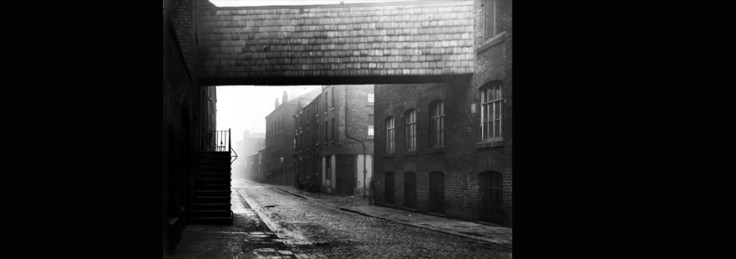
Manchester, more than any other English city, is a landscape of contrasts. These days, the architectural relics of the industry which made the city rich and powerful are either ruins, museums or tastefully converted executive apartments. The brash new buildings which replaced the huddled Victorian slums are themselves now urban hell-holes. Despite the relentless bustle of a big commercial city, the lie of the land means that you can still turn a corner or drive up a hill and glimpse the brooding moorland to the east.

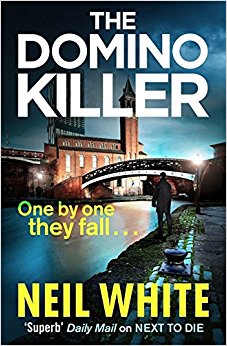
Domino KillerIt is in Manchester that author Neil White introduces us to an unlikely crime fiction duo. Not Inspector and Sergeant, not toff and manservant. not analytical genius and bumbling foil, but brothers. With a difference. Sam Parker is a policeman, while his brother Joe has opted to on the other side of the tracks. Not a criminal himself, you understand, but a solicitor who earns his daily bread by being summoned to police stations across the city to try to advise felons on what they should and shouldn’t say in the interview room. The authenticity of Joe Parker as a character is boosted by the fact that Neil White, as well as writing CriFi bestsellers, is actually a criminal lawyer.

Joe and Sam share a terrible family history. Their teenage sister Ellie was murdered by a serial killer. Neither man escapes the torture of her memory brings, but Joe’s grief is special. He actually saw Ellie’s killer before her death but chose to ignore the threat, and has been too ashamed to admit his negligence. Now, a fresh killing re-opens old wounds and old cases, and the Parker brothers are sucked into the resulting vortex.

WhiteThe plot of The Domino Killer is full of scarcely plausible coincidences, but  Neil White (pictured right) is a good enough writer to plough through these potential blockages and delivers a novel full of drama, suspense and prose which hooks the reader in, and doesn’t let go.

 We learn the identity of the bad guy quite early on. As readers, our main challenge is to find out how the killer can be brought to justice with the minimum damage to the careers of Joe and Sam Parker.

Both the geographical setting and the sympathetic portrait of the conflicted brothers are totally plausible. Those of us who are a certain age will know full well the significance of the nearby Saddleworth Moor, and the awful secrets it still holds. The killer in this case does not quite sink to the depravity of Brady and Hindley, but he is bad enough. For him, the initial killing is but a means to an end. The book’s recurrent metaphor is that the murdered girls are simply large stones thrown into a pond, and it is the consequent ripples which provide the real stimulus for the killer’s twisted mind.

The gloomy warehouses of Ancoats, bisected by dark abandoned canals, are the backdrop for the exciting climax of this novel, which is the third in the series featuring Sam and Joe Parker. It is published by Sphere, and is available now.

Neil White’s website is here, and you can also follow him on Twitter by clicking the icon.

Twitter-icon

THE POSTMAN DELIVERS …Beyond All Doubt

evesham-header

“OK GUV’NOR – IT’S A FAIR COP …you got me bang to rights…” I don’t suppose fictional villains have uttered those words for many years, but I have to confess my personal guilt and push my wrists forward for the click of steel as the handcuffs snap to. My crime? (Takes a deep breath..) I am addicted to crime fiction set in England. Well, there it is. Out in the open. People are supposed to feel better after confession, aren’t they?

Many of you may have suspected this for some time. My enthusiasm for Jim Kelly, Christopher Fowler, Phil Rickman (well, OK, I know Merrily sometimes strays into Wales in the course of her priestly duty..) Dorothy L Sayers, Arthur Conan Doyle, Graham Hurley, Mark Billingham, Chris Nickson, Nick Oldham, and many more is, I hope pretty obvious. I retain a healthy respect for dark deeds further to the north, and yield to no man in my adoration of Harry Bingham’s Welsh lass, Fiona Griffiths. A corner of my heart is forever Los Angeles when it comes to PI novels, and the humid passions of The Deep South as described by James Lee Burke and Greg Iles will always set my pulse racing.

But it is England, my England for me, when it comes to a crime read that will force its way to the top of my reading pile. Should someone have the temerity to conduct an autopsy on my mortal remains when I Cross The Bar, they may well find two words engraved on my heart. The Midlands. The land of my birth, the home of Shakespeare, Philip Larkin, Arnold Bennett, The Archers – and the Crossroads Motel.

bad1There are few places more English than the lovely town of Evesham, the setting for Beyond All Doubt, by local author Paige Elizabeth Turner. The River Avon adds majesty to the Worcestershire town, but can also yield unpleasant discoveries, as when the bloated corpse of Juanita Morales is finally released by the riverbed weeds, much to the horror of passers by, and to the vexation of local police officers DI Marchant and DS Watts.

Beyond All Doubt, which is on sale now, has all the elements of a police procedural combined with a tense legal drama, and the bonus of a wonderful geographical setting. If you are lucky enough have a decent local bookseller you can find the book there and it is, as ever, available on Amazon. If you want to find out more  about the author, you can go to her own website by clicking the image below.

pet-banner

COMPETITION!

screen-shot-2016-12-11-at-21-27-30

mercy-killingCOMPETITION – Win a copy of Mercy Killing by Lisa Cutts, and read how the apparent murder of a registered sex offender places huge strains on the community, and asks the local police force a big question about where their loyalties lie; to local people, or to the letter of the law? You can read our first take on Mercy Killing here. The last Fully Booked competition of 2016 challenges you to two tasks.

TASK ONE – open the Advent calendar window for Monday 12th December.

TASK TWO – After you’ve enjoyed the beautiful music, email Fully Booked with the name of the day’s featured author in the subject box. Email address for entries is;

fullybooked2016@yahoo.com

There’s no need to put any further details. There will be a draw of all the entrants, and the winner will notified in the usual way. This time we are only posting to mainland UK, Northern Ireland and the Irish Republic. The competition closes at 10.00pm GMT on Sunday 18th December.  Rules, as ever, below.

RULES

  1. Competition closes 10.00pm London time on Sunday 18th December 2016.
  2. One entry per competitor.
  3. All correct entries will be put in the proverbial hat, and one winner drawn.
  4. The winner will be notified by email, and a postal address requested

HAPPY CHRISTMAS …. from David at Fully Booked

Here’s the FULLY BOOKED Christmas card for 2016. There’s also a song to go with it!

song-link

christmas-card-small

THE HAMMERSMITH MURDERS

index

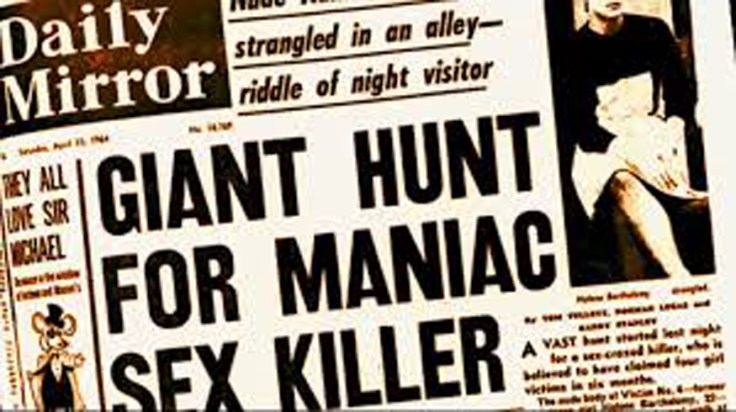
The dark phantom of Jack The Ripper, whoever he (or she) might have been has haunted the world of crime fiction and True Crime writing for over 130 years. The catchy four-syllable nickname, probably cooked up by newspaper hacks in the first place, is never long absent from newspaper copy when serial killings have to be written about. Peter Sutcliffe, of course, became the Yorkshire cousin of the original killer, but headline writers in 1960s London plumbed new depths of bad taste and lack of originality when they covered a series of murders where the victims were all engaged in what is now primly known as “The Sex Industry”. Their dire effort? Why, Jack The Stripper, of course!

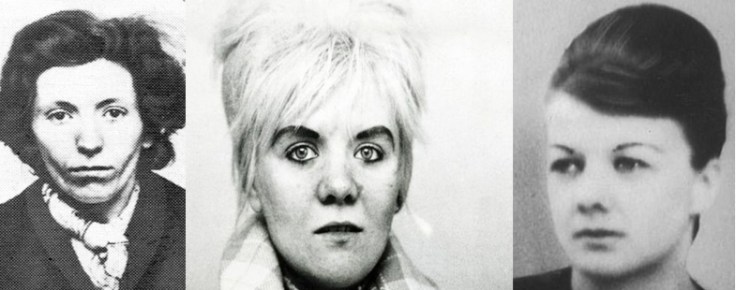
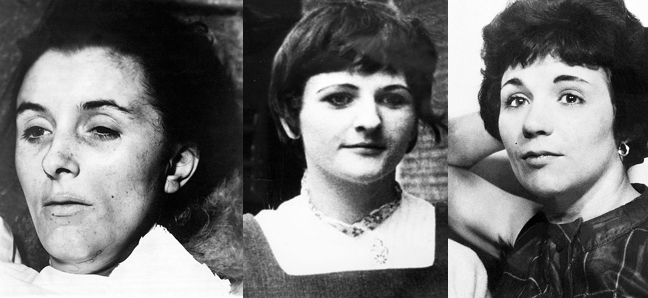
There are certainly similarities between the Hammersmith Murders and the Whitechapel killings. The victims were all women. They had all, at some point, sold their bodies for money. The locations, although not as tight together as those in 1888, were within a recognisable geographical area. There were ‘canonical’ victims; six in fact, as opposed to the generally accepted quintet during the luridly titled Autumn of Terror. There was subsequent talk of a well-known celebrity being involved. The case has inspired both True Crime reconstructions of the events, and novels based on the killings. Finally, of course, the killer was never found, despite subsequent theories claiming to finally identify the perpetrator. The Hammersmith victims were as follows:

123

Hannah Tailford:
Originally from Northumberland, Tailford was found dead on 2 February 1964 near Hammersmith Bridge. She had been strangled and several of her teeth were missing; her underwear had also been forced down her throat. She was age 30

Irene Lockwood: 26 year-old Lockwood was found dead on 8 April 1964 on the foreshore of the Thames, not far from where Tailford had been discovered; their two deaths were linked and police realized that a serial murderer was at large. Kenneth Archibald, a 57-year-old caretaker, confessed to this murder almost three weeks later, but his confession was dismissed due to inconsistencies in his version of events, and because of the discovery of a third victim.

Helen Barthelemy: Barthelemy, originally from Blackpool, was found dead on 24 April 1964 in an alleyway in Brentford. Barthelemy’s death gave investigators their first solid piece of evidence in the case: flecks of paint used in motor-car manufactories. Police felt that the paint had probably come from the killer’s workplace; they therefore focused on tracing it to a business nearby. Barthelemy was 22.

456
Mary Flemming:
Flemming’s body was found on 14 July 1964 in a dead-end street in Chiswick. Once again, paint spots were found on the body; many neighbours had also heard a car reversing down the street just before the body was discovered. Mary Flemming was 30 years old.

Frances Brown: 21 year-old Brown was last seen alive on 23 October 1964 by her friend, fellow prostitute Kim Taylor, before her body was found in a car park in Kensington a month later on 25 November. Taylor, who had been with Brown when she was picked up by the man believed to be her killer, was able to provide police with an identikit picture and a description of the man’s car, thought to be either a Ford Zephyr or a Ford Zodiac.

Bridget O’Hara: O’Hara, also known as “Bridie”, was found dead on 16 February 1965 near a storage shed behind the Heron Trading Estate. She had been missing since 11 January. Once again, O’Hara’s body turned up flecks of industrial paint which, incredibly, were traced to a covered transformer just yards from where she had been discovered. Her body also showed signs of having been stored in a warm environment. Bridget O’Hara was 28 years old.

BOOKS ON THE CASE

gpflsGoodbye Piccadilly, Farewell Leicester Square (Anthony LeBern, 1966) is very loosely based on the Hammersmith Murders, and was later filmed as Frenzy (with many changes) by Alfred Hitchcock in 1972. The book title comes, of course, from the celebrated song It’s A Long Way To Tipperary.


jack-of-jumps
Jack of Jumps
( David Seabrook, 2006) is a dazzling mixture of fact, fiction, contemporary accounts of the 1960s, real characters, imaginary conversations and a certain amount of psychogeography after the manner of Iain Sinclair. Seabrook also features Freddie Mills, who died in his car, parked in a London alley, apparently from a self inflicted gunshot.

bad-pennyBad Penny Blues (Cathi Unsworth, 2009) sticks much closer to the original events, and features several thinly disguised real-life celebrities of the time, including the artist Pauline Boty, David ‘Screaming Lord’ Sutch, Joe Meek, crooner Michael Holliday, and ex-boxer and TV personality Freddie Mills (pictured below). The connection to the crimes is provided by a young copper who is drawn into the circle of Notting Hill artists and bohemians while his day job is to try and find the killer.


unnamed

DEATH IN WINTER … Between the covers

AUTHOR
This is the sixth novel
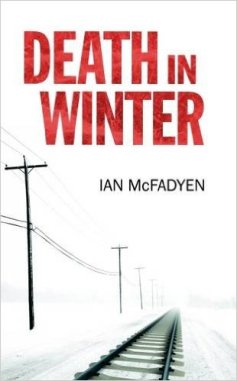
in Ian McFadyen’s popular series featuring DI Steve Carmichael. We pick up the story just a few days before Christmas, and rural Lancashire has been hit with weather conditions which may be delightfully seasonal for children counting down the sleeps until The Big Day, but for tired coppers trying to find a missing woman, the thick snow is just a hindrance.

diwHayley Bell has not returned home after a night out with some lady friends, and husband Duncan is seriously concerned. Mr Bell is a disagreeably pompous fellow with some serious affectations, such as calling four rooms in his grand house after the seasons, and decorating them accordingly. Carmichael and his team, however, have no reason to suspect Duncan Bell – despite his unpleasant manner – of having anything to do with his wife’s disappearance.

CCTV footage from the railway station where Hayley Bell said goodbye to her friends on the fateful night sheds no light on the affair. In fact, the images pose a conundrum similar to a locked room mystery. Hayley Bell boarded the train, but apparently never left it. As Carmichael interviews the other members of Hayley Bell’s Reading Club, he begins to suspect that their activities may have involved something other than deciding upon the Book of The Month.

Meanwhile, chez Carmichael has been blessed with the arrival of his self-centred and ancient Aunt Audrey, but he secretly says a prayer to the gods when an astonishing development in the search for Hayley Bell – and a murder – enable him to get away from home and back to the relative sanity of the police station. The Aunt Audrey situation provides a gentle humorous counterpoint to the increasingly dark and sinister theme of the Hayley Bell disappearance.

Eventually, just as matters are being wrapped up, despite Carmichael’s misgivings that they are missing something crucial, a chance remark by the dreadful Audrey, after she has been earwigging on a private conversation between Carmichael and his wife, removes the scales from the Inspector’s eyes, and he recalls his team from their turkey sandwiches and games of Scrabble to bring about a dramatic solution to the case.

Detective Inspector-led police procedurals are two a penny in British crime fiction, so why did I enjoy this one so much? Firstly the book sticks to the three classical unities of action, place and – even if it is stretched beyond Aristotle’s recommended 24 hours – time. The whole thing is nicely wrapped up over the days immediately before and after Christmas. There is a pleasant old fashioned atmosphere about the story, even though it is obviously the present day, and even one of the murder weapons comes straight off the Cluedo board.

Lovers of serial killing, dismembered corpses, misanthropic coppers with shattered personal lives and a drink problem will have to look elsewhere for their entertainment. Those who like a good whodunnit with credible characters, a wintry atmosphere where the snow crackles beneath the feet and an ingenious plot should enjoy Death In Winter as much as I did. It’s published by The Book Guild, and is available in paperback and Kindle.

Blog at WordPress.com.

Up ↑