
Search

fullybooked2017

Month

August 2026

DEATH ON THE PIER . . . Between the covers

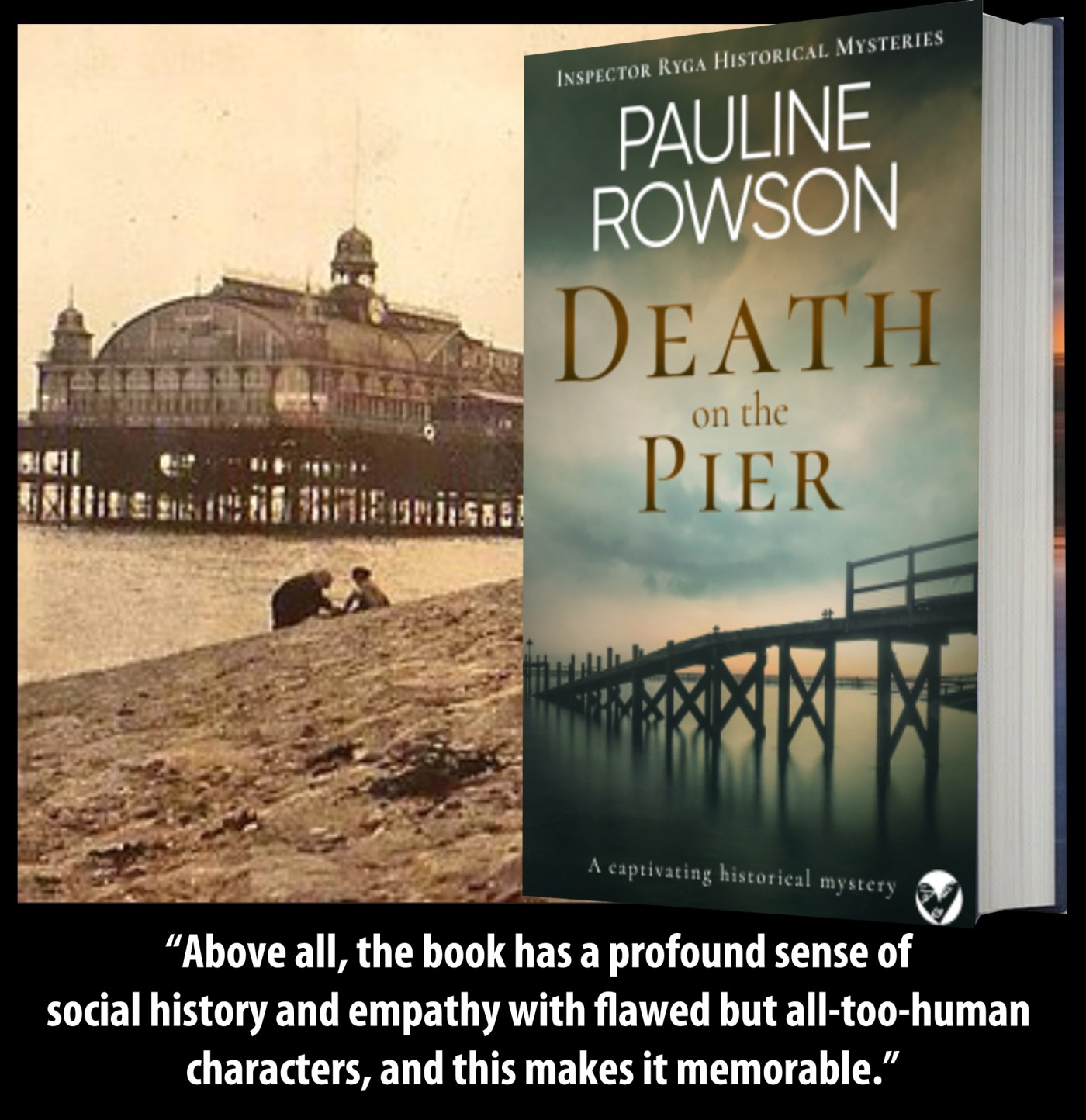
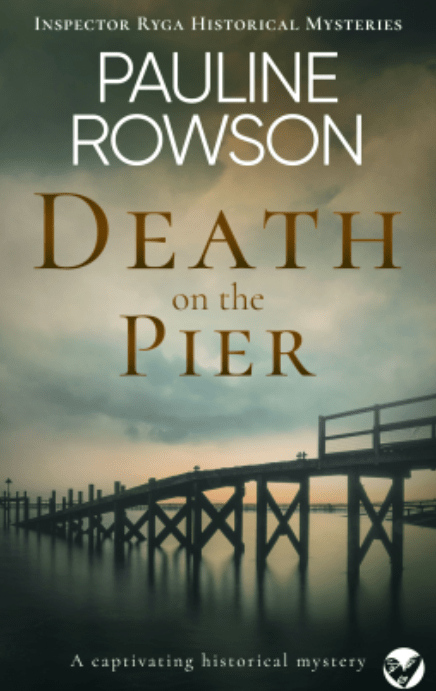
I hadn’t read a Pauline Rowson novel for years, but remembered that she is well known for her love of mysteries set in coastal locations. Here, in Death on the Pier, we are in a 1951 England with a recent war won, but with most ordinary people still struggling to support the costly yoke imposed by being, at least nominally, victors. Everyone, including the Metropolitan Police’s Detective Inspector Alun Ryga, still carries ration books. He is sent on an undercover mission to what was then ‘East End on Sea’, the brash resort of Southend.

A retired naval officer has found a bloodstained corpse in a municipal shrubbery. He goes to seek help and returns with a police constable, but there is no body, nor any sign that one was ever there. Is Clive Cottinglea a fraud, deluded, or part of some wider conspiracy? Posing as a tourist, Ryga befriends Cottinglea and senses that many things are not adding up. When Cottinglea is found dead in his deckchair on Southend’s celebrated pier, to quote our most celebrated crime writer, “the game is afoot.”

The dead man was clearly short of money, and his claims of being a veteran of the Battle of Jutland and skipper of one of Dunkirk’s heroic small boats have not convinced people at the local yacht club. When Ryga, literally over Cottinglea’s dead body, is forced to reveal that he is a London copper, Pauline Rowson has set the stage for a fascinating mystery.

The plot becomes deliciously complex
. As Ryga waits for the post mortem to reveal just how Cottinglea died, the truth about the man’s real life is laid bare. As for being a Commander, the only people he ever commanded were a few housemaids and cooks. Cottinglea was a butler at a nearby stately home, and had been for some years. When, just months earlier, the Lady of The Manor had finally given up the struggle of maintaining Tyide Hall and recreating its 1920s halcyon days, Cottinglea had been paid off and given a decent reference, while the noble Lady sold the house and grounds to developers and flew off to America with the proceeds.

Cottinglea had enjoyed a brief but uncomfortable few days as a guest member of the local yacht club, but why had he been signed in by senior member Admiral Burnham? And why is Burnham now missing?

On one level, this is a standard murder mystery, albeit a very good one, but there is much more. Through the perceptive gaze of Ryga, Pauline Rowson gives us moving and compassionate portraits of ordinary people fighting an uneven battle against life’s vicissitudes.There is Miss Bard, the seemingly severe landlady of The Marigolds guest house. Once a bright and attractive woman, she is now an ageing spinster, saddled with debt but maintaining a brave face. Her carpets and furnishings are shabby, but scrupulously clean, and all that remains to her of a former better life are good manners and a sense of decency. Then there is Mrs Burnham, terminally Ill and virtually deserted by her husband who lacks the moral courage to cope with her illness face to face. Again, she remembers better times, but faces what is left of her future with quiet dignity.

We are also allowed
to be observers of a very different England from the place we inhabit today. We meet men and women who, in one way or another, helped ‘win the war’. But what did they win? From individual workers, shopkeepers, pensioners and public servants right up to those who hold the government purse strings, there is a sense that, to quote Derek Raymond, the crust is on its uppers. I cannot claim to remember 1951, as I was just four years old then, but the legacy of those post-war years was a defining part of my later childhood.

Of course, Ryga gets to the bottom of the mystery, and we are presented with a very entertaining – if rather involved – solution. Above all, the book has a profound sense of social history and empathy with flawed but all-too-human characters, and this makes it memorable. Readers were introduced to Alun Ryga in Death In The Cove (2023) and this, the sixth in the series, will be published by Joffe Books on 26th August.
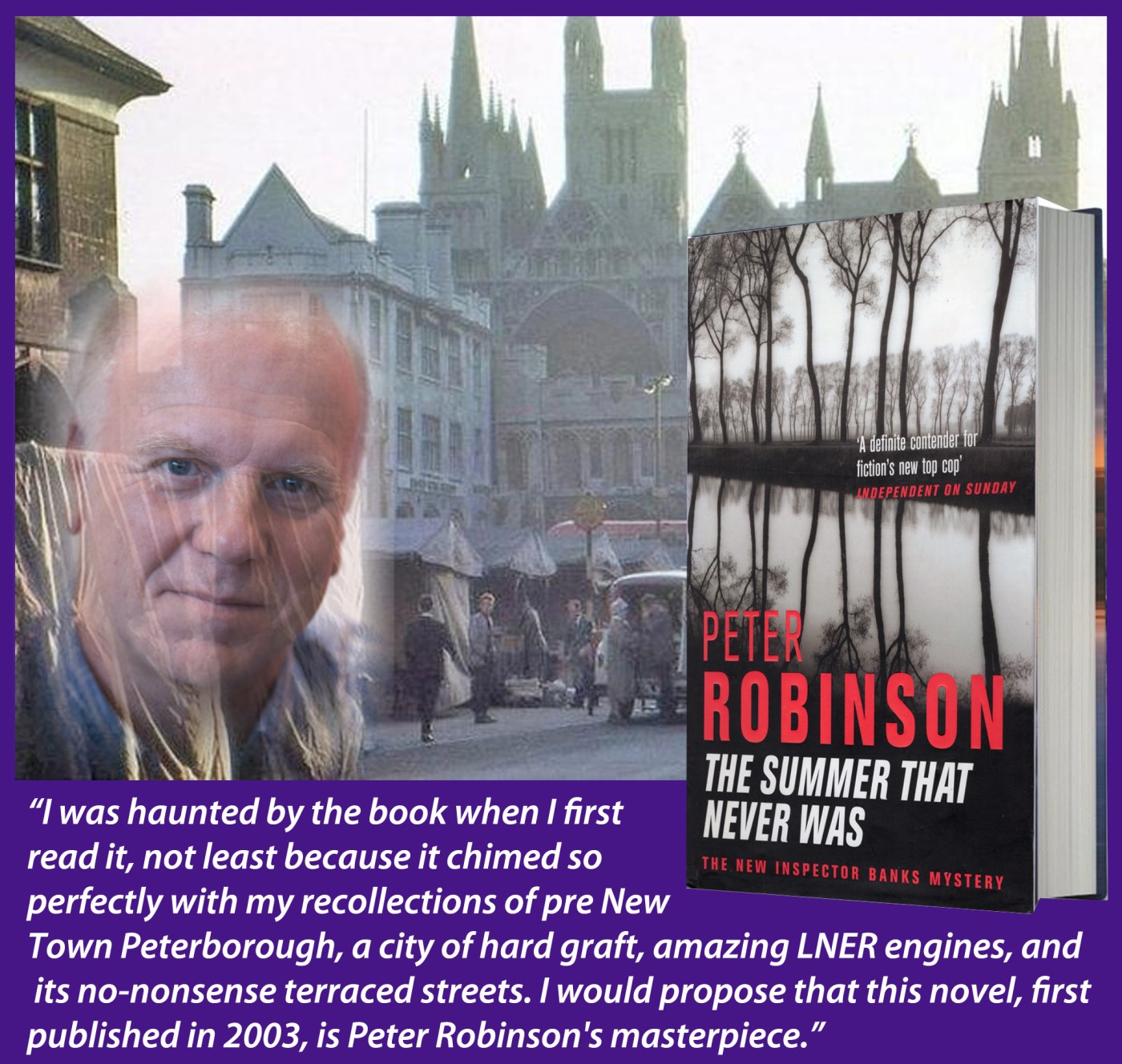
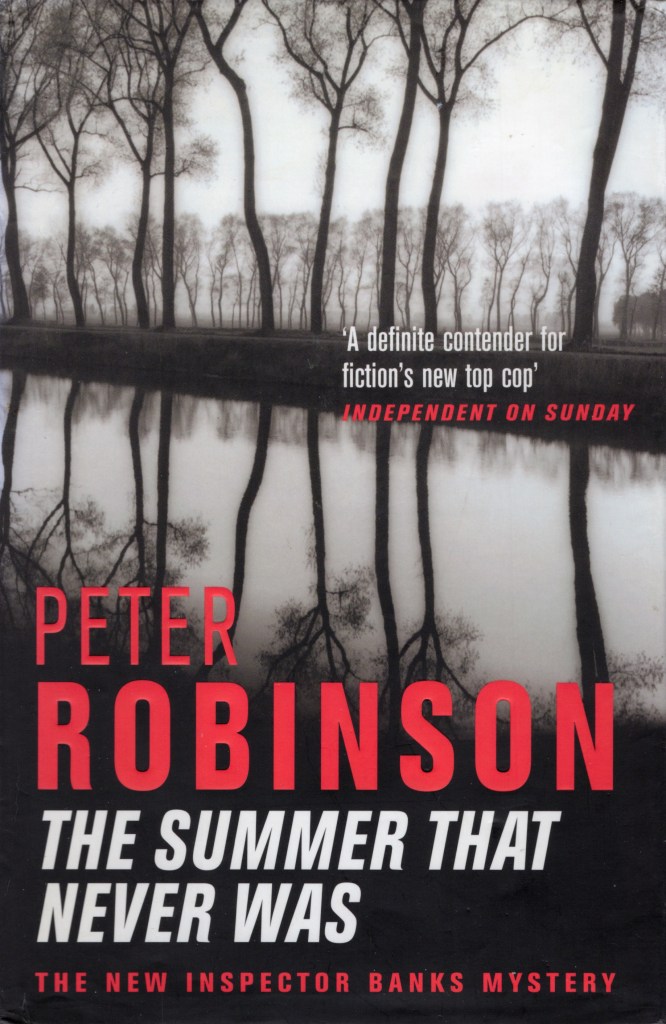
PAST TIMES – OLD CRIMES . . . The Summer That Never Was

Yes, I know, I am cheating here. My PT-OC limit was supposed to be 2000, but I am making an exception here. After all, what is three years in a lifetime? In the lovely song Just A Song At Twilight, there is a phrase, “Once in the dear dead days beyond recall..”. I had those days, and back then, before publishers and authors trusted me with free copies of their novels, I was an inveterate user of our local public library. I mostly borrowed crime fiction, and I came to love the books of writers like Phil Rickman, Nick Oldham, Jonathan Kellerman, Jim Kelly and Peter Robinson. I quote another memorable song, “Some are dead and some are living..” and, sadly, Peter Robinson is one of the latter.

He is best remembered for his Inspector Banks novels, and I have chosen one of those for this feature. Banks, of course, does his coppering in the Yorkshire Dales, but this story takes him back to his childhood in Peterborough. Peterborough is, in some ways, a strange place. It has a majestic cathedral, was once in Northamptonshire, but now seems to be in Cambridgeshire. Like Banks in the novel, I remember it in the 1960s, when it was a grimy little town, surrounded by brickworks but, even then, a vital railway hub. I knew it from my days as a trainspotter, hair excessively Brylcreemed, and with a school satchel packed with sandwiches, fizzy pop and Ian Allen train books. Then came Peterborough’s designation as a New Town, with the massive expansion turning it into a kind of Milton Keynes, all roundabouts and fancifully named new housing estates.


Strangely, there is nothing in online information to suggest that Robinson was a youngster in Peterborough (he was born and brought up in Leeds) but then novelists make us believe things that actually never happened – that’s what they are good at. Here, Robinson creates a brilliant counterpoint, like two independent melodies dancing along together in perfect harmony, Banks, of course, is the link.

Down in Peterborough, a skeleton is discovered on a building site. It is that of a childhood friend of Banks, who disappeared when he was a teenager. Graham Marshall disappeared one morning while doing his paper round and, despite an extensive police investigation, no trace of him was ever found. Back in the present day, Banks’s offsider and onetime lover, Annie Cabbot is investigating the disappearance of Luke Armitage, a brooding and rather troubled youngster with celebrity parents. After what appears to be a fake kidnap-ransom demand, his body is found in a moorland tarn.

For Banks, with the aid of a resourceful Peterborough copper Michelle Hart, the solution to Graham Marshall’s murder involves a painful dismantling of what he remembers of an innocent friendship. The death of Luke Armitage involves individuals who, while innocent of malice, are certainly guilty of several of the Deadly Sins.

Banks, in his determination to secure justice for both boys, comes to realise that the boundaries between victim and perpetrator, between law guardian and law breaker can sometimes be blurred almost into indistinction. Faulkner said, in his memorable line from Requiem For A Nun, “The past is never dead. It’s not even past” and here, Banks’s return to the unremarkable Peterborough housing estate of his youth brings about not only the warmth of nostalgia brought about by the magazines and pop songs of his teenage years, but something darker and much more discomforting. I was haunted by the book when I first read it, not least because it chimed so perfectly with my recollections of pre New Town Peterborough, a city of hard graft, amazing LNER engines, and its no-nonsense terraced streets. I would propose that this novel, first published in 2003, is Peter Robinson’s masterpiece.

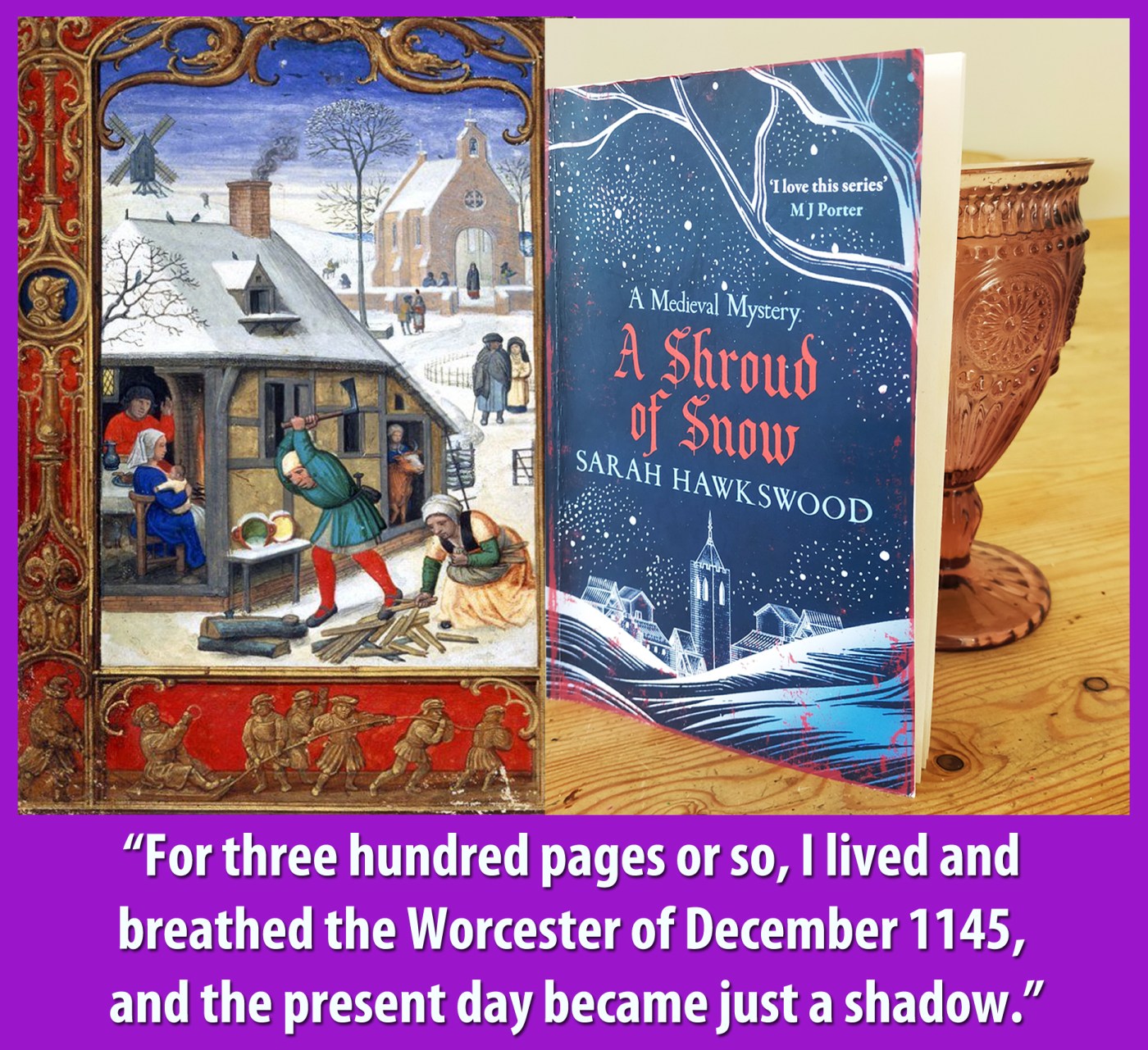
A SHROUD OF SNOW . . . Between the covers

Worcester, December 1145. Snow has dusted the frozen mud and filth of the streets, while the fringes of the city’s great artery, the River Severn, are beginning to freeze. Merchant Hamelin Isenmongere, apparently a benign and compassionate man from Gloucester, is found dead on the quayside, the side of his skull stove in by some heavy implement. No-one has a bad word to say about him. He was benevolent to the poor – including the child of the streets Godfilde (who will later play a significant part in the novel’s finale) – generous to the church, and dealt fairly with fellow traders in the city.

We are frequently reminded in this series that along with the turn of the seasons, and the implacable retreat and return of the sun, this was a society within which religious observance was deeply embedded. Early in the piece we are told that this is the third week of Advent. This season of the church’s year is a precious and significant time largely ignored these days, but one previously associated with great music and a sense of devotion.. A priest tells us that a woman, “did not come to Vespers, for her sons are still very small, but she came to Matins most days, and None sometimes.”

I am something of a lapsed Anglican and, of course, the religion of 12th century Worcester was the Roman Catholicism that was to endure for another four centuries, but the way in which the lives of rich and poor are underpinned by religious observances, both great and small is, somehow, comforting.

Readers of both authors may be surprised to find me likening Hawkswood to the great Noir writer Derek Raymond. The latter’s nameless sergeant, a relentless hunter of killers, does so as a service to the dead. Here, Bradecote, hunched over the body of a victim, whispers,
A price will be paid for this, mistress.
Like his twentieth century counterpart, Bradecote will avenge the dead, and he dedicates his labours to the lives – both noble and humble – that have been ended by acts of violence.

The English civil war of the 12th century smouldered – and occasionally burst into flames – for almost two decades. Stephen and Matilda were both grandchildren of William the Conqueror, and each claimed the throne. It has been in the background for all the Bradecote books, but here the question of dealings between noble supporters of the rival factions raises its head, causing Bradecote and his sergeants to tread very warily.

A particularly significant player in the civil war was Robert, Earl of Gloucester, the illegitimate son of Henry 1st and a fervent supporter of Matilda, and the city of Gloucester is just under 30 miles downstream in the river from Worcester. I don’t know if the Norman French version of cherchez la femme differs significantly from the modern version, but Hamelin’s widow, the Lady Sybilla seems central to the story. How genuine is her grief for her murdered husband, and what is her relationship with the boatman Ragnaill of Duiblinn? Bradecote and Catchpoll eventually confirm that espionage is at the centre of the story, but not before there are more deaths.

Any assiduous historical novelist can do the technical research on the customs, sounds, smells, clothing and political structure of the period in which they set their story. Weaving all these details into a convincing tapestry is something else all together. This is where Sarah Hawkswood (top left) is in a class of her own. For three hundred pages or so, I lived and breathed the Worcester of December 1145, and the present day became just a shadow. Like any murder mystery, A Shroud of Snow is riven with death, but it ends beautifully, just days of the most important Nativity of all, with a birth. It will be published by Allison and Busby on 20th August. For reviews of earlier novels in the series, click the author image.

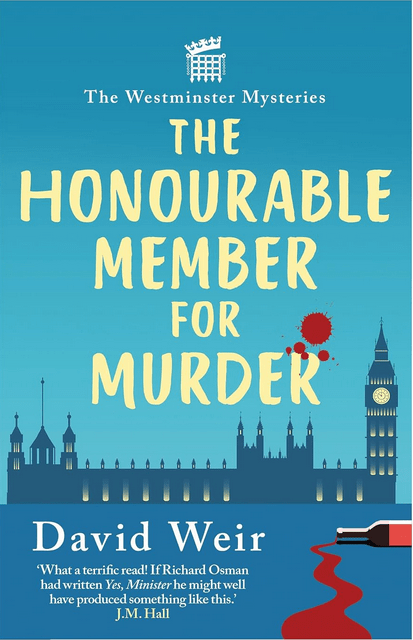
THE HONORABLE MEMBER FOR MURDER . . . Between the covers

Maxwell Murray is personal assistant to Eliot Oakcroft MP, a handsome but utterly vacuous man with political ambitions that are routinely ignored each time there is a cabinet shake-up. The pinnacle of his career thus far is more of a gentle hillock – he is chairman of the All-Party Parliamentary Group for miscarriages of justice, an appointment mainly designed to keep Oakcroft out of the prematurely grey hair of the Chief Whip.

The body of Charlie Cley is eventually found in a Norfolk cottage. Problem is, though, he did not die three years ago when he was first reported missing, but more like three hours earlier – and from a glass of red wine laced with poison. Rebecca Cley is released from her prison cell on the perfectly reasonable grounds that when her husband died, she was under lock and key in HMP Norton St Meals.

What sort of a hero is Max Murray? Can he carry the novel’s narrative on his back for 300 pages? The short answer is – no. He is too honest, too conciliatory and too hesitant. He needs the buccaneering instincts of Diana and Ronni to drag him from the calm waters of the harbour so that he can challenge the criminal Blackbeards and Captain Kidds out there on the open ocean. Is this Cosy Crime? If one applies the AI definition, “a sub genre of crime fiction without sex, or overt violence, typically featuring an amateur sleuth solving a puzzle or murder in a close-knit or picturesque community, emphasizing puzzle-solving, humour, and with a satisfying resolution where order is restored.’ then, yes, I suppose it is. The humour here is sharp enough, and there is just enough cynicism to lift the novel above the mire of elderly ladies cycling around Cotswold villages trying to discover who killed the local Master of Foxhounds. Such books were dismembered and cleverly eviscerated by the late, great Colin Watson in his excellent book Snobbery With Violence.

The crime(s) are solved eventually. more by the perscipacity of Diana than that of Max.I have a couple of minor quibbles; the last time I went to Fincham, the pubs were quite decent, and there was no sign of the breeze-block monstrosity featured here; as anyone who holds a firearms license will tell you, a rifle and a shotgun are two quite different things. That aside, I enjoyed the book, and found it an entertaining and witty read.

David Weir was born and brought up in Edinburgh where he played a lot of rugby and sang for the Pope in a national choir at Murrayfield and in Glasgow. He was a newspaper reporter for 11 years in Fife, Hampshire, Norwich and London interviewing among others Harry Secombe, Ralph Fiennes and a lot of politicians. Then, he went to work at the House of Commons advising MPs from all parties on constitutional stuff and arcane parliamentary procedures as well as running teams reporting on the Treasury, justice, prisons, courts, migration, policing, and Northern Ireland. This is his first novel, and it will be published by Allison & Busby on 20th August.

FIVE THINGS I SEE . . . Between the covers

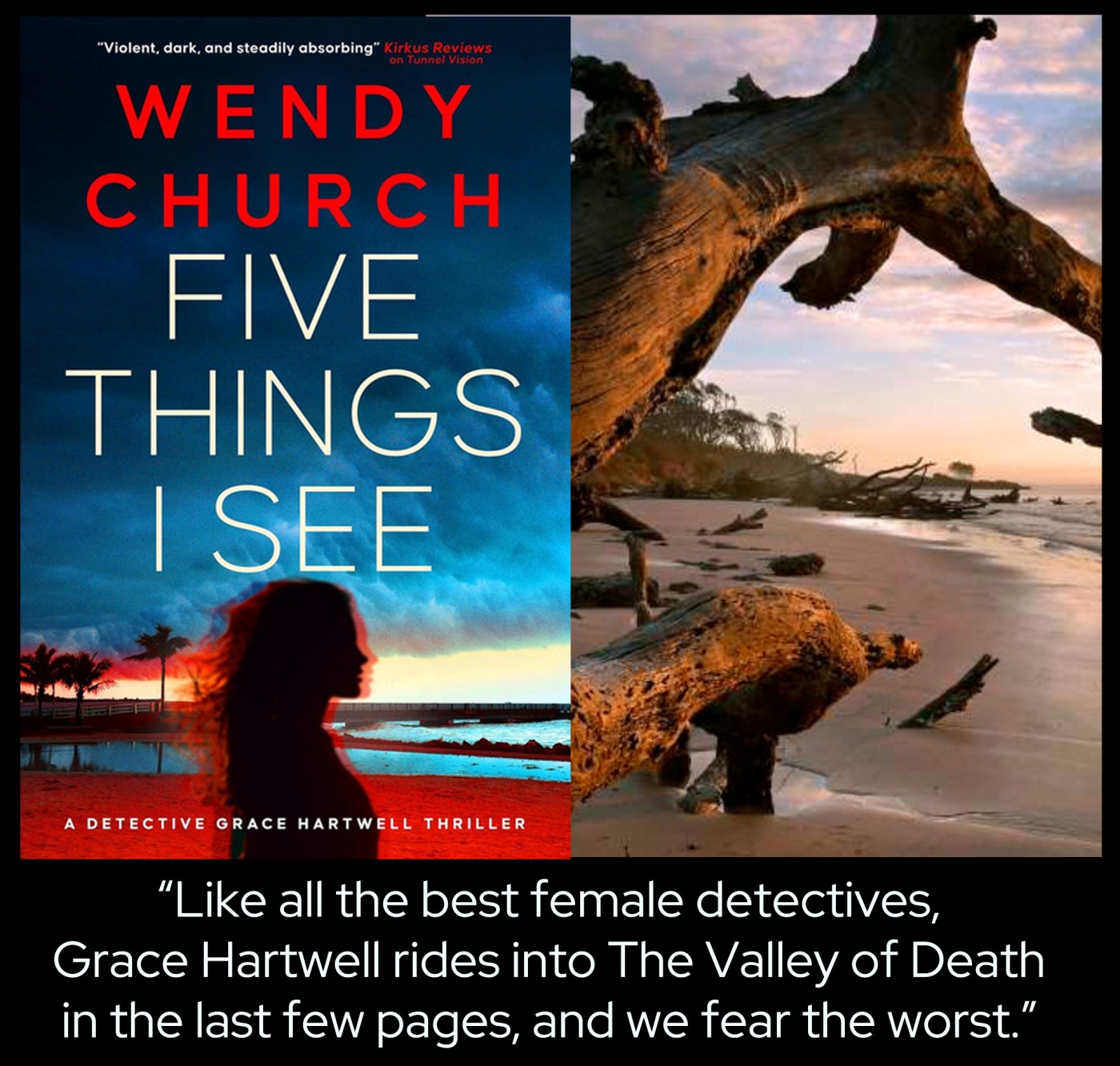
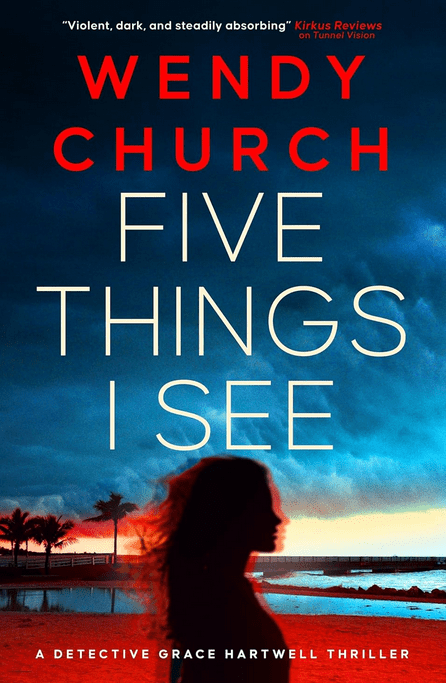
Meet Detective Grace Hartwell, a homicide specialist in the police department of Jacksonville, Florida. Detective Hartwell is a loner, shuns social contact, and her life seems to rotate around the care of her cat, and her fierce fitness regime on the beachfront just below her house. She has two cases on the burner, both seemingly intractable. The more grisly is the murder of college lecturer Daniel Stewart and his wife Jessica. Jessica has not been sexually assaulted, but what is left of her face indicates the work of s deranged killer. The killer also abducted their young son, Shawn but, after an anonymous tip-off, he is found in the boot of an abandoned car, badly dehydrated, but otherwise unharmed.

Stewart was a serial philanderer, but who could he have upset enough to open up his femoral artery and stomp his wife to death? The death of Howie Scofield, a construction site inspector, was initially dismissed as suicide after his body was found next to a drained bottle of bourbon. It was assumed he had fallen from an unprotected balcony of the building he was expecting. But why was he there at the dead of night, and why has his house been ruthlessly turned over by burglars, and what were they searching for?

One of the Stewarts’ near neighbours
is a man called Eddie Snow. Apparently a humble bartender, he has a security system of the intensity only used by federal cops and drug dealers. When Hartwell is warned off by her boss and told that under no account must Eddie Snow be investigated further, she smells a rather large rodent, both deceased and decomposing. When more female murder victims are found, with each bearing the grisly marks of what was inflicted on Jessica Stewart, the pressure intensifies on the Jacksonville cops.

If that weren’t enough
, Grace becomes convinced that Howie Scofield was killed because he had uncovered a massive fraud being inflicted on the city finances by Glade, the construction firm involved. And Glade’s boss? Jackson Masters, a popular and powerful councilman who just happens to be one of Grace’s personal friends.

Each chapter begins with an italicized section of conversation. These conversations appear to be between a patient and and a therapist, but their relevance is not revealed until later in the novel. One rather obvious giveaway in this excellent novel is that, just over 70% in, according to my Kindle, Grace has her man. He has means, method and motive. Having a solution that far from the end of the book sends up a pretty obvious red flag that she has made a mistake. Or has she?

The solution to the mismatched DNA that crashes and burns Grace’s case is imaginative but plausible. The pyschotherapy conversations are eventually explained, but in a totally unexpected way. Wendy Church throws in a few well-loved tropes, such as the lazy. lack-lustre misogynist fellow officer, and the tight lipped senior cop ‘just following orders’.

Wendy Church’s novels are informed by extensive international travel and many careers. She’s been a bartender, tennis pro, management consultant, nonprofit CEO, PhD researcher, and dive bar cleaner. She lives in the Pacific Northwest with her partner, and when not writing spends her time as personal valet to several furry housemates.

Like all the best female detectives, Grace Hartwell rides into The Valley of Death in the last few pages, and we fear the worst. In one way, and not a bad one, this novel is archetypal American CriFi, in that it is slick, tightly plotted, scattered with knowing product placement and cultural references. Fans of more leisurely British police procedurals may not find as much joy here as I did, but I shall now be on the lookout for Grace Hartwell’s next case. Five Things I See will be published by Severn House on 4th August.

Blog at WordPress.com.

Up ↑