Search

fullybooked2017

Month

November 2025

AFTER THE WEEPING . . . Between the covers

David Mark novels are never for the squeamish, and this one begins as it means to go on, with a visit to hell, in the form of a flashback. We are in one of the notorious Romanian orphanages which came to light when the country opened up – after a fashion – following the fall of the Ceaucescu regime in 1989. An as-yet-unnamed foreign visitor is being shown what is known as The Dying Room, where dozens of terminally ill children are lying untended in their own filth, some in cages, others in cots.

We soon learn that the visitor was Rab Hawksmoor, the owner of a Hull haulage firm, and someone who went on to become a controversial celebrity for his attempts to smuggle some of these children out of the country, and his frequent brushes with the Romanian authorities and crime gangs.

Present day, and we rejoin the unique repertory company that has featured in thirteen previous Aector McAvoy novels. Central is Aector himself, a towering bear of a man, originally from the Scottish Highlands. He is capable of terrifying violence when provoked but is, by nature, meek, socially unsure, a devoted husband to Roisin, and a proud father of two children, Lilah and Finn. He is now a Detective Inspector, in charge of a Cold Case Unit. His closest professional colleague is Detective Superintendent Trish Pharaoh. Not only does she never ‘play by the book’, there is not a police manual from which she has not ripped the pages and then thrown on a bonfire in contempt.

Rab Hawkswood is now a shadow of his former self:

“Shrunken now. Diminished. Grey hair and straggly beard, scrawny chicken skin and a lank ponytail hanging whitely from his otherwise bald head.”

Aside from his own exploits, Hawkswood has known personal tragedy. A decade earlier, his son Davey – a bare-knuckle fighter – was found beaten to death near a local cemetery. His murder was never solved, but the case has now been resurrected, and McAvoy has the dubious privilege of leading the investigation, despite the protests of Davey’s mother.

Leaving aside the fact that Hawksmoor’s Romanian crusade seems to have unleashed the closest human thing to a monster from hell, to add to McAvoy’s problems, Trish Pharaoh appears to be playing, not for the first time, a destructive and secret game of her own devising that is leaving a trail of bloodied bodies in its wake. That, and the fact that Roisin’s father, the dangerously ‘Papa’ Teague and his Traveler kin now appear to have skin in the game. The conclusion is predictably violent and, not for the first time, David Mark takes us on a journey through the darker landscape of human excesses and venality, and with the walking paradox that is McAvoy at his most vulnerable – and dangerous.

After the Weeping will be published by Severn House on 2nd December. Click the author image (left) to read my reviews of earlier Aector McAvoy books.

MURDER IN PARIS . . . Between the covers

It is April 1945, and we are in Paris. The fighting has long since moved east, but the consequences of the previous four years are very evident. Charles de Gaulle has marched at the head of his victory parade, convincing some (but not all) that he had liberated France entirely on his own. Across the country, collaborators are being executed, and the women who consorted too freely with Germans are being roughly dealt with. In the gaol at Fresnes are several women who have been liberated from Ravensbruck. They all claim to be victims of the Nazis, but are some of them not who they say they are?

Frederick Rowlands has been brought to Paris by Iris Barnes, an MI6 officer, to confirm – or refute – the identity of a woman he once knew in the days before he lost his sight. He meets Clara Metzner. She is skin and bone, after her incarceration in Ravensbruck, and he is uncertain. The next day, she is found dead in her cell, apparently haven taken her own life.

Fictional detectives seem to be perfectly able to do their jobs despite various physical and mental conditions which might be regarded as disabilities. Nero Wolfe was too obese to leave his apartment, Lincoln Rhyme is quadriplegic, Fiona Griffiths has Cotard’s syndrome, while George Cross is autistic. Christina Koning’s Frederick Rowlands isn’t the first blind detective, of course, as Ernest Bramah’s Max Carrados stories entranced readers over a century ago.

The febrile atmosphere and often uneasy ‘peace’ in Paris is vividly described, and we even have some thinly disguised real life characters with walk-on parts, such as Ernest Hemingway, Martha Gellhorn, Pablo Picasso, Edith Piaf, Samuel Beckett, Gertrude Stein and Wyndham Lewis.

As Rowlands and Barnes seem to be clutching at straws as they try to identify the girl who was murdered – a shock induced heart failure, according to the autopsy – the plot spins off at a tangent. Lady Celia, a member of the Irish aristocracy, asks Rowlands to trace a young man, Sebastian Gogarty, a former employee, who was last heard of as a POW in Silesia. He agrees, and as he and Major Cochrane, one of Lady Celia’s admirers head off on their search, they drive through a very different France. Paris, largely untouched by street fighting or bombs, is in stark contrast to the countryside further east, devastated by the retreating Germans. Gogarty has been living with a group of Maquis, but he returns to Paris after telling Rowlands and Cochrane about the execution of four female resistance members in his camp.

There is an interlude, tenderly described when, after failing to resolve issues in France, Rowlands returns to England. During the elation of VE Day, he recalls a more sombre occasion.

“He remembered standing in a crowd in Trafalgar Square as large as this one. It had been on Armistice Day, 1919. That had been a silent crowd, all the more impressive because of its silence. There had been no cheers, no flag waving as there was now. When the maroon sounded, the transformation was immediate. The roar of traffic died. All the men removed their hats. Men and women stood with heads bowed, unmoving. For fully two minutes the silence was maintained then and across the country. Everyone and everything stopped. Buses, trains, trams, and horse-drawn vehicles halted. Factories ceased working, as did offices, shops, hospitals and banks. Schools became silent. Court proceedings came to a standstill. Prisoners stood to attention in their cells. Only the sound of a muffled bell tolling the hour of eleven broke the silence.”

Rowlands and his family reconcile themselves to leaving their temporary home in Brighton for their bomb damaged home in London, but there is much work to be done. When not involved in investigations, Rowlands has worked with St Dunstan’s, the charity set up to employ blind veterans. Now, with tens of thousands of able-bodied military people being demobbed, will there still be work for them?

The action reverts to Paris, wth Rowlands returning, accompanied by young Jewish man, Clara Meltzner’s brother. It becomes increasingly obvious that some organisation is determined to prevent the true identity of the young woman murdered in Fresnes gaol being revealed. Rowland’s problem is that, despite the Germans no longer being physically present, everyone is at each other’s throats – the rival Résistance groups, Gaullists, communists, Nazi sympathisers – each has much to lose, and violence has become a way of life.

Christina Koning’s spirited account of a Paris springtime takes in so many evocative locations – Le cimetière du Père-Lachaise, the sinister depths of the Catacombs, the newly bustling shops fragrant with fresh baked bread and ripe fromage – that we are transported into another world. Murder in Paris will be published by Allison & Busby on 20th November.


FOR OUR SINS . . . Between the covers

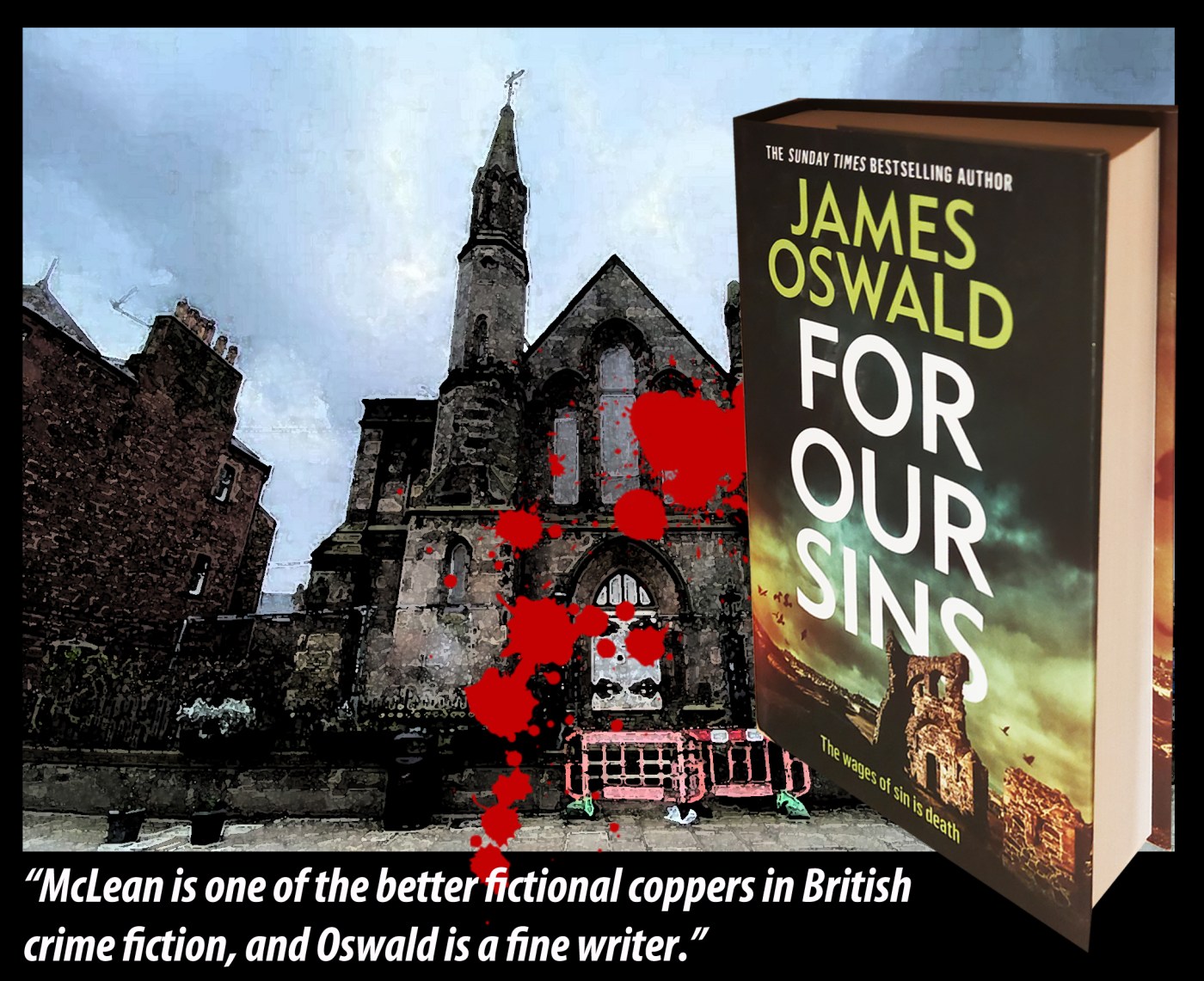
Edinburgh, the present day. A man is found dead in near-derelict church, his head crushed by a collapsed wall. His wallet reveals that he was Kenneth Morgan, an elderly ex-criminal who had been living quietly on his own since coming out of jail five years earlier. In charge of the case is Detective Sergeant Janie Harrison, who remains central to the story, despite the distant presence of her former boss, Tony McLean who has retired from the force. McLean is contacted by investigative journalist Jo Dalgliesh, who asks him to meet a middle-aged man, Robert Murphy who, as a child, was the victim of sexual abuse by his parish priest. The priest was murdered in what appeared to be an interrupted robbery of church silver. Murphy has the strangest of tales to tell.

I was a witness. And nobody listened to me when I told them what he’d done. And if he died, then how come I saw him on the street just a few weeks ago?”.

When another elderly man is found dead on the floor of a church, this time definitely by foul play, the police realise they have something strange on their hands. Both men were long-term associates of notorious gang boss, Archibald Seagram, a man who has remained conspicuously untainted by criminal convictions, despite being at the helm of an organisation responsible for much of the city’s serious crime for decades.

Meanwhile, Tony McLean is making the best of his ‘retirement’ and dutifully looking after his girlfriend Emma, who is slowly recovering from a stroke. He is acutely aware, however, that with the lack of mental and intellectual challenge that his job provided, One of the ‘ever presents’ in the excellent Tony McLean series is the transvestite spiritual medium Madam Rose, and it is his/her intervention that finally persuaded our man to do what his inner soul has been pressing him to do for months – offer himself back to Police Scotland.his life seems hollow and empty of purpose. Softly, softly, James Oswald is preparing us for some kind of comeback.

Every good police procedural novel needs a bad cop, and few are as loathsome as Detective Superintendent Pete Nelson. Detective Sergeant Jamie Harrison is at the core of the first half of this book, and Nelson is ‘on her case’ in all manner of ways, from professional vindictiveness to drunken groping in the pub. McLean’s former office still lacks a new tenant, and the department is worryingly understaffed, and so he returns, ostensibly just to help with this particular investigation.What we know, as readers, thanks to the short and intermittent flashbacks to 1980s, seen through the eyes of teenage altar boys, is that there is a religious aspect to this case and, specifically, connected to the Roman Catholic church.

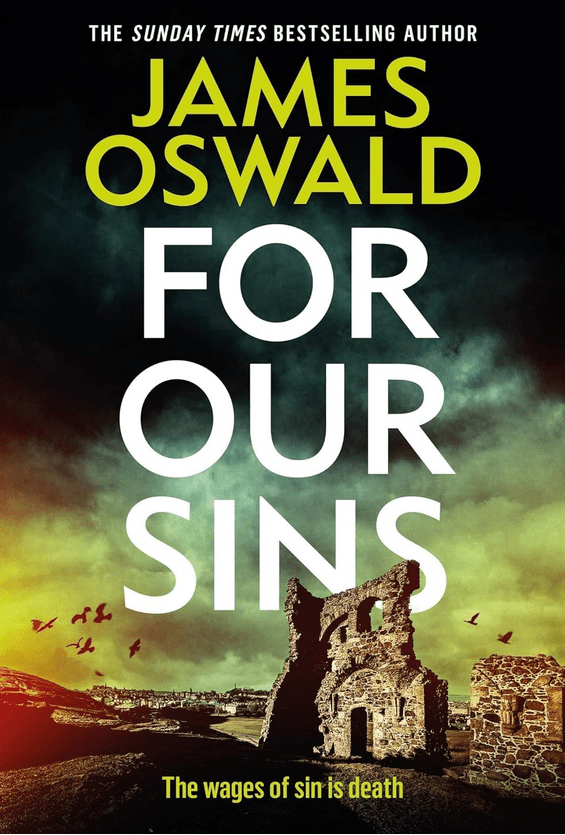
McLean is one of the better fictional coppers in British crime fiction, and Oswald is a fine writer. Although McLean’s return to work is, to a degree, successful, we are left with no neat and conclusive answer to the reason why the three former criminals died. Nor do we learn why the severely disturbed Robert Murphy killed them, and his conviction that his church vestry abuser is still out and about is never explained, except perhaps because of his own mental state – or something paranormal has happened. For Our Sins was published by Headline in 2024, and there will be a new Tony McLean novel later this month.

SHOCKING CRIMES . . . Between the covers

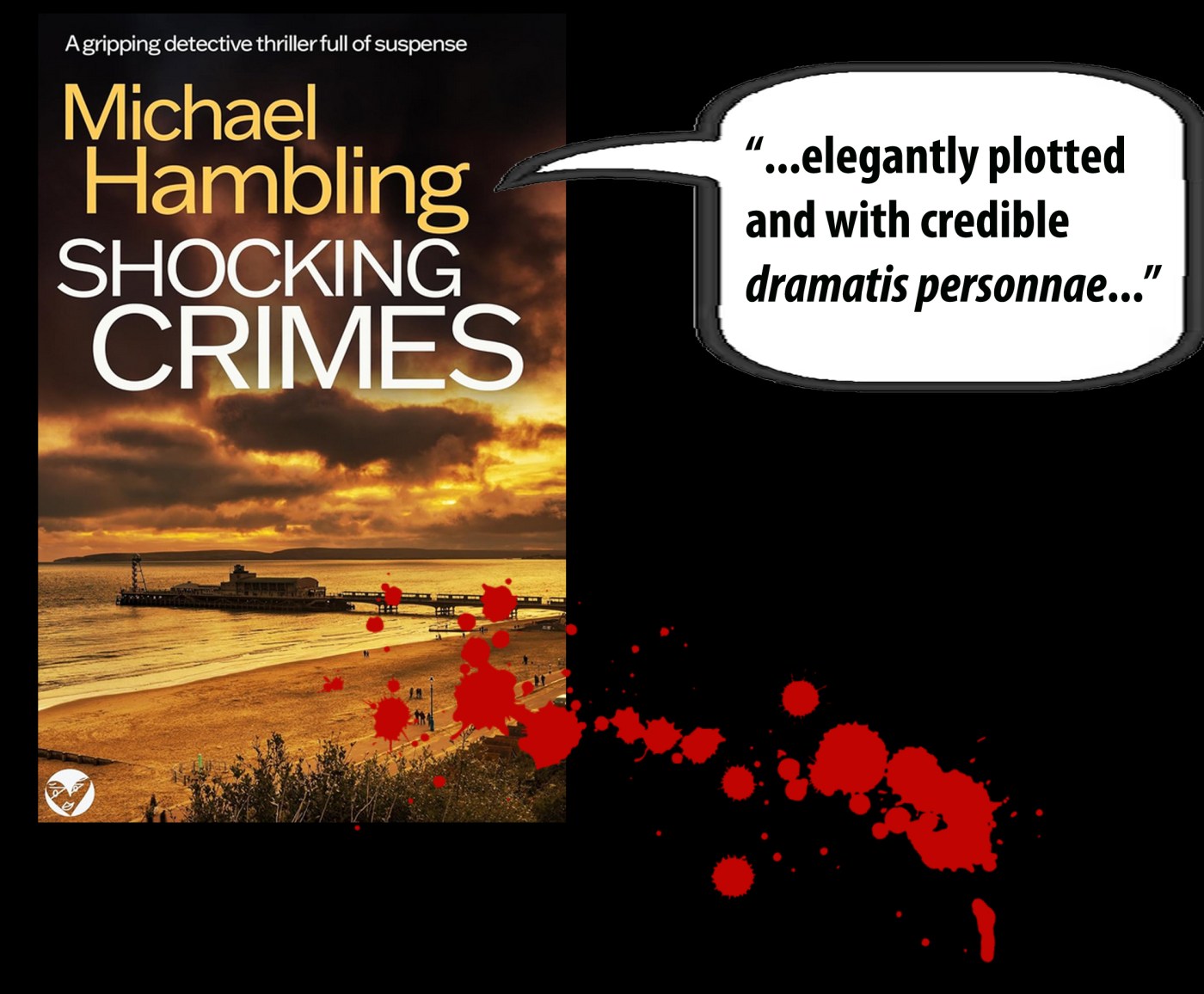
We are in Dorset. Bournemouth, to be exact. But this is not the genteel Budmouth, Regency watering place of Thomas Hardy’s novels, but a much more hard-edged kind of place. The cast of coppers includes Detective Chief Superintendent Sophie Allen, Detective Chief Inspector Barry Marsh and Detective Inspector Lydia Pillay, Bournemouth CID, newly appointed to the role of DI.

Thirty eight year-old Pippa Chandler has been arrested for the murder of her disabled boyfriend Joshua Quick. She had recently inherited a house from her uncle and, while searching the property, police find a scrap of yellowing paper on which appears to be written a cry for help from a ten year-old child. A slapdash search of the house has revealed nothing of interest, but then a more assiduous crime technician discovers a false panel in the roof space. And behind the panel is a battered suitcase containing a grisly find – the dessicated remains of a child, later revealed to the corpse of a little girl.

Meanwhile, a seemingly unrelated investigation into a more recent tragedy is in focus. In a Bournemouth nightclub, a student called Holly collapses on the dance floor. She is rushed to hospital, where she lies between life and death. This wasn’t drink spiking, but ‘jabbing’ –  a surreptitious injection with a throwaway hypodermic syringe, and Holly had an existing heart condition. In a dramatic and significant twist, Holly’s mother admits her historic links to the house where the child’s remains were found.

In general, there are two kinds of police/private investigator thrillers – the ones where the author keeps the perpetrator/s hidden from both us readers and the forces of law and order until the last few pages and those where we learn who the bad guys are early in the piece, with the entertainment coming from watching the police untangle the knots. Shocking Crimes largely falls into the latter category but Michael Hambling actually gives us the best of both worlds here. Yes, we learn early doors that Bruce Greenfield is a wrong ‘un, and we also know who his criminal associates were, but exactly who did what – and to whom – we discover through the eyes of the detectives.

Although elegantly plotted and with credible dramatis personnae, Shocking Crimes makes for uncomfortable reading at times as it delves into the fraught world of child protection, now known as Safeguarding. Having worked in this area myself, I am aware of the dark litany of historic failures laid at the door of professional adults charged with keeping young people from harm. In the end, as this novel shows, there are human beings so depraved and devoid of decency that no foolproof system to combat them has ever been devised. The novel will be published by Joffe Books on 13th November.

NASH FALLS . . . Between the covers

Wily veteran of scores of thrillers, Baldacci certainly builds down his central character in the first few pages. Walter Nash is a lanky, scrawny, rather uptight family man who only ever really loved his deceased pet dog. He is, however, thanks to his number crunching skills with a multinational company, prodigiously rich. And, after his fashion, he tries to be a good husband and father.

His own father, recently deceased, was a brawling and profane Harley-riding Vietnam vet who, to all intents and purposed, despised Walt for his prissy ways and lack of physical presence. One night, Walt has an unwelcome visitor in the shape of an FBI agent, and he has grim news to impart. Walt’s firm, coyly named Sybaritic, has been infiltrated (via one of its senior employees) by a criminal corporation connected to Chinese drug producers. The FBI people explain to Walt that the Chinese, unable to match the USA either militarily or economically, have chosen to inflict a slow death on America through the over-production and distribution of drugs like Fentanyl.

We learn that the ‘inside man’ on this operation is none other than Rhett Temple, the son of the firm’s founder. Then with customary narrative verve, Baldacci describes how Walt Nash’s near-perfect life is reduced to rubble by the perfect storm of an international criminal regime, corrupt cops and bent businessmen desperate to hang on to their wealth. Faced with false – but appalling – accusations, Nash is forced to go on the run, helped by one of his father’s old army buddies, a fearsome black man known as Shock.

What follows is, perhaps, the most implausible part of the story. It is a version of the old riff of a physically inept man who, by training and will power, is transformed into a formidable opponent. Under Shock’s watchful eye Nash is transformed from the puny guy who once had sand kicked in his face by beach bullies, to a remorseless killer. If you don’t get the sand reference, Google ‘Charles Atlas’. The internet will do the rest.

The portrayal of Nash, from his buttoned-down corporate executive days, via family tragedy through to his emergence from that chrysalis as someone quite different, is impressive. My last thoughts, are, I am afraid, something of a spoiler, but I always try to be honest. Walt Nash certainly undergoes a dramatic transformation and, motivated by a sense of vengeance, he rejoins the world from which he had been exiled, his true identity hidden from former acquaintances. However, those wishing for a conclusive resolution to the story must await the sequel, which is trailered at the end of this novel. Nash Falls is published by Macmillan and is out now.

THE ECHO OF CROWS . . . Between the covers

The late Phil Rickman’s genius was to blend intriguing crime mysteries with with events that tapped into our sense of unease about the Unexplained, and I use the upper case with good reason. Here, in the final Merrily Watkins novel,a young multi million pound lottery winner is found shot dead in a field beside his Purdy shotgun, but there is more – so much more- going on.

I don’t know if Phil was religious, but he certainly knew so much about religion. Here, veteran exorcist Huw Owen, driven to distraction by the anaemic, lanyard-wearing leadership of the corporate Church of England, is about to throw in the towel, until he is distracted by a former colleague’s description of a frightening experience in the church at Clodock, allegedly built on the tomb of a murdered Dark Ages king, Clydawg. He visits his former mentee, Rev Merrily Watkins, vicar of Leintwardine, and responsible for exorcism in the diocese of Hereford. Naturally, given the state of the church’s corporate image, she is formally titled ‘Deliverance Consultant’

Longstanding readers of the series will know that the churches and chapels of Rickman’s border region are often deeply sinister places with tangible links to a pagan past, for example the celebrated carvings at St Mary and David church in Kilpeck, which featured prominently in All of a Winter’s Night.

The lottery winner – Eddy Davies – had bought a local farm, and had renovated the collection of neglected buildings. In one lived a young woman called Autumn Wise, whose parents had not long since been killed in an horrific car crash. We learn that Autumn is obsessed with the past and, in particular, the part played in folklore by Corvus Carone.

On a more practical and immediate level, when the police arrived at the farm following the discovery of Eddy’s body, Autumn was found in the farmhouse, cradling a shotgun. Autumn’s cottage was known as The Old Dairy, and it was there, centuries earlier that a man poisoned his wife in order to be with his young lover. The killer and his girlfriend were subsequently hanged outside Hereford gaol.

Across the series, which began in 1998 with The Wine of Angels, Merrily has tended not to see spirits or apparitions, but rather senses them, and believes that other people can see them. Here, when she visits The Old Dairy she actually witnesses something which shakes her to the core. The killer of Eddy Davis is eventually unmasked, but with little intervention in this case from spiritual forces. Rather, it is the intuition and hard work of the police in Hereford that close the case.

Phil Rickman died on 29th October 2024, therefore this is valete to what we might call the Merrily Watkins repertory company. There will be no more Gomer Parry, the aged digger driver, who acted like a one-man Greek Chorus throughout the series; no more Frannie Bliss the canny Scouse copper from Hereford; no more of Merrily’s quixotic daughter Jane, and her complex relationship with boyfriend Eiron; and no more Lol Robinson, the tortured singer songwriter and Merrily’s not-so-secret boyfriend. The Echo of Crows is a magnificent end to a much-loved series, and will be published by Corvus on 6th November. If you click the author image on the left, it will link to other reviews and features on the series.

THE WINTER DEAD… Between the covers

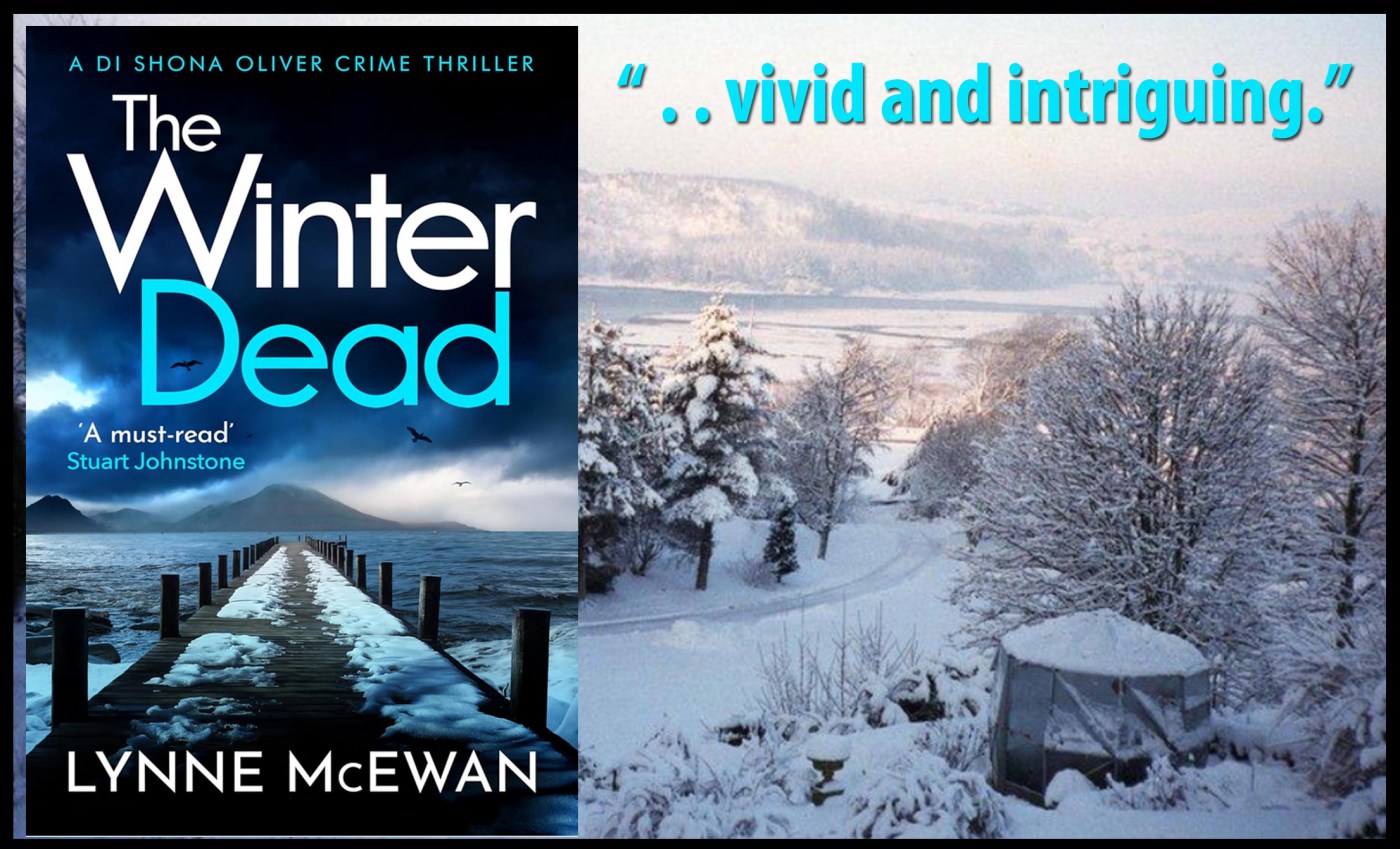
The best Scottish crime fiction novels seem to be polarised between noirish grit and grunge on the mean streets of Aberdeen, Edinburgh and Glasgow, and more windswept tales set on rocky coasts and misty moors. The Winter Dead belongs in the latter category. DI Shona Oliver is in charge of a large rural beat which includes the wild shores of Dumfries and Galloway. Her husband, Robert, is doing time for financial fraud, leaving her to do her day job while trying to keep their guesthouse business solvent. 

A chance discovery (a bloodstained hammer discarded within a lorry load of firewood) presents a massive challenge which forces her to examine the integrity of people she has regarded as being valued friends. Shona also a seasoned member of the local lifeboat crew, and the over-arching sense of a community surviving in spite of the awful weather is reinforced in the early pages when Shona and her colleagues rescue a windsurfer battered against an unforgiving granite cliff by a force ten gale. The elemental theme continues as, following up the bloodstained hammer, Shona and a mountain rescue team are forced to rough it in an isolated visitor centre while searching for a missing forest Ranger.

The snow storm does its worst, and destroys any forensic traces, but when the missing man – John MacFarlane –  is found miles away, not only is the jigsaw jumbled up, but several of its pieces go missing.it is a well established trope of police novels that the central DI, already knee-deep and floundering in the riptide of a perplexing investigation, must also be plagued by family problems. Here, not only does Shona Oliver have her husband glumly sitting in jail, but she hears disturbing news of daughter Becca, away at university in Glasgow. Becca’s flatmate, Jack Rutherford, has been stabbed during an attempted phone snatch, and his injuries are life threatening.

To add to the rich tapestry of misdeeds Shona is tasked with investigating, a local petty crook has handed in something he has ‘found’. It is a Renaissance painting of the Madonna and Child, no bigger than a A4 sheet, but exquisite. She traces its recent provenance, but is it the original, or a saleroom copy?

A mixture of persistence and a touch of good luck results in something of a revelation about the murder of John MacFarlane, and it links the crime to an event decades earlier, in the warm waters of the Persian Gulf. Shona once again finds herself leading a manhunt, this time in the wintry malevolence of Dalgeddie Forest.

“As they went further from the track, the snow lay not like a decorative Christmas dusting, but like deep ash from some catastrophic fire. The branches of the fir swept down to the ground. The dark spaces enclosed by their grasp brought simultaneously a craving for sanctuary and a sense of her own vulnerability where every shadow seemed to hide a human shape. Her footsteps were impossibly loud. The deep powder squeaked and groaned, compacting under each step.”

The author who, like her heroine, is also part of a volunteer lifeboat crew, seamlessly weaves the different strands of the plot together, and Shona’s professional reputation is enhanced. She cannot rest easy, however, as fate has one dramatic personal surprise for her. This vivid and intriguing thriller will be published by Canelo Crime on 6th November.


Blog at WordPress.com.

Up ↑