

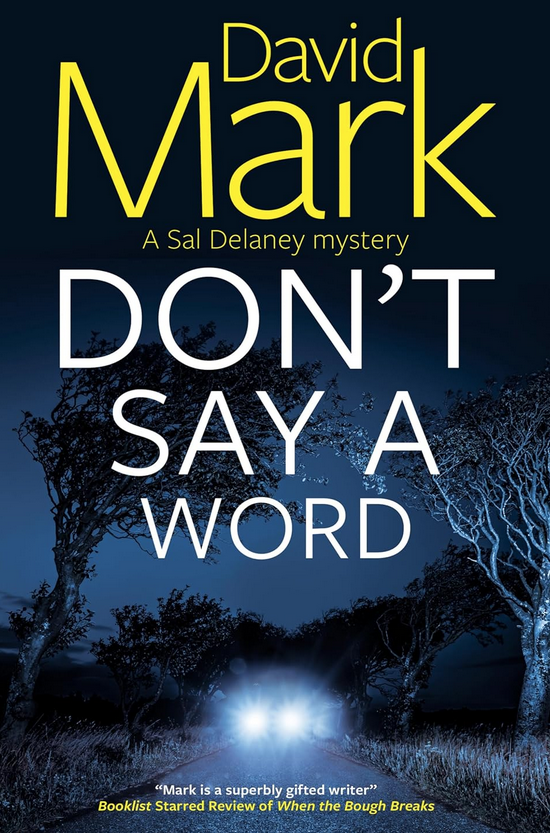
Cumbria traffic cop Salome ‘Sal’ Delaney has a startling back-story, which you can speed-read by checking my review of the previous novel, When The Bough Breaks. Now, we have a mysterious prologue which seems to describe a man being buried alive, but then Sal is called out on a bleak and rainy night to discover why a 4×4 has swerved into an unforgiving dry stone walk out in the middle of nowhere. The past hangs over this narrative like a pall, forcing the reader to be very careful about distinguishing between then and now.
Former drama student Theo Myers has spent an age in prison for a murder he did not commit. Now, finally, he is free of his prison walls, but shackled to a life of uncompensated poverty and a society that views him with suspicion. He reconnects with someone from his past, former policeman Wulf Hagman, who has also spent long years in jail.
Sal’s road accident takes a bizarre turn. The driver of the 4×4 swears he swerved into the wall to avoid what he calls a ‘zombie’. 4×4 man Sycamore Le Gros is stone cold sober but, hearing unearthly noises in a thicket beside the road, Sal discovers a stricken creature, whose state justifies the description Le Gros has given.
We are reunited with Detective Superintendent Magdalena Quinn, a police officer nicknamed The Succubus by male colleagues. She is certainly the embodiment of evil, devious, beautiful, manipulative and corrupt. If you are a Thomas Hardy aficionado, think Eustacia Vye, but with the moral compass of Lucretia Borgia.
The ragged, undead thing with horror in his eyes that Sal discovered in the undergrowth now has a name – Mahee Gamage, a solicitor of Sri Lanka origin, last known to be living in a village near Middlesbrough. The case takes an even more sinister turn when Sal learns that Gamage was the duty solicitor on the fateful night that Theo was arrested, and it looks probable that the advice he gave the young man was fatally flawed.
David Mark, like a cat with a mouse, enjoys playing games with his readers. As Mahee Gamage hovers between life and death in his intensive care bed, it seems clear that he was captured, imprisoned and brutalised because of his incompetence in representing Theo Myers. Was the culprit Theo himself, his obsessive mother Tara, or maybe her second husband Alec, the campaigner with his hatred of the British establishment? Perhaps it was joint enterprise? Or is Gamage’s torturer someone completely from Left Field? Further evidence, if any were needed, that the ambience of this novel is not sun dappled Cotswold limestone, thatched cottages and Inspector Barnaby, comes by way of an examination of the contents of Mahee Gamage’s stomach where the investigators find clear evidence of partially digested human flesh. Like Aector McAvoy, David Mark’s other memorable character, Sal Delaney frequently has to face a world of almost unfathomable moral blackness, and it is only her own spiritual integrity which enables her to survive. Don’t Say A Word is compulsive, dark – and sometimes extremely graphic. It is published by Severn House, and available now.


 fullybooked2017
Leave a comment