
OH….SEPTEMBER … Such a cause for melancholy. Even though it is six years since the end of August, for me, meant one terrible truth. The days ahead would mean a return to work. A return to the classroom. A return to hour upon hour of dreadful, pointless and unproductive staff meetings. A return to the sight of six hundred – well maybe twenty or thirty – shining young faces turned in my direction, desperate to hear my wise words, to share my hard-earned wisdom, to rejoice in a mutual love of learning. (Spot the bare-faced lie or three)
OH….SEPTEMBER … even though I am retired your first dawns still bring a little shiver of fear, but then I roll over in bed, hug my Teddy, and lapse into a smug sleep, safe in the knowledge that I am no longer responsible for shaping the lives of Britain’s future leaders, scientists, composers, authors and philosophers. Nor the lives of apprentice muggers, drug dealers, drunk drivers, sex pests, wife beaters and Jeremy Kyle guests.
OH….SEPTEMBER … thank you for new books, new plots, new writers and the prospect of afternoons spent feet up on the sofa, worlds away from the beige mundanities of small town Cambridgeshire, transported to the world of murder, deception, intrigue and violence. New books, then.
 Renée Knight worked for the BBC directing arts documentaries before beginning her writing career. She has written television and film scripts for the BBC, Channel Four and Capital Films. Her first screenplay, Mother’s Day, made it onto the 2010 Brit List of best unproduced scripts of that year.
Her first novel, Disclaimer, was published by Transworld in 2015, and she is currently adapting for the screen for Fox Searchlight. Renée lives in London with her husband and two children.
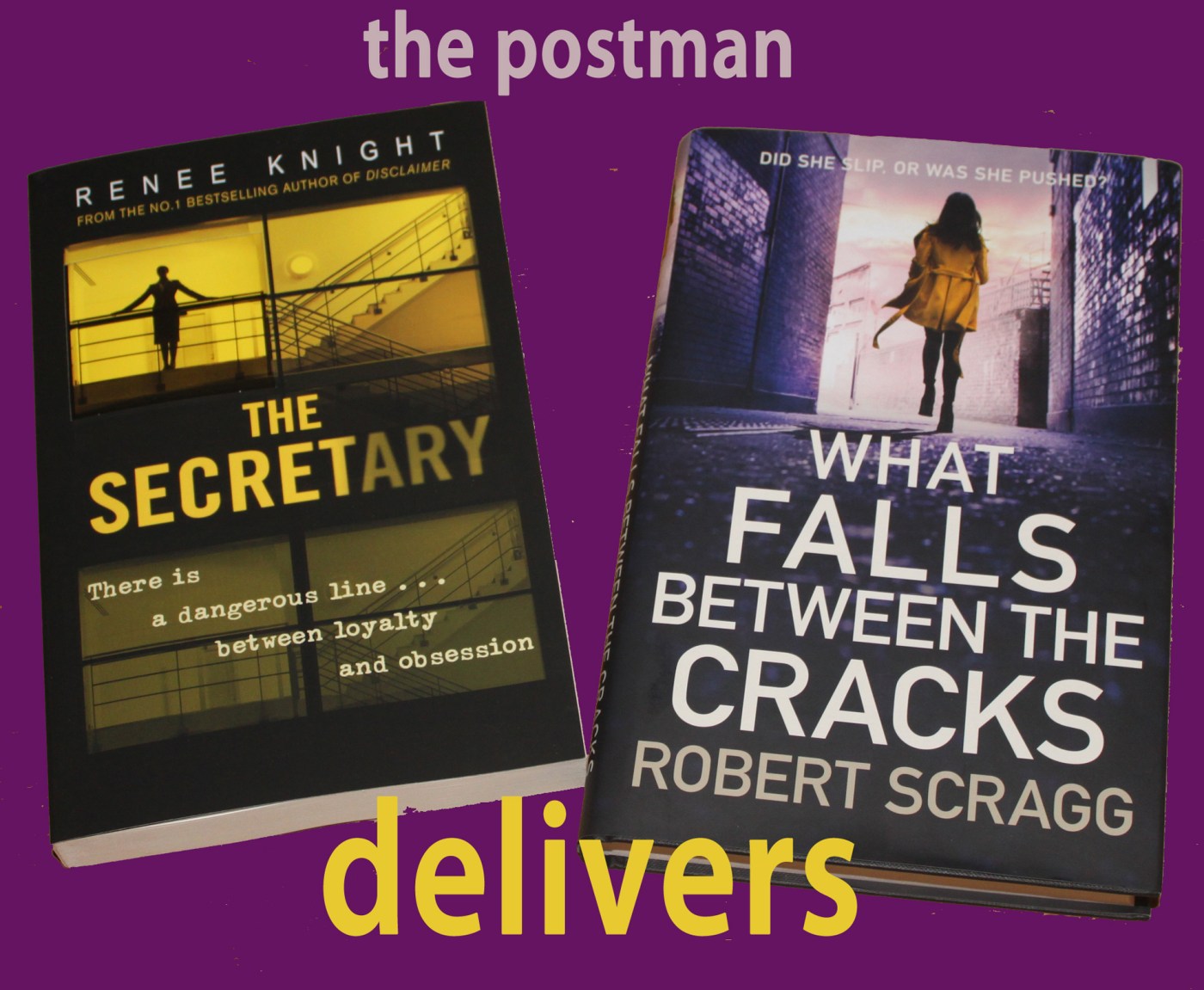
Her new novel, The Secretary, is a psychological thriller based around the concept of someone who is largely ignored and taken for granted, but is always there listening, making mental notes of indiscretions, weaknesses and fallibility. What if that someone, Christine Butcher for example, is pushed to her limit and needs to strike out? Her knowledge and little book of secrets may well prove to be fatally powerful. The Secretary is published by Doubleday, and will be out in early 2019.

 What Falls Between The Cracks is the first published novel from Robert Scragg.He is a northerner born and bred, and has had a random mix of jobs to date, including bookseller, pizza deliverer, Karate instructor, and Football Coach. He originally intended to join the legal profession, but after getting his degree, ended up with a job in Telecoms.
Writing was something he hadn’t done much of since he left school, until around seven years ago when an idea for a book popped up that he found too interesting to ignore, and his lead character, Jake Porter, plus his partner Nick Styles started to nag him to write it. His first novel, What Falls Between the Cracks, is the first in the Porter & Styles series. It was pitched during the 2016 Theakston’s Crime Festival at the “Dragon’s Pen”, to a panel of agents and editors, managing to get four ‘yes’ votes, and has since been picked up by Allison & Busby. It was released in hardback and e-book on 19th April 2018, and the paperback follows on 20th September.
Robert lives in Tyne & Wear, with his wife, children and dog. Away from work and writing, he’s a long-suffering follower of Newcastle United, fan of all things martial arts, scuba diving and mountain climbing, and self-confessed crime fiction junkie. His favourites in the genre include Harlan Coben, Robert Crais, Linwood Barclay, Lee Child, Michael Connelly, Sarah Hilary, Mari Hannah, Mark Billingham and Howard Linskey to name but a few.


 James Barlow was a Birmingham-born novelist who served as an air gunner with the RAF in WWII. Invalided out of service when he contracted tuberculosis, he faced a long convalescence. He began writing at this time, and after he worked in his native city as, of all things, a water rates inspector, he made the decision to write for a living. His first novel, The Protagonists, was published in 1956, but made little impact. It wasn’t until Term of Trial (1961) that he began to make a decent living from writing, and then more because film director Peter Glenville saw the cinematic potential in the story of an alcoholic school teacher whose career is threatened when he is accused of improper behaviour with a female pupil. The subsequent film had a star-studded cast including Sir Laurence Olivier, Simone Signoret, Sarah Miles, Terence Stamp, Hugh Griffith, Dudley Foster, Thora Hird and Alan Cuthbertson.
 Term of Trial was a powerful and controversial film, but clearly had nothing to do with crime fiction. Barlow’s 1968 novel The Burden of Proof was another matter. By the time it was published, the Kray twins’ days as despotic rulers of London’s gangland were numbered. They were arrested on 8th May in that year and the rest, as they say, is history. The Burden of Proof is centred on a Ronnie Kray-style gangster, Vic Dakin. Dakin is psychotic homosexual, devoted equally to his dear old mum and a succession of pliant boyfriends, while finding time to be at the hub of a violent criminal network.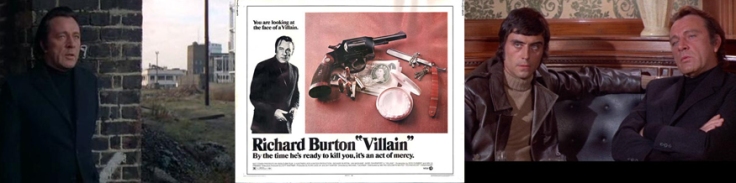
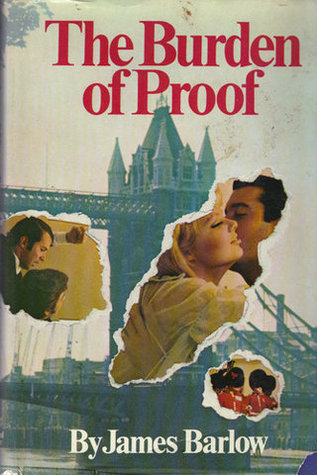 In the city which is portrayed as little more than a moral sewer, we have the vile Dakin and his criminal associates; we have an earnest and incorruptible copper, Bob Matthews who Barlow sets up – along with Bob’s mild-mannered and decent wife Mary – as the apotheosis of what England used to be before the plague took hold. We have Gerald Draycott, a dishonest and manipulative MP who flirts with the dangerous world of gambling clubs, casinos, girls-for-hire and drugs-for-sale, but still dreams of becoming a cabinet minister.


 fullybooked2017