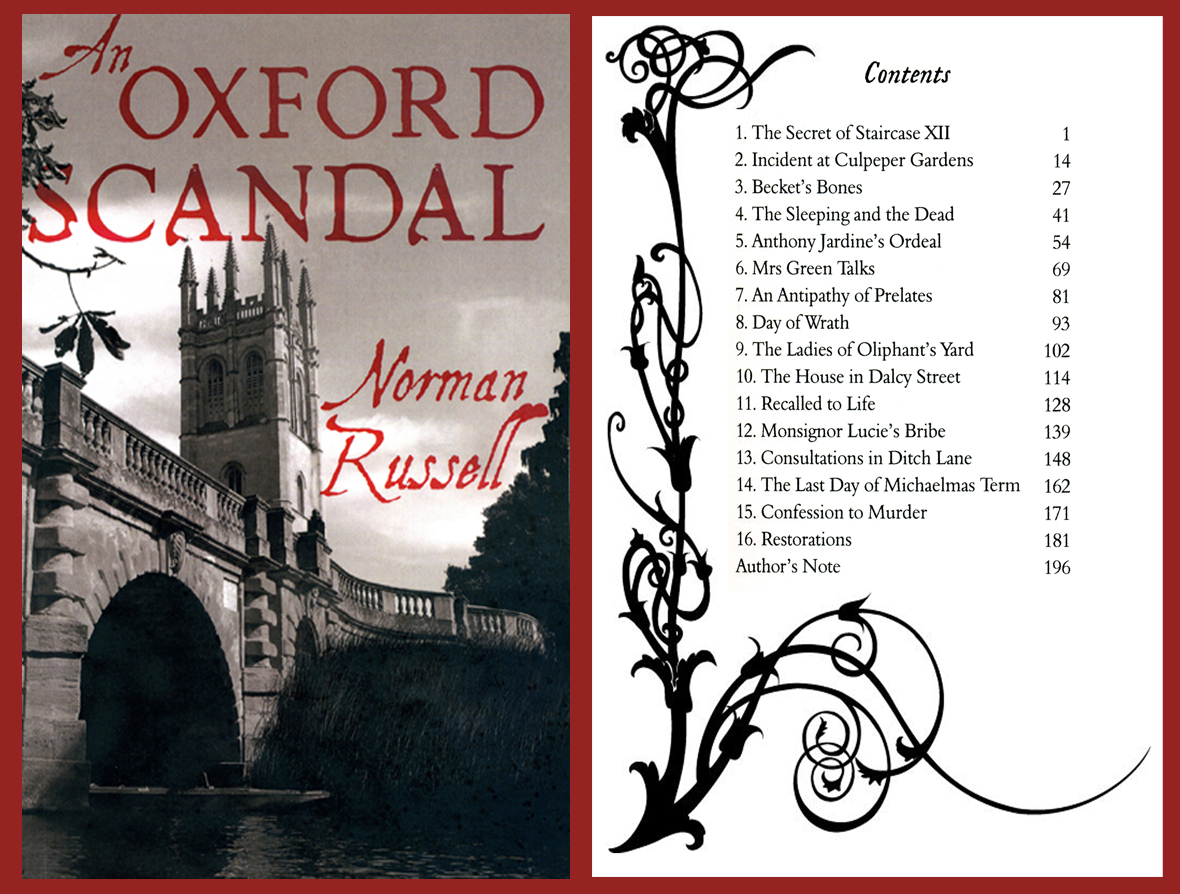

 Oxford, 1895. The spires may well be dreaming, but for Anthony Jardine, Fellow of St Gabriel’s College, the nightmare is just beginning. His drug addicted wife is found stabbed to death, slumped in the corner of a horse tram carriage. His mourning is shattered when his mistress is also found dead – murdered in the house she shares with her elderly eccentric husband. With a background story of an archaeological discovery threatening to shake the English religious establishment to its very roots, Inspector James Antrobus must avoid the temptation to make Jardine a swift and easy culprit. Helped by the uncanny perception of Sophia Jex-Blake, a pioneering woman doctor, Antrobus finds the answer to the killings lies in London, just forty miles away on the railway.
 Norman Russell (right) is a writer and academic, who has had fifteen novels published. He is an acknowledged authority on Victorian finance and its reflections in the literature of the period, and his book on the subject, The Novelist and Mammon, was published by Oxford University Press in 1986. He is a graduate of Oxford and London Universities. After military service in the West Indies, he became a teacher of English in a large Liverpool comprehensive school, where he stayed for twenty-six years, retiring early to take up writing as a second career.
Russell skilfully avoids the trap into which some well-intentioned historical fiction writers fall – that comprising copious and elaborate period detail which chokes the plot itself. Yes, all the Victoriana boxes are ticked; we have horse-drawn trams, the ‘upstairs-downstairs’ ambience of prosperous homes, extravagant dinner menus – and even the doomed but heroic consumptive so beloved of period painters and dramatists. Despite all these familiar tropes, the search for the killer is a genuine whodunnit, and the narrative rattles along nicely.
Not the least of the pleasures of An Oxford Scandal for me was to be reminded of the prickly – not to say downright malevolent – relationships between various versions of the Christian church. Russell enjoys a joke at the expense of the Roman Catholics, the ‘High’ Anglicans, and their humourless cousins in the ‘Low’ Church of England. The joke will probably be shared by just the few of us but I do remember, back in the day when I thought such things were important, that St Ebbe’s church in Oxford was a place to be studiously avoided by those of us who liked a whiff of incense with our worship.
Although Inspector Antrobus ends the novel frail, housebound, and trying to avoid the sight of his bloodstained handkerchief, it looks as though he may survive to undertake another adventure as a consultant detective. I do hope so. The earlier books in the series were An Oxford Anomaly and An Oxford Tragedy. An Oxford Scandal is published by Matador, and is available here.

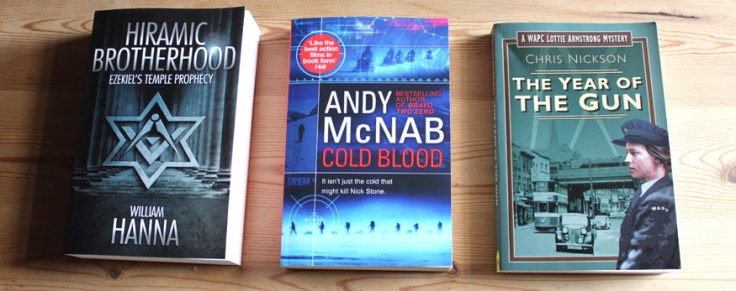
 HIRAMIC BROTHERHOOD, Ezekiel’s Temple Prophecy – written by
  COLD BLOOD – written by
  THE YEAR OF THE GUN – written by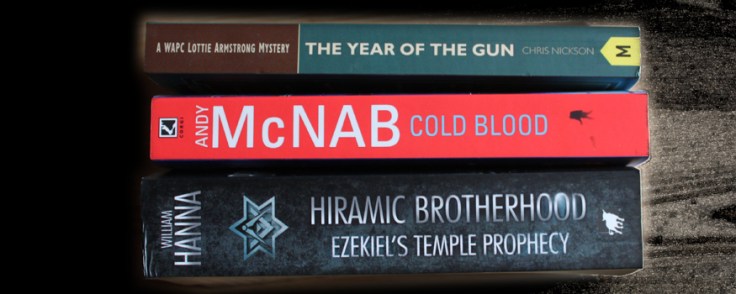

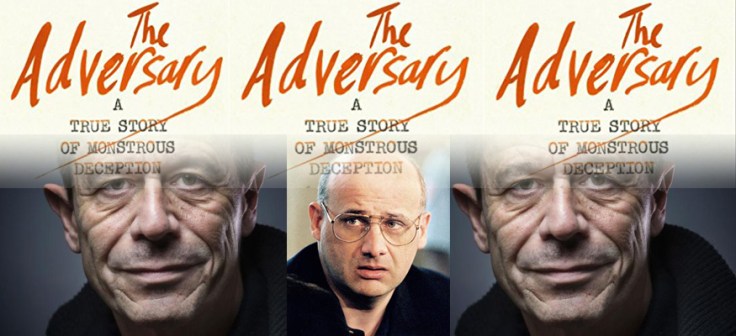
 To this farrago of lies and deception add fraud on a grand scale. Romand was able to keep himself and his family in relative prosperity by claiming that he had access to investment opportunities which would pay handsome dividends to those fortunate enough to be ‘in the know’. He relieved relatives and members of his wider family of hundreds of thousands of French francs – every one of which went into his numerous personal bank accounts. Separating his mistress and her vast personal fortune was his undoing. She was sharp enough – eventually – to call him out and, with his fantasy world on the verge of unraveling, Romand, on an icy weekend in January 1993, killed his wife, two children, and both of his parents.
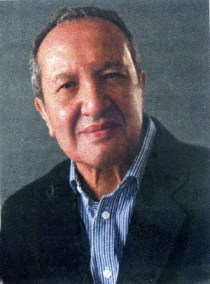
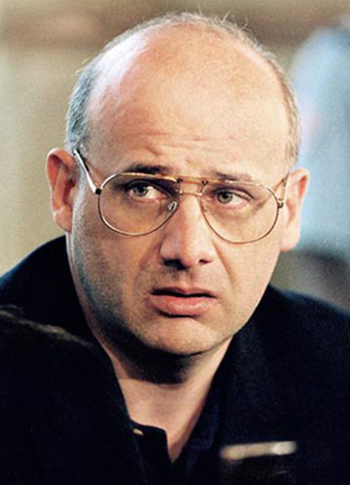 Inevitably, Romand was found guilty of murder, and in 1996 was sentenced to life imprisonment with no chance of parole for at least twenty two years. Prior to the trial, Carrère had begun a correspondence with Romand (right) with a view to writing an account of the case. In this account, aside from the factual detail, Carrère invites us to ponder the true nature of evil and insanity, and makes us wonder if the two states are totally separate, or whether or not they are actually bedfellows.
 Carrère (left) concludes:


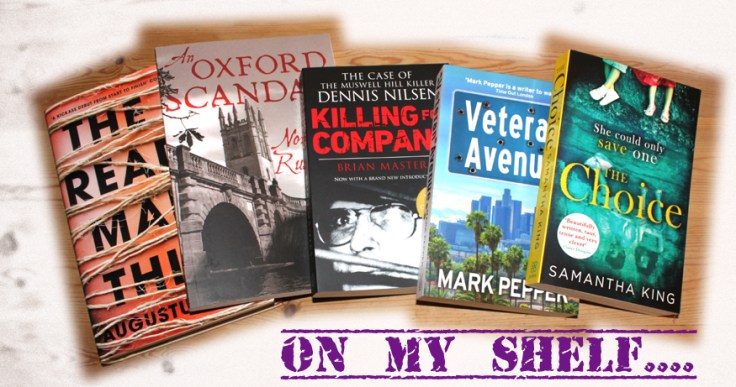

 The grisly exploits of the Muswell Hill murderer Denis Nilsen still defy belief over thirty years later. As you read the story you can rub your eyes and hope that you have woken up from a particularly sordid and violent dream, but you haven’t: everything on the page in front of you is the grim reality. We covered the case briefly in our
 From the ghastly to the ghostly – or at least, a world where fantasy and literary trickery take us away from the mundanity of murder. The Readymade Thief is the debut novel from the Chicago based teacher and screenwriter Augustus Rose, (right) and has just been published by
 Samantha King (left) also serves up a nightmare, but unlike the shifting and illusory Philadelphia of Augustus Rose and Lee Cuddy, hers is very real and down-to-earth, but equally chilling. Madeleine and Dom have twins, Aidan and Annabel. Make that past tense. Had twins. For now Annabel is gone. Just a memory of red-gold curls in a photograph. “Choose one, bitch,” the killer said, and Madeleine chose. This terrifying psychological thriller is a startling debut from an author who is a former editor and is also a qualified psychotherapist. You can find out more on her
 Mark Pepper is an actor, and in his wryly self- deprecating potted biography he wonders why he never received the Oscar he deserved for his pivotal role in Titanic –
 From the badlands of Oregon to the cloistered calm of Oxford, in the late nineteenth century. The opening lines set the tone:


 Kristy puts food on the table and tries to make sure that Ryan isn’t disadvantaged. She has a job, and it is one that demands every ounce of her compassion and every droplet of her sang froid. Her official title? Public Information Officer for the Texas Department of Criminal Justice. If that sounds like some bureaucratic walk-in-the-park, think again. Acting as mediator between inmates, the press and the prison system is one thing, but remember that The Lone Star State is one of the thirty one American states which retains the death penalty. Consequently, Kristy not only has to manage the fraught liaison between prisoners on death row and the media, but she is also required to be an official witness at executions.
 It will come as no surprise to learn that Hollie Overton (right) is an experienced writer for TV. In The Walls every set-piece, every scene is intensely visual and immediate. With consummate cleverness she sets up two story lines which at first run parallel, but then converge. Two men. One is definitely guilty. One possibly innocent. Both are condemned to death. One by the State of Texas. The other by his battered wife.


 Many people in their sixties – particularly those who are comfortably off – plan ahead for their own funerals. Daytime television programmes are interspersed with advertisements featuring either be-cardiganed senior citizens smugly telling us that they have taken insurance with Coffins ‘R’ Us, or rueful widows plaintively wishing that they had been better prepared for the demise of poor Jack, Barry or Derek. However, it would be unusual to hear that the be-cardiganed senior citizen had died only hours after planning and paying for their own send-off from the world of the living.
 During the story, Horowitz (right) drops plenty of names but, to be fair, the real AH has plenty of names to drop. His CV as a writer is, to say the least, impressive. But just when you might be thinking that he is banging his own drum or blowing his own trumpet – select your favourite musical metaphor – he plays a tremendous practical joke on himself. He is summoned to Soho for a vital pre-production meeting with Steven and Peter (that will be Mr Spielberg and Mr Jackson to you and me), but his star gazing is rudely interrupted by none other than the totally unembarrassable person of Daniel Hawthorne, who barges his way into the meeting to collect Horowitz so that the pair can attend the funeral of Diana Cowper.


 fullybooked2017