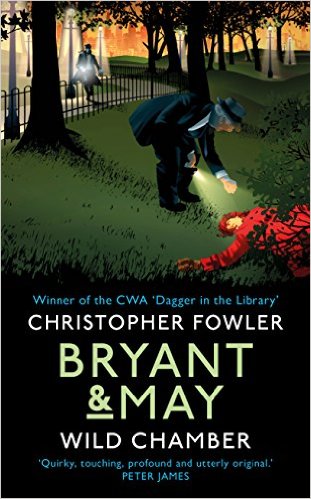

WILD CHAMBER by CHRISTOPHER FOWLER
When a woman is found strangled in one of those little gated parks within a square of houses, unique to London, the Metropolitan Police’s Peculiar Crimes Unit swings into action. Led – and sometimes misled – by its two extremely senior detectives, John Bryant and Arthur May, the other members of the PCU realise that they are faced with an outdoor version of the crime fiction staple – the locked room mystery.
 Other murders follow, and each has been committed in one of the parks and gardens – the Wild Chambers – which are scattered throughout central London. Are the gardens linked, like some erratically plotted ley line? Why are the murders connected to a tragic freak accident in a road tunnel near London Bridge? Why are the murder sites speckled with tiny balls of lead?
For Arthur Bryant – and his creator – London’s past is like a great sleeping creature buried beneath the layers of the city’s history. Sometimes it stirs in its slumber, and the vibrations are felt far above, by those who wish to feel. On other occasions, it sighs, and its breath stirs the leaves in the trees of memory, but only people like Bryant, for whom the present is just a footnote in the chapter of life, can hear the rustling.
Bryant’s unique relationship with London’s vibrant and violent past is described thus:
“London’s lost characters were to him close companions, from the bodysnatchers of Blenheim Street to the running footman of Mayfair and the rat man of Tottenham Court Road. He saw Queen Elizabeth I dancing alone on rainy days in Whitehall Palace
and female barbers shaving beards in Seven Dials, but he could barely recall his mother’s face.”
Fowler came up with the brainwave of having Bryant undertake a course of experimental chemical therapy to treat a life-threatening condition. He recovered, but the drugs have left him prone to out-of-body experiences. These – and here is The Fairy Feller’s masterstroke – allow him to have occasional meetings with pivotal figures from London’s past, such as Sir William Gilbert and Samuel Pepys. Such is the spell that Fowler casts, that these seem perfectly natural and without artifice.
Fowler is, among other things, a comic genius. He mines the rich and productive seam of peculiarly English comedy which gave us George and Weedon Grossmith,
J B ‘Beachcomber’ Morton, the sublime pretensions of Anthony Aloysius Hancock and the surreal world of Basil Fawlty. The book is full of great gags and very good one-liners, such as the world view of a British Library researcher who is consulted for his erudition:
“I expect my libraries and churches to be like my ex-wife:
unlovely, unforgiving, and underheated when you’re inside them.”
 Along the way, Fowler (right) has the eagle eye of John Betjeman in the way that he recognises the potency of ostensibly insignificant brand names and the way that they can instantly recreate a period of history, or a passing social mood. At one point, Bryant tries to pay for a round of drinks in a pub:
“Bryant emptied his coat pocket onto the bar counter and spread out seventeen and sixpence three farthings in pre 1973 money, two tram tickets and a Benwell’s Aerial Bombshell left over from a long-past Guy Fawkes night.”
Sometimes Fowler throws in a literary reference that is tailor made for the job. When John May exclaims:
“God, it’s as cold as Keats’s owl in here..”
… I had to reach for my Oxford Book of English Verse to confirm a vague schoolboy memory of Keats;
“St. Agnes’ Eve—Ah, bitter chill it was!
The owl, for all his feathers, was a-cold”
Fowler has his own view of the modern world, and he occasionally treats himself to the luxury of having a character give voice to it. One of Bryant’s eccentric acquaintances lets rip:
“I’m staying where no one who’s interested in singing competitions or baking shows will ever venture. I pray that when we find life on another planet it turns out to be a lot more fun than ours and that they have relaxed immigration laws. I really do prefer 1752. If we’d had the internet back then people would have spent their days looking at Rembrandt’s Storm on the Sea of Galilee, not shots of Justin Bieber’s dick.”
Such is the rich entertainment that Fowler serves up – bravura writing, poignancy, compassion, complex plotting, biting humour and a unique view of London’s landscape – that it doesn’t really matter who did what to whom, but he stays staunch and true to the crime fiction genre and gives us the answer to the intricate whoddunnit he has constructed. I have read all the previous Bryant and May novels, and this gem more than maintains the high standard Fowler has set for himself. If you love an intriguing murder plot, sparkling humour, wonderful scene-setting and brilliantly stylish writing, then get hold of a copy of this. You won’t be sorry. Wild Chamber is out now.


 Brunetti is feeling his age, and the constant pressure of the expectations of his bosses in


 In 1997, at the long-delayed inquest into the murder, the five men suspected of the killing refused to co-operate and maintained strict silence. Despite direction to the contrary by the Coroner, the jury returned the verdict that Stephen Lawrence was killed “in a completely unprovoked racist attack by five white youths.” Later that year, The Daily Mail named the five as Stephen’s killers, and invited them to sue for defamation. Needless to say, none of the five took up the challenge. Below, the five suspects run the gauntlet of a furious crowd after the inquest.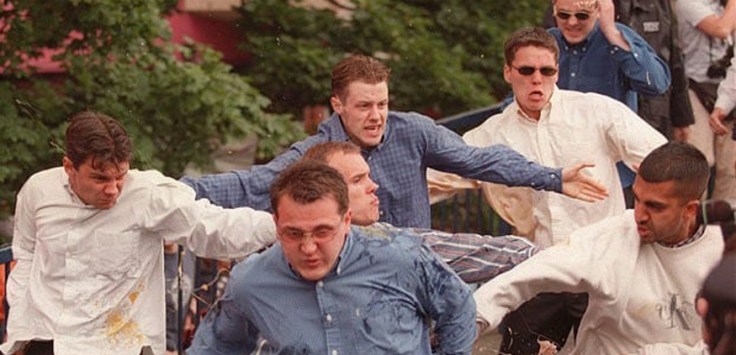



 SKELETON GOD by ELIOT PATTISON
 FATAL PURSUIT by MARTIN WALKER
 AMNESIA by MICHAEL RIDPATH
 DEFECTORS by JOSEPH KANON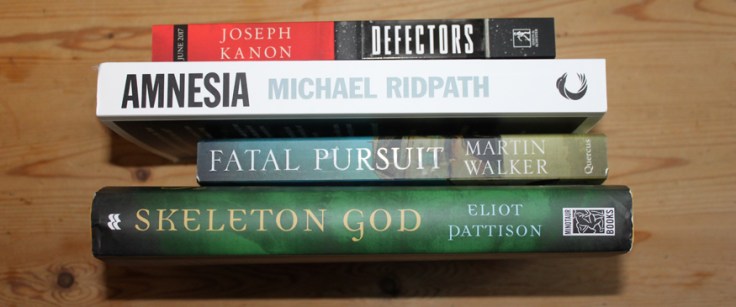

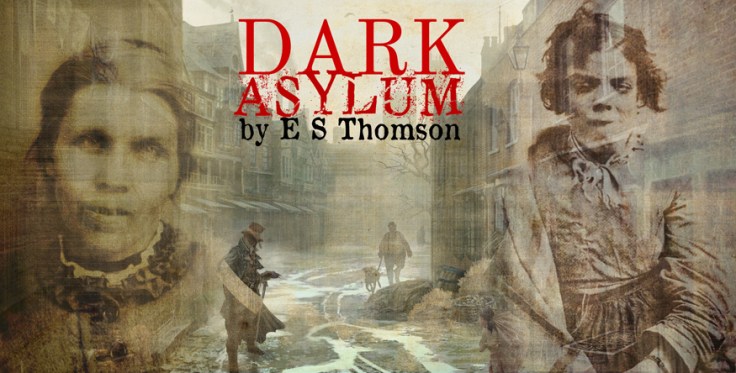
 As I got further into the book, I was beginning to wonder just what the point was of having Jem Flockhart cross-dressing, as it didn’t seem to have any real bearing on events. Just at the point when I was about to dismiss the idea as a conceit, Thomson delivered a beautifully written scene which made sense of Flockhart’s subterfuge, and added extra poignancy to the relationship between Jem and Will.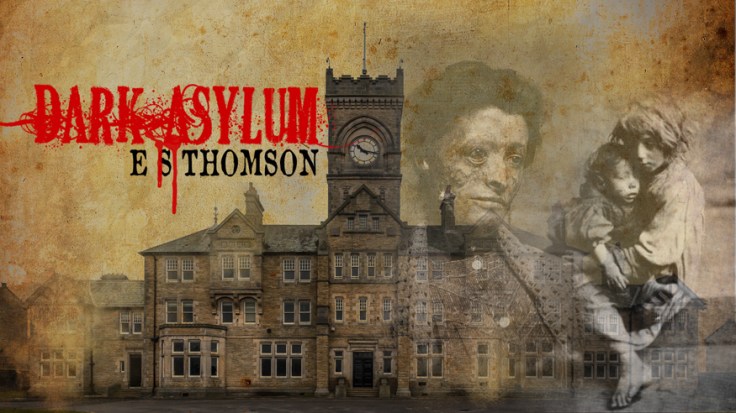


 A 15 year-old girl, Tania Mills, walks out of her front door and out of the lives of her parents, her family and her friends. She becomes just another statistic. Just another missing person for the police to make a dutiful attempt to appear involved. Just another file, first of all gathering dust on a shelf, and then occupying a tiny space on someone’s hard drive.


 There have been many murders where a perpetrator has been allowed to roam, free to kill despite – with the glorious clarity afforded by hindsight – there being loud alarm bells ringing throughout the criminal justice system and, sadly, the offices of mental health professionals. One grim and grisly case was the double murder of two French students in New Cross in 2008. Laurent Bonomo (left) and Gabriel Ferez were gifted research scientists from Clermont Ferrand University finishing their Masters Degrees at Imperial College London.
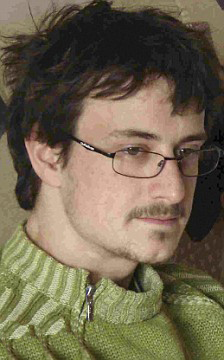 Bonomo and Ferraz (right) were tied up, gagged, tortured and then subject to frenzied multiple stabbings over several hours. They were then doused in an accelerant, and set fire to. Their bodies were discovered by firefighters attending the blaze in their rented apartment at Sterling Gardens, New Cross, on 29th June 2008.
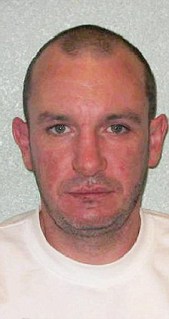 On 10 July, Nigel Edward Farmer, 33, (left) unemployed and of no fixed abode, was charged with double murder, arson and attempting to pervert the course of justice when he appeared before Greenwich Magistrates’ Court. He was remanded in custody until 16 October, at which point the case would be transferred to the Old Bailey.


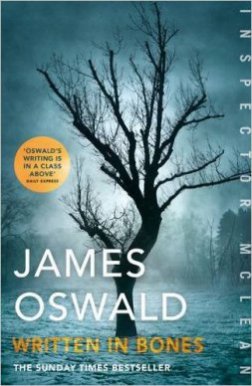 As the pathologists – literally – piece together the evidence they conclude that the shattered remains in the tree is that all that is left of Bill Chalmers, a copper who was not so much bent as tangled and doubled up on himself. After surviving a jail sentence for his misdeeds, he used his connections and his wits to found a drug rehabilitation charity, which drew immense support from the community.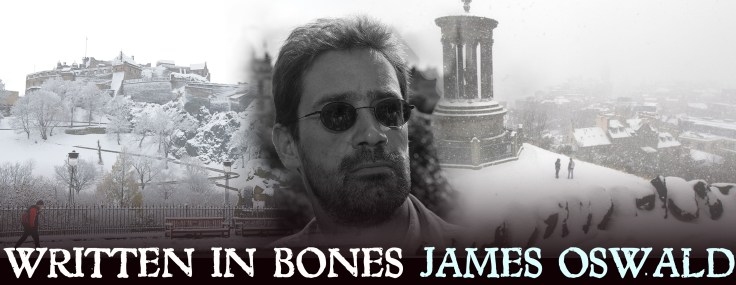

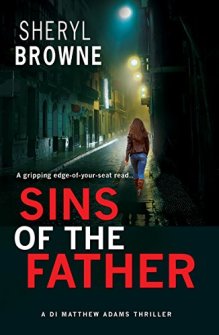 Detective Inspector Matthew Adams is slowly picking up the pieces from a case that nearly cost him the lives of his entire family and his own sanity too. On the surface, he seems to be moving on, but he drinks to forget – and when he closes his eyes, the nightmares still come.


 fullybooked2017