

David Raker is a former journalist who has been at the sharp end, the places where bullets fly, knives flash, and explosions separate the bodies and limbs of decent men. Now, he has left the killing fields of Iraq and Afghanistan behind, and he plies his trade in what is, ostensibly, a more civilised environment, but still one where greed, violence, depravity and deception are an everyday – and very viable – currency. Where could that be? Correct. The dark streets of London. Raker’s business sounds simple. He looks for missing people. Sons, daughters, sisters, brothers, husbands, wives and parents who have disappeared. Vanished. Went to work one day, and never caught the ‘bus home. People whose absence becomes more grievous day on day for their loved ones, but folk whose here-today-gone-tomorrow status has defeated the limited resources of the police.
Raker has a special empathy with his clients. Like them, grief and loss still gnaw away at his heart and soul, but he has the slight advantage of knowing what happened to his loved one. Derryn. His adored wife. Taken in a prolonged tug of war between her spirit and the implacable demon of cancer. Raker watched her fade away, watched her beautiful skin turn to fragile parchment as the disease ate its way through her body.
 But he has, as far as is possible, moved on. He has an unexpected family in the form of a daughter from an early relationship, and he keeps his chin up and his eyes bright. Because to do otherwise would mean self destruction, and he owes the physically absent but ever-present spirit of Derryn that much. His world, however, and such stability as he has been able to build into it, is rocked on its axis when a woman turns up at a West End police station claiming to be his wife. Derryn. Dead and buried these nine years. Her fragile remains consigned to the earth. He sees the woman through a viewing screen at the police station and he is astonished. In front of him sits his late wife, the love of his life, and the woman for whom he has shed nine years of tears.
In terms of improbable plot lines, Tim Weaver has form. You Were Gone is his ninth David Raker novel, and he has staked out his territory as a writer who sets questions which seem unanswerable. I have to confess that in the earlier books, I was tempted to think, “Oh, come on – you cannot be serious..!” Now, however I have learned to trust Tim Weaver, and I know that however impossible the conundrum he sets, he will provide a plausible – if audacious – resolution.
Raker faces a series of events which force him to question his own sanity. Someone, somewhere has constructed a brilliant plot to undermine his sense of self and his memories. Who can he trust? The police investigation into the ‘reappearance’ of his wife seems skewed and slanted against him. Why has a widely respected doctor offered the police evidence that he had treated Raker for an obscure psychological syndrome? Why does Raker have no memory of this? What secrets lie in the overgrown ruins of a London mental hospital?
 So many questions. The answers do come, and the whole journey is great fun – but occasionally nerve racking and full of tension. Tim Weaver (right) has crafted yet another brilliant piece of entertainment, and placed a further brick in the wall built for people who know that there is nothing more riveting, nothing more calculated to shut out the real world and nothing more breathtaking than a good book.
You Were Gone is published by Michael Joseph and will be out on 17th May. To read a review of the previous David Raker novel, I Am Missing, click the blue link.


 Teachers taking advantage of their unique position of trust is nothing if not topical, and few teachers can become so connected to their pupils’ progress and personality as music teachers. In Christobel Kent’s latest domestic thriller we meet Anthony Carmichael, one such person. The student he abused has now grown up and married. Bridget has a loving husband, a delightful son, and a business that demands her full attention. When Carmichael reappears, the fences protecting her comfortable life are torn down, and events take a sinister turn. Published by Sphere, What We Did is out on
  Charles Holborne is a brilliant and successful barrister specialising in criminal cases, and his work brings him into contact with the most corrupt and manipulative people in 1960s London. It will be no surprise to learn that these characters are not all associates of the notorious Kray twins, but men and women who are normally seen on the other side of the justice system. The deeply psychotic Ronnie Kray has already had a terrifying influence on Holborne’s life, and if the barrister thought that the episode was over, he is very much mistaken as he becomes involved in a sex scandal that threatens the very government of the country itself. Corrupted is published by
 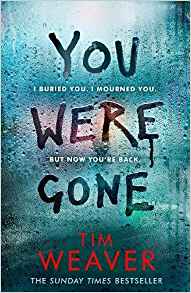 Tim Weaver’s investigator David Raker is now a well established member of fictional PI royalty in British fiction, and he is just that little bit different. His speciality is finding people – whether they wish to be found or not. This is the ninth in the series and, with existing fans well aware that Weaver is a master of plot surprises, readers new to the series are presented with another audacious premise. Raker’s late wife – repeat late wife – reappears and accuses him of faking her disappearance and death. With the police suspecting him of the crime, Raker is faced with a baffling conundrum which will ruin him if he fails to find the answers? Is this woman a clever and convincing opportunist, or does the solution lie in a breakdown of his own sanity? I have been a fan of the Tim Weaver/David Raker partnership for a good while – read why by checking out my review of
  It seems there is nowhere quite like Vienna for mystery, intrigue and international back stabbing – both literal and figurative. For so long the major crossroads between East and West, the Austrian city once again is the backdrop to a dangerous game of bluff and counter bluff and deception. Freddie Makin is a surveillance expert who is paid to watch ‘people of interest’ and report back to his paymasters. His problem is that this a risky profession; powerful people are likely to feel threatened, and when their discomposure reaches a certain level, they will lash out. After following a suspected Chinese intelligence agent, Makin is now the hunted man. Who is trying to kill him? What has he learned that has pushed his name to the top of the kill list? Thomas and Mercer are publishing


 fullybooked2017