

It is the Autumn of 1933. The summer had seen the cinema release of The Private Lives of Henry VIII featuring Charles Laughton, and an out-of-favour politician called Winston Churchill had made a speech warning of the dangers of German re-armament. In Wisbech – an unremarkable town in Cambridgeshire’s Fen country – a criminal case was the headline in the Wisbech Standard. The repercussions of this vaguely comical affair would later bring Wisbech into national focus.

Let the report in the Wisbech Standard tell the tale of these ruthless gangsters and their reign of terror which had the honest Fenland folk cowering in their beds and in fear of their lives.
“For five hours Dr H. C. Meacock (in the chair) and other magistrates sat, on Tuesday, at a special Wisbech Children’s Court listening to the evidence in an amazing series of thefts extending over two months, committed by a gang of young Wisbech schoolboys, five of whom were eventually ordered to be sent to an industrial school.”
Those who read – in an earlier Fully Booked True Crime feature – the sad tale of Horace Dimock, and the tragic events in Wisbech some twenty years earlier, may recall the name of Dr Meacock. It could be said that he had ‘previous’. Wasn’t he the man who, twenty years earlier, was most prominent in the sad case of Dr Dimock and The Wisbech Riots? He was, the very same. One of his fellow magistrates was a certain Mr Savory, seen here on the right of the good doctor.

So, what was the nature of the criminal career of these five lads? Were they emulating the deeds of Clyde Barrow and Bonnie Parker who were in the middle of their legendary crime spree a few thousand miles across the Atlantic? The crimes of The Wisbech Five were rather more mundane:
The defendants were first charged with stealing a purse containing a ten shilling note and 2s 6d in silver from the dwelling house of Annie Ward, at Wisbech, on September 5th.
Annie Ward, of Little Church Street, Wisbech, stated that she left her house at 11.55 am to go to a nearby baker’s establishment. When she returned five minutes later she found her purse missing from the mantelpiece.
Inspector Bush gave evidence of the enquiries he pursued after being informed of the loss, and read statements which he said were made by the defendants when he interviewed them.
The next charge was one of stealing a box of ante-serum for pigs and 5s worth of groceries, the property of Bert Clifton at Wisbech on September 1st.
Bert Clifton, a farmer, of Gedney, said that about 8 o’clock he left his motor car against the Canal railings near the Empire Theatre. In the car were some drums of ante-serum, which he valued at 22s 8d, and 5s worth of groceries. He was away from his car between 8pm and 10.45pm, and on leaving the Theatre he went direct to the car and did not miss the goods until he reached home.
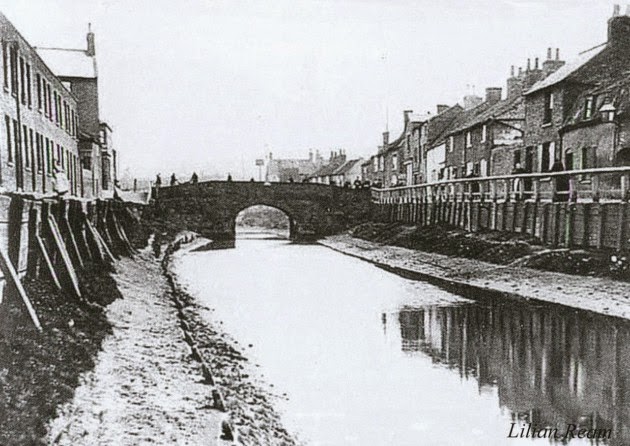
Inspector Bush stated that on September 11th and on subsequent dates he interviewed defendants, one of whom he said took the groceries out of the car and handed them to another of the defendants, who threw them into the canal. Witness added that one of defendants’ parents had rendered every assistance in trying to retrieve the goods from the canal (pictured below)
All the defendants pleaded guilty except one, whose father said that he was in the house at the time of the alleged crime.
The same boys were then charged with stealing a rib of beef and a carton of cream belonging to Susannah Winters, at Wisbech on the same date.
Susannah Winters said that she left her cycle in Clare’s Passage at about 6-40pm. On the handlebars was a basket containing a joint of meat worth 2s 3d, and a carton of cream, which had disappeared when she returned to her cycle at 6.55. Inspector Bush spoke of interviewing defendants, one of whom said that one of the others took the meat home and had it cooked. This was denied by the parent. Mr A R Bennett, headmaster of the Queen’s School and Mr A V Thompson, headmaster of St Peter’s School were present when witness interviewed defendants.
Five of the boys were then charged with stealing cycle lamps at Wisbech on September 8th and 9th, the property of William Callaby, James John Harrop, Kate Rose, and another. Inspector Bush gave evidence in each case.
A charge of stealing two purses and 9d in money, the property of Ivy Irene Hurst, and another, at Wisbech on September 9th was brought against four of the boys. Ivy Irene Hurst said that she went to the Swimming Bath on the date in question, with a friend. After she had left the water, and dressed, she took her shopping bag, which contained her own handbag, inside which was her friends purse, and placed it in her friend’s cubicle. A few minutes later they both went back to the cubicle and found that the purses had been taken from the bag. Witness valued the handbag at 7s 6d. Jean Parlett corroborated the previous witness’s evidence. Inspector Bush said he interviewed defendants, who admitted being there.
Another summons was for stealing half a pound of butter, a box of Aspro tablets and two cycle spanners, at Wisbech on September 9th. Dolly Mary Willimott Barber stated that she left her cycle outside 6, The Crescent at about 6-15pm. On returning at 6-40pm, she found the articles were missing. In his evidence, Inspector Bush said he saw the defendants on September 10th, and one said that they had all shared “the white sweets, which did not taste nice.”
Five of the boys were also charged with stealing a leather handbag containing 2s 7d in money, certain photographs, and one NP match-box, the property of Ivy may Hurst, at Wisbech, on September 1st. Ivy Hurst, of Broad Drove, South Brink, Wisbech, said that at about 9-15am she left her perambulator, in which was her handbag containing the articles, outside Dr Gunson’s House. She visited Dr Gunson’s surgery at 10-10, and when she came out at 11 o’clock the handbag was not there.
Inspector Bush said that when he interviewed defendants one of them said that a boy took the bag out of the perambulator and hid it under some stones near St Peter’s School. All the boys admitted they were there when the theft was committed.
Two of the boys were finally charged with stealing 2s in silver and 4d in copper, the monies of Barbara Joyce Bush, at Wisbech, on September 9th. Barbara Joyce Bush, of the Police Station, Harecroft Road, Wisbech, stated that she left her cycle outside Peark’s shop. On the handlebars was a basket, in which was a small bag containing the money. She was only in the shop about three minutes, but when she came out her bag was missing. Inspector Bush spoke of the previous witness reporting her loss to him, and the subsequent enquiries he made. One of the defendants admitted taking the money and sharing it one of the other boys. They bought some sweets with some of the money.
This hearing took place at Sessions House, a familiar Wisbech landmark.

IN PART TWO
(live on Friday 26th June)
The summing up and sentencing …
The horrors of the Industrial Schools…
The town – and the nation – responds …
The five boys named for the first time ….
The ‘judge’ who had no business being in the court


 To this farrago of lies and deception add fraud on a grand scale. Romand was able to keep himself and his family in relative prosperity by claiming that he had access to investment opportunities which would pay handsome dividends to those fortunate enough to be ‘in the know’. He relieved relatives and members of his wider family of hundreds of thousands of French francs – every one of which went into his numerous personal bank accounts. Separating his mistress and her vast personal fortune was his undoing. She was sharp enough – eventually – to call him out and, with his fantasy world on the verge of unraveling, Romand, on an icy weekend in January 1993, killed his wife, two children, and both of his parents.
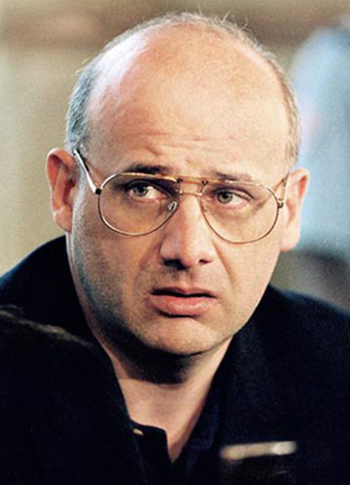 Inevitably, Romand was found guilty of murder, and in 1996 was sentenced to life imprisonment with no chance of parole for at least twenty two years. Prior to the trial, Carrère had begun a correspondence with Romand (right) with a view to writing an account of the case. In this account, aside from the factual detail, Carrère invites us to ponder the true nature of evil and insanity, and makes us wonder if the two states are totally separate, or whether or not they are actually bedfellows.
 Carrère (left) concludes:

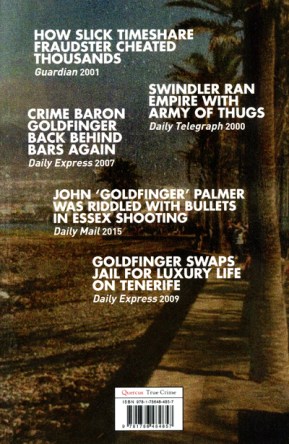 Perhaps the world has shrunk, or maybe it is that organised crime, like politics, has gone global, but more recent British mobsters have become bigger and, because we can hardly say “better”, perhaps “more formidable” might be a better choice of words. No-one typifies this new breed of gang boss than John “Goldfinger” Palmer. His name is hardly on the tip of everyone’s tongues, but as this new book from Wensley Clarkson shows, Palmer’s misdeeds were epic and definitely world class.
 Meanwhile, Palmer had not been idle, at least in the sense of criminality. He had set up in the timeshare business, perpetrating what was later proved to be a massive scam. When he was eventually brought to justice, it was alleged that he had swindled 20,000 people out of a staggering £30,000,000. In 2001 he was sentenced to eight years in jail, but his ill-gotten gains were never recovered.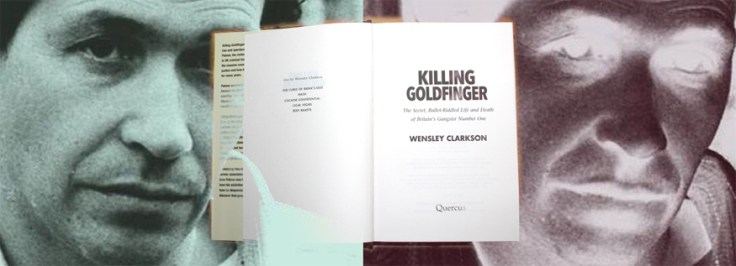

 July 1953. Queen Elizabeth was scarcely a month crowned, children were drinking National Health Service orange juice from their Coronation mugs, and Lindsay Hassett’s Australian cricketers, including the legends Richie Benaud, Ray Lindwall and Keith Miller, were preparing for the Third Test at Old Trafford. John Reginald Halliday Christie was sitting in the condemned cell at Pentonville, awaiting the hangman’s noose for multiple murders.
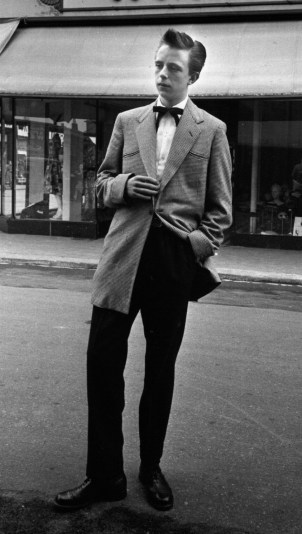 A social trend which had the middle-aged and elderly tut-tutting was the rise of the Teddy Boy. So called because their outfits – long coats with velvet collars, tight ‘drainpipe’ trousers and crepe-soled shoes – vaguely harked back to the Edwardian era. In truth, they were more influenced by the fledgling Rock ‘n’ Roll culture which was scandalising America. Every generation has a sub-culture which, at its most harmless is just clothes and hairstyles, but at its worst is just a cover for male violence. Teddy Boys, Mods, Rockers, Chavs, Gangstas – each generation reinvents itself, but each is depressingly the same – a cloak for male testosterone-fuelled rivalry and aggression.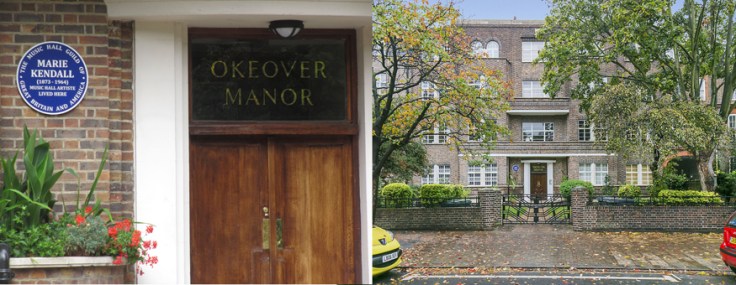
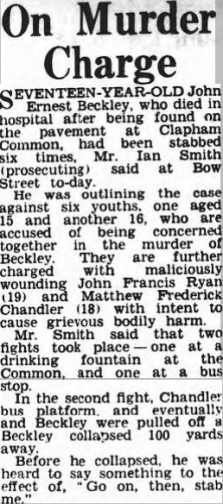 The remaining Plough Boys, realising that the situation had become more serious than a simple punch-up, ran off. One of the bus passengers, made a call from the Oakeover Manor flatsand another passenger improvised a pillow for the victim with a folded coat. Eventually, at 9.42 pm a policeman arrived and just one hour later, John Beckley was found to have six stab wounds about his body and one to his face. He was pronounced dead at the scene.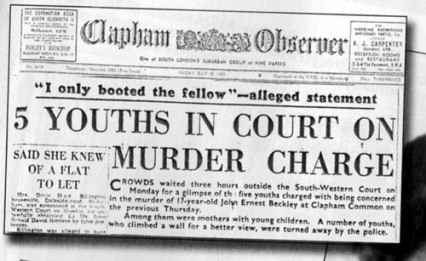
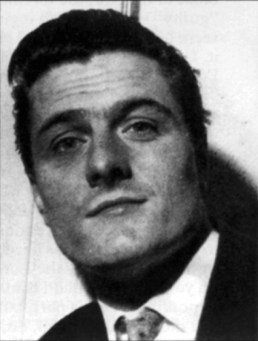 Michael John Davies, (right) the 20 year old labourer from Clapham, never denied being in the fight. “We all set about two of them on the pavement” he said “I didn’t have a knife, I only used my fists.”
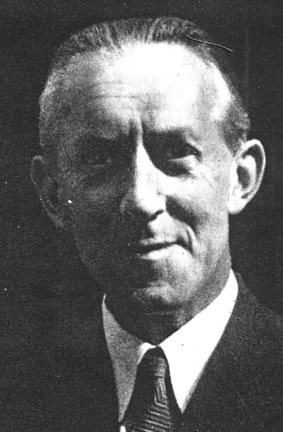 On Monday 14th September 1953, at the Old Bailey, Ronald Coleman and Michael John Davies pleaded not guilty to murdering John Beckley. The four others were formally found not guilty after Christmas Humphreys, (left) the prosecutor for the Crown, said he was not satisfied there was any evidence against them on this indictment. However they were charged with common assault and kept in custody.
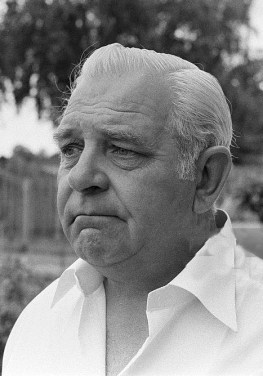 one of the investigating officers in

 There have been many murders where a perpetrator has been allowed to roam, free to kill despite – with the glorious clarity afforded by hindsight – there being loud alarm bells ringing throughout the criminal justice system and, sadly, the offices of mental health professionals. One grim and grisly case was the double murder of two French students in New Cross in 2008. Laurent Bonomo (left) and Gabriel Ferez were gifted research scientists from Clermont Ferrand University finishing their Masters Degrees at Imperial College London.
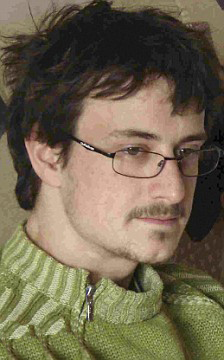 Bonomo and Ferraz (right) were tied up, gagged, tortured and then subject to frenzied multiple stabbings over several hours. They were then doused in an accelerant, and set fire to. Their bodies were discovered by firefighters attending the blaze in their rented apartment at Sterling Gardens, New Cross, on 29th June 2008.
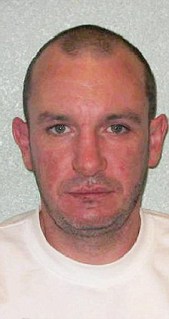 On 10 July, Nigel Edward Farmer, 33, (left) unemployed and of no fixed abode, was charged with double murder, arson and attempting to pervert the course of justice when he appeared before Greenwich Magistrates’ Court. He was remanded in custody until 16 October, at which point the case would be transferred to the Old Bailey.

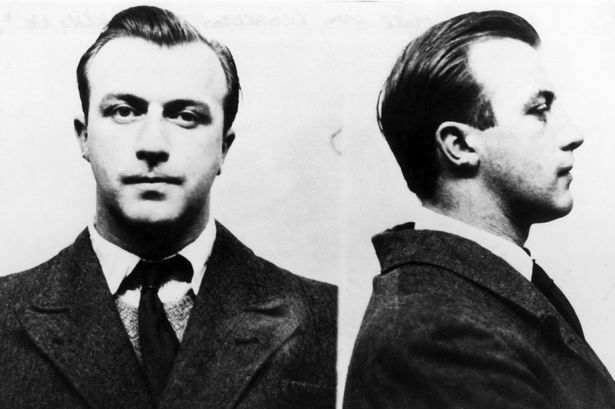


 March 1966. Cornell (right) was having a quiet drink in The Blind Beggar pub, well inside Kray territory on Whitechapel Road, when Ronnie walked in and put a bullet from a 9mm Luger into his head. Needless to say, none of the bar staff or other customers saw a single thing. Kray was eventually convicted of the murder when a barmaid, aware that Ronnie was already safely under lock and key for other misdeeds, testified that she had witnessed the killing.
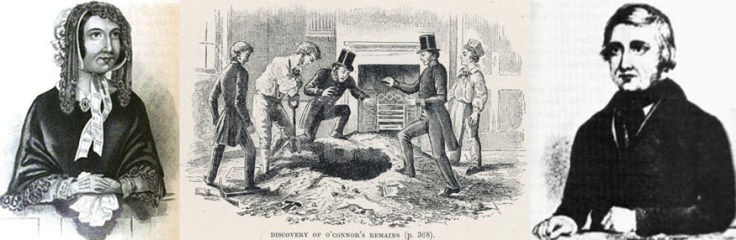 This is the tale of a ghastly pair of opportunists in Victorian London. Frederick Manning turned a blind eye to his wife, Marie, while she dispensed her favours to a rich customs official, Patrick O’Connor. The pair prepared a grave for him under their kitchen floor, and having murdered him, tried to escape with all his money. Inevitably, they were caught, and provided yet another job for William Calcraft, the Lord High Executioner.
 The sounds and sweet airs might have been provided by Haydn Woods’ A Brown Bird Singing or, if you were more disposed towards the art of Edith Sitwell, William Walton’s setting of her poetry – Façade. The discordant sounds of the thousand twangling instruments could have come from several sources; possibly the thousands of impoverished ex-servicemen sold short by the country they had fought for; perhaps, however, the isle which was most full of noises was that of Ireland, and in particular the newly formed Irish Republic.
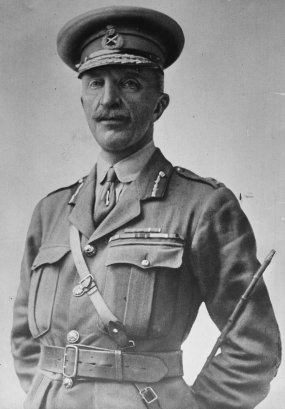 Sir Henry Wilson was a former General in the British Army, and his contribution to events in The Great War divides opinion. Some have him firmly in the ‘Butchers and Bunglers’ camp, a stereotypical Brass Hat who send brave men off into battle to meet red hot shards of flying steel with their own mortal flesh. Others will say that he was part of the combined military effort which defeated Germany in the field, and led to the surrender in the railway carriage at Compiègne in 1918. Whatever the truth, Wilson was never a field commander. He was much more at home well behind the front line, hobnobbing with politicians and strategists.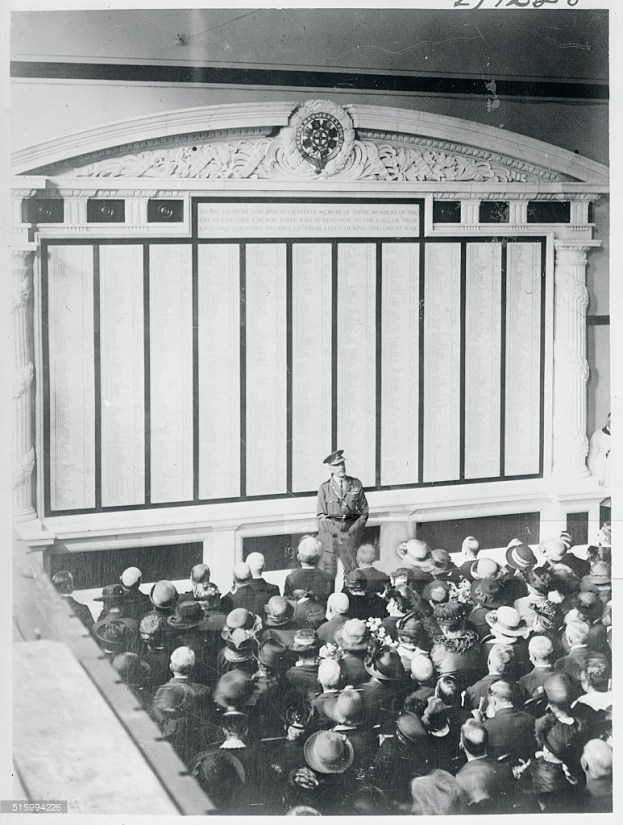

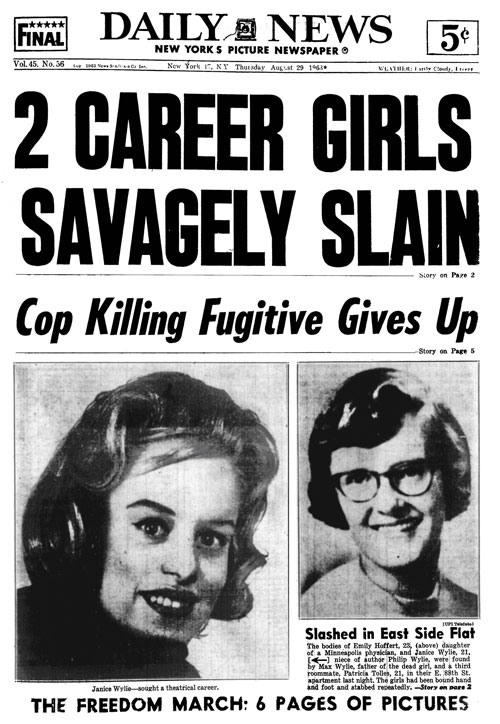
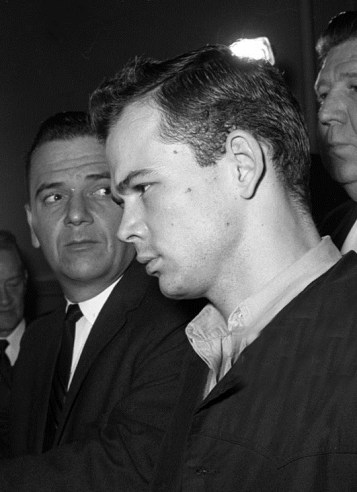 Yet, Mel Glass, a young Assistant District Attorney in Manhattan, not even assigned to the Homicide Bureau, was troubled by the investigation. With the blessing from legendary District Attorney, Frank Hogan, Glass tirelessly immersed himself in the case. So began an epic quest for justice, culminating in a courtroom showdown in which the Brooklyn arresting and interrogating cops refused to admit their flagrant missteps, providing a complete defense to the actual career criminal, vicious predator, murderer, Richard Robles.(pictured right)
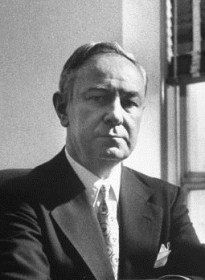 Important to note that District Attorney Hogan (left) was truly a legend long before Wylie-Hoffert occurred. Once convinced that Mel Glass’ gut-instincts and subsequent investigation was legitimate and that George Whitmore, Jr., was wrongfully indicted for the most gruesome and sensationalized double-rape murders in the media’s radar, Mr. Hogan was prepared to admit his mistake, possibly fracture his career’s reputation, and exonerate an impoverished young man with a very low I.Q. And why? Simply and manifestly because it was right, justice demanded it.
 Angeles and defended Amy Grossberg in her sensationalized baby death case. He was Assistant District Attorney in New York County in the office of legendary District Attorney Frank Hogan, where he ran the Homicide Bureau, served as Chief of the Criminal Courts, and was in charge of the DA’s legal staff training program. He served as Deputy Chief counsel for the Congressional Committee investigation into the assassinations of President John F. Kennedy and the Rev. Dr. Martin Luther King, Jr. He also served two terms as mayor of Beverly Hills and taught Advanced Criminal Procedure for four years at Boalt Hall School of Law, University of California, Berkeley, and has conducted continuing legal education (CLE) seminars for practicing lawyers in California, New York, and Pennsylvania. Born in Brooklyn, New York, Tanenbaum attended the University of California at Berkeley on a basketball scholarship, where he earned a B.A. He received his law degree (J.D.) from Boalt Hall School of Law at the University of California, Berkeley. For more information, please visit


 fullybooked2017