

Mark Billingham is certainly a man of many parts. To name a few, there is Gary, the dim-but-lovable stooge to the Sheriff of Nottingham in Maid Marian and her Merry Men, stand up comedian and scriptwriter, acoustic guitarist with Fun Lovin’ Crime Writers and, of course, best selling crime novelist. But author of historical fiction? Well yes, in a manner of speaking. In his afterword to his latest novel Cry Baby, Billingham says that in writing this prequel to the Tom Thorne series he had to imagine a world of clunky computers the size of refrigerators, telephone boxes and ‘phone cards, and pubs where people smoked.
We are, as ever in London, but it is the summer of 1996. The city and the country – at least many of the menfolk thereof – are transfixed with the European Cup. Crosses of St George flutter from the aerials of Mondeos up and down the land and pubs are rammed with supporters of Shearer, Sheringham, Southgate and company. Detective Sergeant Tom Thorne is trying to schedule his work around the matches, but when a boy is abducted from a London park, football has to take a back seat.
 Kieron Coyne is playing with his mate Josh under the watchful eyes of their mothers, Cat and Maria. Cat goes off for a pee, Maria settles back on the park bench and lights a fag. One minute Kieron is there, the next he has disappeared. Josh emerges from the little wood where the boys were playing hide and seek. He neither saw nor heard anything of his friend.
A major police investigation kicks in, with Thorne doing the leg work at the best of his incompetent boss. We learn that Cat and Maria are both single mothers – had ‘lone parents’ been invented in 1996? – but in different circumstances. Kieron’s father is doing a long spell in a maximum security prison, while Maria’s doctor husband divorced her a couple of years back.
Hours turn into days and there is no sign of Kieron, dead or alive. A birdwatcher thinks he saw a boy getting into a car with a man he obviously knew, and a Crimewatch presentation by the late lamented Jill Dando turns up nothing more useful than imagined sightings the length and breadth of the country, and the usual false confessions from the mentally ill.
Thorne does find a suspect – a neighbour of Cat’s with a suspicion of ‘form’ for dodgy sexual activity – but the arrest of Grantleigh Figgis does not go well for either the police of the suspect.
Billingham manages the historical details very well, and we meet one or two regular characters from the Thorne series for the first time, none more dramatically than Phil Hendricks, the much-tattooed and oft-pierced pathologist. In a rare droll moment in a seriously dark book, Billingham has gentle fun with making Thorne’s gaydar so wonky that he has our man making enquiries as to why Hendricks hasn’t found the right woman to settle down with. We also meet Thorne’s soon-to-be-ex wife Jan, and fellow copper Russell Brigstocke who, as lovers of the series know, manages subsequently to keep his CV much cleaner than Thorne.
Fans of Billingham’s novels, both the Tom Thorne series and the stand-alones, know that he likes nothing better than a dramatic twist in the final few pages, and he doesn’t let us down here. There is something of a ‘where the **** did that come from’ moment when all the patient door-knocking, statement-taking and deduction of the coppers is spun on its head in a few dazzling pages of revelation. Cry Baby is published by Little, Brown and is out now.


 irst up, read my review of
  can’t make it too random, so here’s a little decider. You can answer by email to



 London copper DI Tom Thorne has been entertaining us since his debut in Sleepyhead (2001). His creator, Mark Billingham, (left) has developed an enviably reliable repertory company of other players who share the stage with the main man. There is his best mate Phil Hendricks, a pathologist who, despite being gay, supporting Arsenal against Thorne’s beloved Spurs and having piercings in places where most folk don’t even have places, is the voice of sanity in Thorne’s often chaotic world. Thorne’s love interest (from whom he is currently living apart) is Helen, another police officer, but one who works in the traumatic world of child protection. Nicola Tanner is Thorne’s professional partner and they have history, but not one that either reflects on with much pleasure. Tanner’s partner Susan was brutally killed in a previous episode, and her death hangs over the pair like a pall.
 In an ostensibly unconnected narrative thread, Billingham introduces us to a Sarah, a vulnerable single mum who is anxious to gain the approval of other mums with whom she waits at the primary school gate twice each day. They seem confident, successful and financially comfortable. Sarah tries to join in with their daily sojourn at a pretentious ‘artisan’ coffee shop after the morning school run, but she still feels like the outsider. Her world is just herself and her son Jamie, and she struggles to compete with the gossip and banter that fly like sparks between Karen, Caroline, Savita and Heather. Until. Until the day when, sitting apart at her own table in HazBeanz, Sarah is chatted up by distinctly fanciable slightly older fellow. Almost instantly, Sarah finds the others anxious to swap phone numbers in return for daily updates about the new romance.



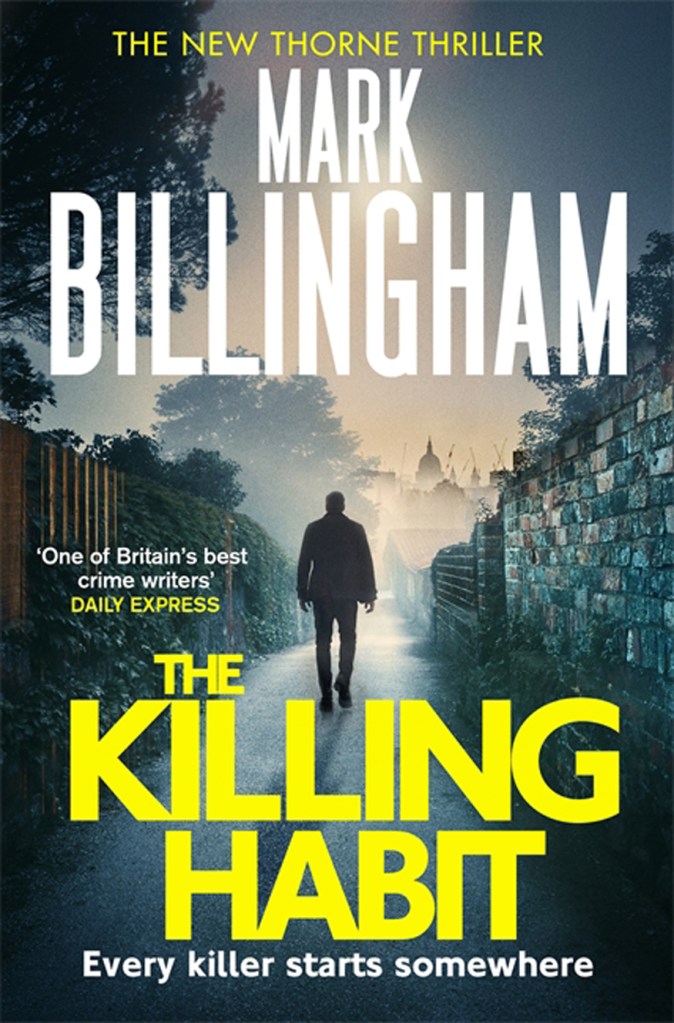

 The Thorne novels have a recurring cast list. As Salvatore Albert Lombino, aka Ed McBain said, quoting a 1917 popular song, “Hail, Hail, The Gang’s All Here!” Indeed they are. Its members include Helen, Tom Thorne’s long suffering partner plus little boy Alfie, and the bizarrely tattooed and pierced Mancunian pathologist Phil Hendricks. We have Nicola Tanner the police officer scarred by the murder of her alcoholic partner, Susan, and the perpetually cautious DCI Russell Brigstocke. Between them, they pursue two killers; one who murders losers-in-the-Game-of-Life on the periphery of a drugs gang, and another who seems to be targeting lonely women via a match-making service.
 Just when you think that he has provided all the answers to the complex plot, and the characters are, to quote the only bit of Milton I can remember from ‘A’ Level, “calm of mind and all passion spent,” Billingham (right) provides a breathtaking epilogue which, in addition to turning my preconception on its head, (feel free to add your own metaphor) bites you on the bum, punches you in the gut, hits you over the head with a piece of four by two, takes the wind out of your sails and grabs you by the short-and-curlies. Hopefully recovering from this multiple assault, you will be hard pushed to disagree with me that this is a brilliant crime thriller written by a master storyteller at the very top of his game.
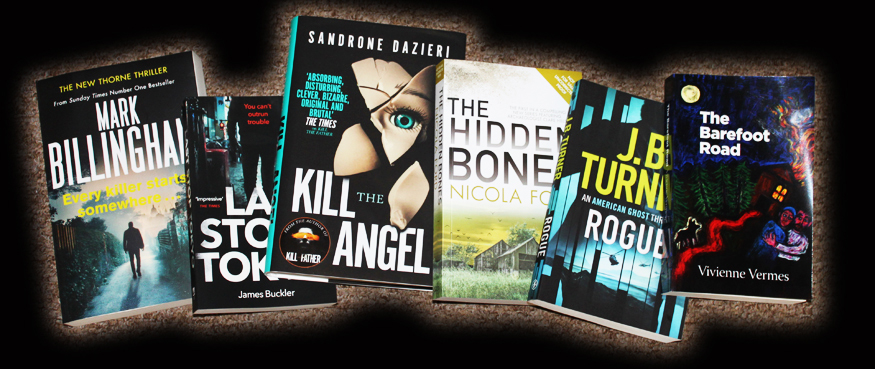



 THEY SAY THAT YOU’RE NEVER TOO OLD TO LEARN – and reading the Amazon description of Dazieri’s novels I came across the amazing word Rocambolesque. As ever, Google had an answer of sorts, and I am now waiting for the opportunity to drop the word into casual conversation with my friends and family. That aside, Dazieri returns with another case for detectives Torre and Caselli. An express train from Milan arrives in Rome, but several of its passengers and train crew won’t be disembarking, at least without the help of medical teams, stretchers and body bags. This is Italian Noir at its finest, and not for the faint of heart. Published by Simon & Schuster, Kill The Angel is translated by Anthony Shugaar, and is out now.

 If you said either “Dracula” or “Vampire”, I win. But maybe you’ve been reading the novel by Irish-Hungarian actress and poet, Vivienne Vermes? If so, you’ll know that her novel The Barefoot Road definitely doesn’t involve teeth, cloaks, garlic or unconventional blood transfusions. It dos however, involve blood which is shed by violence. A young woman is found near a Romanian village. She is unconscious, half -starved, and barely alive. She is from an ethnic group which were brutally expelled by the ancestors of the present villagers. Humanity temporarily triumphs over tribal bigotry and she is nursed back to health, but when she begins a relationship with one of the villagers, and a child disappears, the embers of old hatreds burst into flames. The Barefoot Road is published by Matador, and is available as a Kindle or a paperback.


 In this imaginative retelling of the now infamous events in the Bavarian capital in 1938, David Laws gives us a young present-day researcher trying to find out the truth about her grandfather’s part in a series of meetings which shaped history. What evidence did he have that Neville Chamberlain was being duped by Hitler? Why did he almost certainly give his life to prevent the deal going through? Emma Drake finds the answer not in dusty telegrams or carbon copied communiques, but in a present day forest just fifty miles from the site of the lasting testament to Nazi infamy –
  From the grim and silent testimony of a Polish forest to the bustling and utterly cosmopolitan world of Venice, courtesy of Donna Leon and her immensely popular Italian copper, Commissario Guido Brunetti. It seems barely credible that this is number twenty seven – no, that’s no misprint, 27 – in the series. While trying to discover the source of an information leak from within his own department, and investigating the savage attack on a family friend, Brunetti seeks solace – and a possible solution – from the pages of Sophocles’ Antigone. The Temptation of Forgiveness will be out on 5 April from William Heinemann/Cornerstone in
  Miller created quite a stir with his debut novel, Norwegian By Night, and now he aims to repeat the achievement with the story of Chief Inspector Sigrid Ødegård who has to leave her native Norway and travel to America to find the truth behind her brother’s disappearance. In addition to apparently disappearing off the face of the earth, he is implicated in the death of a prominent African-American academic. And this is 2008, election year, nerves are in shreds, and across the political world innocent mistakes are treated as mortal insults. In addition to plying her police officer skills, Sigrid Ødegård needs to learn a whole new set of behavioural responses if she is to get the the bottom of her brother’s disappearance. American By Day is published by Transworld/Doubleday and will be

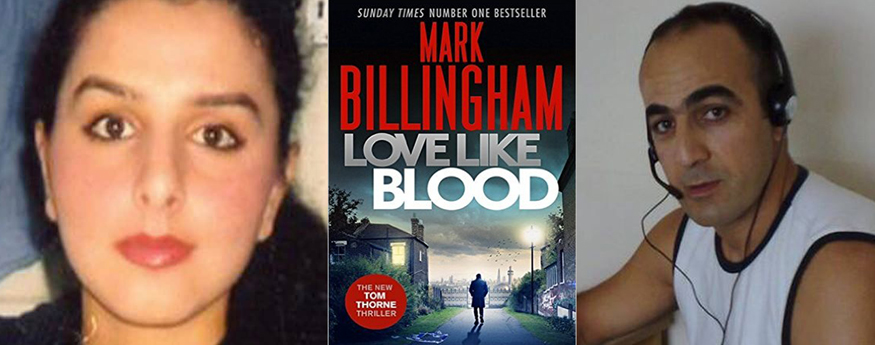
 Now, Thorne becomes involved in another kind of hell on earth, and one where all absent devils have been called home, all leave cancelled, and any recently retired fallen angels pressed back into duty. The fires stoked in this particular hellish pit illuminate the ghastly world inhabited by some British Asian communities who sanction murder in the name of their warped concept of family honour. Among the ghosts which inhabit the darker parts of Thorne’s memory is that of Meena Athwal. She was killed, he is certain, at the behest of her family, but her death remains unavenged in a court of justice.


 fullybooked2017