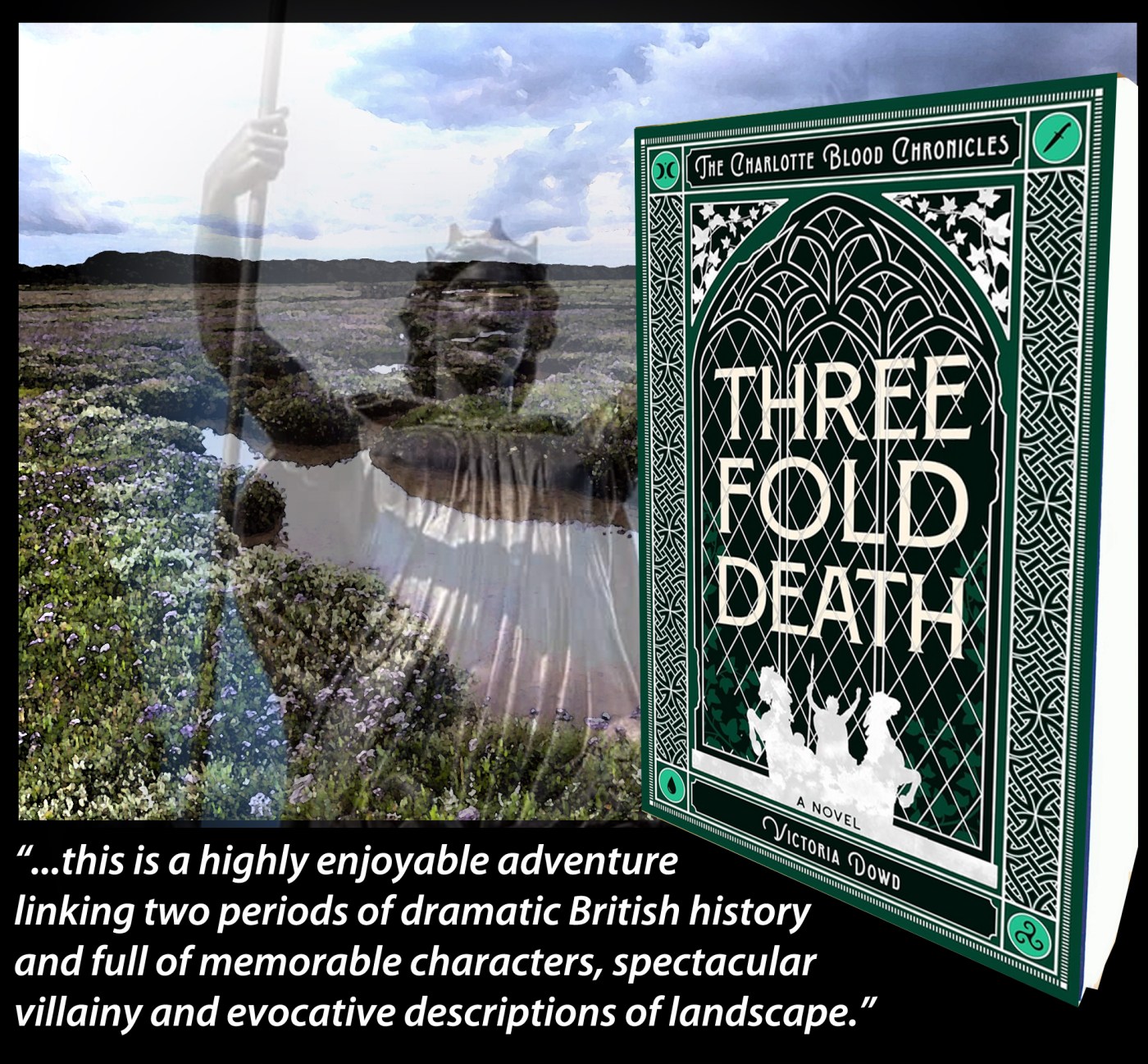

All we know about Boudica is courtesy of three Roman historians, Tacitus, Suetonius and Cassius Dio. The latter’s more detailed account was written 140 years after the celebrated revolt by Boudica’s Iceni tribe against their Roman overlords. How much of what they wrote is historical fact we shall never know as, like Shakespeare and his politically expedient ‘history’ plays, the Romans would have had, shall we say, axes to grind. In short, Boudica is pretty much a blank canvas for writers of historical fiction.
Here, Victoria Dowd has great fun with a 1930 archaeological dig in the marshes of North Norfolk. where the organisers believe they have found Boudica’s tomb. Covering the dig for her newspaper is Charlotte Blood, a young widow whose husband, Archie, was a late casualty of The Great War, his lungs never recovering from the scourge of mustard gas. We are reminded that it was just eight years earlier that one of the most celebrated archaeological digs of all time uncovered the tomb of Tutankhamen, and the team gathered in the Norfolk mansion of the British Museum’s Director of Antiquities, Sir Robert Ainsworth all have their hopes and fears.
The three journalists are each eager for details – either glorious or gruesome – which will sell newspapers; the serious archaeologists like James Sharpham are aware that this may be a career-defining moment. The financial backer of the project, Lord Elvridge, may be hoping for a return on his investment in the way of commercially valuable artifacts, while his son and heir, ‘Boy’ Laybury, a junior archaeologist, appears to be a sneering toff more interested in totty than torcs.
The opening of the tomb, next to a ruined chapel on a windswept island out in the coastal marsh, is gloriously over the top. Victoria Dowd, unbeknown to us, has assembled the cast of a classic Golden Age country house mystery and, suddenly, within a paragraph or two, we are dealing with a very modern murder rather than the fate of a fabled British Queen. A recently dead body is found beside more ancient remains in the tomb, and it is identified as that of Victoria, the rather wayward daughter of site manager Eddie Hart, and when both Elvridge and his almost spectral wife are found dead, Mere House comes to resemble Agatha Christie’s celebrated island off the coast of Devon.
No cliche is left hanging on its hook in the cupboard. The telephone line is down. High tides have left the marsh impenetrable, and a mission to reach what passes for civilisation – and the police – is launched. We have one advantage over the beleaguered guests in the remote mansion, and that is that we have already witnessed what appears to be Boudica’s demise, not in the glory of battle, but at the sharp end of a dagger wielded by her Roman lover.
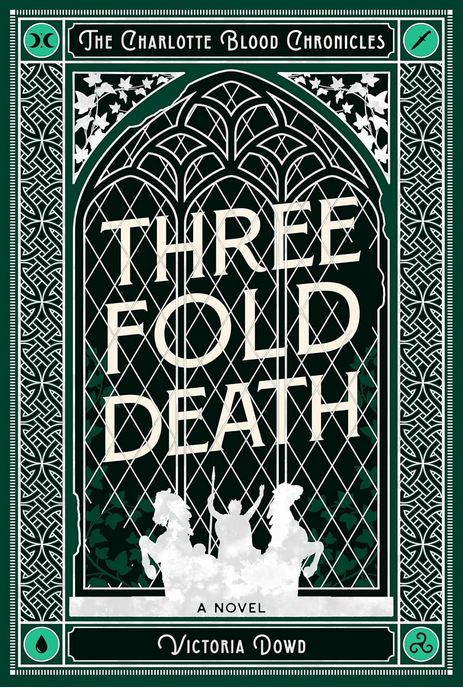
I have one rather nerdish geographical quibble with this engaging thriller The author plays fast and loose with the terms ‘fen’ and ‘marsh’. The Norfolk marshes are mostly open to the sea, while the fens, long since drained, were predominantly inland areas made up of peat inundated with freshwater. Having got that off my chest, I have to say that this is a highly enjoyable adventure linking two periods of dramatic British history and full of memorable characters, spectacular villainy and evocative descriptions of landscape. I am particularly susceptible to anything set in 1930s Britain, as the poignant memories of The Great War are still very much part of so many people’s lives, and there is the terrible irony that so few would have any idea of the horrors that lay just a few years ahead. Threefold Death is published by Datura Books and is out now.