

I was delighted that John Lawton’s Friends and Traitors showcased a return for his charismatic copper, Fred Troy, and even more pleased that the beautiful and enigmatic Meret Voytek featured once again, after her ordeals in A Lily of The Field. Norman Russell certainly brought Victorian Oxford to life with An Oxford Scandal, and his consumptive Inspector Antrobus was an intriguing fellow, finishing the novel trying to avoid the sight of his bloodstained handkerchief. In Dangerous Crossing, Rachel Rhys captured beautifully the potent cocktail of snobbery, suspicion and political uncertainty among passengers on an ocean liner on the eve of World War II. In The Well Of The Dead, Clive Allan skilfully wove together two stories, the first being an account of the calamitous events surrounding The Battle of Culloden in 1746, and the second an assured modern police procedural plot.
My winner this year, in spite of the fierce competition, is On Copper Street, by Chris Nickson. I have grown to love the stories featuring Inspector Tom Harper, a brave and determined copper treading the cobblestones of Victorian Leeds. Here, Harper investigates the death of a petty crook, and the horribly modern-sounding attack on two children who have acid thrown at them. Against the background of the lonely and impoverished death of a pioneering political activist, Harper pursues the villains in his usual implacable way, supported at every turn by his admirable – and very bonny – wife. I wrote:
“I would imagine that Nickson is a good old-fashioned socialist, and he pulls no punches when he describes the appalling way in which workers are treated in late Victorian England, and he makes it abundantly clear what he thinks of the chasm between the haves and the have nots. Don’t be put off by this. Nickson doesn’t preach and neither does he bang the table and browbeat. He recognises that the Leeds of 1895 is what it is – loud, smelly, bustling, full of stark contrasts, yet vibrant and fascinating.”


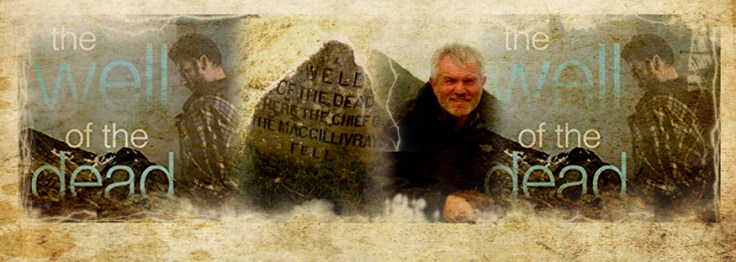
 In the icy Scottish dawn of 16th April 1746, the last battle to be fought on British soil was just hours away. The soldiers of the Hanoverian army of William Duke of Cumberland were shaking off their brandy-befuddled sleep, caused by extra rations to celebrate the Duke’s birthday. Just a mile or two distant, the massed ranks of the Scottish clans loyal to Charles Edward Stuart, the Young Pretender, were shivering in their plaid cloaks, wet and exhausted after an abortive night march to attack the enemy.
 The Well Of The Dead is a winning combination of several different elements. It’s a brisk and authentic police procedural, written by someone who clearly knows how a major enquiry works. For those who enjoy a costume drama with a dash of buried treasure, there is interest a-plenty. Military history buffs will admire the broad sweep of how Allan (right) describes the glorious failure that was the Jacobite rebellion, as well as being gripped by the detailed knowledge of the men who fought and died on that sleet-swept April day in 1746, bitter both in the grim weather conditions and what would prove to be a disastrous legacy for the Scottish Highlanders and their proud culture.
 This is the second outing for Clive Allan’s Detective Inspector Neil Strachan and, as in the first book in the series, The Drumbeater, past and present collide. Glenruthven, a tiny community in the Scottish Highlands, is dominated by its distillery. When the owner, Hugh Fraser is murdered alongside his wife, the village is shattered at the thought of there being a killer in their midst.
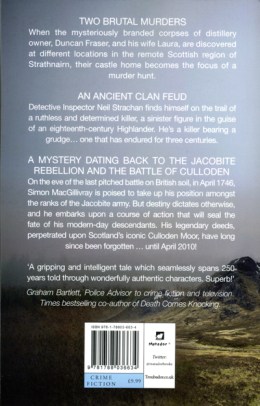 As Strachan and his police partner DS Holly Anderson set about finding the killer, they discover that the man they suspect of the double murder is obsessed with his own ancestry, and believes that he is related to a Jacobite soldier who, like so many of his fellow rebels, was slain on the bloody battlefield of Culloden on 16th April 1746.
 Clive Allan (right) is a former police officer of thirty years’ service, and is also a keen aficionado of his country’s military history. This mixture of experience and passion combines to create a novel which will blend the lure of momentous events of the past with the gritty reality of modern policing.


 fullybooked2017