

A beach in Goa, 1992. A boy and a girl, a brother and his older sister, are amusing themselves at the water’s edge. Their parents, unconventional, more in love with their own escapist lifestyle than they are with their children, are nearby. But then they aren’t nearby. They are gone. What happens next is a blur of childlike confusion, incomprehension and false memory. But Jess and Ro are now orphans.
The years pass. The remains of the children’s father are eventually discovered in the jungle not far from the beach, but of their mother, Sophie, not a trace. Well meaning but reluctantly relatives have cared for and schooled Jess and Ro until they pass from their scarred childhood into the uncertainty of adulthood. Jess, though has made a success of her life. She is a successful commercial lawyer, has a treasured daughter with husband Charlie, and she lives in a delightful house just on the edge of Clapham Common in south London.
But little brother Ro – short for his nickname, Sparrow – has fared poorly. His school days were troubled and tormented, and he has carried the trauma of that hazy day on a tropical beach like a monster clinging to his back. He has led a largely nomadic life and, like the obsessed Captain Ahab, he travels the world in search of his lost mother. His most recent attempt to track her down leads him to a hamlet in rural Ireland where Sophie Considine was known. This particular trip ends badly, however, and he makes his way to England.
 Annemarie Neary gives us a chilling sense of separate events which are not fatal in themselves but deadly when they collide, and while Ro is making his way to Clapham, the normally self-assured Jess is in trouble at work. She has rejected the advances of a senior partner at an office social, and he uses the rebuff to light a fire under Jess’s professional life.
Ro arrives at his sister’s home and Neary skilfully describes how the young man’s near-autism and utter self-obsession starts to undermine the household. Charlie already holds Ro in contempt after previous clashes but the live-in au pair, a balefully unpleasant young Brazilian woman called Hana, is the final ingredient in a the shaking up of a poisonous cocktail of guilt, lust and fractured relationships.
Sensing that he has at last found gold at the end of his rainbow, Ro projects his fixation on Maya, the wife of an old family friend, Eddie. The fact that Eddie was part of the loose community of beach bums in Goa convinces Ro that Maya – complete with a tell-tale scar where a tattoo has been removed – is his mother.
Neary has a silken touch and she spins a web of potential tragedy that is gossamer light, shot through with poetry, but one that will draw you, the reader, into its folds and not let you escape. Here, she describes Ro’s conviction that his lonely quest is over.
“And as he passes under the great avenue of chestnuts, his heart rises like freshly baked bread and he imagines himself a stork, not a swallow. If he were a stork, with a sash in his beak, this is where he would take his mother. He would carry her up into the high branches, make a nest there for her. He would keep her safe from predators, out of the reach of the grubby little world.”
The book succeeds on every level: it is near perfect as a tragedy in that it has the three Aristotelian demands of drama – the unities of time, place and action. Like the tragic figures of Hardy and Shakespeare the doomed protagonist is not totally devoid of human decency, and this makes their downfall ever more bitter because we onlookers can see that it is preventable. The Orphans is a tale as dark as ebony, and as convincing a description of a descent into madness as I have ever read. It is published by Hutchinson and will be available in July as hardback, paperback and Kindle.


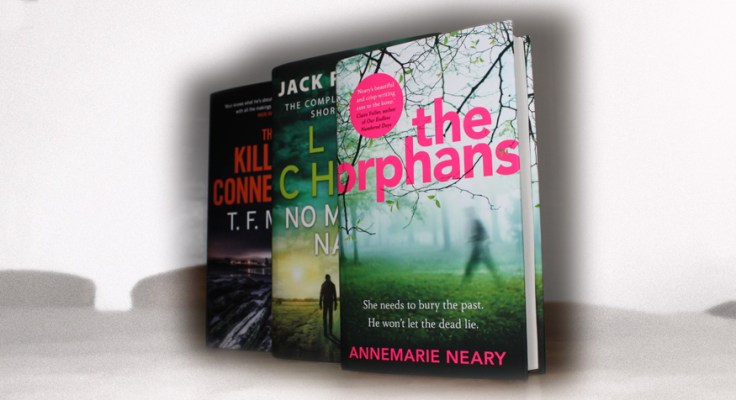
 Annemarie Neary (left) is an Irish-born novelist and short story writer. She studied literature at Trinity College Dublin before qualifying as a lawyer and moving to London. Her two previous full length novels are A Parachute In The Lime Tree (2012) and Siren (2016). The Orphans tells the tale of two children, Jess and Ro, brother and sister, whose parents mysteriously disappear while the family are staying on the island of Goa. Years later, the two children have gone in different directions. Jess has become a successful lawyer, and is married with
 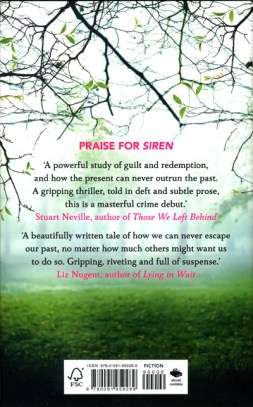 children of her own. Her brother Ro (short for his nickname Sparrow) has spent his adult life searching for his missing mother, and this obsession has taken him all over Europe, including their old home town in Ireland. The last thing Jess needs is for Ro to reappear in her life, armed with a renewed conviction that their mother is still alive out there somewhere. But this is precisely what he does, and it triggers a dramatic and dangerous downturn in their lives – and the lives and well being of those around them. The Orphans is published by Hutchinson, and will be
  while Alex Gray’s Bill Lorimer has the Glasgow beat. Not to be outdone, TF Muir (left) has put the university town of St Andrews firmly on the crime fiction map with his series featuring DCI Andy Gilchrist. The Killing Connection is the seventh of these, and Gilchrist is investigating the death of an unknown woman washed up on the rocks near the castle ruins. When another woman comes forward with information about the death, Gilchrist breathes a sigh of relief. His sense of well-being is short lived, however. His would be informant disappears, and then she, too, turns up dead. The Killing Connection is published by Constable and will be available
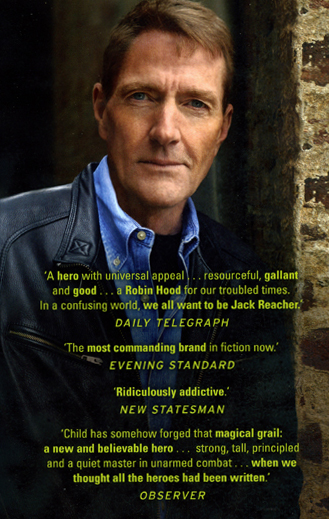 million New Yorkers, and was the backdrop – or maybe blackdrop – to over 26 hours of looting. Returning to the story, we have an extremely young Jack Reacher, just a few weeks short of his seventeenth birthday, out on the town. In addition to helping a suspended FBI agent take out a top mafioso, the young man also manages to point the authorities in the direction of David Berkowitz, the infamous Son of Sam killer.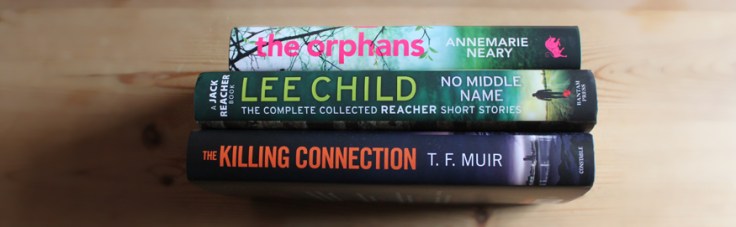


 fullybooked2017