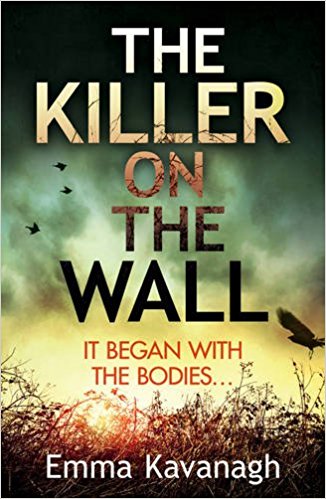
There are towns and villages the world over which in themselves are insignificant in the greater scheme of things, but whose names are indelibly imprinted on the public consciousness for the evil deeds committed there. My Lai, Sandy Hook, Columbine, Dunblane, Hungerford: the names resonate, and cause us to shudder. In the latest novel from Emma Kavanagh, Briganton is such a place. It is a village otherwise little worthy of note, with nothing to detain either the traveller or the tourist save, perhaps, for its proximity to the remains of the winding wall built to protect the northern limits of Roman Britain from so-called Celtic barbarians.
 The name Briganton, to most British people, conjures up a series of murders, where the victims were dragged up the steep hillside and posed, in death, gazing with sightless eyes out over the windswept moorland. But all that was long ago. The killer, Heath McGowan, was brought to justice by the determination of Eric Bell, a local policeman who has since been promoted and has achieved national celebrity due to his solving the case. His triumph had added poignancy because it was his teenage daughter, Isla, who discovered the first bodies while out for an early morning run.
Twenty years have past, and now Isla Bell is Professor of Criminal Psychology at the University of Northumberland. Her husband, Ramsey Aiken was one of the original victims of The Killer On The Wall, but he survived his injuries, and is now a freelance journalist, while her father, Superintendent Eric Bell has become something of a police legend.
Isla is working on a project to identify physical differences between the brains of serial killers and normal people, and her work takes her to the prison where Heath McGowan is serving several life sentences for his murderous activities in and around Briganton. As she persuades him to undergo an MRI scan, she tries to persuade him to talk about the killings, but he treats it as a game, and refuses to divulge any useful information.
Then, the unthinkable – even the impossible – happens. In quick succession, two more local women are murdered and take the places of the long-dead bodies propped up against the limestone blocks of Hadrian’s Wall. Clearly, McGowan is not the killer, but does he have an imitator? An accomplice, maybe, who was never caught decades earlier? A young Detective Constable, Mina Arian, has made her home in Briganton and she becomes obsessed with finding – or disproving – links between the original killings and the new murders.
Emma Kavanagh has a doctorate in psychology, and her understanding both of what we know – and what we don’t know – about the workings of the human mind give this novel a very distinct and disturbing potency. Her academic credentials aside, she is a very gifted writer. As far as the plot is concerned she gives us a trawl net full of red herrings to sift through, and her vivid characterisations, particularly of Mina Arian, Eric Bell and Isla Aiken, give the narrative an electric charge.
This is a guided missile of a book: it explodes into life, and then keeps burning, inexorably homing in on a target which you will only foresee by cheating and flipping through to the last few pages. When it comes, the detonation is as devastating as it is unforeseen. Only the very best writers have the daring and dexterity to deliver such a plot twist and make it as credible as it is shocking, and Emma Kavanagh must be a founder member of that exclusive club.
You can read our review of The Missing Hours, an earlier novel by Emma Kavanagh, and she also wrote a very perceptive feature on Trauma. The Killer On The Wall is out now.


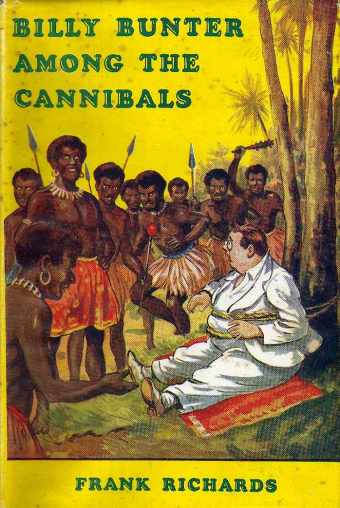 Hamilton. The tales were strewn with classical and biblical references which, in those days, most of us understood. One of my favourites was used whenever Bunter was at low point in life, but then, miraculously, found a forgotten toffee in his pocket, or perhaps an unguarded slice of chocolate cake in the common room. Richards would say, “but for Bunter, there was Balm in Gilead.” This meant, of course, that the woes of the world inhabited by The Fat Owl of The Remove were, temporarily, eased. Gilead is a hilly region in modern day Jordan, and the balm was a herbal medicine known to the inhabitants in biblical times.
 David R Ewens (right) lives and works in Kent, and Fifth Column is the fourth book featuring PI Frank Sterling. We are in the world of international skullduggery, but it isn’t all first class lounges and dangerous blondes. Sterling says:
 one of the best things about it is that I can pretty much do as I damn well please, and that wasn’t the case when I was on the job and had a sergeant or inspector breathing down my neck. One thing is certain. I was never a team player so how I currently earn my living suits me just fine…”
 “April, come she will,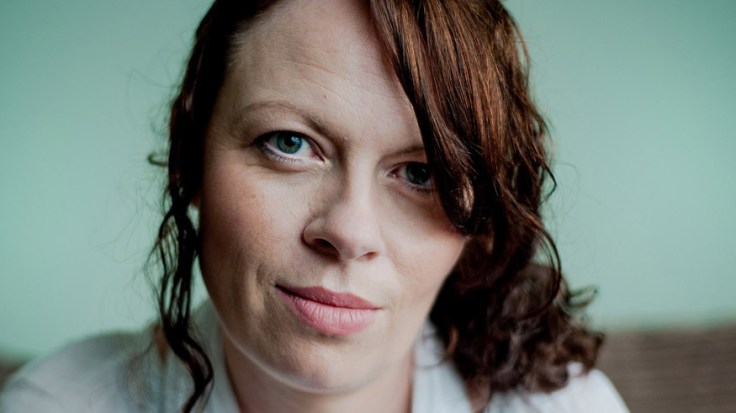
 DC Max Wolfe has become established in the crime fiction firmament, thanks to his creator, Tony Parsons (left). Of the previous book in the series, The Hanging Club, I wrote:
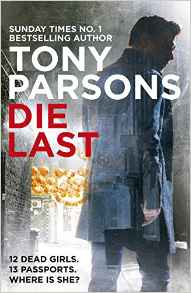 abomination that we thought we had seen the back of in the nineteenth century – slavery. Parsons doesn’t flinch from portraying evil for what it is, but neither does he preach. Wolfe’s latest case starts when a refrigerated lorry is found abandoned in London’s Chinatown. Inside are twelve women. Twelve corpses – frozen to death. But in the cab of the lorry are thirteen passports. Where is the missing woman? Max Wolfe’s determination to solve this conundrum takes him to darker places than even his world-weary soul could ever have imagined. Die Last is published by Century,


 fullybooked2017