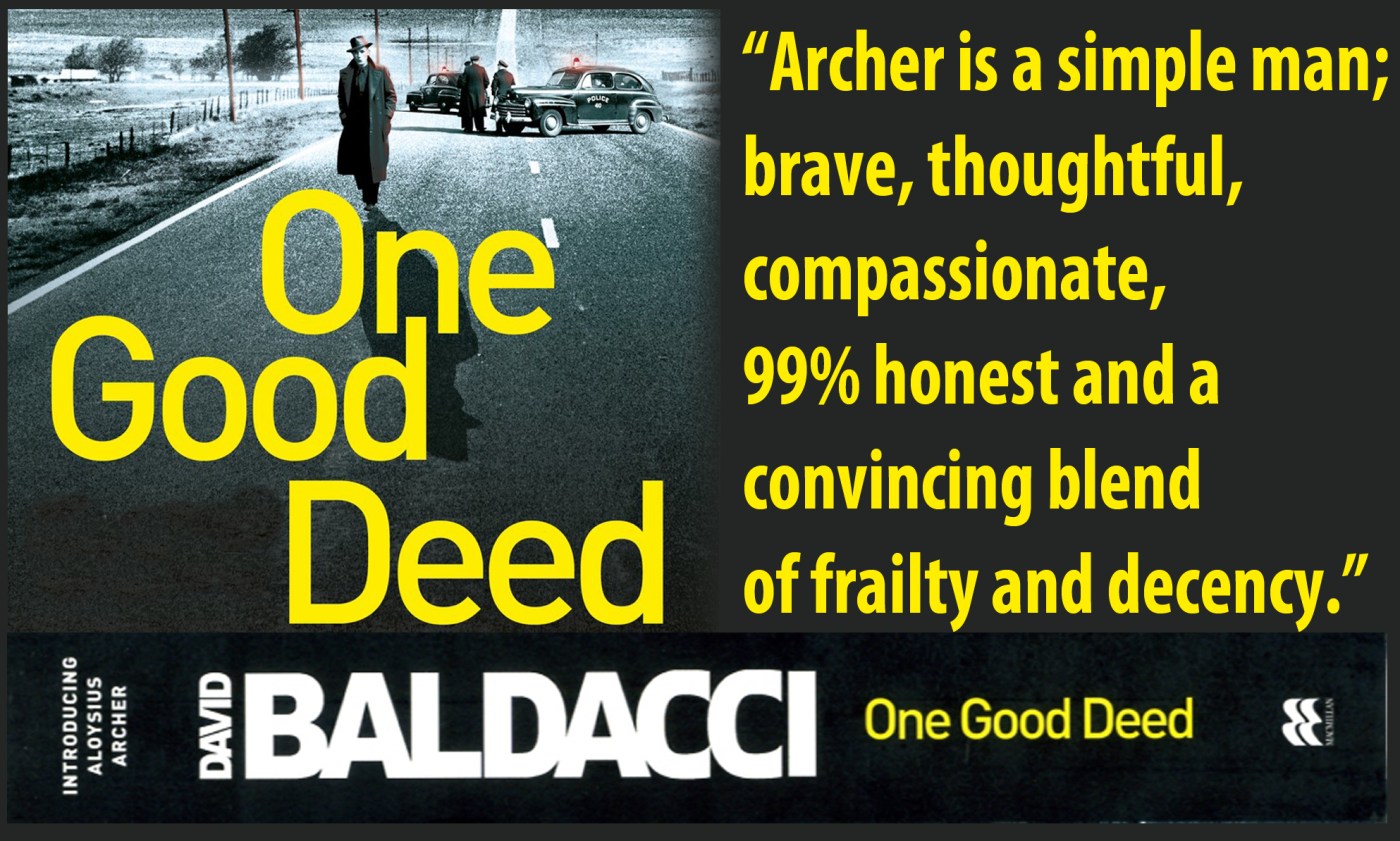

Aloysius Archer has good cause to remember his parents for most things. Their decency, their love and their determination to do the best for him, certainly. For his Christian name, not so much. He finds that most folk can’t even pronounce it properly, so he is happiest with just Archer. This has not been a problem for the last few years, as residents of the State Penitentiary were not too precious about names. Put inside for a crime he didn’t commit, Archer has served his time, survived, and is out on parole. It is 1949, and he is on a bus heading for Poca City, a metropolis in name only. In reality, it is a parched and fly-blown settlement with a few bars, a handful of stores and diners – and a Probation Office.
 rcher served his country with distinction in the war, fighting his way up the spine of Italy, watching his buddies die hard, and wondering about the ‘just cause’ that has trained him to shoot, throttle, stab and maim fellow human beings while, at the same time, preventing him from being at the deathbeds of both parents.
 Wearing a cheap suit, regarded as trash by the local people, and with every cause to feel bitter, Archer checks into the Derby Hotel and contemplates the future. His immediate task is to check in with his Probation Officer, Ernestine Crabtree. Quietly impressed by her demeanour – and her physical charm – Archer goes, in spite of his parole restrictions, for a drink in a local bar, The Cat’s Meow
Propping up the bar is a middle-aged roué with a much younger woman on his arm. Hank Pittleman is clearly a big man in Poca City, and he offers Archer what appears to be a simple job – reclaim a fancy car that was held as collateral for a defaulted loan. The Cadillac is currently in the possession of Lucas Tuttle, another local man of property, but a man who seems to have fallen on hard times.
Archer accepts the job, takes an advance on the fee, and sets off on what seems to be a relatively straightforward mission. Truth be told, the Cadillac belongs to Pittleman and Tuttle has it. Archer is tough, capable of extreme violence, so what could be possibly go wrong? As Oscar Wilde wrote:
“The truth is rarely pure and never simple.”
 ven before Lucas Tuttle answers the door to Archer’s knock by pointing a cocked Remington shotgun at his unwelcome visitor, Archer has learned that the floozie on Pittleman’s arm in the bar is none other than Jackie, Tuttle’s estranged daughter. Archer finds the coveted motor car hidden away on Tuttle’s ranch, but it has been deliberately torched. Cursing his involvement in this blood feud, Archer’s equilibrium and freedom both take a severe knock when Pittleman’s body is found in a bedroom just along the floor from Archer’s room in The Derby. Thrown into the cells as the obvious suspect, Archer is released when he meets up with Irving Shaw – a serious and competent detective – and convinces him of his innocence.
 Pretty much left on his own to solve the case after a violent attempt to silence Jackie, Archer has to summon up very ounce of his military experience and his innate common sense to put himself beyond the reach of the hangman’s noose.
 mplausible as it may sound, given the body count – stabbings, shootings, people devoured by hogs – One Good Deed is a wonderfully warm and feel-good kind of novel. Archer is a simple man; brave, thoughtful, compassionate, 99% honest and a convincing blend of frailty and decency. Baldacci (right) is such a skilled storyteller that the pages spin by, and anyone who loves a crime novel where goodness prevails would be mad to miss this. Mr B also gives us a rather unusual romance – for 1949, at least. One Good Deed is published by Macmillan and is available in all formats on 25th July.



 It is 1965 and we are basking in the slightly faded grandeur of Brighton, on the south coast of England. The town has never quite recovered from its association, more than a century earlier, with the bloated decadence of The Prince Regent, and it shrugs its shoulders at the more recent notoriety bestowed by a certain crime novel brought to life on the big screen in 1947. Brighton has its present-day misdeeds too, and who better to write about it than the intrepid crime reporter for the Evening Chronicle, Colin Crampton?
 rampton is an enterprising and thoroughly likeable fellow, with a rather nice sports car and an even nicer girlfriend, in the very pleasing shape of Australian lass Shirley Goldsmith. Crampton is summoned to the office of his deputy editor Frank Figgis and, barely discernible amid the wreaths of smoke from his Woodbines, Figgis’s face is creased by more worry lines than usual. His problem? The Chronicle’s drama correspondent, Sidney Pinker, has been served with a libel writ for savaging, in print, a local theatrical agent called Daniel Bernstein.
 inker, by the way, is very much in the John Inman school of caricature luvvies, so those with an over-sensitive approach had better look away now. His pale green shirts, flowery cravats and patronage of certain Brighton nightspots are pure (politically incorrect) comedy.
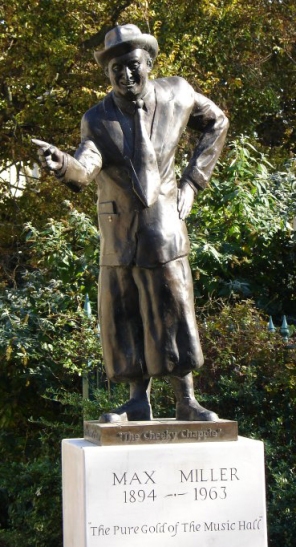 Bernstein’s murder is seen as very much open-and-shut by the Brighton coppers, but Crampton does not believe that Pinker has the mettle to commit physical violence. Instead, his investigation takes him into the rather sad world of stand-up comedians. Today, our stand-up gagsters can become millionaire celebrities, but back in 1965, the old style joke tellers with their catchphrases and patter were becoming a thing of the past, as TV satire was breaking new ground and reaching new audiences. Crampton believes that the murder of Bernstein is connected to the agent’s former association with Max Miller and, crucially, the possession of Miller’s fabled Blue Book, said to contain all of The Cheeky Chappy’s best material – and a few jokes considered too rude for polite company.
 here have been occasions – and I am not alone – when I have used the term cosy in a book review, meaning no ill-will by it, but perhaps suggesting a certain lack of seriousness or an avoidance of the grim details of crime. Are the Colin Crampton books cosy? Perhaps.You will search in vain for explorations of the dark corners of the human psyche, any traces of bitterness or the consuming powers of grief and anger. What you will find is humour, clever plotting, a warm sense of nostalgia and – above all – an abundance of charm. A dictionary defines that word as “the power or quality of delighting, attracting, or fascinating others.” Remember, though, that the word has another meaning, that of an apparently insignificant trinket, but one which brings the wearer a sense of well-being and even, perhaps, the power to produce something magical.




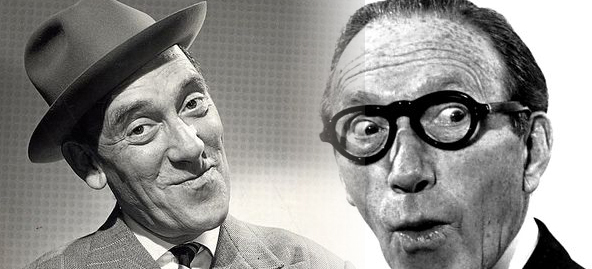
 Then there was the female comic, in the 1960s often from the north of England, like Hylda Baker. In fact, I’ve made my version – Jessie O’Mara – younger and more overtly feminist than Baker. The feminist movement was stirring in the 1960s. I’ve made O’Mara a Liverpool lass with a strong line in scouse chat.
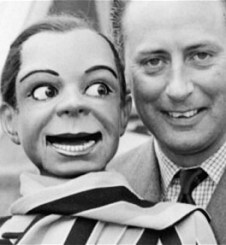 A special kind of comic in the days of variety theatre was the ventriloquist. The most famous was Peter Brough whose dummy was Archie Andrews. The pair featured in a long-running radio show. (I could never see the point of doing a vent act any more than a juggling act on the radio.) So I’ve created Teddy Hooper and his dummy Percival Plonker who do what used to be called a cross-talk act of quick-fire gags.


 I have become a great fan of the Crampton of the Chronicle mysteries. Despite having multifarious murders and diverse dirty deeds, they are breezy, funny, beautifully written and they have a definite feel-good factor. Peter Bartram (left) is an old newspaper hand himself, and the background of a 1960s newsroom in a provincial newspaper is as authentic as it can get. Colin Crampton’s latest journey into the criminal underworld of Brighton is The Comedy Club Mystery. The cover blurb tells us:
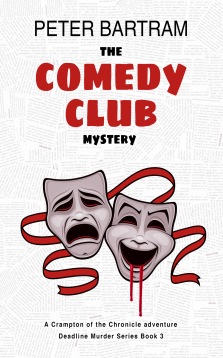 “When theatrical agent Daniel Bernstein sues the Evening Chronicle for libel, crime reporter Colin Crampton is called in to sort out the problem.


 fullybooked2017