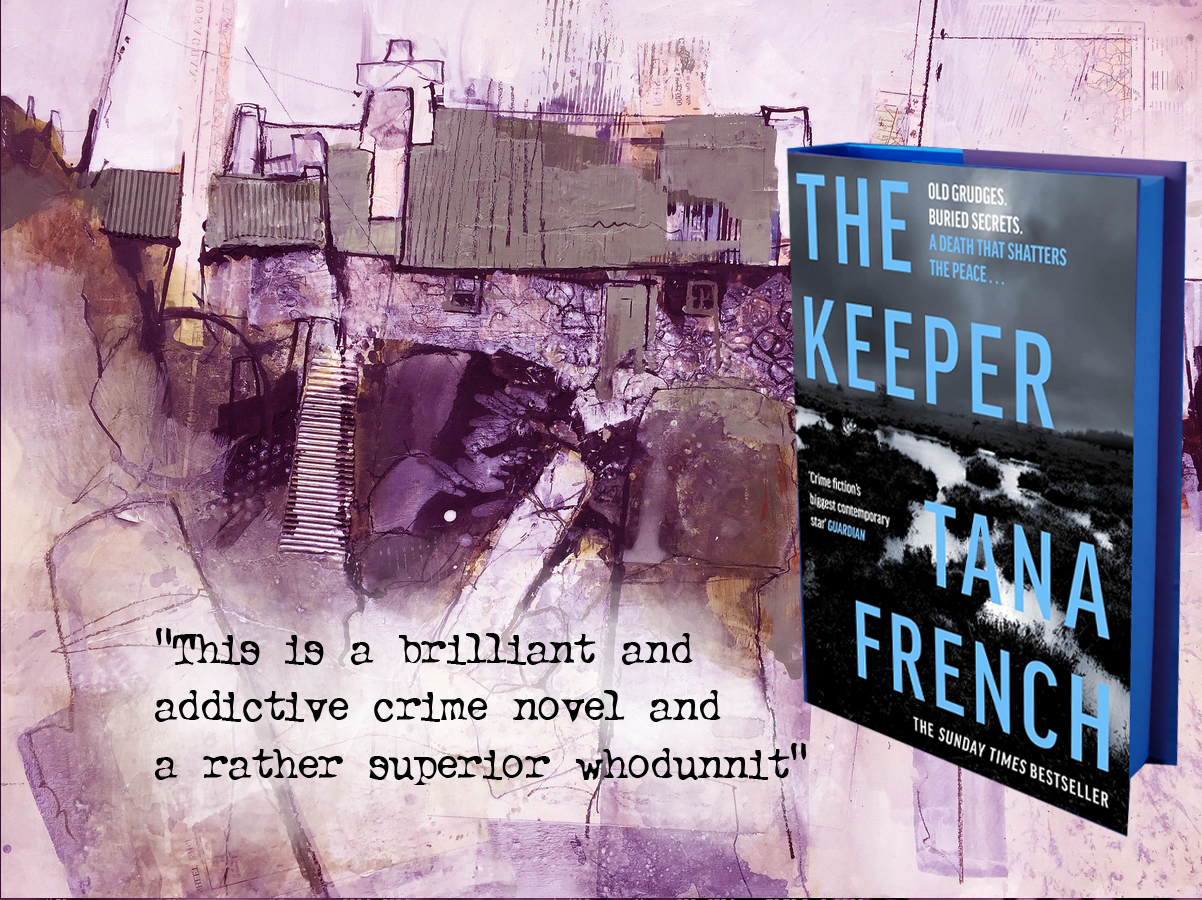

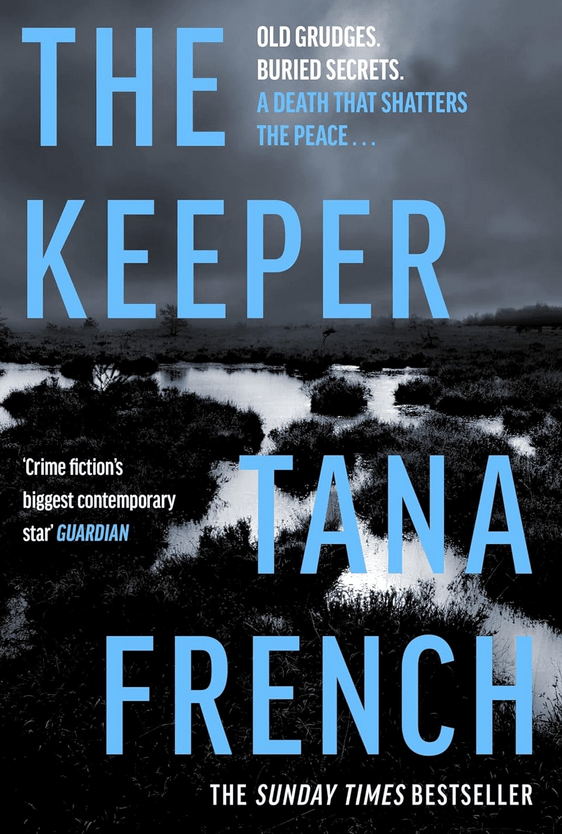
Former Chicago cop Cal Hooper has fetched up in the Irish village of Ardnakelty, where he supplements his pension with woodworking and carpentry. This is the third novel in the series, but for newcomers, the cast list comprises:
Lena, his kind-of fiancée. She is a widow.
Noreen, her sister. She runs the village shop and is a one woman Greek chorus and general busybody.
Tommy Moynihan, a would-be big shot, manager of a local factory, rich but widely disliked.
His son Eugene, something in Dublin finance circles.
Rachel Holohan, his long time girlfriend.
Trey, a teenage girl, something of a wild child, informally adopted by Cal, whose natural daughter Alyssa still lives in America.
The drinkers at the Seán Óg pub. They are a diverse mix of farmers and strugglers, but unequivocally wedded to Ardnakelty and its heritage, for good or bad.
We learn that all is not well between Rachel and Eugene. She is reported missing one night, and then Cal and other searchers find her body in the local river. Weeks pass before the authorities declare her death a suicide, through drinking antifreeze. Meanwhile, the village has become polarised with gossip and speculation, the fault line being suspicion of – or support for – the Moynihans.In the long dead days between Rachel Holohan’s death and her body being released for burial, Ardnakelty begins to twitch.
A better snapshot of a rural Irish wake you will not find:
“I’m starving, “Bobby says dolefully.
At a long table at the end of the room, a scrawny kid with an unconvincing mustache is ladling soup from a tureen into bowls for a line of the kind of old women who can’t be killed by anything short of a lightning strike.
Bobby eyes him wistfully.
‘I’d eat the hind leg off the lamb of God.”
At a hefty 400 plus pages this is no crime caper throwaway. Tana French uses the time and space to plant a seed of suspicion beneath the turf of Ardnakelty. The seed germinates, puts out roots, and then produces the flowers which Baudelaire called Fleurs de Mal. As Rachel is laid to rest, the parish priest cannot resist a biblical reference to the evil of suicide, while the Moynihans and Rachel’s family sit, pointedly, on opposite sides of the church.
The enigmatic Trey thinks that the antifreeze suicide makes no sense; Lena has told no-one about the night Rachel visited her, ostensibly to ask for Lena’s veterinary advice about her cat, but actually – and tearfully – wanting someone to talk to. In an effort to find out what is going on, as tensions increase, Lena goes to see Noreen”s mother in law, who seems to know all and see all, despite never leaving the house:
“At the heart of it all is Mrs. Duggan, vast and formless, in a magenta dress, coated with swirls of tiny magenta beads, like one of those underwater creatures that lie wide-mouthed on the seabed, waiting to receive anyone and anything that comes their way.”
As opinions in Ardnakelty polarise between the pro and anti Moynihan camps, Tana French gives us a magnificent pub brawl which (old movie buffs, pay attention) might have been orchestrated by John Ford, with John Wayne and Victor McLaglen in full flight.
Despite his being an outsider and a former Chicago cop, Cal feels connected:
“Cal doesn’t know how to find words for what he means.The things he’s come to prize in this place are not, mostly, the ones he moved here in search of.The beauty is all there and more, but he was also picturing simplicity and peace, maybe even innocence, none of which showed up in any noticeable quantity.Instead, he’s found the intricate webs constructed over centuries that bind people to one another, to their land and to their past.He’s under no illusion that these bindings are simple or innocent either.They’ve sliced people to the bone, scourged them out of town, choked them to death. But alongside all that, they’ve held the place together, steadfast in the face of time, dark happenings, rifts, attacks, and sieges.”
This is a brilliant and addictive crime novel and a rather superior whodunnit, but it is so much more. Tana French’s portrait of small town rural Ireland, with its gossip, linguistic quirks, petty jealousies, long-held grudges and its ambiguous relationship with the land and its climate reveals in words what Rembrandt brought to life with brush strokes. I have never set foot in Ireland, so I cannot say if her version is accurate. What I do know is that no contemporary English writer does the same thing for our villages and small towns. We are, of course, a very crowded and compact country and much more in thrall to globalist media influence, so perhaps the comparison is unfair. In the end, good triumphs – after a fashion. Tommy Moynihan is stopped in his tracks, but not before a good man dies. The Keeper will be published by Viking on 2nd April.


 fullybooked2017