Search

fullybooked2017

Tag

Suffolk

THE ANTIQUE HUNTER’S GUIDE TO MURDER . . . Between the covers

Antiques spine022 copy

Think the beautiful county of Suffolk, with its stately churches and half-timbered villages. Think the timeless Stour and Deben valleys and their rivers, where the sun dapples the glinting water, much as it did when Constable immortalised the scene. Think antiques. Think crime and intrigue. Remind you of Sunday nights back in the day? It reminds me of the antics of Lovejoy and his friends, thirty years ago. However, this is rather different.  We are in the present day, and the central character is Freya Lockwood, a skilled antique hunter who has fallen on hard times. Her former husband has let her keep their house until their daughter grew up, but now he wants it back and she is, to paraphrase the great Derek Raymond, rather like the crust on its uppers.

Freya’s background has elements of tragedy. As a schoolgirl, she was badly burned in the house fire that killed her parents, and she was brought up by her aunt Carole and began her working career as an assistant to antiques expert Arthur Crockleford.  At some point they had a major falling out, and haven’t spoken in years. When Freya gets a ‘phone call from Carole to say that Arthur has been found dead in his shop, she ups sticks and travels down to  Little Meddington where he had his shop.

The police have decided that Arthur’s demise is a simple case of an elderly man falling down the stairs, but then Freya and Carole are handed a letter addressed to them which begins:
“If you are holding this letter in your hands then it is over for me..”

Is there more to Arthur’s death than meets the eye? We know there is, because of the first few pages of the book, but Freya and Carole are in the dark after subsequently being told by a solicitor that the shop and its contents are now theirs. They begin to pick away at the mystery.

Arthur has arranged an antiques weekend to be held, in the event of his death, at Copthorne Manor a nearby minor stately home. He has invited several people connected with the antiques world to stay at the Manor, and it is as if he will be conducting the consequent opera like a maestro from beyond the grave.

We learn that the falling out between Freya and Arthur was a tragedy that occurred in Cairo many years earlier, Arthur and Freya were in Egypt ostensibly verifying and valuing certain items which were thought to have been stolen and were being traded on the antiques black market. Freya fell in love with a with a young Egyptian, Asim, whose family firm specialised in creating very cleverly faked antiquities. When a deal goes wrong, Asim is found dead, and Arthur sends Freya back to England. They have not spoken since, as Freya believes that Arthur was responsible for her lover’s death.

Now, back in Suffolk, at Copthorne Manor, some of the people involved in the Cairo incident are together again under the same roof, and in the vaults of the house are packing crates which contain some of the items which were central to Asim’s murder.

Everyone wants to get their hands on the precious items, but no-one is who they seem to be. The country house setting allows author Cara Miller to run through the full repertoire of Golden Age tropes, including thunderstorms, power cuts and corpses, and she has great fun as Freya and Carole eventually expose the villains.

Screen Shot 2024-03-17 at 19.10.35
Cara Miller
(above) is the daughter of the late Judith Miller of Antiques Roadshow fame, so she certainly knows her stuff. The novel is a splendid mix of murder, mayhem and outrageous characters, and will delight those who love a good old fashioned mystery, with more than a hint of the Golden Age. It is published by Macmillan, and is available now.
A GEOGRAPHY OF HORROR . . . Between the covers

James header

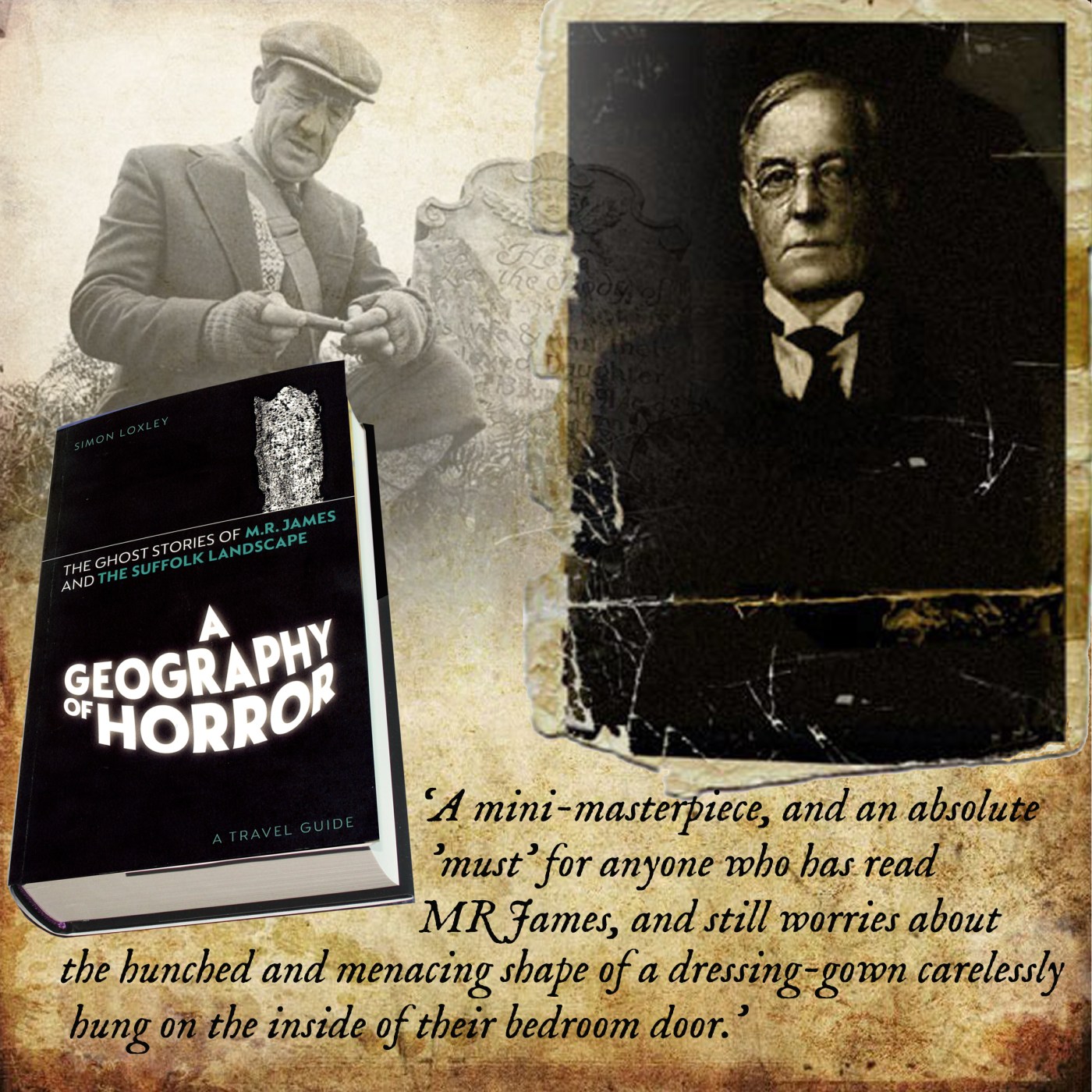
Ghost_stories_of_an_antiquaryWho was the most celebrated writer of ghost stories? The genre doesn’t lend itself particularly well to longer book form, and even classics like Henry James’s The Turn of The Screw and Susan Hill’s The Woman In Black are relatively slim volumes. The master of the shorter version and, in my view, a man who unrivalled in the art of chilling the spine, was MR James. Montague Rhodes James was born in Kent in 1862, and in his main professional life he became a renowned scholar, medievalist and academic, serving as Provost of King’s College Cambridge, and Provost of Eton. His first collection of ghost stories, Ghost Stories of an Antiquary, was published in 1904 and has, as far as I am aware, never been out of print.

Screen Shot 2022-03-24 at 18.57.29

From the age of three, until he was in his forties, James’s  home was in Suffolk, and several of his most chilling tales were set in the county. Now, Simon Loxley, himself a Suffolk man who is a celebrated expert on typography, has written a book which examines James’s links with the county and the places which he is convinced that James had in his mind as the settings for such stories as Whistle and I’ll Come to You. Older readers of this review may remember a magnificent television adaptation of this story which was first shown in 1968, starring the great MIchael Hordern as the sceptical academic who, after rubbishing the very existence of a supernatural world, has a very nasty encounter with bed-sheets in his hotel room. A DVD is available (at a price), but as with so many other things, it’s on YouTube.

Simon Loxley’s book is, among other things, a superb piece of research. He has walked every inch of his territory, and has read every word that James wrote. He notes the distinctive Englishness of the characters and , in particular, their emotional restraint:

“They are people who would not normally foist their life story upon you at a moment’s notice. They have no-one close to confide in, so they carry the story with them, unspoken until, perhaps underv the encouragement of a social setting, they tell. That fits in with the perceived British national character of the period. The sanity and the solidarity of the characters is emphasised.”

Here, Loxley hits the button which reveals why the  MR James stories are so believable. The people who experience the unpleasant, dusty, scuttling – and long since dead – entities that still terrify us today, are not gullible fools, nor are they emotionally fragile. Instead they are solid, pragmatic ‘tweedy types’ who live their lives based on evidence and things empirical.

The book is lavishly illustrated with maps and photographs, and the author examines James as a man, as a writer, and also looks at his contemporaries, predecessors in the genre, and those he influenced. Loxley is also a perceptive critic and does not shy away from identifying the stories which he believes are weaker than James at his very best. Anyone who lives in Suffolk, or plans a visit. will find  particularly fascinating the  examination of the eight stories that are precisely linked with locations within the county.

Suffolk

The first of these, The Ash Tree, remains embedded in the darkest corner of my imagination, and has been there ever since I first read the story in my teens. I am an incurable arachnaphobe and, despite having lived for several years in Australia, where daily acquaintance with the eight-legged devils was commonplace, the very though of hand-sized versions of the worst thing that God ever created leaping onto your face as you lie asleep still makes me sweat with terror. MR James may not have shared my visceral fear of these creatures. but he certainly knew that his words would strike terror into the minds of people who see spiders as the ultimate evil.

A Geography of Horror is a mini-masterpiece, and an absolute ‘must’ for anyone who has read MR James, and, like the unfortunate Professor Parkins. still worries about the hunched and menacing shape of a dressing-gown carelessly hung on the inside of their bedroom door. To buy a copy, the best thing is to go to Simon Loxley’s website, or contact him on sloxley@btinternet.com.

GUILT . . .Between the covers

Guilt Header

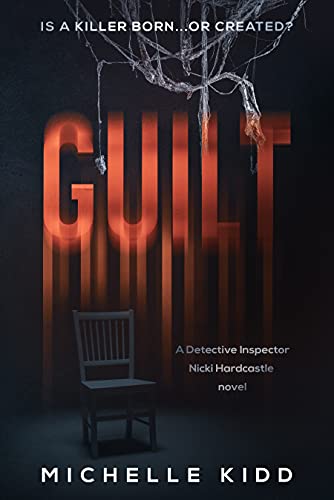
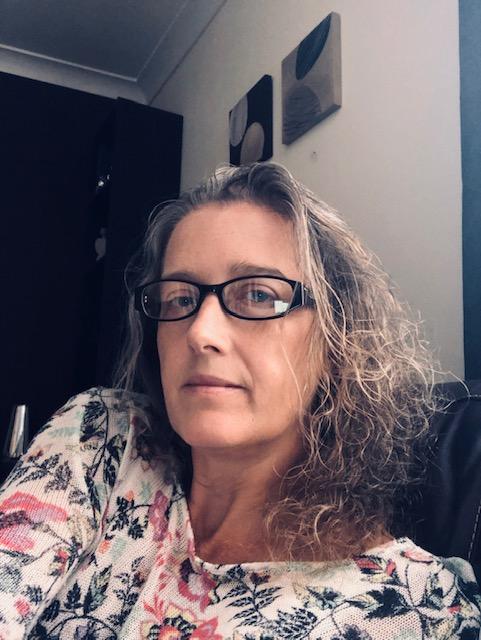
Michelle Kidd is a new name to me, and the central character in this novel – DI Nikki Hardcastle – will be a new name to everyone, as Guilt is the first in a series. The author practiced law for 10 years, specialising in criminal and civil litigation. A career change in 2008 took her to work for the NHS where she still works today. Michelle’s Interests are varied but are mostly reading, wine and cats – but not necessarily in that order. She is no novice author, however. In 2018 she published her first novel, which featured Detective Inspector Jack MacIntosh. There have been three subsequent Jack Macintosh novels and the fifth is expected in 2022.

GuiltNikki Hardcastle is a detective in the pleasant Suffolk town of Bury St Edmunds, but being, as the tourist board suggests, “A Jewel in the Crown of Suffolk” is no deterrent to criminals of all kinds, and the particular one at the centre of this story is perhaps the worst sort of all – an abductor of children. My four sons are all grown up now, and they have children of their own, but no matter how many times I read accounts (fictional or otherwise) of that awful moment when a parent first realises that their child is missing, it still chills me to the bone.

One minute Sophia Jackson’s little boy Lucas – enjoying his birthday treat at the traveling fair – is there, and the next minute he is gone. The initial panic, the momentary hope that that the child will suddenly appear, and then the numbing, growing dread that someone has taken him – are described with uncomfortable realism. The police become involved, and Nikki Hardcastle heads up the search – against the better judgment of her boss. His reasons? Nothing to do with Nikki’s competence, but the knowledge that many years ago, she, too, was with her young brother at a funfair, and in the twinkling of an eye was taken while Nikki lingered a little too long at the candy-floss stall. And little Dean – Deano – has never been seen since. Michelle Kidd lets us know quite early where Lucas is and what is happening, and this makes for a tantalising kind of tension as we watch the police go round in circles, while the author explains the traumas – without excusing the deeds – that have shaped the monster who has taken Lucas.

We also learn of the terrible childhood of the abductor, and the awful twists of human cruelty that can make beasts of the psychologically vulnerable. The book also explores the complexity of guilt, and the corrosive effect it can have on families and individuals. Eventually Nikki Hardcastle and her team manage to complete the jigsaw, but the grueling case has one final shock in store for the mentally and physically exhausted detective.

Be warned. This is not a humdrum or cosy (in any shape or form) police procedural. There are descriptions of cruelty and malice which some readers may find difficult. This is however, a cleverly written – and sometimes painfully convincing –  crime novel which shines a light on the darker corners of the human psyche. Guilt is published by Question Mark Press and is available now as a Kindle or in paperback. If you want to find out more about Michelle Kidd, you can visit her website by clicking on her image below.

MK

Blog at WordPress.com.

Up ↑