Search

fullybooked2017

Tag

Serial Killer

THE LOLLIPOP MAN . . . Between the covers

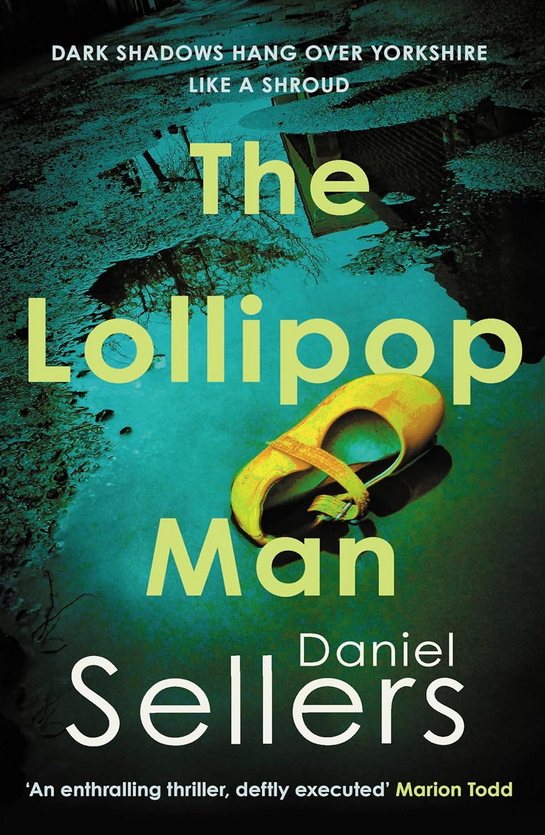
It is 1994, and we are in West Yorkshire, in the district known as the Calder Valley. An old friend of mine called it Cleckhudderfax, a neat blend of three of its major towns. The main character is a young man known as Adrian Brown. I say ‘known as’ because he was christened Matthew Spivey. When he was 10, he was abducted by a serial killer later dubbed The Lollipop Man, who had already claimed three victims – little girls. Nothing was ever found of them except bloodstained clothes. But here’s the strange thing. Adrian/Matthew was found and returned, unharmed, to his parents. It was then decided that he should change his name to allow him to grow up without constant attention from the media.

Now, Adrian is employed as a  trainee reporter-cum gofer with the local newspaper. An unusual lad, is Adrian. He is intelligent, but socially insecure. He is also gay, which was is not an easy road to travel in the landscape of the sometimes toxic masculinity of West Yorkshire in the 1990s. When, after a gap of ten years, another little girl disappears, Adrian is drawn into the messy periphery of the police investigation, along with Sheila Hargreaves, a TV journalist and presenter.

There are several characters on the periphery of this drama but their significance is not immediately obvious to the reader. We have Edna Worley, a middle aged busybody who is obsessed with appearing on local news or getting her name in the papers. When she is found dead on a canal towpath it seems clear that she has been murdered for something she knew. We also have the habitues of the district’s only gay pub, a collection of losers including a barman who doubles as a drag Queen. When one of the regulars, a petty crime sponger known as ‘Little Phil’ also turns up as a corpse in the canal, Adrian is forced to examine the integrity of the people he views as his friends.

It’s fair to say that Adrian isn’t the most inspiring of central characters. Midway through the novel, he is forced to examine how he has screwed up:

“He did a gloomy stock take. He lied to his parents about his sexuality and about his social life. He’d found a dead body and lied about that, this time to the authorities.He’d tampered with evidence. He’d drawn his best friend into a conspiracy to conceal his earlier misdemeanor. Then, with that same friend, he’d broken into a pensioner’s house and stolen his murdered sister’s private papers. Since then, he’d also managed to fall out with his friend and with his parents and had shouted at and run away from a well-loved television presenter.”

There is a tragi-comic episode where Adrian is discovered ‘making hay’ with his boyfriend. Bursting unannounced into the bedroom is a relation who promptly tells her husband, who storms round to Adrian’s parents house. His timing couldn’t be worse, as Adrian’s mum had been childminding a neighbours’ little girl, who appears to have snatched by The Lollipop Man while she was playing in the back garden. Therefore, the crowded front room of the terraced house is full of coppers and social workers. Not exactly the ideal place, one might think, for Adrian’s sexual preferences to be made public. Adrian survives relatively unscathed, and goes on, with the help of a mate, to put two and two together and find the correct answer, lurking in a rather gothick and isolated former tannery on the edge of the moors.

This is certainly not a police procedural, as the coppers seem to make one blunder after another, but it is an entertaining thriller taking us back to the days of mobile phones the size of bricks, and a northern England still under the shadow of the misdeeds of Myra Hindley and Peter Sutcliffe. The book’s title refers to the vague recognition of several witnesses that the abductor was dressed in a white coat and a military style peaked cap, similar to the garb worn by people escorting children across busy roads at going home time. The Lollipop Man will be published by Allison and Busby on 20th February.
A VIOLENT HEART . . . Between the covers

AVH spine078 copy

David Fennell introduced us to London copper DI Grace Archer in The Art of Death (2021) Now, she returns  in a complex new case which involves cold case crime and the murders of sex workers, decades apart. The investigation becomes very here-and-now when the body of a young Croatian woman called Elena Zoric is found. She died from a puncture wound to her chest, but whatever killed her, it wasn’t a bullet.

The best police procedurals always give us a fly-on-the-wall account of the personalities and tensions that exist inside a police station. Because her previous superior has been sideline and has to care for her husband, struck down with Long Covid, Grace Archer has a new boss, Chief Inspector Les Fletcher, He is described as a “gammon-faced Yorkshireman” with more than a trace of the toxic masculinity common to that breed. Archer’s wing man is Belfast born DS Harry Quinn – reliable and intuitive. Less helpful is DI Lee Parry, nephew of the Metropolitan Police Commissioner, but about as much use as a chocolate fireguard. He is lazy, venal and prepared to cut corners for an easy life.

I have often observed that Detective Inspectors in British crime novels are, perhaps, overused. There are very sound reasons for this, however. DIs are perfectly placed to be both at the centre of investigations bureaucratically, while able to be out on the street, at the crime scene, and in the faces of the bad guys. Much more rare is the novel where a humble DC is the locus of activity. I can think of only one series, and that was written by Alison Bruce, and featured Cambridge Detective Constable Gary Goodhew. My review of The Silence is here. That being said DI Grace Archer is a welcome guest at a party held in a very crowded room.

We have here something of a whirling dervish of a plot, which spins this way and that and incorporates apparently disconnected events. We have a bizarre (but sadly all-too-credible) social ‘influencer’ called Calvin ‘Dixy’ Dixon whose latest Tik-Tok sensation shows him talking to the dessicated corpse of a woman sitting in a wheelchair in an abandoned house. There is also something that might become a ‘love interest’ angle, when Liam, a builder friend of Harry Quinn, is booked to renovate Archer’s house. He also happens to be extremely handsome, and brings with him freshly baked croissants to share before he starts work each day.

Then there is Mallory Jones, the guiding light in a successful podcast called Mallory Jones Investigates. She alternately helps and hinders Archer’s search for a man whose weapon of choice appears to be some kind of bolt gun. Finally, in far-off Berwick on Tweed, we have the Mercer family. Barry and Isla, and Isla’s brother Simon. Barry and Isla are both ex-coppers, but their teenage daughter Lily has fallen in with a bad crowd, and makes fistfuls of cash by appearing in amateur porn videos with her bestie, Gemma.

Archer is concerned to discover that, back in the day, her new boss Les Fletcher was, as a young PC, involved in the older murder investigations, and her informants tell her that he was rude and unsympathetic, strongly showing his prejudice that as ‘working girls’, getting assaulted by clients just went with the job.

As you might expect, David Fennell seizes the frayed ends of these plot strands and weaves them together to make for a highly satisfying conclusion. There is a savage and sanguinary denouement in, most appropriately, a disused abattoir. Not everyone survives the carnage, but as the emergency vehicles trundle off into the night, we have catharsis. Grace Archer certainly has her own demons to torment her, but she is a courageous and resourceful copper with a fierce determination to pursue the truth. A Violent Heart is published by Zaffre and is available now.

THINK TWICE . . . Between the covers

think twice spine053 copy

A bit of back story. Myron Bolitar (read my review of an earlier book in the series HERE) is a New York sports agent who, before a career-ending knee injury, was a top basketball player. One of his bitterest rivals on the court – and in romance –  was Greg Downing. Bolitar went on to become his agent, but not before impregnating Downing’s soon-to-be wife Emily, a young woman they had fought over. The resultant child, Jeremy, now a serving soldier, was brought up to be the Downings’ son. Citing psychological problems, Downing retired from sport, and went to the Far East to “find himself”. He never returned, but his death was announced, and his ashes returned to the USA. Bolitar, being a decent man and putting past grievances to one side, gave the eulogy at his memorial service.

Understandably, Bolitar’s jaw drops when two FBI agents enter his office, and tell him that Downing’s DNA has been found at a recent murder scene. We know from the very start of the book that someone is very good at committing murder and putting someone else in the frame by acquiring their DNA via, say, a hairbrush or a used tissue, and leaving it at the scene of the crime. To say more would be to spoil the fun, but all I will say is that readers should not make assumptions. Across New York and its suburbs, people are looking at serious jail time for crimes we know they didn’t commit but, strangely, as well as irrefutable forensic traces, the suspects have motive, too. Like the young woman who worked a building contract with her father, for a big developer. When that developer simply refused to pay them, citing shoddy workmanship, was she finally driven to desperation, borrowed her father’s rifle and shot the crooked developer dead?

Many fictional American investigators have a brutal sidekick who can be relied upon to dish out extreme violence from time to time. Robert B Parker’s Spenser had Hawk, John Connolly’s Charlie Parker has Louis, and Myron Bolitar has Windsor Horne Lockwood III, a billionaire playboy who loves guns – and using them. Here, he rescues Bolitar from having a toe removed by mobsters, and plays an important part at the end of the book. The relationship between Win and Myron is complex. Win is borderline psychotic, and he does things which, in his mind, are for the good, while knowing full well that Myron would not conscience such behaviour. He doesn’t utter the words, but he is thinking, “I will do this so you don’t have to.”

The plot becomes more complex page by page, and I trust it is not a spoiler to say that Greg Downing is very much alive and well. What neither Bolitar, Win, Emily, Jeremy nor we readers know is why Downing faked his death and – most importantly – with whom. The FBI involvement develops far beyond the two agents we met at the beginning of the novel, and heads right to the core leadership of the agency, but all the while, the pieces of the puzzle stubbornly refuse to fit together, until Coben creates a tense and violent conclusion played out – of all places – under the gloomy Gothic shadow of the Dakota Building on the edge of Central Park, while a busker does his unknowingly ironic stuff with John Lennon’s Imagine.

The book is trademark Harlen Coben – razor sharp East Coast dialogue, relentlessly entertaining, witty, and with enough violence to keep noir fans satisfied. The back cover blurb describes the author as a ‘Global Entertainment Brand.’ I am a bit old fashioned, and would much rather think of him as an immensely talented writer. Think Twice is published by Century and will be out on 23rd May.

THE GENIUS KILLER . . . Between the covers

TGKspine011

The central character of this novel is Karl Jackson. He has survived a brutal upbringing punctuated with savage beatings by his drunken father, and sexual abuse from his uncle Charlie. Karl has a twin, Nathan,  but he never faced the same storm of violent rage. Karl Jackson is described in the cover blurb as a sociopath. I am no psychologist, but Jackson’s steady job as a chemistry teacher and his scrupulous and well-planned crimes make me think he is more psychopathic, but it does not matter. He is a genuinely awful human being. His spree of undetected killings started in his childhood when, merely for the fun of it, he pushed a young boy – fishing in the lake where they played – down into the water, and then watched with amusement as the lad struggled, choked, and then bobbed about on the surface as lifeless as the float attached to his fishing line.

Jackson’s genius (hence the title of the book) is to organise killings in such a way that no possible evidence can link the deaths to him. While Jackson was working as a student in Australia, one of his murders involved the ingenious combination of a sleeping bag, a sedative injection and a deadly Brown Snake on a hiking trail in the Blue Mountain region of New South Wales. Jackson exacts an elaborate – and some may say justified – revenge on his father by causing the old man’s death in hospital with a very clever use of cyanide and the sharpened end of a coat hanger.

The background to this novel is the atmospheric landscape of the English Lake District, where Jackson carries out another long delayed act of retribution on his abusive uncle Charlie by faking an accidental climbing death. When Charlie is found dead at the bottom of a solo climb, his head shattered like a melon hit with a hammer, no one believes it is anything other than an unfortunate error of judgement.

Thus far, Jackson has been clever enough to avoid any attention from the police but, inevitably, he meets his nemesis. Theodore “Tex” Deacon is a late career – but distinguished – detective slowly recovering from the trauma caused by the protracted death of his wife. As is the way with institutions these days, he is temporarily sidelined and identified as a vulnerable person in need of psychological help and treatment by the ubiquitous counselling profession. However, his many successes in tracking down murderers brings him to the attention of Debbie Pilkington, an ambitious young reporter with a local Lakeland newspaper. She alerts him to the many coincidences surrounding deaths in the Jackson family, and so he goes off piste to investigate the case.

Black humour is never very far away in this book, despite the body count. Here, Karl Jackson describes the man who is having an affair with his wife.

“Richard Turkington’s graying Beatle cut had a bald spot on top giving him the appearance of a rock star monk. A fleshy roll wobbled over the top of his chinos. Turkington had clearly ignored warning signs of middle age and had lived a pudgy existence preferring a world of pints and puddings. Quite a contrast to the sleek wire framed fell runners surrounded by them at a function like this. Richard looked like Mr Blobby.”

The Genius Killer rattles along at great pace and is sometimes darkly comic, but in Jackson, the author has created a genuine larger-than-life monster. The book ends rather enigmatically, but as it is described as No.1 in the Tex Deacon series, I suspect the Cumbrian copper will be back soon with another case. Mark Robson is a sports journalist and this is his debut novel. It is published by Orla Kelly Publishing and available now.

NO LESS THE DEVIL . . . Between the covers

nltd header

610XqcYjnhL._SX450_This is a new police procedural from Stuart MacBride (left) and it introduces Detective Sergeant Lucy McVeigh. Her beat is the fictional town of Oldcastle (not to be confused with the actual city of Oldcastle, which lies between Aberdeen and Dundee). Aberdeen, of course, is where DS Logan McRae operated in the hugely successful earlier series from MacBride. Also, DS McVeigh comes across – to me at any rate – as a younger version of McRae’s boss, the foul-mouthed and acerbic DCI Roberta Steel. McVeigh is equally sharp tempered, and similarly indisposed to suffer fools gladly.

Early on, we are aware that McVeigh has been involved a high profile incident where she killed a man – Neil Black –  in the line of duty. This requires her to suffer – by order of her bosses – psychological treatment and counselling. Like the good storyteller that he is, MacBride doesn’t let us know the nature of the incident right away, thus keeping us guessing for a while. When we do learn what happened, over seven terrifying pages, it is horrific stuff.

McVeigh is involved in the  hunt for a serial killer nicknamed The Bloodsmith. He – or she – eviscerates victims and scrawls “Help Me’ on the wall of the murder scene, using the blood of the unfortunate prey. The trail is cold, but when a new victim emerges McVeigh and her ‘gofer’ Detective Constable Fraser (aka The Dunk) have some fresh clues to work with. It turns out that the latest corpse is the remains of a former police officer who did time for petty theft, and then ended up as a vagrant on the streets.

Women are supposed to multi-task better than men, but Lucy McVeigh has two other problems. Firstly, she is being harassed by the family of the man she killed. They are determined to end her career by fair means or foul, and the press are lapping up every minute of the feud. Secondly, a case from the past surfaces. Years earlier, McVeigh was involved in putting behind bars an eleven year-old boy who, along with another boy as yet unidentified, committed a terrible murder. Now a young man, Benedict Strachan  is back – literally – on the streets, using an alias, misusing drugs, living rough, and he is convinced that someone is trying to kill him.

Screen Shot 2022-04-19 at 19.51.13As the search for The Bloodsmith continues, and Lucy McVeigh struggles to keep abreast of that investigation, as well as her battle with the Black family and coping with the mental agonies of Benedict Strachan, MacBride treats us to his signature mixture of Noir, visceral horror and bleak humour. Even though his Oldcastle is a fictional place, it is vividly brought to life to the extent that I would not be in the least surprised if the author has a map of the place hanging on the wall of his writing room. The situation becomes ever more complex for Lucy McVeigh when she learns there is a connection between the murdered former policeman and Benedict Strachan. That connection is a prestigious and exclusive independent school, known colloquially as St Nicks’s. When she visits the school, she unearths more questions than answers.

Novels that use the name of the Devil in their title are making a statement that the writer has to live up to. No-one did it better than the great Derek Raymond in his 1984 The Devil’s Home On Leave, but what about this book? I won’t over-egg the pudding and say that it’s an existential treatise on the nature of evil. It’s just a crime novel, albeit a very superior one. Suffice it to say that Stuart MacBride takes us to some very dark places, and convinces us that the Devil is real, if only in the sense that he lives in the hearts and souls of certain human beings.

No Less The Devil will be published by Bantam Press on 28th April. As a postscript, I have to say that I found the last hundred or so  pages seriously strange, and it took me all the way back to the 1990s and my weekly (and increasingly puzzled) visits to Twin Peaks. Without any further spoilers, I will simply say that I think I know what happens, but I aIso believe readers will be divided over the plot swerve.  I would be interested to hear from other people what they made of it.

SHAKING HANDS WITH THE DEVIL . . . Between the covers

shwtd header014

There is an interesting debate which raises its head periodically, and it involves the tricky subject of what can – or should not – become the subject of comedy. Jimmy Carr was in the news only the other day, because he made a joke about the deaths of Roma people in The Holocaust. There are numerous TV sitcoms from back in the day which are fondly remembered by us older folks, but would not survive the heightened sensibilities of modern publicists and producers. This preamble is by way of a warning that Bryan J Mason’s novel, Shaking Hands With The Devil, will not be for everyone. There are jokes and themes in here which, as they say, push boundaries, so if you are someone who takes offence at words on a page, then I think it’s probably ‘Goodnight Vienna‘. For those made of sterner stuff, here’s the story.

We are in late 1980s London – the autumnal years of Thatcher’s Britain – beset by strikes and endless assaults by the IRA. A predatory killer called Clifton Gentle – think Denis Nilsen – is enticing young homosexuals to come back to his home, where they have sex, but the post coital routine is that he kills them and chops them up into pieces. Sometimes the pieces stay in his flat, but when they become too noxious, he leaves them spread about the capital, in skips, under bushes or in Biffa bins.

SHWTD coverOn his trail is a grotesque cartoon of a copper – DCI Dave Hicks. He lives at home with his dear old mum, has a prodigious appetite for her home-cooked food, is something of a media whore (he does love his press conferences) and has a shaky grasp of English usage, mangling idioms  like a 1980s version of Mrs Malaprop.

The other gags come thick and fast. We have three new police cadets – Oldfield, Abberline and Slipper –  working on the case (Google if you’re not sure}, while the editor of The Herald Review (one of the newspapers covering the case) is a certain Mr Charles Manson.

Mason’s final audacious name-check is when he reveals that there is a second killer on the loose, a young man who has won all the glittering prizes, but has been diagnosed with terminal cancer. Peter Kurten is determined to make the most of his final six months by a bit of casual ‘triple D’ – Date, Death, Dismember. A confession. Suspecting that this was another joke, I Googled the name (so you don’t have to) and found that Peter Kurten a.k.a The Vampire of Düsseldorf was a notorious German serial killer who went to the guillotine on 2nd July 1931.

When he learns that he has a rival, Clifton Gentle is most aggrieved. That is not his only problem, however, because a young rent boy called Jimmy is Clifton’s only failure. Not only did Jimmy escape before fulfilling his date with the cleaver and hacksaw, he has now located his would-be assassin and is blackmailing him.

Hackney’s finest, Dave Hicks or, as he prefers to be known, ‘The Dick from The Sticks’ is also up against it. As clueless as ever, he unwisely announces in a news conference that he had set himself just fourteen days to bring the killer to justice. The days and hours tick by, without Hicks having any genuine leads. Then, on the eve of the expiry of his deadline, he decides to save his reputation. In a a bizarre attempt to blend in with the crowds in London’s gay clubs, Hicks sets out to attract the killer (he is unaware that there are two) and is dressed to kill, decked out in:

BJM“A fuchsia -pink shirt with outsize wing collar, over-tight lime green denim jeans, a brand new squeaky-clean leather jacket and, just for good measure, a black beret with white trim.”
The finale of Dave Hicks’s  quest to catch his man is set in an old fashioned Soho of seedy clubs, touts and pimps that would be unrecognisable to the trendsetters who frequent it today. Bryan Mason (right) has written a dystopian novel which is, in turn, ghastly, eyebrow-raising and hilarious, but is also a must for those who like their satire as black as night.

Shaking Hands With The Devil is published by Vanguard Press/Pegasus Publishing, and is available now.

NINE LIVES . . . Between the covers

Nine Lives header

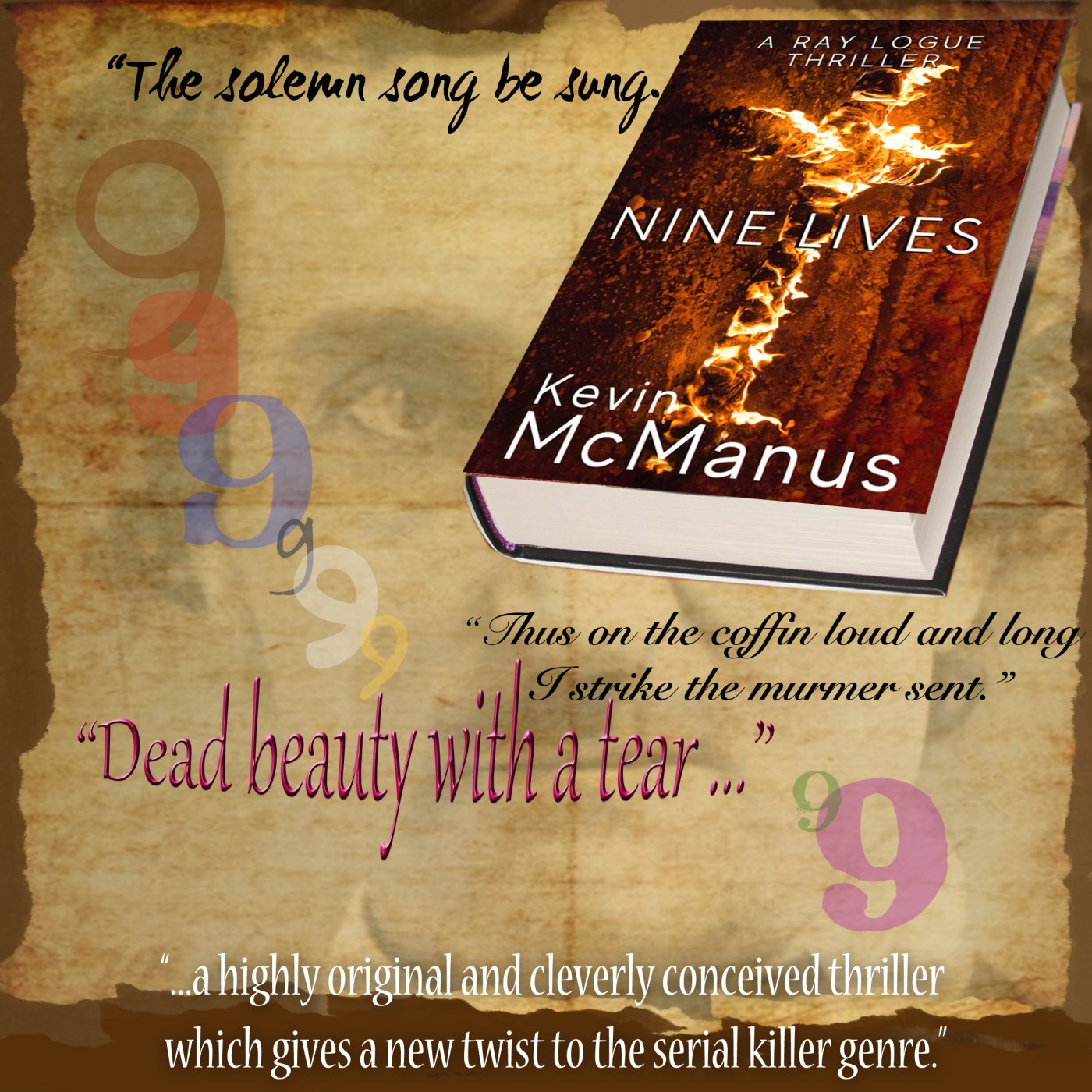
This thriller is relatively brief, but it buzzes like an angry hornet. It begins in rural Ireland in 1979, when a terrified girl escapes from being held by an unknown assailant. She finds refuge in a farmhouse, and the farmer’s wife arranges for a neighbour to drive her to the nearest Garda Síochána station. Neither the girl nor the neighbour is ever seen alive again. Some months later, the girl’s remains are found. There is little left of Hazel Devereaux, but just enough to reveal, on examination, that her throat had been cut.

Screen Shot 2021-07-19 at 18.16.06The action skips thirty years, and Jim Mulcahy who was the rookie detective covering the girl’s disappearance is now Superintendent, and heading for retirement. When recreational scuba divers find the rusting remains of a car at the bottom of a local lough with a skeleton on the back seat – which turns out to be the headless remains of Frank Rudden – the case is reopened. It was Rudden who drove off in his VW Beetle that fateful night three decades earlier, with Hazel Devereaux as his passenger. We are now, of course, in the age of smartphones and internet search engines, and it doesn’t take the Irish coppers long to link this cold case to several similar murders in that Irish home-from-home, Boston Massachusetts. Detective Ray Logue is sent to liaise with the Boston PD, in particular Officers Sam Harper and Olivia Callaghan.

The rough-and-ready Irish policeman manages to ruffle the feathers of his more sophisticated American counterparts, but they soon make three interesting discoveries. One is that the dates of the Boston murders have an uncanny connection – they are all numerically linked with the number nine. You can Google it, and see that there is a long tradition of mysticism connected to the number, but Ray is initially unimpressed by what he feels is “hocus pocus.” The second discovery is that Donal Keane, an Irish academic was in the area at the time of Hazel Devereaux’s murder and then immediately decamped to Boston, where he has been ever since. The third – and most sinister – connective element is that each of the victims has been sent a brief note containing a quotation from a poem by Edgar Allan Poe.

Screen Shot 2021-07-19 at 18.16.23As Logue, Callaghan and Harper close in on who they think is the killer, Kevin McManus bowls us a couple of googlies – or perhaps I should say, since we are in Boston, throws down some curve balls – and all is not what it seems to be.
Kevin McManus (right) primarily writes Crime Fiction novels but also delves into writing poetry and short stories. He lives in County Leitrim in Western Ireland with his wife Mary and their dog Jack. He works by day as a secondary school teacher. In addition to the Ray Logue books Kevin has written a series based around a New York Detective called John Morrigan. His debut novel, published in 2016, was The Whole of the Moon. Nine Lives is a highly original and cleverly conceived thriller which gives a new twist to the serial killer genre. It is published by Spellbound Books and is available now.

amazon_co_uk_logo_640

A COLD GRAVE . . . Between the covers

ACG header

I had not come across Trevor Negus and his DCI Danny Flint novels, and it was only a browse through Netgalley that brought it to my attention, and I am glad I found it – but sorry to come late to the series, which began with Evil in MInd, and was followed by Dead and Gone. The three books all came out in May this year from Inkubator Books, but A Cold Grave was first published in 2018 with the title A Different Kind of Evil, from Bathwood Manor Publishing, which seems to be no more. I am glad that Inkubator have picked up the torch and are running with it.

I have to say that the police procedural genre is my absolute Alpha and Omega in crime fiction, and chancing upon a new (to me) series is a ‘punch the air’ moment. The acid test of course, is deciding if the book is any good. I think police procedurals are harder to get wrong than most genres, but it does happen. I am happy to say that Trevor Negus does most things right in this novel, and so he hasn’t dropped the Ming vase to shatter into a thousand pieces. The book is set in 1986, so in one sense it is Historical Crime Fiction, but only the absence of mobile phones stands out as a major difference between then and now. One of the elements that make this novel work so well is the sense – and continuity – of place. We certainly aren’t in the most romantic or obviously atmospheric part of Britain, but Negus knows Nottinghamshire like the back of his proverbial, and so he should; his bio reveals:

“In 1975 Trevor joined the Nottinghamshire Constabulary as a Police Cadet, becoming a regular officer in 1978. As a uniform constable he learned his craft in the pressure cooker environment of inner city Nottingham which at that time had one of the highest violent crime rates in the United Kingdom.

During a varied thirty year police career Trevor spent six years as an authorised firearms officer and sniper, before transferring onto the CID. He spent the last twelve years of his career as a detective, becoming a specialist interviewer involved in the planning and implementation of interviews with murder suspects.”

Rampton

One of the most notorious places in Nottinghamshire is Rampton Secure Hospital, and it is here that the story begins. Two prisoners escape, after inflicting serious violence on several staff. One is quickly tracked down, but the other, Jimmy Wade, gets clean away, almost certainly helped by a member of the public with a car. Wade is a seriously deranged psychopath, and every day he remains at large is a day of anxiety for Detective Inspector Danny Flint and his team.

Flint has something else on his plate, though. That ever-reliable participant in murder enquiries (real and fictional)  – a dog walker – has discovered the decomposing body of a boy. The boy is soon identified as Evan Jenkins, who has been removed from the ‘care’ of his mother, a drug addicted prostitute, and placed in a care home called Tall Trees. Flint has a bad feeling about the couple who run the home – Carol and Bill Short – and he connects them both to a drug ring and – even worse – a ring of paedophiles  whose members include several civic dignitaries and influential businessmen. Meanwhile, Wade’s whereabouts remains a mystery.

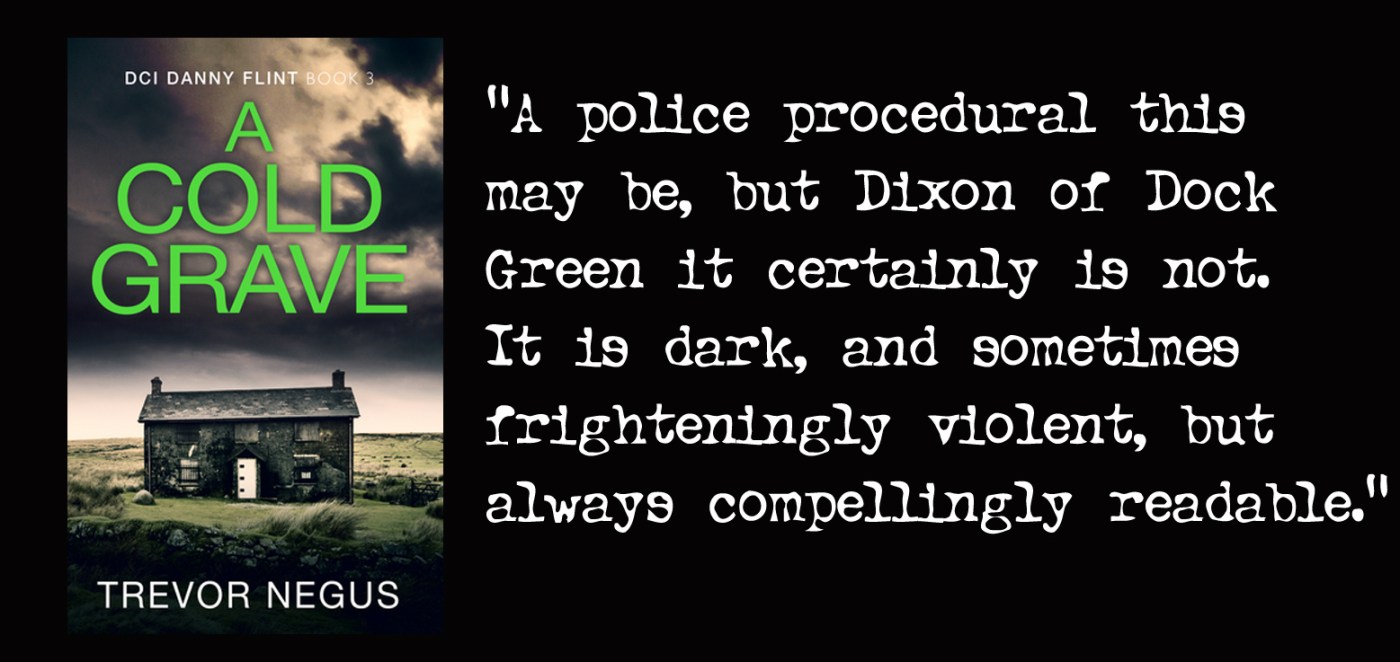
Unlike Danny Flint, we know that Wade is living in a remote cottage on a country estate, aided and abetted by his girlfriend Melissa Braithwaite, who is drawn to him by a poisonous mixture of fear of his violence and the worst kind of sexual attraction. Wade has a revenge mission he hatched while under lock and key – the abduction of two prison officers who had given him a particularly hard time in Rampton. Danny Flint’s hunt for Wade and the paedophile ring responsible for Evan Jenkins’s death is played out against an impressively authentic geographical background – the Nottinghamshire towns of Retford, Newark and Mansfield. A police procedural this may be, but Dixon of Dock Green it certainly is not. It is dark, and sometimes frighteningly violent, but always compellingly readable. A Cold Grave is out now.

THE CUSTARD CORPSES . . . Between the covers

TCC header
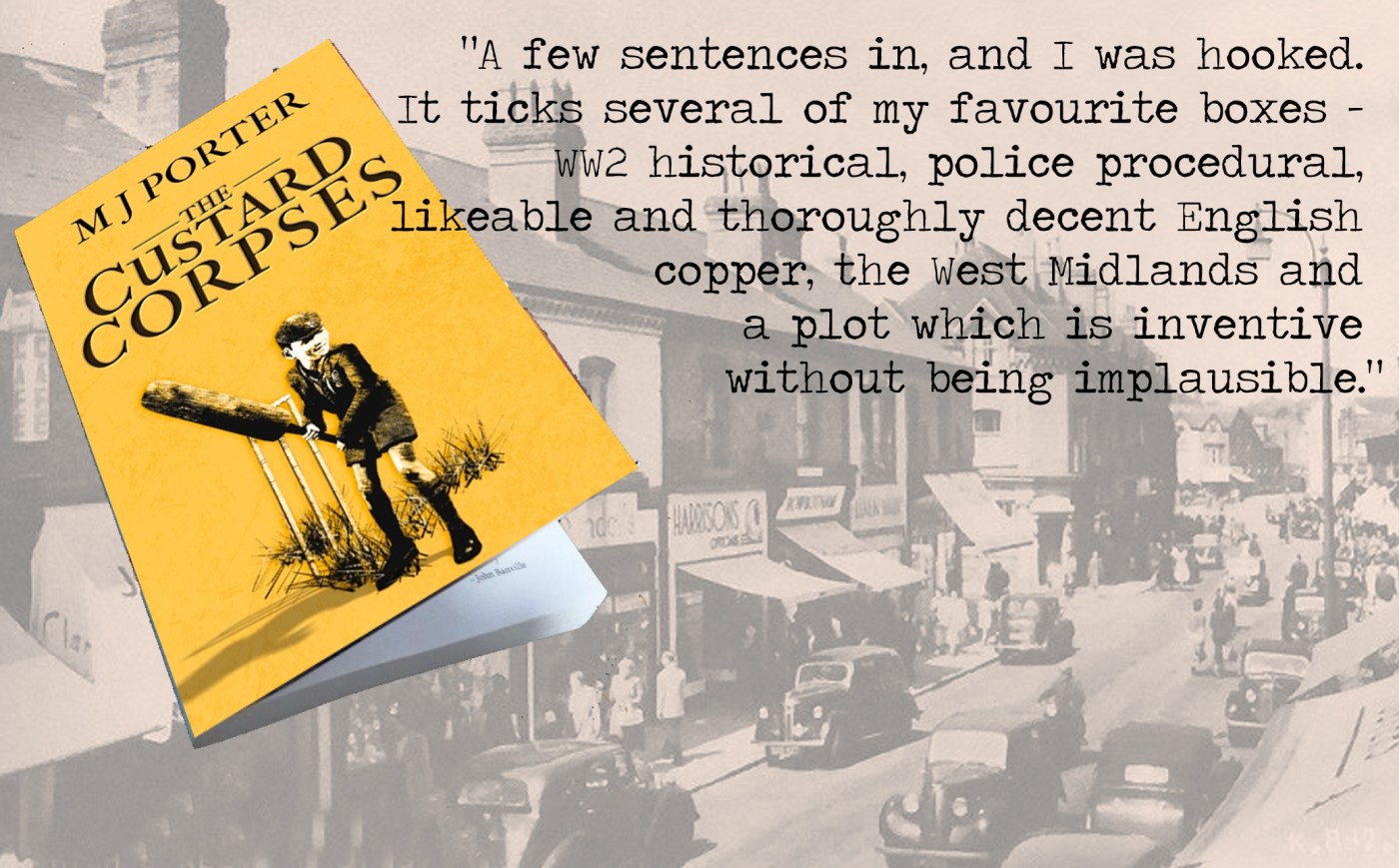
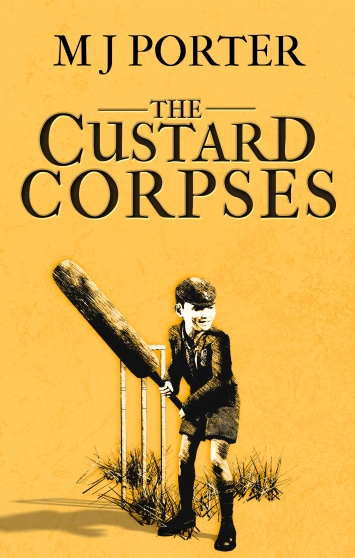
Sometimes a book comes along with very little by way of advanced publicity or hype, and it hits the sweet spot right away. One such is The Custard Corpses by MJ Porter. Strangely-named it might be but the reason for the title becomes more obvious - and appropriate - the more one reads. A few sentences in, and I was hooked. It ticks several of my favourite boxes - WW2 historical, police procedural, likeable and thoroughly decent English copper, the West Midlands and a plot which is inventive without being implausible.

We are in the Birmingham district of Erdington. It is 1943 and Great War veteran Sam Mason is a uniformed Chief Inspector at the local nick. He is not yet on the downward slope heading for retirement, but he is like Tennyson's Ulysses:

“Tho’ much is taken, much abides; and tho’
We are not now that strength which in old days
Moved earth and heaven, that which we are, we are;
One equal temper of heroic hearts,
Made weak by time and fate, but strong in will
To strive, to seek, to find, and not to yield.”

Screen Shot 2021-04-05 at 19.39.14Mason is a man given to reflection, and a case from his early career still troubles him. On 30th September 1923, a boy’s body was found near the local church hall. Robert McFarlane had been missing for three days, his widowed mother frantic with anxiety. Mason remembers the corpse vividly. It was almost as if the lad was just sleeping. The cause of death? Totally improbably the boy drowned. But where? And why was his body so artfully posed, waiting to be found?

Mason and his then boss, Chief Inspector Fullerton, had never solved the crime, and Mrs McFarlane died without knowing the whys and wherefores of her son’s death. When  Mason learns that there had been a similar case, a couple of years later, he is close to despair that it hadn’t come to light earlier. He realises that the fault was theirs. They hadn’t circulated the strange details of Robert’s death as widely as they should.

Attempting to make amends, albeit two decades too late, he has a circular drawn up, and sent to the police forces across England, Scotland and Wales. To his dismay, a succession of unsolved killings come to light; the dead youngsters are of different ages, but there is one bizarre common factor – the bodies have been posed as if in some kind of sporting action. Mason is given permission to devote his energies to this macabre series of killings, and with the resourceful Constable O’Rourke, he sets up an incident room, and begins to receive case notes and crime scene photographs from places as far apart as Inverness, Weston, Conway and Berwick.

Picture_Post_21-Sep-40One evening, after he has taken images and documents home with him, his wife Annie makes a startling discovery. Like nearly two million other readers across the country, she is a great fan of the magazine Picture Post, and while thumbing through a recent copy she notices that the sporting youngster drawn in an advertisement for a well-known brand of custard is posed in a way that has a chilling resemblance to the way one of the victims that Sam is investigating.

At this point, the investigation sprouts wings and takes flight and, in a journey that takes them across England, Mason and O’Rourke eventually uncover a tale of horror and obsession that chills their blood. MJ Porter has written a  series of historical and fantasy novels, mostly set in what we call The Dark Ages – Vikings, Goths and those sorts of chaps. That doesn’t tend to be ‘my thing’ but, my goodness, Porter is a good writer. The Custard Corpses goes straight onto my early shortlist for Book of The Year, and I do hope that he can tear himself away from his tales of ravens, rape, swords and general pillage to bring us another novel featuring Sam Mason. The Custard Corpses is out now.

Blog at WordPress.com.

Up ↑