
In February this year – remember when everything was normal, and Covid-19 was just something nasty that was happening in China and Italy? – I reviewed Blood Will Be Born, the debut thriller by Belfast writer Gary Donnelly. I said it was:
“… breathtakingly violent, vividly written and a bleak commentary on a seemingly terminal bitterness which makes normal human beings behave like creatures from a warped vision of hell.”
The full review of that book is here, but in no time at all, it seems, comes the second episode in the career of Met Police detective Owen Sheen. He has been seconded to the historic crimes unit of the Police Service of Northern Ireland. If ever there were a British city where historic crimes still haunt the streets, it is Belfast. Sheen was born in Belfast, and watched his own brother being blown to pieces by a terrorist bomb as the two youngsters played football in the street. Donnelly says:
“Over the decades, so much blood had spattered the streets of Belfast, all now washed away, and forgotten by many. But there would always be those, the ones who had been left behind to count the cost, for which the stain and the pain would never really go.”
The (literally) explosive conclusion to the previous case has left Sheen sidelined and his PSNI partner Aoifa McCusker walking with a stick and suspended from duty after a stash of Class ‘A’ drugs were planted in her locker. Sheen is haunted by the discovery of a boy’s body, found in remote Monaghan bogland on the border with the Republic. The body has been partially preserved by the acidic water, but even a post mortem examination reveals few details.

Meanwhile, a spate of horrific killings has perplexed PSNI detectives. A priest has been decapitated in his own sacristy; the teenage daughter of a prominent barrister has been abducted and then killed; her body, minus one of its hands has been dumped at her father’s front door. The adult son of a former hellfire Protestant preacher and politician has been found dead – again, butchered.
Against the better judgment of senior officers, Sheen is allowed to ‘get the band back together’ and so a limping McCusker, and colleague George ‘Geordie’ Brown are joined by Hayley, a mysterious transgender person who calls herself an ‘instinctive’ because she has what used to be called a sixth sense about death or extreme violence.
As ever in Belfast, the answers to modern questions lie irremovably in the past and, almost too late, Sheen and his team discover that the killings are bound up with acts of scarcely credible evil that took place decades earlier. Revenge is certainly being served cold and, for someone, it tastes delicious.
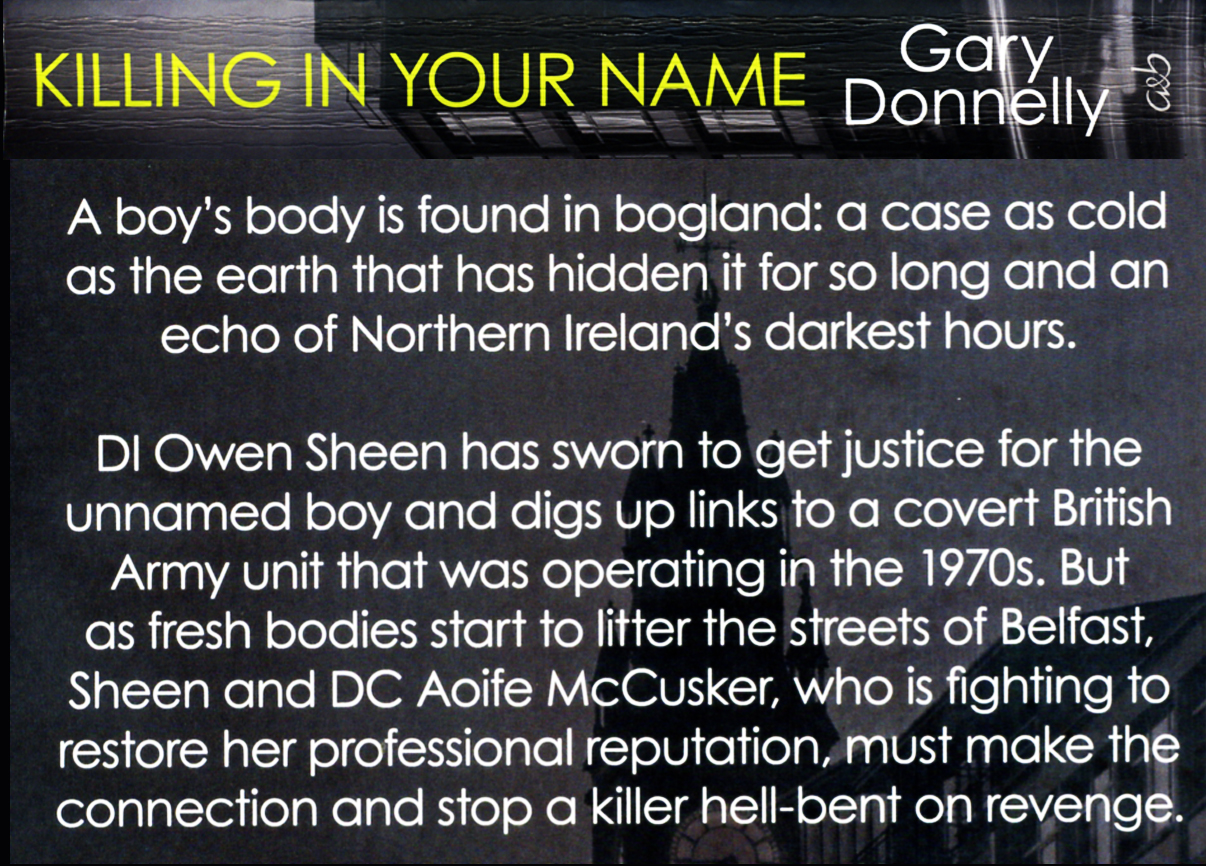
Donnelly (below) has another winner on his hands here, and it is partly due to his superb sense of narrative, but also to his ability to create truly monstrous villains, and there is at least one in Killing In Your Name to rival anything his fellow Irishman John Connolly has created. Connolly’s creations tend to have a sulphurous whiff of the supernatural about them. Donnolly’s monsters are human, if in name only. Killing In Your Name is published by Allison & Busby and is out today, 20th August.


 Belfast and its grim sectarian past is the epitome of noir. But, sadly, it is a non-fiction noir, as real events over the past fifty years or so would have been dismissed as preposterous had they been penned by a novelist. Such novelists would have to be writing historical fiction, though – wouldn’t they? Surely the momentous events of the spring of 1998 signaled a slow but irrevocable process of healing across the province? Gary Donnelly (left) has written a blistering debut novel Blood Will Be Born which says otherwise.
 is Belfast minder is to be DC Aoifa McCusker, an ambitious and headstrong young officer widely distrusted by her male colleagues. Even before Sheen and McCusker have the chance to discover how they each like their coffee, author Donnelly introduces us to two of the spectacularly grotesque villains of the story. First up is John Fryer, a brutal republican hitman with too many deaths to his name. Too many? Fryer’s murderous career has been haunted by a grisly mythical beast known as The Moley, who rises up from the primeval bog and is only placated by the shedding of fresh blood. Fryer is contained – for now – in a secure mental hospital.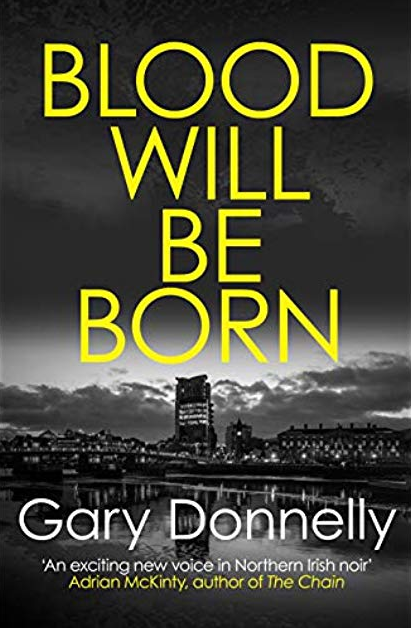
 ryer and Moore, for their own reasons, are determined to set Belfast on fire. Not the triumphalist – but literal and containable – fire of The Loyalist bonfires on the eve of 12th July, but a fire which will lay waste to the fragile peace enjoyed in the divided city. Sheen and McCuskey, with different motives, are desperate to bring down Fryer and Moore.


 fullybooked2017