
Search

fullybooked2017

Tag

Scottish Crime Fiction

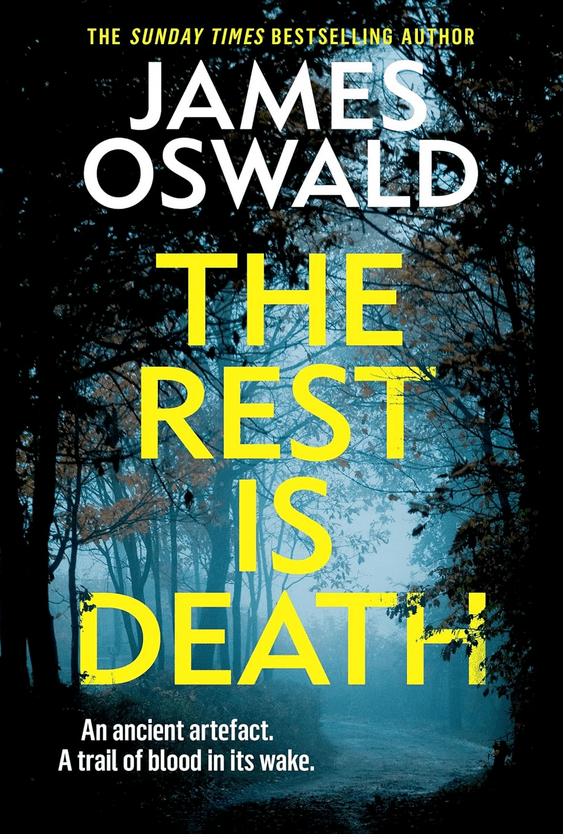
THE REST IS DEATH . . . Between the covers

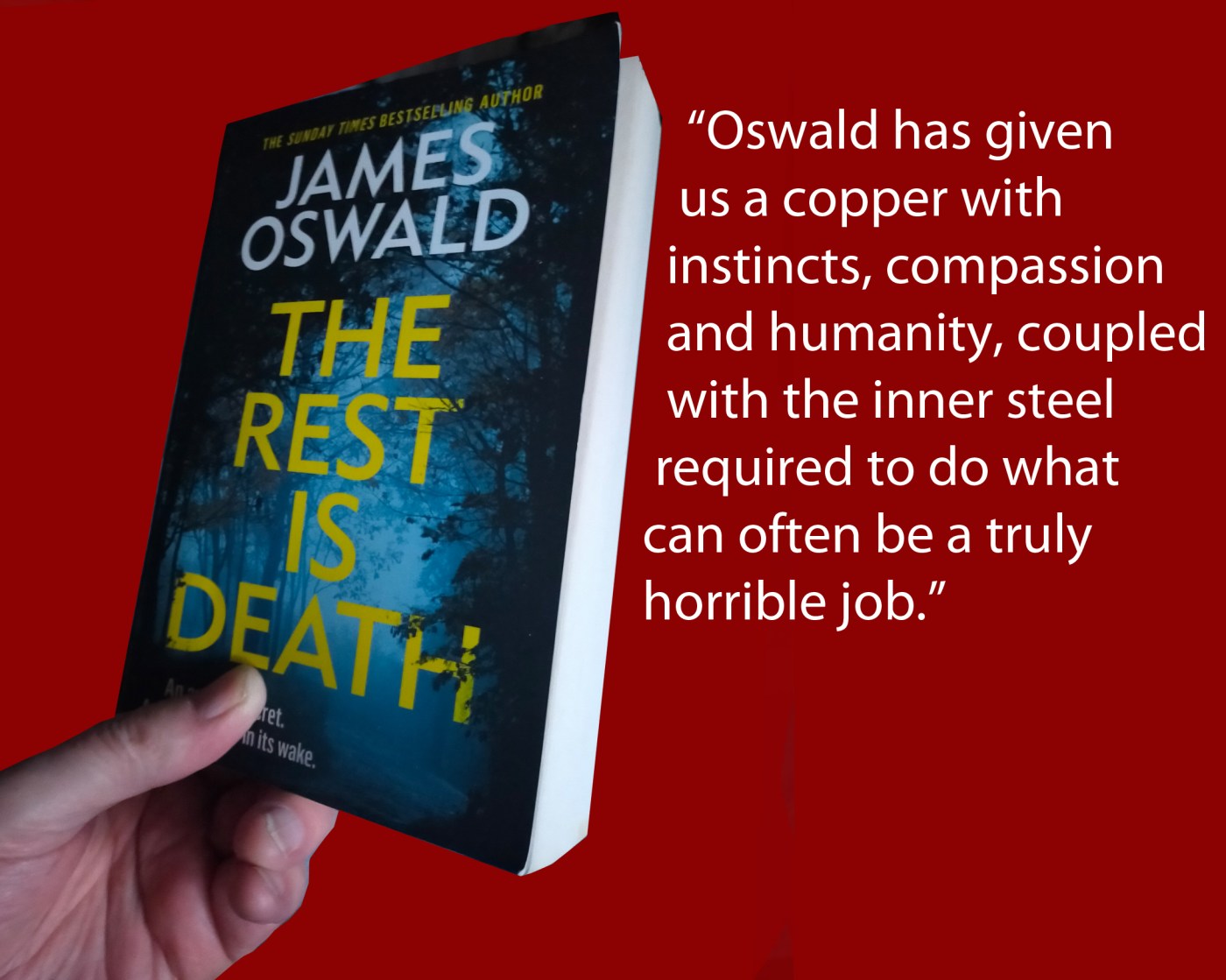
In a silky smooth segue from 2024’s For Our Sins, Edinburgh copper Tony McLean has returned from temporary retirement and is asked to investigate an apparently trivial break-in at a Biotech facility. Nothing seems to have been taken, no-one was harmed, so why is a Detective Chief Inspector sent on the job when it would normally be handled by a uniformed Sergeant? The answer is simple. Drake Biotech is owned and funded by billion are Nathanial Drake, who just happens to be on WhatsApp terms with Scotland’s First Minister.

When an old school chum approaches DI Janie Harrison with a request to look, for her missing boyfriend, a Serbian carpenter, Janie does a perfunctory search, but assumes the man has gone to ply his trade elsewhere. She has logged the photos from her chum’s phone, and is horrified to find, that when she is called out to woodland where a hastily buried body has been found, the remains are that of Vaclav Mihailovic.When the autopsy is carried out on the Serbian, the pathologist is both baffled and shocked. The unfortunate man is opened up, but there is no stench of decay. It seems that the gut bacteria that continue working away after the heart stops beating are mysteriously absent. There is no bloating and no breakdown of tissue.

Halfway through the book, Oswald escalates and complicates the narrative. First, the driver of the van that took the intruders to Blake Biotech is identified, but then rapidly disappears. McLean suspects he is working for an external intelligence agency. A professional protester called Sanderson, believed to be one of the Biotech vandals is found sitting on a park bench, stone dead. Then the bodies of both Sanderson and Mihailovic are stolen from the city mortuary. Long time fans of the Tony McLean novels have become accustomed to an element of the supernatural appearing in the narrative. Here, it comes in page one, but it is another 60 pages before we realise the relevance to Nathaniel Drake and his interests.

McLean ponders the situation:

“We’ve got a break-in at the lab by animal rights activists who turn out to be a diversion for some MI5 spook doing God knows what. One of the team turns up dead in the park, looking like he’s not eaten in months and shouldn’t have had the strength to wield a spray can, let alone smash up a lab. I’d really like to know what he died from, just in case I’ve got a new disease about to spread through the city.

But someone breaks into the mortuary and steals his body before the pathologist can have a proper look. And whoever does that has the ability to break the servers of a sophisticated security services company to order.

A company that, it turns out, is a fully owned subsidiary of Drake Corporation, whose labs were broken into. And am I going round in circles?”

Within the CriFi genre, police procedural investigations are not natural bedfellows with the paranormal. The late Phil Rickman made it work – in spades – and James Oswald does a pretty good job. He certainly pushes the boundaries here, and gives us a finale with an archetypal mad professor locked in a life or death struggle with McLean, Harrison, and the mummified heart of a man who was court magus to Vlad Dracul in the medieval Carpathian Mountains. All this aside, Oswald has given us a copper with instincts, compassion and humanity, coupled with the inner steel required to do what can often be a truly horrible job. The Rest is Death is published by Headline, and is available now.


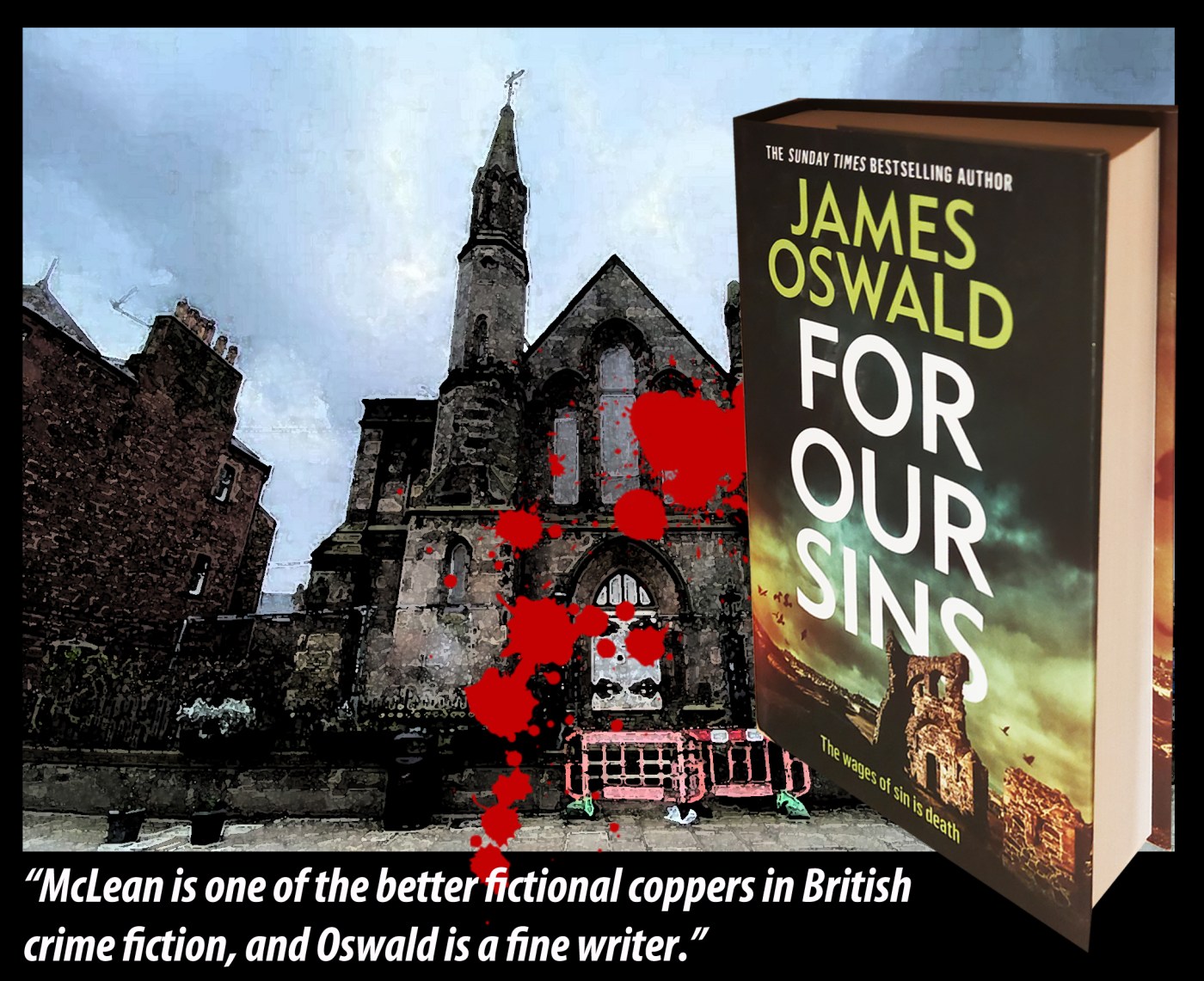
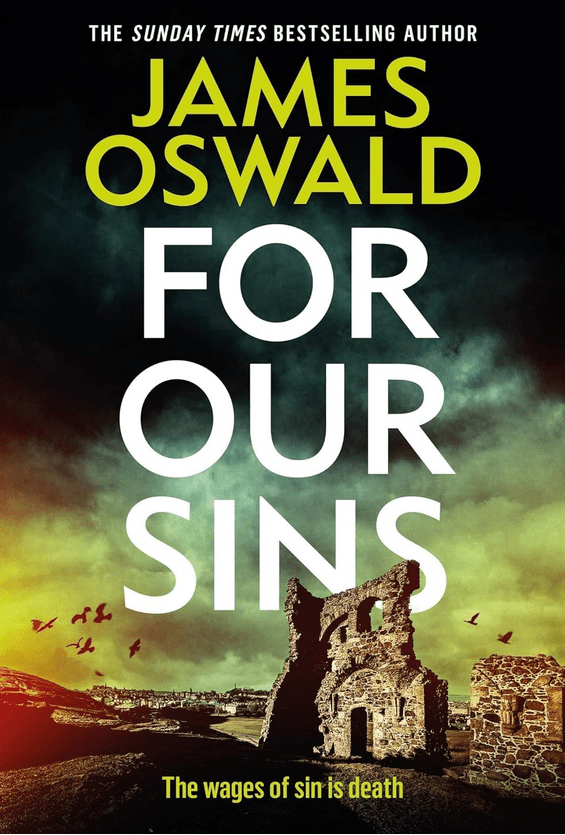
FOR OUR SINS . . . Between the covers

Edinburgh, the present day. A man is found dead in near-derelict church, his head crushed by a collapsed wall. His wallet reveals that he was Kenneth Morgan, an elderly ex-criminal who had been living quietly on his own since coming out of jail five years earlier. In charge of the case is Detective Sergeant Janie Harrison, who remains central to the story, despite the distant presence of her former boss, Tony McLean who has retired from the force. McLean is contacted by investigative journalist Jo Dalgliesh, who asks him to meet a middle-aged man, Robert Murphy who, as a child, was the victim of sexual abuse by his parish priest. The priest was murdered in what appeared to be an interrupted robbery of church silver. Murphy has the strangest of tales to tell.

I was a witness. And nobody listened to me when I told them what he’d done. And if he died, then how come I saw him on the street just a few weeks ago?”.

When another elderly man is found dead on the floor of a church, this time definitely by foul play, the police realise they have something strange on their hands. Both men were long-term associates of notorious gang boss, Archibald Seagram, a man who has remained conspicuously untainted by criminal convictions, despite being at the helm of an organisation responsible for much of the city’s serious crime for decades.

Meanwhile, Tony McLean is making the best of his ‘retirement’ and dutifully looking after his girlfriend Emma, who is slowly recovering from a stroke. He is acutely aware, however, that with the lack of mental and intellectual challenge that his job provided, One of the ‘ever presents’ in the excellent Tony McLean series is the transvestite spiritual medium Madam Rose, and it is his/her intervention that finally persuaded our man to do what his inner soul has been pressing him to do for months – offer himself back to Police Scotland.his life seems hollow and empty of purpose. Softly, softly, James Oswald is preparing us for some kind of comeback.

Every good police procedural novel needs a bad cop, and few are as loathsome as Detective Superintendent Pete Nelson. Detective Sergeant Jamie Harrison is at the core of the first half of this book, and Nelson is ‘on her case’ in all manner of ways, from professional vindictiveness to drunken groping in the pub. McLean’s former office still lacks a new tenant, and the department is worryingly understaffed, and so he returns, ostensibly just to help with this particular investigation.What we know, as readers, thanks to the short and intermittent flashbacks to 1980s, seen through the eyes of teenage altar boys, is that there is a religious aspect to this case and, specifically, connected to the Roman Catholic church.

McLean is one of the better fictional coppers in British crime fiction, and Oswald is a fine writer. Although McLean’s return to work is, to a degree, successful, we are left with no neat and conclusive answer to the reason why the three former criminals died. Nor do we learn why the severely disturbed Robert Murphy killed them, and his conviction that his church vestry abuser is still out and about is never explained, except perhaps because of his own mental state – or something paranormal has happened. For Our Sins was published by Headline in 2024, and there will be a new Tony McLean novel later this month.

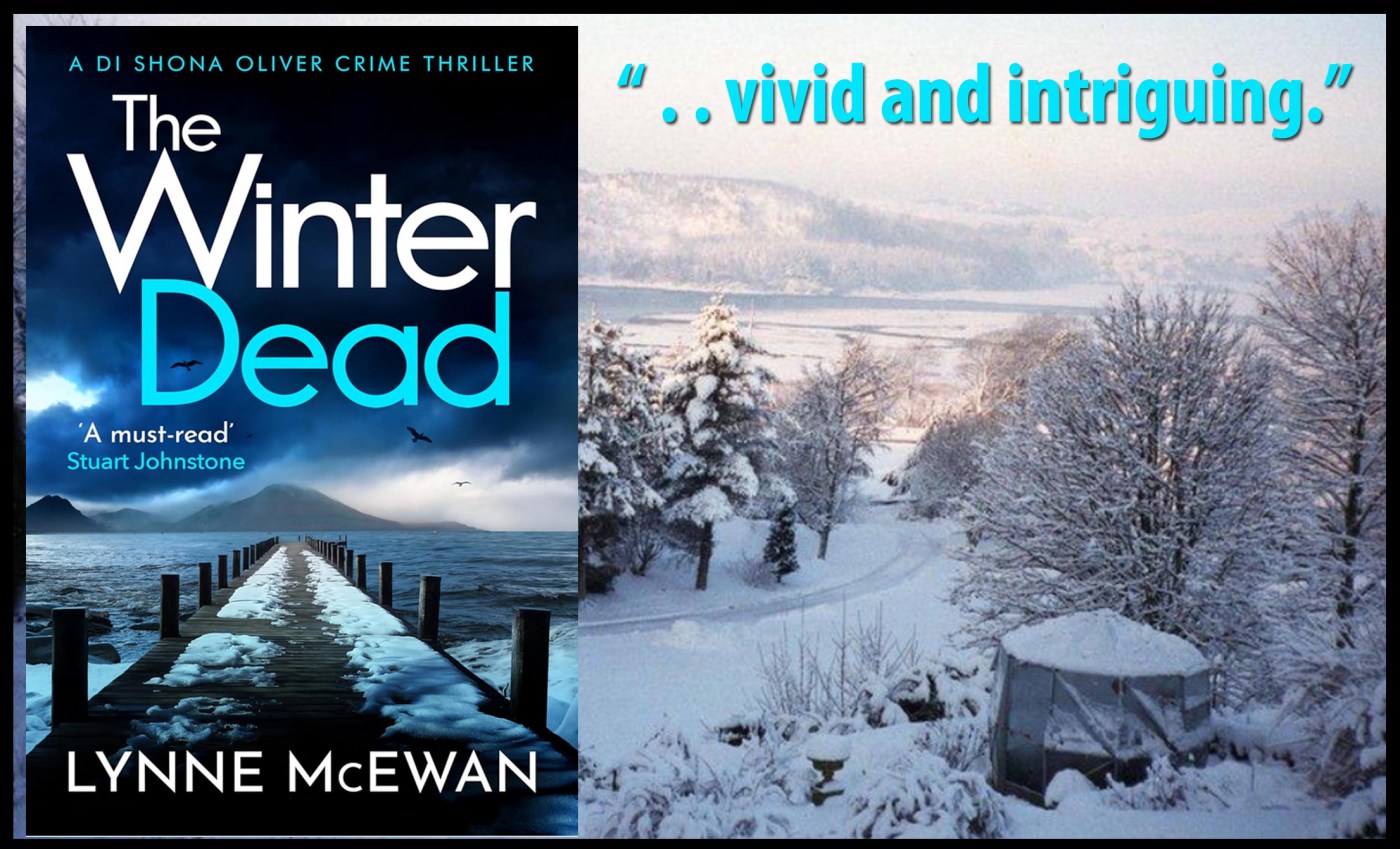
THE WINTER DEAD… Between the covers

The best Scottish crime fiction novels seem to be polarised between noirish grit and grunge on the mean streets of Aberdeen, Edinburgh and Glasgow, and more windswept tales set on rocky coasts and misty moors. The Winter Dead belongs in the latter category. DI Shona Oliver is in charge of a large rural beat which includes the wild shores of Dumfries and Galloway. Her husband, Robert, is doing time for financial fraud, leaving her to do her day job while trying to keep their guesthouse business solvent. 

A chance discovery (a bloodstained hammer discarded within a lorry load of firewood) presents a massive challenge which forces her to examine the integrity of people she has regarded as being valued friends. Shona also a seasoned member of the local lifeboat crew, and the over-arching sense of a community surviving in spite of the awful weather is reinforced in the early pages when Shona and her colleagues rescue a windsurfer battered against an unforgiving granite cliff by a force ten gale. The elemental theme continues as, following up the bloodstained hammer, Shona and a mountain rescue team are forced to rough it in an isolated visitor centre while searching for a missing forest Ranger.

The snow storm does its worst, and destroys any forensic traces, but when the missing man – John MacFarlane –  is found miles away, not only is the jigsaw jumbled up, but several of its pieces go missing.it is a well established trope of police novels that the central DI, already knee-deep and floundering in the riptide of a perplexing investigation, must also be plagued by family problems. Here, not only does Shona Oliver have her husband glumly sitting in jail, but she hears disturbing news of daughter Becca, away at university in Glasgow. Becca’s flatmate, Jack Rutherford, has been stabbed during an attempted phone snatch, and his injuries are life threatening.

To add to the rich tapestry of misdeeds Shona is tasked with investigating, a local petty crook has handed in something he has ‘found’. It is a Renaissance painting of the Madonna and Child, no bigger than a A4 sheet, but exquisite. She traces its recent provenance, but is it the original, or a saleroom copy?

A mixture of persistence and a touch of good luck results in something of a revelation about the murder of John MacFarlane, and it links the crime to an event decades earlier, in the warm waters of the Persian Gulf. Shona once again finds herself leading a manhunt, this time in the wintry malevolence of Dalgeddie Forest.

“As they went further from the track, the snow lay not like a decorative Christmas dusting, but like deep ash from some catastrophic fire. The branches of the fir swept down to the ground. The dark spaces enclosed by their grasp brought simultaneously a craving for sanctuary and a sense of her own vulnerability where every shadow seemed to hide a human shape. Her footsteps were impossibly loud. The deep powder squeaked and groaned, compacting under each step.”

The author who, like her heroine, is also part of a volunteer lifeboat crew, seamlessly weaves the different strands of the plot together, and Shona’s professional reputation is enhanced. She cannot rest easy, however, as fate has one dramatic personal surprise for her. This vivid and intriguing thriller will be published by Canelo Crime on 6th November.


THE FRACTURE . . . Between the covers

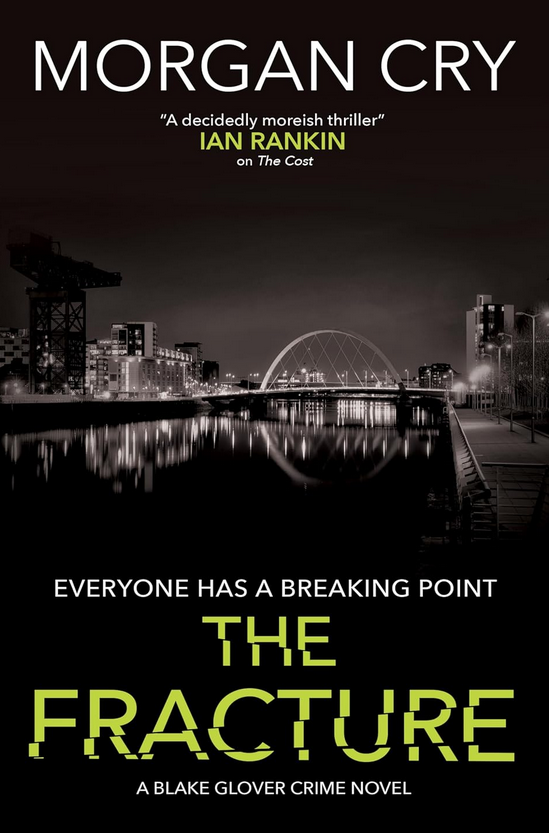
Blake Glover – BG to his friends – is a fifty-something taxi driver in his home town,the bleak fishing port of Fraserborough on Scotland’s north east coast. In a former life he was a police officer on the mean streets of Glasgow. His career ended after a messy attempt – involving planted evidence – to bring drug boss Mitch Campbell to justice. Now, Campbell has been arrested and tried, legitimately, and is awaiting sentence in Glasgow’s notorious Barlinnie prison. Glover is about to find out that Campbell has long reach, despite his incarceration.

The book begins, however, with a dramatic and, apparently, unconnected scene. Out on the desolate Fraserborough shoreline, a homeless alcoholic guzzles his last few mouthfuls of ‘Buckie’ (Buckfast tonic wine) but sees something perturbing out there in the darkness. A man has has walked out onto the beach, taken off his clothes, shoes and socks, and walked out into the white horses of the tide. The drunk staggers towards the beach calling out, but he is too late; the man has disappeared. The strange event has a temporarily sobering effect on the drunk, and he returns to the town and reports what he has seen.

Meanwhile, attending the funeral of an elderly lady he knew from childhood, Glover notices something disturbing. In the teeth of a furious and drenching storm, one of the pallbearers loses control of his rope lowering the coffin into the grave. That corner of the coffin thuds into the earth – and splits. The gravediggers in the mini JCB furiously pile the earth on top of the coffin before Glover can investigate, but he drives away from the churchyard trying to make sense of what he saw. He learns that in the darker corners of the funeral business it is not unheard of for relatives to order and pay for a top of the range oak coffin, only for the corpse to be switched to a more fragile plywood version at the last minute.

The man on the beach left his wallet with his clothes and has been identified as Ray Cocklestone, a former local farmer. He is classed, at least for now, a missing person, but few locals think it will be long before he is declared a suicide. Glover is interviewed by the police, as he may have been one of the last people to have talked to Cocklestone, having taken him in his taxi from his home to a local pub.

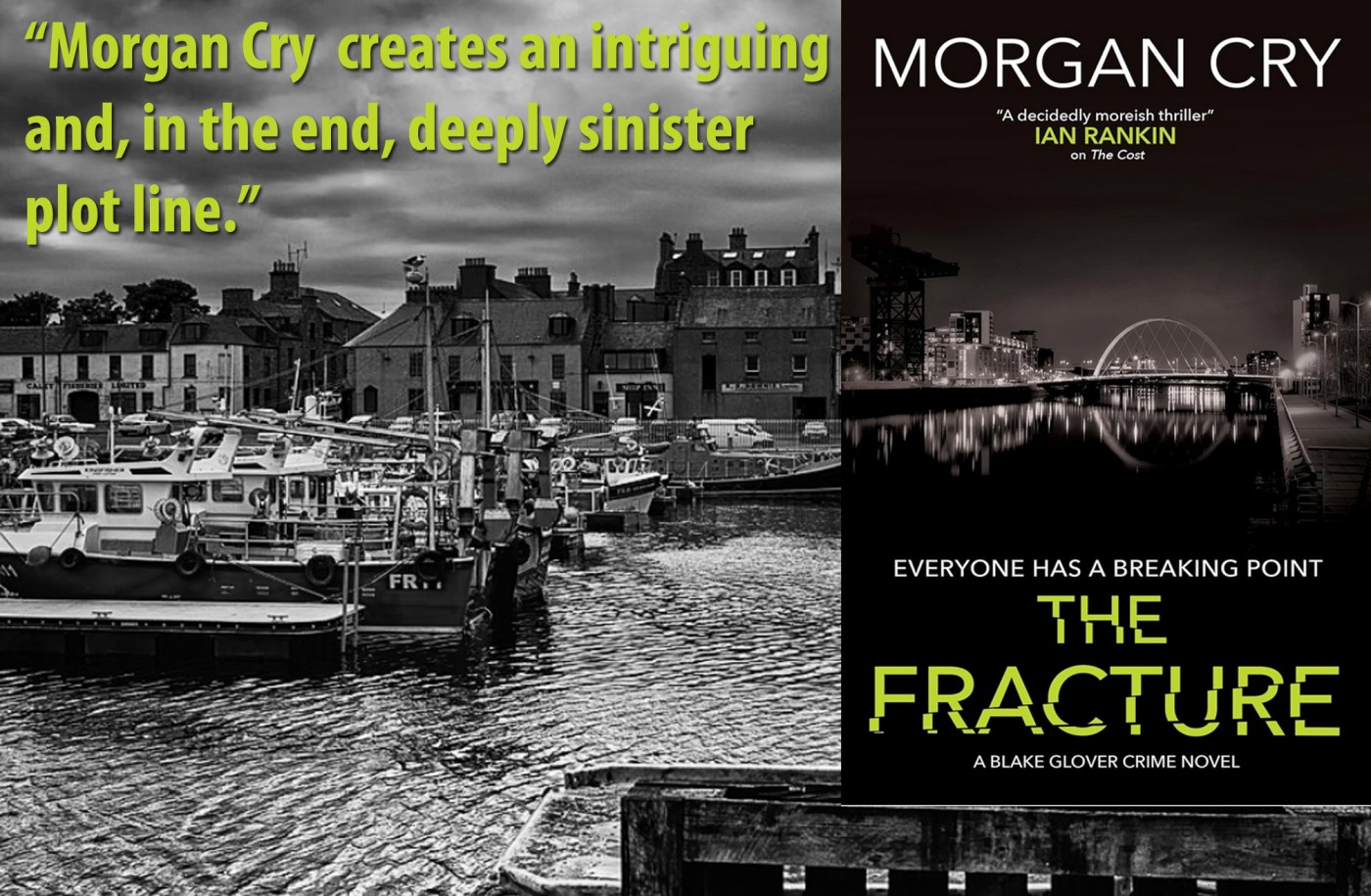
Morgan Cry (pen name of Gordon Brown, but no, not that one) creates an intriguing and, in the end, deeply sinister plot line which links the mystery of the splitting coffin and the disappearance of Ray Cocklestone with the truly dreadful things that take place courtesy of The Dark Web and the anonymity it gives its users. The Mitch Campbell storyline develops separately, and is one which comes to threaten not only Glover’s relatively modest current career, but his freedom and, perhaps, his life itself.

There are two central characters in the novel. One is the flawed, but likeable Glover. His lifestyle is certainly destructive, at least from a dietary point of view. He exists on industrial quantities of service station pasties and Mars bars, washed down with copious draughts of that peculiar Scottish delicacy, Iran-Bru. His taxi driver life is a miasma of unwashed passengers and the sickly scent of yet another air-freshener dangling from the rear view mirror. The other imposing presence in the book is Fraseborough itself. The town is frequently battered by the storms swirling in from the North Sea. The reluctant hedgerows and trees dolefully wear their permanent Christmas decorations of discarded plastic bags and wrappers from last night’s fish supper. The pubs, the houses, the leisure centres and the rain washed supermarket car parks are all bleak enough, but the people of the town are lovingly painted for the most part, with their impenetrable Aberdeenshire accents and their abiding love of gossip. The Fracture will be published by Severn House on 4th November.


THIS HOUSE OF BURNING BONES . . . Between the covers

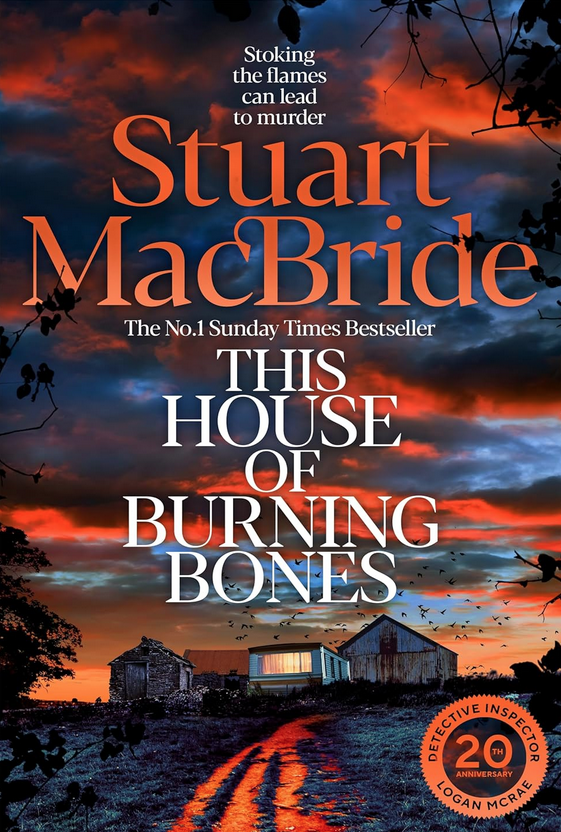
It has been a while since I read one of the Logan McRae books, and I am delighted to return to the series. Things have changed, though. McRae’s one-time boss, the foul mouthed Roberta Steel, has been reduced to the ranks after planting evidence in a rape trial. Now, things are turned on their head, McRae is Steel’s boss, and it is not a comfortable arrangement.

The McRae novels are, in my reading experience, unique in their blend of camp comedy, criminality at its most grisly and that essential sense that we have, in the person of DI Logan McRae, a serious copper with an unblemished sense of right and wrong. This novel starts with comedy, and an attempt by the Aberdeen cops to nail a man called Charles MacGarioch, who is suspected of leading an arson attack on a hotel full of asylum seekers. He eventually escapes in a hijacked ice-cream van, much to the frustration of McRae and the Keystone pursuers. After a chase that makes the famous scene in Bullitt look like the London to Brighton Rally, the van ends up in the River Don. The ice-cream man is rescued and is in a serious condition, but of MacGarioch there is no sign.

As the search for MacGarioch continues, we know something that McRae and his colleagues don’t. A burglar/peeping tom called Andrew Shaw (who lives with his mum, naturally) has broken into the house of Natasha Agapova, the new editor of an ailing local paper. Ms Agapova returns unexpectedly, but before she can even kick off her Laboutins, she is attacked and abducted by a man claiming to be Detective Sergeant Davis. And Andrew has captured the proceedings on his night vision head- worn camera.

When a beaten body is found in Aberdeen’s other river – the Dee – expectations are that Charles MacGarioch has met a watery end, but the corpse is that of Andrew Shaw. The few remaining staff at the once august Aberdeen Examiner have been queuing up outside the office of the new editor, Ms Agapova, to argue for their jobs, but where is she? It isn’t until senior journalist Colin Miller decides to go round to Agapova’s expensive but tasteless house to give her a piece of his mind that, finding the door unlocked, Miller finds scenes of a violent struggle and bloodstains – now dark and dried – but unmistakable. He calls 999.

MacBride is one of the better comedy writers within the CriFi genre. How about this gem?

“PC Ian Shand looked as if he’d been made by four-year-olds out of knotted string and old cat hair. And when he opened his mouth, every single one of his teeth pointed in a different direction.”

As we move through the book MacBride takes aim at all manner of institutions. In no particular order, the NHS, school Parents’ Evenings, the decline of Aberdeen, urban social architecture, preposterous management-speak and that strange public grief which involves plastic flowers, balloons and semi-literate messages of sympathy draped on railings and lamp-posts. Each one takes a fatal bullet.

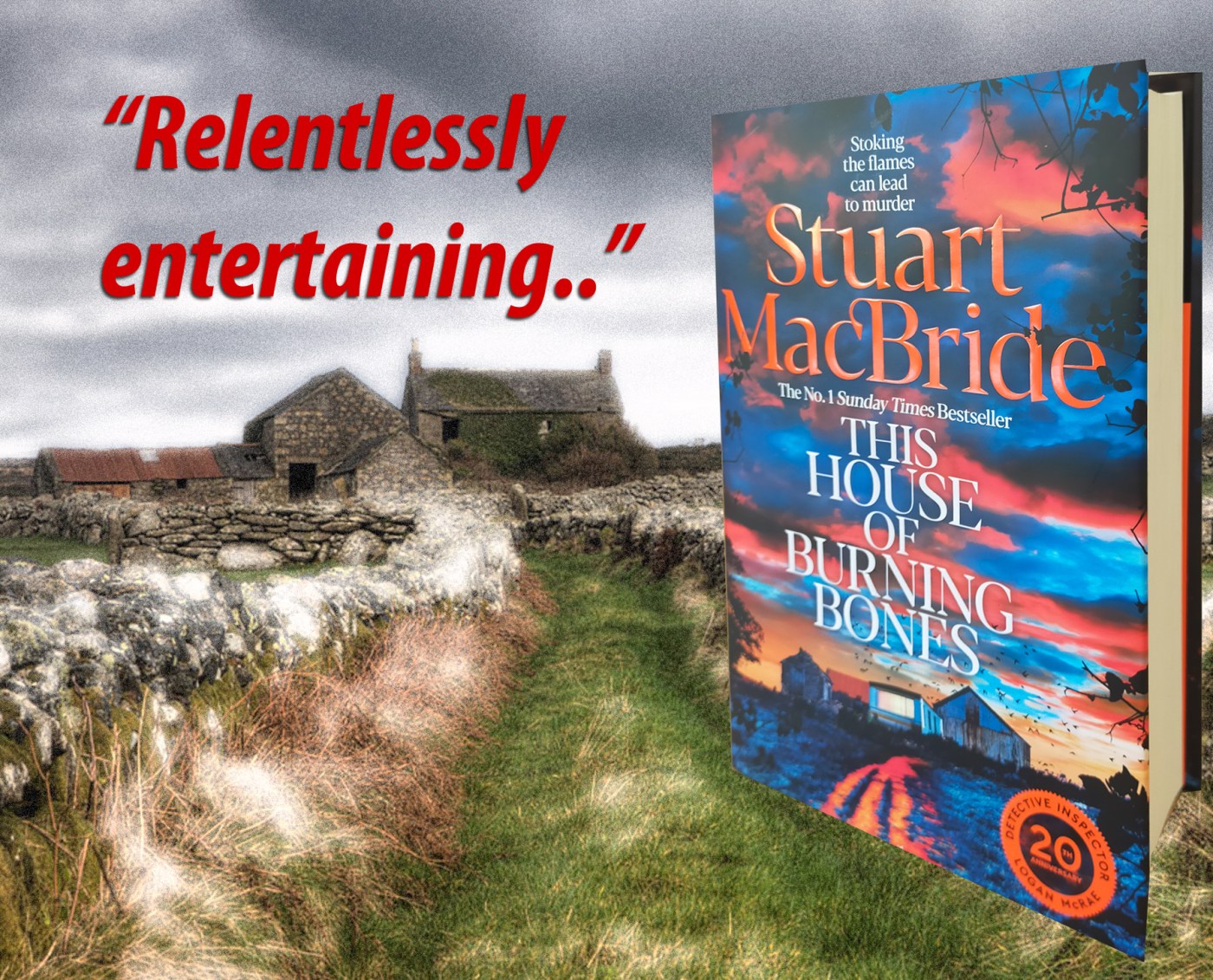
From ‘Early Doors’ in this relentlessly entertaining novel, we have been aware that Natasha Agapova has been held captive in a remote farm, by ‘Detective Sergeant Davis’. The big question is, of course concerns his real identity. If he isn’t an actual policeman, then who is he? Of course, we eventually learn who is, thanks in no small measure to McRae’s sidekick DC “Tufty” Quirrel. I am not sure who he irritated more, Logan McRae or me, but he is certainly a clever wee lad. The House of Burning Bones was published by Macmillan on 25th May.

WHISPERS OF THE DEAD . . . Between the covers

WOTD SPINE067

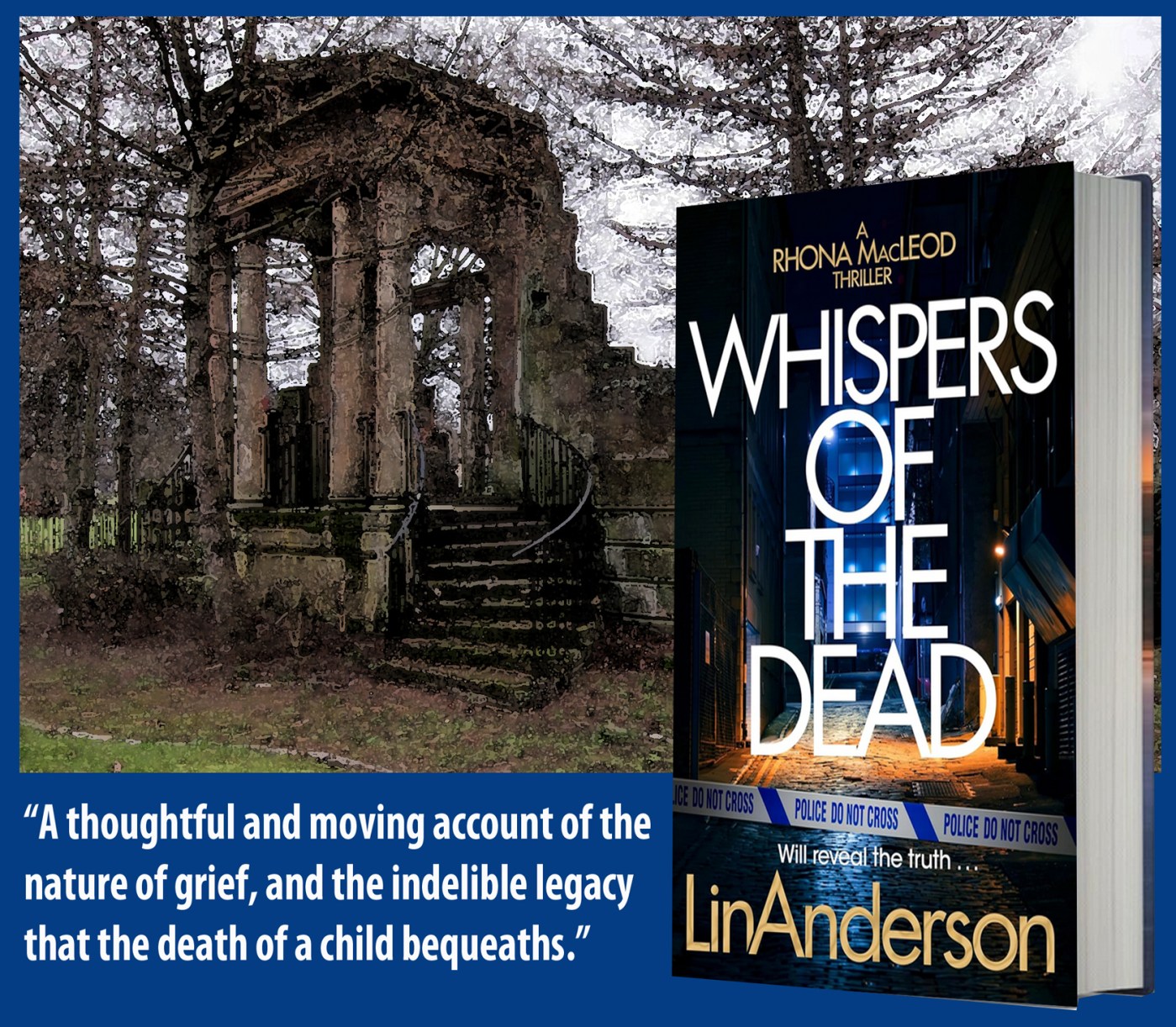
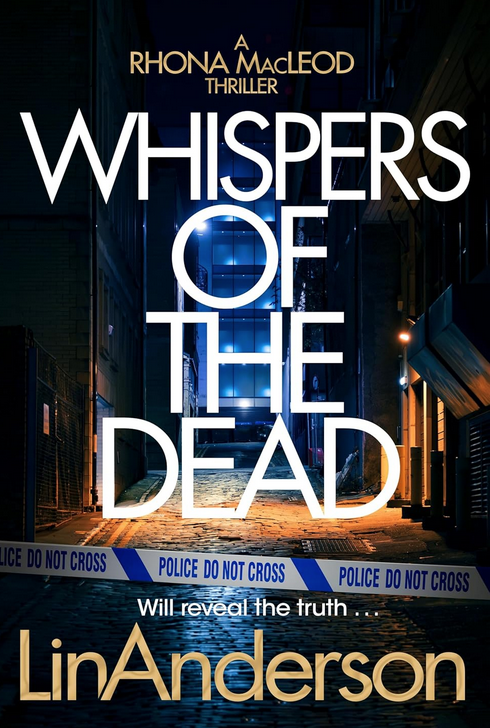
Lin Anderson’s battle-hardened forensic investigator Dr Rhona MacLeod returns to make another journey through the grisly physical mayhem that some human beings inflict on others. In a disused and vandalised farmhouse in Glasgow’s Elder Park, a man’s body has been found. His eyes and mouth have been sewn shut and, strapped to a metal chair, he has been thrown through an upstairs window. A trio of teenage scallies have been using the old building as a base for their minor law-breaking, and they are the first people to see the body,

In another part of the city, an American film crew have informed the police that their leading man is missing. With the assistance of DS McNab, who has interviewed the movie-makers, Rhona MacLeod becomes involved, and wonders if the missing actor is the mutilated corpse found in the park.

At the very beginning of the book Lin Anderson introduces what develops into a parallel plot thread. A woman called Marnie Aitken has served six years in prison for the murder of her four year-old daughter, Tizzy, despite the fact that no trace of Tizzy, dead or alive, has ever been found. Marnie is known to Rhona MacLeod, and to her colleague, psychiatrist Professor Magnus Pirie. On her release, Marnie – abused as a child and as a young woman – is placed in sheltered accommodation. She goes missing. but not before sending a bizarre gift to Rhona. It is a beautifully sewn and knitted doll, in the likeness of a young Highland dancer. Rhona realises its significance, as Tizzy Aitken was a promising dancer, but she is also appalled to see that the doll’s lips have been sewn shut with black thread. What message is Marnie sending?

Marnie is located at her old cottage on the Rosneath Peninsula, and but she returns to Glasgow, where the police find that she is linked – albeit at a tangent – the the killing of the man in Elder Park. Meanwhile, DS McNab – who was involved in the original investigation into Tizzy’s disappearance, but kicked off the case – has realised that the script and screenplay of the film – now abandoned after the disappearance of its star – is inextricably tangled up with the murder.

Right from the beginning of the novel, we know that Marnie still talks to Tizzy, and Tizzy still talks to her. Is this merely, as Magnus Pirie suggests, a grieving woman’s way of coping with her loss? Or is it something else? On the first page of the book, Marnie looks out of the window:

“It was at that moment the figure of a girl, dressed in a kilt and blue velvet jacket, arrived to tramp across the snow in front of the main gate. As though sensing someone watching, the girl stopped and turned to look over at her. Marnie stood transfixed, then shut her eyes, her heart hammering. ‘She’s not real. It’s a waking nightmare. When I look again, she won’t be there.’
And she was right.
When Marnie forced her eyes open, the figure had gone, or more likely, it had never been there in the first place except there were footprints in the snow to prove otherwise.”

When Rhona visits Marnie’s seaside cottage, she walks down to the beach where Tizzy used to go with her mother:

“The snow at sea level had gone and the muddy ruts were studded with puddles and the shape of footsteps leading both ways. Her forensic eye noted three in particular, ranging in size: a small childlike print, a medium one and a large one, going in both directions.”

Lin Anderson doesn’t resolve this for us. She leaves us to draw our conclusions, and I suppose it depends on how feel about Hamlet’s oft-quoted words to Horatio in Act 1 Scene 5 of the celebrated play. The police procedural part of this novel plays out in the favour of the good guys, but aside from this, Lin Anderson has written a thoughtful and moving account of the nature of grief, and the indelible legacy that the death of a child bequeaths. Whispers of The Dead was published by Macmillan on 1st August.

Screen Shot 2024-07-17 at 20.19.00

RESOLUTION . . . Between the covers

iresolution spine062 copy

Edinburgh copper Ray Lennox last appeared a couple of years ago in The Long Knives. Now, he has quit the  force and, given his predilections, is in a strange place on what might be thought foreign soil – England’s south coast, a partner in a security firm based in Horsham, with his customer base ranging from the gay green madness of Brighton, to the villas of Eastbourne, where the silence is only punctuated by the quiet hum of wheelchair tyres and the creak of zimmer frames.

His business partner is  George Marsden, in some ways the antithesis of Lennox, in that he is English public school, suave, urbane, and speaks the esoteric language of the English middle classes. He is no man’s dupe, however, as we are given hints that he once served with the Special Boat Service.

Lennox is deeply in lust with a local chemistry lecturer, Carmel Devereux, some years his junior, and it is at a meet and greet party with potential wealthy sponsors of her research, that he is staggered to see the face of Mathew Cardingworth, a character from wounding nightmares. In an Edinburgh underpass, all those years ago, Cardingworth was one of a gang that captured Lennox and his teenage mate Les Brodie, and subjected them to grim sexual and physical abuse.

Fantasising about getting even with Cardingworth, Lennox actually meets him socially and then makes the error of accepting Cardingworth’s offer of a couple of tickets for the executive box at Brighton’s next Premiership home game against Liverpool. An even worse mistake is inviting Les Brodie down from Scotland, standing him the air fare as a treat. Whereas Lennox’s vengeance against his abuser have stayed firmly inside his head, Les Brodie is more volatile. He catches sight of Cardingworth as they drink their pints and graze at the buffet; it only takes seconds for Brodie to recognise his abuser, and he is just as quick to smash his glass on the bar counter and thrust it into Cardingworth’a face.

As his obsession with Cardingworth deepens, Lennox discovers that there is a tenuous – but intriguing link between the businessman and several youngsters who disappeared from the ‘care’ of Sussex Children’s Services. The fact that all local and national newspaper references to those years – print, microfiche and digital – have all disappeared. In another puzzle, at least for the reader, one of the non-Brighton, non-now narratives in the book is in the voice of an Englishman, perhaps a merchant seaman, who has killed a man in a Shanghai bar fight and been incarcerated sine die in a vile Chinese prison. He is clearly a deeply damaged and dangerous man, and he appears to be directing his story at Lennox, but who is he?

Lennox, as he peels back the layers of the recent past, all too late realises he is in way over his head, but with almost suicidal and terrier-like tenacity, he presses on regardless, perhaps echoing the thoughts of his famous fictional countryman, who mused:

I am in blood
Stepped in so far, that, should I wade no more,
Returning were as tedious as go o’er”

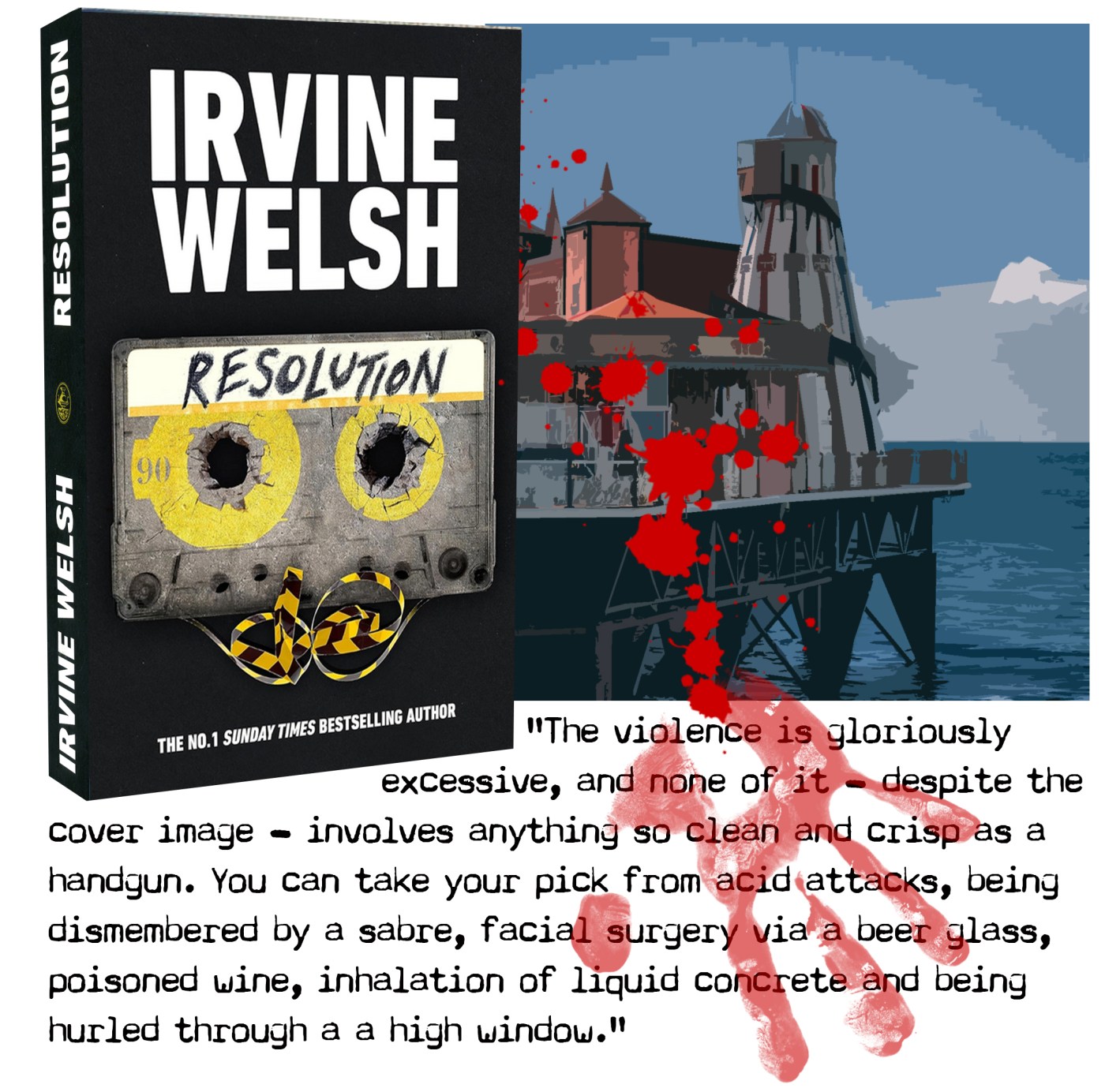
Fans of Welsh will love this, and feel at home with how the story darts back and forth between various characters, the Scottish conversational vernacular, the violence, the sex – and the grim humour. There is one wonderful example of the latter when contractors installing a new security system in a retirement home fall foul of a particularly demented resident, and all hell breaks loose. The titular resolution does not happen until the final pages of the book and it occurs, ironically, in the same care home where the contractors came so comically to grief. The violence is gloriously excessive, and none of it – despite the cover image – involves anything so clean and crisp as a handgun. You can take your pick from acid attacks, being dismembered by a sabre, facial surgery via a beer glass, poisoned wine, inhalation of liquid concrete and being hurled through a a high window. Resolution is published by Jonathan Cape and will be out on 11th July.

Screen Shot 2024-06-25 at 19.13.06

THE ESTATE . . . Between the covers

estate spine051 copy

Police Scotland’s Detective Inspector Cara Salt has been sidelined (because of a serious career blip, of which more later) into what can only be described as a dry and dusty branch of law enforcement, the Succession, Inheritance and Executory Department, SIE for short. Their job is to deal with breaches of the law that happen as a consequence of wills that upset people who assumed they were going to be beneficiaries but, for whatever reason, feel they have been short-changed.

A celebrity hedge fund manager, Sebastian Pallander has died on TV. No, not ‘died’ as in a comedian who fails to get a laugh, but ‘died’ as in suffering a massive heart attack while being interviewed on a live politics programme. It is his will – and its consequences – that are central to this story. When one of Sebastian’s sons, Jean Luc, manages to blow himself up while trying to sabotage a wind turbine, DI Salt is initially surprised to be asked to investigate. Along with her recently acquired assistant, DS Abernathy Blackstock, she visits the site of the wind farm, and finds that young Jean Luc is in many pieces, decoratively spread across the Scottish hillside.

Blackstock is not all he seems to be. The fifty-something Sergeant has not only been working on a top secret investigation into the late Sebastian Pallander’s links to highly dubious Russian money men, but he is the scion of a formerly wealthy branch of Scotland’s aristocracy.

One by one, the Pallander siblings seem to be the in the cross hair gun-sights of some rather nasty people. First Tabitha is kidnapped, then rescued by a mysterious man who tells her that she and her husband must make themselves scarce. When the hotel they are staying in, anonymously, catches fire, Cara Salt decides that Tabitha needs sanctuary – with none other than her former boyfriend – and fellow copper, Sorley MacLeod, now running a  laptop refurbishment business in London, but with an lonely fishing cottage out in the Essex marshes as a retreat.

Meanwhile, Silas Pallander, once destined to take over his father’s business but – since the reading of the will – relegated to manager of the family estate, has also been seized, along with his personal assistant Anna. He is forced to sign certain papers, and then the gang make a hasty exit, leaving Silas and Anna to emerge, blinking, from their captivity, to find themselves in a disused Belgian airfield.

About halfway through the book, we learn the reason that Cara Salt is now involved in a policing operation that is as far from the mean streets of Glasgow as it could be. She had headed up a police take-down of a violent local gangster. It went pear-shaped and, faced with her Detective Sergeant – Sorley MacLeod – being held at gunpoint by the man who was the target of their raid, she took a chance and fired two shots. The first shattered MacLeod’s shoulder, but the second hit the gangster right between the eyes. Salt was sidelined and, after a long and painful recovery, MacLeod left both the police force and the world of Cara Salt.

Macleod and Tabitha Pallender, after a helter-skelter chase and a too-close-for-comfort brush with the bad guys, are eventually reunited with Salt and Blackstock, and are whisked back to relative safety in the Pallander company helicopter. However, anyone connected to the Pallander financial empire is about to enter a whole world of hurt. Pallander and his associates had for years basically been operating a Bernie Madoff-style financial scam and, with his death, the corporate chickens are about to come home to roost.

Screen Shot 2024-04-30 at 18.43.53

Towards the end of the book Denzil Meyrick (left) throws a sizeable spanner into the works in terms of what we think we know about what is going on, but this nothing to the shock we get during his version of the classic crime novel denouement in the library. In this case, it’s not the library, but the baronial dining room of Meikle House, the home of the Pallanders. The Estate is fast paced, witty and full of those plot twists that make Meyrick’s books so entertaining. It is published by Transworld/Bantam and is available now.

THE DEVIL STONE . . . Between the covers

TDS spine019 copy

Detective Inspectors – and their bosses the DCIs – are hardly a dying breed in crime fiction, so what is distinctive about Christine Caplan, the central figure in Caro Ramsay’s latest book? For starters, she has been demoted from DCI because her previous case involved some evidence mysteriously going ‘walkies’. Her run of bad continues when, after a night out the ballet in Glasgow (she used to be a dancer) she inadvertently becomes involved in a mugging, and the drug-frazzled perpetrator  subsequently dies from falling from his bike. Family-wise, things are not much better. Her husband, Aklan, formerly something of a creative high flyer, has a serious case of depression and rarely leaves his bed. When he does, it’s only to stagger to the sofa where, wrapped in a blanket, he binges on daytime TV. Son Kenny is a ne’er-do-well drug user, flunking college and a bit too handy with mum’s credit card. Daughter Emma is the only glimmer of light. She seems relatively healthy, bright and has something of a future once she finishes her degree.

Things don’t improve for Caplan when she is sent off to the Scottish west coast where, near the village of Cronchie, a multiple murder has taken place. Two teenage boys – “neds”, to use the Scottish slang, have broken into Otterburn House, a mansion belonging to the McGregor family. The intruders get more than they bargained for:

“…jerking the phone, causing the beam to drop suddenly where it caught the ghostly white face staring at the ceiling with nacreous clouded eyes. Unable to stop himself, he looked along. Another face. Then another. Five of them in a row, cheek to cheek. Dried white skin clinging to thin cheekbones, mouths open, teeth bared.”

The lads – one of whom is a devotee of Satanism –  have burgled the house looking for a legendary artifact known as The Devil Stone which, according to the ancient lore, is able to predict impending tragedy. They leg it away from the house as if Old Nick himself is chasing them. They are hospitalised suffering from shock, the police are summoned and a major investigation is triggered.

In charge of the investigation is Detective Chief Inspector Bob Oswald, a highly respected officer just weeks away from retirement. When he goes missing, Caplan finds herself put in charge of the case, rather to her own discomfort and the resentment of the local team. One member of the McGregor family – Adam, a New Age hippy and something of a black sheep – is missing from the gruesome line of corpses, and thus he becomes the main suspect.

When Bob Oswald is finally located dead – in mysterious circumstances – Caplan realises that whatever happened at Otterburn House is part of a much bigger conspiracy, involving the distribution of a dangerous new narcotic known as Snapdragon. While she suspects that a nearby New Age community living on the nearby island of Skone may be involved, another discomforting thought is nagging away at her, and it is the suspicion that someone in the police team is batting for the other side. How far can she trust DC Toni Mackie, a larger-than-life woman, with a slightly cartoonish air about her? And what is to be made of the bumbling DC Craigo, with his strange slow blink, and his lack of social graces?

Already facing a twin-pronged attack on her career, Caplan realises that her relentless determination to solve the Otterburn House mystery has brought her head-to-head with some people who are determined to take her life if she gets in their way.

This edition of The Devil Stone is published by Canongate and is out now.

Blog at WordPress.com.

Up ↑