

The book starts in spectacular fashion. We are in London, in the summer of 1681. At Gresham College, the home of The Royal Society, senior scientist Robert Hooke (he of Hooke’s Law) has summoned the Great and the Good, including His Majesty King Charles II, and Harry Hunt, who we met in The Poison Machine and The Bloodless Boy (click the links to read reviews) to a public dissection. Wielding the blades and saws will be none other than the great polymath Sir Christopher Wren. The unfortunate corpse is an unknown woman who recently committed suicide at Bethlehem Hospital, the recently built refuge for the insane. Sir Christopher is hoping to show that the muscles of the cadaver can be made to twitch by manipulating various parts of the brain. The macabre experiment is well underway when the woman’s face is revealed. All hell breaks loose when Harry Hunt cries out:
“You must stop! She is no suicide from Bethlehem Hospital. Her name is Miss Diana Cantley. She was my neighbour in Bloomsbury Square.”
Sir John Reresby, Justice of The Peace for Westminster is called in, and he and Harry Hunt try to ascertain just when and how the body of Diana Cantley came to be substituted for the expected cadaver – that of a woman who took her own life in Bethlehem Hospital. Soon, a second aristocratic woman, Mrs Elizabeth Thynne, is reported missing but before her disappearance can be investigated, Harry is himself arrested. The body of the Bedlam Cadaver, Sebiliah Barton, is planted in his laboratory and Reresby, using Occam’s Razor*, assumed Harry is responsible for both deaths.
*A principle often attributed to. 14th–century friar William of Ockham that says that if you have two competing ideas to explain the same phenomenon, you should prefer the simpler one.
Harry, more by luck than judgment, escapes captivity, and after a life threatening encounter with the unforgiving waters of the Thames, struggles ashore in Rotherhithe, where he is sheltered by two women tailors. He finds the younger, Rachel – a Lithuanian – strangely attractive and they have a brief but passionate encounter. Thanks to a bizarre signaling mechanism invented by Robert Hooke, he is smuggled back to central London, where he faces a race against time to establish his own innocence and find the killer of Diana Cantley.
King Charles II features here, as in the previous novels, and Robert Lloyd paints a picture of a calm and decent man, at ease with himself, with a benign and generous soul. Be that as it may, Charles was no slave to marital loyalty, and he fathered many children by different lovers, hence the political problem, a simmering issue in this book, but one which was to boil over not many years down the line. Charles had no legitimate heir, and it was accepted that his brother James, would succeed him. This would pose a problem, as James was a devout Roman Catholic. Charles had a much favoured illegitimate son, James Scott Duke of Monmouth. A Protestant, he also appears in this novel, and readers who know their history will be aware that when Charles died in 1685, he was succeeded by James, and not long after, Monmouth was leader of an unsuccessful invasion force, which was defeated at the Battle of Sedgemoor, and its surviving followers brutally dealt with.
In addition to clearing his own name, finding out who murdered Diana Cantley and tracing Elizabeth Thynne, Harry is caught up in the search for a mysterious black box, said to contain evidence that King Charles was secretly married to the Duke of Monmouth’s mother, thus making Monmouth the rightful heir to the throne.
Harry Hunt is an unusual – but engaging – hero. His main quality is intelligence. Although no coward, he rarely comes off best in fisticuffs or swordplay. His ambition to marry Grace, Robert Hooke’s niece, is paramount, mainly for social reasons, but he is a man with needs, as shown by his brief dalliance with the enigmatic Rachel. The Bedlam Cadaver is impeccably researched, and its anchor points are the real life characters like Hooke, Wren, The King and Monmouth; above that, however, Robert Lloyd gives us a sparkling narrative, and the real sense that – nearly 350 years later – we are in the same room as his characters. The Bedlam Cadaver is published by Melville House, and is out now.


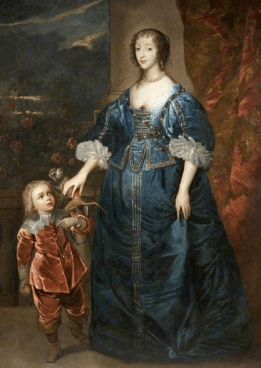 In far-off Norfolk, men repairing flood defences near Denver Sluice have discovered what appears to be the remains of a child inside the rotted skeleton of a boat. Hunt, accompanied by Colonel Michael Field, a grizzled veteran of Cromwell’s army, and Hooke’s niece, Grace. When the trio arrive in Norfolk, Hunt soon determines that the remains are not those of a child, but the mortal remains of Jeffrey Hudson, who was known as the Queen’s Dwarf – the Queen in question being the late Henrietta Maria (left), wife of Charles I. The situation becomes more bizarre when Hunt learns that Hudson is not dead, but living in the town of Oakham, 60 miles west across the Fens. Hunt and his companions’ journey only delivers up more mystery when they find that ‘Jeffrey Hudson’ has left the town. Hunt knows that the jolly boat* which contained the skeleton belonged to a French trader, Incasble, which worked out of King’s Lynn.
 Hunt’s odyssey continues. In King’s Lynn, Hunt and his companions are summoned to the presence of the Duchesse de Mazarin. Hortense Mancini is one of the most beautiful women in Europe. She is highly connected, but also notorious as one of Charles II’s (several) mistresses. She reveals that the mysterious dwarf – or his impersonator – may be in possession of a a legendary gemstone – the Sancy – a diamond of legendary worth, and the cause of centuries of intrigue and villainy. The Duchesse bids Harry to travel to Paris, but once there, his fortunes take a turn for the worse.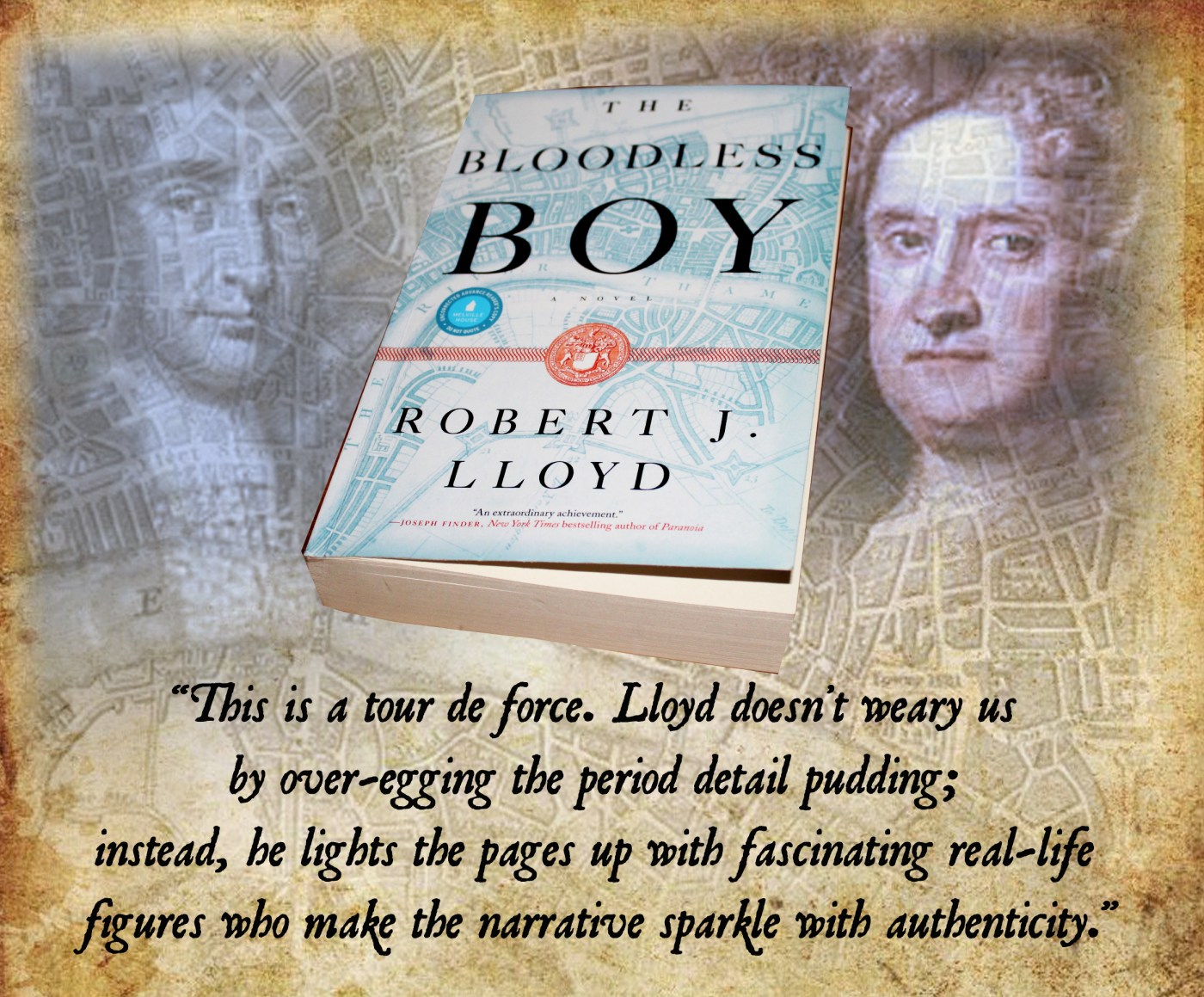

 Thus begins a thoroughly intriguing murder mystery, steeped in the religious politics of the time. For over one hundred and fifty years, religion had defined politics. Henry VIII and his daughters had burned their ‘heretics’, and although the strife between Charles I and Parliament was mainly to do with authority and representation, many of Oliver Cromwell’s adherents were strident in their opposition to the ways of worship practiced by the Church if England. Now, Charles II is King. He is reputed to have sired many ‘royal bastards’ but none that could succeed to the throne, and the next in line, his brother James, has converted to Catholicism. In most of modern Britain the schism between Catholics and Protestants is just a memory, but we only have to look across the Irish Sea for evidence of the bitter passions that can still divide society.
 How on earth this superb novel spent many years floating around in the limbo of ‘independent publishing’ is beyond reason. While not quite in the ‘Decca rejects The Beatles‘ class of short sightedness, it is still baffling. The Bloodless Boy has everything – passion, enough gore to satisfy Vlad Drăculea, a sweeping sense of England’s history, a comprehensive understanding of 17th century science and a depiction of an English winter which will have you turning up the thermostat by a couple of notches. The characters – both real and fictional – are so vivid that they could be there in the room with you as you read the book.




 fullybooked2017