
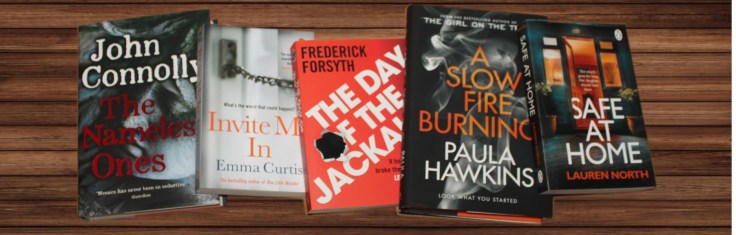
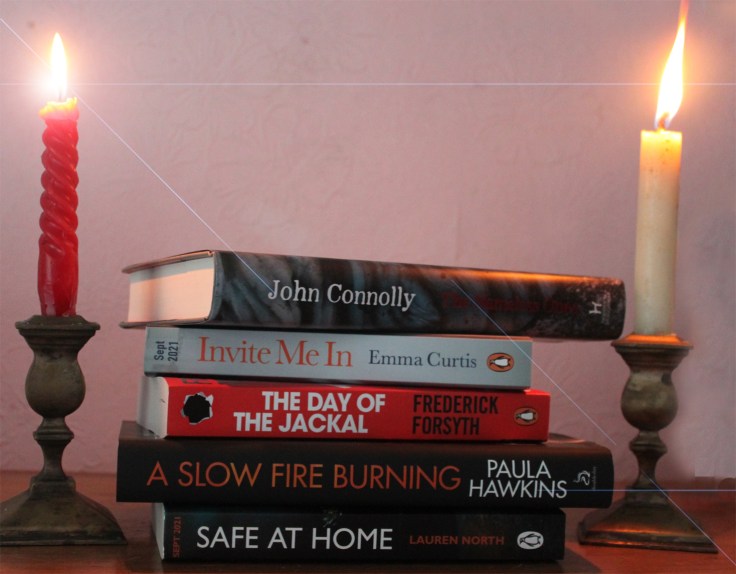
I have a healthy To Be Read stack as July swelters its way towards August, as well as some interesting-looking blog tour stops to fulfil.
THE NAMELESS ONES by John Connolly
A new Charlie Parker novel is always one of the significant way-points in my reading year. Centre stage in this latest adventure for the Portland private eye is his loyal – but violent – friend, Louis. Instead of the customary Maine woods or the craggy North Atlantic shoreline, the actions shifts to Amsterdam, where an old friend of Louis’ has been murdered after tangling with Serbian war criminals. Fans of this excellent series will know what to expect – violence, a sense of deep unease that echoes Hamlet’s famous advice to Horatio, and a genuine present day battle between good and evil. The Nameless Ones is published by Hodder and Stoughton, and is available now.
INVITE ME IN BY Emma Curtis
The trope of the seemingly happily married woman with lovely children and and a handsome, supportive husband – but who is hiding a terrible secret – has become very popular in domestic thrillers, but Emma Curtis, in this account of what happens when Eliza Curran takes on a new tenant, gives it fresh legs. Published by Transworld Digital, Invite Me In is out now as a Kindle, and the paperback version will follow in September.
THE DAY OF THE JACKAL by Frederick Forsyth
As the late lamented Sandy Denny once sang, “Who Knows Where The Time Goes?” It was fifty years ago that former RAF pilot and journalist Frederick Forsyth’s political thriller was first published. If you want a copy of the UK first edition, you might need a grand or so to play with, but this 50th anniversary edition from Arrow – with the added bonus of an introduction by Lee Child – is much more reasonable. I won’t waste time and space by outlining the plot (which is still as original and compelling as when it was written) but you can get this paperback here and still have change from a tenner.
A SLOW FIRE BURNING by Paula Hawkins
In the publicity blurbs all the great and the good among contemporary crime fiction jostle to praise Paula Hawkins and her writing. The Zimbabwe-born author certainly hit the big time with her breakout bestseller The Girl on The Train and her second novel Into The Water. Can she make it a hat-trick of triumphs? All the ingredients seem to be there – female centred, tense, anxiety-driven and a complex emotional undertow which threatens to drag the unwary participants away. Three women – Laura, Carla and Miriam – face different challenges that force them to re-evaluate how they calibrate innocence, guilt – and danger. A Slow Fire Burning will be out on 31st August and is published by Transworld Digital
SAFE AT HOME by Lauren North
More domestic angst and tension now from Lauren North, whose debut novel was The Perfect Son (2019). Her latest novel features Anna James, described as “an anxious mother” When she has to leave eleven-year-old Harrie home alone one evening, she can’t stop worrying about her daughter. But nothing bad ever happens in the sleepy village of Barton St Martin. Except something does go wrong that night, and Anna returns to find Harrie with bruises she won’t explain. The next morning a local businessman is reported missing and the village is sparking with gossip. Anna is convinced there’s a connection and that Harrie is in trouble. But how can she protect her daughter if she doesn’t know where the danger is coming from? This is, again, from Transworld Digital and will be out as a Kindle at the beginning of September, and in paperback at the end of that month.



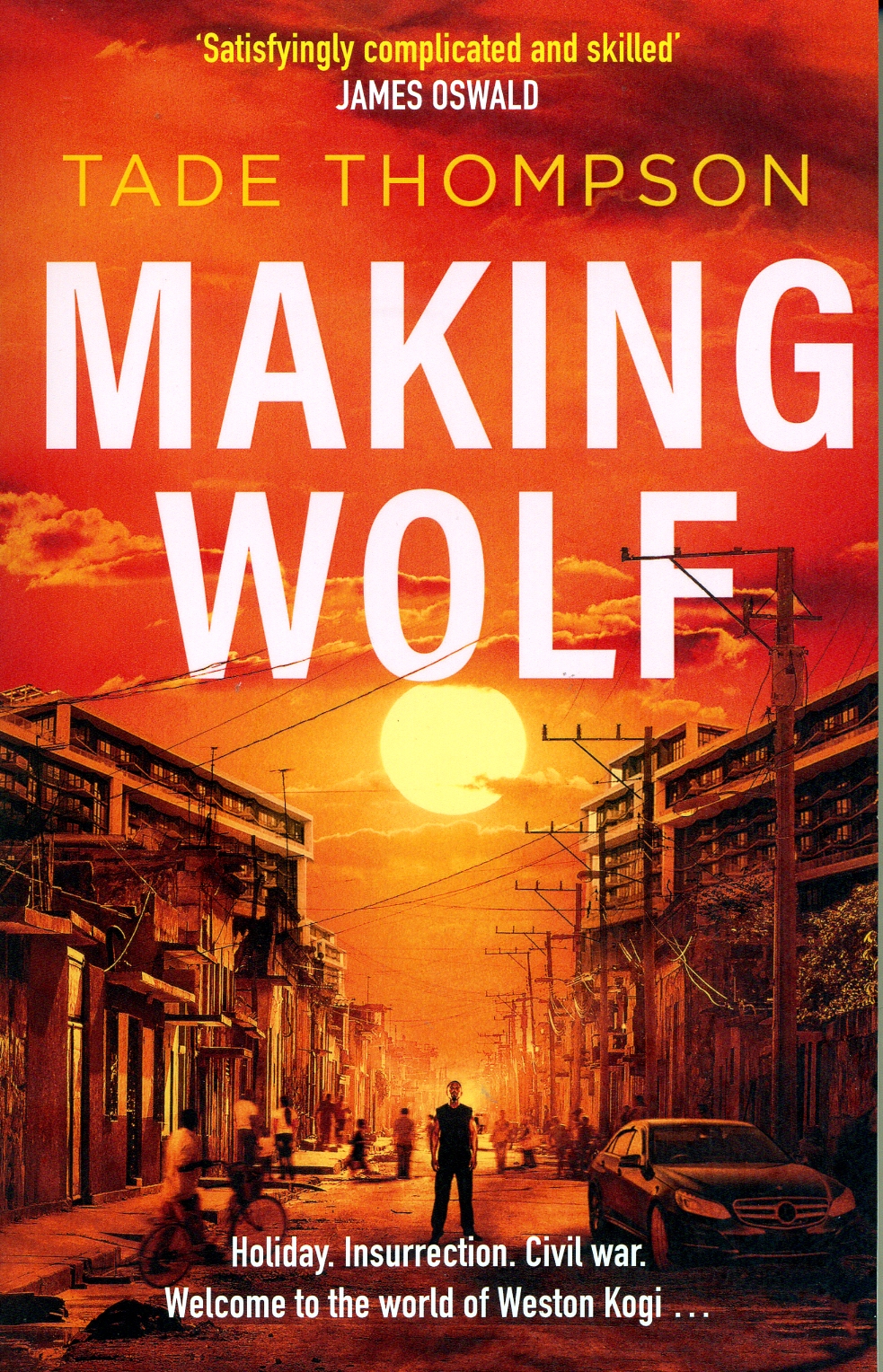 At his aunt’s funeral he meets Churchill “Church” Okuta. Church is a nightmare from Kogi’s schooldays, and the meanest person he has ever met. When asked what he does in London, Kogi, on impulse says that he is a homicide detective. Bad move. Church orchestrates the drugging and abduction of Kogi, and when he wakes up he finds that he is in the camp of the Liberation Front of Alcacia, one of two warring rebel groups trying to overthrow the government. Their leader, Enoch ‘Papa’ Olubusi has been assassinated, and the LFA, in the mistaken belief that Kogi is a crack British detective, want him to prove that the killing was the work of their bitter rivals – the People’s Christian Army.


 odern readers don’t need history degrees to understand the savagery with which followers of different religious views are prepared to torture, maim and kill one another. Sunni against Shia across the Middle East; Roman Catholic against Protestant in Northern Ireland; both are all too recent in memory.
 London, 1591. Queen Elizabeth has ruled England for over three decades, but the religious fires lit by her father and then – literally – stoked by the Catholic zealots driven on her half-sister Mary, may just be glowing embers now, but the mutual fear and bitterness between followers of the Pope and members of the English church are only ever a breath away from igniting more conflict. Just a few short miles from England’s eastern coast, war still rages between the rebels of The Seventeen Provinces of The Low Countries and the armies of King Philip of Spain.
 he arrival of a Venetian ship on Bankside brings not only Bianca’s cousin Bruno Barrani but a violent encounter in The Jackdaw which leaves the Venetian near death with a terrible head wound. Shelby ministers to the grievously wounded Italian, but is then summoned to an unwelcome reunion with the saturnine and deeply dangerous Robert Cecil. Shelby is already aware that Samuel, the young son of his former military commander Sir Joshua Wylde is afflicted with The Falling Sickness (epilepsy) and is being tended in rural Gloucestershire by a controversial Swiss doctor, Arcampora. Shelby has already agreed to give Wylde a second opinion, but when Cecil offers him a large sum of money to do exactly the same thing, he welcomes the opportunity to both repay a favour and line his pockets.
 This is a riveting and convincing political thriller that just happens to be set in the sixteenth century. The smells and bells of Elizabethan England are captured in rich and sometime florid prose, while Nicholas and Bianca are perfect protagonists; she, passionate, instinctive and emotionally sensitive; he, brave, resourceful and honest, but with the true Englishman’s reluctance to seize the romantic moment when he should be squeezing it with all his might. SW Perry (right) has clearly done his history homework and he takes us on a fascinating tour through an Elizabethan physic garden, as well as letting us gaze in horror at some of the superstitious nonsense that passed for medicine five centuries ago.
 is a reference to the Rod of Asclepius, which was a staff around which a serpent entwined itself. This Greek symbol has always been associated with healing and medicine, existing even in our time as the badge of the Royal Army Medical Corps. SW Perry’s novel is published by Corvus and
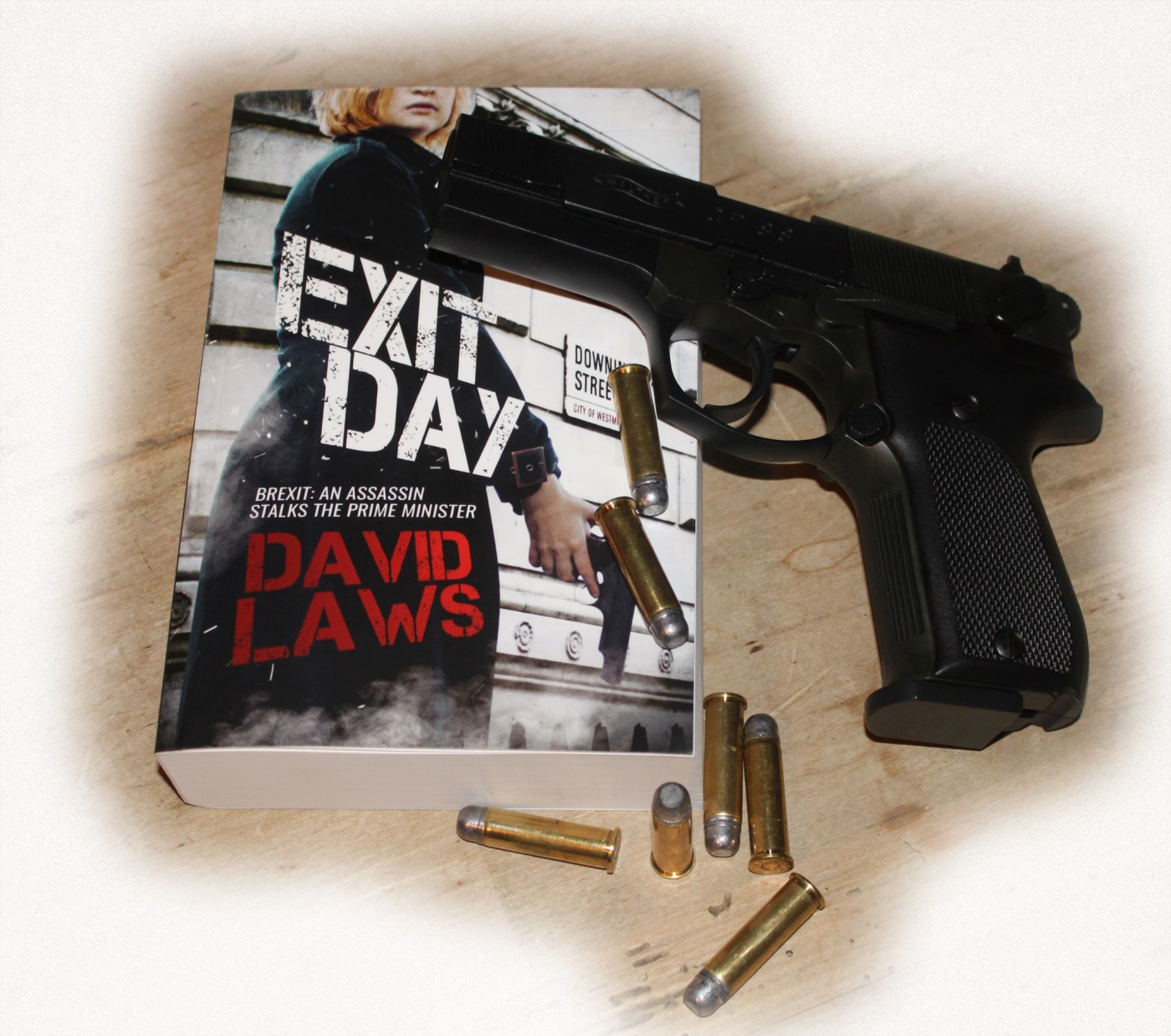
 Those last seven words kill, and journalist David Laws (left) has written a novel about the “passionate intensity” which sparks political assassination. The fateful day of Britain’s exit from the EU is dawning, and a vicious conspiracy is about to make all the previous months of political bickering seem like a garden party in comparison. Inadvertently, a journalist called Harry Topp has embedded himself at the heart of the plot, and he blunders on in search of a lifetime scoop, blissfully unaware of what is unfolding around him.


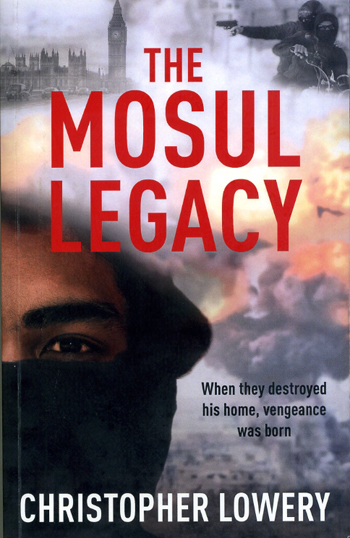 Lowery sets out his narrative stall with those four threads which will eventually weave together to powerful effect. Ibrahim, his puppet strings pulled from afar courtesy of the internet, plans a terrorist bomb attack which goes spectacularly wrong and he goes on the run. A revered and respected fighter, Karl, has to watch in frustration while his ISIL soldiers are outgunned and overwhelmed by coalition forces, and his position is undermined by over-promoted jobsworths in his own organisation. Faqir has finally had enough of living in the shell-torn morgue that Mosul has become, and gathers together his hard-earned savings and is determined to find a better life for his family. Battling German privacy laws which prevent him from publishing photos of his suspect, Kellerman presses on and is determined to bring his man to justice.
 This is a big, sprawling novel – nearly 450 pages – but it is grimly readable. I say ‘grimly’ because it goes behind bland newspaper headlines and ten-second TV news video clips, to reveal the whole Iraq – Syria situation as the ruinous, depressing and insoluble shambles it has become. It would be impossible to write a novel like this with it being political, but I don’t think Lowery (right) allows himself to become partisan. For sure, he pulls no punches in his scathing depiction of the social intolerance of many Muslim communities, and the genocidal fanaticism of ISIL which is as close to mental illness as makes no difference. He is, however, just as clear sighted in his scepticism about the real reasons why America and its allies – most pointedly Britain – became involved in Iraq in the first place.


 fullybooked2017