Search

fullybooked2017

Tag

Police Procedural

THE BARRAGE BODY . . . Between the covers

It is December, 1944, and we are in the Birmingham suburb of Erdington. Further afield, and quite unknown to both the residents of Erdington and the American soldiers shivering in their foxholes in the Ardennes Forest, Hitler is about to launch his last desperate gamble in what would come to be known as the Battle of The Bulge. In Erdington, war-wise, things are relatively quiet, but a barrage balloon unit, staffed by young women of that WAAF, is parked up at the Dunlop rubber factory, commonly known as Fort Dunlop.

It is here that Detective Chief Inspector Sam Mason is summoned, initially to investigate what appears to be a case of malicious communications, but things escalate rapidly. First it seems that someone has stolen vital blueprints for new and improved tyres for Lancaster bombers, and then, a body is discovered tethered to a barrage balloon which has unaccountably broken free.

Mason has a veritable 2000 piece jigsaw to put together. So many questions. Who was the man found dead in the barrage balloon cables? Why was jack-the-lad teenager Simon Samuels found in a similar position? What is the connection to Samuels’ father, a guard at a Staffordshire POW camp. Painstakingly, Mason and his redoubtable Sergeant O’Rourke have to move the pieces one by one until they begin to make a recognisable picture.

Sam Mason is quite unlike most British coppers in contemporary CriFi, partly because of the era in which was working. Because it is the 1940s we are quite content for him to rather stolid, happily married, prone to the aches and pains of late middle age. His deceptively gentle and slow-moving approach masks a sharp mind and a critical eye for detail. Here, he patiently absorbs the facts of a strange case, and delivers the goods.

This is the fourth Erdington Mystery. I enjoyed and reviewed the first of them, The Custard Corpses. The series couldn’t be more different from the books for which Porter is, perhaps, better known – dramatic swords, shields and helmets dramas from Saxon and Norman times. The books have one thing in common, however, and that is the setting – Mercia, the ancient kingdom we would now call The Midlands where, incidentally, Porter was born and brought up. The Barrage Body is original, inventive, nostalgic, absorbing, and I loved it. Published by MJ Publishing, it is available now.

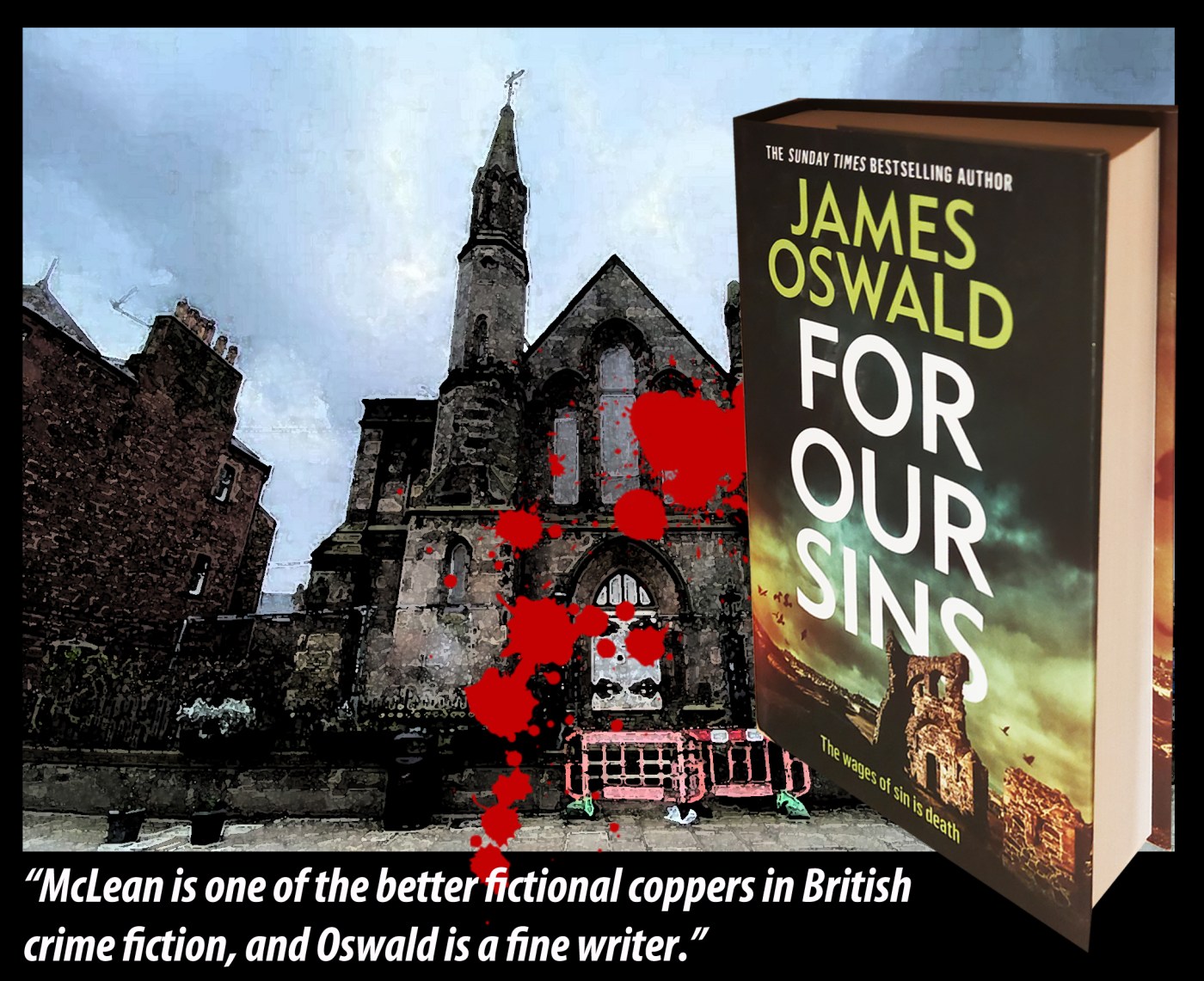
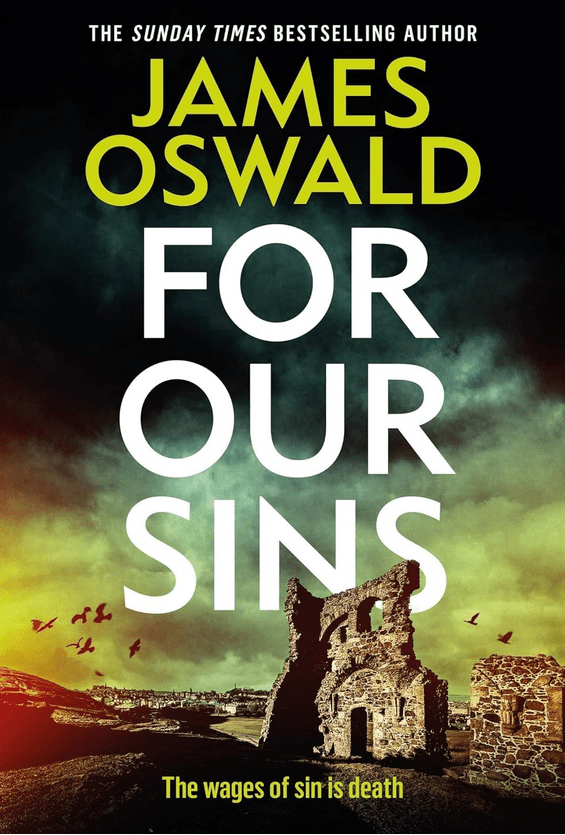
FOR OUR SINS . . . Between the covers

Edinburgh, the present day. A man is found dead in near-derelict church, his head crushed by a collapsed wall. His wallet reveals that he was Kenneth Morgan, an elderly ex-criminal who had been living quietly on his own since coming out of jail five years earlier. In charge of the case is Detective Sergeant Janie Harrison, who remains central to the story, despite the distant presence of her former boss, Tony McLean who has retired from the force. McLean is contacted by investigative journalist Jo Dalgliesh, who asks him to meet a middle-aged man, Robert Murphy who, as a child, was the victim of sexual abuse by his parish priest. The priest was murdered in what appeared to be an interrupted robbery of church silver. Murphy has the strangest of tales to tell.

I was a witness. And nobody listened to me when I told them what he’d done. And if he died, then how come I saw him on the street just a few weeks ago?”.

When another elderly man is found dead on the floor of a church, this time definitely by foul play, the police realise they have something strange on their hands. Both men were long-term associates of notorious gang boss, Archibald Seagram, a man who has remained conspicuously untainted by criminal convictions, despite being at the helm of an organisation responsible for much of the city’s serious crime for decades.

Meanwhile, Tony McLean is making the best of his ‘retirement’ and dutifully looking after his girlfriend Emma, who is slowly recovering from a stroke. He is acutely aware, however, that with the lack of mental and intellectual challenge that his job provided, One of the ‘ever presents’ in the excellent Tony McLean series is the transvestite spiritual medium Madam Rose, and it is his/her intervention that finally persuaded our man to do what his inner soul has been pressing him to do for months – offer himself back to Police Scotland.his life seems hollow and empty of purpose. Softly, softly, James Oswald is preparing us for some kind of comeback.

Every good police procedural novel needs a bad cop, and few are as loathsome as Detective Superintendent Pete Nelson. Detective Sergeant Jamie Harrison is at the core of the first half of this book, and Nelson is ‘on her case’ in all manner of ways, from professional vindictiveness to drunken groping in the pub. McLean’s former office still lacks a new tenant, and the department is worryingly understaffed, and so he returns, ostensibly just to help with this particular investigation.What we know, as readers, thanks to the short and intermittent flashbacks to 1980s, seen through the eyes of teenage altar boys, is that there is a religious aspect to this case and, specifically, connected to the Roman Catholic church.

McLean is one of the better fictional coppers in British crime fiction, and Oswald is a fine writer. Although McLean’s return to work is, to a degree, successful, we are left with no neat and conclusive answer to the reason why the three former criminals died. Nor do we learn why the severely disturbed Robert Murphy killed them, and his conviction that his church vestry abuser is still out and about is never explained, except perhaps because of his own mental state – or something paranormal has happened. For Our Sins was published by Headline in 2024, and there will be a new Tony McLean novel later this month.

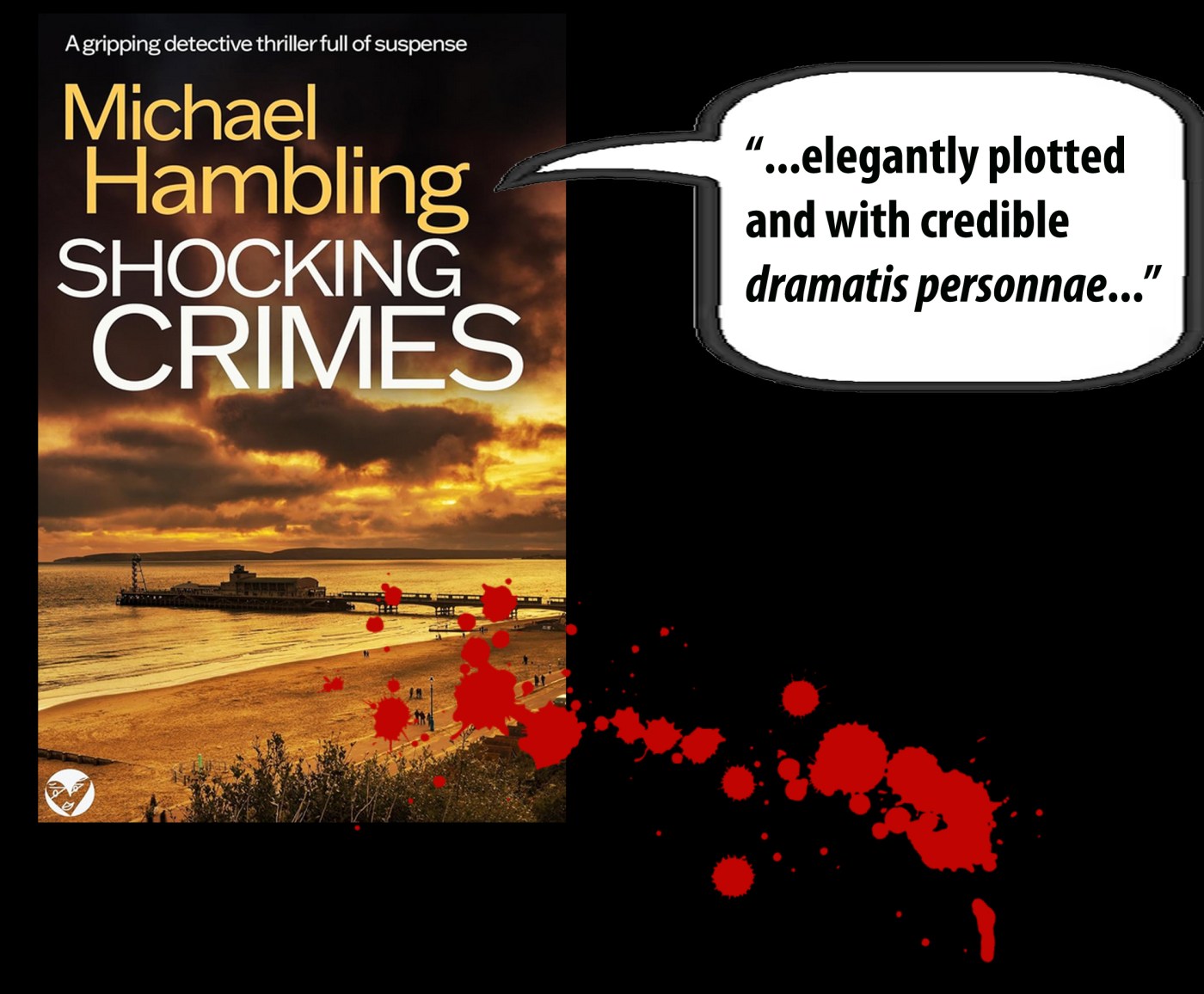
SHOCKING CRIMES . . . Between the covers

We are in Dorset. Bournemouth, to be exact. But this is not the genteel Budmouth, Regency watering place of Thomas Hardy’s novels, but a much more hard-edged kind of place. The cast of coppers includes Detective Chief Superintendent Sophie Allen, Detective Chief Inspector Barry Marsh and Detective Inspector Lydia Pillay, Bournemouth CID, newly appointed to the role of DI.

Thirty eight year-old Pippa Chandler has been arrested for the murder of her disabled boyfriend Joshua Quick. She had recently inherited a house from her uncle and, while searching the property, police find a scrap of yellowing paper on which appears to be written a cry for help from a ten year-old child. A slapdash search of the house has revealed nothing of interest, but then a more assiduous crime technician discovers a false panel in the roof space. And behind the panel is a battered suitcase containing a grisly find – the dessicated remains of a child, later revealed to the corpse of a little girl.

Meanwhile, a seemingly unrelated investigation into a more recent tragedy is in focus. In a Bournemouth nightclub, a student called Holly collapses on the dance floor. She is rushed to hospital, where she lies between life and death. This wasn’t drink spiking, but ‘jabbing’ –  a surreptitious injection with a throwaway hypodermic syringe, and Holly had an existing heart condition. In a dramatic and significant twist, Holly’s mother admits her historic links to the house where the child’s remains were found.

In general, there are two kinds of police/private investigator thrillers – the ones where the author keeps the perpetrator/s hidden from both us readers and the forces of law and order until the last few pages and those where we learn who the bad guys are early in the piece, with the entertainment coming from watching the police untangle the knots. Shocking Crimes largely falls into the latter category but Michael Hambling actually gives us the best of both worlds here. Yes, we learn early doors that Bruce Greenfield is a wrong ‘un, and we also know who his criminal associates were, but exactly who did what – and to whom – we discover through the eyes of the detectives.

Although elegantly plotted and with credible dramatis personnae, Shocking Crimes makes for uncomfortable reading at times as it delves into the fraught world of child protection, now known as Safeguarding. Having worked in this area myself, I am aware of the dark litany of historic failures laid at the door of professional adults charged with keeping young people from harm. In the end, as this novel shows, there are human beings so depraved and devoid of decency that no foolproof system to combat them has ever been devised. The novel will be published by Joffe Books on 13th November.

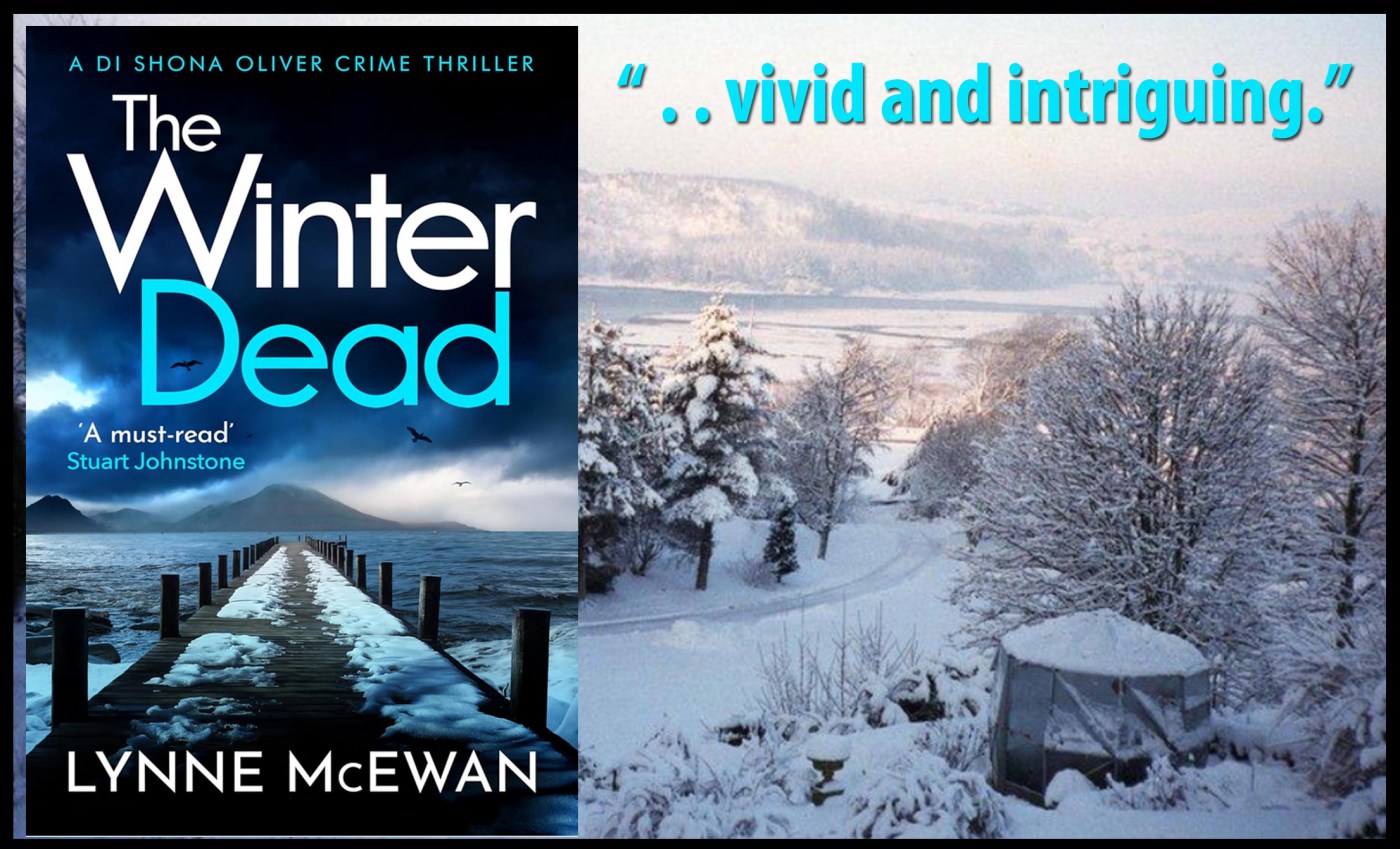
THE WINTER DEAD… Between the covers

The best Scottish crime fiction novels seem to be polarised between noirish grit and grunge on the mean streets of Aberdeen, Edinburgh and Glasgow, and more windswept tales set on rocky coasts and misty moors. The Winter Dead belongs in the latter category. DI Shona Oliver is in charge of a large rural beat which includes the wild shores of Dumfries and Galloway. Her husband, Robert, is doing time for financial fraud, leaving her to do her day job while trying to keep their guesthouse business solvent. 

A chance discovery (a bloodstained hammer discarded within a lorry load of firewood) presents a massive challenge which forces her to examine the integrity of people she has regarded as being valued friends. Shona also a seasoned member of the local lifeboat crew, and the over-arching sense of a community surviving in spite of the awful weather is reinforced in the early pages when Shona and her colleagues rescue a windsurfer battered against an unforgiving granite cliff by a force ten gale. The elemental theme continues as, following up the bloodstained hammer, Shona and a mountain rescue team are forced to rough it in an isolated visitor centre while searching for a missing forest Ranger.

The snow storm does its worst, and destroys any forensic traces, but when the missing man – John MacFarlane –  is found miles away, not only is the jigsaw jumbled up, but several of its pieces go missing.it is a well established trope of police novels that the central DI, already knee-deep and floundering in the riptide of a perplexing investigation, must also be plagued by family problems. Here, not only does Shona Oliver have her husband glumly sitting in jail, but she hears disturbing news of daughter Becca, away at university in Glasgow. Becca’s flatmate, Jack Rutherford, has been stabbed during an attempted phone snatch, and his injuries are life threatening.

To add to the rich tapestry of misdeeds Shona is tasked with investigating, a local petty crook has handed in something he has ‘found’. It is a Renaissance painting of the Madonna and Child, no bigger than a A4 sheet, but exquisite. She traces its recent provenance, but is it the original, or a saleroom copy?

A mixture of persistence and a touch of good luck results in something of a revelation about the murder of John MacFarlane, and it links the crime to an event decades earlier, in the warm waters of the Persian Gulf. Shona once again finds herself leading a manhunt, this time in the wintry malevolence of Dalgeddie Forest.

“As they went further from the track, the snow lay not like a decorative Christmas dusting, but like deep ash from some catastrophic fire. The branches of the fir swept down to the ground. The dark spaces enclosed by their grasp brought simultaneously a craving for sanctuary and a sense of her own vulnerability where every shadow seemed to hide a human shape. Her footsteps were impossibly loud. The deep powder squeaked and groaned, compacting under each step.”

The author who, like her heroine, is also part of a volunteer lifeboat crew, seamlessly weaves the different strands of the plot together, and Shona’s professional reputation is enhanced. She cannot rest easy, however, as fate has one dramatic personal surprise for her. This vivid and intriguing thriller will be published by Canelo Crime on 6th November.


DEADMAN’S POOL . . . Between the covers

Murder sites in British crime fiction come in all shapes and sizes: West Country bookshops, greasy subterranean passages under Leeds Station and a twelfth century water mill have featured in my recent reads but, because of our climate we cannot do exotic. We can, however do windswept and bracing. Fitting that bill perfectly is a beach on the storm-lashed island of St Helen’s, one of the Scilly Isles. Home now only to gulls and kittiwakes, it remains the last resting place of the monks who once lived on the island. Scilly Isles copper DI Ben Kitto discovers a much more recent burial and, in doing so, he uncovers evidence of that vilest of vile modern ‘professions’, human trafficking.Kitto’s problems mount.

A new-born baby boy, just about alive, is left on the police station steps and DCI Madron, Kitto’s abrasive boss, is injured in an accident, and then disappears. The Scilly Isles must be a challenging place to be a copper. The islands that make up the archipeligo have, in total, the population of an medim-size English village, so crime ought to be easily solvable. But. And it is a very large ‘but’. Small boats are everything, and most people have access to one. The distances between the main inhabited islands – St Mary’s, Tresco, St Martin’s, St Agnes and Bryher – are relatively short, but the Atlantic Ocean is wild, unpredictable and unforgiving. Crime scenes are difficult to protect, forensic experts have to be flown in from Cornwall, and the frequently vile weather is a challenge to logistics and normal police procedure.

Kitto – who has returned to his birthplace after cutting his teeth in London with the Met – painstakingly gathers evidence about the dead girl and the abandoned baby, reluctantly reaching the conclusion that although international crime gangs may be at the root of the problem, the branches and leaves of this particularly poisonous tree are flourishing in the climate of his own bailiwick, and several prominent and well-respected individuals may be involved. Kitto is an islander to his core, but he is painfully aware of the challenges residence poses.

The outside world is comfortless though. When I pull back the curtain, breakers are lashing the shore. Seabirds are returning to Bryher in flocks, scattered by the breeze.

It feels like we’re at the mercy of some savage force that’s trying to tear these islands apart.”

The old expression “barking up the wrong tree” has its origins in America, where hunting dogs would be fooled by their prey jumping between adjacent trees to fool their pursuers. It doesn’t sound as if there are many trees on the Scilly Isles, but Ben Kitto barks up at most of them in vain. This isn’t to say he is inept, or a fool. Quite simply, the villain is hiding in plain sight, too close to home. The final pages of Deadman’s Pool are exhilarating and graphic. When Kitto finally exposes the killer, I had to check back to see if Kate Rhodes had given us any clues, but I don’t think she did, so the surprise is even more startling.

I am a suburban man, root and branch, so it baffles me how anyone can remain sane living in such remote places as Barra, the Orkney Islands or the Scilly Isles. Kate Rhodes, however, has been bewitched by the charm of Island life, and she has written a gripping and addictive police procedural set in a frequently intimidating landscape. Deadman’s Pool will be published by Orenda Books on 25th September.

THE BOOKSELLER . . . Between the covers

Detective Sergeant George Cross is unique among fictional British coppers in that he is autistic. This apparent disability gives him singular powers when investigating crimes. While totally unaware of social nuances, his analytical mind stores and organises information in a manner denied to more ‘normal’ colleagues within the Bristol police force. When questioning suspects or witness his completely literal mindset can be disconcerting to both guilty and innocent alike. Regular visitors to the site may remember that I reviewed two earlier novels in the series The Monk (2023) and The Teacher (2024) but, for new readers, this is the background. Cross is in his forties, balding, of medium height and, in appearance no-one’s idea of a policeman, fictional or otherwise. He lives alone in his flat, cycles to work, and likes to play the organ in a nearby Roman Catholic Church, where he is friends with the priest. George’s elderly father lives nearby, but his mother left the family home when George was five. At the time he was unaware that she left because Raymond Cross was homosexual. Now, Christine, has slowly reintroduced herself into the family group and George, reluctantly, has come to accept her presence.

This case begins when an elderly bookseller, Torquil Squire returns to his flat above the shop after a day out at an antiquarian book sale at Sothebys. He is horrified to find his son Ed, who is the day-to-day manager of the shop, dead on the floor, stabbed in the chest. George and his fellow DS Josie Ottey head up the investigation which is nominally led by their ineffectual boss DCI Ben Carson.P.The world of rare and ancient books does not immediately suggest itself to George as one where violent death is a common occurrence, but he soon learns that despite the artefacts being valued in mere millions rather than the billions involved in, say, corporate fraud, there are still jealousies, bitter rivalries and long running feuds. One such is the long running dispute between Ed Squire and a prestigious London firm Carnegies, who Ed believed were instrumental in creating a dealership ring, whereby prominent sellers formed a cartel to buy up all available first editions of important novels, thus being able to control – and inflate – prices to their mutual advantage.

Then there is the mysterious Russian oligarch, an avid collector of books and manuscripts, who paid Ed a sizeable commission to buy a set of fifteenth century letters written by Christopher Columbus, only for the oligarch to discover that the letters had, in fact, been stolen from an American museum. Could Oleg Dimitriev have resorted to Putinesque methods following the debacle?

Running parallel to the murder investigation is a crisis in George’s own life.  Raymond discovers that he has lung cancer, but it operable. During the operation, however, he suffers a stroke. When he is well enough to return home he faces a long and difficult period of recuperation and therapy for which George is ready  and able to organise. More of a problem for him, however, is the challenge to his limited emotional capacity to deal with the conventionally expected responses. Even before his father’s illness, George has been disconcerted to learn that Josie Ottey has been promoted to Detective Inspector, and he finds it difficult to adjust to what he perceives as a dramatic change in their relationship.

The killer of Ed Squire is, of course, identified and brought to justice, but not before we have been led down many a garden path by Tim Sullivan. The Bookseller is thoughtful and entertaining, with enough darker moments to lift it above the run-of-the-mill procedural. Published by Head of Zeus, it is available now.

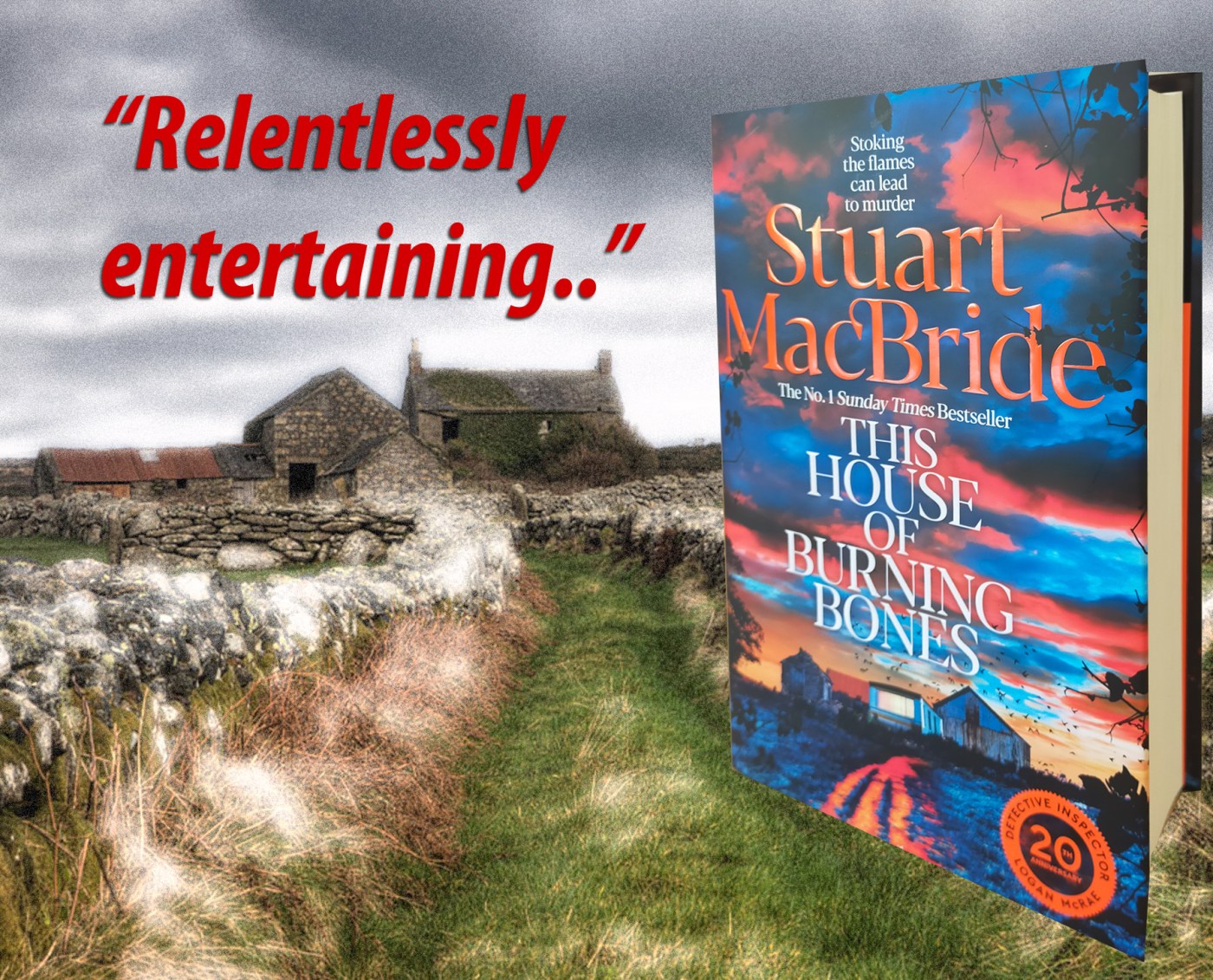
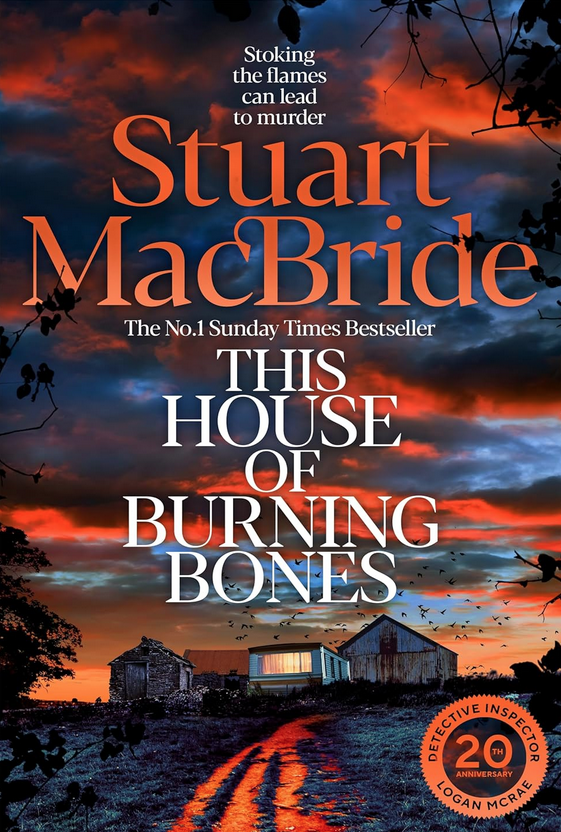
THIS HOUSE OF BURNING BONES . . . Between the covers

It has been a while since I read one of the Logan McRae books, and I am delighted to return to the series. Things have changed, though. McRae’s one-time boss, the foul mouthed Roberta Steel, has been reduced to the ranks after planting evidence in a rape trial. Now, things are turned on their head, McRae is Steel’s boss, and it is not a comfortable arrangement.

The McRae novels are, in my reading experience, unique in their blend of camp comedy, criminality at its most grisly and that essential sense that we have, in the person of DI Logan McRae, a serious copper with an unblemished sense of right and wrong. This novel starts with comedy, and an attempt by the Aberdeen cops to nail a man called Charles MacGarioch, who is suspected of leading an arson attack on a hotel full of asylum seekers. He eventually escapes in a hijacked ice-cream van, much to the frustration of McRae and the Keystone pursuers. After a chase that makes the famous scene in Bullitt look like the London to Brighton Rally, the van ends up in the River Don. The ice-cream man is rescued and is in a serious condition, but of MacGarioch there is no sign.

As the search for MacGarioch continues, we know something that McRae and his colleagues don’t. A burglar/peeping tom called Andrew Shaw (who lives with his mum, naturally) has broken into the house of Natasha Agapova, the new editor of an ailing local paper. Ms Agapova returns unexpectedly, but before she can even kick off her Laboutins, she is attacked and abducted by a man claiming to be Detective Sergeant Davis. And Andrew has captured the proceedings on his night vision head- worn camera.

When a beaten body is found in Aberdeen’s other river – the Dee – expectations are that Charles MacGarioch has met a watery end, but the corpse is that of Andrew Shaw. The few remaining staff at the once august Aberdeen Examiner have been queuing up outside the office of the new editor, Ms Agapova, to argue for their jobs, but where is she? It isn’t until senior journalist Colin Miller decides to go round to Agapova’s expensive but tasteless house to give her a piece of his mind that, finding the door unlocked, Miller finds scenes of a violent struggle and bloodstains – now dark and dried – but unmistakable. He calls 999.

MacBride is one of the better comedy writers within the CriFi genre. How about this gem?

“PC Ian Shand looked as if he’d been made by four-year-olds out of knotted string and old cat hair. And when he opened his mouth, every single one of his teeth pointed in a different direction.”

As we move through the book MacBride takes aim at all manner of institutions. In no particular order, the NHS, school Parents’ Evenings, the decline of Aberdeen, urban social architecture, preposterous management-speak and that strange public grief which involves plastic flowers, balloons and semi-literate messages of sympathy draped on railings and lamp-posts. Each one takes a fatal bullet.

From ‘Early Doors’ in this relentlessly entertaining novel, we have been aware that Natasha Agapova has been held captive in a remote farm, by ‘Detective Sergeant Davis’. The big question is, of course concerns his real identity. If he isn’t an actual policeman, then who is he? Of course, we eventually learn who is, thanks in no small measure to McRae’s sidekick DC “Tufty” Quirrel. I am not sure who he irritated more, Logan McRae or me, but he is certainly a clever wee lad. The House of Burning Bones was published by Macmillan on 25th May.

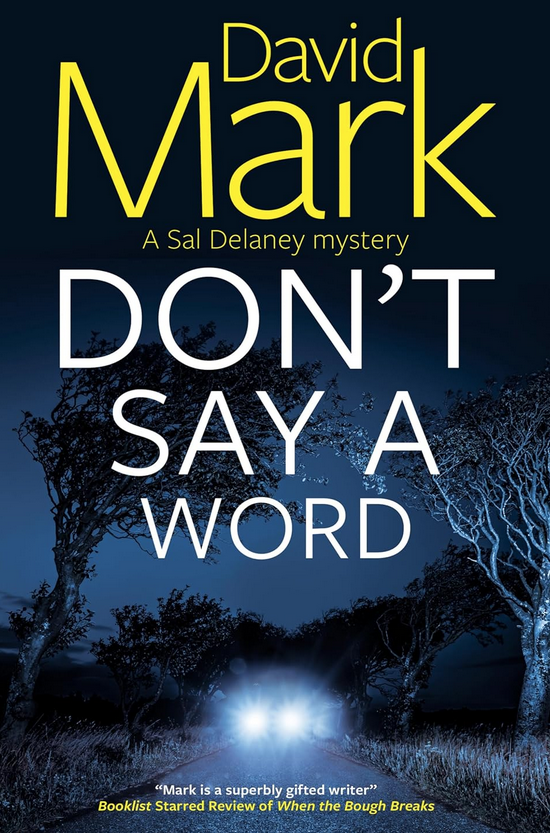
DON’T SAY A WORD . . . Between the covers

Cumbria traffic cop Salome ‘Sal’ Delaney has a startling back-story, which you can speed-read by checking my review of the previous novel, When The Bough Breaks. Now, we have a mysterious prologue which seems to describe a man being buried alive, but then Sal is called out on a bleak and rainy night to discover why a 4×4 has swerved into an unforgiving dry stone walk out in the middle of nowhere. The past hangs over this narrative like a pall, forcing the reader to be very careful about distinguishing between then and now.

Former drama student Theo Myers has spent an age in prison for a murder he did not commit. Now, finally, he is free of his prison walls, but shackled to a life of uncompensated poverty and a society that views him with suspicion. He reconnects with someone from his past, former policeman Wulf Hagman, who has also spent long years in jail.

Sal’s road accident takes a bizarre turn. The driver of the 4×4 swears he swerved into the wall to avoid what he calls a ‘zombie’. 4×4 man Sycamore Le Gros is stone cold sober but, hearing unearthly noises in a thicket beside the road, Sal discovers a stricken creature, whose state justifies the description Le Gros has given.

We are reunited with Detective Superintendent Magdalena Quinn, a police officer nicknamed The Succubus by male colleagues. She is certainly the embodiment of evil, devious, beautiful, manipulative and corrupt. If you are a Thomas Hardy aficionado, think Eustacia Vye, but with the moral compass of Lucretia Borgia.

The ragged, undead thing with horror in his eyes that Sal discovered in the undergrowth now has a name – Mahee Gamage, a solicitor of Sri Lanka origin, last known to be living in a village near Middlesbrough. The case takes an even more sinister turn when Sal learns that Gamage was the duty solicitor on the fateful night that Theo was arrested, and it looks probable that the advice he gave the young man was fatally flawed.

David Mark, like a cat with a mouse, enjoys playing games with his readers. As Mahee Gamage hovers between life and death in his intensive care bed, it seems clear that he was captured, imprisoned and brutalised because of his incompetence in representing Theo Myers. Was the culprit Theo himself, his obsessive mother Tara, or maybe her second husband Alec, the campaigner with his hatred of the British establishment? Perhaps it was joint enterprise? Or is Gamage’s torturer someone completely from Left Field? Further evidence, if any were needed, that the ambience of this novel is not sun dappled Cotswold limestone, thatched cottages and Inspector Barnaby, comes by way of an examination of the contents of Mahee Gamage’s stomach where the investigators find clear evidence of partially digested human flesh. Like Aector McAvoy, David Mark’s other memorable character, Sal Delaney frequently has to face a world of almost unfathomable moral blackness, and it is only her own spiritual integrity which enables her to survive. Don’t Say A Word is compulsive, dark – and sometimes extremely graphic. It is published by Severn House, and  available now.
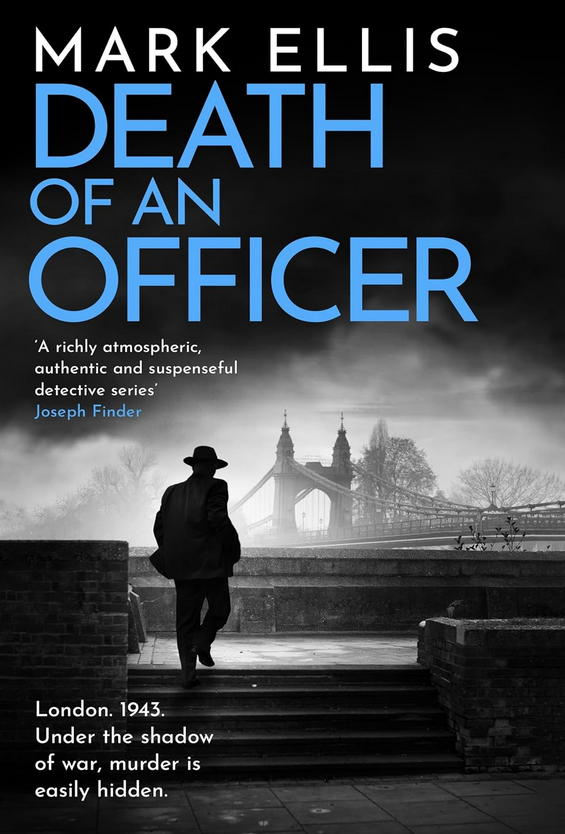
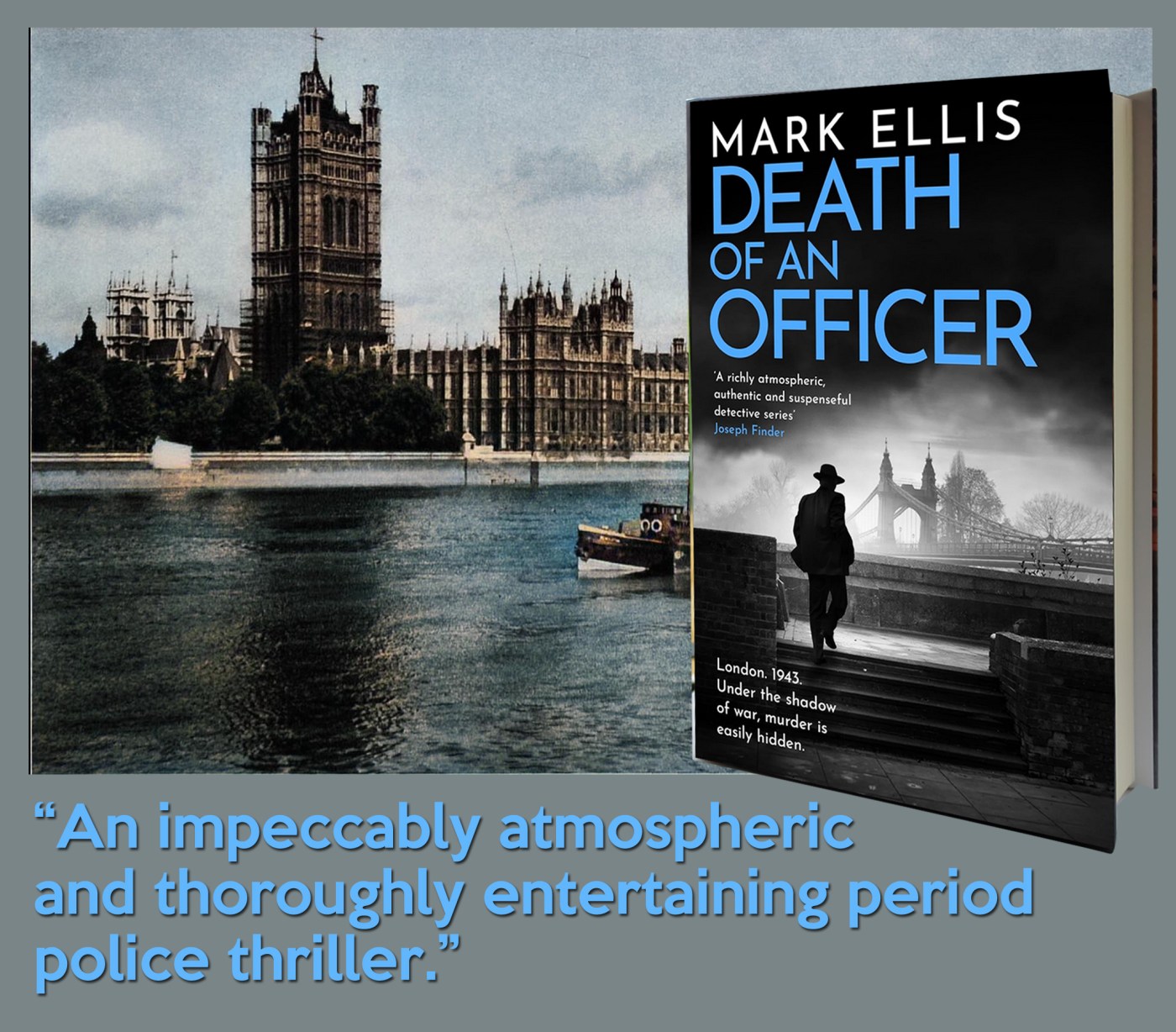
DEATH OF AN OFFICER . . . Between the covers

Detective Chief Inspector Frank (christened Francisco) Merlin is a thoroughly likeable and convincing central character in this murder mystery, set in 1943 London. As in all good police novels, there is more than one murder. The first we are privy to is that of a seemingly inoffensive consultant surgeon, Mr Dev Sinha, found dead in his bedroom, apparently bludgeoned with a hefty statue of Ganesha, the Hindu elephant god. Sinha’s wife has been diagnosed with a serious mental illness, and has been packed off to an institution near Coventry ( no jokes please) but when she is interviewed she is more lucid than those around her have been led to believe.

Added to Merlin’s list of corpses is that of south London scrap dealer called  Reg Mayhew, apparently victim of the delayed detonation of a German bomb. Unfortunately for the investigators, the word ‘corpse’, suggesting an intact body, is misleading. Mayhew’s proximity to the blast has given the lie to the old adage about someone’s inability to be in two places at once.

Clumsily concealed beneath bomb site rubble in the East End is the well-dressed (evening attire and dress shirt) remains of Andrew Corrigan, a Major in the US army. It seems he was a ‘friend’ of a rich and influential MP, Malcolm Trenton. 

Merlin’s investigations take him towards the contentious issue of Indian independence, and it seems that the murdered consultant was a member of a committee comprising prominent British Indians who support Subhas Chandra Bose, a firebrand nationalist who is seeking support from Nazi Germany and Japan, in the belief that they would win the war, and then look favourably on an independent India.

Like all good historical novelists, Mark Ellis has done his homework to make sure we feel we are in the London of spring 1943. We are aware of the recent Bethnal Green Tube disaster, that Mr Attlee is a key member of Churchill’s coalition government, and that a Dulwich College alumni has just had his latest novel, The Lady in the Lake, published. We also know that the Americans are in town. As Caruso sang in 1917, the boys are definitely ‘Over There!‘Among the 1943 intake is Bernie Goldberg, a grizzled American cop, now attached to Eisenhower’s London staff.

I am old, but not so ancient that I can remember WW2 London. Many fine writers, including Evelyn Waugh in his Sword of Honour trilogy, and John Lawton with his Fred Troy novels, have set the scene and established the atmosphere of those times, and Mark Ellis treads in very worthy footsteps. There is the dismal food, the ever present danger of air raids, the sheer density of the evening darkness and the constant reminder of sons, brothers and husbands risking their lives hundreds of miles away. Ellis also reminds us that for most decent people, the war was a time to pull together, tighten the belt, shrug the shoulders and get on with things. Others, the petty and not so petty criminals, saw the chance to exploit the situation, and get rich quickly.

Central to the plot is ‘the love that dare not speak its name‘ in the shape of an exclusive club organised by Maltese gangsters. Mark Ellis reminds us that there were no rainbow pedestrian crossings or Pride flags flying over public buildings in 1943, and that there was an ever-present danger that men in public life were susceptible to blackmail on account of their sexual preferences. With a mixture of good detective work and a bit of Lady Luck, Merlin and his team solve the murders. The book’s title is ambiguous, in that Major Andrew Corrigan certainly fits the bill, but there is one other officer casualty – I will leave you to find out for yourself his identity by reading this impeccably atmospheric and thoroughly entertaining period police thriller. It will be published by Headline Accent on 29th May.

Blog at WordPress.com.

Up ↑