

All too often, opening pages of crime novels headed ‘Prologue’ are enigmatic flashbacks, and they leave the reader wondering what their relevance is to the emerging narrative. Not so here. It is short, brutal and and painfully obvious. A Tyneside detective has been called to a murder scene. The body is that of his teenage daughter. That was then.
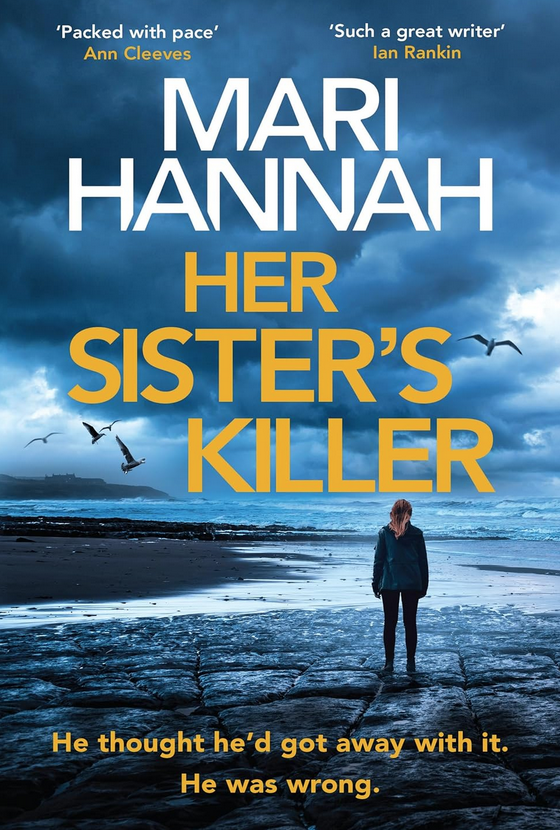
Now. For some arcane reason, when police Sergeants are promoted to Inspector, they have to serve a term in uniform, away from their home station. So it is that Frances ‘Frankie’ Oliver – the younger sister of the girl whose murder is revealed in the prologue – is sent away from the city hub of Newcastle to the relative backwater of Berwick – England’s last outpost before the Scottish border. Her first major call-out is a serious RTA – with fatalities. In the back of a wrecked van, Frankie finds a seriously injured child, his wrist secured to a stanchion with cable ties.
Meanwhile, DCI David Stone – Frankie’s on-off romantic interest, acting on loose talk overheard at a police social function, has reopened the investigation into the unsolved murder of Joanna Oliver. Frankie’s secondment to Berwick takes on a life of its own as, amid the wreckage beside the A1, evidence emerges that an organised crime gang has been hard at work trafficking children.
Mari Hannah has penned a classic ‘two plot’, novel, in that DI Frankie Oliver is heading up a multi-agency investigation into a Bulgarian people smuggling gang, while DCI David Stone is in charge of a covert cold-case operation into the murder of Frankie’s sister. Why covert? Stone believes that a serving policeman was her killer and, the law being what it is, any involvement by Frankie Oliver would mean the case would be thrown out of court.
I have meta-tagged this book as a police procedural which, on one level, it is. There is so much more, however. Mari Hannah’s ability to create vividly authentic characters is here for all to see. In no particular order, we have retired copper Frank Oliver, father of Frances, the murdered Joanna and older sister Rae; his torment at being called to a murder scene, only to find that the victim is his own daughter is lifelong; Frankie herself is a brilliant police officer, fearless but vulnerable, intuitive but analytical; David Stone is a ruthless career policeman but, like Frank Stone, the scar on his heart from when his former lover, Jane, was shot dead by an insane gunman, has never healed; I was also particularly taken with rookie PC Indira Sharma who, apart from his boss (Detective Superintendent Bright) is Stone’s only confidante. She is new to the job, but incisive, courageous and has a gimlet eye for detail.
The best crime novels have an authentic sense of place and location and, as with her Kate Daniels novels, Mari Hannah’s heart is never far from England’s north east and the contrast between the bright lights of ‘big city’ Newcastle, and the windswept horizons of rural Northumbria. There is so much to admire about this novel but I suspect, like me, you will be left breathless by David Stone’s ruthless and remorseless interview room demolition of Joanna Oliver’s killer at the end of the book. I don’t do checklists, but if I did, I would be ticking the boxes for brilliant thriller, credible characters, narrative verve, great sense of place and bloody good read. Her Sister’s Killer is published by Orion and is available now.


 Fictional police officers come in an almost infinite number of guises. They can be lowly of rank, like Tony Parsons’ Detective Constable Max Wolfe, or very senior, such as Detective Superintendent William Lorimer, as imagined by Alex Gray. Male, female, tech-savvy, Luddite, happy family folk or embittered loners – there are plenty to choose from. So where does Peter Lovesey’s Peter Diamond fit into the matrix? As a Detective Superintendent, he pretty much only answers to the Assistant Chief Constable, but for newcomers to the well established series, what sort of a figure does he cut? Lovesey lets us know fairly early in The Finisher, the nineteenth in a series that began in 1991 with The Last Detective. Diamond is on plain clothes duty keeping a wary eye on a half marathon race in the historic city of Bath:
 There’s a dazzling array of characters to act out the drama. We have an earnest school teacher who forces herself to run the race in order to make good a lost donation to a charity; there is a statuesque Russian, wife of a cynical businessman, determined to lose weight and gain her husband’s respect; instant villainy is provided by a paroled serial seducer and sex-pest who has taken on a new role as personal trainer to the rich; at the bottom of the pond, so to speak, are a pair of feckless Albanian chancers who have escaped from an illegal work gang, and are trying to avoid the retribution of their controllers.
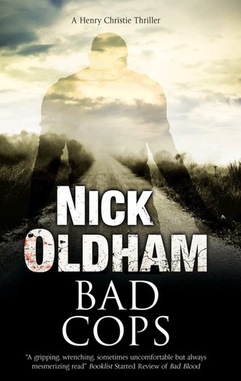 His resolve weakens, however, when he is visited by two of his more senior officers, his own Chief Constable and the newly appointed boss of the Central Yorkshire force, John Burnham. The Yorkshire police has suffered a disastrous inspection, and Burnham has been appointed to cleanse the Augean Stables.
 Oldham (right) is a retired copper himself, so readers are guaranteed procedural details which are described with total authenticity, whether they be the smelly reality of unmarked police cars used for observation, complete with the detritus of discarded fast food wrappers and the inevitable flatulent consequences, and an intriguing – and quite scary – use for Blutac and two pence pieces.
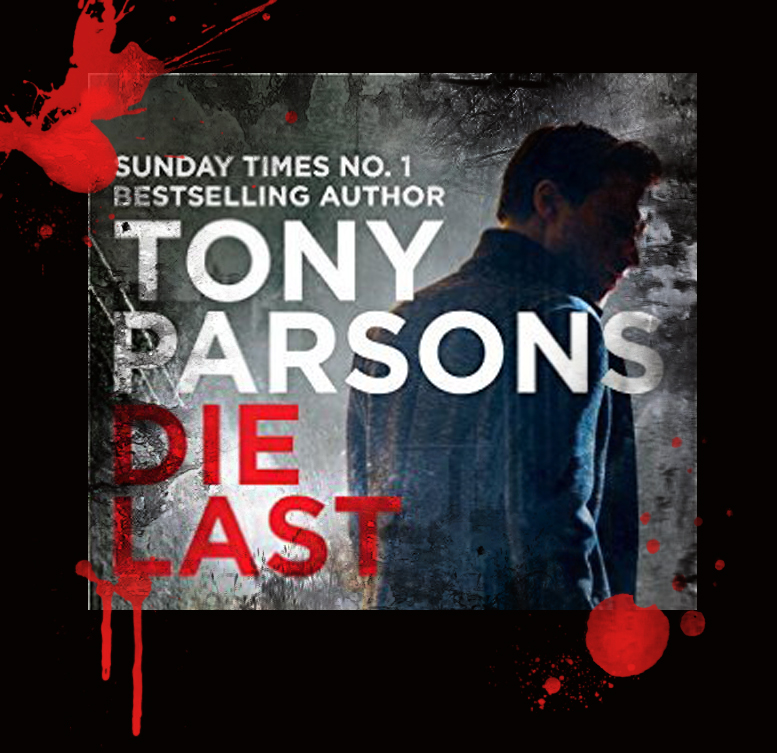

 His London copper, DC Max Wolfe, becomes involved when a refrigerated lorry is abandoned on a street in London’s Chinatown. The emergency services breathe a huge sigh of relief when they discover that the truck is not carrying a bomb, but their relaxed mood is short-lived when they break open the doors to discover that the vehicle contains the frozen bodies of twelve young women. The bundle of passports – mostly fake – found in the lorry’s cab poses an instant conundrum. There are thirteen passports, but only twelve girls. Who – and where – is the missing person?
 Max Wolfe certainly gets around for a humble Detective Constable, but he is an engaging character and his home background of the Smithfield flat, young daughter, motherly Irish childminder and adorable pooch make a welcome change from the usual domestic arrangements of fictional London coppers with their neglected wives, alcohol dependency and general misanthropy. Parsons (right) is clearly angry about many aspects of modern life in Britain, but he is too good to allow his writing to descend into mere polemic. Instead, he uses his passion to drive the narrative and lend credibility to the way his characters behave.



 fullybooked2017