
Search

fullybooked2017

Tag

Olivier Norek

SURFACE . . . Between the covers

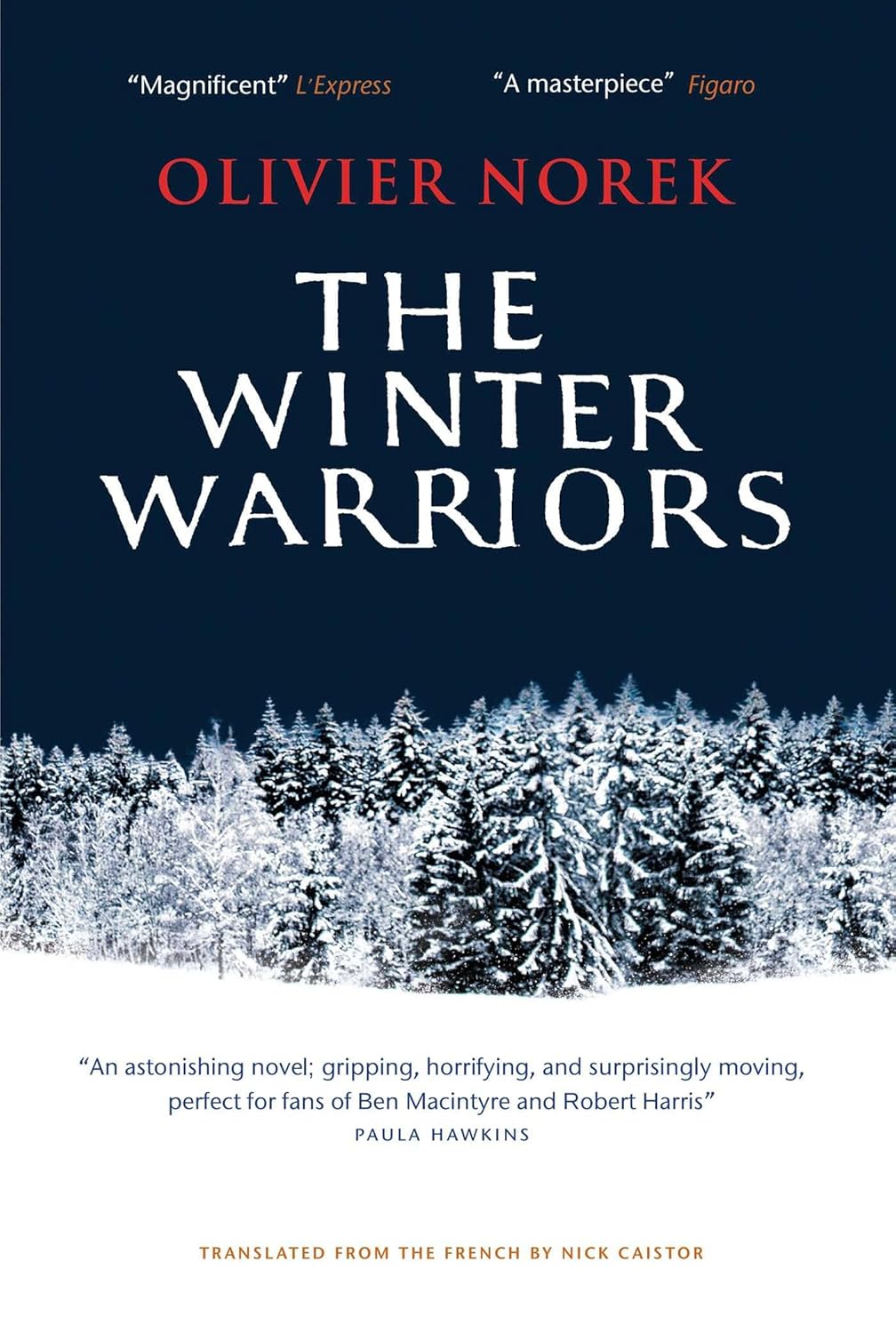
Norek’s powerful and unflinching account of the Finnish sniper Simo Häyhä, The Winter Warriors, was graphic and brutal, so I was not expecting a gentle pastoral stroll, but when I opened Surface, his latest novel, the words were devastating. Noémie Chastain, a Paris cop, has led a dawn raid on the apartment of a ruthless drug dealer. And she takes a shotgun blast. Right in the face. The damage is not fatal, but it is ruinous.

She recovers in hospital but when she returns to work a month later, she finds that her bosses have decided that her shattered face is too potent a reminder to her colleagues of how vulnerable they are, and she is sent to France’s deep south, the Aveyron Department, ostensibly to work with the local police force in the commune of Avalone but, she is told, secretly to observe how inefficient they are and prepare a report recommending reorganisation.

Francophile that I am, this book taught me something of which I had been previously unaware, and that is the difference between French police and the Gendarmerie. The latter is a military organisation in both training and practice, while the police, typified in fiction by the immortal Jules Maigret, is regarded as a civilian unit. The Gendarmerie’s main responsibility is for rural areas, and here they will take over if the Avalone police department is disbanded.

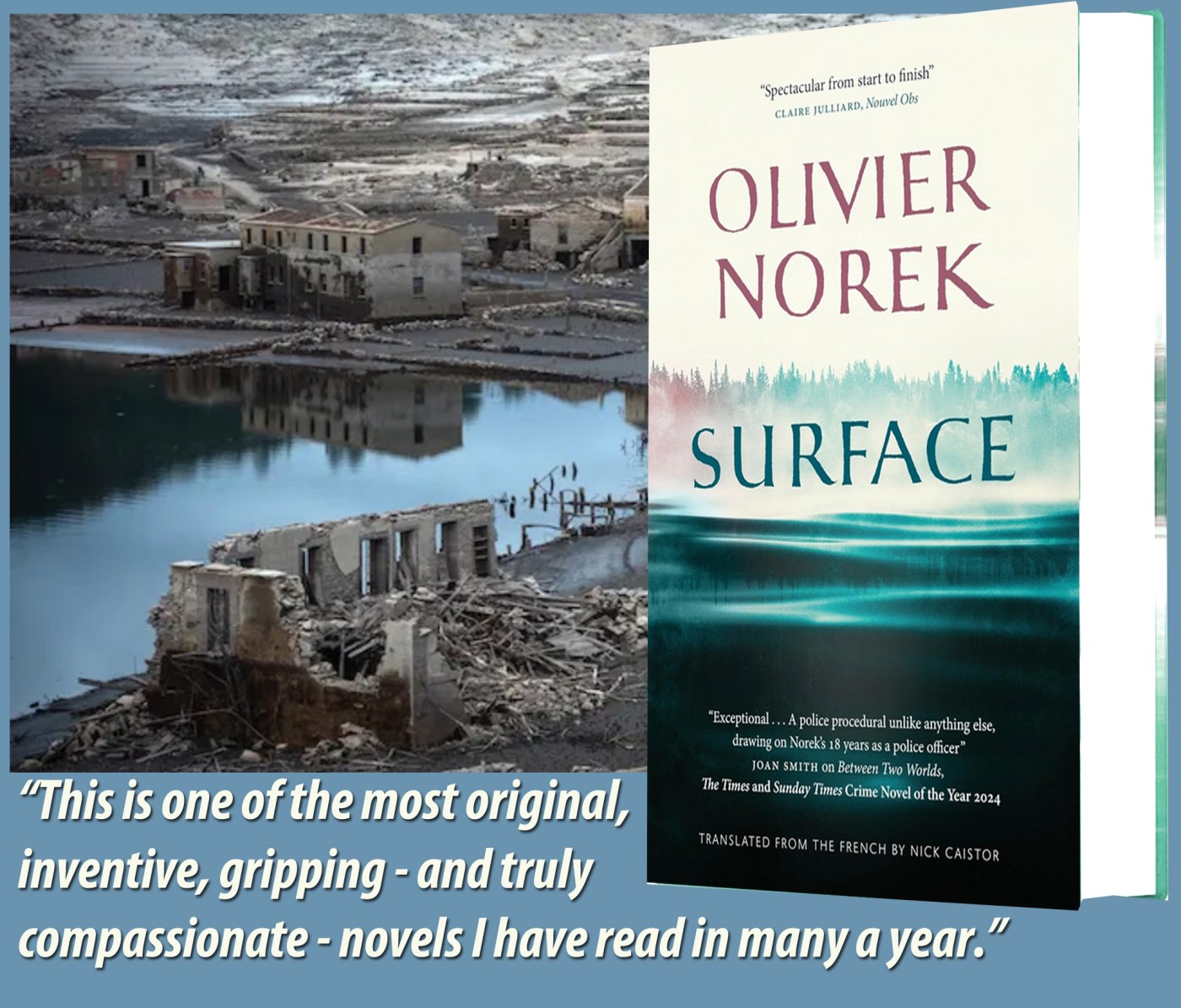
With her report recommending this on a memory stick ready to send to Paris, Noémie receives an early morning visit from the amiable and sensitive Lieutenant Romain Valant. Human remains have been found, tightly sealed in an oil drum, floating in a local lake. All of a sudden, everything changes for Noémie. Twenty five years earlier, three children, two boys and a girl, had disappeared, and she puts her report on the police department to one side, and resolves to solve the case of the missing children.

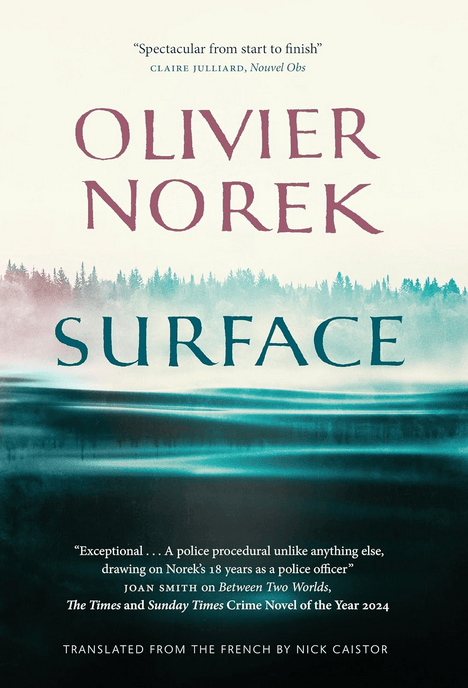
The lake is man made, created for a hydro electric project and beneath its surface is every fiction writer’s dream trope – a ruined and abandoned village.The remains in the barrel are identified as those of one of three missing children, who vanished just before the old village drowned beneath the dark waters. A diving team is sent for and, in a truly terrifying passage, the senior diver discovers another barrel, lodged in the ruins of the old community centre.

Unwilling to risk
any more lives Noémie persuades the regional préfet to issue orders to drain the lake. Whatever secrets surround the three missing children, it becomes slowly clear that they are to be found not in the fate of the career criminal, a violent drifter called Fortin, who disappeared without trace after being linked to the case, but closer to home, in Avalone itself. First, part of the farm belonging to Roman Valant’s father, the long-time Mayor of the commune, is destroyed in an arson attack, and then Noémie and her borrowed Land Rover are shunted of the parapet of the dam by a mysterious white van. She escapes with cuts and bruises, and is able to complete the most macabre strand of her investigation. She has learned that all the coffins from the old village were disinterred before the deluge, and reburied in the new cemetery on dry land.

It is another well-used CriFi trope that the best place to bury a missing body is in a cemetery and, with the help of the small-but-willing team of local officers, she determines that there is one grave too many. Who – or what – will it contain? The answer adds only more mystery to the case but then, in a brilliant plot twist Noémie, is summoned to a village a few hours’ drive away, just over the Spanish border and, in an instant, the case is turned on its head. By this time, the lake has been drained, and old Avalone has surrendered yet another grisly secret. There is one final devastating twist before Noémie closes the case and exorcises Avalone’s ghosts.

I always wonder, when reading novels in translation, just how much of the original intent is conveyed, and how accurately. All I can say is that if Nick Caistor has come anywhere near Olivier Norek’s original narrative, then he has done a brilliant job. This is one of the most original, inventive, gripping – and truly compassionate – novels I have read in many a year. Surface is published by Open Borders Press and is available now.
THE WINTER WARRIORS . . . Between the covers

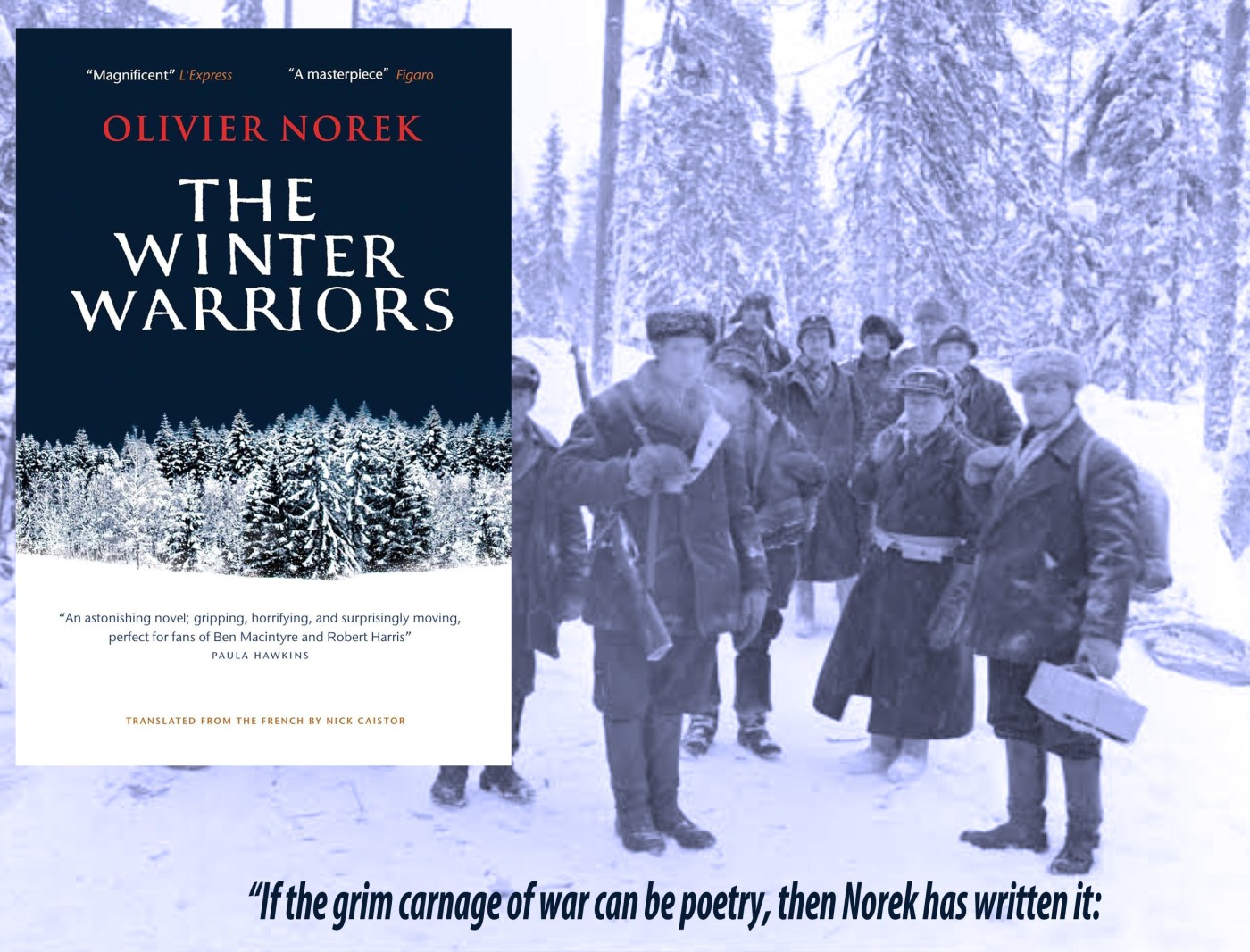
If the short but bloody war between Finland and Russia which took place in the winter of 1939/40 is largely forgotten today, it is simply because of the enormity of events which followed it. This is the story of that war, and of one man in particular – Simo Häyhä, who came to be known by the Russians as the White Death. A farmer and forester by trade, he was already renowned as a gifted marksman when the Russian invasion began, and was a reservist member of the Finnish Civic Guard. The narrative follows Simo and a small group of his childhood friends from the beginning of the war to Simo’s near-fatal wounding, just seven days before the end of hostilities on 13th March 1940.

This is, ostensibly, a novel, but the events depicted are as close to the facts as anything found in a dry history. Author Olivier Norek is a successful crime writer, but here, his descriptions of battle are as real and uncomfortably vivid as anything I have ever read. Most of the characters are from real life, and they include Russian foreign minister Vyacheslav Molotov and Finnish Commander in Chief Carl Gustav Mannerheim. One individual who stands out is Arne Juutilainen, one of the Finnish combat commanders. Known to his men as ‘The Terror’, he was a seldom-sober veteran of the French Foreign Legion, suicidally courageous with an almost insane lust for killing.

With skill and compassion, Norek describes Simo’s descent into a kind of moral numbness that enables him to do his job:

“For Simo, the first kill of the day was always painful. The second anaesthetised whatever feelings f pity he still had, and by the third he he was nothing more than a machine, mechanically adjusting each movement to increase his speed and precision. So as not to go mad, he forget they were men, forgot how many fathers and brothers he was sending six feet under the snow, even if they were Russian invaders.”

We are reminded of the paucity of Finnish resources: the uniforms of the dead, provided they are not too badly damaged, are laundered, patched and sent to clothe new recruits; lines of solemn faced women, many of them already widows, queue to hand in their gold wedding rings to be sold for currency on the international market.

While the book centres on the bravery and almost supernatural skills of Simo Hayha, one other character looms over the narrative like a spectre. In my opinion, Joseph Vissarionovich Dzhugashvili – Stalin – was unequalled in the twentieth century for his grotesque cruelty, inhuman lack of compassion, overwhelming ambition and demonic ability to embrace evil. His paranoia in the 1930s had led to thousands of senior military commanders to be shot, thus leaving the Russian army bereft of experienced generals, with those that survived policed at every turn by political commissars who reported back to Stalin only what they thought he wanted to hear. Thus the Russian tactics for most of the war were chaotic and myopic, and it was only better organisation and more intelligent – if brutal – use of firepower in the closing weeks of the war that forced the Finns to surrender.

If the grim carnage of war can be poetry, then Norek has written it:

“The dead from previous weeks were half-hidden in the earth. Only vestiges remained: their still visible helmets, occasionally part of their backs. Their arms were like aerial roots, as if growing out of the ground itself, ready to rise, get to their feet and haunt all those who had decided on this war, entirely forgotten by the world almost a century later.

Their blood would saturate the ground, their flesh would nourish the trees, mingle with the sap. They would be in every new leaf, every new bud.

There were more than a million of them, and when, tomorrow and beyond tomorrow, the wind blew through the forests of Finland, it would also carry their voices.”

A cover blurb for this book says, simply, “a masterpiece”. For once, this is not hyperbole. The book takes its place in the pantheon of novels of war, alongside such as Alexander Baron’s From the City, From the Plough, John Harris’s Covenant With Death, Erich Maria Remarque’s All Quiet on the Western Front and Norman Mailer’s The Naked and The Dead. Translated from the French by Nick Caistor, it is published by Open Borders Press and is available now.

Blog at WordPress.com.

Up ↑