

I absolutely adored Andrew Martin’s Jim Stringer novels from the word go. The Necropolis Railway was set around the actual railway line near Waterloo that took hearse carriages containing the coffins that would be buried in the relatively new Brookwood Cemetery in Surrey, and introduced Jim Stringer, a young railwayman who would join the Railway police, and solve many mysteries, including novels set during Jim’s wartime experience on The Somme, Mesopotamia, and post-war India.
Now, we are in 1925, and Jim is a Detective Inspector based in York. The story is based on a strange encounter Jim had at the York Summer Gala in the summer of that year. He meets his boss, who insists they go and watch one of the attractions – a Wild West Show. They see the usual antics – a fake Red Indian, a ‘gunslinger’ who throws knives at his provocatively dressed female partner, then shoots clay pipes out of her mouth. Both the woman, the Red Indian and the cowboy are about as American as Yorkshire Pudding, but in the audience is a genuine American (who acts as a stooge for the performers, and a celebrated couple in the entertainment business, celebrated film star Cynthia Lorne and her producer husband, Tom Brooks.
 The gunslinger, Jack ‘ Kid’ Durrant, is not only good with guns, but has ambitions to writer cowboy novels, rather after the celebrated author of Riders of The Purple Sage, Zane Grey (1872 – 1939) Not only that, the relationship between Lorne, Brooks and himself is, as they say, interesting. When Lorne is found dead, with Brooks and Durrant both missing, it is assumed that Durrant is the killer. Although it is not strictly a matter for the Railway Police, Jim feels personally involved, and visits the place where the three were last seen – the grounds of Bolton Abbey in Wharfedale. This allows Andrew Martin (left) to introduce us to what is known as one of the most dangerous rivers in Europe, The Strid. This natural phenomenon sees the River Wharfe forced through a narrow ravine, just a few feet wide. It has been described as the river ‘running sideways’, rather like a twisted ribbon and is believed to be prodigiously deep. No-one goes into it and ever comes out alive.
The best series are enlivened by recurring subsidiary characters, and one has been ever present in the Jim Stringer novels, in the shape of his wife Lydia. We met her when she was young Jim’s landlady in the first novel. Although understandably distant when Jim was on military duties in France, Mesopotamia and India, she has remained by his side. I am not sure how Martin does it but, without being in the least explicit, he makes her quite the most alluring copper’s wife in detective fiction, and their courtship in The Necropolis Railway was – and you’ll have to read the book to understand the contradiction – chastely erotic.
Central to the appeal is, of course, the heartbreaking descriptions of a railway that we once had, but threw away in various acts of criminal negligence and wrong-headedness. The magnificent smoke and almost animal fury of the engines, the cathedrals that were the stations, the legions of uniformed officials, and the fact that in 1925 you could take a train from almost anywhere to somewhere else with minimal discomfort. All now gone and, in the words of the hymn;
“They fly forgotten, as a dream
Dies at the opening day.”
Jim, of course, tries to get to the bottom of of the mystery, party because – in spite of his devotion to Lydia – he was slightly smitten by the deceased movie star. The melancholy denouement involves a London and North Eastern Railway locomotive,and a definite sense of closure – if not satisfaction – for our man. In one sense, none of this matters, as our total engagement with the pubs, hotels, railway world, social quirks of the 1920s, and the lingering legacy of The Great War has given us that comfortable sensation we feel after feeling sated after a delicious meal. Powder Smoke is published by Corsair and is available now.


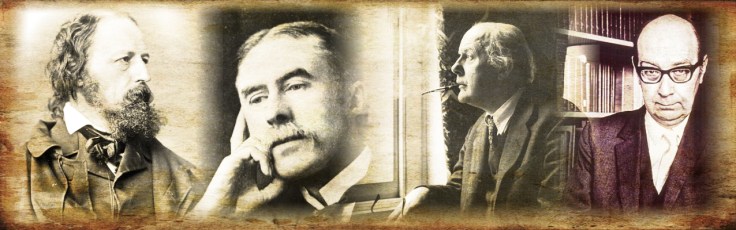
 I have spent longer on the biographical details of John Betjeman because, in what was his longest and most profound poem, Summoned By Bells (1960), he writes his autobiography in blank verse.
 So what are we to make of Betjeman’s poetry today, the age of cancel culture, triggered university graduates, and the most virulent class war that I can remember in my seventy-odd years of being sentient? He has been described – by lesser writers – as mediocre. His prevailing themes included the foibles and rituals of the English middle class, churches, railways, Victorian buildings and London. Hardly the stuff to bring him to the cutting edge of the literary razor in 2022, admittedly. But his detractors – or those who see him as an anachronistic bumbler, mugging it up for TV cameras and radio microphones – miss the point, big time. Time and space forced me to ignore the sheer joy found in his description of railway stations, gymkhanas, Edwardian suburbs and churches and look at his compassion. In


 There were nineteen B & M novels, beginning with Full Dark House in 2003, plus a quartet of graphic novels and short story collections. I say ‘were’, because although Christopher Fowler (left) is still with us, those who have read London Bridge Is Falling Down (2021) will know – and I am sorry if this is a spoiler – that old age and infirmity finally catches up with the venerable pair of detectives. Where to start to talk about this series? The author himself is, as far as I can judge, a modern and cosmopolitan fellow, but his love – and knowledge – of London is all embracing. Christopher Fowler is a one-off in contemporary writing, and completely individual, but speaking as an elderly chap with many years of reading behind me, I can best put him in context with great English writers of the last 150 years or so by looking at various aspects of the novels.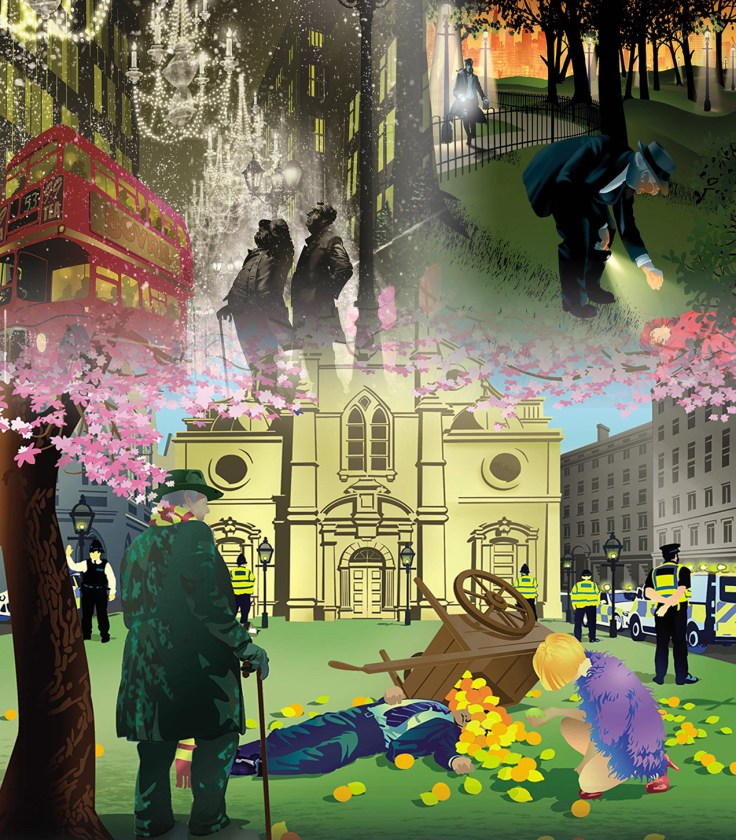


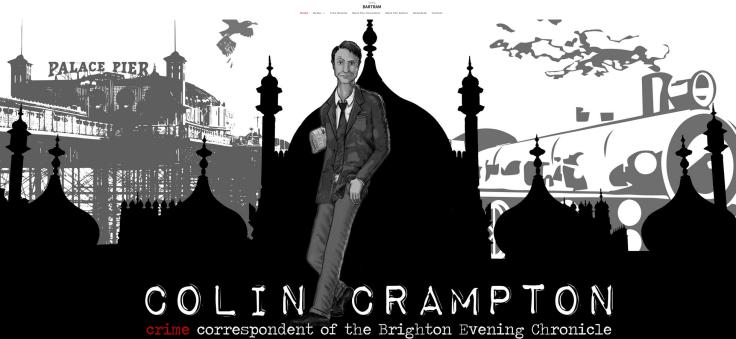
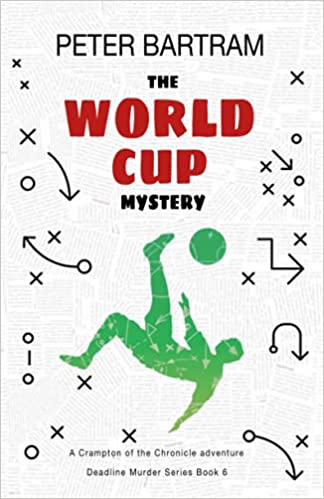 We are in Sicily, and it is the long hot summer of 1966. Brighton crime reporter Colin Crampton has taken his Aussie girlfriend Shirley Goldsmith abroad for a holiday. While the sun beats down, and gentle breezes blow in from the Mediterranean, Colin hopes to choose a romantic location – perhaps the ruin of a Greek temple – where he will go down on one knee and propose marriage to the beautiful Shirl. He has an expensive diamond ring in his pocket to help boost his case, but it is not to be.




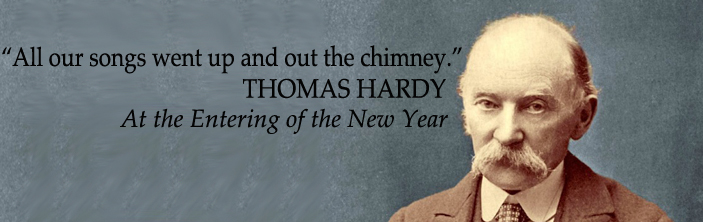
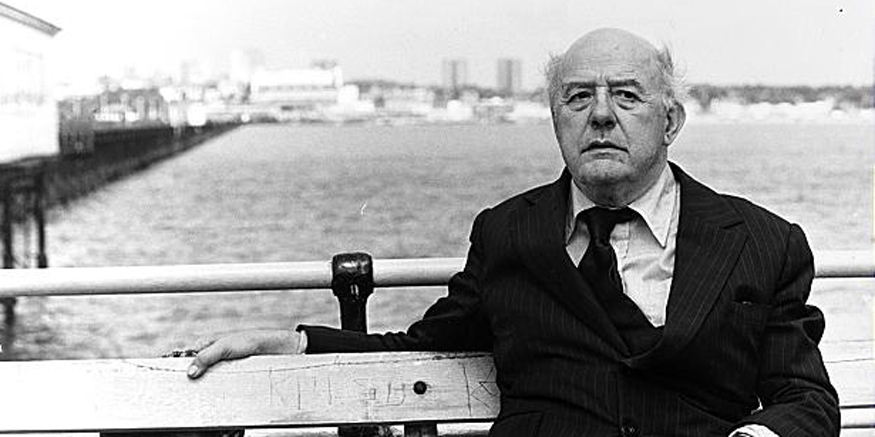 Sir John Betjeman is so unfashionable these days that it is an utter delight to be an admirer. His directness and accessibility have been mocked, but only by those whose lack of talent and perception can only be measured in geological numbers. Here, he pokes his head round a curtain, and sees an ageing debutante, lamenting the passing years and her own decline


 fullybooked2017