Search

fullybooked2017

Tag

Norfolk

BEYOND CLOSED DOORS . . . Between the covers

BCD SPINE065 copy

This enjoyable police procedural novel is the sixth in the series (to read reviews of the previous two, click this link) following the career of Norfolk copper Detective Chief Inspector Greg Geldard, his girlfriend Detective Sergeant Chris Mathews, and the rest of their team. These novels pretty much follow on from each other, and in the previous book Geldard battled a violent Lithuanian gangster called Constantin Gabrys. Now, it’s March 2020, Gabrys is serving a long prison sentence and his psychotic son is dead. However, all is not well, because a key figure in the case, now under witness protection has been attacked. He survived, but a police officer has been seriously injured, and it is obvious that the leak of information can only have come from within the police forced itself.

Despite the Gabrys empire having been apparently dismantled, their poisonous legacy hangs over Norfolk like a miasma. Norfolk, I hear you ask? Surely not that wonderful holiday destination with its abundant wildlife, historic homes and beautiful coastline? While the entire county might not be a wretched hive of scum and villainy, there are places – like Yarmouth and Gorleston – which suffer deep deprivation, and are consequently ripe feeding grounds for organised criminals, whether imported from Eastern Europe or of the home-grown variety.

Geldard traces the leak to a civilian police secretarial worker, but is dismayed to learn that part of the conspiracy involves Helen Gabrys, a member of the family he thought to have been as innocent of wrong doing as she was disgusted at her father’s career.

You will notice in the first paragraph that the story is set in March 2020. Remember that? As the country begins to shut down against the ravages of Covid, life just gets more difficult for Geldard and his team. Right across the criminal justice system things are starting to unravel. Court backlogs become years rather than months, prisons are struggling with absent staff, and the police themselves have to try to hold important conversations yards apart from each other. As the cover blurb suggests, however, the streets may be nearly empty, but evil is just as happy within four walls as out in public places.

There is a parallel thread in the story, which I found unsettling and hard to read. In Yarmouth live the Mirren family. Children Karen and Jake don’t have the happiest lives. Their mum is well-meaning, but weak, and browbeaten by her brutish husband. Karen has a place where she feels valued, can be herself and feel comfortable with trusted adults. It is her primary school, and when it shuts, forcing all the children to stay at home, it is a life sentence for the little girl. The reason this part of the novel affected me is that I taught in Norfolk for over thirty years, and for the latter part of that I led Safeguarding, and the scenes that Heather Peck describes were uncomfortably familiar.

When tragedy strikes in the Mirren house, the subsequent events become very much the concern of Greg Geldard, and he has to add a significant missing persons search to his mounting caseload. In the best traditions of great Victorian writers like Dickens and Hardy, who serialised their novels in popular magazines prior to publishing them in their entirety, Heather Peck leaves us on a knife edge, eagerly awaiting the next novel in this impressive series. Beyond Closed Doors was published by Ormesby Publishing on 22nd June.

Screen Shot 2024-07-08 at 19.11.05

DIG TW0 GRAVES . . . Between the covers

DTG spine007 copy

I thoroughly enjoyed an earlier book in the series, and you can click the image below for the link.

Temenos

I mention this, because Dig Two Graves begins literally as the final scene of The Temenos Remains fades out. We are in Norfolk and crime fiction buffs will know that this is no rural idyll; readers of Jim Kelly’s Peter Shaw series – and the excellent Ruth Galloway novels by Elly Griffiths – will be well aware that away from the “Chelsea-On-Sea” second homes of North Norfolk and the gentle downlands beyond Sandringham, Norwich and Great Yarmouth provide, to adapt the immortal words of Ben Obi-Wan Kenobi, as wretched a hive of scum and villainy as one could wish to experience.

The “scum and villainy” in this case are provided by the brutal Lithuanian gangsters Constantin Gabrys and his psychopathic son Mica. As a local, Heather Peck will be only too cogniscant of the fact that Freedom of Movement in the dark days of EU membership brought tens of thousands of Eastern Europeans to the area to pick and process the food crops on which we all rely; like many others, she will also know that with the decent folk came gangsters, drug barons and people-traffickers, and this is the background to this novel.

DCI Greg Geldard and his team have found a Romanian woman – Madame Trieste, real name Adrianne Laurientiu – brutally murdered. The killers, in no particular order, have crucified the nail-bar owner, cut her throat, and made her swallow her own eyeballs The first police officer on the scene, DI Sarah Laurence has been abducted by the killers. The search for Sarah Laurence and the determination to bring her captors to justice drives the police on, and provides us with an excellent read.

I finished this excellent novel in just two sessions, and that should tell you that it is a genuine page-turner. My rather weather-beaten maxim for judging crime novels is in the shape of a question – do we care about the principal characters in the novel? Here, I can deliver a resounding ‘Yes!”. Geldard is thoroughly human and believable, and it doesn’t hurt that he his “significant other” is colleague DS Chris Matthews. Heather Peck doesn’t make a meal of this relationship, but she makes us aware that the police top brass are not entirely in favour. Peck resolves the problem, rather delightfully, in the last few paragraphs.

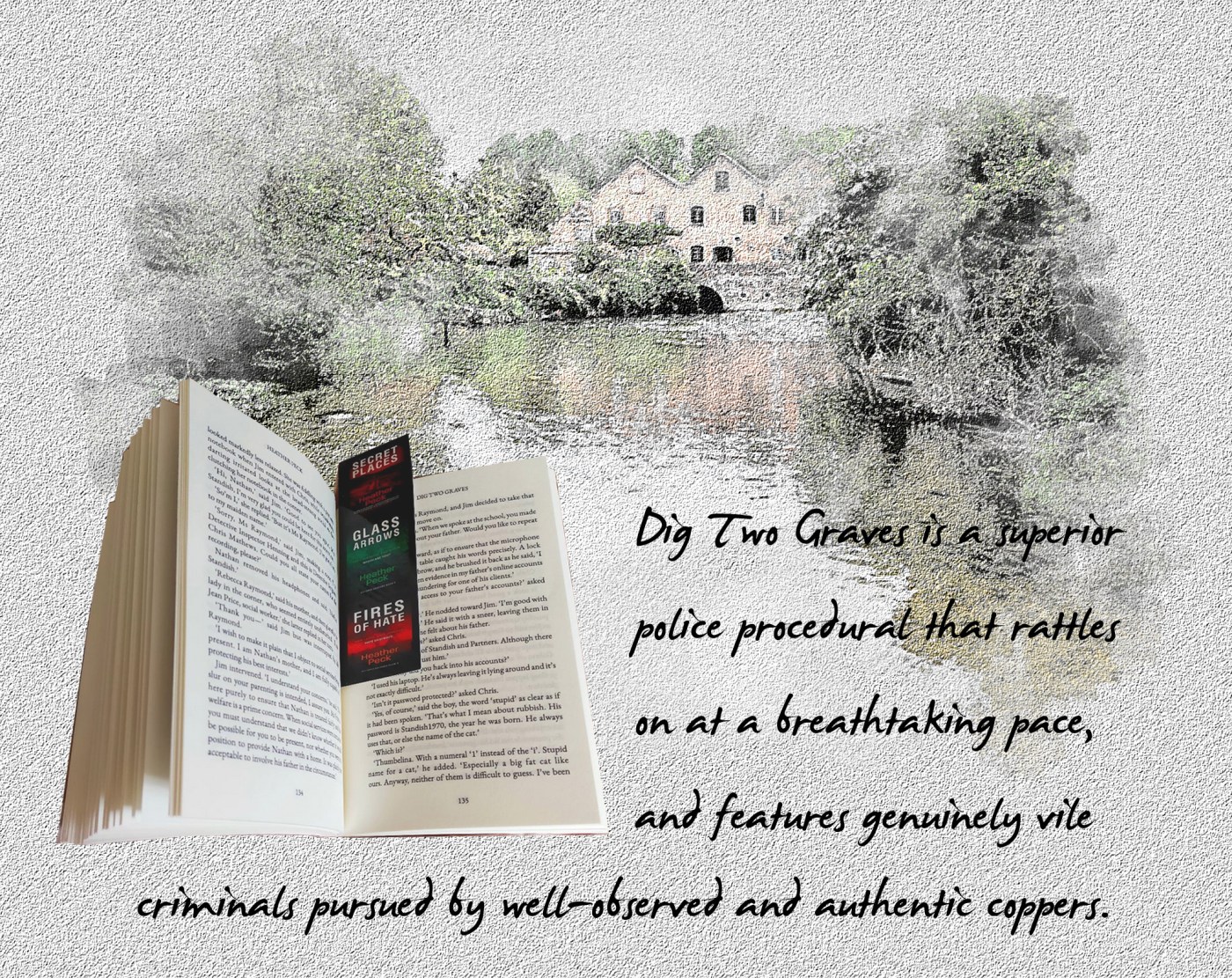
Dig Two Graves is a superior police procedural that rattles on at a breathtaking pace, and features genuinely vile criminals pursued by well-observed and authentic coppers. It was published by Ormesby Publishing on 28th June.

THE TEMENOS REMAINS . . . Between the covers

temenos spine

A temenos (Greek: τέμενος; plural: τεμένη, temenē) is a piece of land cut off and assigned as an official domain, especially to kings and chiefs, or a piece of land marked off from common uses and dedicated to a god, such as a sanctuary, holy grove, or holy precinct.

Screen Shot 2023-02-22 at 19.19.37This is the fourth book in a series featuring Norfolk copper DCI Greg Geldard, but author Heather Peck (left) wastes no time in providing all the back-story we need. Geldard is divorced from his former wife, Isabelle, who is a professional singer. She has now remarried a celebrated orchestral conductor, with whom she has a child, while Geldard is in a relationship with one of his colleagues, DS Chris Mathews. When he gets an early morning ‘phone call from Isabelle saying she and her son have been threatened by a foreign criminal connected to one of Geldard’s previous cases, he is forced to stay at arm’s length, but is disturbed to hear from a colleague that Isabelle may be making the story up.

With this at the back of his mind, he has to focus on human remains found during an archaeological dig. Not unusual, you might think, but this skeleton has modern dental work and was buried with a 1911 silver thruppence in its mouth. After mining down into HOLMES, the national police database, Geldard’s team discover more cases that seem to be similar, and when part of the cliff near Hemsby collapses in a violent storm, another skeleton is revealed, along with its now obligatory coin. Meanwhile, in a series of short episodes which she calls ‘Entr’actes’, Peck introduces us to the man we presume is the killer, but these paragraphs are, at first, enigmatic, and only make sense towards the end of the book when the killer becomes a person of interest to the team.

Geldard’s relationship with Chris Mathews comes under a strain as she resents what she sees as his lingering affection for his former wife, and she is equally unhappy about his working relationship with DI Sarah Laurence. Do real-life coppers get into relationships with close colleagues? I don’t know, but other fictional social partnerships I recall were Tom Thorne and Helen Weeks in the Mark Billingham books, and Peter Robinson’s DCI Banks and his feisty on-off partner Annie Cabbot.

GG banner

Eventually, the killer makes a big mistake and is pulled in, Geldard’s only problem being to convince the CPS that he is fit to stand trial and plead. There is to be no celebratory night in the pub, however. Heather Peck has kept the sub-plot featuring the foreign gangster gently simmering in the background, but right at the end she turns up the heat – and leaves us with a cliffhanger worthy of Scheherazade’s tales.

I loved the Norfolk setting of this story, and as a former resident, I can vouch for its authenticity. Greg Geldard is pleasantly ‘normal’ for a fictional senior detective, and Heather Peck relies on her mastery of modern police methods to hold our interest and keep the story ticking along. The Temenos Remains is published by Ormesby Publishing and is out now.

Heather Peck is certainly a busy woman. As well as writing novels, she has been a farmer, chaired an NHS Trust, has worked on animal welfare, sailed a boat on the Broads, volunteered in Citizens Advice and the Witness Service and vaccinated humans against Covid. To find out more, go to her website.

CRIME ACROSS ENGLAND . . . 2: Norfolk and Boston

CAE HEADER

“A little onward lend thy guiding hand” as Samson said in Milton’s interminable poem, and we are headed towards the Norfolk coast, where we will meet up with an engaging archaeologist who has a disturbing habit of discovering present day corpses, along with the bones of long-dead Bronze Age folk. Ruth Galloway is the creation of Domenica de Rosa, better known to readers as Elly Griffiths, and she is one of the most convincingly human of present day crime fiction heroines. Galloway is, of course, in a long line of amateur investigators and, like many of her predecessors, she needs a connection to the professional police force so that the stories remain plausible. In Galloway’s case, the connection is deeply personal, as her police contact is a King’s Lynn based detective who was once her lover. Harry Nelson (and there’s a proud Norfolk name) is the father of Galloway’s daughter Kate, yet he still lives more-or-less peaceably with his wife Michelle, and they too have children. The relationship between Galloway and Nelson is unusual, to say the least, but it provides an interesting counterpoint to the  discovery of bodies and the search for murderers.

Brancaster011

The crime fiction tropes which lead to bodies being discovered, thus setting in chain a murder investigation, are many and varied. A long standing favourite is the dog-walker, and then there is the cleaner who makes an unwelcome discovery when she enters a house. People on boats or perhaps fishing on river banks are pretty good for ‘floaters’, but archaeologists – whose very job involves digging – are better than most. Elly Griffiths makes excellent use of this device, but it never becomes trite, mainly because she is such a gifted writer.

A resident player in the Galloway-Griffiths Repertory Company is an ageing hippy called Cathbad. His real name is Michael Malone, and he frequently adds a touch of mysticism (real or imagined) to proceedings. To my shame, I always imagine him as Nigel Planer in The Young Ones, but that, perhaps, does him – and Elly Griffiths – a disservice.

Crime novels are not all about location, but having an affinity with landscape – and the ability to make it a character in the narrative – never hurts, and Elly Griffiths brings the North Norfolk Coast to life. I live not too far away, and cynical locals have re-christened the area ‘Chelsea-on-Sea’, due to the gentrification of villages, and the surge in properties being bought up as weekend retreats for wealthy people from the Home Counties. There remains, of course, a rougher local under-current, and this features in the most recent Ruth Galloway novel, The Nighthawks. Click the link to read my review, and keep an eye open for the next novel in the series, The Locked Room, which is due to be published in early 2022.

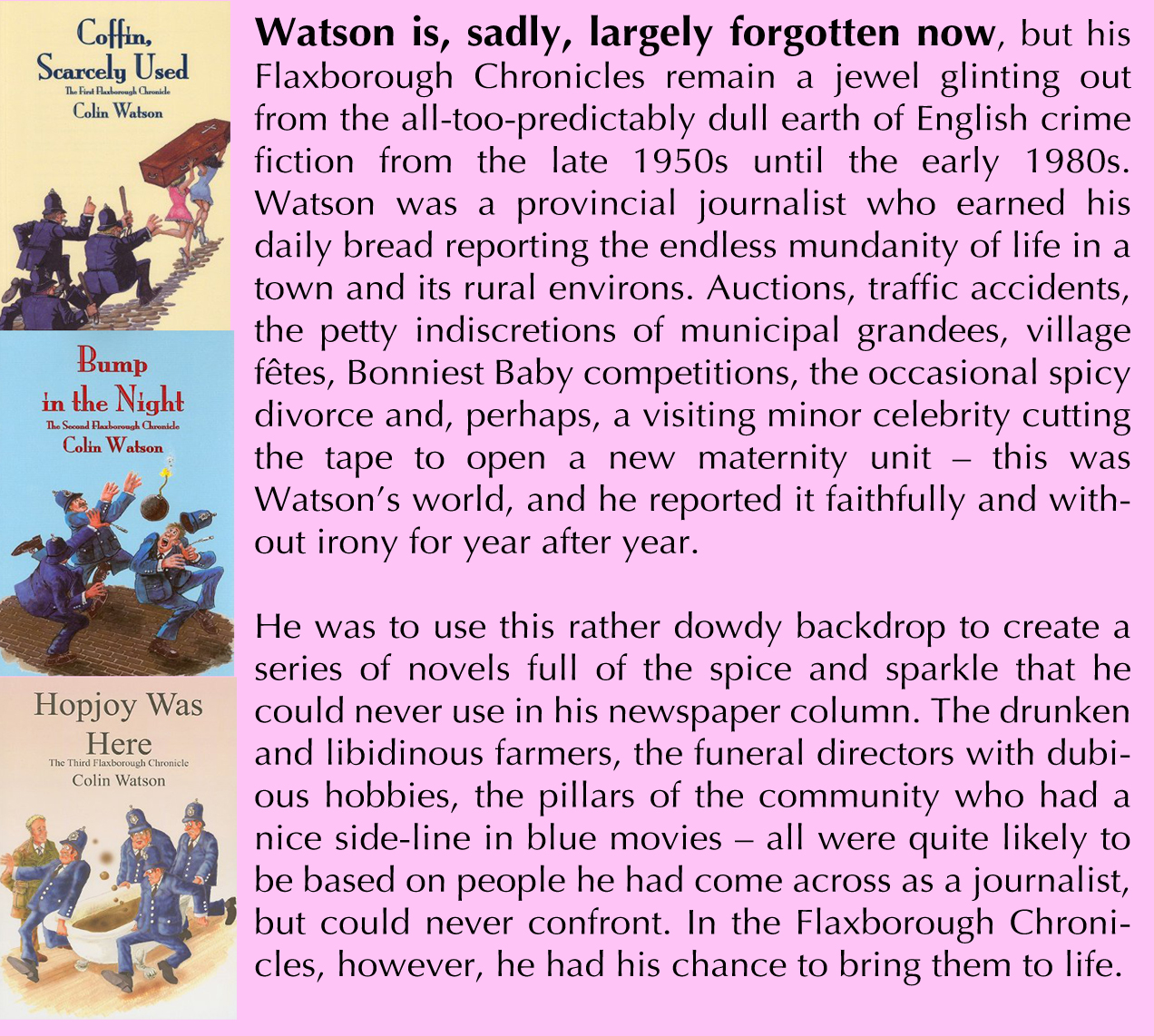
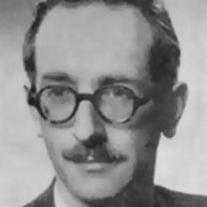
BostonThe next stage of our journey is to a town that doesn’t exist – at least on an Ordance Survey map. Writers have always created fictional towns based on real places – think Thomas Hardy’s Casterbridge, Trollope’s Barchester, Arnold Bennett’s Bursley, Herriot’s Darrowby, and Dylan Thomas’s Llareggub – but remember that each was based on a real life place well known to the writer. Thus we drive along a road that skirts the windswept and muddy shores of The Wash until we arrive in Boston, Lincolnshire. It was here that the journalist and writer Colin Watson lived and worked for many years, and it was in Boston’s image that he created Flaxborough – the home and jurisdiction of Inspector Walter Purbright.
Watson body

Watson wrote an entertaining book about English crime fiction. He called it Snobbery With Violence (1971), and he was not particularly complimentary about several crime writers who contributed to what we call The Golden Age, but it shows that he was a man who read widely, and took his craft seriously. CWAny serious student of crime fiction should read it, but must bear in mind it was written by a man who became seriously disillusioned with writing and the world of publishing. The last book in the series was Whatever’s Been Going on at Mumblesby? which was published in 1982. Watson died in 1983, but had retired to the village of Folkingham, where he had taken up silver-smithing, and had remarked to a visiting journalist that writing was something of a mugs’ game, with too little reward for too much effort. His characters had, however briefly, been adapted for a four-episode TV series in the 1970s, with Anton Rodgers as Purbright and Christopher Timothy as Sergeant Love. For more about Colin Watson on the Fully Booked site, click the author’s image.

THE NIGHT HAWKS . . . Between the covers

Night Hawks header

Screen Shot 2020-12-18 at 19.46.09Elly Griffiths, (left) whose real name is Domenica de Rosa, has created an endearing heroine in the person of Ruth Galloway, an English archaeologist who, over the course of a dozen novels, has managed to find herself at the centre of murder mysteries where the corpses are considerably more recent than the ones she normally excavates. She is a senior lecturer at the fictional University of North Norfolk, and the novels are set in and around the north and west of Norfolk. Griffiths uses real locations like King’s Lynn, Blakeney and Sheringham, and has also constructed a reliably entertaining cast of supporting players, principally Ruth’s once-upon-a-time lover, a refreshingly old fashioned married police detective called Harry Nelson. They have a child, Kate, who lives with Ruth, while Harry remains more-or-less happily married to Michelle, with whom he also has children.

In the thirteenth book in the series, The Night Hawks, we have the characters who long time readers of the series will recognise, including the middle aged druid who calls himself Cathbad. His real name is Michael Malone, but he can usually be relied upon to bring to bring a touch of the supernatural – imagined or otherwise – to the proceedings. The Night Hawks in this tale aren’t remotely sinister, despite their name. They are group of men whose hobby is traversing the ancient Norfolk landscape with their metal detectors, searching for buried artifacts. They operate at night, because it is quieter and they are less likely to be disturbed.

They get the story started with a classic Elly Griffiths trope – the finding of a Bronze Age hoard, including an ancient skeleton, alongside a body that is much more recently deceased. While the older gentleman can wait his turn to be studied and catalogued, the young man’s body is whisked off to King’s Lynn for the attention of the police pathologist.

51D4BGVpbxLShortly after the grim discovery, the police are called to a remote farmhouse a few miles inland, where there are reports of gunshots being heard. This time, there is no doubt about the identity or the cause of death of two dead people found inside Black Dog Farmhouse. Dr Douglas Noakes and his wife Linda are dead from gunshot wounds, and it appears to be a clear case of murder-suicide. This clear cut diagnosis becomes rather more tenuous when questions are raised about firearms technicalities, despite an apparent suicide note being found.

The plot becomes pleasantly complicated from this point on. The late Dr and Mrs Noakes had two children, from whom they had become estranged, but was the separation bitter enough to provoke murder? Noakes was not a GP, but a research scientist, and it seems that he had been working with a Cambridge lab developing vaccines. Was this why one of the rooms at Black Dog Farmhouse was kitted out like a doctor’s surgery, complete with bed? The dead young man – the twentieth century one – is eventually identified as Jem Taylor, a 25 year-old from Cromer, who had only recently been released from prison.

There is another murder. This time the victim is a member of The Night Hawks, a retired teacher with connections to several of the people in the story. He has been battered over the head with a lump of rock, and his death further complicates matters.

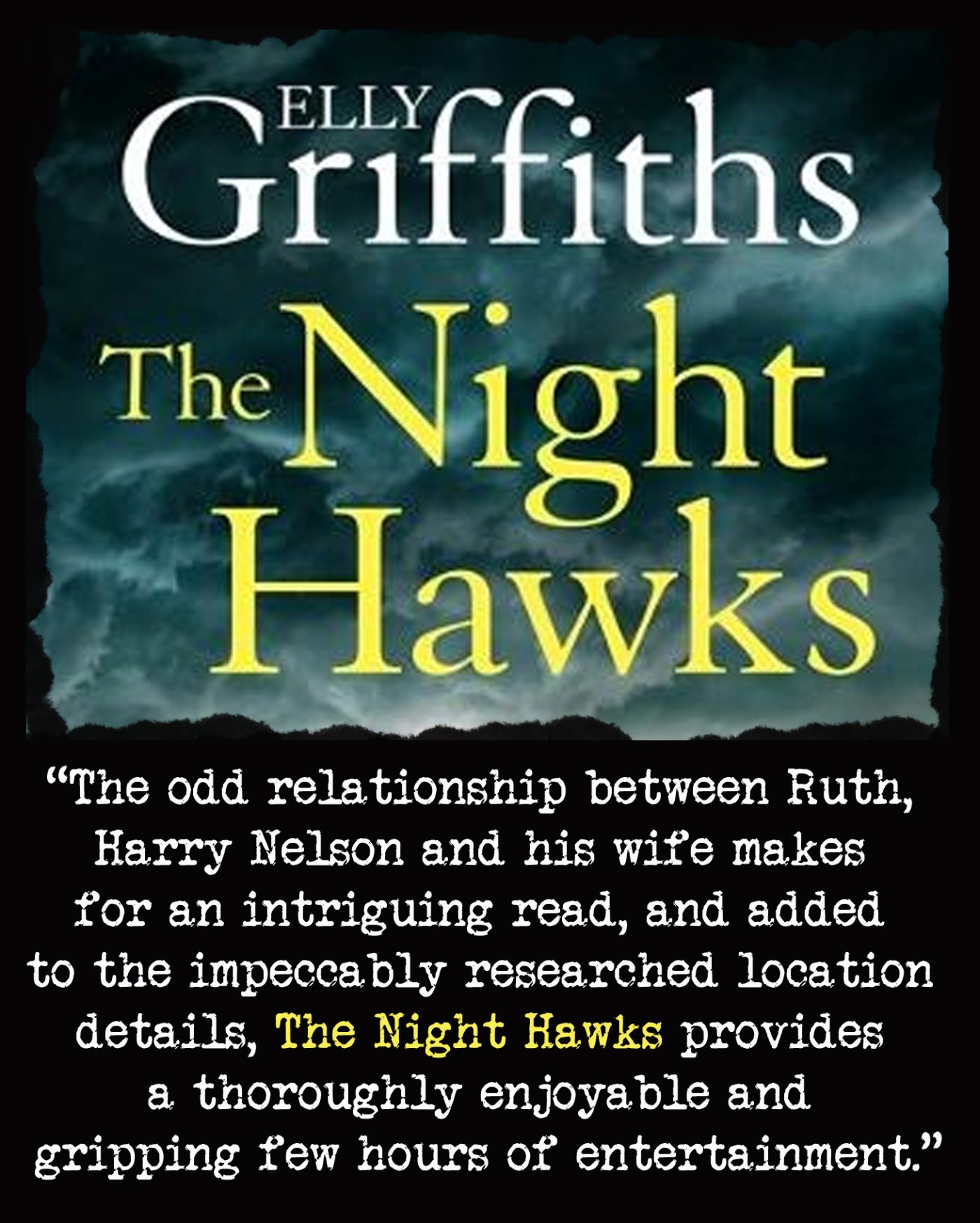
Elly Griffiths has great fun by introducing some ‘spookery’ by way of a local legend – that of Black Shuck. Tales of a ghostly hellhound are spread far and wide through English folklore, and this Norfolk version is equally menacing. Like all literary amateur sleuths, Ruth Galloway’s involvement with active police investigations is pretty implausible, but delightfully so. The odd relationship between Ruth, Harry Nelson and his wife makes for an intriguing read, and added to the impeccably researched location details, The Night Hawks provides a thoroughly enjoyable and gripping few hours of entertainment. The book is published by Quercus and will be out on 4th February.

JIM KELLY: A Landscape of Secrets

Screen Shot 2018-06-18 at 09.22.29

Jim Kelly’s brooding and atmospheric crime novels are set in the eastern counties of Norfolk and Cambridgeshire. I am a huge admirer of his books, and you can click the link below to watch a short video which tries to distill the essence of his work into a brief juxtaposition of images and music.

JIM KELLY: A Landscape of Secrets

THE KILLING OF JOHN AUGER

Outwell

This is a tale of brutality – and total incompetence. An elderly man is battered to death, and his killers escape with a safe containing small change. Get the full story by clicking the podcast link.

THE KILLING OF JOHN AUGER

THE SEAWEED THAT STARTED A WAR

Samphire HeaderHere on the coast of The Wash we can, if we wish, still measure the seasons by produce. I say “if we wish”, because supermarkets have no seasons – everything is available all the year round. But in the old fashioned world of buying food when it is fresh and local, the year has its own rhythm. Early summer gives us asparagus, followed by strawberries. In autumn and winter Brancaster mussels and native oysters are delicious, but for me, the true treasure of the summer months is samphire. This plant of the coastal marshes, Crithmum maritimum, allegedly gets its name from a corruption of the French “St Pierre”, but whatever its etymology, it is utterly delicious. Lightly boiled or steamed, it is best eaten with the fingers. Running the stems through your teeth to strip off the flesh is a completely sybaritic sensation. Local folk love it with vinegar, but with butter and coarsely ground pepper it is little short of heavenly.
But hold on, you say, this is mostly a crime fiction site. What’s with the gourmet stuff? Bear with me for a moment longer. Let’s look at the price. As you can see from the photos, it’s £5.99 for a kilo here in the market. Sadly, this will be the last until June or July next year, but no matter. A quick search on the internet reveals that an online Cornish fishmonger will provide some for £16.90 a kilo, Waitrose are selling it for £22 a kilo, and if you want to use a firm called Fine Food Specialists, a kilo will set you back a cool £34.50.

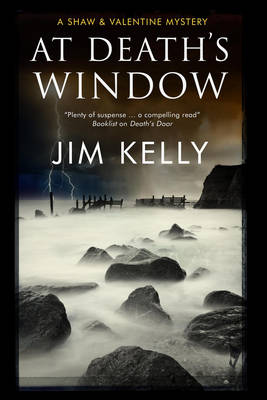
Now with that kind of a mark-up, we are almost into class ‘A’ drug territory – and this is where the crime fiction link comes in. In 2014, the estimable Jim Kelly updated his Peter ADWindowShaw and George Valentine series with At Death’s Window. In addition to solving a series of burglaries at properties along the Norfolk coast owned by wealthy out-of-towners, Shaw and Valentine become involved in a turf war between product dealers. These are not your common-or-garden drug barons, or even owners of ice cream vans, but dealers in samphire! As I have illustrated, with a 300% mark-up available for an item that can be had for nothing, why bother with something as illegal and potentially lethal as narcotics? The problem in At Death’s Window comes when local folk are muscled off their home territory by criminal gangs using illegal immigrants as pickers. Think cockles and the Morecambe Bay tragedy, and you can see how it all might go pear-shaped.
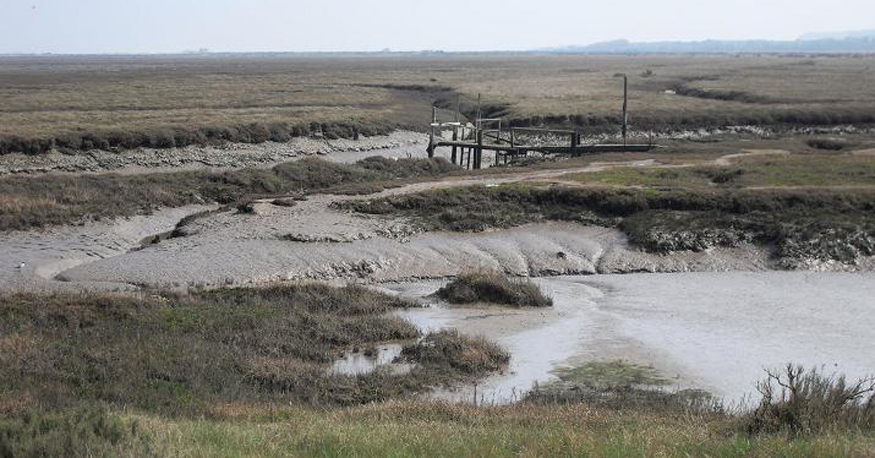

So, as I sit down tonight and indulge myself with the last of the summer samphire, and a glass of something invigorating to wash it down, I shall drink a toast to Jim Kelly, anticipate the first sighting – and tasting – of the new season’s mussels, and dream about next summer. Oh yes, I almost forgot. Samphire pickles extremely well, and I have a few jars in the cupboard to sample in the dark depths of winter!

We have plenty of Jim Kelly on the site, for anyone whose interest has been piqued. There’s an appreciation of his writing, Jim Kelly – a landscape of secrets and a review of his latest book, Death Ship. You can also follow the link to get hold of a copy of At Death’s Window.

VLUU L200  / Samsung L200

DEATH SHIP … Between the covers

Death Ship spread


In Jim Kelly’s novels, the past is like a sunken ship that has lain undisturbed on the sea bed for decades. Then, with a freak tide, or maybe some seismic shift, the ship’s blackened timbers surface once again, breaking through the surface of the present. In this, the latest case for Detective Inspector Peter Shaw and Sergeant George Valentine, the metaphor becomes literal. In the terrible storm of January 31st 1953, a tempest that battered the East Anglian coast and claimed over 300 lives, a dilapidated Dutch coaster, the Coralia, went down, taking its captain and crew with her.

Meanwhile, the unique seaside town of Hunstanton – unique in that it is an east coast resort which faces west – has been literally rocked by an explosion on its crowded beach. Something buried deep beneath the sand is triggered by some boys determined to dig a sink-hole sized pit before the tide sweeps in. There is a brief moment when something metallic and shiny appears in the wall of their excavation, but then hell is unleashed. Miraculously, no-one is seriously hurt, but the beach is closed to holidaymakers while forensic experts and a bomb disposal team from the army do their stuff.

Shaw is faced with several possibilities. Was the explosive device recently planted by extremists from the STP – Stop The Pier – movement, who are protesting against the construction of a huge new pier which will suck trade and footfall from existing businesses? Was the explosion a result – as a teenage boffin from King’s Lynn suggests – of the very late detonation of an unexploded bomb dropped in a Zeppelin raid way back in 1915?

Shaw’s case is complicated by the discovery of a dead diver, tethered to the underwater remains of Hunstanton’s Victorian Pier, destroyed by storms in 1978. Eventually, he learns that the murdered diver is the son of one of the crew members of the ill-fated Lagan, whose remains are rotting on the seabed a couple of miles distant from the pleasure beach. And what of the apparently guileless old lady who has been caught giving arsenic-laced sweets to people in a local ‘bus queue.

Detective partnerships have become one of the enduring clichés of crime fiction. Sometimes – but not always – the pairings work, and when they do, they are a very satisfying literary device. The trope usually requires the senior partner to be yin to the junior’s yang. In this case, Peter Shaw has the imagination. George Valentine the curmudgeonly common sense; Shaw is the live wire to Valentine’s earth. The telling difference between these two and other ‘odd couples’ is that Kelly explores the psychological make up of both men, and the glimpses into their personal lives are equally perceptive and revealing. Valentine is older than Shaw by many a mile; so much so, that Valentine actually served in the force alongside Shaw’s late father, a man still revered within the Constabulary. We also learn that were it not for a faux pas which almost ended his career, Valentine would now be Shaw’s senior officer.

New readers will be pleasantly surprised at how Kelly knits together the misdeeds of the past and the murderous intent of the present. Existing fans will simply smile, and say, “He’s done it again.” You will be pushed to find a novel which so successfully welds together the police procedural, the psychological thriller, the ‘whodunnit’, and the atmospheric novel of place. If you find one, please let me know. In the meantime, I will not be holding my breath – except in waiting for the next masterpiece from one of our finest writers. Death Ship is published by Severn House, and is available here. The official launch will be – very appropriately – at the RNLI Headquarters in Hunstanton on 3rd September. For tickets and enquiries ‘phone 07840 375 984

jim kelly Small_0

Blog at WordPress.com.

Up ↑