
Search

fullybooked2017

Tag

Noir

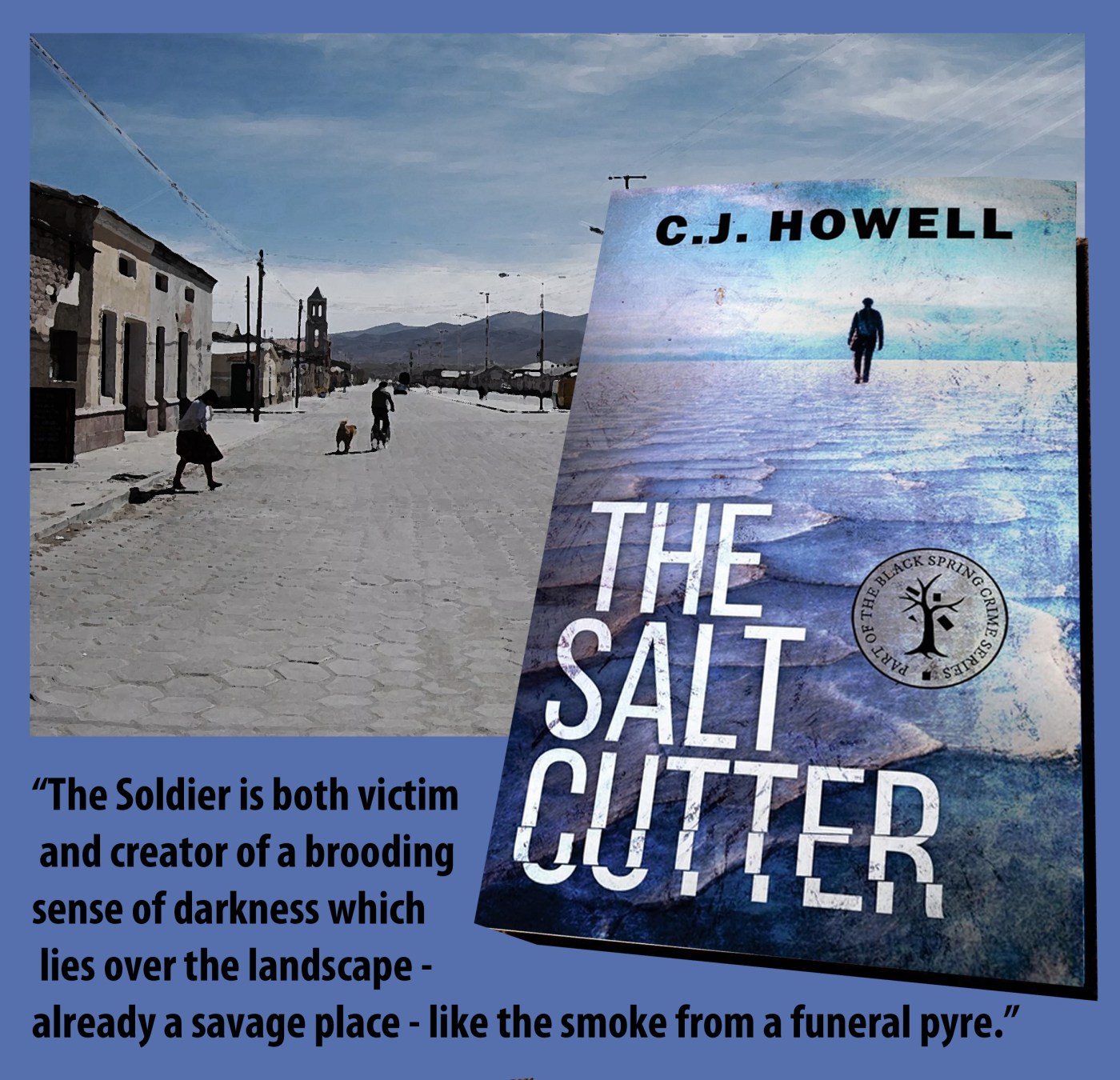
THE SALT CUTTER . . . Between the covers

Tsc spine019 copy

Screen Shot 2024-02-20 at 16.57.12Ask ten different readers what they think qualifies as ‘noir’ and you will get ten different answers. Is it that everything is framed in a 1950s monochrome? Is it because all the participants behave badly towards each other, and have zero respect for themselves? Is it because we know that when we turn the final page, there will be no outcome that could be described as optimistic or redemptive? One quality, for me, has to be an unremitting sense of bleakness – both physical and moral –  and this novel by CJ Howell (left) certainly has that.

Set in Bolivia, The Salt Cutter centres on a young soldier – he is never named – who has deserted, and is on the run, with only his military boots, a rucksack, and his disassembled M16 machine gun for company. It is November 1991, and The Soldier fetches up in the desolate town of Uyuni, on the edge of the Salar de Uyuni, the world’s largest salt flats. Nowadays, there is something of a tourist industry but at the time when the book is set, the place was so bleak that even the rats had given up the ghost and moved elsewhere.

Along with a man called Hector Anaya, who had arrived with his family on the same ramshackle bus that brought him to Uyuni, The Soldier gets a job with a small crew cutting salt out on the flats, and he strikes up a cautious friendship with a woman called Maria, the town baker. He as also attracted a little follower, in the shape of a boy who makes a precarious living shining shoes.

The Soldier is expecting to be followed to Uyuni by his military masters, but why they would bother, for one random young man from an army of tens of thousands is not made clear. Two agents of the army do arrive and The Soldier kills them. The town’s policeman, El Gordo, has a realistic view of what law and order means in his town:

“Law? There is no law.”
El Gordo sucked at his cigarette between gasping breaths. ”
“There is money and there are guns. In a place like this, that isn’t much money, so the guns have the power. Here, the law is guns. Here, you are the law.”

The policeman knows that if the army come in force for The Soldier, they may exact a terrible price on the town, so the young man allows El Gordo to drive him a safe distance from the town, and he ends up in a remote settlement near a lithium mine.

At this point, the book takes an unusual narrative turn, as it jumps back in time – three days before we first meet The Soldier –  and  we are in a large city, presumably the capital La Paz, where Hector Anaya is a college lecturer. When two of his students are arrested by the army, he goes home, bundles his family and a few belongings into their car, and they drive off, putting as much distance between themselves and the city as possible. Eventually, hundreds of miles later, the car has pretty much been driven into the ground, which is how Hector, his wife and children, end up on the bus that brings The Soldier into Uyuni.

We then rejoin The Soldier, where he has the chance to board a bus which will take him even further from Uyuni but, instead, he gets a ride with a driver taking a tanker full of lithium brine to meet the railway at Uyuni. He finds that the army have indeed arrived, and the town, which was a bleak place before, now carries the stench of death.

Dead dogs lined the street. Strays, shut and then left to rot where they lay. Clumps of fur slowly peeled away by the wind. Sunken rib cages and smiles of death.  Leathered gums shorn back high on the tooth. Fangs bared for eternity.

The conclusion of this powerful novel is all about sacrifice and redemption – of a sort. Throughout, the writing is vivid and visceral, sometimes literally so. The Soldier is both victim and creator of a brooding sense of darkness which lies over the landscape – already a savage place – like the smoke from a funeral pyre. The Salt Cutter is published by The Black Spring Press and is available now.

BASED ON THE BOOK BY . . . Pop. 1280

pop1280 header

Jim Thompson loved the theme of a corrupt small town lawman, as in The Killer Inside Me, but what makes Pop. 1280 different is that Nick Corey, Sheriff of Pottsville, basks in his reputation as a bumbling buffoon, whereas Lou Ford’s outward persona was that of someone who was fairly shrewd, but otherwise unremarkable. Both novels employ the first-person narrative. The Killer Inside Me was published in 1952 (click this link for a feature on the novel and its film adaptations) but Pop. 1280 came out in 1962.  To date, it has only been filmed once, as Coup de Torchon (Clean Slate) in 1981. The French film was directed by Bertrand Tavernier and starred Philippe Noiret as the central character.

To judge from the lurid cover illustrations of the novel you would be forgiven for supposing that it was set in the 1950s, but it actually takes place around the time of World War One, probably before America entered the war, as we hear Corey ask a man reading a newspaper
“What do you think about them Bullshevicks? Do you reckon they’ll ever overthrow the Czar?”
Coup de Torchon, strangely, is set in French Colonial Africa just before the outbreak of World War Two. This trailer gives some indication of the ambience:

The novel is an astonishing blend of slapstick comedy, bizarre sex (Cory’s wife is in a relationship with her retarded brother) and disturbing violence. On of the comedy scenes makes it almost untouched into the film. Cory is bothered by an insanitary privy that sits just outside the courthouse where he lives. Unable to convince the town worthies to have it removed, he takes advice from a neighboring Sheriff, a couple of train stops down the line. Remember this the deep South, probably Texas, and automobiles are rare (although Thompson does give some of the characters telephones):
“I sneaked out to the privy late that night, and I loosened a nail here and there, and I shifted the floor boards around a bit.”
Next day, one of the town’s leading citizens heads to the privy, his breakfast having provoked an urgent response:
“He went rushing in that morning, the morning after I’d done my tampering – a big fat fella in a high white collar and a spanking new broadcloth suit. The floor boards went out from under him, and down into the pit. And he went down with them.  Smack down into thirty years’ accumulation of night soil.”

Readers of my generation idolised Joseph Heller’s magisterial one-off, Catch 22, and I vividly remember a dramatic mood shift towards the end of the book. The clowning and absurdities are paused for a spell, and a cold wind – both literal and metaphorical – blows through the streets of the Italian town where Yossarian and his buddies seek their entertainment. The genial but seemingly harmless Captain ‘Aarfy’ Aadvark has just murdered an Italian prostitute, and thinks no more of it than if he had crushed a bug under his boot. I remember being shocked back then and, similarly, Jim Thompson, via Nick Corey, lets rip about the realities of hard scrabble small town America:

“There were the helpless little girls, crying when the own daddies crawled into bed with ’em. There were the men beating their wives, the women screaming for mercy. There were the kids wettin’ in the beds from fear and nervousness and their mothers dosing them with red pepper for punishment. There were the haggard faces, drained white from hookworm and blotched with scurvy. There was the near starvation, the never-bein’-full, the debts-that-always-outrun-the-credit. There was that how-we-gonna-eat, how-we-gonna sleep, how-we-gonna-cover-our-poor-bare-asses thinking.”

Nick Corey sets about framing first one person and then another for various crimes, executes four more with his own hand, mainly to keep his job, and his triple relationships with various women, namely his wife Myra, Rose Hauck and the rather aristocratic Amy Mason. He delivers a running commentary on all these manoeuvers, always in the same Good Ol’ Boy “Aaw shucks, God dang it honey!” homely vernacular, which only makes starker the contrast between the man he wants to appear to be and the man he actually is. Thompson also has a sly chuckle at the expense of the heritage of the American South by naming tow of Pottsville’s dignitaries Robert Lee Jefferson and Stonewall jackson Smith.

My French is nowhere near good enough to know how closely the film script kept to Thompson’s original, or even if there is a similar trope in French culture to that of the tumbleweed town in the American South, but Coup de Torchon retains the main characters and plot direction. The equivalent characters and actors are:

Nick Corey        Lucien Cordier           Phillipe Noiret
Myra Corey       Huguette                    Stéphane Audran
Lennie               Nono                         Eddy Mitchell
Rose Hauck      Rose Marcaillou          Isabelle Huppert
Amy Mason      Anne                           Irène Skoblene
Ken Lacey         Marcel Chavasson      Guy Marchand

There are some books that cannot be filmed. It’s as simple as that. Mike Nichols made a brave stab at Catch 22 (1970) and, despite hiring a stellar cast, never quite recaptured the moral anarchy of the novel. Quite wisely, producers and directors have never attempted adaptations of any Derek Raymond novels. How would you even start to put I Was Dora Suarez on screen? It has to be said that Corp de Torchon was a brave attempt to capture the essence of Thompson’s caustic and abrasive novel, but since what happens in Pottsville is nothing short of a dive into the middle of a townscape imagined by Hieronymus Bosch, Bertrand Tavernier and his crew have to given full marks for trying.

TED LEWIS . . . A Lincolnshire perspective

TL header

lincolnshire-bomber-station1Alfred Edward Lewis was born in Stretford, Manchester on 15th January 1940, but in 1946 the family moved to Barton upon Humber. Five years later, Lewis passed his 11+ and began attending the town’s grammar school. There, he was fortunate enough to come under the influence of an English teacher called Henry Treece. Treece was born in Staffordshire, but had moved to Lincolnshire in 1939, and although he ‘did his bit’ as an RAF intelligence officer, he was able to make his name during the war years as a poet.

Ted Lewis excelled at both Art and English, and when it came to leaving school, he was desperate to go to Art School in Hull (now the Hull School of Art and Design). His parents thought this idea frivolous and a waste of time, and were determined that he should get ‘a proper job’ locally. Henry Treece interceded on Lewis’s behalf and was able to persuade his parents to let the young man cross the murky waters of the Humber to study.

HWBAfter leaving the college, it seemed that Lewis was going to make his way as an artist and illustrator, and a book written by Alan Delgado, variously called The Hot Water Bottle Mystery or The Very Hot Water Bottle, can be had these days for not very much money, and the description on seller sites usually adds  “Illustrated by Edward Lewis”. That was the first serious money Ted ever made. He moved to London in the early 1960s to further his prospects.

Screen Shot 2023-12-27 at 17.08.18His first published novel was All the Way Home and All the Night Through (1965) and it is a semi-autobiographical account of the lives and loves of art students in Hull. I remember borrowing it from the local library not long after it came out and, looking back, it was a far cry from the novels that would make Lewis’s fame and fortune.

Five years later, Lewis was getting regular script work in television, but now his second novel was published. Its original title was Jack’s Return Home. I believe  that to be a reference to a mock Victorian melodrama of the same name, that featured in a Tony Hancock episode called The East Cheam Drama Festival. In Lewis’s book, the main character is Jack Carter, a London gangster returning to his home town to investigate the death of his brother. Re-badged as Get Carter, it was made into oneScreen Shot 2023-12-27 at 18.29.35 of the finest British films ever made. It was released in March 1970, and Lewis is credited, along with director Mike Hodges, with the screenplay. Incidentally, a hardback first edition of JRH can be yours – a snip at just £3,250 (admittedly with a hand-written note by the author)
Although the film is clearly set in Newcastle, the action in the book takes place in the far less glamorous setting of a ‘steel city’ much closer to where Lewis grew up – Scunthorpe, obviously. Sadly, the town was already regarded as a metaphor for somewhere awful, and the butt of many jokes, so setting Lewis’s story there would probably have been box office suicide.

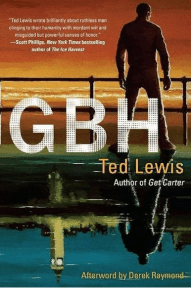
Lewis wrote more novels, none achieving quite the success of Get Carter, although he returned to the character in his penultimate novel Jack Carter and the Mafia Pigeon (1977). By this time, however, Lewis was in a self induced spiral of decline, mainly due to alcohol abuse. His final novel, which many critics Screen Shot 2023-12-27 at 18.33.12believe to be his finest was GBH, published in 1980. Here, he unequivocally returns to Lincolnshire, and a bleak and down-beat out-of-season seaside town which is obviously Mablethorpe. The central character is George Fowler, a mobster who has made a living out of distributing porn movies, but has crossed the wrong people, and needs somewhere to hide up for a while. Rather like his creator, Fowler is in the darkest of dark places, and the novel ends in brutal and surreal fashion on a deserted Lincolnshire beach, with the wind howling in from the north sea as Fowler meets his maker in the remains of an RAF bombing target.

GET

With his marriage  over and career in ruins, Lewis returned home to Barton, to live with his mother, but his health had gone, and the Grimsby Evening Telegraph ran this melancholy story on 30th March 1982. There is something deeply sad about a man who had the world at his feet, immensely gifted as a writer and artist, and a man whose literary legacy would prove to be immense, being taken by ambulance from a modest semi in Ferriby Road to a ward in Scunthorpe hospital, where he would die a few days later.

So what was the legacy of Ted Lewis? Some critics have dubbed him ‘England’s Albert Camus’. I don’t buy into that, for any number of reasons, one of which is that I have never knowingly been captivated by any book written by the French existentialist, while GBH, to name but one of Lewis’s books, gripped me by the throat and never let go until I had reached the final page. Another description of Lewis is that he was the ‘Godfather of English Noir.’ There isn’t time here to go into what is and isn’t ‘Noir’ in books and films, but let’s settle for a few descriptions, in no particular order: bleakly pessimistic; realistic; violent; deeply flawed characters; full of dark humour.

The more sharp-eyed of you will see that the cover of GBH bears the legend ‘with an afterword by Derek Raymond.’ Raymond (aka Robin Cook) was also self destructive, but he managed to survive until 1994, and left a catalogue of brutal, compassionate and disturbing crime novels, perhaps the best of which is I Was Dora Suarez. There is no evidence that Raymond was influenced by Lewis, but he clearly recognised a kindred spirit. But this article is about Lincolnshire. Lewis’s life – and his greatest novels – are book-ended by the county. He described the grimy and frequently corrupt world of a town dominated by a thriving steel industry (Scunthorpe) in Jacks’ Return Home and – when his personal life was in total disarray – he made his last words play out in GBH, resonating over the often bleak seashores around Mablethorpe, a place he must have visited with his parents when he was young. For George Fowler, however, there was not to be the long walk from the railway station to the beach; no arcades with penny slot machines, not a sniff of the intoxicating sweetness of candy floss, no jingling of bells from the donkey rides, and not a hint of the itchy reassurance of Mablethorpe sand between his toes. All that remained was an almost surreal death, which Lewis described brilliantly, while making sure we readers were never certain about what was real and what was not.

The good folk of Barton upon Humber have, perhaps rather belatedly, chosen to honour their two most famous literary sons. There is a Ted Lewis Centre, and his mentor from back in the day is acknowledged with a blue plaque. For a more detailed account of Ted Lewis’s life, I can recommend Getting Carter by Nick Triplow.

TL footer

THE BURNING TIME . . . Between the covers

TBT header

After David Mark starts his latest novel with a nod to the celebrated first three words of Herman Melville’s masterpiece, the first chapter of The Burning Time made me wonder if I had slipped off the page and fallen into a visceral nightmare straight out of the Derek Raymond playbook displayed in I Was Dora Suarez – there was blood, pain, death, distortion, madness, fire – and human disintegration.

Chapter two reminds readers that we are accompanying Inspector Aector McAvoy on his latest murder investigation. Bear-like McAvoy – based in Hull –  and his beguiling gypsy wife Roisin, have been invited to an all-expenses-paid stay at a luxury hotel in Northumbria  to celebrate the seventieth birthday of McAvoy’s mother. Mater and filius have become somewhat estranged over the years, mainly due to mum dispensing with Aector’s dad when her son was young, and opting for a newer, richer husband – who insisted on Aector being sent away to boarding school, causing mental scars which have not healed over the years. Aector, via this arrangement, has a step brother called Felix, older than he, and a person who subjected his younger step sibling to all kinds of mental and physical bullying back in the day. It is Felix who has organised the family gathering.

Part of the carnage in chapter one involves  Ishmael Piper – a middle-aged hippy living with a twin curse, the first part being that he was the son of the late and legendary rock guitarist Moose Piper, and the second being that he is suffering from Huntington’s Chorea, the degenerative disease whose most famous victim was the American musician Woody Guthrie. Ishmael inherited much of his father’s wealth, guitars and memorabilia, but his life has become a protracted car crash. His life comes to an end when his remote cottage on the Northumberland moors is gutted by fire. He is found dead outside, his daughter Delilah clutching his hand, while one of his female companions, asleep in an upstairs room, is the second fatality. Delilah has been badly burned. Later, McAvoy sees her:

He wants to look away; to jerk back – to not have to see what the flame has done on half of her face. He thinks of wormholes at low tide. He can’t help himself: his imagination floods with memories; so many twisted worm-casts in the soft grainy sand.’

McAvoy is an intriguing creation. He is physically massive, but suffers from debilitating shyness and a chronic lack of social confidence. He is, however, formidably intelligent and a very, very good policeman. Crime fiction buffs will know that there is a certain trope in police novels, where the newly promoted detective becomes frustrated with paper work, and longs to be out on the street catching villains. McAvoy is more nuanced:

‘It always surprises his colleagues to realise that, in a perfect world, McAvoy would never leave the safety of his little office cubicle at Clough Road Police Station.’

The Puccini aria from Tosca, Recondita Armonia, can be translated as ‘strange harmony’, and no harmony is stranger than that between McAvoy and his wife Roisin. They share a fierce intelligence, but David Mark portrays her as slender, captivatingly beautiful and blessed – or cursed – with an intuition and silver tongue inherited from her Irish gypsy ancestors, and a dramatic contrast to her physically imposing but socially gauche husband.

McAvoy realises that he has been invited to the family gathering, not out of any desire for reconciliation, but because Felix wants him to find out the truth behind Ishmael’s death, a task at which the local police have failed. McAvoy, of course – after bouts of epic violence involving various bit-players in the drama – does find the killer, but in doing so illustrates that the birthday party was nothing other than a bitter charade. The Burning Time – a powerful and sometimes disturbing read –  is published by Severn House and is available now. For more reviews of David Mark novels, click the image below.

Screen Shot 2023-12-09 at 19.36.32

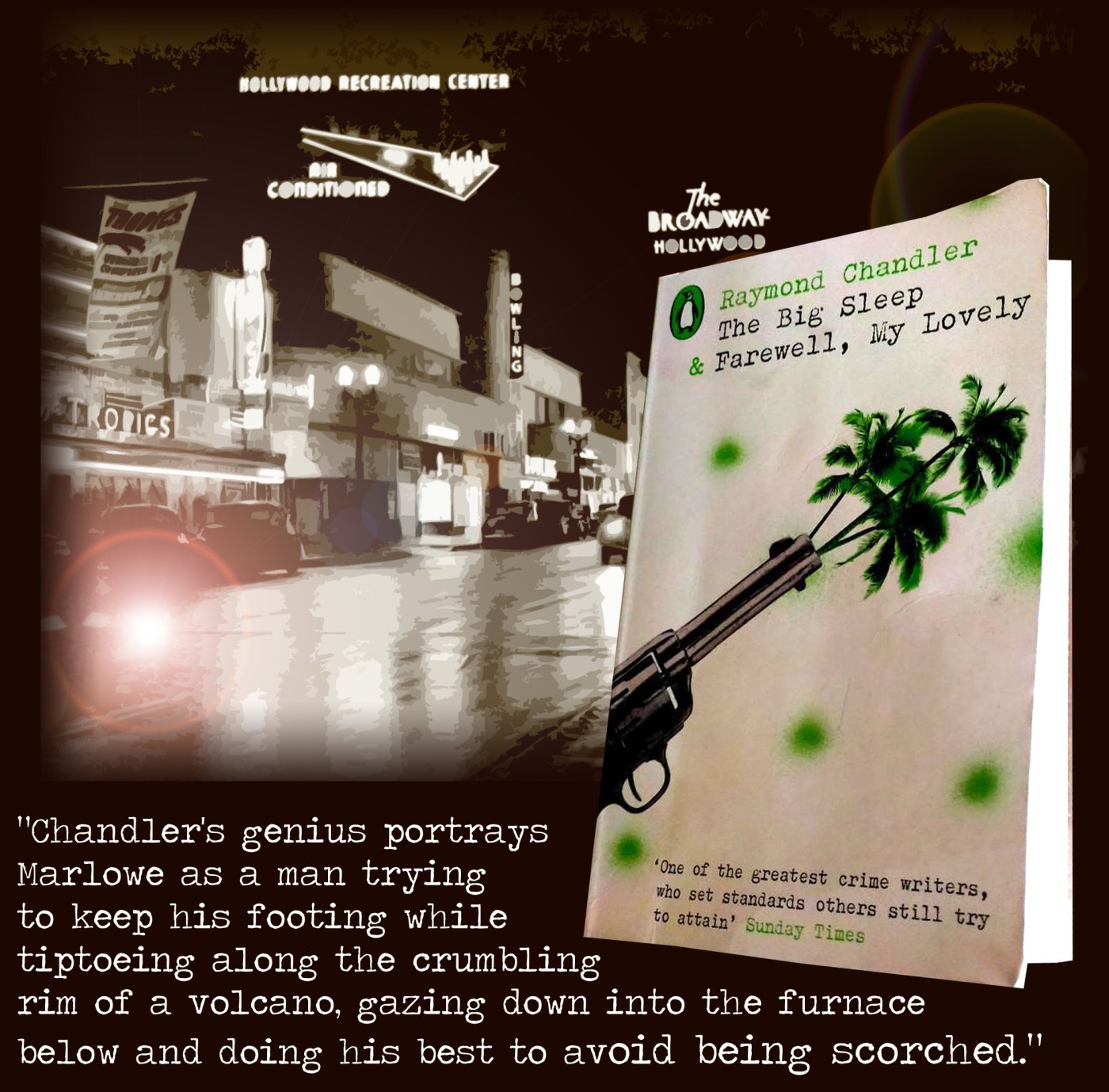
CLASSICS REVISITED . . . The Big Sleep

tbs spine048 copy

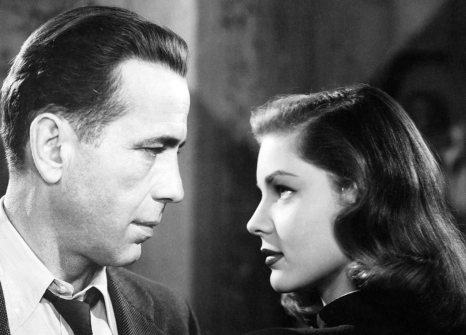
Screen Shot 2023-11-13 at 20.27.10The Big Sleep was published in 1939, but the iconic film version, directed by Howard Hawks, wasn’t released until 1946. Are the dates significant? There is an obvious conclusion, in terms of what took place in between, but I am not sure if it is the correct one. The novel introduced Philip Marlowe to the reading public and, my goodness, what an introduction. The second chapter, where Los Angeles PI Marlowe goes to meet the ailing General Sternwood who is worried about his errant daughters, contains astonishing prose. Sternwood sits, wheelchair-bound, in what we Brits call a greenhouse. Marlowe sweats as Sternwood tells him:
“I seem to exist largely on heat like a newborn spider, and the orchids are an excuse for the heat. Do you like orchids?”
“Not particularly.”
“They are nasty things. Their flesh is too much like the flesh of men. And their perfume has the rotten sweetness of a prostitute.”

The General can no longer drink alcohol, but he enjoys watching men who can:

“The old man licked his lips watching me, over and over again, drawing one lips slowly across the other with a funereal absorption, like an undertaker dry-washing his hands.”

“I used to like mine with champagne. The champagne as cold as Valley Forge and about a third of a glass of brandy beneath it.”

Sternwood has two daughters. The elder, Vivian, was married to a an ex-IRA bigshot called Rusty Reagan, a man much admired by his father-in-law, but he has disappeared. The younger girl, Carmen, has gone off the rails completely, and has been sucked into a world of drugs, vice and pornography.

Initially, Marlowe’s brief from the General is to find out what is going in with Carmen. He soon discovers that she is involved with a pornographer called Geiger. He goes to Geiger’s house, and sits in his car outside, the rain teeming down.

“As the darkness folded back on it and ate it up a thin tinkling scream cried out and lost itself among the rain drenched trees. I was out of the car and on my way before the echoes died. There was no fear in the scream. It had a sound of half pleasurable shock, an accent of drunkenness, overtone of pure idiocy. It was a nasty sound. It made me think of men in white and barred windows and hard narrow courts with leather wrist and ankle straps fastened to them.”

Forcing his way into the house, Marlowe finds an interrupted photoshoot:

“Neither of the two people in the room paid any attention to the way I came in, although only one of them was dead. She was wearing a pair of long Jade earrings. They were nice earrings and had probably cost couple of hundred dollars. She wasn’t wearing anything else.”

The drugged Carmen Sternwood had clearly been in the middle of a pornographic photo shoot and beside her is Geiger – shot dead. After taking Carmen back to the Sternwood mansion Marlowe returns to Geiger’s house, where he has left his car. He finds that Geiger’s body has gone and the crime scene has been interfered with. Wondering who has taken the corpse, he makes the celebrated comment:

“Dead men are heavier than broken hearts.”

Screen Shot 2023-11-13 at 20.28.07

The plot then becomes something of a whirling dervish pirouetting in the California dust, sometimes moving so fast and in such unexpected directions that it is not easy to keep track of what is going on.  We meet Joe Brody, a small-time spiv who is trying to muscle in on Geiger’s pornography racket. He is shot dead by Geiger’s homosexual lover, and then Marlowe becomes aware of a much more sinister figure – gangster Eddie Mars, who is connected to Vivian Sternwood. This mad dance however is subsidiary to the poetry of Marlowe’s view of the dark world he inhabits. Chandler’s genius portrays Marlowe as a man trying to keep his footing while tiptoeing along the crumbling rim of a volcano, gazing down into the furnace below and doing his best to avoid being scorched.

In the end, as in all great novels it comes down to who we as readers care about. We don’t care too much for Carmen. We don’t care at all for the scattering of underworld figures who populate the book. We care about Vivian, who is damaged but perhaps redeemable. We care about the dying general still trying to protect his daughters and his legacy. Another cruel irony for the old man is the fate of Rusty Reagan, his corpse long since dumped in one of oil wells that have brought the family their immense wealth Above all, however, we care about Marlow and the bruises – mental and physical – he sustains while trying to do his job.

Screen Shot 2023-11-13 at 20.29.04The book began with an optimistic Marlowe:

“I was wearing my powder blue suit, with dark blue shirt, tie, and display handkerchief, black brogues, black wool socks with dark blue clocks on them. I was neat, clean, shaved and sober, and I didn’t care who knew it.”

It ends with him making a bitter deal with Vivian, that she will take Carmen as far away as possible from the moral cesspit she has been bathing in, and that the fate of Rusty Reagan will be kept from her father.

“Me, I was part of the nastiness now. Far more a part of it than Rusty Reagan was. But the old man didn’t have to be. He could lie quiet in his canopied bed, with his bloodless hands folded on the sheet, waiting. His heart was a brief, uncertain murmur. His thoughts were as grey as ashes. And in a little while  he too, like Rusty Reagan, would be sleeping the big sleep.”

The edition I read for this review was published by Penguin, and is part of their recent series of ‘Green Penguin’ crime classics. It is paired with Farewell My Lovely, and is available now.

FLESH AND BLOOD . . . Between the covers

FABheader

This is book number eleven in the series, so a quick heads-up for new readers.
Time: the present
Place: Humberside
Main characters: Detective Inspector (recently promoted from DS) Aector McAvoy. He is a Scot, huge and bear-like, a gentle soul but a formidable copper. His wife Roisin; she is of Irish Gypsy stock, romantic but fiercely protective of Aector and their children – Fin and Lilah. Detective Superintendent Patricia ‘Trish’ Pharoah, thirty years in the force, and as tough as nails. Trish and Aector worship each other, but it is a purely platonic relationship. McAvoy is on holiday with his family in the Lake District, living in a traditional Romany Vardo.

In this book:
Reuben Hollow, a serial killer, serving several life sentences for murdering people he judged as having escaped justice. He was captured by McAvoy. Detective Chief Superintendent George Earl. Promoted because Trish Pharoah turned down the job. Earl is the very model of a modern media friendly senior police officer:

Trish is not immune to the pleasures of the flesh, and she is in bed with an Icelandic copper she met on a course. Their post coital bliss is disturbed by Trish’s car alarm going off, and Thor Ingolfsson runs downstairs to investigate. He is attacked with an adze and left for dead. Thor happens to be a dead ringer for Aector, and when the local police arrive to find the man face down in the road, they put two and two together, and make seventeen. Aector is very much alive and well, however and, despite being told to stay well away by Earl, he is determined to find out what is going on. David Mark’s description of Earl will ring horribly true to anyone who has experienced senior management in corporate services in recent years:

“George Earl is a tall, slim, straight-backed careerist who exudes the gentle earnestness and Anglican-priest sincerity of a Tony Blair. He has a habit of clasping his hands together when he talks, and makes a great show of telling his staff that his door is always open, and there’s no such thing as a stupid question.”

David Mark spent years as a crime reporter for a regional newspaper, and so he is well aware of the depths of villainy which are regularly plumbed by apparently ordinary and innocuous men and women. He also knows that – despite graduate entry – some of the people who are accepted as police officers are not “the brightest and best of the sons of the morning.” (Activists – please feel free to substitute the gender of your choice)

“The three uniformed constables milling around at the rear….he’s noticed that none of them seem to be able to breathe through their nose. All in their twenties and look as though they would be more comfortable working in a phone shop or flogging gloriously chavtastic trainers in a sports shop.”

What follows is pure mayhem. A former police colleague of Trish Pharoah meets an elaborate death by wood-carving chisels, McAvoy narrowly escapes death by hanging, in an execution house probably last used by Albert Pierrepoint, the chaos of Trish Pharoah’s previous life is laid bare to the world, and our man emerges – not unscathed – but able to fight another day.

Flesh and Blood veers violently between the darkest noir imaginable and a simple – but affecting – poetry. It is published by Severn House and will be available on 6th June. The final sentence sums up this brilliant series:

“And inside McAvoy’s head, another voice joins the chorus of the dead.”

https://fullybooked2017.com/tag/david-mark/

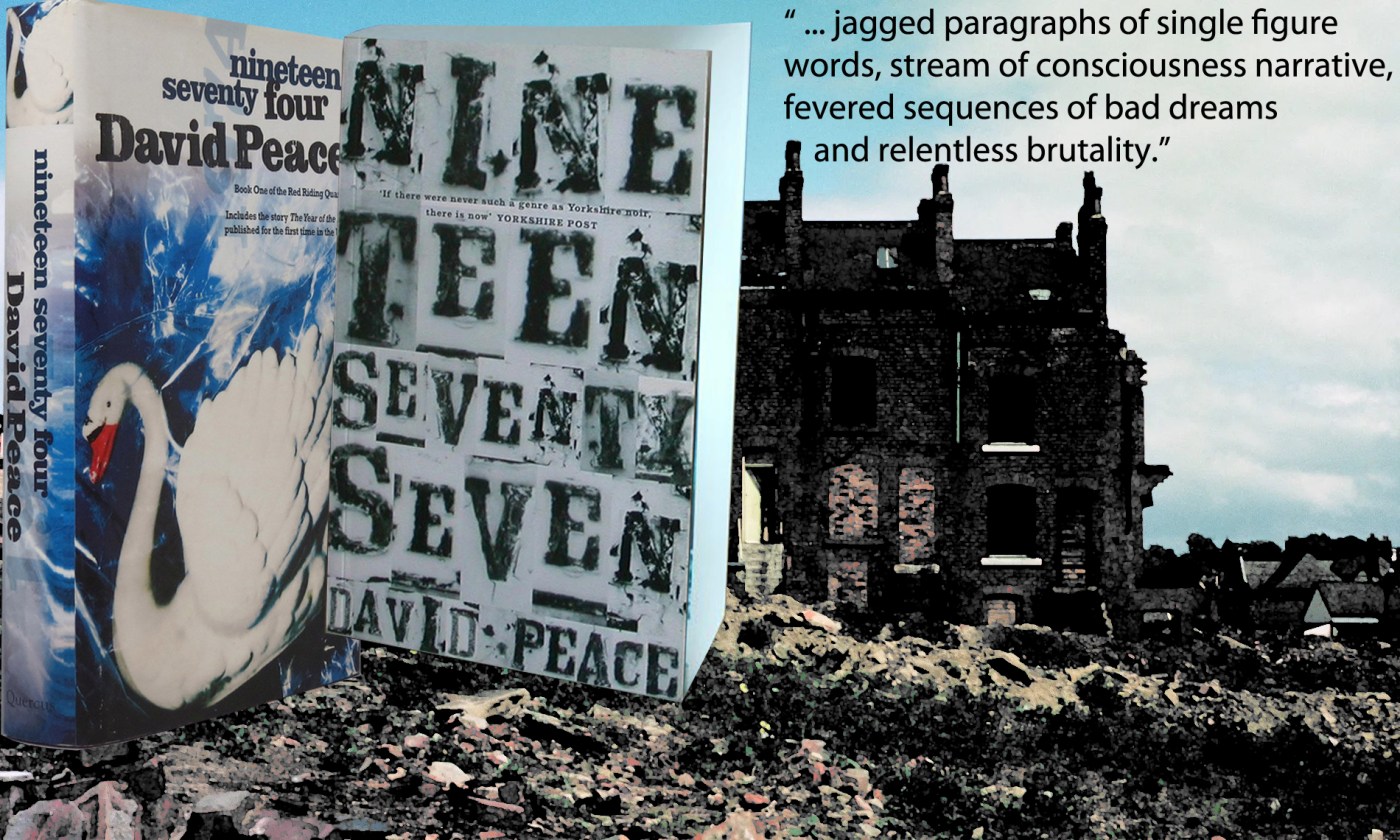
PAST TIMES – OLD CRIMES . . . 1974 and 1977 by David Peace

Screen Shot 2023-05-09 at 17.45.25

This occasional series of retrospective reviews seeks to ask and – hopefully – answer a few simple questions about crime novels from the past. Those questions include:
How was the book received at the time?
How does it read now, decades after publication?

OTOC header

Screen Shot 2023-05-09 at 20.02.45

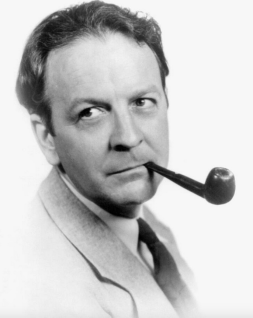
I have departed from the usual format by examining two books, published in 1999 and 2000 by Serpents Tail. They were the first two in a quartet of novels by David Peace (left), which have come to be known as the Red Riding Quartet. The books are set in West Yorkshire, and each references real criminal events of the time

1974 is set in a bleak December in Leeds. Edward Dunford is the crime correspondent for a local paper which publishes daily morning and evening editions. He is keen to make his mark, but is overshadowed by his more experienced predecessor, Jack Whitehead. Mourning the recent death of his father, Dunford covers the abduction of a schoolgirl, Clare Kemplay, whose body is later found sexually assaulted and horrifically mutilated. Wings, torn from a swan in a local park, have been been crudely stitched to the little girl’s back. Dunford is convinced that the killing is connected to earlier missing children, but then his search for answers becomes tangled up with crooked property dealers, blackmail, corrupt politicians and a dystopian police force. Dunford receives several graphically described beatings, there is violent, joyless sex and, in almost constant rain, the neon-lit motorways and carriageways around Leeds and Wakefield take on a baleful presence of their own.

Screen Shot 2023-05-09 at 20.04.301974 was praised at the time – and still is – for its coruscating honesty and brutal depiction of a corrupt police force, bent businessmen who have, via brown envelopes, local councillors at their beck and call in a city riven by prostitution, racism and casual violence. In a nod to a real life case David Peace has a man called Michael Myshkin, clearly with mental difficulties, arrested for the Clare’s murder. It is obvious that this refers to the ordeal of Stefan Kiszko (right)  – arrested, tried and convicted for the murder of Lesley Molseed in 1975. He remained in prison until 1992, but was then acquitted and released after the case was re-examined.
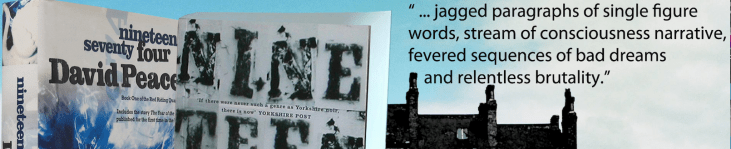
1977 is a re-imagining of the how the Yorkshire Ripper murders began to imprint themselves on the public’s imagination, and baffle police for many years. It is the early summer and we are reunited with many characters from 1974, including Jack Whitehead, DS Bob Fraser and several of the senior police officers who made Eddie Dunford’s life a misery. Apart from the obvious mark of Peace’s style – jagged paragraphs of single figure words, stream of consciousness narrative, fevered sequences of bad dreams and relentless brutality, there are other thematic links. Eddie Dunford’s father has just died, shriveled to a husk by cancer; Bob Fraser’s father in law is just days away from death from the same disease. Both  Whitehead and Frazer have their sexual demons, and in Fraser’s case it is a prostitute called Janice who he first arrested, and then became transfixed by. She is murdered, and he is arrested.

When straightforward narrative clarity is abandoned in favour of literary special effects, the downside is that it is sometimes hard work to know who is imaging what. Someone in 1977 is referencing the Whitechapel murders of 1888 and, in particular, the destruction of Mary Jane Kelly in Millers Court. Likewise, someone is using the slightly artificial jollity of the Queen’s Silver Jubilee as a sour counterpoint to the carnage being inflicted on the back streets of Leeds. The novel ends inconclusively, but it seems that both Whitehead and Fraser become the victims of their obsessions.

Screen Shot 2023-05-11 at 21.08.47

It is worth looking at the chronology of what I call ‘brutalist’ crime fiction (aka British Noir). The grand-daddy of them all is probably Jack’s Return Home, (1970) later re-imagined as Get Carter, and featuring corrupt businessmen, although there is little or nopolice involvement. This was Ted Lewis’s breakthrough novel, but aficionados will argue that his GBH – a decade later – is even better. 1974 and 1977 are explicit, bleak and visceral, but we would do well to remember that I Was Dora Suarez, the most horrific of Derek Raymond’s Factory novels, was published in 1990, and featured a similar leitmotif to 1974 – that of wounds, pain and suffering. To revisit IWDS click the link below.

https://fullybooked2017.com/tag/i-was-dora-suarez/

Screen Shot 2023-05-11 at 21.11.52

As compelling as these two novels are, David Peace wasn’t exploring ground unvisited by earlier writers. Tastes and descriptions in crime fiction are all relative. Val McDermid’s excellent Tony Hill/Carol Jordan novels were lauded as visiting dark places where other writers had feared to tread, but they were relatively mild, at least in terms of gore and viscera. Great stories, yes, from a fine writer, but not exactly pushing boundaries. Given the free use of vernacular words to describe ethnicity and sexual preferences, had Peace’s novels been submitted by an unknown writer in 2023, it is improbable that the books would see the light of day, given the cultural eggshells on which mainstream publishers seem to tiptoe.

Final verdict? I’ll answer the two questions I posed at the top of this piece. Firstly, the contemporary reactions were pretty enthusiastic, and included, from Time Out (remember that?):
“The finest work of literature I’ve read this year – extraordinary and original”
The Independent on Sunday enthused:
“Vinnie Jones should buy the film rights fast!”
The Guardian offered:
“A compelling fiction – Jacobean in its intensity.”

They
are not wrong about the books, but I suspect that the soundbites were from reviewers who perhaps did not have a very great overview of what had gone before. As for how they read these days, I came to them new, via a Christmas present from my son, and they certainly grab you by the throat. I read both books in two days but did I care very much about what happened to Eddie Dunford, Jack Whitehead or Bob Fraser? Not much, to be honest. The Aeschylean/Shakespearean view of a tragic figure is that he/she is someone who is basically a decent person brought low by a combination of fate and accident. For me, Eddie, Jack and Bob might have appeared to tick the first box, but actually didn’t. The two later books in the quartet were published in 2001(1980) and 2002 (1983) so they fall outside this remit. As for Vinnie Jones buying the film rights, the books were filmed as a trilogy, more or less omitting 1977 altogether. They were broadcast in March 2009.


TWIST OF FATE . . . Between the covers

tof001

The story begins with a violent prelude in an English country churchyard. It is dark, cold and damp, Thomas Gray’s “rugged elms” are almost certainly present, and his “rude forefathers of the hamlet” still sleep beneath their headstones, but there is little else elegiac about the scene. A couple, married – although not to each other – are using the sexton’s shed for sex. Then something awful happens. How this links to the main narrative of the book is not made clear until much later.

In another place – a prestigious building in central London – we meet a brother and sister. They couldn’t be more different, Claudine Cadjou is a well-known political lobbyist, used to schmoozing the media and well-versed in the dark arts of the professional publicist. She is suave and chic. Her brother Jethro looks like a madman. His clothes are one step up from rags. He is dirty and unkempt. His home, if such it can be called, is a semi derelict farmhouse in the Lincolnshire fens. He is basically ‘in care’ with Claudine paying his neighbours to make sure he doesn’t starve. Once, he had a brilliant mind, but it has all but been destroyed by psychotic episodes linked to substance abuse. While talking, Claudine is fighting a battle between embarrassment at her brother showing up on her turf, and her love for  this wreck of a man. Then her discomfort turns to terror when an unknown man storms into the atrium of the building and stabs Jethro to death.

The man who killed Jethro has just committed several other atrocities nearby. More people are dead, and several not expected to survive. At this point we meet a London copper, DS Benny Dean. Another soul  – another torment – but of a different kind.  His wife of many years is also a copper, but she has risen through the ranks and now she is a Chief Superintendent. And she wants a divorce. Like Claudine, she is sophisticated, cultured and  ambitious. Even her name has changed from homely ‘Fran’ to the media chic ‘Cesca’  Benny has tried his best, put his career on hold while hers prospered, but now she wants out. And the cruelest irony of all? As police are mobilised to investigate the murders, Benny’s wife is put in charge of the investigation, and he has to remember to use the word ‘ma’am’ when phoning in reports.

Benny and his partner DC Helen Savage, and, separately, Claudine, travel to Lincolnshire to investigate Jethro’s’s recent history. At this point it is worth reminding readers about the fens, their geography, their place in literature, and the social history of the area. First, a geological distinction; low lying areas which were once under fresh water are known as fens, while areas reclaimed from the sea are, more properly, marshland. One of the great crime novels in history, The Nine Tailors, was set in the fens (well known to DL Sayers from her days as a rural rector’s daughter) while Jim Kelly’s Philip Dryden series takes place in and around Ely. Graham Swift’s Waterland deals entirely with the darker aspects of fenland history, while John Betjeman wrote a deeply scary poem called A Lincolnshire Tale, wherein a traveler encounters a spectral vicar who still rings the bells in his abandoned church.

“The remoteness was awful, the stillness intense,
Of invisible fenland, around and immense;
And out on the dark, with a roar and a swell,
Swung, hollowly thundering, Speckleby bell.”

I live in the fens and, to this day, there is an insularity about the remote villages and a lingering sense of suspicion about outsiders which I have never encountered anywhere else in England.

Body text 2

Looking back on my previous reviews of David mark’s novels, I see that I have – more than once – likened his work to that of Derek Raymond, I won’t labour the point, but Benny Dean is a 21st century version of Raymond’s valiant but tormented nameless sergeant. Death stalks this book like some hideously deformed entity in an MR James ghost story; it is superbly written, but not for the faint hearted. Twist of Fate is published by Head of Zeus and is available now. For more by DL Mark (writing as David Mark) click the author image below.

Screen Shot 2023-02-23 at 18.44.35

THE LONG KNIVES . . . Between the covers

LOng Knives header005

Irvine Welsh introduced us to Edinburgh detective Ray Lennox in Crime, but it has taken fourteen years for the second in the series – The Long Knives – to emerge. The title is not a metaphor, as the opening chapter describes the castration of a rather unpleasant Conservative MP in an empty warehouse in Leith.

There is no shortage of people who might have wanted Ritchie Gulliver dead. They range from political opponents, via victims of his predatory sexual habits, to activist groups he has offended. Lennox is given the case, and is immediately alerted to a recent incident in London which sounds similar. Home Office civil servant Christopher Piggott-Wilkins has been attacked in the Savoy Hotel. He managed to escape, badly wounded, and immediately transferred himself to a Harley Street hospital, after which what occurred in his suite has been cleaned up, both literally and metaphorically, by un-named but powerful agencies. Piggott-Wilkins has been left with one testicle, while Gulliver’s complete ‘package’ was discovered, draped from the Sir Walter Scott memorial, by an unsuspecting tourist.

After a lighting trip to London to speak to Mark Hollis, the larger-than-life Met copper investigating the Savoy case, Lennox returns to Edinburgh to face a sea of troubles. His fiancee Trudi not only seems to be ignoring his calls, but may have another love in her life. A former colleague, Jim McVittie, has transitioned to female, but has been found horrifically beaten up and is not expected to survive. Before the assault, Lennox meets one of the more ‘in your face’ transexuals in the local scene:

“What appears to be a brawny young man of around six foot four in a blue dress not so much enters as bulldozes in, a charged storm of bristling rage. He has a big hooked nose, and long flowing brown hair, which seems to have been given the attention of crimping tongs fashionable in the eighties. On his face a long scar bubbles thickly from under a  trowelling of foundation.”

An investigative journalist has tipped Lennox off that the two cases may be linked to a serious sexual assault at a ski resort some years earlier, and that high class prostitutes – and the men who run them – may be involved.

TLK author

Readers familiar with Welsh’s style over the years will recognise his trademarks, including the unpunctuated rapid-fire dialogue, the demi-monde of drugs, violence, sex and alcohol, and the underpinning ground-bass that tells us it’s an us-and-them world. There is even a passing reference to the most infamous of the author’s creations, Francis Begbie.

One of the more memorable characters in the drama is the brilliantly over-the-top Mark Hollis. He is more redolent of the glory days of The Sweeney than the current fashion of dancing the Macarena at Gay Pride marches. Hollis provides valuable information to Lennox, and slowly but surely the Edinburgh cop connects the pieces of the jigsaw. The picture that emerges is a chilling one. The killings are the work of a partnership. The man is linked to an act of random cruelty some years previously in Tehran, while his female partner is, indeed, seeking revenge for her abuse in a ski-lift gondola, but when her identity is revealed, Lennox is beyond shocked.

Welsh brings us horrific violence, but also the dark poetry of compassion. I can only liken Ray Lennox’s desire to avenge the murder victims whose suffering is imprinted on his soul, to Derek Raymond’s nameless Sergeant in books like I Was Dora Suarez. This is a magnificent work of fiction, not just a good crime novel. It is published by Jonathan Cape and will be out on 25th August.

Blog at WordPress.com.

Up ↑