
Search

fullybooked2017

Tag

Noir

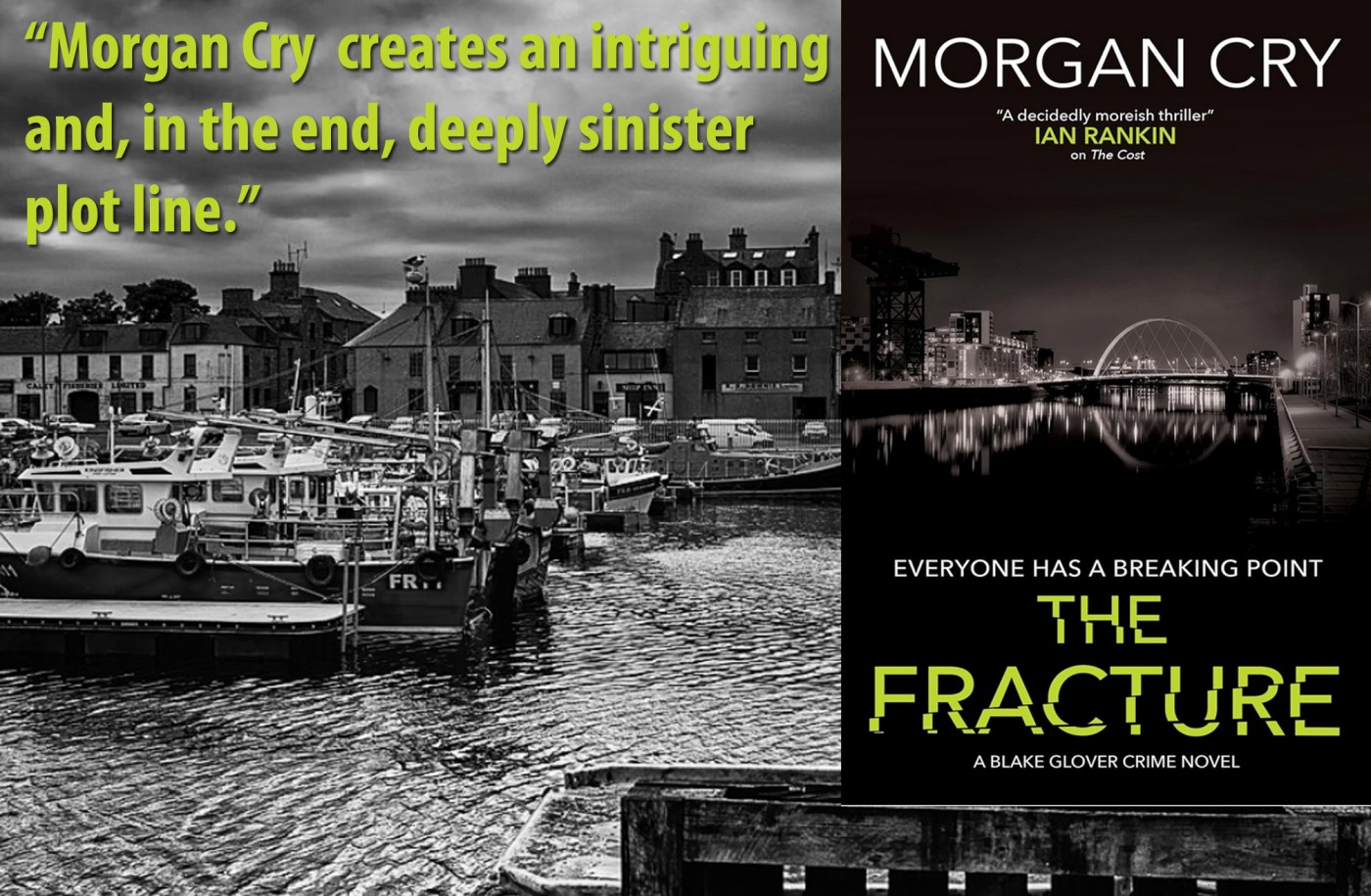
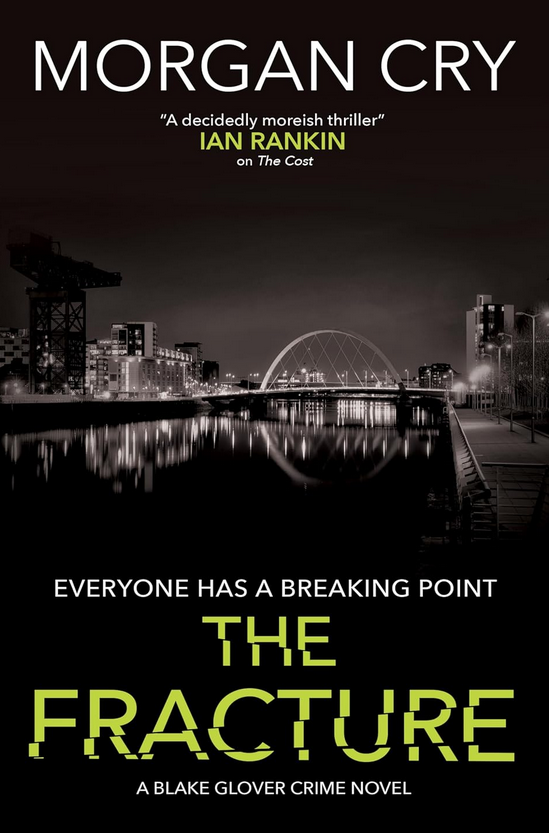
THE FRACTURE . . . Between the covers

Blake Glover – BG to his friends – is a fifty-something taxi driver in his home town,the bleak fishing port of Fraserborough on Scotland’s north east coast. In a former life he was a police officer on the mean streets of Glasgow. His career ended after a messy attempt – involving planted evidence – to bring drug boss Mitch Campbell to justice. Now, Campbell has been arrested and tried, legitimately, and is awaiting sentence in Glasgow’s notorious Barlinnie prison. Glover is about to find out that Campbell has long reach, despite his incarceration.

The book begins, however, with a dramatic and, apparently, unconnected scene. Out on the desolate Fraserborough shoreline, a homeless alcoholic guzzles his last few mouthfuls of ‘Buckie’ (Buckfast tonic wine) but sees something perturbing out there in the darkness. A man has has walked out onto the beach, taken off his clothes, shoes and socks, and walked out into the white horses of the tide. The drunk staggers towards the beach calling out, but he is too late; the man has disappeared. The strange event has a temporarily sobering effect on the drunk, and he returns to the town and reports what he has seen.

Meanwhile, attending the funeral of an elderly lady he knew from childhood, Glover notices something disturbing. In the teeth of a furious and drenching storm, one of the pallbearers loses control of his rope lowering the coffin into the grave. That corner of the coffin thuds into the earth – and splits. The gravediggers in the mini JCB furiously pile the earth on top of the coffin before Glover can investigate, but he drives away from the churchyard trying to make sense of what he saw. He learns that in the darker corners of the funeral business it is not unheard of for relatives to order and pay for a top of the range oak coffin, only for the corpse to be switched to a more fragile plywood version at the last minute.

The man on the beach left his wallet with his clothes and has been identified as Ray Cocklestone, a former local farmer. He is classed, at least for now, a missing person, but few locals think it will be long before he is declared a suicide. Glover is interviewed by the police, as he may have been one of the last people to have talked to Cocklestone, having taken him in his taxi from his home to a local pub.

Morgan Cry (pen name of Gordon Brown, but no, not that one) creates an intriguing and, in the end, deeply sinister plot line which links the mystery of the splitting coffin and the disappearance of Ray Cocklestone with the truly dreadful things that take place courtesy of The Dark Web and the anonymity it gives its users. The Mitch Campbell storyline develops separately, and is one which comes to threaten not only Glover’s relatively modest current career, but his freedom and, perhaps, his life itself.

There are two central characters in the novel. One is the flawed, but likeable Glover. His lifestyle is certainly destructive, at least from a dietary point of view. He exists on industrial quantities of service station pasties and Mars bars, washed down with copious draughts of that peculiar Scottish delicacy, Iran-Bru. His taxi driver life is a miasma of unwashed passengers and the sickly scent of yet another air-freshener dangling from the rear view mirror. The other imposing presence in the book is Fraseborough itself. The town is frequently battered by the storms swirling in from the North Sea. The reluctant hedgerows and trees dolefully wear their permanent Christmas decorations of discarded plastic bags and wrappers from last night’s fish supper. The pubs, the houses, the leisure centres and the rain washed supermarket car parks are all bleak enough, but the people of the town are lovingly painted for the most part, with their impenetrable Aberdeenshire accents and their abiding love of gossip. The Fracture will be published by Severn House on 4th November.


HOME BEFORE DARK … Between the covers

November 1967, Iceland. Fourteen year-old Marsi has a secret pen pal, a boy who lives on the other side of the country – but she has been writing to him in her older sister’s name. Now, she is excited to meet him for the first time. But when the date arrives, Marsi is prevented from going, and during the night, her sister, Stina, goes missing. Her bloodstained anorak is later found at the place where Marsi and her pen pal had agreed to meet. No trace of Stina, dead or alive, is ever found.

The narrative jumps backwards and forwards  between 1967 and 1977, the 1967 voice being that of Stina and the 1977 voice belonging to Marsi.  Marsi receives a letter purporting to be from her pen pal of ten years earlier and, when a Danish au pair is found dead by the roadside (apparently from exposure) another letter addressed to Marsi is found on the body.

If you wanted an archetypal Nordic Noir novel, this certainly ticks all the boxes. The unrelenting climate and landscape dominate everything; angst, suspicion, nightmares, neuroses and dark thoughts combine to make a vast umbrella which keeps out anything remotely humorous or optimistic. Marsi dreams:

“Not long afterwards, I drifted off to sleep. For once, I dreamt about Dad. Dreamed he came and sat on my bed, stroked my cheek and gazed at me with staring, deep-set eyes.But every time he opened his mouth to speak, I heard the croaking of a raven.”

One of the problems the reader may face as regards working out what is going on, is that Marsi is, to put it mildly, a rather disturbed young woman. Some might say that she is as mad as a box of frogs, but how reliable a narrator is she? Is her memory warped by trauma? I should remind readers that the book consists of two first person accounts of events, that of Marsi and that of Stina. This, of course, raises the technical dilemma of Stina’s account. Because she is telling us what is happening in the winter 0f 1967, are we to assume that she is still alive? It is not quite such a conundrum as that of Schrödinger’s Cat but, outside the realm of supernatural fiction, the dead cannot speak.


Eva Björg Ægisdóttir (left) gives us few clues as to the fate of Stina until a violent denouement finally reveals the truth, but before that happens we are drawn into the mystery of a reform school for girls thought to be wayward – think of an Icelandic version of the Magdalene Laundries – and, in particular the fate of one young woman suspected of having a ‘special relationship’ with an American soldier. There is certainly an air of perpetual darkness about this book, which has all the aspects of a particularly unpleasant nightmare from which, despite your having reached out and turned on the bedside lamp, and no matter how many times you blink or shake your head, you simply cannot wake up and leave behind. Home Before Dark was translated by Victoria Cribb and was published by Orenda Books on 17th July.


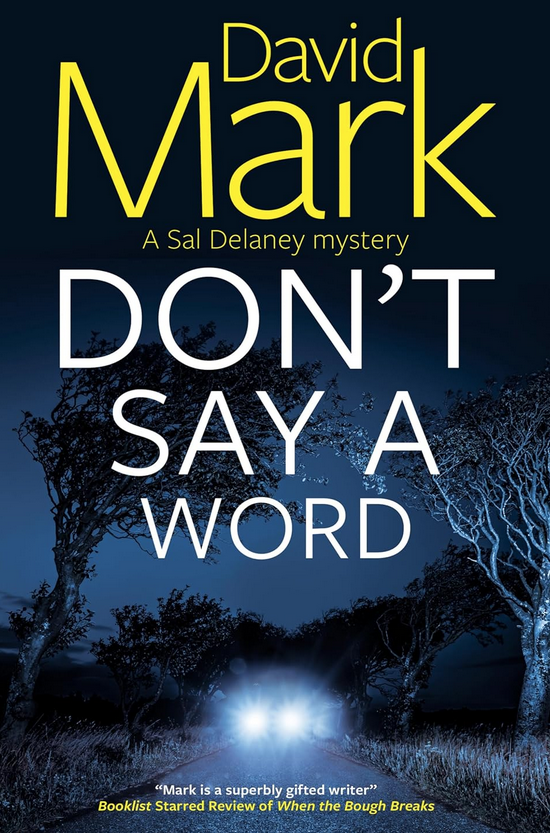
DON’T SAY A WORD . . . Between the covers

Cumbria traffic cop Salome ‘Sal’ Delaney has a startling back-story, which you can speed-read by checking my review of the previous novel, When The Bough Breaks. Now, we have a mysterious prologue which seems to describe a man being buried alive, but then Sal is called out on a bleak and rainy night to discover why a 4×4 has swerved into an unforgiving dry stone walk out in the middle of nowhere. The past hangs over this narrative like a pall, forcing the reader to be very careful about distinguishing between then and now.

Former drama student Theo Myers has spent an age in prison for a murder he did not commit. Now, finally, he is free of his prison walls, but shackled to a life of uncompensated poverty and a society that views him with suspicion. He reconnects with someone from his past, former policeman Wulf Hagman, who has also spent long years in jail.

Sal’s road accident takes a bizarre turn. The driver of the 4×4 swears he swerved into the wall to avoid what he calls a ‘zombie’. 4×4 man Sycamore Le Gros is stone cold sober but, hearing unearthly noises in a thicket beside the road, Sal discovers a stricken creature, whose state justifies the description Le Gros has given.

We are reunited with Detective Superintendent Magdalena Quinn, a police officer nicknamed The Succubus by male colleagues. She is certainly the embodiment of evil, devious, beautiful, manipulative and corrupt. If you are a Thomas Hardy aficionado, think Eustacia Vye, but with the moral compass of Lucretia Borgia.

The ragged, undead thing with horror in his eyes that Sal discovered in the undergrowth now has a name – Mahee Gamage, a solicitor of Sri Lanka origin, last known to be living in a village near Middlesbrough. The case takes an even more sinister turn when Sal learns that Gamage was the duty solicitor on the fateful night that Theo was arrested, and it looks probable that the advice he gave the young man was fatally flawed.

David Mark, like a cat with a mouse, enjoys playing games with his readers. As Mahee Gamage hovers between life and death in his intensive care bed, it seems clear that he was captured, imprisoned and brutalised because of his incompetence in representing Theo Myers. Was the culprit Theo himself, his obsessive mother Tara, or maybe her second husband Alec, the campaigner with his hatred of the British establishment? Perhaps it was joint enterprise? Or is Gamage’s torturer someone completely from Left Field? Further evidence, if any were needed, that the ambience of this novel is not sun dappled Cotswold limestone, thatched cottages and Inspector Barnaby, comes by way of an examination of the contents of Mahee Gamage’s stomach where the investigators find clear evidence of partially digested human flesh. Like Aector McAvoy, David Mark’s other memorable character, Sal Delaney frequently has to face a world of almost unfathomable moral blackness, and it is only her own spiritual integrity which enables her to survive. Don’t Say A Word is compulsive, dark – and sometimes extremely graphic. It is published by Severn House, and  available now.

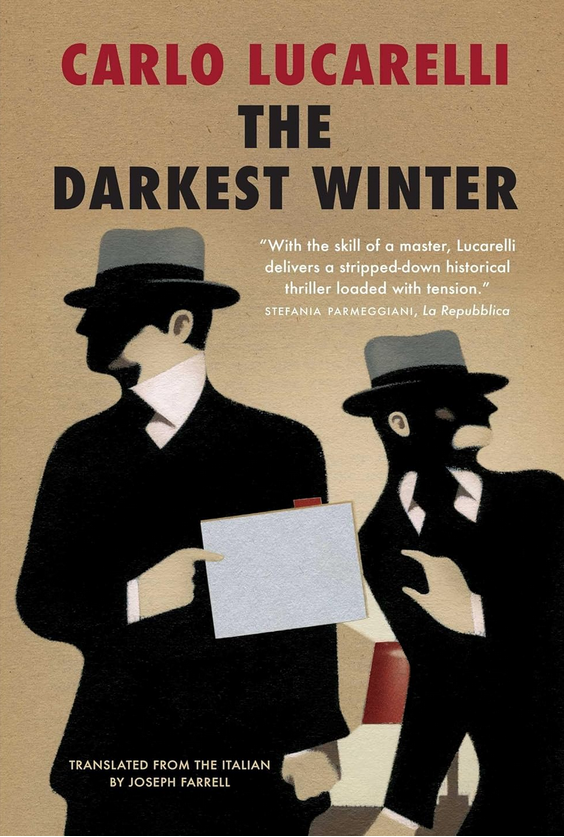
THE DARKEST WINTER . . . Between the covers

Bologna, northern Italy, November 1944. The introduction to this excellent novel explains the political situation in more detail but, in a nutshell, Italy is divided. The provisional ‘free’ government has surrendered to the Allies who are, painfully, fighting their way north up the spine of the country. Most of Italy – including Bologna – is still under German control. The city, with its ancient churches, porticos and squares, now resembles a giant farmyard. Rural villages around the city have now moved in, bringing livestock and farm carts full of straw and root vegetables.

Bolognese copper Comandante De Luca has three murders to investigate. The three dead men giving De Luca a headache are: Francesco Tagliaferri, in life an engineer, in death just a corpse with a shattered head, slumped against the column of a portico in Via Senzanome; Professor Franco Maria Brullo, of the city’s Faculty of Medicine, shot dead through the eye; most problematic, given the Germans’ penchant for violent retribution, is the corrupted body of a minor SS functionary, Rottenführer Weber, found floating in a flooded cellar. The latter is key, as if De Luca doesn’t solve the killing of the SS corporal the Nazi authorities will execute ten random Italian prisoners pour encourager les autres {or its equivalent in Italian.

As Caliban said, “The isle is full of noises,” and among the ‘noises’ to disrupt the lives of Bologna’s citizens are The Black Brigades (ultra violent fascist volunteers), the Bodogliani (left wing partisans loyal to the the King) and activists with all manners of allegiances in between. Rather like Philip Kerr’s immortal Bernie Gunther, De Luca tries to be a decent copper with his left hand tied behind his back and the fingers of his right holding his nose against the stench of corruption.

Parts of Bologna resemble a nightmare visualised in a Bosch painting. A young man in a derelict theatre – where shattered families are trying to rebuild their lives in the boxes once patronised by wealthy theatre-goers,  faces Deluca. When challenged for his identity, he says,

“What do you want to see? My military rank? My exemption from labor?” He beat his hand on his shoulder and grimaced because he must have hurt himself. “Here are my documents. This,” he shook the empty sleeve, “I left in Russia. And what I am wearing,” he held the flap of his coat, “is all I have left.”

The Bologna winter is certainly dark, but Lucarelli’s prose renders the shattered city with the inky blackness of a genuine Noir novel.

“There was in the air the scent of old smoke, ashes and wet filth which Bologna always had during that year and a half of war. Damp and sticky in summer, dry and biting in winter. The stench of boiled cabbage and burnt oil, of urine and excrement, sweat and dust, cold and coarse like rusted iron.”

While reading this, my mind strayed to Joseph Heller’s Catch 22. Not only was Bologna the target for Yossarian’s squadron but, towards the end of the book, a cold wind blows away the buffoonery, and we are left with the blacked out streets, and the grim murder of the maid Michaela, by the psychopathic navigator, ‘Aarfy’ Aardvark.

Lucarelli gives us a labyrinthine plot and a reassuringly fallible central character, who makes many mistakes and wrong calls as he searches for the truth. Reassuringly, there is also a full glossary explaining the multitude of different factions and splinter groups which made up the Italian political landscape in 1944. Bizarre though it sounds given their brutality, the Wehrmacht and the SS give a sense of relative unity to what was, otherwise, chaos.

This novel follows on from three earlier books, known as the De Luca trilogy, consistg of  Carte Blanche (it: Carta bianca, 1990), The Damned Season (it: L’estate torbida, 1991), and Goose Street (it: Via Delle Oche, 1996). The Darkest Winter, translated by Joseph Farrell, is published by Open Borders Press/Orenda Books, and will be available on 22nd May. For an Englishman’s view of a very different Italy, a few months earlier than Lucarelli’s story, you should read There’s No Home by Alexander Baron, where we join a British unit in the south of the peninsula, not long after the Germans had retreated to their defence lines further north.

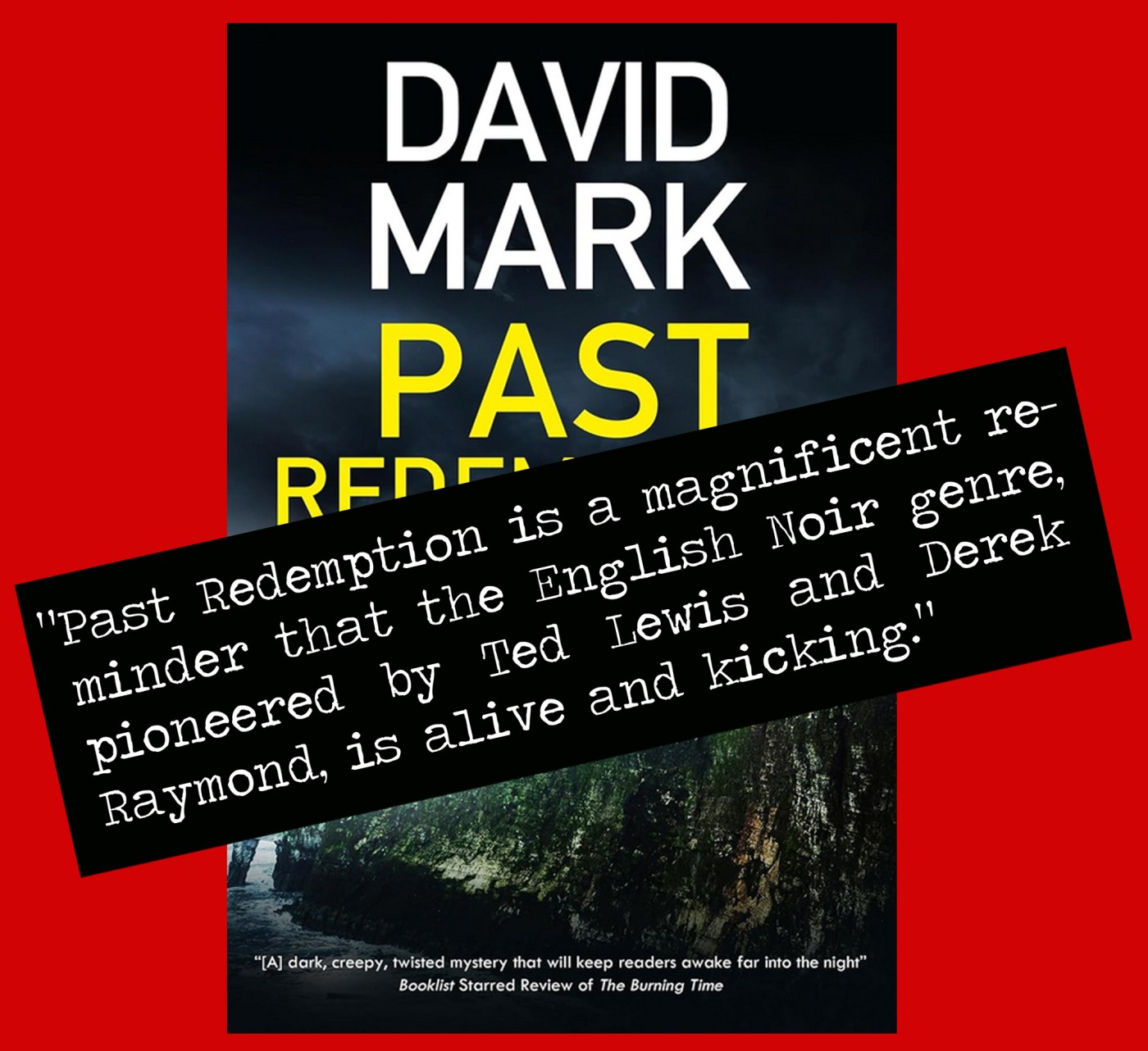
PAST REDEMPTION . . . Between the covers

PR feature

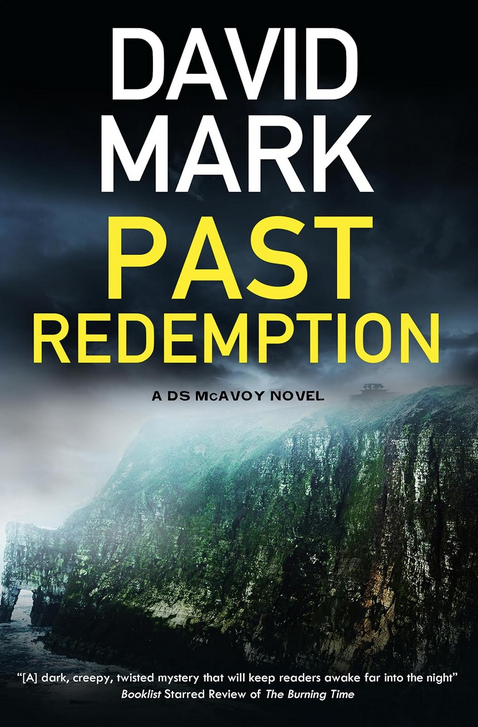
The new Aector McAvoy novel by David Mark begins with a bloodbath. A man is being literally ripped to pieces with the savagery torturers used to flay saints in medieval times. Just as it seems the victim is done for, someone comes to his rescue, in the shape of a small but fierce woman. We soon learn that the tortured man is Decland Parfitt who would, after he made an almost miraculous recovery, be jailed for child sexual abuse. His rescuer? Aector McAvoy’s long time boss, the formidable Chief Detective Superintendent Trish Pharaoh.

The story actually begins with a man driving in the pouring rain along a remote minor road in East Yorkshire. The driver, a man named Joe, is getting an ear-bashing from his ex-wife – who is on speaker phone – over the way he has let their daughter down. Distracted by her tirade and with the windscreen misting up, he feels a large bang, and knows he has hit something. When he gets out of the car he sees what appears to be a large black bag lying in the road. Rapidly calculating that there will be no cameras nearby, he gets back in the car and drives off. The bag is later found to contain a body – that of John Dennic, jailed for a savage assault on a police officer, and an acquaintance of Parfitt in prison. Dennic had been on day release when he went missing.

Parfitt was an arch-deceiver. He brought fun and laughter to countless youngsters across the region as a children’s entertainer. Dressed rather like Lofty in It Ain’t Half Hot Mum, he was everyone’s favourite uncle, with his jokes, his performing animals and his sunny disposition. He was a single man, but that rang no alarm bells with the local authorities when he applied to be a foster parent to two damaged sisters. Incredibly, his request was granted. One of the girls, Gaynor, suffered such abuse at his hands, that she later committed suicide. Younger sister Ruby, however, adored her foster dad and swore on oath that Gaynor was in a state of drug induced delusion.

Trish Pharaoh has two major problems to deal with and, by definition, they become McAvoy’s too. It seems that the prison authorities are determined to release Parfitt from prison, and Pharaoh needs to stop this. Second, she needs to disturb Ruby’s deep conviction that her foster father is a decent man who was wrongly convicted. Pharaoh is also convinced that Parfitt was also responsible for the abduction and murder of at least two girls, whose bodies have never been found.

The cast of villains in many of David Mark’s novels resemble the creations of the great Dutch painter Hieronymus Bosch. Bosch was obsessed with the darker side of humanity, and if you take a magnifying glass to his paintings, you can see tormented individuals, scurrying this way and that in the hellish landscape in which the painter has placed them. Bosch painted a figurative mouth of Hell, a gaping maw into which humans are sucked. Mark’s villains, such as Parfitt and Dennic are consumed by a metaphorical hell created from their own misdeeds. This is dark stuff, and not for the cosy crime community. Past Redemption is, however a fierce and gripping tale of evil deeds committed against the grey and dreary background of a city once vibrant with the noise and smells of its fishing industry, but now reduced to a backwater trying to celebrate what it once was.

The novel plays out with dramatic revelations of people who have pretended to be one thing, but were something else entirely. It is no coincidence that the man who nearly killed Parfitt, and may have killed Dennic has the nickname Virgil. David Mark himself plays Dante’s Virgil, as he leads us through Purgatory and Hell, contrasting his monstrous villains with McAvoy who, although, a physical giant, is gentle, endearingly clumsy, but fiercely brave. Past Redemption is a magnificent reminder that the English Noir genre, pioneered by Ted Lewis and Derek Raymond, is alive and kicking. The novel is published by Severn House and will be available on 3rd December.

Screen Shot 2024-11-10 at 20.06.33

REDEMPTION . . . Between the covers

Redemption header

Young Joshua Moore loved rabbits and hares. He had pestered his mom and dad – Evelyn and Tobias – for a pet, and so they bought him a white rabbit. The family had only just moved from London to San Diego, and the rabbit in its hutch mesmerised the nine year old boy. Reluctantly, because they were only just finding their USA feet, Evelyn and Tobias allowed Joshua to go away on a school camp in the nearby desert. On arriving, Joshua had seen a desert hare and, as darkness fell, it appeared again in the moonlight. Chasing it to get a closer look, and running across the highway, Joshua was struck by a car and killed instantly. The driver of the car didn’t stop.

Evelyn spends the next eleven years brooding over her son’s death, and plotting revenge. We get an early indicator which reveals her mindset:

“I spent a whole month in bed after the funeral, listening to the rabbit we’d bought for him hopping around in its hutch on the other side of the window. The rustling of the sawdust. The chomping and crunching of the vegetables. I lay there for a month loathing it, it’s mere existence feeding my rage until it was a living, breathing thing, for bigger and stronger than me. When I finally got out of bed, the first the thing I did was stride towards that hutch and snap the rabbits neck. It never did get a name.”

Driving the car was Aaron Alexander. a young, gay, drug-addicted drifter. He was traced, tried, and jailed. Now, eleven years later, he is out of prison, and scratching a living as a pump attendant at a gas station in Beatty, Nevada. Evelyn, with Tobias a reluctant passenger, gets in the car and heads for Nevada. Among minimal clothes changes and toiletries in her bag are a handgun, boxes of ammunition, rope, duct tape and a black canvas roll containing every variety of butchers’ knife. The relationship between Evelyn and Tobias has long since soured. She cannot bear his touch, and yet he clings on desperately, hoping she will someday emerge from her frozen state.

At the motel where they rest up for that first night, Evelyn does what she had obviously been planning for ages. While Tobias sleeps, she takes his wallet, cards, phone and shoes, and drives off into the early dawn. The remainder of the book is a hypnotic dance of death that plays out in cockroach infested motels, desolate gas stations miles from anywhere and the endless Nevada desert, where rapidly encroaching wildfires make the air sting. Very simply, Tobias is trying to get to Aaron before Evelyn can kill him, and it becomes a very bloody affair. Fans of dentist torture à la Laurence Olivier in Marathon Man mustn’t miss the scene where Evelyn, driven mad with toothache, removes the offending molar herself, with the help of a hammer, chisel and pair of pliers.

There is an ironic problem with the premise that Tobias’s main aim is to save Evelyn from herself, by stopping her from killing Aaron, because by the time they are grimly reunited,in a desolate former auto repair shop, she has already done enough damage to ensure that – always assuming that she survives – she will be put away for a very long time.

Redemption – noun, the action of saving or being saved from sin, error, or evil.

How apposite, then, is the book’s title for the three main characters? Perhaps it is for Aaron and Tobias. For sure, Aaron’s upbringing was tough, but his brother Chris survived, and it was Aaron being open about his sexual preferences which precipitated a slide into self pity and woeful lifestyle choices. By the end of the book, he has come through the firestorm of events with something akin to self-respect and moral courage. Tobias is more complex. He is the Hamlet of the piece, beset by doubt, a reluctance to act decisively and timidity in the face of Evelyn’s white hot anger. But he survives, and no-one comes out the other side of the horrific violence towards the end of the story a weaker person. Evelyn? For me, her ever increasing derangement puts her beyond any sense of redemption, but you must make up your own minds.

There was a termGrand Guignol – applied, retrospectively, to the blood-stained stage dramas of the Jacobean period and, in the twentieth century there was, in Paris, Le Théâtre du Grand-Guignol, which specialised in acting out scenes of horrific violence with spectacular special effects. Redemption certainly has elements of Grand Guignol, but it is a powerful novel which lays bare the dreadful things people will do to each other when they are – physically and emotionally – pushed beyond the limit. Published by Simon and Schuster, it is out today, 20th June.

WHEN THE BOUGH BREAKS . . . Between the covers

WTBB header

David Mark has taken a temporary break from his excellent Aector McAvoy series (click the link to find out more) and his latest novel has a prologue that is as violent and visceral as any of the disturbing scenes in Derek Raymond’s I Was Dora Suarez. If you have read that masterpiece, you will know what I am talking about. If you haven’t, then you should. Here, copper Wulfric Hagman wakes up in a charnel house, apparently of his own creation. His former lover, Trina Delany lies butchered on the bed, while he seems to have tried to hang himself with a length of baler twine.

That was then, but now, Hagman has served a prison sentence, been released, and is now living in a moorland farmhouse he gifted by Jarod, one of Trina’s children. His twin sister, Salome is also living there. She is a traffic cop, formally known,in today’s jargon, as Collision Investigation Officer. At Hagman’s original trial, both Sal and Jarod gave chilling evidence testifying to the abuse they – and the other children – received at Trina’s hands.

Against this unusual human background and with the Northumbrian hills carpeted in deep snow, David Mark weaves his magic. The plot is complex, but this is a breakdown of the main characters.

Salome Delaney, police officer.
Jarod Delaney, Sal’s twin. Now a farmer, living in a house signed over to him by …
Wulfric Hagman, former policeman, served a long prison term for the murder of Trina Delaney. He now lodges with the Delaneys.
Dagmara Scrowther, charismatic Children’s Services officer. Worked with the Delaney family.
Lewis Beecher, senior police officer, divorced. Has recently ended a long term relationship with Sal Delaney.
Barry Ford. Once a child tearaway, now relatively respectable. Former lover of Trina Delaney.
Detective Superintendent Magda Quinn. Has re-opened the Hagman case, believing him to be guilty of more murders.

With transport paralysed by deep snow, Salome – although on leave – receives a call from a fellow officer asking her to go and investigate a car that has come off the road just a couple of miles away. She clings on grimly as Jarod’s quad-bike makes light work of the snow drifts. She finds the wrecked car, but the macabre feeding habits of local crows lead her to a man’s body. Some of the crows who have fed on the corpse are collapsing and dying. The reason? The body has had acid poured into his throat.

This grim discovery sets off a train of events that are as violent and disturbing as anything I have read in recent crime fiction. I am a great admirer of David Mark’s writing, and I make no apology for frequently comparing his style to that of Derek Raymond. Like Raymond, Mark takes us into dark places where monsters – in human form – ply their trade. Like Raymond’s nameless Sergeant in the five Factory novels, Mark’s heroes are often gravely damaged, but have a depth of compassion that always brings about a sense of redemption at the end of the journey, no matter how hellish the road.

The body in the snow is eventually identified as being that of Barry Ford, a man who was a troubled youngster but, thanks to the perseverance of Dagmara Scrowther, seems to have turned himself into something of a decent citizen. However, when Salome, hastily drafted back to work as a Family Liaison Officer, has to break the news of Ford’s demise to his current girlfriend, she opens a Pandora’s Box from which fly demons of cruelty and bestial abuse. Also in the mix is the fate of Lewis Beecher’s divorced wife. She and her two daughters – Nola and Lottie – have a new ‘dad’. He seems jolly and full of jokes, but is he genuine?

In this superb novel we cross paths with many human monsters. Trina Delaney is one, certainly, and Barry Ford is not far behind. But a third monster lurks in plain sight. Its identity is known to me, but you will have to find out for yourselves. When The Bough Breaks is published by Severn House and is available now.

THE KITCHEN . . . Between the covers

kitchen spine039 copy

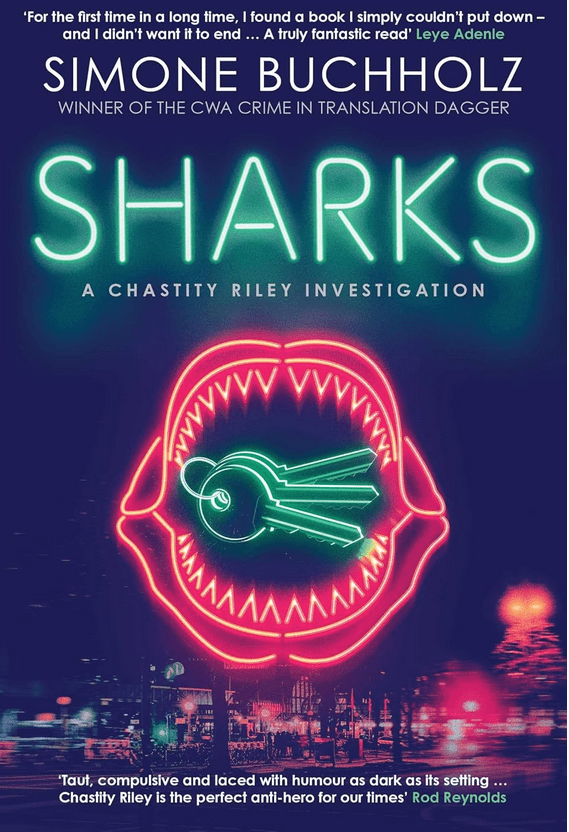
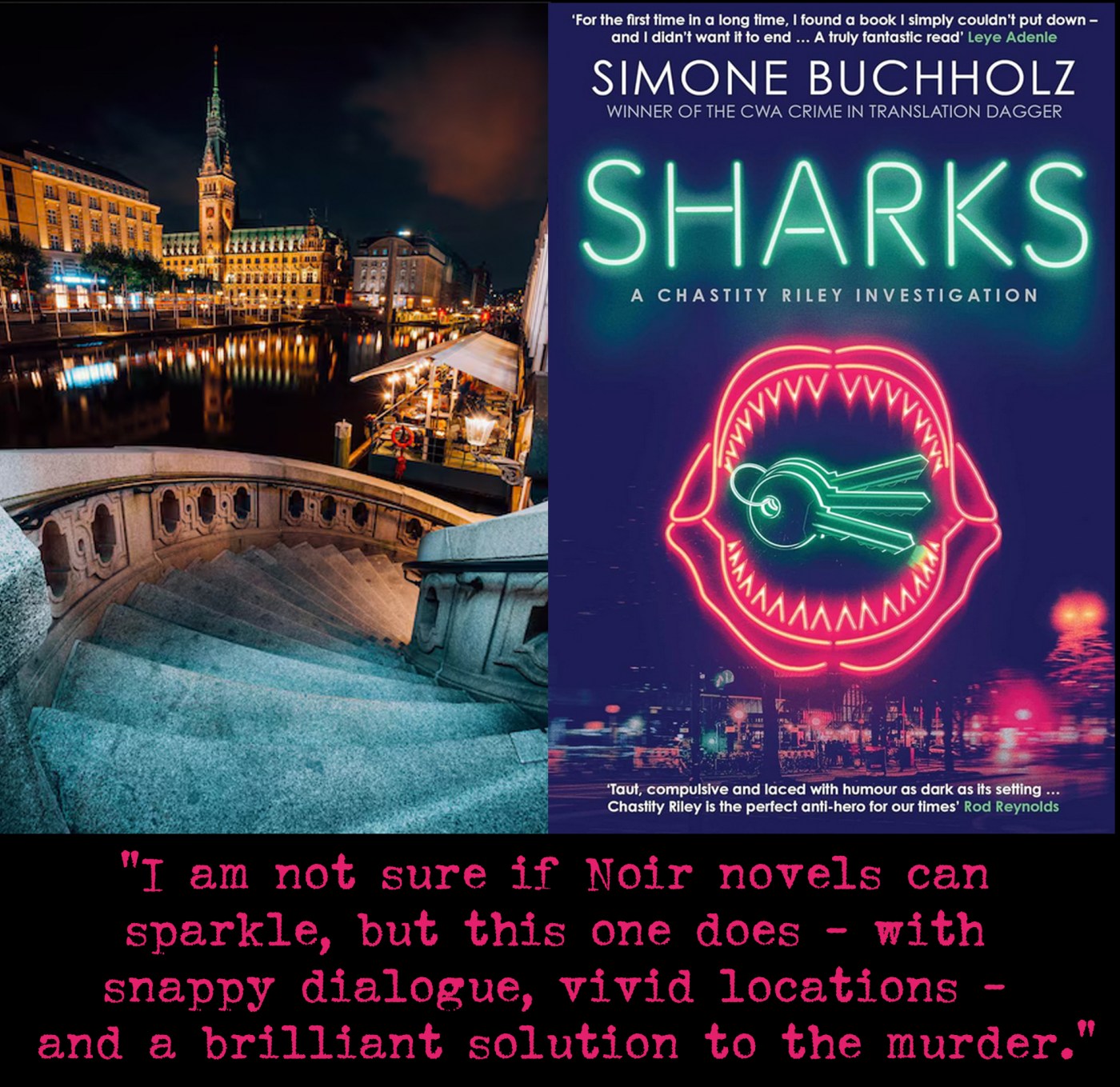
As her name suggests, Hamburg State Prosecutor Chastity Riley has American antecedents, but her work and life are both firmly centred in the German city that sits astride the River Elbe. Author Simone Buchholz leaves us pretty much to our own devices to imagine what she looks like, but we know she smokes, enjoys a drink or three, can be foul-mouthed, and has an on-off relationship with a chap called Klatsche.

From the word go, Buchholz drops a broad hint about what is going on, but Riley only finds out much later. Her immediate problem is that two packages of body parts have been recovered from the Elbe, disturbed by dredging. The men have – literally – been expertly butchered and the parts neatly wrapped up in plastic and duct tape. It turns out that the dead men have a history of serious abuse towards women, and a witness report suggests that two women are linked to the killings.

A third body is found, this one being intact, but Riley has another problem to solve. She has a friend named Carla, who runs a coffee shop and is a very important part of Riley’s life, fulfilling the dual function of sister and mother. When Carla is attacked and raped by two men, Riley becomes angry with the police’s apparent lack of urgency, but is powerless to intervene. As well as trying to solve the mystery of the Elbe packages she is central in a current court case where two people traffickers are on trial. Their business model was to travel to rural areas in places like Romania, and persuade young women that a glamorous lifestyle awaits them in Germany. The reverse is true, of course, and the girls are soon put to work in Hamburg’s notorious sex trade.

Events in Riley’s personal and professional life seek to be spinning out of control. First, thanks to the defence lawyers in the trafficking case successfully making out that their clients are really nice chaps who had traumatic childhoods, and who’ve just had a bit of bad luck recently, the smirking criminals get the lightest sentence possible. Then, she and Klatsche discover that Carla – with the assistance of a shady friend called Rocco – have done what the police failed to do, and have captured the two rapists. It is only with the greatest reluctance that Riley realises she must persuade Carla to hand the two men over to the police.

Screen Shot 2024-04-05 at 18.48.52

When, with a mixture of instinct and sheer luck, Riley identifies the two women responsible for the three earlier murders, her professional integrity is put to its sternest test. In some ways this is a very angry book and is centred on the evil that men do, particularly to women. It is obviously entirely appropriate to the tone of the book that much of it is set in the St Pauli district of Hamburg, an area that began its notoriety centuries ago as a place that provided entertainment for sailors. Its infamous Reeperbahn remains a living – and sadly prosperous – example of women being made into a commodity to please men. Despite her obvious anger, however, Buchholz (left) doesn’t moralise. Chastity Riley realises that Hamburg is what it is, and  if the needle of her moral compass occasionally swings in an unexpected direction, then so be it.

The Kitchen proves that a book doesn’t have to be 400 pages long to be effective. The prose is precise, spare, icy cool and as dark as ink. Simone Buchholz has serious style – in spades. The book was translated by Rachel Ward, published by  Orenda Books and is available now.

Screen Shot 2024-04-17 at 17.27.08

BASED ON THE BOOK BY . . . The Getaway

Getaway header

JT quote

Jim Thompson’s thriller was published in 1958, and it was first filmed in 1972. The story centres on a career criminal Carter ‘Doc’ McCoy, his wife Carol and a psychotic accomplice called Rudy Torrento. They execute a bank heist in Beacon City, getting away with a cool quarter of a million dollars. Each man plans on killing the other afterwards but McCoy strikes first, leaving Torrento for dead in a dried up stream bed. As the McCoys take to the highway news of the Beacon City heist (and the corpses left as collateral damage) is all over the airwaves. The fugitives’ next port of call is the isolated home of a man named Beynon, the boss of the State Parole Board. For a large bribe delivered by Carol McCoy, it was Beynon who got McCoy out of the penitentiary well ahead of the time he was serving for his previous conviction.

McCoy still owes Beynon the largest part of the bribe, and as the two men talk, the drunken official implies that there had been more than just a financial transaction between himself and Carol while McCoy had been locked up. Carol, who had been waiting outside in the car, comes into the room and shoots Beynon dead. Then the McCoys abandon the highway in Kansas City and decide to head by rail to Los Angeles.

Meanwhile, the story is about to get even more bloody. McCoy’s bullet had not killed Torrento, but been deflected by the buckle on his shoulder holster. Still badly wounded, Torrento gets himself patched up by veterinarian Harold Clinton, but then takes the vet and his wife hostage as he vows to find the McCoys and take his revenge. As they hop from one cheap motel to another Torrento beds Fran and forces Harold to watch:

‘Mrs Clinton smirked lewdly. Rudy winked at her husband.
“It’s okay with you, ain’t it, Clint? You’ve got no objections?”
“ Why, no. No, of course not”, Clinton said hastily, “It’s, very sensible.”
And he winced as his wife laughed openly. He did not know how to object.  In his inherent delicacy and decency, he could not admit that there was anything to object to. He heard them that night-and subsequent nights of the leisurely journey westwards. But he kept his back turned and his eyes closed, feeling no shame or anger but only an increasing sickness of soul.’

In keeping with the ongoing carnage, Harold Clinton – soul first sickened, and then dead, commits suicide, while Doc manages to keep ahead of the game – just – by gunning down Rudy and Mrs Clinton.

Screen Shot 2024-03-18 at 20.07.03The 1972 film, (trailer above) directed by Sam Peckinpah with a screenplay (eventually) by Walter Hill was ‘wrong’ from the word go, at least in terms of the book. It is hardly surprising that Jim Thompson (right) hired to write the screenplay, didn’t last long on the project and was sacked. Star man was Hollywood golden boy Steve McQueen. With box office hits like The Magnificent Seven (1960), The Great Escape (1963) Bullitt (1968) and The Thomas Crown Affair (1968) on his resumé, he wasn’t ever going to be right for the  homicidal and totally amoral Doc McCoy. The producers were probably of the mindset that they had the star, so to hell with the book. The film Doc McCoy is a criminal for sure, but he doesn’t murder people. He’s a Robin Hood or a (film version) Clyde Barrow. Beynon is the villain of the piece, and Rudy is working for him. This was the cast:

Cast

I’d better mention the 1994 version of the story. Starring Alec Baldwin and Kim Basinger in the lead roles, it took even more liberties with the original story, in spite of (or perhaps because of) Walter Hill being on screenwriting duties. Wkipedia states, succinctly:
“The film flopped at the box office, but it enjoyed lucrative success in the home video market.”

As a critic once wrote of a record that flopped:
“It wasn’t released – it escaped.”

Back to the comparison between the Steve McQueen version of Doc McCoy and the original. Like the dreadful lawmen in two other Thompson classics (click the links for more information) The Killer Inside Me and Pop.1280, McCoy has a public persona:

“He was Doc McCoy, and Doc McCoy was born to the obligation of being one hell of a guy. Persuasive, impelling of personality; insidiously likable and good-humoured and imperturbable one of the nicest guys you’d ever meet, that was Doc McCoy.”

Screen Shot 2024-03-18 at 19.53.13We soon learn, however, in the novel, that McCoy is a ruthless and stone cold killer. Rudy Tarrento is a monster, but he has something of an excuse. He is insane. Doc, though, is – by all interpretations – perfectly rational and in good mental health. In the film, after much ammunition is expended in various shoot-outs, Doc and Carol buy an old truck from a cowboy (played by the legendary Slim Pickens – left) and – almost literally – drive off into the Mexican sunset, full of life and love, with most of the loot intact. The ending of the novel is – to put it mildly – enigmatic. It has the feel of an hallucination. According to Steven King:

If you have seen only the film version of The Getaway, you have no idea of the existential horrors awaiting Doc and Carol McCoy at the point where Sam Peckinpah ended the story.”

Doc and Carol, after avoiding the land border into Mexico via a fishing boat, end up in a mountain enclave ruled by a man known as El Rey. The last few pages read like something from a surreal nightmare, a kind of Twin Peaks world where nothing makes sense. Our less-than-starstruck lovers meet Dr. Vonderschied, a friend of the late Rudy. Each has asked the doctor to perform surgery on the other, and make sure that the medical intervention proves fatal. The doctor refuses both requests, and the book ends with Doc and Carol clinking glasses to celebrate their ‘successful getaway.”

Blog at WordPress.com.

Up ↑