
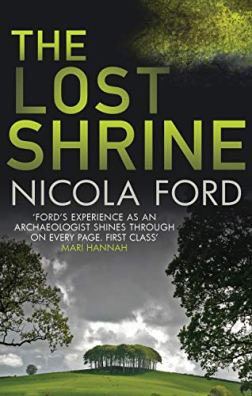
 On a lonely and ancient hill in south western England, a group of amiable but earnest hippy cranks prepare to celebrate a pagan festival. What their leader finds when he climbs the hill to consummate the ritual sends him reeling and retching to his knees. There, strung up from the trees is a grisly collection of local wildlife, butchered and bloody. That is bad enough, but the centrepiece of this obscene display is – or was – human.
 he corpse is that of Beth Kinsella, an intense and controversial archaeologist who has been excavating Bailsgrove Hill prior to much of it being consumed by a building development. She was convinced that the site contained the remains of a rare Bronze Age shrine, much to the frustration of Paul Marshall who, although paying the wages of the dig team has his JCBs and concrete mixers massing on the horizon waiting for the academics with their trowels, sieves and brushes to be gone.
Enter, stage left, Clare Hills. She is an academic who works with Dr David Barbrook. Barbrook’s main job is lecturer, but together with Hills he has established the Hart Unit, a team of archaeologists totally dependent on commercial funding and meagre trickle-down money from the university. Clare’s personal life is anything but robust. She is recently widowed, and finds that her late husband has blown their life savings on failed investments. She is literally scratching out a living with the tools of her trade, but Barbrook asks her to go and complete the work Kinsella started at Bailsgrove.
 ore corpses – both ancient and modern – are discovered, while Clare Hills is run ragged by a combination of unsettling discoveries about her late husband’s business affairs, and a bizarre conspiracy centred on the site, involving the dark and devious word of online antiquity sales.
Among the many strong features of this highly readable murder mystery are the delicious sense of place – a real bonus for those who know and love this part of England, – a credibly vulnerable and appealing main character, and a hard-headed knowledge of the problems that archaeologists have in earning any sort of a decent living. One of my sons is a professional archaeologist who spent his degree years immersed in the magic of the past. Now he has a family to house, feed and clothe, so he is on the staff of a major construction company and faces, on a daily basis, the dilemma between recording and – sometimes – preserving the past in the face of commercial and financial pressures.
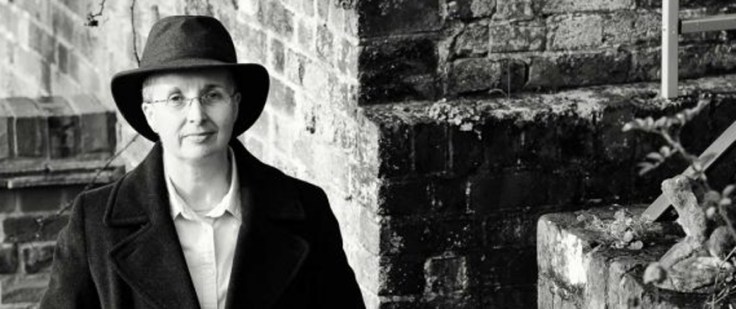
The Lost Shrine is published by Allson & Busby and will be out on 23rd May. Nic Ford is the pen name of Dr Nick Snashall (above), National Trust Archaeologist for the Stonehenge and Avebury World Heritage Site. My review of her first novel in the Hills and Barbrook series, The Hidden Bones, is here.
For eBook fans, The Lost Shrine is on offer
from 29th May until 5th June at a bargain 99p!


 Leaving aside the morbid musings, there’s no shortage of cruelty in the latest crop of excellent crime reads on the Fully Booked shelf. For me, the highlight has to be the latest Tom Thorne novel, where our man goes head-to-head with a particularly nasty specimen of humanity who bears out the adage that the female is deadlier than the male.
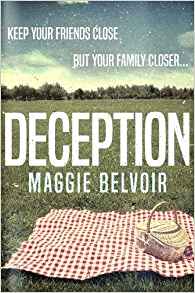 Set in the university town of Cambridge, Deception tells the tale of a how an ostensibly ideal family of perfect children, loving parents and comfortable circumstances is rent asunder when their good deed – adopting a troubled schoolgirl – certainly does not go unpunished. Add to the mix a nasty murder and a conflicted police officer, and we have a witches’ cauldron of dark deeds against the serene background of an ancient seat of learning. Maggie Belvoir has lived in Cambridge for 40 years. She is writing under a pseudonym as members of her social and family circle, may be shocked at some of the scenes depicted in her novel. Published by Matador, Deception is
  London copper Tom Thorne has become an institution for those who like a brilliant police procedural with a distinctly individual cast list, a Pandora’s Box of nasty villains and plot twists to confound the best of us. A conman whose set-piece scam is to befriend wealthy women and separate them from their fortune meets his match when he chooses his next victim – only to find that she is a borderline insane psychopath. You can get your copy of Their Little Secret from 2nd May, and it’s published by
 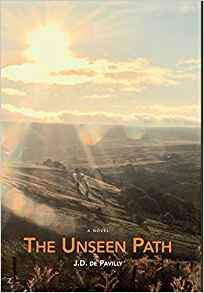 For starters, the copy I received today is a beautifully presented hardback, with that simplest, but most welcome delight – a ribbon bookmark. The novel is centred around the life of a security officer, Andy Bowson whose witnessing of the death of a notorious jihadi draws him down into a vortex of corruption, international subterfuge and political mayhem. As if Bowson hasn’t enough to deal with, his personal life has begun to unravel at an alarming rate, and when his wife disappears on Exmoor while driving to visit her parents, he discovers a sinister link to what appears to be a vigilante campaign against the Islamic community. I normally take publicity blurbs with several sizeable grains of NaCl, but one line intrigued me here:
 I confess a vested interest here in that one of my sons is a professional archaeologist who is employed by a major construction company. He identifies and records ancient traces before they are covered with tons of steel and concrete. In the real world, this commercial work keeps archaeology alive, and so the Nicola Ford’s fictional sleuth Clare Hills and her university colleague Dr David Barbrook know they have to accept, albeit reluctantly the developers’ shilling. Murder, however, is a different matter, and a corpse found on an historical site high on a Cotswold hill leads Hills and Barbrook into dangerous territory. The Lost Shrine is published by Alison &Busby and is
 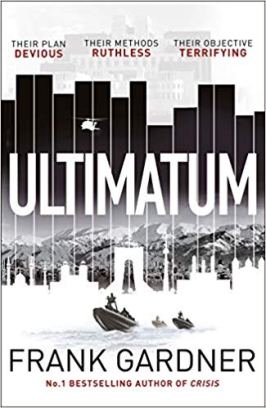 Intelligence agent Luke Carlton is the creation of the celebrated BBC security correspondent Frank Gardner. Carlton made his debut in the 2017 best-seller Crisis, and now he returns for a second adventure set in that apotheosis of anti-Western malice, Iran. The feared Iranian Revolutionary Guard Corps are working on a weapon which will destroy the fragile international balance of power. When a search-and-destroy mission involving Carlton goes disastrously wrong, the clock starts to tick on a potentially devastating military and political time bomb.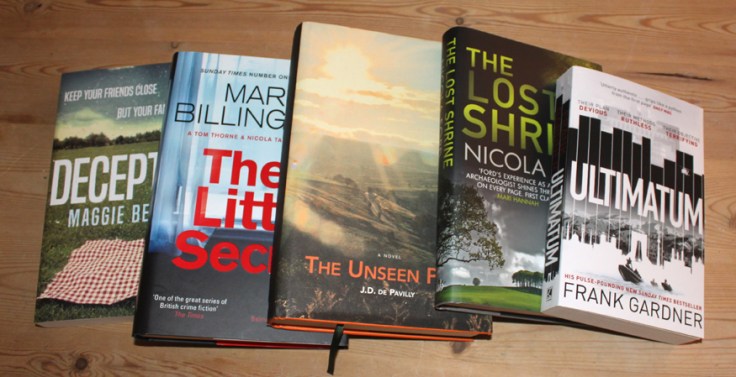


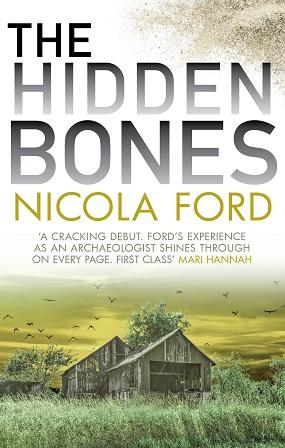 Clare Hills is an archaeologist who is struggling to hold her life together after the death of her husband. Her grief at his passing is tempered by the fact that he has left her virtually penniless. When she is invited by her former tutor, Dr David Barbrook, to help explore and archive the papers of Gerald Hart, she welcomes the chance to use her expertise. Hart was a gentleman archaeologist whose Palladian villa, Hungerbourne Manor, was the centre of his life’s work – investigating the Hungerbourne Barrows. The Bronze Age burial sites were Hart’s obsession, but whatever secrets they held, he seems to have taken them with him to his grave.
 I have many guilty pleasures, and one of them is being a sucker for a crime novel where the landscape plays a vital part in the plot. My two particular favourite writers in this regard are Phil Rickman and Jim Kelly, but with this excellent debut novel, Nicola Ford (right) has elbowed herself into their company.


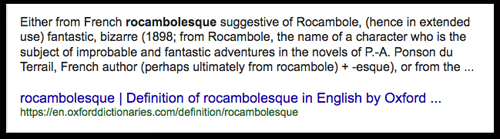 THEY SAY THAT YOU’RE NEVER TOO OLD TO LEARN – and reading the Amazon description of Dazieri’s novels I came across the amazing word Rocambolesque. As ever, Google had an answer of sorts, and I am now waiting for the opportunity to drop the word into casual conversation with my friends and family. That aside, Dazieri returns with another case for detectives Torre and Caselli. An express train from Milan arrives in Rome, but several of its passengers and train crew won’t be disembarking, at least without the help of medical teams, stretchers and body bags. This is Italian Noir at its finest, and not for the faint of heart. Published by Simon & Schuster, Kill The Angel is translated by Anthony Shugaar, and is out now.

 If you said either “Dracula” or “Vampire”, I win. But maybe you’ve been reading the novel by Irish-Hungarian actress and poet, Vivienne Vermes? If so, you’ll know that her novel The Barefoot Road definitely doesn’t involve teeth, cloaks, garlic or unconventional blood transfusions. It dos however, involve blood which is shed by violence. A young woman is found near a Romanian village. She is unconscious, half -starved, and barely alive. She is from an ethnic group which were brutally expelled by the ancestors of the present villagers. Humanity temporarily triumphs over tribal bigotry and she is nursed back to health, but when she begins a relationship with one of the villagers, and a child disappears, the embers of old hatreds burst into flames. The Barefoot Road is published by Matador, and is available as a Kindle or a paperback.


 fullybooked2017