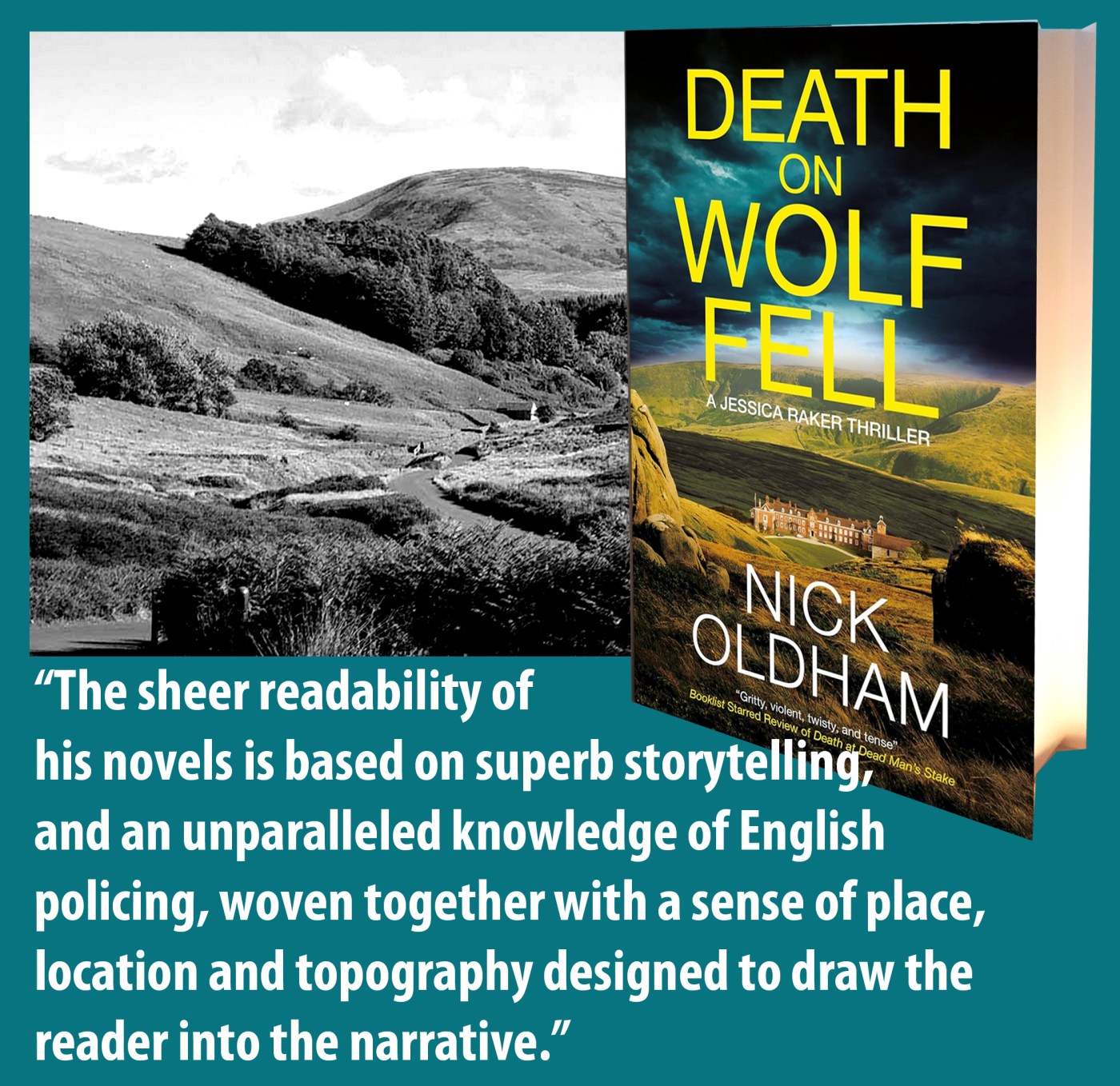
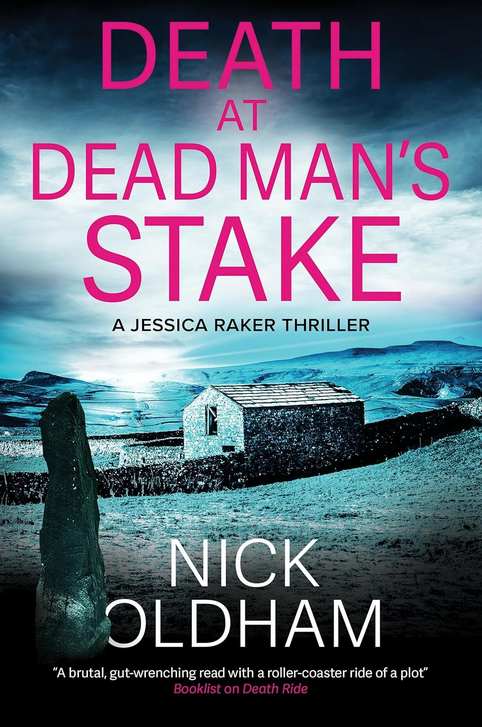
This is the next instalment of the career of Lancashire DS Jessica Raker, to whom we were introduced in “Death at Dead Man’s Stake”. Jess resumes her head-to-head battle with gang boss Maggie Horsefield, a ruthless and vindictive woman who is at the apex of the criminal fraternity, but someone who swims in the toxic waste in terms of human decency. It complicates matters that Jess’s daughter Lily and Maggie’s offspring Caitlin are BFFs at school.
It’s fair to say that Jessica Raker has something of a turbulent past. Born and bred in the district she now polices, she gravitated to London, where her career in the Metropolitan Police concluded dramatically with her shooting dead a feckless younger member of a serious crime gang. When a retaliatory contract was taken out on her life, she was relocated to Clitheroe. She has two children, but her relationship with husband Josh is, to say the least, threadbare, although they are still together.
This story starts with Lance Drake, a petty crook somewhere near the bottom of Maggie Horsefield’s barrel of criminal employees, facing his worst nightmare. He is being released on license from HMP Preston, where he has been quite happily spending the last few months, safe from the inevitable retribution which has awaited him since he shot his mouth off to the police, thus losing his boss tens of thousands of pounds in a drug shipment.
Inevitably, given that Horsefield has her employees embedded at every level of the criminal justice system, Drake is soon grabbed, and when the hood is taken from his head, he finds himself cable-tied to a chair sitting, ominously, on a large plastic sheet spread on the floor of a disused mill, with Horsefield sitting nearby, fondling a zombie knife. Jess Raker’s team have had their eyes on this mill for some time, rightly suspecting that is part of Horsefield’s drug distribution business and, happily for Lance Drake, they choose that moment for a raid.
Most of Horsefield’s goons get away, the mill plus an industrial quantity of ‘merchandise’ go up in flames, and the stage is set for a dramatic encounter as Horsefield and her lover, London gangster Tommy Moss, plan a multi-million pound raid on Wolf Fell Hall, an ancestral home which contains scores of priceless old master paintings. Along the way, we learn more about the team of officers around Jessica Raker. There is the intelligent and resourceful PCSO Samira Patel, who yearns to become a ‘proper’ copper. CID officer Dougie Doolan is one of Jessica’s mainstays, but she suspects he is hiding a grim secret. Her boss, Inspector Price, we strongly suspect may be a wrong ‘un, but is he actually feeding information to the dreadful Maggie Horsefield?
One thing you will not find in a Nick Oldham novel, thankfully, is the remotest trace of sympathetic hand-wringing for his villains. Yes they may come from awful families with dreadful parents but, like all of us, they have a choice. If they take the wrong road, then they have no-one to blame but themselves. For Oldham, once a working copper in hives of scum and villainy like Blackpool, they have made their choice and deserve everything they get. He has a direct, no-frills narrative style. The sheer readability of his novels is based on superb storytelling, and an unparalleled knowledge of English policing, woven together with a sense of place, location and topography designed to draw the reader into the narrative. Death on Wolf Fell will be published by Severn House on 6th May.










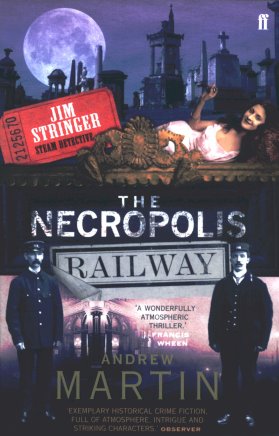 Ever onwards, and ever northward to the ancient city of York. For all that it houses the magnificent medieval minster and has a history going back to the Eboracum of Roman times, fewer people remember that York was also a great railway city, and there can be no more appropriate place to house the National Railway Museum. Like many men now in the autumn of their years I was an enthusiastic trainspotter back in the days of steam, so it is – I hope – perfectly understandable that I have chosen the Jim Stringer novels by Andrew Martin for this stop on our trip. Martin introduced Stringer in The Necropolis Railway (2002) when Stringer is very much at the bottom of the railway hierarchy, and working in London, but by 2004 in The Blackpool Highflyer, Stringer has married his landlord’s daughter – the beautiful Lydia – and has been promoted to a job in York.

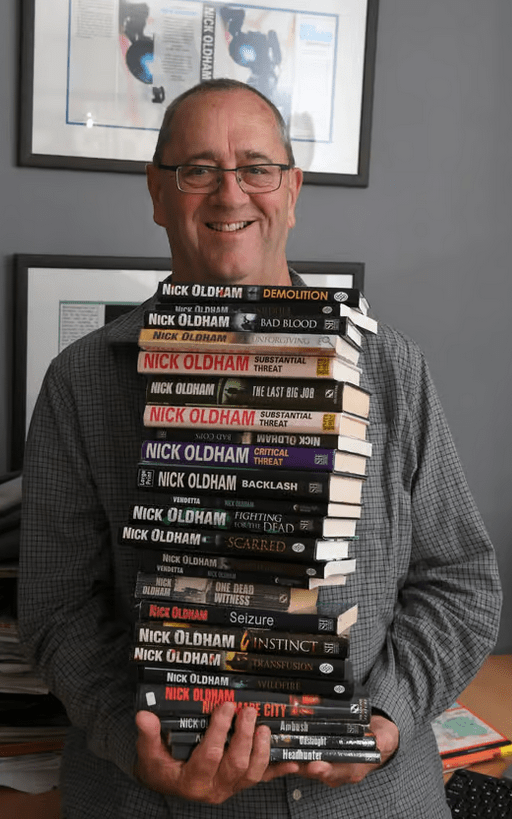
 His creator, Nick Oldham, knows of what he writes, as he is a former police officer, and the 29th book in this long running and successful series is due out at the end of November. So, what can readers expect from a Henry Christie story? It depends where you start, of course, because if you go back to the beginning in 1996, Peter Shilton was still in goal, but for Leyton Orient, England lost to Germany (on penalties, naturally) in the Euros semi-final, the trial of men accused of murdering Stephen Lawrence collapsed and John Major was in his second term as British Prime Minister. In A Time For Justice Christie is a relatively junior Detective Inspector – and someone who is seriously out of favour with his bosses, and has to tackle a cocky mafia hitman who thinks the English police are a joke. As the novels progress over the years, Christie rises through the ranks, but he is still someone who is viewed with some suspicion by the few officers who outrank him – the chief constables and their assistants.
 Henry Christie is always hands on, and he has the scars – mostly physical, but one or two mental lesions – to prove it. His personal life has been a mixture of love, passion, tragedy and disappointment. His geographical battle grounds are usually confined to the triangle formed of Preston, Lancaster and Blackpool. This is an area that Oldham (right) himself knows very well, of course, thanks to his years as a copper, but it is also very cleverly chosen, because it allows the author to play with very different human and geographical landscapes. The brooding moorland to the east is a wonderful setting for all kinds of wrong-doing, while the seaside town of Blackpool, despite the golden sands, donkey rides, candy floss and cheerful seaside ambience, houses one of the worst areas of deprivation in the whole country, with run-down and lawless former council estates controlled by loan sharks, traffickers and criminal families of the worst sort.


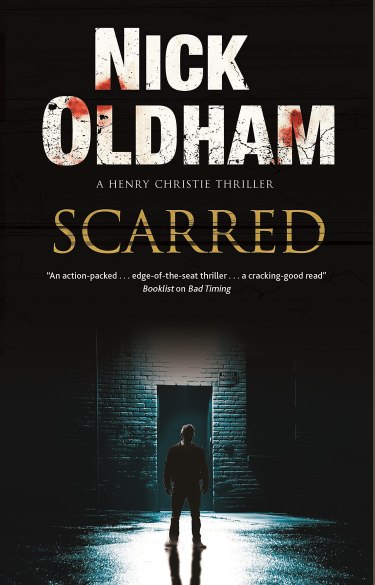 The 1985 episode links crucially with the second part of the book which is firmly in present day Covid-restricted Lancashire, complete with masks and elbow bumps. A teenage boy who was the object of Christie’s near fatal pursuit – but then disappeared off the face of the earth – turns up again, but in an unexpected and deeply disturbing way.


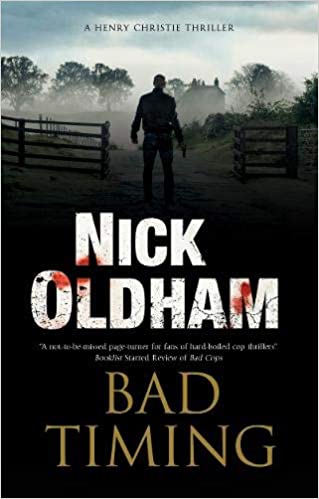
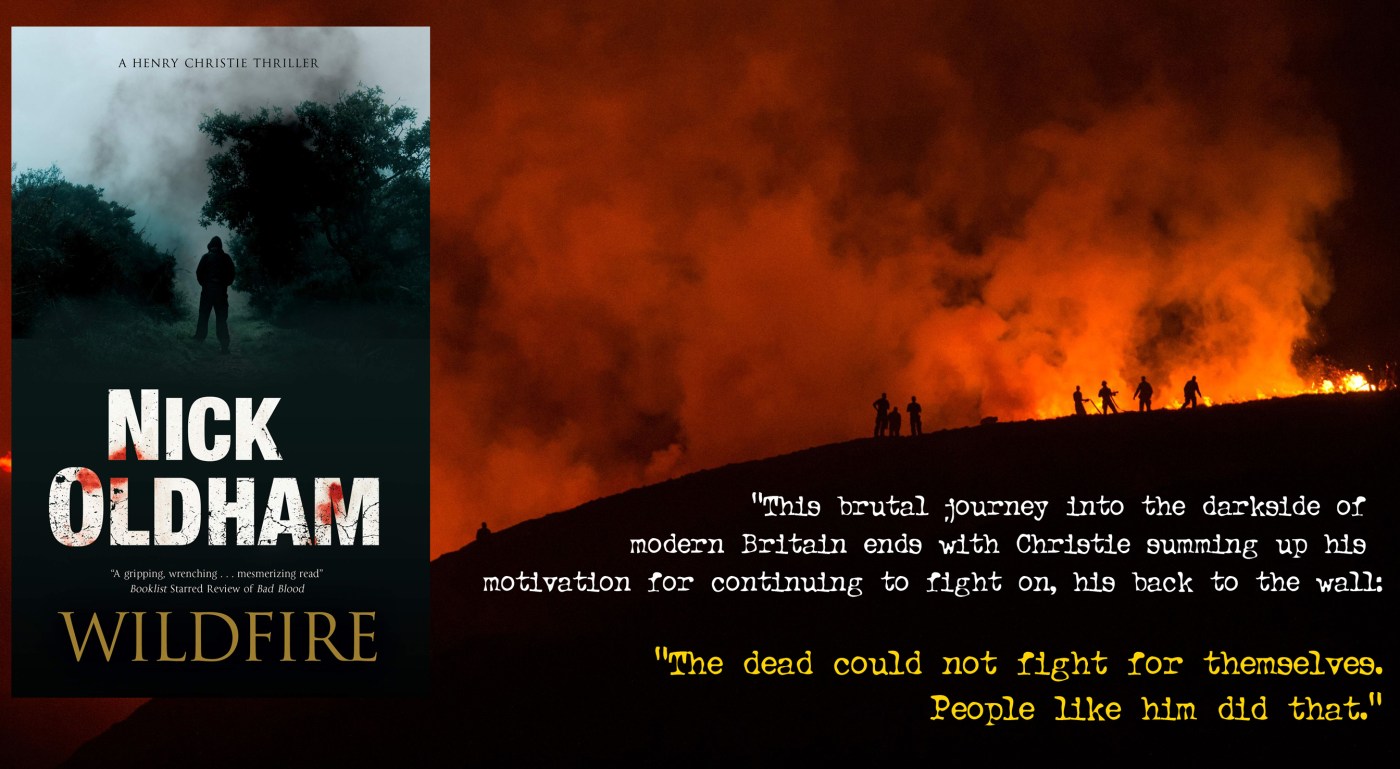

 ack in the day, before authors and their publishers trusted me with reviewing novels, I did what the vast majority of the reading public did – I either bought books when I could afford them or I went to the local library. I had a list of authors whose latest works I would grab eagerly, or take my place in the queue of library members who had reserved copies. In no particular order, anything by John Connolly, Jim Kelly, Phil Rickman, Frank Tallis, Philip Kerr, Mark Billingham, Christopher Fowler and Nick Oldham would be like gold dust.
 Oldham’s Henry Christie was a particular favourite, as his adventures mixed excellent police procedure – thanks to Oldham’s career as a copper – a vulnerable and likeable hero, and an unflinching look at the mean and vicious streets of the Blackpool area in England’s north-west. Wildfire is the latest outing for Henry Christie, who has retired from the police and now runs a pleasant village pub set in the Lancashire hills.
 ventually, the wildfires of both kinds are extinguished, at least temporarily, but not before Henry Christie is forced, yet again, to take a long hard look at himself in the mirror, and question if it was all worth the effort.
 his brutal journey into the darkside of modern Britain ends with Christie summing up his motivation for continuing to fight on, his back to the wall:


 fullybooked2017