

I live in what could be called Cromwell Country. Oliver’s former house in nearby Ely is a tourist attraction, and he is well commemorated in Huntingdon. Was he a Great Englishman? He was certainly an excellent military commander and a successful politician, but I find him hard to warm to. This novel takes us back to the England of 1650. The Civil Wars were over, the King was dead, but the peace was deeply uneasy.
The political situation in 1650 was complex. The country was ruled by the Council of State, a group of forty or so senior politicians who held supreme executive power. It would be another three years before Oliver Cromwell became Head of State, styling himself as Lord Protector. The most significant former Royalists were businessmen and merchants. Their riches and commercial acumen were essential for the country to regain some form of equilibrium after the turmoil of the war years irrespective of their having backed the losing side.
James Archer, a native of Newcastle, is something of a contradiction. He made himself locally notorious by breaking away from his Royalist roots and signing up to fight for Parliament. Although still in his twenties, he has seen – and participated in – great violence, including Cromwell’s barbaric campaign in Ireland. He is sent back to his home town by the Council of State, ostensibly to check that the former King’s men who ran the vital mining and shipping of coal were playing by the rules.
Archer’s subsidiary mission is to investigate the findings of the now infamous Newcastle Witch trials, which took place in 1649 and 1650. The deaths of these women are only of procedural interest to the Council, but Archer certainly has a dog in the fight, as his sister Meg was one of the accused.
What made me distinctly uncomfortable in Bergin’s narrative is his reminder that a society dominated and swayed by hellfire preaching and scriptural quotes is a deeply unstable one. Archer observes the Newcastle town-folk, crowded on the benches of St Nicholas Church, quaking as Dr. Jenison, “so skeletally angular that it appeared he was already half way to the grave,” spits out his sectarian venom, and his demeaning view of the place of women in society. Thank goodness we have no places of worship in Britain where this still goes on. Oh, wait….
After a series of violent encounters, Archer becomes the victim of a conspiracy involving the Great and The Good of Newcastle’s commercial and political world, and he resolves to abandon the town, and head north into the countryisde to search for his sister. As the bruised and battered Archer ventures into border country, he notices something.
“…no men were to be seen. The old had died in the hard winters, the young not yet returned from the wars.”
It is in the Teeside village of Norham that Archer finally earns the truth about his sister, and Bergin has created a masterly ironic twist that is worthy of Thomas Hardy. There is so much to admire in this novel, but one or two things stand out. The fight scenes – and there are several – are superbly described, and the reader can almost hear the clash of steel, and smell the sweat and blood of the participants. Bergin’s historical research is immaculate, as befits a Cambridge history graduate, and his portrayal of the dark and foetid alleys of 17th century Newcastle is vivid and memorable. Published by Northodox Press, this fine novel is available now.


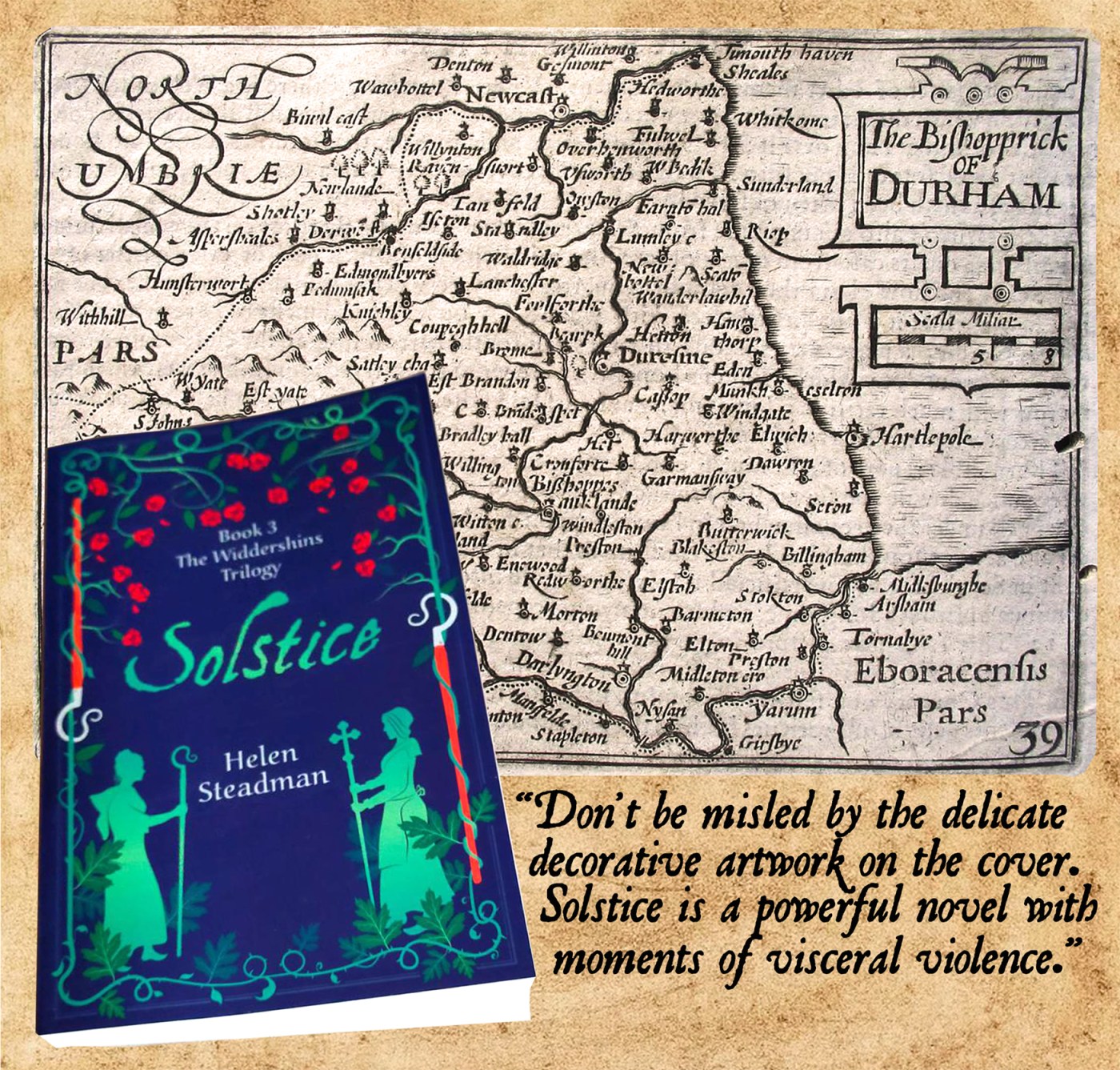

 Widdershins, by the way is a strange word. Some say it was German, others say it originated in Scotland. It translates as


 Jimmy Mullen is a former Royal Navy man, but he has fallen on hard times. He served in The Falklands and has recurrent PTSD. He has served a jail term for manslaughter after intervening to stop a girl being slapped around and, until recently, lived out on the streets of Newcastle, among the city’s many homeless. Now, for the first time in years, he has a job – working for a charity – and a proper roof over his head. Author Trevor Wood (left) introduced us to Mullen in
  Gadge becomes the victim of one of these assaults, but when he is woken up from his drunken stupor by the police, he is covered in blood – most of it not his – and in an adjacent alley lies the corpse of man battered to death with something like a baseball bat. And what is Gadge clutching in his hands when the police shake him into consciousness? No prizes for working that one out!


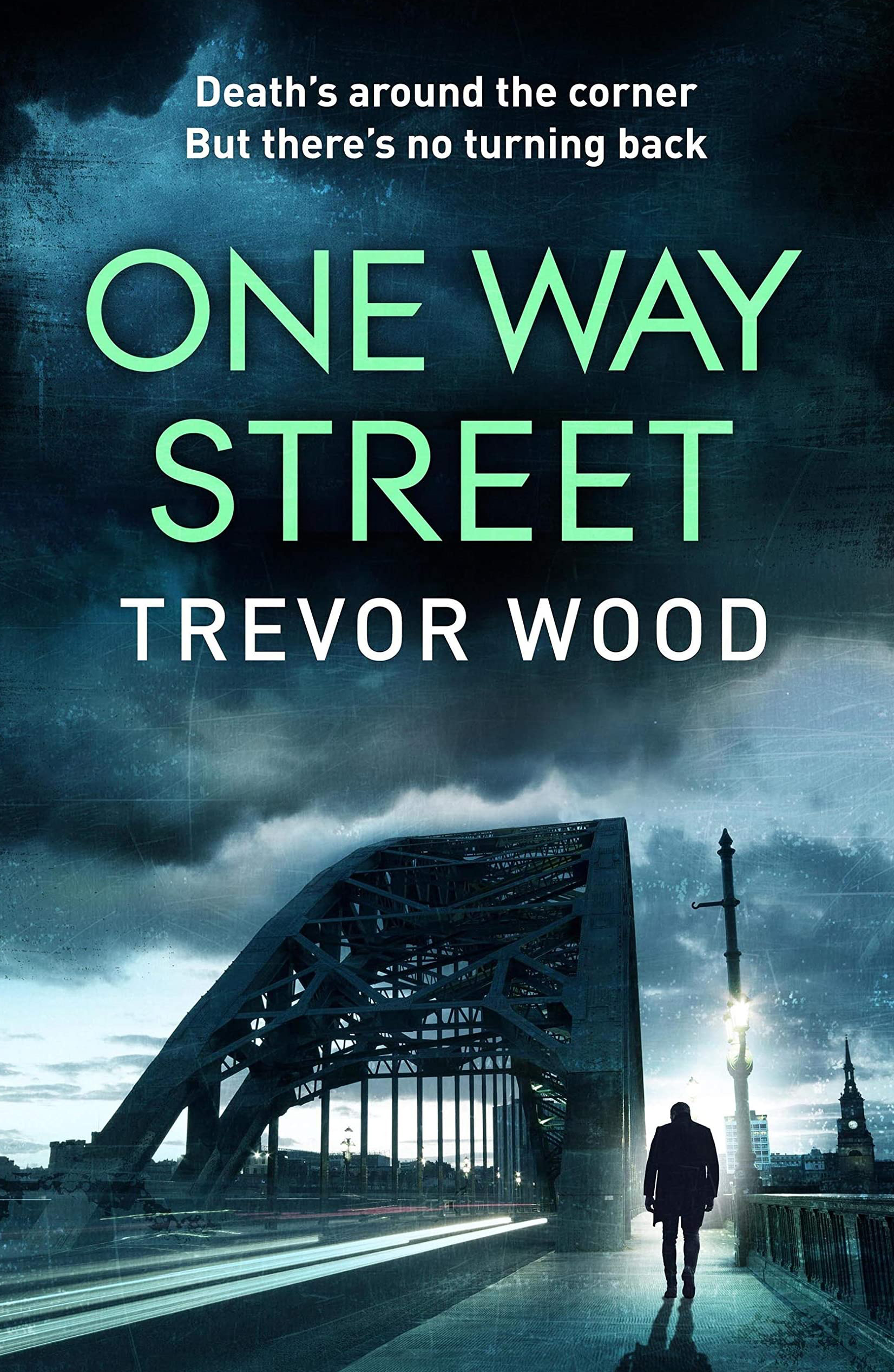


 immy Mullen has been round the block. In the Falklands War his ship takes a direct hit from an Argentine fighter bomber and he watches his mates consumed by the ensuing fireball. Back home recuperating, with a pittance of a pension, he stacks supermarket shelves, battles with his nightmares and presides over the slow erosion of his marriage as drink becomes his only solace. Walking home one night from the boozer, he intervenes to prevent a girl being slapped around by her boyfriend. All very gallant, but the result is the boyfriend (an off-duty copper) lying insensible on the pavement in an expanding pool of blood.
 After the inevitable prison sentence Jimmy is now out on early release, but homeless, his ex-wife now remarried, and his daughter a complete stranger to him. Home is anywhere he can kip out of the rain. His social circle? A few fellow vagrants, raddled by drink, mental instability, drugs – or a toxic combination of all three. Their home-from-home is a charity called The Pit Stop where volunteers provide, food, showers and clothing.
 ome time later Jimmy sees a newspaper article featuring a young woman appealing for news about her missing father. The picture she is holding is of a man Jimmy thinks he recognises. It is the smaller man from the argumentative pair who disturbed his sleep a few weeks since. Or is it? With the help of a couple of his more social-media-savvy pals from The Pit Stop, Jimmy contacts the woman – Carrie Carpenter – and they are drawn into a mystery involving police (both complacent and corrupt), environmental activists, crooked businessmen and – as we learn near the end of the book – grim sexual deviancy.
 uthor Trevor Wood (right) has lived in Newcastle for 25 years and considers himself an adopted Geordie, though he says that he still can’t speak the language. Despite this, his phonetic version of the unique Geordie accent is good. Normally, I shy away from books where writers try too hard to convey accents in dialogue, but I think Trevor Wood does rather well here. Perhaps this is a result of my addiction to my box set of When The Boat Comes In.


 fullybooked2017