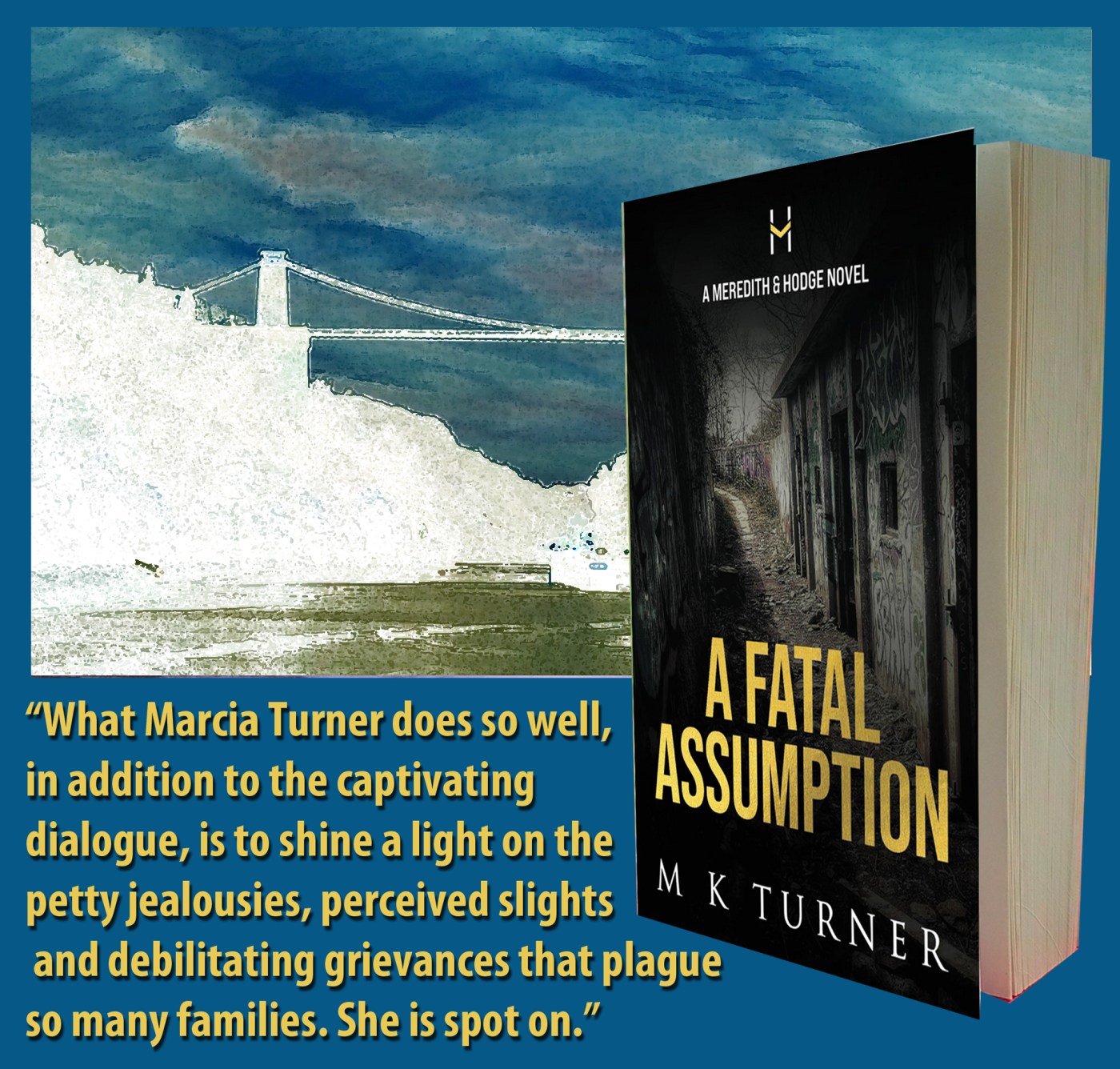

These Bristol based Meredith & Hodge cold-case-crime novels are rather special. Their latest case seems unsolvable. For starters it’s over a decade old. Christine Hawker was making breakfast for the children with husband Mike was upstairs getting them ready for school. The smoke alarm goes off. Mike discovered it has been triggered by a pan of burned porridge. But where was Christine? Puzzled, he took the kids to school, but then he disappears, too. The case baffled everyone, and gradually slid further and further back down the “To Do” list.
Now, the case has been reopened, because Mike Hawker’s remains have been inadvertently exposed by the bucket of a digger preparing the ground for a new supermarket. Meredith & Hodge? DCI Meredith and his wife, fellow officer Patsy Hodge are the ideal husband and wife team. Except – at the moment – they’re not. Patsy is on extended sick leave after a case went horrifically awry and has fled to relatives in New Zealand. Meredith? He’s getting over jetlag in a budget Auckland hotel having flown in to try to save his marriage.
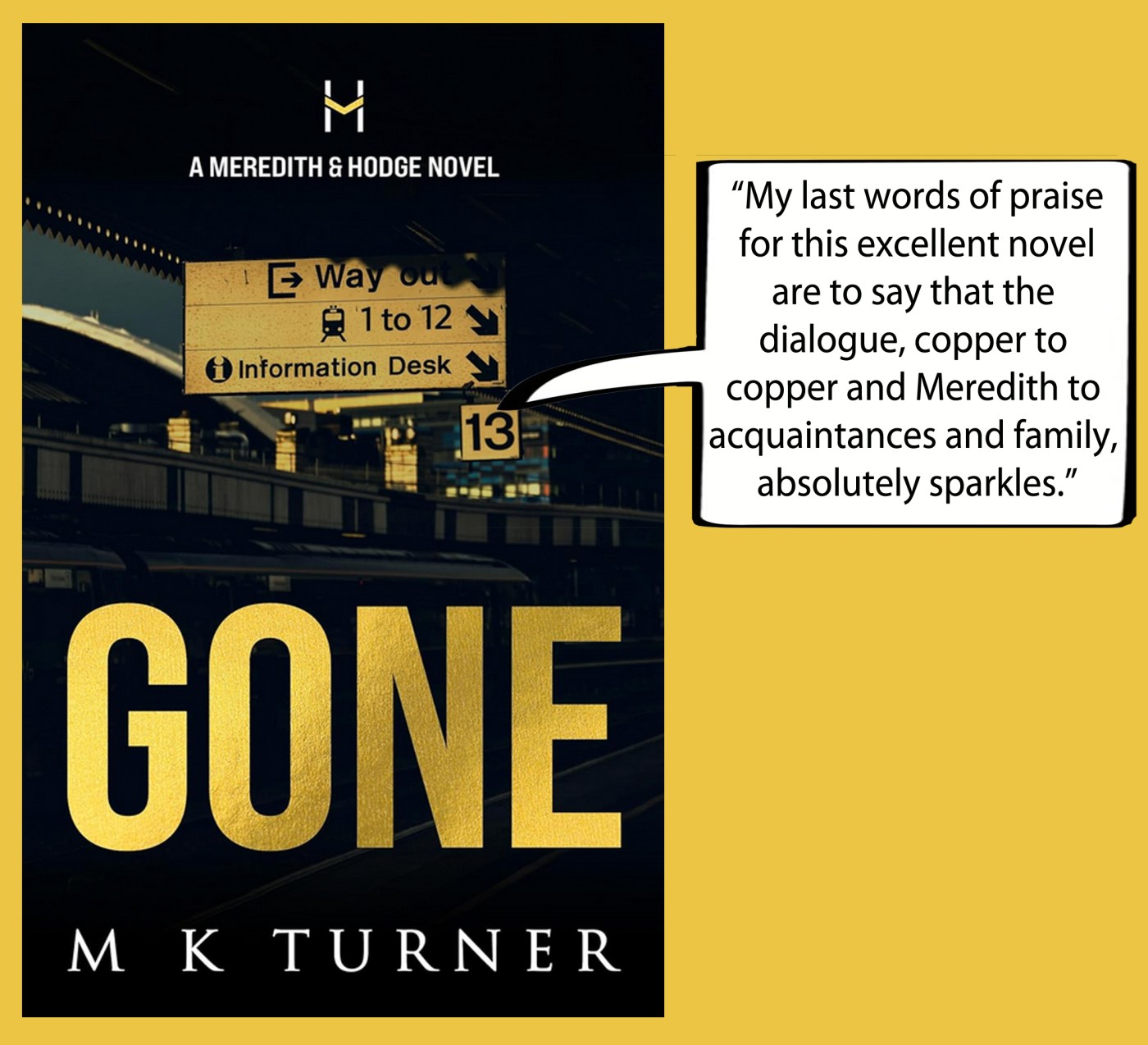
By any standard, this is a terrific police procedural novel. Yes, all the operational details are convincing and the plotting is cleverly done. For me, however, it is the dialogue that sparkles. Marcia Turner enlivens her characters by what they say, and the idioms they use. For example, an elderly man says that he is a bit ‘mutton’. Younger readers might be baffled, but Turner knows that people of this character’s generation would recognise the rhyming slang. Mutt ‘n’ Jeff were comic book characters back in the day. Mutt ‘n’ Jeff became rhyming slang for ‘deaf’ and this later evolved into ‘mutton’ – a double play on words.
Meredith’s peacemaking overture in New Zealand is favourably received, and the pair return to the UK and face the mysteries of the Hawker case. The extended family dynamic is complex, and throws up a number of grievances. In no particular order. Christine’s father died of cancer when she was in her early teens, and she had become embittered that her mother remarried so quickly, suspecting that the relationship may have been blossoming while her father was on his bed of death. Mike’s father is cantankerous and an awkward customer, and his peace of mind was not improved a few months before his son’s disappearance when a young man met him and introduced himself as his long-lost son, conceived in a youthful fling decades earlier.
Meredith’s team clutch at what seem to be increasingly flimsy straws of evidence and imperfect recollections. What about the mysterious white van seen near the Hawker’s house on the day of the abduction? It is of no help at all that several of the potential suspects worked in trades where the proverbial ‘white van’ was ubiquitous. As is probably the case in real life criminal investigations, forensic questioning unearths all manner of ill-concealed grievances and grudges within the extended family of Mike and Christine Hawker.
Despite the proverbial quote suggesting the opposite, it is inspiration rather than perspiration which finally lifts the veil for Meredith, and it comes by way of a pleasant couple of hours the detective spends with his baby grandchildren. The next day, he calls the investigative team together, and on the whiteboard writes one simple word. The culprit returns to the interview suite, confesses, and the cold case team can chalk up another success. What Marcia Turner does so well, in addition to the captivating dialogue, is to shine a light on the petty jealousies, perceived slights and debilitating grievances that plague so many families. She is spot on. We all know what she is writing about. Thankfully, it doesn’t make us all murderers, but – as they say – we have all been there. From 127 Publishing, this excellent police thriller is available now.





 fullybooked2017