

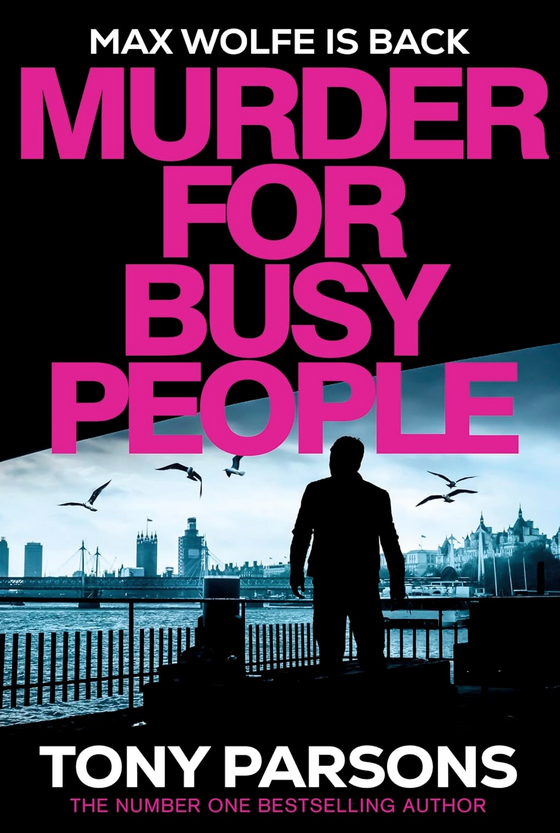
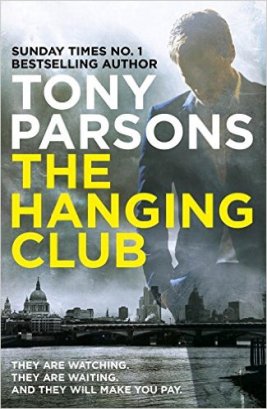
The good news is that DS Max Wolfe is back, and the even better news is that, after a long absence, our man is in very good form. As a young uniformed copper, only days out of Hendon Police College, Wolfe was first on the scene at a safe heist in a palatial London villa. All he found was a gaping hole in the wall, two corpses – and a young woman called Emma Moon, a girlfriend of the mobsters who committed the heist. Wolfe put the cuffs on her, she was tried, convicted, and served a long jail term, during which her troubled son committed suicide. Never once, during the whole process, did she utter a word about those who profited from the robbery. Now, she is out, suffering with terminal cancer, but on a ice cold revenge mission to kill as many of her former associates as she can in the brief time she has left.
Old Max Wolfe hands will know that there is an autobiographical strand running through the novels. Parsons’ breakthrough book was Man and Boy, an account of a male single parent. Here, Wolfe brings up his daughter Scout, rather than a son. Both Wolfe and Parsons are lovers of a dog called Stan, and it was sad to see an RIP notice to the real Stan in the frontispiece of this novel. Max Wolfe lives within sight, sound and smell of the historic meat market known as Smithfield, for centuries the beating heart of a country that loves beef, pork and lamb. Parsons may not have known, when this book was signed off to the printers, that the death knell would be sounded on this historic site. It will, no doubt, be demolished and something trite and anodyne built in its place. This is a purely personal paragraph, as Parsons doesn’t preach, but I think London is gone for us now: pubs are closing at an alarming rate, institutions like the iconic chop house Simpsons of Cornhill lie empty, derelict and vandalised. Philip Larkin was right when he wrote, “And that will be England gone.”
Wolfe juggles several criminal – and personal – issues. He knows that a group of Jack-The-Lad firearms officers have a flat where they abuse young women, wrongly arrested when they flash their warrant cards. The murder of a young woman of the streets, Suzanne, seems unsolvable. On a personal level, he struggles to keep tabs on Scout, his twelve-year-old daughter. She is wilful, disobedient, but highly intelligent. Every single second while he is working, he is worried about where she is, and what she is doing. One by one, the foot soldiers of the heist succumb, each apparently, to natural causes. Wolfe does, in the end, unmask the killer, but more by accident that intention.
Apart from being a gripping read from the first page to the last, this novel is remarkably prescient. I believe that there are many months between the final edition of a book being sent to the printers, and its appearance on bookshop shelves. Parsons weaves two very recent issues into the warp and wedt of his novel. One is a subtle and reflective elegy on Smithfield and its sanguinary history. Just weeks ago, an enquiry released its findings into the killing of a London criminal at the hands of firearms officers. Parsons lets us know, in excruciating detail, the hell that descends on any officer who fires a fatal shot.
Max Wolfe is both convincing and endearing. He doesn’t always get things right. Here, his judgment of Sarah Moon veers from spot-on to plain-wrong (and back again) several times. For all that certain critics and reviewers turn up their noses at Tony Parsons because of his political views, and the newspapers he has written for, the last pages of this book reveal what I have known ever since I met the man at a publishers’ party. He is observant, fiercely honest, and a deeply sensitive writer. Max Wolfe may be only marginally autobiographical but, like his creator, he only dances to the tunes he hears in his own head, and not those streamed in from elsewhere. Murder For Busy People will be published by Century on 2nd January.


 #Taken kicks off, appropriately enough, when a young ballet dancer, Jessica Lyle, is snatched from her borrowed car just yards from the gated luxury home she shares with another girl. From here, Wolfe and his alcoholic boss DCI Pat Whitestone face a veritable University Challenge of questions. Their starter-for-ten is to decide if Jessica was actually the intended victim. Although her father is a retired copper who may have run up an impressive list of enemies, isn’t it more likely that Jessica was mistaken for her flatmate, Snezia? After all, Snezia is not only a dancer of a different kind from Jessica (think ‘gentlemen’s’ clubs, tiny thong and shiny pole) but she is the mistress of fabled former gang boss Harry Flowers. Jessica was driving Snezia’s car when she was taken. Isn’t this just another example of the stupidity of hired thugs?




 His London copper, DC Max Wolfe, becomes involved when a refrigerated lorry is abandoned on a street in London’s Chinatown. The emergency services breathe a huge sigh of relief when they discover that the truck is not carrying a bomb, but their relaxed mood is short-lived when they break open the doors to discover that the vehicle contains the frozen bodies of twelve young women. The bundle of passports – mostly fake – found in the lorry’s cab poses an instant conundrum. There are thirteen passports, but only twelve girls. Who – and where – is the missing person?
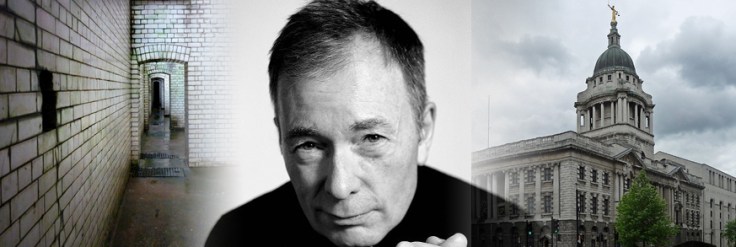
 Max Wolfe certainly gets around for a humble Detective Constable, but he is an engaging character and his home background of the Smithfield flat, young daughter, motherly Irish childminder and adorable pooch make a welcome change from the usual domestic arrangements of fictional London coppers with their neglected wives, alcohol dependency and general misanthropy. Parsons (right) is clearly angry about many aspects of modern life in Britain, but he is too good to allow his writing to descend into mere polemic. Instead, he uses his passion to drive the narrative and lend credibility to the way his characters behave.
 The random murder of an innocent man? Not exactly. Mahmud Irani was part of a gang of men who groomed, raped and abused a number of white teenage girls. He served a jail term which many believe was too short, considering his crimes.


 fullybooked2017