

For a good part of its long and curious history, it seems that The Peculiar Crimes Unit of London’s Metropolitan Police has been under threat. Civil servants and box-tickers without number have tried to close it down; it has endured bombs (courtesy of both the Luftwaffe and those closer to home); it has suffered plague and the eternal pestilence of whatever vile tobacco Arthur Bryant happens to stuffing into his pipe at any particular moment. The PCU has become:
“..like a flatulent elderly relative in a roomful of
millennials,a source of profound embarrassment..”
But now, yet another crisis seems to be the fatal straw that will break the back of the noble beast. Bryant’s partner John May (the sensible one) is on sick leave recovering from a near-fatal gunshot wound. Mr B has gone AWOL (trying to have his memoirs published), and the office has been invaded by a tight lipped (and probably ashen-faced) emissary from the Home Office who has instructions to observe what he sees and then report back to Whitehall.
The PCU creaks into arthritic action when Arthur Bryant puts his literary ambitions on hold, and links three apparently random deaths. A Romanian bookseller’s shop is torched, and he dies in police custody; a popular and (unusually) principled politician is grievously wounded, apparently by a pallet of citrus fruit falling from a lorry; a well-connected campaigning celebrity is stabbed to death on the steps of a notable London church. For Bryant, the game is afoot, and he draws on his unrivaled knowledge of London’s arcane history to convince his colleagues that the killer’s business is far from finished. His colleagues? Regular B&M fans will be relieved to know that, in the words of the 1917 American song (melody by Sir Arthur Sullivan) “Hail, Hail – The Gang’s All Here!”

An intern in the PCU? Yes, indeed, and in the words of Raymond Land;
“You may have noticed there’s an unfamiliar name attached to the recipients at the top of the page. Sidney Hargreaves is a girl. She’s happy to be called either Sid or Sidney because her name is, I quote, ‘non gender specific in an identity-based profession.’ It’s not for me to pass comment on gender, I got lost somewhere between Danny la Rue and RuPaul.”
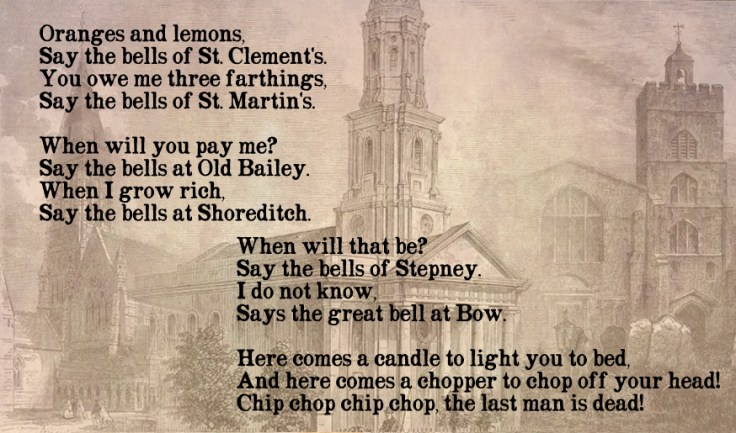
There are more deaths and Arthur Bryant is convinced that the killings are linked to the London churches immortalised in the old nursery rhyme, with its cryptic references:
But what links the victims to the killer? Beneath the joyous anarchy Arthur Bryant creates in the incomprehending digital world of modern policing, something very, very dark is going on. Fowler gives us hints, such as in this carefully selected verse between two sections of the book:
“The past is round us, those old spires
That glimmer o’er our head;
Not from the present are their fires,
Their light is from the dead.”
Also, underpinning the gags and joyfully sentimental cultural references there are moments of almost unbearable poignancy such as the moment when the two old men meet, as they always have done, on Waterloo Bridge, and think about loves won and lost and how things might have been.
There is no-one quite like Christopher Fowler among modern authors. He distills the deceptively probing gaze of John Betjeman, the sharp humour of George and Weedon Grossmith, the narrative drive of Arthur Conan Doyle and a knowledge of London’s darker corners and layers of history quite the equal of Iain Sinclair and Peter Ackroyd, The result? A spirit that is as delicious as it is intoxicating. Oranges and Lemons is published by Doubleday and is out now.
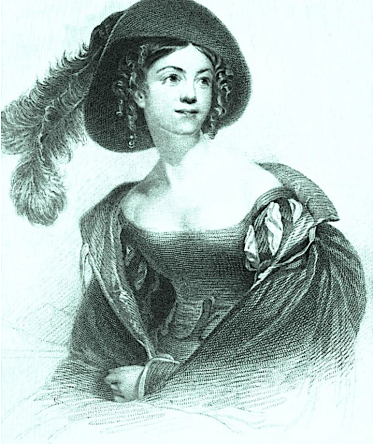
More about the unique world of Arthur Bryant and John May can be found here, while anyone who would like to learn more about the origin of the rather sinister verse quoted earlier should click on the picture of its author, below, Letitia Elizabeth Landon.

 Incidentally, I don’t think there are many Old Etonian authors around these days, but Dickinson (left) was there from 1941 to 1946, and it is tempting to wonder if he ever rubbed shoulders in those years with another Eton scholar by the name of Robert William Arthur Cook, better known to us as the Godfather of English Noir


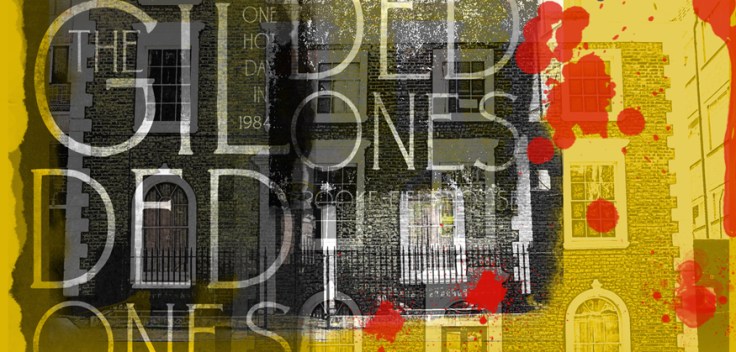
 This is a curious and quite unsettling book which does not fit comfortably into any crime fiction pigeon-hole. I don’t want to burden it with a flattering comparison with which other readers may disagree, but it did remind me of John Fowles’s intriguing and mystifying cult novel from the 1960s, The Magus. I am showing my age here and, OK, The Gilded Ones is about a quarter of the length of The Magus, it’s set in 1980s London rather than a Greek island and the needle on the Hanky Panky Meter barely flickers. However we do have a slightly ingenuous central character who serves a charismatic, powerful and magisterial master and there is a nagging sense that, as readers, we are having the wool pulled over our eyes. There is also an uneasy feeling of dislocated reality and powerful sensory squeezes, particularly of sound and smell. Author Brooke Fieldhouse (left) even gives us female twins who are not, sadly, as desirable as Lily and Rose de Seitas in the Fowles novel.
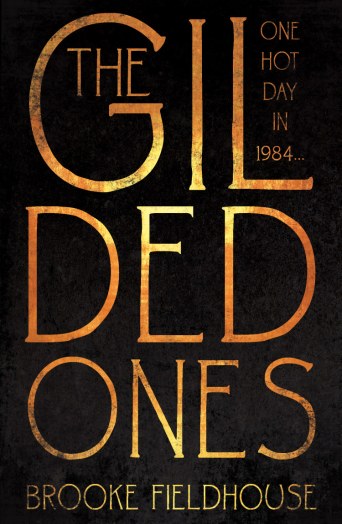 Lloyd Lewis is the Magus-like figure. He is so thumpingly male that you can almost smell him, and he rules those around him, with one exception, with an almost feral ferocity. So who are ‘those around him’? Ever present psychologically, but eternally absent physically, is his late wife Freia, the subject of Pulse’s dream. Martinique is Patrick’s girlfriend, and loitering in the background are his children, step-child and office gofer Lauren. Lauren, who has “thousand-year-old eyes”, is of the English nobility, but quite what she is doing in the Georgian townhouse we only learn at the end of the book. The one person to whom Patrick defers is his Sicilian friend Falco. Equalling the Englishman’s sense of menace, the sinister Falco appears briefly but is, nonetheless, memorable.
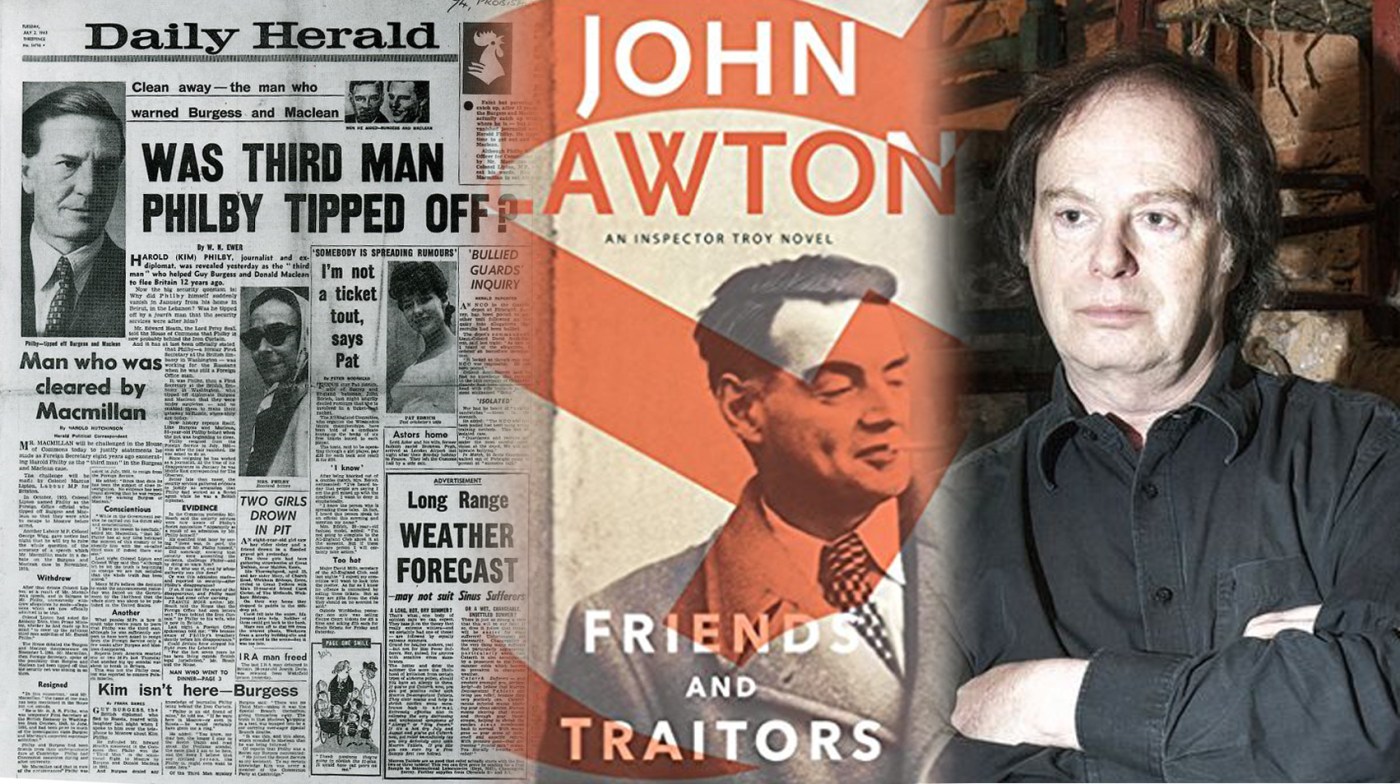

 Friends and Traitors focuses mostly on the 1951 defection – and its aftermath – of intelligence officer Guy Burgess, to the Soviet Union. A huge embarrassment to the British government at the time, it was also about personalities, Britain’s place in the New World Order – and its attitudes to homosexuality. Burgess’s usefulness to the Soviets was largely symbolic, but the crux of the story is the events surrounding Burgess’s regrets, and heartfelt wish to come home. Troy interviews him in a Vienna hotel.
 Lawton (right) was born in 1949, so would have only the vaguest memories of growing up in an austere and fragile post-war Britain, but he is a master of describing the contradictions and social stresses of the middle years of the century. Here, he describes Westcott, a notoriously persistent MI5 interrogator, sent to quiz Troy on the events in Vienna:

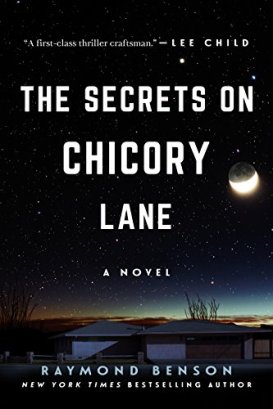 Eddie is Eddie Newcott, the boy who used to live across the street in Chicory Lane, Limite. The boy who was just a bit different from all the other kids at school. The kid whose dad was a rough and abusive oilfield mechanic. The kid whose mom turned to the bottle to escape her violent husband and the beatings he handed out to their only child. But that was then. Now sees Eddie fallen on hard times. Times so hard that he achieved brief notoriety in the tabloid press, and has now been sentenced to death by lethal injection for murdering his pregnant girlfriend, slashing her open, dragging the foetus out and then arranging the two corpses on his front lawn, posed in an obscene mockery of a Nativity tableau. And it was Christmas Eve.
 Like Shelby Truman, Raymond Benson (right) is a highly successful writer. He has written thrillers under his own name, most notably his Black Stiletto Saga, and has also written novels based on video games. He has taken up the baton from authors who are no longer with us, like Tom Clancy, and has written several James Bond stories which have either been based on established screenplays – like Die Another Day – or standalone original stories such as The Man With The Red Tattoo.

 Inspector Kosuke Iwata’s personal life is as scarred and trauma-ridden as the human tragedies he faces daily as a member of the Homicide division of the Tokyo Municipal Police Department. He was abandoned by his mother in a bus station when he was a child, but has become partly Americanised since she reappeared, now married to a prosperous US citizen, to reclaim him. In the intervening years, Iwata grew up in a Catholic orphanage, and his sleep is frequently disturbed by fretful dreams of those days, with the voices of both his disturbed best friend, as well as the abusive head of the institution, forever whispering in his ear.
 This a superb novel and goes way beyond the restraints and conventions of crime fiction. In his afterword, Obregón says of Iwata:


 fullybooked2017