Search

fullybooked2017

Tag

Leamington

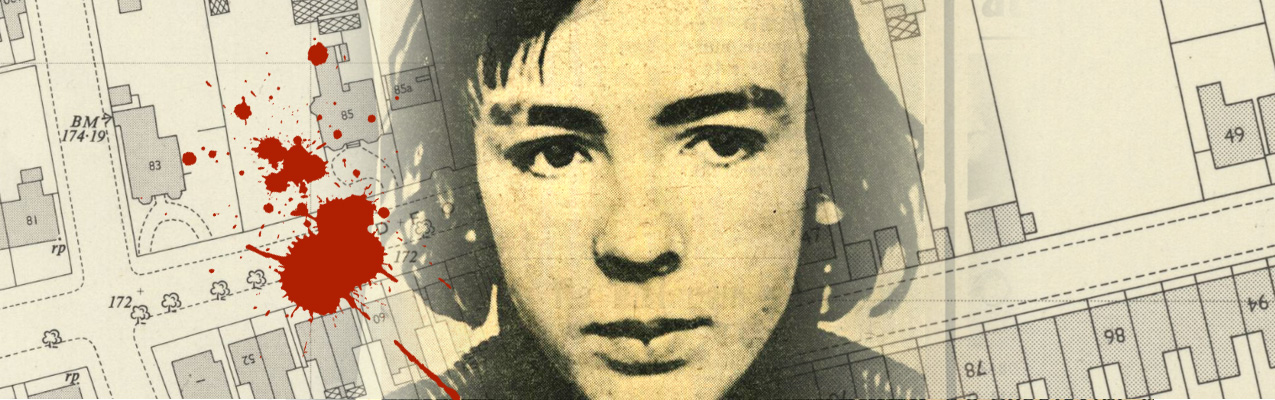
THE BABY-FACED BUTCHER . . . Death in Leamington (2)

BFB header

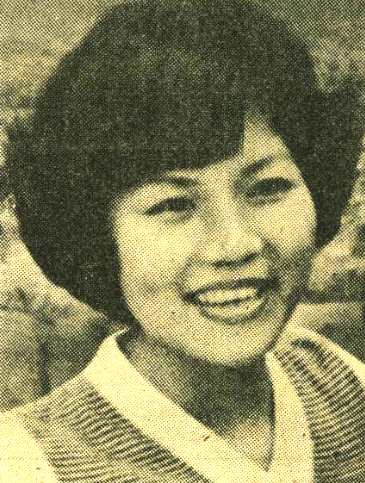
TzeYung TongSO FAR: In the early hours of Monday 2nd February 1976, the butchered body of Chinese nurse Tze Yung Tong (left) was found in her room in a nurses’ hostel at 83 Redford Road, Leamington Spa. Other young women had heard noises in the night, but had been too terrified to venture beyond their locked doors. We can talk about ships passing in the night, in the sense of two people meeting once, but never again. Tze Yung Tong was to meet her killer just the one fatal time.

Gerald Michael Reilly was born in Birmingham in 1957, but he and his family moved to Leamington. After primary school, he went to Dormer School, which then had its main building on Myton Road. He was described as quiet and pleasant, but not one of life’s high achievers. In 1974 he had a brief spell in the Merchant Navy before returning to Leamington to live with his parents at 49 Plymouth Place and work as a builders’ labourer. He was engaged to be married to Julie, a young woman from the north of England he had met during his Merchant Navy days.

On the evening of 1st February 1976, he was observing the moral code of the time by sleeping downstairs, while Julie was chastely abed upstairs. At some point, he decided he needed sex. It was never going to happen at home, so he let himself out of the house, and walked the 200 yards or so along snow-covered pavements to the nurses’ hostel on Redford Road. There, he shinned up a drain-pipe, and padded along the corridors hoping for an unlocked door. He found one. It was Tze Yung Tong’s room.

This is where the story goes into “you couldn’t make it up” territory. It was estimated that Reilly spent 90 minutes going about his dreadful work on the young nurse. Then, still clutching the sheath knife with which he had disembowelled Tze Yung Tong, he retraced his steps to Plymouth Place and went back to sleep.Just twelve days later, with hundreds of police banging their heads against a brick wall, Gerald and Julie were married with all the traditional trappings at St Peter’s church on Dormer Place. In those days honeymoons were rather prosaic by modern standards, so the star-crossed lovers set off for the West Country. Julie had her “going away” outfit, but Gerald brought with him something more significant – the knife with which he gutted Tze Yung Tong. In a bizarre attempt at concealment, he hid the blade in a toilet cistern at a Bath hotel.

Below, Gerald and Julie on their wedding day

wedding

By this time, whatever passed for logical thought in Reilly’s mind had gone AWOL. Upon returning to Leamington, and hearing about the intense fingerprinting initiative, he decided that the game was up and, with his uncle for company, turned himself in.  The irony is that the police, in desperation, had announced that there was one set of prints they had not been able to eliminate. Assuming they were his, Reilly offered his wrists for the handcuffs. The prints were not his.

Screen Shot 2024-09-01 at 12.54.01Despite his palpable guilt, Reilly was endlessly remanded, made numerous appearances before local magistrates, but eventually had brief moment in a higher court. At Birmingham Crown Court in December, Mr Justice Donaldson (right) found him guilty of murder, and sentenced him to life, with a minimum tariff of 20 years.In 1997, a regional newspaper did a retrospective feature on the case. By then, the police admitted that he had already been released. Do the sums. Reilly, the Baby-Faced Butcher may still be out there. He will only be in his late 60s. Ten years younger than me. One of the stranger aspects of this story is that, as far as I can tell, at no time did solicitors and barristers working to defend Reilly ever suggest that his actions were that of someone not in his right mind. By contrast, in an earlier shocking Leamington case in 1949, The Sten Gun Killer (click the link to read it) the ‘insanity card’ was played with great success. Perhaps must face the fact that sometimes, sheer evil can exist in human beings who are perfectly sane and rational.

FOR OTHER LEAMINGTON & WARWICK MURDER CASES
CLICK THE IMAGE BELOW
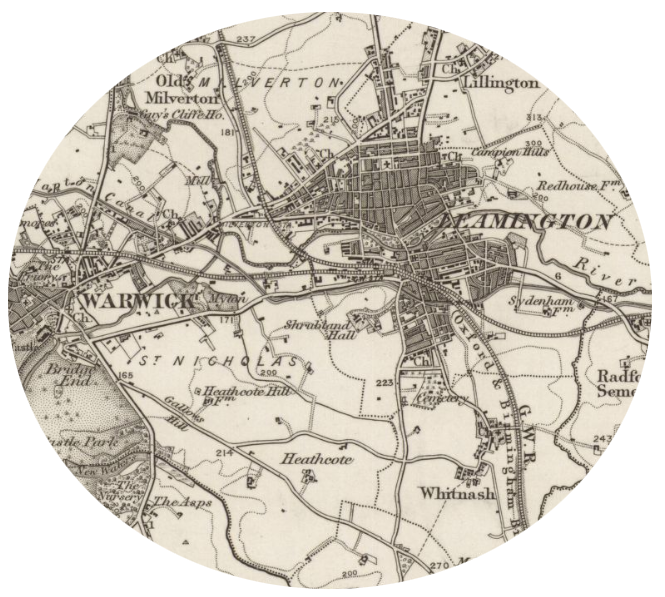
LEAMWAR

THE BABY-FACED BUTCHER . . . Death in Leamington (1)

BFB header

In the early hours of 2nd February 1976, an act of almost inhuman barbarity occurred in a rather grand Regency house on Radford Road, Leamington Spa. The house, number 83, was used as an annexe providing accommodation for nurses who worked at the nearby Warneford hospital. One such was 23 year old Tze Yung Tong. What were the circumstances that led her to be in Leamington? Misjudgment, or an act of cruelty by Fate?

Thomas Hardy ends what is, for me, his most powerful tragedy by commenting on the death by hanging of his heroine, Tess Durbeyfield. He says, “’Justice’ was done, and the President of the Immortals (in Aeschylean phrase) had ended his sport with Tess.” He refers to the Greek dramatist who imagined humans as mere playthings of the Gods, moved around like chess pieces for their entertainment. If you accept this concept is valid, then the Gods certainly played a very cruel trick on Tze Yung Tong.

It could be said that misfortune had played a part in putting the young Chinese woman in that particular place at that particular time. Trained as a nurse, she had married a travel courier in Hong Kong in 1973, and the couple had moved to Taiwan. The marriage did not last, however, and Tze, pregnant, moved back to her parents’ house in Hong Kong. When her son, Yat Chung Lam, was born, she made the fateful decision to move to England where the pay was much better, reasoning that she could send sufficient money home to better provide for the boy’s upbringing. The picture below shows Tze with her son in happier times.

Tze copy

On the morning of 2nd February Tze’s body was found in her room. The subsequent autopsy found that she had been stabbed multiple times in what must have been a frenzied assault. She had also been raped. At the murderer’s trial, the prosecution barrister told the jury:

“Two police officers came and were greeted with a horrible sight. Blood was everywhere, even splattered on the walls. Among evidence found by detectives were footprints on the roof leading to the landing window, and fingerprints on the landing windowsill, and on the outside of nurse Tong’s door. The pathologist examined the ghastly scene. Firstly there was a superficial cut on the nurse’s neck and it is considered the deceased was held at knife-point prior to her throat being cut. Also her clothes had been taken off after her throat had been cut. The pathologist also found she had laying on the bed completely passively in part because of loss of blood and partly through fear.”

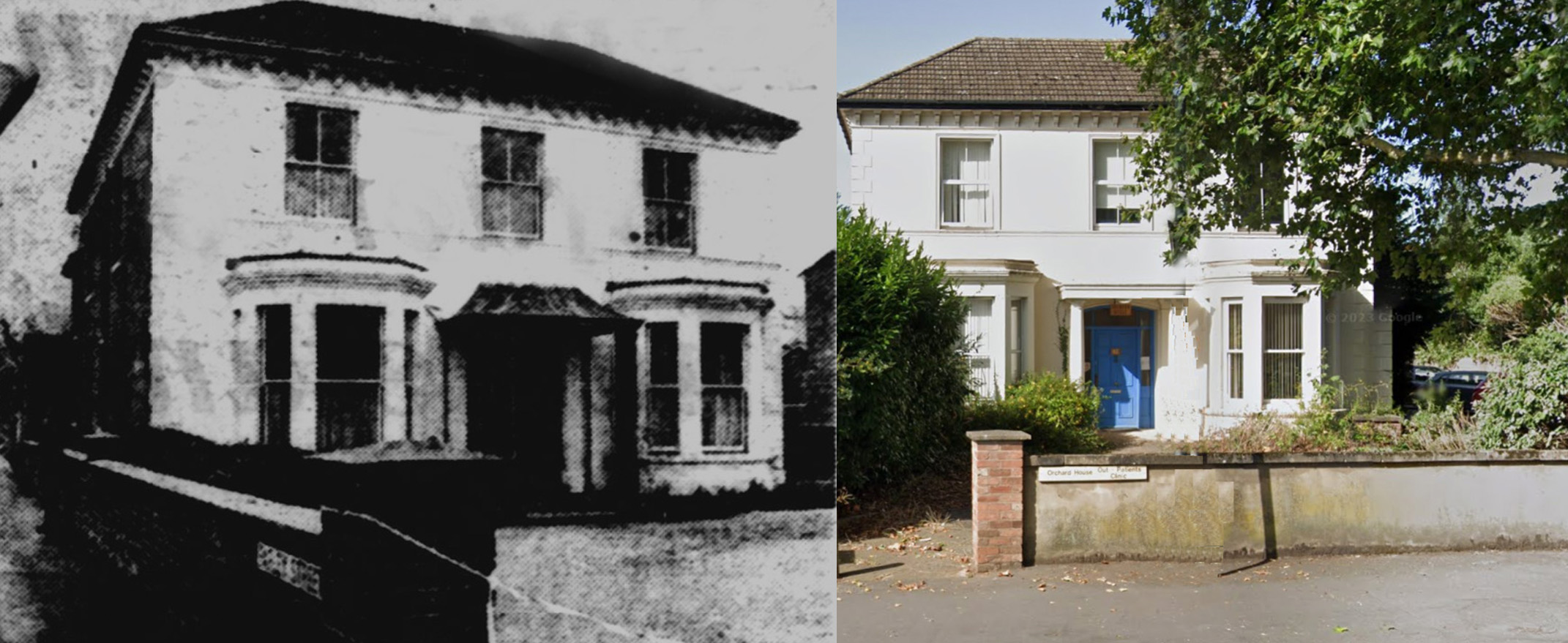
Below – the house where Tze was murdered, as pictured in a 1976 newspaper and how it is today.

83 combined

In researching these murder stories, I often wonder about the metaphor of a random rolling of the dice that puts two people on a collision course. More often than not, murders are committed by someone known to the victim, often a family member, but was this the case here? It also proved to be a case where the police, despite a huge allocation of manpower and resources, literally had no clue as to the identity of Tze’s killer, and it was only a loss of nerve on his part that resulted in his arrest and trial.Tze had finished her shift at the Warneford at around 9.00pm on 1st February and had walked back along the snow covered pavement to the nurses’ hostel. Again, fate intervened. The girls had been warned repeatedly to make sure their room doors were locked before they went to bed. Tze’s keys were found hanging on a hook on the side of her wardrobe.

Tze’s ravaged body was eventually released to her family, in this case her mother Kit Yu Chen who had flown in from Hong Kong, and one of her sisters –  Patricia Tze Min Fung – who had travelled from Canada. Whatever secrets the girl’s remains held were consumed by the flames at Oakley Wood crematorium on 26th February. Her relatives did not stay for the funeral.

The police threw everything they had into the investigation but in a way, it was doomed from the start. There was no jealous boyfriend. Tze, with what might be called her ‘real life’ 6000 miles away in Hong Kong, was pleasant and polite, but had shown no desire to establish a social life in England. The Warneford was just somewhere where she could advance her midwifery skills before going home and use her qualifications to provide a better life for herself and her son. The police clutched at straws. Who was the well-spoken mystery man she had shared a meal with at a recent course in Stratford on Avon? Could local tailors shed any light on a pair of trousers found near the murder scene? Would the mass fingerprinting of thousands of Leamington men shed any light on the mystery?

Ironically, it was the latter scheme which would produce a result, but not in the way police imagined.

IN PART 2
A wedding
A honeymoon
A confession


DEATH IN DARK WATER . . . The murder of Ann Chapman (2)

SO FAR – Saturday 16th April, 1870. Thomas Chapman and his wife Ann have gone out for a walk together, leaving heir children at home in Linen Street Warwick, with Ann’s parents. Neither would ever return to that back-to-back terraced house.

Thomas Chapman’s father lived in Friar’s Court, Warwick. At 1.00 am on the morning of 17th April, he was awakened by a loud banging on his front door. Opening it, he was astonished to see his son, bedraggled, and apparently soaked to the skin. He said to his father:
“I have killed Ann, and now I have come home to die with you.”
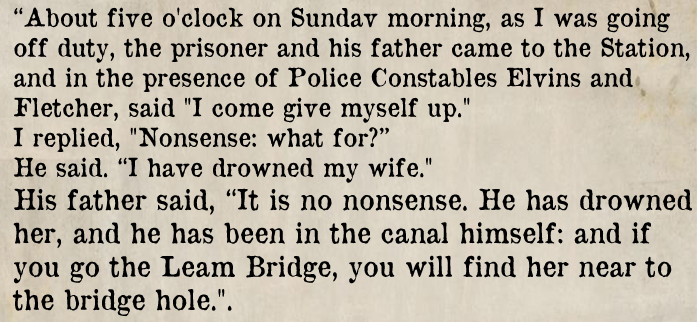
Thinking his son to be either drunk or muddled, the elder Chapman made his son take off his clothes and sent him upstairs to lie down. After a few hours, however, Thomas Chapman convinced his father that he had,indeed, killed Ann,and the air set off together to the police station. PC Satchwell later gave this statement to the magistrates.

Confession

Taking Chapman seriously now, a party of constables took drags – large iron rakes on the end of ropes – and set off for Leam Bridge. They noted that there were signs of a struggle on the canal towpath, and they set about the melancholy business of searching for Ann Chapman. After about twenty minutes they found her, and brought her up out of the water. She was taken back to Warwick on a cart, covered in blankets, and Thomas Chapman was charged with her murder.

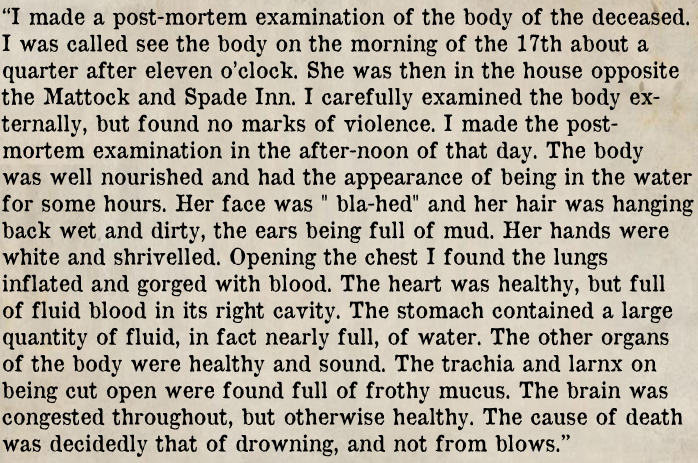
As was usual with these matters, a Magistrate’s hearing and a Coroner’s inquest were quickly convened. At the inquest, Mr Bullock, a surgeon reported what he had found.

Inquest

Chapman’s confession was graphic, and told of how his grievances against Ann’s behaviour with other men had been festering for some time:

“Last night I went home about six o’clock, and gave my money to her mother. We lived with her. I stayed at home till went out with my wife. I told her we would go to Leamington and look round there. We started a little after nine o’clock. We called at Page’s near the chapel and had a pint of ale. That is all I had all the night. We looked in the shop windows, and went on to Emscote cut bridge. I said, “Come on this way”. She said she did not like to the water side. She was all of a tremble. I said, “What makes you tremble? What have you to tremble for – I said if she would come along there we could get out the Leam Bridge on the Old Road.

We were talking as we were going along the cut side. I said I was sure the last child was not mine. She said none of the children were mine. She said. “No, you scamp, none of them are yours.” She said, “I have deceived you a good while.” When got under the Leam Bridge I pushed her into the water, and as she was going in she laid hold of me and pulled me into the water, I could not get away from her for a long while. She kept fast hold of me. She had liked to have drowned me. I got away from her and got out of the water, and lay down on the grass. I could not walk I was wet. The water was up my chin. I could not touch the bottom.

I threw my old jacket into the water. I got on the Old Road. man passed me against lawyer Heath’s. I made up my mind to drown her before went out of the house. I went my father’s house about one o’clock, changed clothes and lay down on the bed. I have been away from home three months together. When I last came home she held the last child up and said, “Here’s pattern for you; do you think you could get such a one as this ?”

By the time Chapman’s case eventually came to Warwick Assizes, it had clearly dawned on him that it was likely he was going to be hanged, and it was reported that he had been busy trying to convince the authorities that he was insane. What appears to be play-acting cut no ice with the doctors, and they testified that he was perfectly sane, both then and at the time of Ann’s death. Remarkably, the jury – all male, remember – were sufficiently sympathetic with Chapman’s bruised ego that they found him guilty of the lesser charge of manslaughter, and he was sentenced to life. What became of him, I don’t know. In those days life meant life, and so it may well be that he died in prison.

What became of the Chapman children is another mystery. The 1871 census has Francis and Mary Dodson – Anna’s parents – living at 12 Union Building, both on ‘Parish Relief’. This had nothing to do with church parishes, but was a form of benefit based on what we now call local government wards. In practice, it was patchy, and depended on the ability of a particular parish to levy rates, and then distribute a portion to the needy.

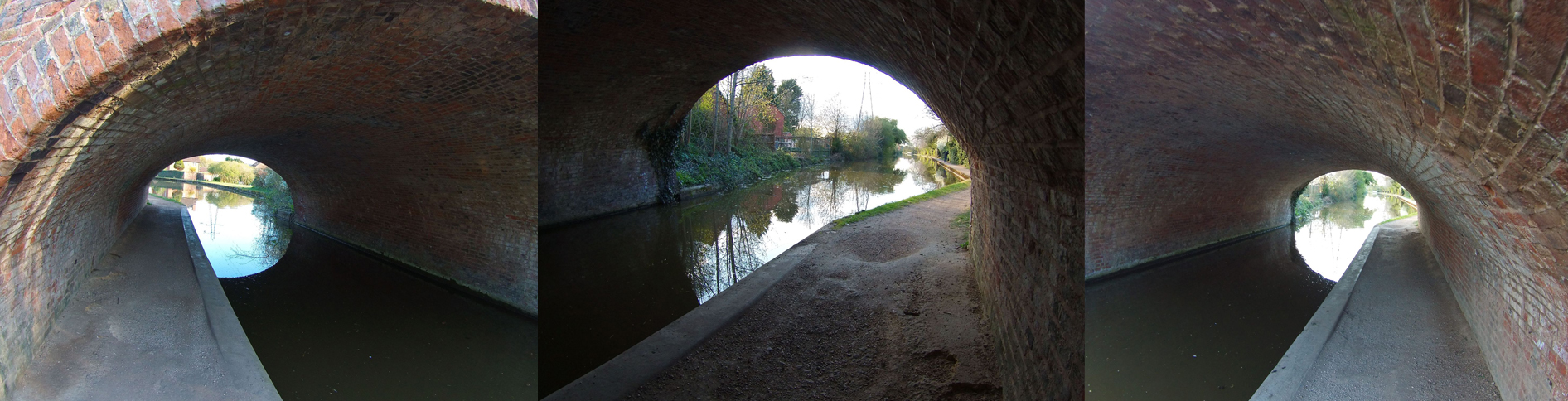
To me, it is absolutely clear that Thomas Chapman murdered his wife. He pushed her into the murky depths of the Warwick and Napton Canal with one purpose, and one purpose only – to pay her out for her infidelity and taunts about the parentage of her children. His bizarre attempts to convince the authorities that he was insane suggest that he knew he was facing the hangman’s noose. Why judge and jury deemed his crime manslaughter baffles me. What became of him, and whether he survived the Victorian prison system, I cannot say. What I do know is that the dark and gloomy spot where the canal passes under Myton Road is forever tainted by the struggles of a young woman pushed down into the unforgiving depths by an angry and violent man.

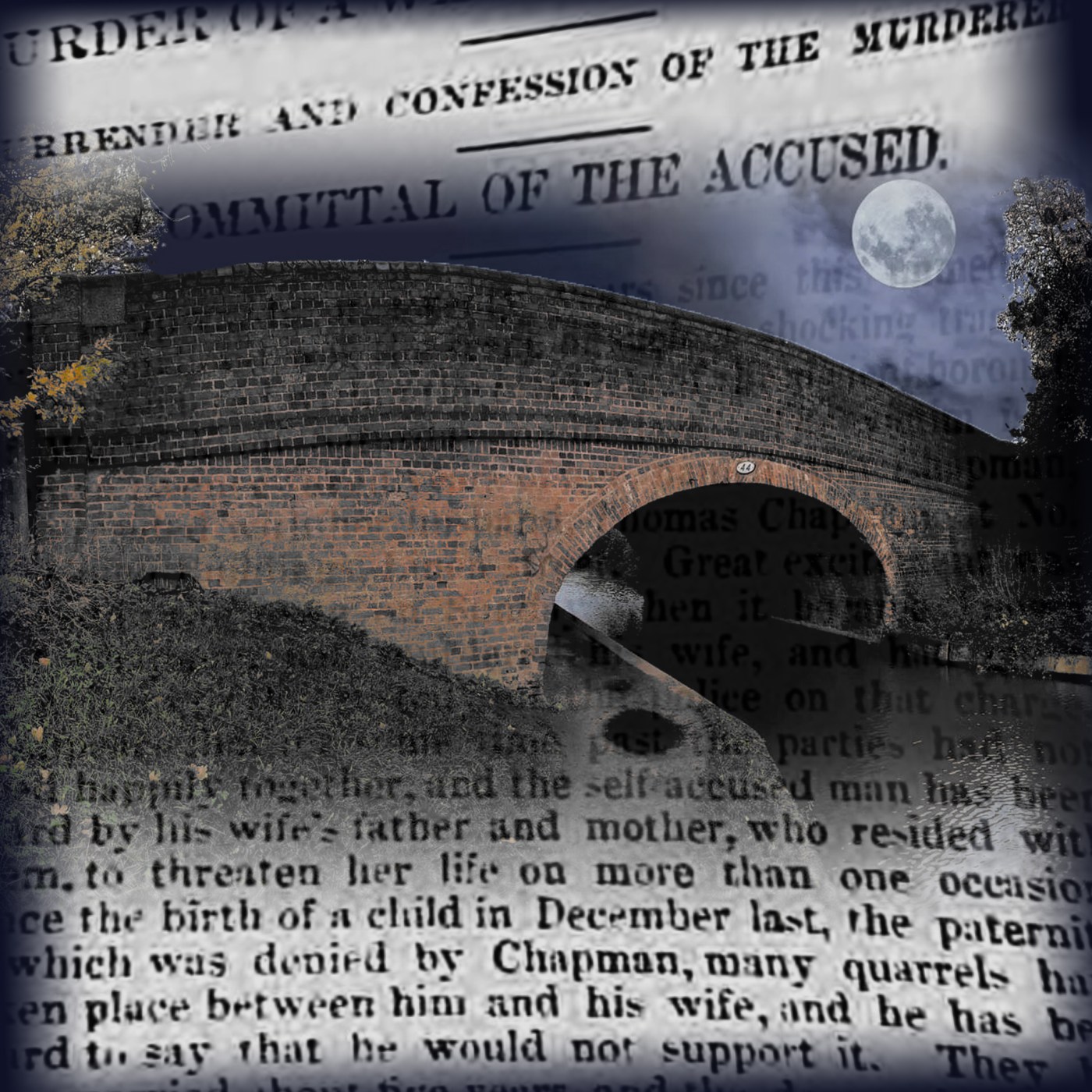
Thanks again to Simon Dunne and Steve Bap for the photographs

bridge-combined

Blog at WordPress.com.

Up ↑