

 It is 1965 and we are basking in the slightly faded grandeur of Brighton, on the south coast of England. The town has never quite recovered from its association, more than a century earlier, with the bloated decadence of The Prince Regent, and it shrugs its shoulders at the more recent notoriety bestowed by a certain crime novel brought to life on the big screen in 1947. Brighton has its present-day misdeeds too, and who better to write about it than the intrepid crime reporter for the Evening Chronicle, Colin Crampton?
 rampton is an enterprising and thoroughly likeable fellow, with a rather nice sports car and an even nicer girlfriend, in the very pleasing shape of Australian lass Shirley Goldsmith. Crampton is summoned to the office of his deputy editor Frank Figgis and, barely discernible amid the wreaths of smoke from his Woodbines, Figgis’s face is creased by more worry lines than usual. His problem? The Chronicle’s drama correspondent, Sidney Pinker, has been served with a libel writ for savaging, in print, a local theatrical agent called Daniel Bernstein.
Bernstein has certainly seen better days. His hottest property, the redoubtable Max Miller, is two years in the grave, and Bernstein’s remaining clients consist of dodgy ventriloquists and wobbly sopranos whose top notes have long since disappeared with the last high tide. Crampton is tasked with talking the aggrieved impresario out of legal action, but his job becomes slightly more difficult when Bernstein is found dead in his office, impaled by a sword. And who is discovered with his hand on the hilt? None other than Sidney Pinker.
 inker, by the way, is very much in the John Inman school of caricature luvvies, so those with an over-sensitive approach had better look away now. His pale green shirts, flowery cravats and patronage of certain Brighton nightspots are pure (politically incorrect) comedy.
 Bernstein’s murder is seen as very much open-and-shut by the Brighton coppers, but Crampton does not believe that Pinker has the mettle to commit physical violence. Instead, his investigation takes him into the rather sad world of stand-up comedians. Today, our stand-up gagsters can become millionaire celebrities, but back in 1965, the old style joke tellers with their catchphrases and patter were becoming a thing of the past, as TV satire was breaking new ground and reaching new audiences. Crampton believes that the murder of Bernstein is connected to the agent’s former association with Max Miller and, crucially, the possession of Miller’s fabled Blue Book, said to contain all of The Cheeky Chappy’s best material – and a few jokes considered too rude for polite company.
Eventually, Crampton discovers the killer, but only after life-threatening brushes with American gangsters and psychotic criminal twins born much closer to home. His success is due in no small way to the ability of the delightful Shirley to deliver a debilitating karate kick to sensitive male parts.
 here have been occasions – and I am not alone – when I have used the term cosy in a book review, meaning no ill-will by it, but perhaps suggesting a certain lack of seriousness or an avoidance of the grim details of crime. Are the Colin Crampton books cosy? Perhaps.You will search in vain for explorations of the dark corners of the human psyche, any traces of bitterness or the consuming powers of grief and anger. What you will find is humour, clever plotting, a warm sense of nostalgia and – above all – an abundance of charm. A dictionary defines that word as “the power or quality of delighting, attracting, or fascinating others.” Remember, though, that the word has another meaning, that of an apparently insignificant trinket, but one which brings the wearer a sense of well-being and even, perhaps, the power to produce something magical.
I can’t remember in recent times reading anything more magical than the three page Epilogue which concludes The Comedy Club Mystery. I have to confess to being sentimental at times and I am unashamed to say that I put this lovely novel down rather moist eyed.
“Yes”, the man said. “Love is very important too.”
The Comedy Club Mystery is published by The Bartram Partnership, and is out now. For more on Crampton of The Chronicle, follow this link.

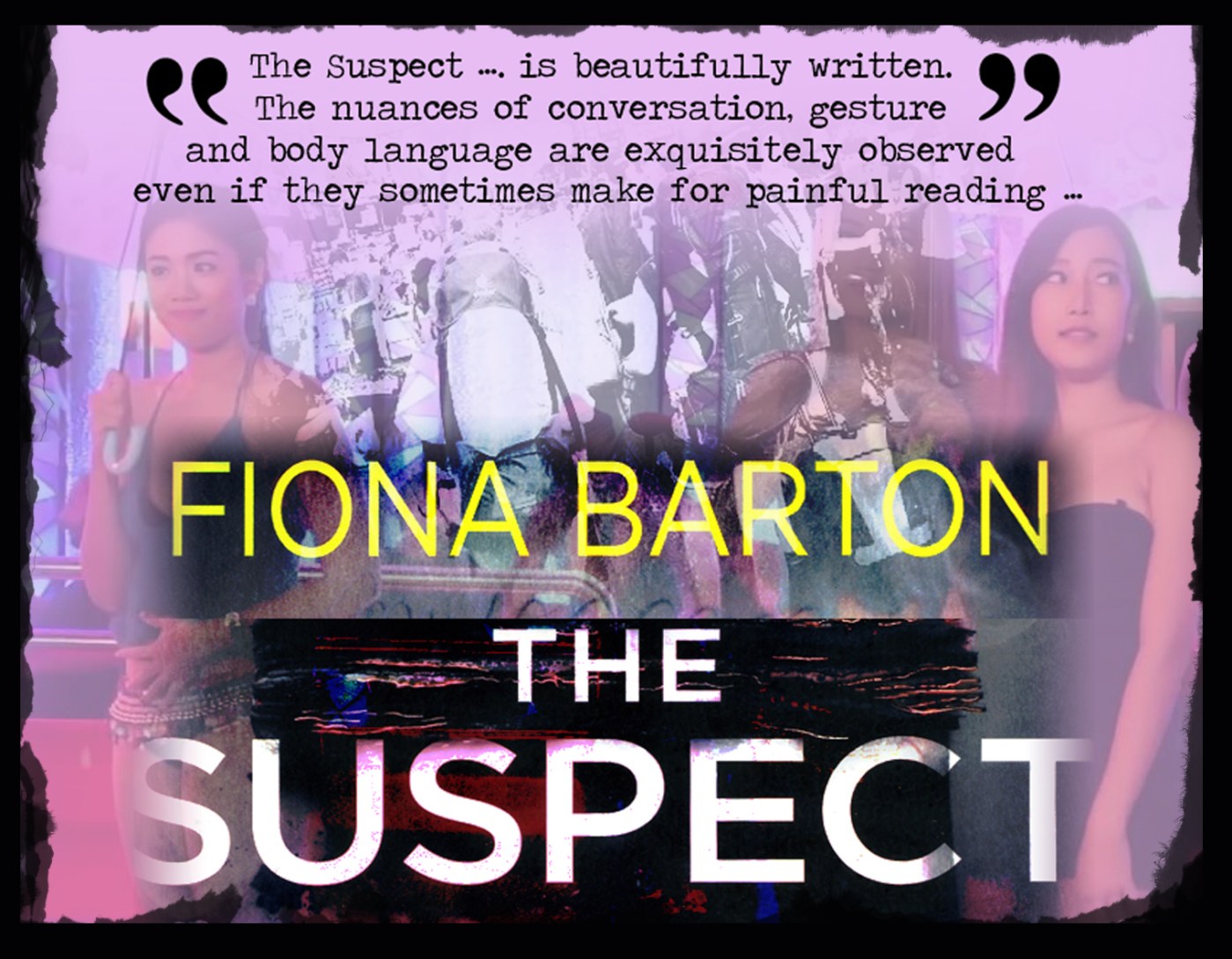

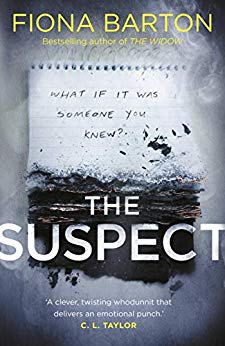 Sensing a very productive headline story that will run and run, Kate Waters uses all her empathy and tricks-of-the-trade to get close to the girls’ families, and the story does indeed have the whole enchilda. Beautiful teenage girls, disappearance in a Bangkok drug den, frantic parents, the possibility of incompetence by foreign police – what could possibly go wrong? Jake Waters is what could possibly go wrong. Kate’s son has been away in Thailand “finding himself” after a failed spell at university, and her journalistic glee at the ramifications of the story is brutally brought up short when she finds that her errant boy might be at the very epicentre of the story she has claimed as her own.
 It must be said that this is a story long on personal misery and rather short on redemption, but it is beautifully written. The nuances of conversation, gesture and body language are exquisitely observed even if they sometimes make for painful reading, such as the bittersweet moments between Bob Sparkes and his dying wife. My own children are, thankfully, well past the age of “doing” Thailand, but my advice to those with gap-year offspring is, with all respect to Fiona Barton (right), don’t read this book! Once your teenagers have shouldered their backpacks and waved goodbye at the departure gate, your mind will hark back to The Suspect it will be nessun dorma for you!






 Charles Harris (right), a best-selling non-fiction author and writer-director for film and television sets in train a disastrous serious of mishaps, each of which stems from Kati’s ostensibly harmless error. Too exhausted from her daily grind making sure that Every Little Helps at everyone’s favourite supermarket, she sends her hapless son, Liam, off to the cashpoint, armed with her debit card and its vital PIN. Sadly, Liam never makes it home with the cash, the pizza guy remains unpaid, and Kati Glass is pitched into a nightmare.
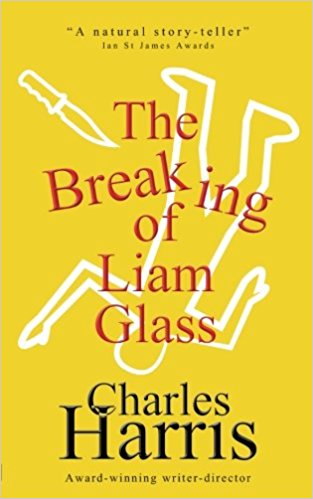 Trying to find out who stabbed Liam Glass is Detective Constable Andy Rackham. He is a walking tick-box of all the difficulties faced by an ambitious copper trying to please his bosses while being a supportive husband and father. The third member of this unholy trinity is Jamila Hasan, an earnest politician of Bengali origin who senses that the attack might be just the campaign platform she needs to ensure that she is re-elected. But what if Liam’s attackers are from her own community? Sadly, in her efforts to gain credibility on the street, Jamila has been duped.


 fullybooked2017