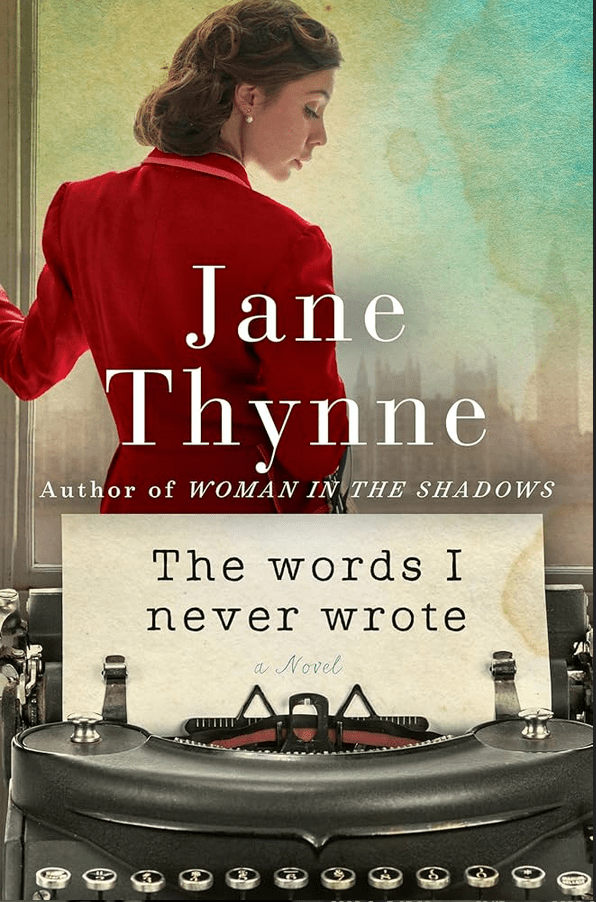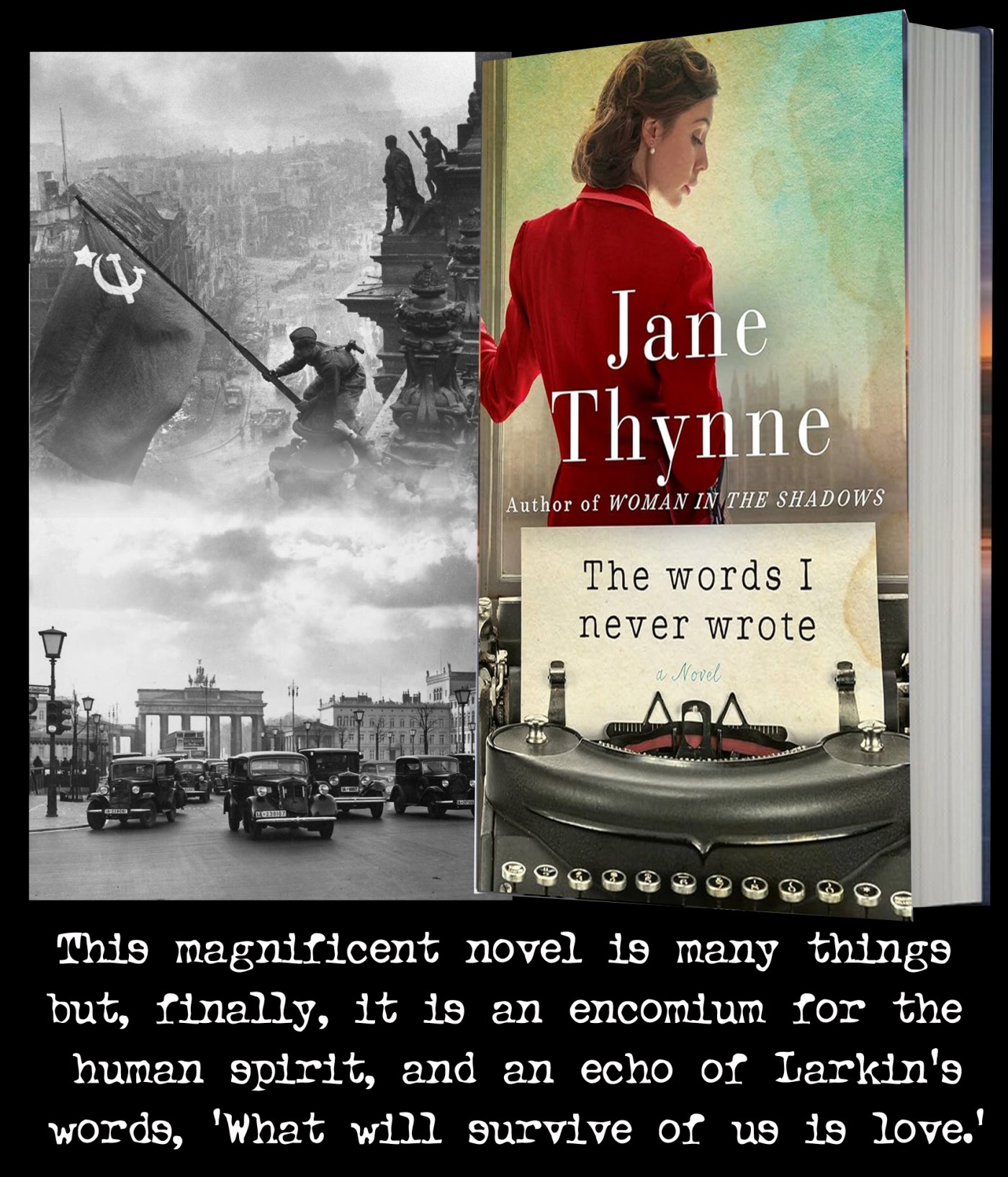

Jane Thynne’s novel spans many decades, and takes us from London, Paris and Berlin to New York. The central characters are sisters Cordelia and Irene Capel. Born into an aristocratic English world, the sisters take very different paths when Irene marries the heir to a German industrial empire and moves to Berlin. Cordelia, meanwhile, hoping for a career as a writer, takes a job as a secretary at the Paris office of a London newspaper.
Irene discovers – at first with amusement and then, as the true nature of the party is revealed to her, dismay – that her husband Ernst is an admirer of the Nazi party – and the feeling is mutual. At social functions she rubs shoulders with, among others, Herman Goering and Reinhardt Heydrich. She also meets Martha Dodd, the captivating daughter of the American Ambassador. Dodd went on to have a career as a novelist and Soviet spy, but shortly before her father is recalled to America, she tells Irene what Berlin is really like:
“I had a lover once who was chief of police and he put the fear of the devil into me. He said Berlin was a vast network of espionage, terror, sadism and hate from which no one could escape.”
Along the way, we meet other real life characters such as Hardy Amies, Adolph Eichmann, Arthur Koestler and Kim Philby. Jane Thynne’s account of the paradox of late 1930s Germany is familiar, but still painful to read. On the one hand there was the booming economy, miniscule employment, and a burgeoning sense of national identity. On the other hand, the relentless surveillance by the Gestapo and the descent into state sponsored thuggery should haunt everyone, including modern Germans and its neighbours who sat back and watched it happen.
The narrative is cleverly constructed, and its master stroke is the introduction of modern day photographer Juno Lambert who buys an old portable typewriter for a photo shoot and uncovers a mystery that is as enchanting as it is chilling. Jane Thynne poses an exquisitely painful moral question, which is centred around the life of Irene. We see her as a newly-wed in the heady days of pre-war Berlin, with a glittering social life on the arm of her husband, Ernst. Their villa on the shores of the Wannsee, is a paradise, with a fertile garden rich with fruit and delicious vegetables. Literally ‘the house next door’ was where Reinhardt Heydrich chaired the infamous conference which drove the final nail into the coffin of Europe’s Jews.
We see Irene in the early months of 1945. The house is undamaged, but Ernst is long dead, killed on the Eastern Front. She boils the remains of vegetables to make an apology for soup. She trades her Cartier watch for a rabbit at the butcher shop. Everywhere, the talk is ‘what will happen when the Ivan’s arrive?’ The women of Berlin know only too well.
The moral question is this. Do we sympathise with people like Irene, betrayed by a corrupt and vainglorious government, or do we opt for that word (that only the Germans could invent) Schadenfreude? Although, wordwise, most of the novel is full of the stories of Irene and Cordelia, Juno Lambert is the key which unlocks the past. Juno rents the Villa Weissmuller in 2016 and, having read Cordelia’s manuscript, hidden in the case of the antique typewriter, she is anxious to find out if the sisters were ever reconciled.
There is an exquisite moment of irony when, with the Red Army rampaging through Berlin, we read how Irene’s recent lover, Obersturmbannführer Alex Hoffman, and the young Jewish man she has been sheltering for weeks, cower together in the hastily constructed hiding place behind the ornate shelves of the house’s library.
This magnificent novel is many things: a record of atrocities almost too awful to contemplate, let alone describe in words; several stories of love, some of which end in tragedy; a hymn of praise for Berlin, a city which has suffered unspeakable cruelty, but a place resilient enough to reinvent itself; finally, it is an encomium for the human spirit and an echo of Larkin’s words, “What will survive of us is love.” The Words I Never Wrote is published by Sharpe Books and is available now.