Search

fullybooked2017

Tag

Irish Crime Fiction

CAN YOU KEEP A SECRET? … Between the covers

Karen-Perry-M2C-1
This is the latest from Karen Gillece and Paul Perry
, the successful Dublin writing partnership. How two people can write one novel remains a mystery to me but, my goodness, Gilece and Perry do the business. Who contributes what may well remain a trade secret, but if you have any misgivings about the effectiveness of collaborations, ditch them now. This narrative is seamless, gripping, intensely creepy, and an object lesson in how to to convince the reader that they know what is going on, while cooking up surprise after surprise and twist on twist. Eventually, a rather sinister rabbit is pulled out of a bloodstained hat.
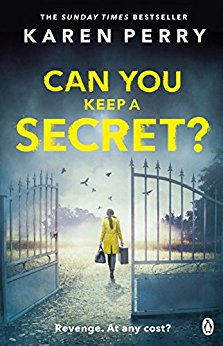
CYKAS coverLindsey Morgan is our narrator. She is a photographer with the Irish police, the Garda Síochána, and her frequent visits to gory crime scenes mean that she must don a cloak of cold objectivity as she looks through her camera at the damage people do one another. The distance between the person behind the viewfinder and the scene captured by the lens is a key motif in the story, as you will discover when you read the book.

Lindsey finished her education at an independent school, and it was there that she met the players in this drama. There’s Niall, Marcus and Hilary but, most significantly we have Rachel Bagenal and her older brother Patrick. Rachel and Patrick are the children of what used to be called landed gentry. Their home is Thornbury, a substantial mansion in the countryside.

We have two separate timelines here. First, we have the present day, where Patrick Bagenal, living alone in the decaying house, invites his old school friends for a final weekend at Thornbury. The house has deteriorated beyond Patrick’s ability to maintain it, and so he has been forced to sell. His parents, Peter and Heather, are both dead. The second timeline takes us back to the early 1990s. The youngsters are all still at school, but enjoy being invited for weekends at Thornbury. It is one such visit – for Patrick’s lavish eighteenth birthday party – which ends in a tragedy which will resonate down the years.

As with all reunions, the adults appraise each other and remember how they used to be, and how they have changed. Marcus has embraced modern acceptance of homosexuality and is comfortably gay, while Niall has made a success of his business but failed in the marriage game. Hilary has metamorphosed from the archetypal fat girl into a waif-like lifestyle coach. Patrick retains his boyish charm, but has grey hairs because of the demands imposed on him by being the sole tenant of Thornbury. Rachel? Rachel was always the force of nature, the woman among the teenagers, the assured femme fatale among the gauche schoolgirls. Now, she returns from a life in London to preside over a weekend which will self destruct in a clatter of betrayal, guilt, recrimination and violence.

CTKAS banner

This is an outrageously brilliant thriller, and we are pretty much hit with every shot in the stylistic locker. We have a classic convergence of past and present, where convergence becomes a collision, and the collision explodes into a catastrophe. We have the timeless element of a crumbling old house, complete with secrets, unexplained noises, and the shades of the dead – some of them malevolent, but some of them wronged. Thornbury is every bit as haunted as Daphne du Maurier’s Manderley. We may not have a Mrs Danvers, but we certainly do have a Rebecca.

Throughout the book, I felt an over-arching sense of regret for lost innocence, but the authors are far too canny to make that straightforward as they shine a torch into all the little guilty corners in the lives of the characters. And, the novel’s tour de force, the narrator herself. Victim? Catalyst for tragedy? Innocent observer? As the saying goes, if I told you, I would have to kill you. You can avoid further bloodshed by buying your own copy of Can You Keep A Secret, which is published by Penguin.

For more top quality Irish crime fiction, check out our reviews of:
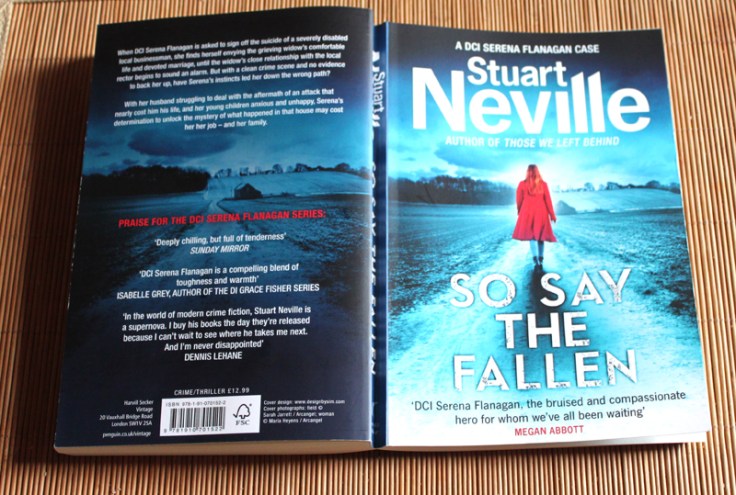
So Say The Fallen by Stuart Neville

Beneath The Surface by Jo Spain

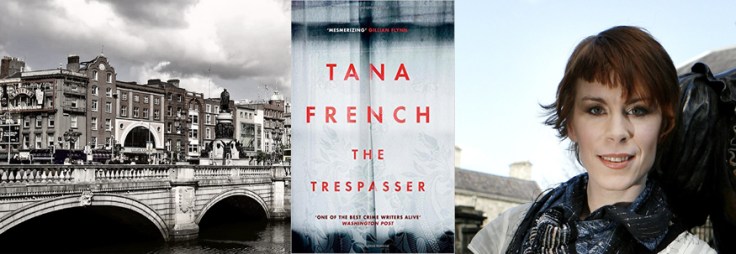
THE TRESPASSER …Between the covers

trespasser

AUTHOR TANA FRENCH beams us down into an endlessly wet, chill and foggy Dublin. The old working class district of Stoneybatter has become, so we are told elsewhere, the epitome of ‘cool’ with all the trappings which that entails – craft ales, artisan bakeries and community spaces. There’s little of that on display when DI Antoinette Conway and her partner Steve Moran are called to a terrace house to view the body of a dead woman. Aislinn Murray is on the floor by her fake rustic fireplace with severe head injuries. Conway says;

“Her face is covered by blond hair, straightened and sprayed so ferociously that even murder hasn’t managed to mess it up. She looks like Dead Barbie.”

Two things puzzle Conway and Moran. Firstly, who was the man who made the ‘phone call alerting the authorities to Aislinn’s demise, and why did he call direct to Stoneybatter police station, rather than using the emergency number? Secondly who was the dead woman’s intended dinner guest that evening? The table was laid for two, with candles lit and a bottle of decent red wine quietly breathing.

As Conway puts her team of ‘D’s’ – murder detectives – together, we learn that she has a prickly relationship with her fellow officers. Yes, she is a woman and, yes, the men’s laddish behaviour – nothing new to readers of novels featuring women detectives – is nastier than simple banter, but the dystopian atmosphere in the squad room is more complex. To be blunt, Conway is something of a pain in the arse at times. She has more chips on her shoulder than a bag of McCains (other brands are available), and the endless baiting and crass pranks from her male colleagues simply stoke the fires of bitterness. Having said that, she is an absolutely pin bright and razor sharp copper, but her fragile equanimity is not helped when her boss forces her to work alongside DI Breslin, a man she loathes. Breslin is glib, sharp-suited and much admired by the other D’s. In short, he is everything that Conway is not.

The consensus among the Gardaí is that the killer of Aislinn Murray is her latest boyfriend, an apparently mild-mannered bookshop owner called Rory Fallon, and he was  the intended beneficiary of the candle-lit dinner in the Stoneybatter cottage. From the moment Conway clapped eyes on the Aislinn’s ruined face, however, she is tantalised by a feeling that she has seen the girl before. When that memory clicks into place, the investigation takes a different turn entirely, and it turns over a large rock which has many nasty creatures scuttling around underneath it.

To say that The Trespasser is a police procedural is, strictly speaking, accurate. But the description does the book justice in the same way that simply describing Luciano Pavarotti as a singer fails to illuminate the central truth. Tana French knows her Dublin, and she knows her An Garda Síochána, but those dabs of authenticity are just that – mere paint spots on a subtle, complex and magnificent canvas.

I suppose I must have drawn breath during the five or six minutes it took to read the gripping climax of this book, but I don’t remember doing so. The final pages contain no action to speak of, just four people sitting in an office, but the psychological intensity is quite terrifying. The quality of the writing is such that French does not allow Conway to luxuriate in her victory, such as it is. There is just a terrible sense of pity, of shattered lives, and human frailty. Conway walks away from the police station:

“The cobblestones feel wrong under my feet, thin skins of stone over bottomless fog. The squad I’ve spent the last two years hating, the sniggering fucktards backstabbing the solo warrior while she fought her doomed battle; that’s gone, peeled away like a smeared film that was stuck down hard over the real thing.”

This is a brilliant, savage and uncomfortable read. Don’t pick it up unless you want your emotions scoured and your sense of empathy and compassion put through the mangle.

Tana French has her own website, and you can follow the link to check buying choices for The Trespasser, which is available now.

BENEATH THE SURFACE … Between the covers

btsThere are few grander places in Dublin’s fair city than Leinster House, even though its style and grandeur might hark back to the days when the Irish aristocracy – with its links to England – were a power in the land. Whether the current inhabitants of the ducal mansion do its stately rooms and grand corridors proud is not for me to judge, for it houses Oireachtas Éireann, the parliament of the Irish Republic. There must have been a whole lexicon of killing words uttered between political opponents over the decades, but few – if any – actual murders have despoiled the Georgian grandeur. Jo Spain puts this right within the first few pages of Beneath The Surface.
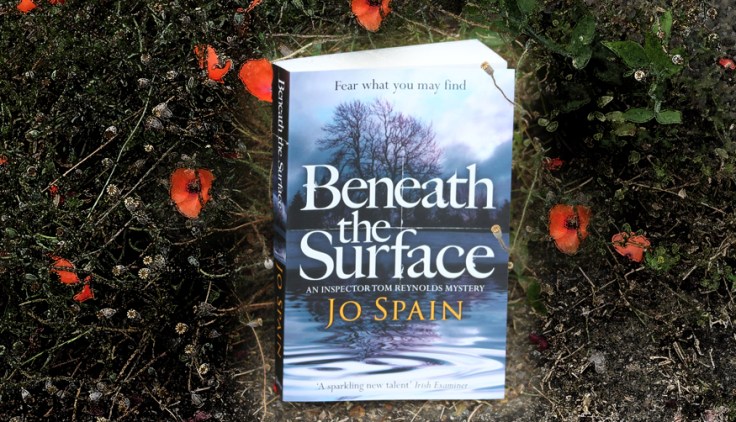
 Ryan Finnegan, a parliamentary aide to an ambitious government minister, is found shot dead, lying at the feet of a loftily oblivious stone angel in one of the labyrinthine corridors beneath Leinster House. Enter Detective Inspector Tom Reynolds of An Garda Síochána, the Irish police force. Jo Spain introduced us to Reynolds and his team in her 2015 hit debut With Our Blessing. There, Reynolds was wading through a morass of guilty secrets engendered by the Roman Catholic church and the Magdalene Laundries scandal, but now he is in a place where straight talking is equally hard to find – the upper echelons of government.

Beneath Finnegan’s body is a computer printout. It isn’t just any old piece of A4, however. It’s an image of Finnegan’s boss, cabinet minister Aidan Blake, in what used to be euphemised as “a compromising position”. When the police tech boys search the right hard drives, they find more photos from the same album. If the images were being tagged on social media, the content might include #gaysex #rentboys #cocaine #thailand.

Reynolds has more suspects than he can deal with, and even when he applies the time-honoured question Cui Bono? there is something of a queue. How about the icily calm Danish businessman Carl Madsen whose gas exploration firm stands to gain from preferential treatment in the new resources bill? Can we trust Darragh McNally, the Chairman of the governing Reform Party, and a man whose singular devotion to his party – and his mother – sets alarm bells ringing? And is the Taoiseach himself above suspicion?

As in all the best CriFi novels, there is a dramatic finale with half a dozen possible outcomes. Jo Spain walks us through this, and cleverly switches narrator just at the crucial moment. I was hooked by this excellent novel within the first few pages. Yes, it’s a police procedural, but it succeeds so many other levels. Jo Spain has a very deft hand when dealing with personal relationships, and she lets us be a fly on the wall in many encounters, most memorably those between Tom Reynolds and his long-suffering wife, Louise.

The widowed Kathryn Finnegan and her baby daughter Beth are beautifully described, and my reputation as a man with a heart of stone was severely tested when I came to the scene where they visit Ryan’s grave. Reynold’s boss, Detective Chief Superintendent Sean McGuiness has a gracious wife, June, well used to hosting dinner parties, and playing The Good Wife with her husband’s associates, but her sad slide into the living hell of dementia is described with great subtlety and compassion, but not without dramatic effect.

Beneath The Surface has pushed its way into my Top Five novels of 2016, and I will be scanning the horizon for the first sight of the next Tom Reynolds story.

Beneath The Surface is published by Quercus, and you can check out buying choices here.

THE POSTMAN DELIVERS … Beneath The Surface

Beneath The SurfaceIRISH CRIME FICTION seems to be on a roll at the moment. With writers like Anthony Quinn, Stuart Neville, Ken Bruen, John McAllister and Sinead Crowley making headlines, it’s not too fanciful to see Ireland – North and South – rivaling its neighbour across the sea, Scotland, as everyone’s favourite setting for moody and intense crime tales. Is there room for one more at the top table of Irish crime? There certainly is, when it’s Jo Spain asking for a seat. Her debut novel With Our Blessing was named as an Irish Times crime fiction book of the year by Declan Burke in 2015, and achieved great critical acclaim.
Now, DI Tom Reynolds and his team return for another sortie against the many-headed monster of Irish crime. This time a government official is murdered in Leinster House, the former ducal residence in Dublin which has housed the Irish Parliament since 1922.

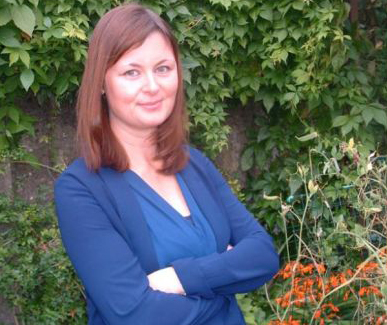
Everyone makes the assumption, that Ryan Finnegan’s death has been orchestrated by one of his political opponents, but before too long, Reynolds is uncovering evidence that points in a different direction altogether. The novel will be available very soon from the usual sources, and it looks from this angle that Jo Spain (below) and her publishers Quercus, have another hit on their hands. You can also keep in touch with Jo by following her on Twitter.

Jo Spain


SO SAY THE FALLEN – Between the covers


SSTF

Neville-Stuart-Colour-c-Philip-ONeill-Photography2Stuart Neville (left) returns with another hard-bitten and edgy tale of life and crimes in Northern Ireland. Set in a fictional village on the edge of Belfast, we are reunited with DCI Serena Flanagan, who first appeared in Those We Left Behind. Like much of life in Ulster, fictional and real, religion and the stresses and strains it places on secular life is never far from the surface. The sacred influence in this case is provided by the Reverend Peter McKay. The clergyman is a widower, but we find that he has been taking his parochial duties above and beyond what is normally expected. The recipient of his pastoral care is Roberta, the attractive wife of Henry Garrick.

The unfortunate Garrick has been of little solace to his wife in recent times, as he was lucky to escape with his life after a catastrophic road accident which resuted in him losing both legs, and rendering him totally dependent on his wife and visiting carers. When he is found dead one morning, with empty sachets of morphine next to his bed, it is clear that the poor man has had enough of his living death, and decided to make it final. Flanagan is sent to the scene, and as is the way with these things, her bosses expect her to sign off the death as a suicide.

But this is crime fiction, and regular readers will know that suicides in these stories are seldom what they seem to be. They will also know that police Inspectors are rarely happy, healthy people, untroubled by their job and with idyllic family lives. Flanagan doesn’t buck the trend. She is recovering from cancer, and the intensity she brings to the job is having a destructive effect on her relationship with her schoolteacher husband and their two children.

Flanagan has a nagging suspicion about the death of Mr Garrick, and she is troubled, not by the arrangement of family photographs around the bed, but by the one that is missing – that of the Garrick’s young daughter – and only child – who was drowned in a tragic accident in Spain.

This is a cleverly written book on many levels. We know early in the piece that Henry Garrick’s death is not what it seems to be. We can also make a shrewd guess as to who is responsible. Neville uses the narrow space occupied by the few unknowns left to us to expand the characters, describe their unsettled personal lives, and paint a mesmerising picture of the ordinary – but strangely intense – lives of church-goers in the parish of Morganstown. The final action set piece, as Flanagan homes in on the killer, is as gripping as anything Neville has written. The title? It is taken from lines written by the American writer Dennis Lehane.

“I can’t just live for the other world. I need to live in this one now.
So say the fallen. So they’ve said since time began.”

You can buy So Say The Fallen from good booksellers, and from Amazon.

Blog at WordPress.com.

Up ↑