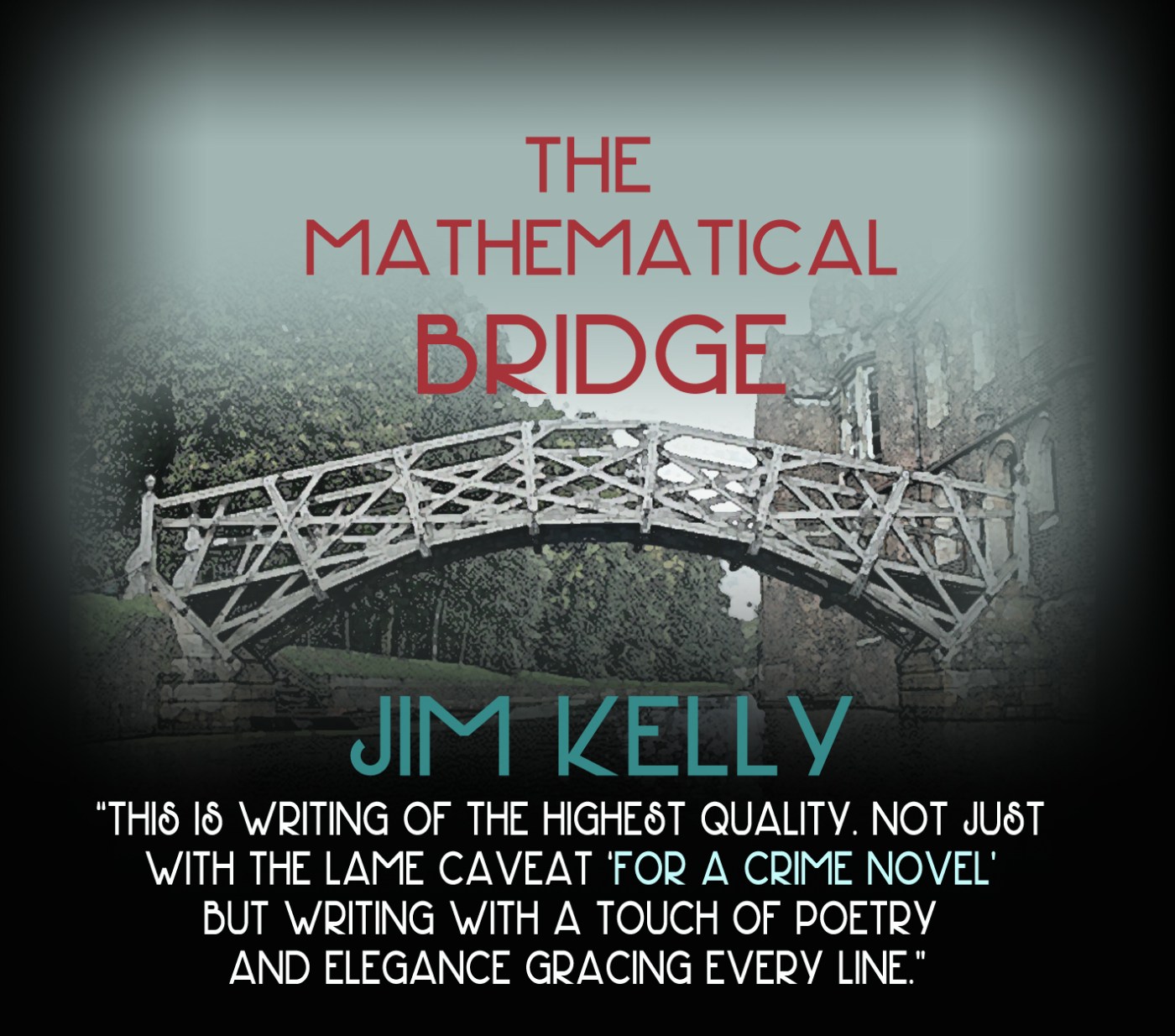
“Detective Inspector Eden Brooke trudged into Market Hill, the city’s great square, as snowflakes fell, thick and slow, each one a mathematical gem, seesawing down through the dead of night. Every sound was muffled, a clock striking the hour out of time, the rhythmic bark of a riverside dog, the distant rumble of a munitions train to the east, heading for the coastal ports. The blackout was complete, but the snow held its own light, an interior luminescence, revealing the low clouds above. Brooke stopped in his tracks, his last crisp footstep echoless, and wondered if he could hear the snow falling; an icy whisper in time with the sparkling of the crystals as they settled on the cobbles, composing themselves into a seamless white sheet.”
 “Begin as you mean to go on” says the old adage, and Jim Kelly sets himself a hard task with the brilliant and evocative first paragraph of The Mathematical Bridge. The beautiful use of language aside, Kelly’s first 126 words convey a wealth of information. A country at war. Midwinter. A city preparing for an attack from the air. A policeman out and about when honest men are abed.
Eden Brooke first appeared in The Great Darkness (2018) and you can read my review by clicking the blue link. A copper in the university city of Cambridge, he is a war veteran, not of the Western Front, but of the desert campaign, one of ‘Allenby’s Lads.’ We join him in that first winter of the Second World War, when German bombers have yet to inflict their terror on the houses and streets below them. Tragedy strikes when a boy, evacuated from his London home to the relative safety of a Roman Catholic community in Cambridge, is feared drowned in the fast-freezing River Cam. His body is eventually recovered, but not before Brooke has unearthed a plot to bring death and destruction to the streets of Cambridge.
The conspirators are not Germans but people from much nearer home who firmly believe that their enemy’s enemy is their friend. With two Irish republican conspirators sitting in a Birmingham jail, sentenced to death for a 1939 bomb atrocity in Coventry, Brooke realises that the next potential target for the IRA is Prince Henry, Duke of Gloucester, younger brother to the King. Henry is due to make a morale-boosting visit to Cambridge to boost the war effort, and Brooke is desperate to find the link between the dead boy in the river and the Irish community who worship at St Alban’s church.
Eden Brooke is an engaging character. Blighted by vision problems and chronic insomnia – both the result of his wartime treatment at the hands of brutal Turkish captors – he goes about his work with a steely intensity, much to the despair of his wife and daughter. Kelly’s portrait of provincial England in the first months of WW2 is mesmerising, more so given the added piquancy of our knowledge of what will happen, contrasted with the uncertainty of the characters in the novel.
Give Jim Kelly a landscape, a town, a city, an isolated village, and he will mobilise and send it off to war. Fans of his Philip Dryden novels will know the dramatic chiaroscuro he paints that shows how the comfortable middle-class cathedral city of Ely sits surrounded by dark and broken hard-scrabble villages out in the Fen. His Norfolk copper, Peter Shaw, knows only too well the contrast between the rough estates of King’s Lynn and the Chelsea-On-Sea second homes further up the Norfolk coastline. Eden Brooke’s Cambridge is a vivid and vital character in The Mathematical Bridge. Kelly makes it, despite the murders, an island of relative calm and rationality, for beyond it, out there in the flat darkness, lies The Fen.
 This is writing of the highest quality. Not just with the lame caveat ‘for a crime novel’ but writing with a touch of poetry and elegance gracing every line. Even when the crime is solved, the perpetrators are behind bars, and the delightfully complex contradictions of the plot have been explained, Kelly (right) still has the emotional energy to give us a last scene which manages to be poignant but, at the same time, life-affirming.
The Mathematical Bridge is published by Allison & Busby and is out on 21st February. For more about Jim Kelly and his writing click this link.

 The sounds and sweet airs might have been provided by Haydn Woods’ A Brown Bird Singing or, if you were more disposed towards the art of Edith Sitwell, William Walton’s setting of her poetry – Façade. The discordant sounds of the thousand twangling instruments could have come from several sources; possibly the thousands of impoverished ex-servicemen sold short by the country they had fought for; perhaps, however, the isle which was most full of noises was that of Ireland, and in particular the newly formed Irish Republic.
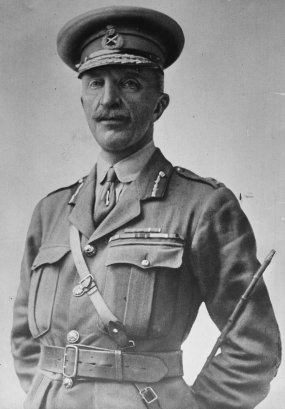 Sir Henry Wilson was a former General in the British Army, and his contribution to events in The Great War divides opinion. Some have him firmly in the ‘Butchers and Bunglers’ camp, a stereotypical Brass Hat who send brave men off into battle to meet red hot shards of flying steel with their own mortal flesh. Others will say that he was part of the combined military effort which defeated Germany in the field, and led to the surrender in the railway carriage at Compiègne in 1918. Whatever the truth, Wilson was never a field commander. He was much more at home well behind the front line, hobnobbing with politicians and strategists.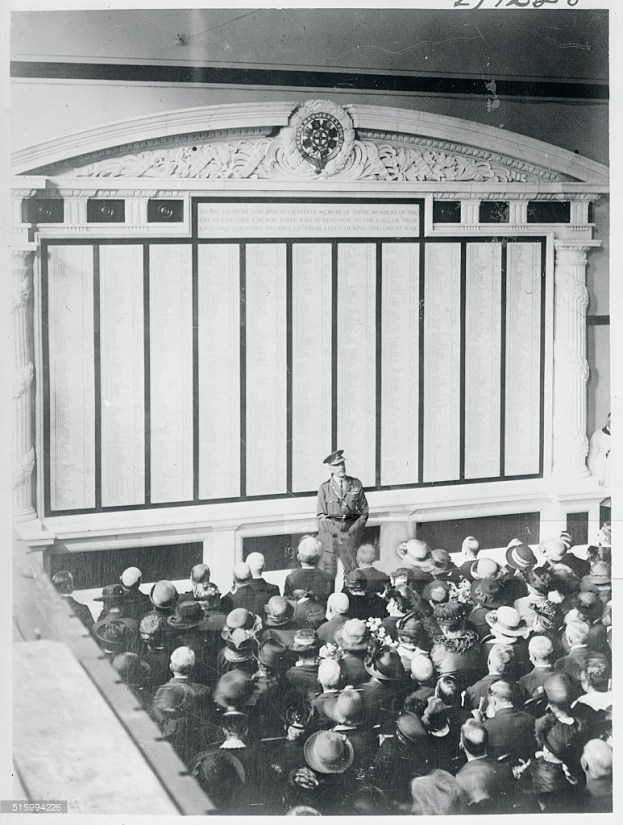

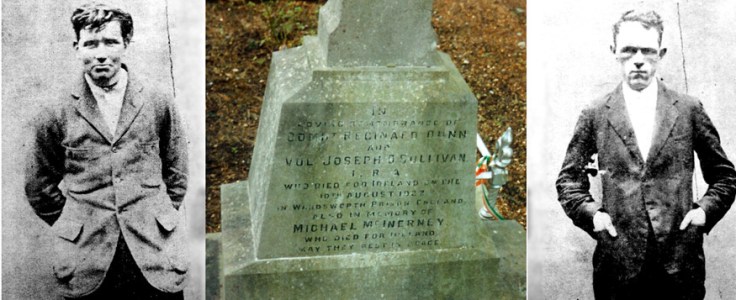
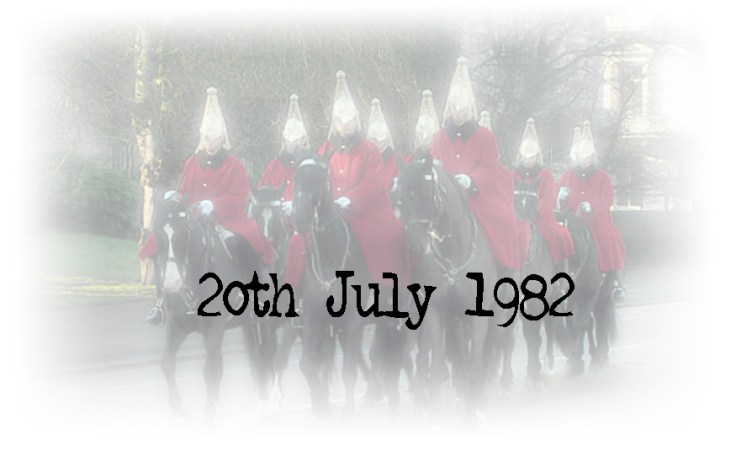 There is, perhaps, a legitimate debate to be had over what to call killings which are carried out in the name of a political cause. No-one in their right mind would label the millions of soldiers who died in the two world wars of the 20th century as murder victims. The wearing of a uniform, and the acceptance of the King’s shilling has always legitimised the act of pulling the trigger, firing the shell, or dropping the bomb.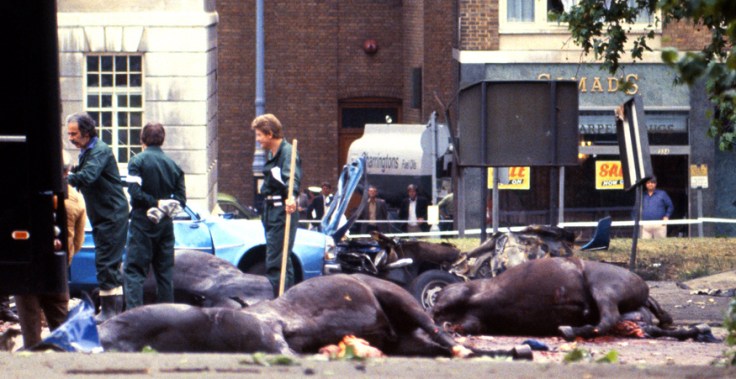

 Just a couple of hours later, as emergency services struggled to deal with the mayhem in South Carriage Drive, the terrorists struck again. It seems barely credible that in another part of the city, life was going on as normal. Remember, though, that these were the days before mobile ‘phones and social media, the days when news was only transmitted in print, by word of mouth and on radio and television. The regimental band of The Royal Green Jackets was entertaining a small crowd clustered round the bandstand in Regent’s Park. They were playing distinctly un-martial music from the musical ‘Oliver!’ when, at 12.55 pm, a massive bomb went off beneath the bandstand. The blast was so powerful that one of the bodies was thrown onto an iron fence thirty yards away, and seven bandsmen were killed outright. They were: Warrant Officer Graham Barker, Serjeant Robert “Doc” Livingstone, Corporal Johnny McKnight, Bandsman John Heritage, Bandsman George Mesure, Bandsman Keith “Cozy” Powell, and Bandsman Larry Smith.
 Downey (right) may or may not have been implicated in the Hyde Park murders. Only he knows for certain. At least he had the decency to cancel a party planned in his honour when he was released. He said:


 fullybooked2017