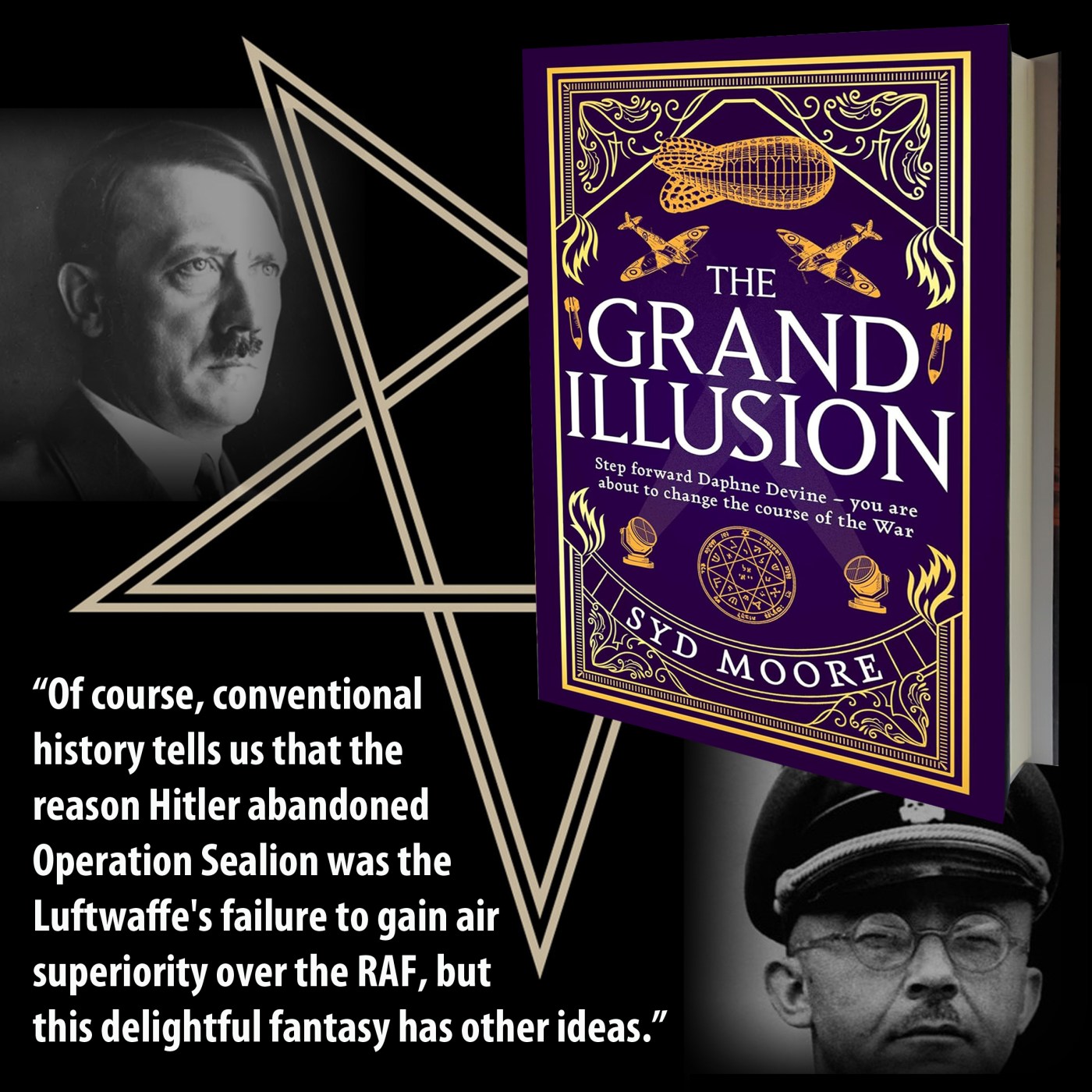

London. The early summer of 1940. British military leaders, politicians and the general public are wondering quite what to make of Dunkirk. Yes, over three hundred thousand allied servicemen have been rescued from the jaws of Hitler’s Blitzkrieg, but they have left behind them their weapons, millions of rounds of ammunition and countless thousands of gallons of fuel. The British Expeditionary Force might still exist, but it has few rifles, artillery pieces or tanks (even if their were any fuel to propel them).
Against this gloomy backdrop, we meet Daphne Devine and Jonty Trevelyan. They are busy entertaining audiences at London theatres with their conjuring act. Daphne is, of course, the archetypal ‘glamorous assistant’, flashing her shapely legs before the climax of their act, where she apparently gets sawn in half by The Grand Mystique. In much more secret places than the Metropolitan Edgware Road, intelligence officers are wondering just how they can remove the gloves from the British establishment who don’t yet realise that their Nazi opponents have torn up the rules of war and are fighting a very dirty fight. Just as Daphne and Jonty are enlisted as unlikely secret weapons, news comes that the SS Arandora Star, taking hundreds of internees and prisoners of war to Canada has been torpedoed and sunk by a German U-boat with the loss of more than 800 lives. Daphne’s Italian uncle is one of those lost.
Unsure of what is to be asked of them, Daphne and Jonty say goodbye to normal life, and are whisked off to a high security unit which seems to specialise in camouflage, pretence and making German aircraft make as many mistakes as possible in identifying targets on the ground. Then, events make another lurch in the direction of the unexpected. The ‘behind-the-scenes’ directors of this unlikely drama have become aware that the Nazi high command are, to a man, deeply susceptible to the occult and the power of astrology. This is the list. The initials are fairly obvious, although I admit to wondering what Reinhardt Heydrich was doing their, as this was only 1940. Then I remembered Hitler’s deputy, that strange who flew a plane to Scotland, and spent the last years of his life in Spandau Prison.

Then, Syd Moore introduces us to the delightful fulcrum on which the rest of the novel pivots. In a briefing Daphne and Jonty are astonished to learn that they are required not just to create an illusion of some astral phenomenon which will deter Hitler and his cohort from invading Britain, but to actually dabble in the Black Arts and recreate the demonic force which – so they are told – wreaked hell and destruction on The Spanish Armada in 1588, thus enabling Sir Francis Drake to continue his game of bowls, safe in the knowledge that the spell has already been cast.
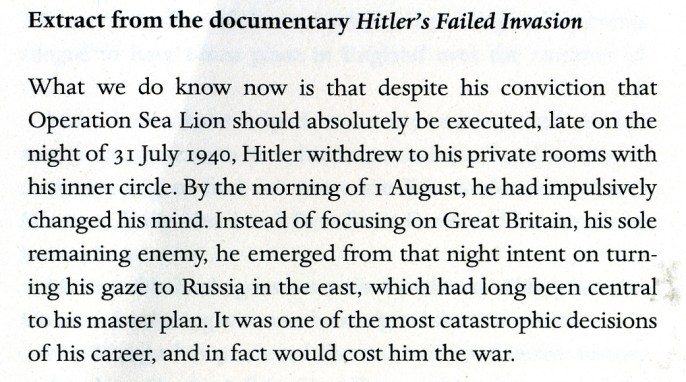
On 31st July 1940, In the full knowledge that there are German spies nearby, observing their every move, Daphne and the other specialists create an elaborate and dramatic psychic event. It is a spectacular illusion. Or is it just an illusion? That is the enigma with which Syd Moore leaves us. Of course, conventional history tells us that the reason Hitler abandoned Operation Sealion was the Luftwaffe’s failure to gain air superiority over the RAF, but this delightful fantasy has other ideas.
The Grand Illusion is published by Magpie Books and is available now.


 fullybooked2017