Search

fullybooked2017

Tag

Hull

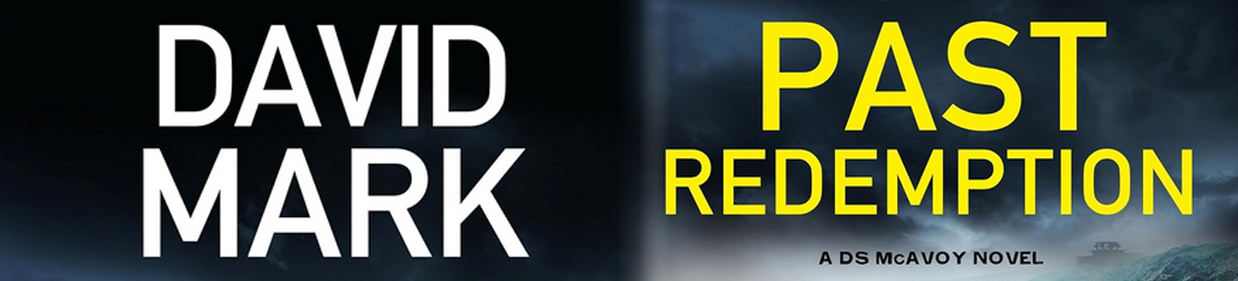
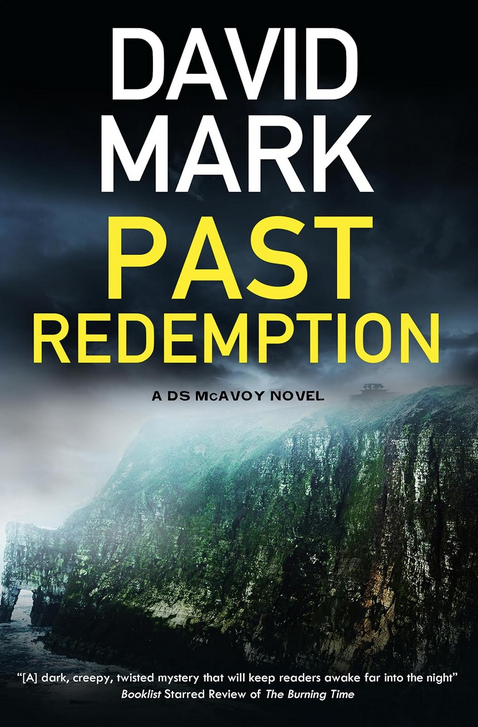
PAST REDEMPTION . . . Between the covers

PR feature

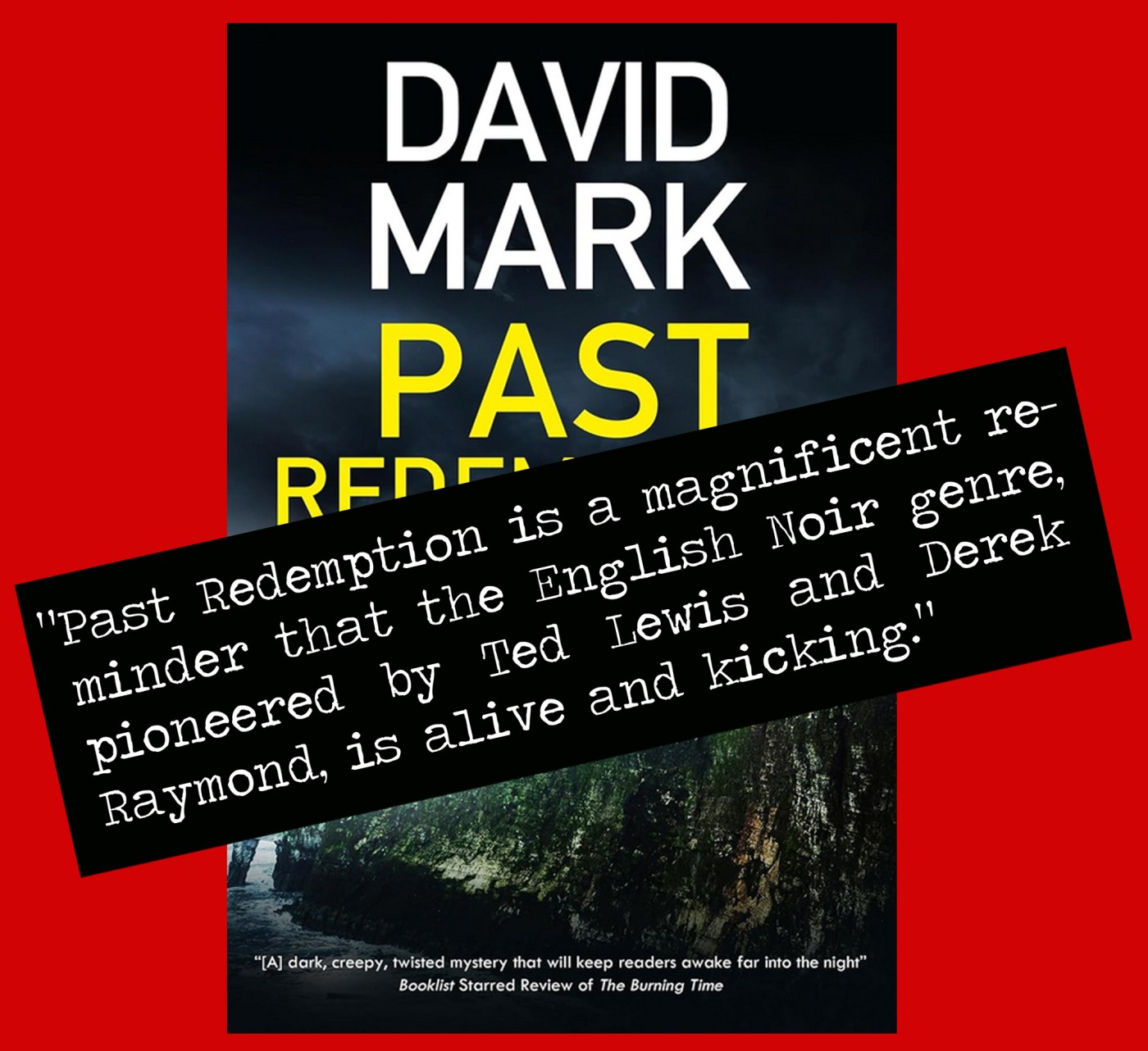
The new Aector McAvoy novel by David Mark begins with a bloodbath. A man is being literally ripped to pieces with the savagery torturers used to flay saints in medieval times. Just as it seems the victim is done for, someone comes to his rescue, in the shape of a small but fierce woman. We soon learn that the tortured man is Decland Parfitt who would, after he made an almost miraculous recovery, be jailed for child sexual abuse. His rescuer? Aector McAvoy’s long time boss, the formidable Chief Detective Superintendent Trish Pharaoh.

The story actually begins with a man driving in the pouring rain along a remote minor road in East Yorkshire. The driver, a man named Joe, is getting an ear-bashing from his ex-wife – who is on speaker phone – over the way he has let their daughter down. Distracted by her tirade and with the windscreen misting up, he feels a large bang, and knows he has hit something. When he gets out of the car he sees what appears to be a large black bag lying in the road. Rapidly calculating that there will be no cameras nearby, he gets back in the car and drives off. The bag is later found to contain a body – that of John Dennic, jailed for a savage assault on a police officer, and an acquaintance of Parfitt in prison. Dennic had been on day release when he went missing.

Parfitt was an arch-deceiver. He brought fun and laughter to countless youngsters across the region as a children’s entertainer. Dressed rather like Lofty in It Ain’t Half Hot Mum, he was everyone’s favourite uncle, with his jokes, his performing animals and his sunny disposition. He was a single man, but that rang no alarm bells with the local authorities when he applied to be a foster parent to two damaged sisters. Incredibly, his request was granted. One of the girls, Gaynor, suffered such abuse at his hands, that she later committed suicide. Younger sister Ruby, however, adored her foster dad and swore on oath that Gaynor was in a state of drug induced delusion.

Trish Pharaoh has two major problems to deal with and, by definition, they become McAvoy’s too. It seems that the prison authorities are determined to release Parfitt from prison, and Pharaoh needs to stop this. Second, she needs to disturb Ruby’s deep conviction that her foster father is a decent man who was wrongly convicted. Pharaoh is also convinced that Parfitt was also responsible for the abduction and murder of at least two girls, whose bodies have never been found.

The cast of villains in many of David Mark’s novels resemble the creations of the great Dutch painter Hieronymus Bosch. Bosch was obsessed with the darker side of humanity, and if you take a magnifying glass to his paintings, you can see tormented individuals, scurrying this way and that in the hellish landscape in which the painter has placed them. Bosch painted a figurative mouth of Hell, a gaping maw into which humans are sucked. Mark’s villains, such as Parfitt and Dennic are consumed by a metaphorical hell created from their own misdeeds. This is dark stuff, and not for the cosy crime community. Past Redemption is, however a fierce and gripping tale of evil deeds committed against the grey and dreary background of a city once vibrant with the noise and smells of its fishing industry, but now reduced to a backwater trying to celebrate what it once was.

The novel plays out with dramatic revelations of people who have pretended to be one thing, but were something else entirely. It is no coincidence that the man who nearly killed Parfitt, and may have killed Dennic has the nickname Virgil. David Mark himself plays Dante’s Virgil, as he leads us through Purgatory and Hell, contrasting his monstrous villains with McAvoy who, although, a physical giant, is gentle, endearingly clumsy, but fiercely brave. Past Redemption is a magnificent reminder that the English Noir genre, pioneered by Ted Lewis and Derek Raymond, is alive and kicking. The novel is published by Severn House and will be available on 3rd December.
Screen Shot 2024-11-10 at 20.06.33

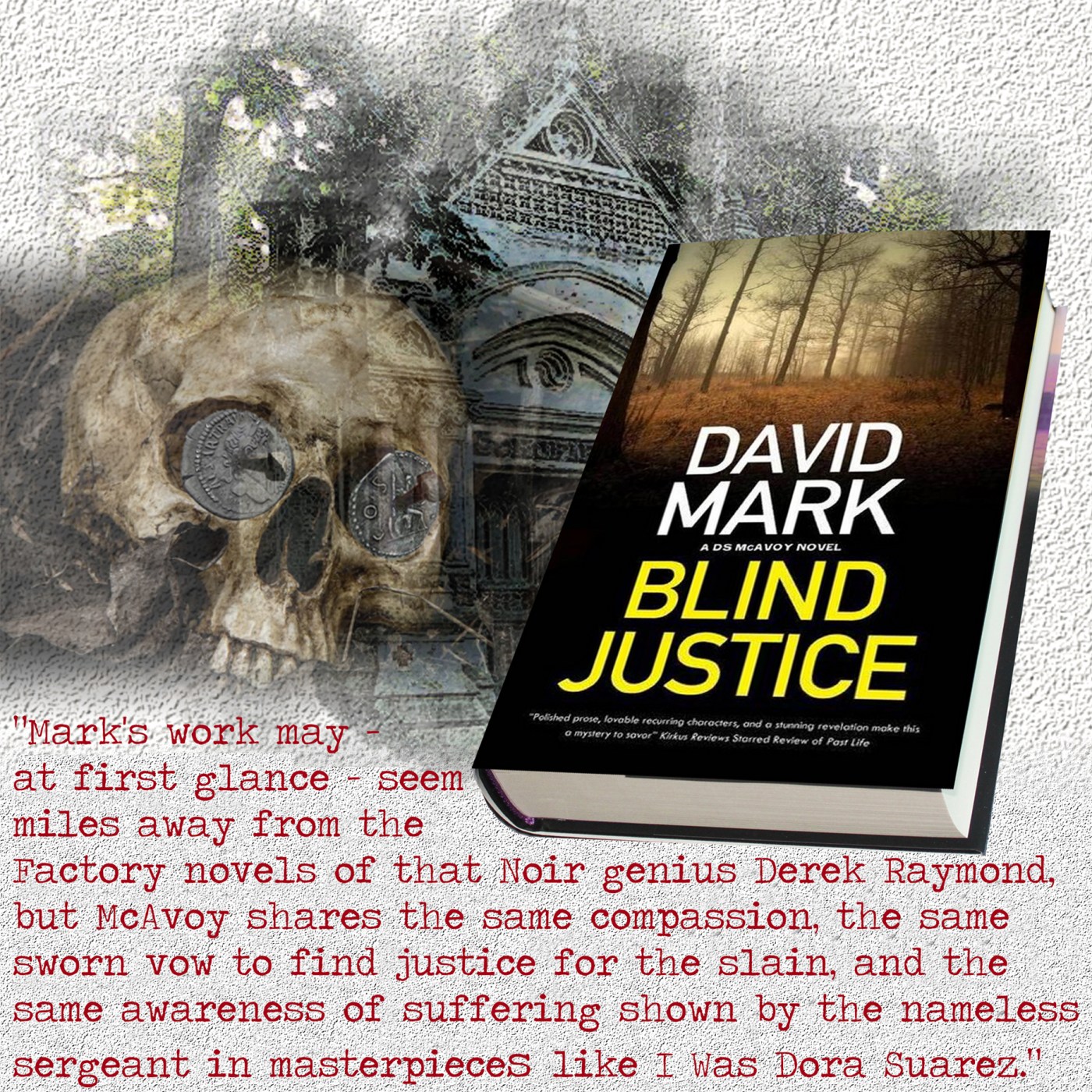
BLIND JUSTICE . . . Between the covers

BJ header

In the thirteenth episode of what is a genuinely impressive series, David Mark’s Hull copper Aector McAvoy returns, along with the established cast – his wife Roisin and their two children, and his boss, Detective Superintendent Trish Pharoah. McAvoy is, as the name suggests, a Scottish exile, and he is built like the proverbial brick you-know-what. Despite his forbidding appearance, McAvoy is a peaceable and studious man, shy with other people, but perceptive and with an attention to detail that matches his formidable appearance.

Screen Shot 2022-03-15 at 19.07.34The book begins with a flashback to an attempt by young men to carry out what seems to be a robbery in an isolated rural property. It ends in horrific violence, matched only by the destructive storm that rages over the heads of the ill-advised and ill-prepared group. Cut to the present day, and another storm has lashed Humberside, bringing down power lines, flooding homes, and uprooting trees. One such tree, an ancient ash, reveals something truly awful – a human body, mostly decayed, entwined within its roots in a macabre embrace.

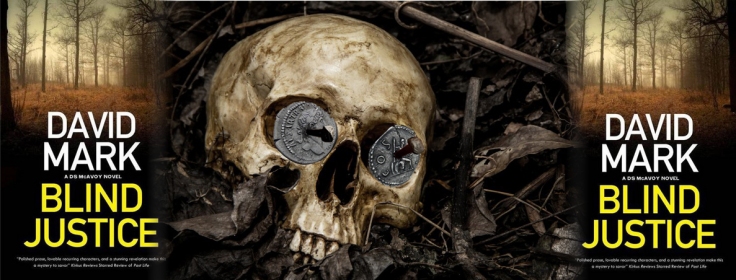
McAvoy is called to the scene, and it doesn’t take too much evidence – in this case a pair of fashionable trainers – for McAvoy to deduce that this body has been put into the ground in living memory. What is astonishing, however, is that two Roman coins have been nailed into the victim’s eyes. The gentle policeman can only hope and pray that this act was not done while the victim was still alive. To make matters more disturbing, the fragile bones of two babies are also found.

The body is soon identified as that of a university student who went missing in the 1990s, but what on earth was he doing in this remote spot, and who had cause to kill and maim him in such a fashion? The owners of the adjacent property are interviewed, but add nothing to the investigation. Pharoah and McAvoy discover that the case may be linked to the trade in ancient artifacts discovered by illegal metal detectorists – nighthawks – and there is disturbing evidence that a notorious Manchester gangster – convicted of horrific torture just a few years earlier – may be involved on the fringes of the case.

Screen Shot 2022-03-20 at 19.29.57David Mark (right) writes with a sometimes frightening intensity as dark events swirl around Aector McAvoy. The big man, gentle and hesitant though he may seem, is, however, like a rock. He is one of the most original creations in a very crowded field of fictional British coppers, and his capacity to bear pain for others – particularly in this episode his son Fin and Trish Pharoah – is movingly described. Mark’s work may – at first glance – seem miles away from the Factory novels of that Noir genius Derek Raymond, but McAvoy shares the same compassion, the same sworn vow to find justice for the slain, and the same awareness of suffering shown by the nameless sergeant in masterpieces like I Was Dora Suarez.
The terrifying climax to Blind Justice is also straight out of the Derek Raymond playbook and is not for the squeamish, but vivid and visceral. Where David Mark does differ from his illustrious predecessor is that he allows McAvoy the redemption and respite denied to Raymond’s sergeant with his dead child and mad wife, and it comes in the shape of his intriguing part-gypsy wife and their children.

If I read a better book all year, be sure that I will let you know. Blind Justice is published by Severn House and will be out on 31st March.

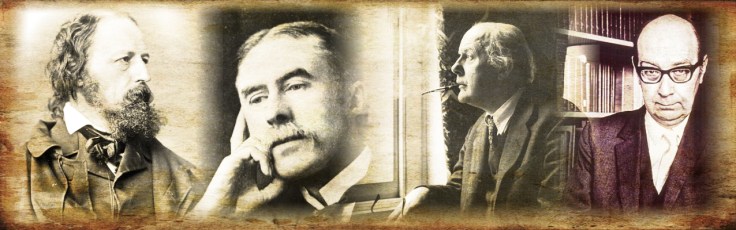
FOUR ENGLISH POETS . . . A personal choice (4)

poets header

If Betjeman was the poet of joyful nostalgia, Philip Larkin inhabited a much darker universe. He was born in Coventry in 1922, and after attending King Henry VIII school went on to Oxford to read English. There, he began to write poetry and became friends with KIngsley Amis who shared Larkin’s love of jazz, which he was to write about as jazz critic for The Daily Telegraph. He was an ardent traditionalist and loved Bessie Smith, Bix Beiderbeck and Louis Armstrong, but had little time for what he saw as the the more self-obsessed music of modern players like John Coltrane.

After graduating, Larkin became a librarian, first in Shropshire, then Leicester, Belfast and, finally at the University of Hull in 1955. He was to remain there for the rest of his life, and he took the job extremely seriously and was responsible for overseeing and encouraging the growth of the collection and buildings, and was regarded as an excellent administrator.

His first collection of poems was published in 1945 under the title The North Ship. The poem of the title is very different in tone and structure from more familiar works of later years.

TheNorthShip

Larkin takes the traditional Christmas carol and adds a more sombre note with the enigmatic fate of the third ship, “rigged for a long journey”. It was ten years before his second collection of poems, The Less Deceived was published. The twenty nine poems included Church Going, where he rubbed shoulders with John Betjeman, but in a darker and – perhaps – more disturbing – way.

Once I am sure there’s nothing going on
I step inside, letting the door thus shut.
Another church: matting, seats, and stone,
And little books; sprawlings of flowers, cut
For Sunday, brownish now; some brass
Up at the holy end; the small neat organ;
And a tense, musty, unignorable silence,
Brewed God knows how long.
Hatless, I take off My cycle clips in awkward reverence.

He wonders if the nondescript church is worth stopping for, but then reflects on what the building has meant to generations of people, and he wonders how long the place will remain central to the lives of people nearby, or if it has already outlived any use it may have had:

Yet stop I did: in fact I often do,
And always end much at a loss like this,
Wondering what to look for; wondering, too,
When churches will fall completely out of use
What we shall turn them into, if we shall keep
A few cathedrals chronically on show,
Their parchment, plate and pyx in locked cases,
And let the rest rent free to rain and sheep.
Shall we avoid them as unlucky places?

Here, he presages a sentiment expressed in one of his more celebrated later poems, Going, Going (1972)

For the first time I feel somehow
That it isn’t going to last,

That before I snuff it, the whole
Boiling will be bricked in
Except for the tourist parts –
First slum of Europe: a role
It won’t be hard to win,
With a cast of crooks and tarts.

And that will be England gone,
The shadows, the meadows, the lanes,
The guildhalls, the carved choirs.
There’ll be books; it will linger on
In galleries; but all that remains
For us will be concrete and tyres.

By this time Larkin had completely found his voice, and while his early work showed something of the lyrical intensity of Yeats, the gentle pessimism and sense of regret found in Thomas Hardy was embedded in everything he wrote. There are differences. Hardy’s novels look back to the rural communities he knew – or was told about –  in the 1850s, while his poems often reflect on his troubled relationship with his first wife, Emma Gifford. So what does Larkin regret? In what is one of his most celebrated poems, This Be The Verse, he seems to blame his parents, despite his early years being notable for the absence of obvious neglect or cruelty. The crucial four words are “they may not mean to”:

They fuck you up, your mum and dad.
They may not mean to, but they do.
They fill you with the faults they had
And add some extra, just for you.

But they were fucked up in their turn
By fools in old-style hats and coats,
Who half the time were soppy-stern
And half at one another’s throats.

Man hands on misery to man.
It deepens like a coastal shelf.
Get out as early as you can,
And don’t have any kids yourself.

Larkin’s poems, although often misanthropic, are not without humour. In Annus Mirabilis he pokes sly fun at the sexual revolution. He also echoes Betjeman’s love of what we might call product placement – the use of brand names to evoke a period atmosphere that would ring the bells of readers of a certain age:

Sexual intercourse Began
In nineteen sixty-three
(which was rather late for me)
Between the end of the “Chatterly” ban
And the Beatles’ first LP

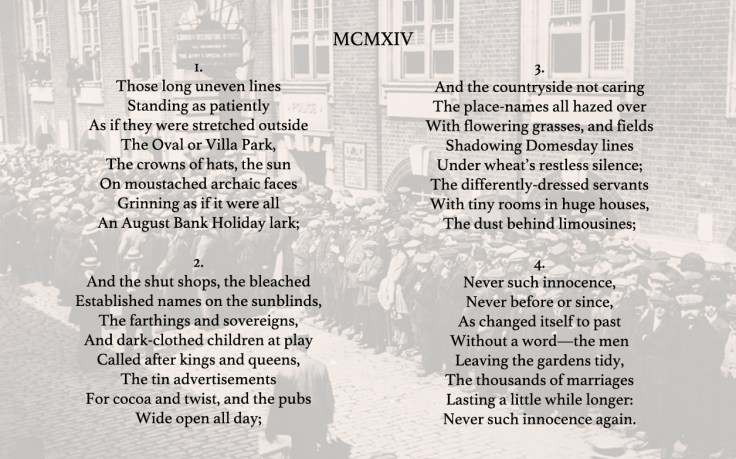
Larkin’s genius and his sheer Englishness is nowhere better expressed than in MCMXIV which was published as part of his 1964 collection The Whitsun Weddings. Larkin grew up at a time when there were still tens of thousands of survivors from The Great War across the country and even by the 1960s they still marched on Armistice Sunday. He contrasts the bustling masculinity of sporting venues with the timeless nature of the ancient rural landscape, and makes the telling observation that the men in the “long uneven lines” staring out from old photographs were more than just from a bygone age – the “moustached archaic faces” might have been from another universe. His comment on the  bitter and catastrophic effects of the coming slaughter on families couldn’t be more eloquent – “The thousands of marriages Lasting a little while longer.” The shattering of the established social order and the death of the Edwardian dream remain a constant theme in Great War literature, but the last four words of this poem encapsulate it with such a depth of sadness.

MCMXIV

It has been asserted, in recent times, that Larkin was not the kindest of people, had a misogynistic streak in him, and was not destined to fit the stringent requirements imposed on us all by modern sensibilites about race and gender. It is not my place to apologise to people he may have treated badly, but I can only say that when creative people mine down into the complex geology of humanity, they rarely emerge with clean hands. For me, at any rate, his consummate poetry and what it tells us about the human condition completely diminishes any failings he may have had as a person.

PAST LIFE . . . Between the covers

PAST LIFE HEADERE

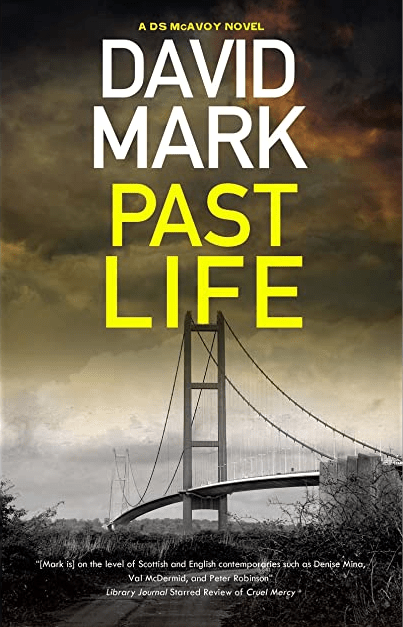
I won’t repeat my spiel about coming late to an established series (which I seem to do all too often), so here’s a brief account of where we are in Past Life. Aector McAvoy is a Detective Sergeant working in Hull, on the north bank of the Humber Estuary. He is married to Roisin, who is of Irish Traveller heritage, and they have two children, Fin and Lilah. His boss is Detective Superintendent Trish Pharoah. McAvoy is a bear of a man, born to a Scottish crofter family. He is capable of great violence, but is fundamentally a gentle soul but perhaps too conciliatory and thoughtful for his own good. Author David Mark tells us:

“He is not a man at ease with the world or his place in it. He feels permanently displace; dislocated – endlessly cast as an outsider. He’s still the lumbering red-haired Scotsman who left the family croft at ten years old and has been looking for home ever since.”

Screen Shot 2021-10-10 at 20.06.34The story begins with a murder, graphically described and, at this point in the review, it is probably pertinent to warn squeamish readers to return to the world of painless and tidy murders in Cotswold manor houses and drawing rooms, because death in this book is ugly, ragged, slow and visceral. The victim is a middle-aged woman who makes a living out of reading Tarot cards, tea leaves, crystal balls and other trinkets of the clairvoyance trade. She lives in an isolated cottage on the bleak shore of the Humber and, one evening, with a cold wind scouring in off the river, she tells one fortune too many.

When McAvoy and Pharoah arrive at the scene they find the ravaged remains of Dymphna Lowell, and understand why one or two of the police officers first to respond to the 999 call have parted company with their last meal. Trish Pharoah has seen worse, but then she has been a regular onlooker at grisly tableaux that demonstrate the depths that humans can sometimes plumb. She is the wrong side of middle age, but not going gently into that good night. She has four daughters and nursed her husband – although he was an absolute bastard – day and night as he took a long time to die from an aneurism.

As McAvoy and Pharoah hunt the killer, the back-story is crucial and it needs to be explained. Roisin’s family have been engaged in a decades-long blood feud with another clan, and there has been copious amounts of blood shed along the way. Part of this history involved Roisin saving McAvoy from an infamous killer nicknamed ‘Cromwell’. Cromwell was then gruesomely punished by Roisin’s father, she and McAvoy fell in love and married, but the savage murder of Roisin’s aunt – another fortune teller – cloaks the narrative like a shroud. Roisin is a woman not at ease with the world or herself:

Screen Shot 2021-10-12 at 10.29.37“She has found herself some mornings with little horseshoe grooves dug into the soft flesh of her palms. Sometimes her wrists and elbows ache until lunchtime. She sleeps like a toppled pugilist: a Pompeian tragedy. She sees such terrible things in the few snatched moments of unconsciousness.”

When the satanic Cromwell strikes hard at McAvoy’s family, the big man goes off the radar and hunts down the killer. David Mark (right) gives us what we think is the climax as McAvoy and Cromwell go head to head in a terrifying and violent  battle in a disused WW1 sea fort, but just as we relax and think “job well done”, there is a plot twist that few will see coming, and we learn that there is a final trauma to be endured by the McAvoy family.

This is a dark, brooding novel, with more than a touch of Derek Raymond-esque nihilism and despair but, like his late, great Noir predecessor, David Mark also gives us searing honesty and compassion. Past Life is published by Severn House and is available now in hardback, and as a KIndle in November.

Blog at WordPress.com.

Up ↑