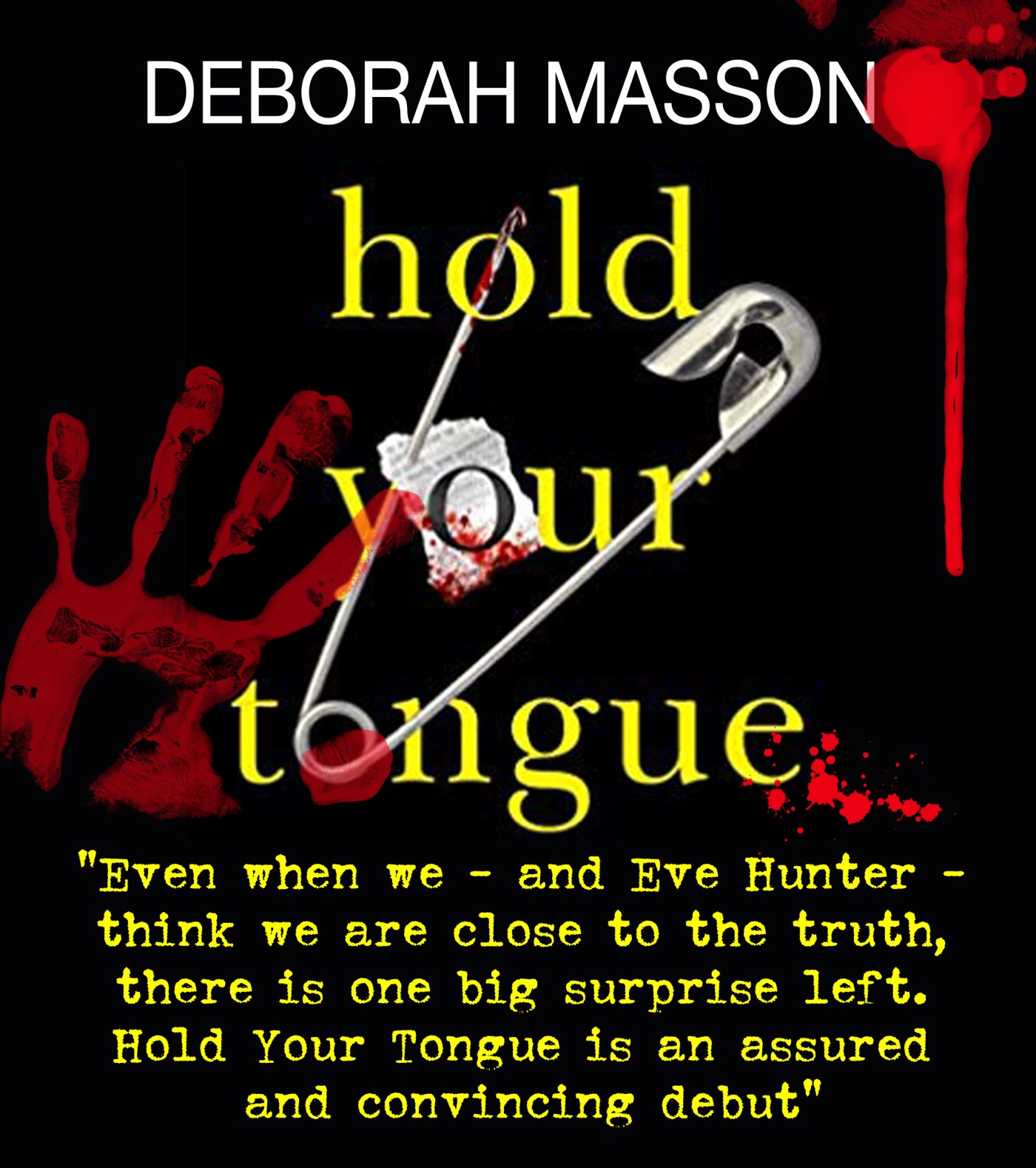

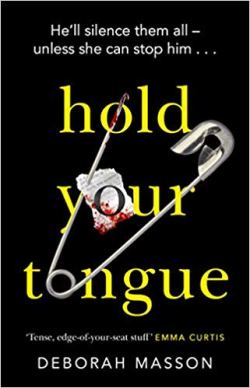
 Deborah Masson’s police procedural Hold Your Tongue is as gritty as the granite in the Aberdeen where it is set. Fictional Detective Inspectors tend to be brilliant, yet with fatal flaws; perceptive, but incapable of managing calm personal lives; honest and principled, but concealing their own dark secrets. Masson’s Eve Hunter ticks all the boxes, and adds a few of her own. She is returning to work after a catastrophic encounter with a notorious criminal family. After the son of the crime gang’s Capo sustains life changing injuries in a car chase, Johnny MacNeill has exacted brutal revenge resulting in Hunter’s partner DS Nicola Sanders being paralysed from the neck down, while Hunter herself has a permanently damaged leg and intense psychological scarring.
There is no ‘Welcome Back’ party for Hunter. There are former colleagues who blame her impulsive and driven approach to police work for what happened to Nicola Sanders. Her boss doubts she is ready for a return, particularly as her first case will be to solve the savage murder of an aspiring model, found dead in a hotel room, surrounded by an elaborate and deliberate staging of fashion magazines, make-up and mirrors. Melanie Ross’s tongue has been cut out, and taken away by her killer.
Masson makes telling use of Aberdeen itself as a baleful presence looming behind the misdeeds of its citizens. Despite the grim grandeur of its municipal buildings, the passing of the North Sea oil bonanza has left a legacy of closed shops and tatty, uncared-for neighbourhoods. A prostitute called Rosie, who is involved with one of the suspects, provides a chilling metaphor for the city:
“Rosie pulled together the edges of the flimsy unbuttoned black raincoat that she wore; it barely concealed the bony chest in a low-cut top and laddered fishnets below a skirt that could pass as easily for a belt.”
The pre-Christmas weather is vile and utterly inhospitable. The sleety rain slants down, the wind blows in squalls from the North Sea, and the grey light of dawn reveals city streets slick, wet and icy, decorated only with discarded takeaway meals, the odd abandoned high-heeled shoe, and a general air of attempts at gaiety which ended in failure.
More murders follow, and they are clearly the work of the same person. Eventually Hunter realises what the elaborate posing of the victims signifies. The killer has somehow become obsessed with the old nursery fable:
Monday’s child is fair of face
Tuesday’s child is full of grace,
Wednesday’s child is full of woe,
Thursday’s child has far to go,
Friday’s child is loving and giving,
Saturday’s child works hard for a living,
But the child who is born on the Sabbath Day
Is bonny and blithe and good and gay.
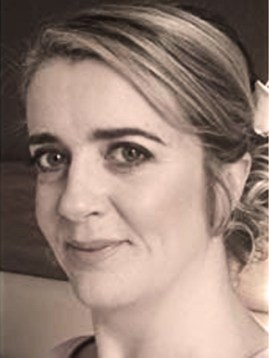 As the killer works towards the Sabbath Day child, Hunter and her colleagues dash this way and that, always vital hours behind the murderer. Masson (right) contributes to the mayhem with some elegantly clever misdirection. Early in the piece she teases us with the suggestion that the series of murders has something to do with brothers and sisters, but even when we – and Eve Hunter – think we are close to the truth, there is one big surprise left. Hold Your Tongue is an assured and convincing debut, and I hope there will be more cases to come for Eve Hunter. The book is out now, and published by Corgi/Penguin.

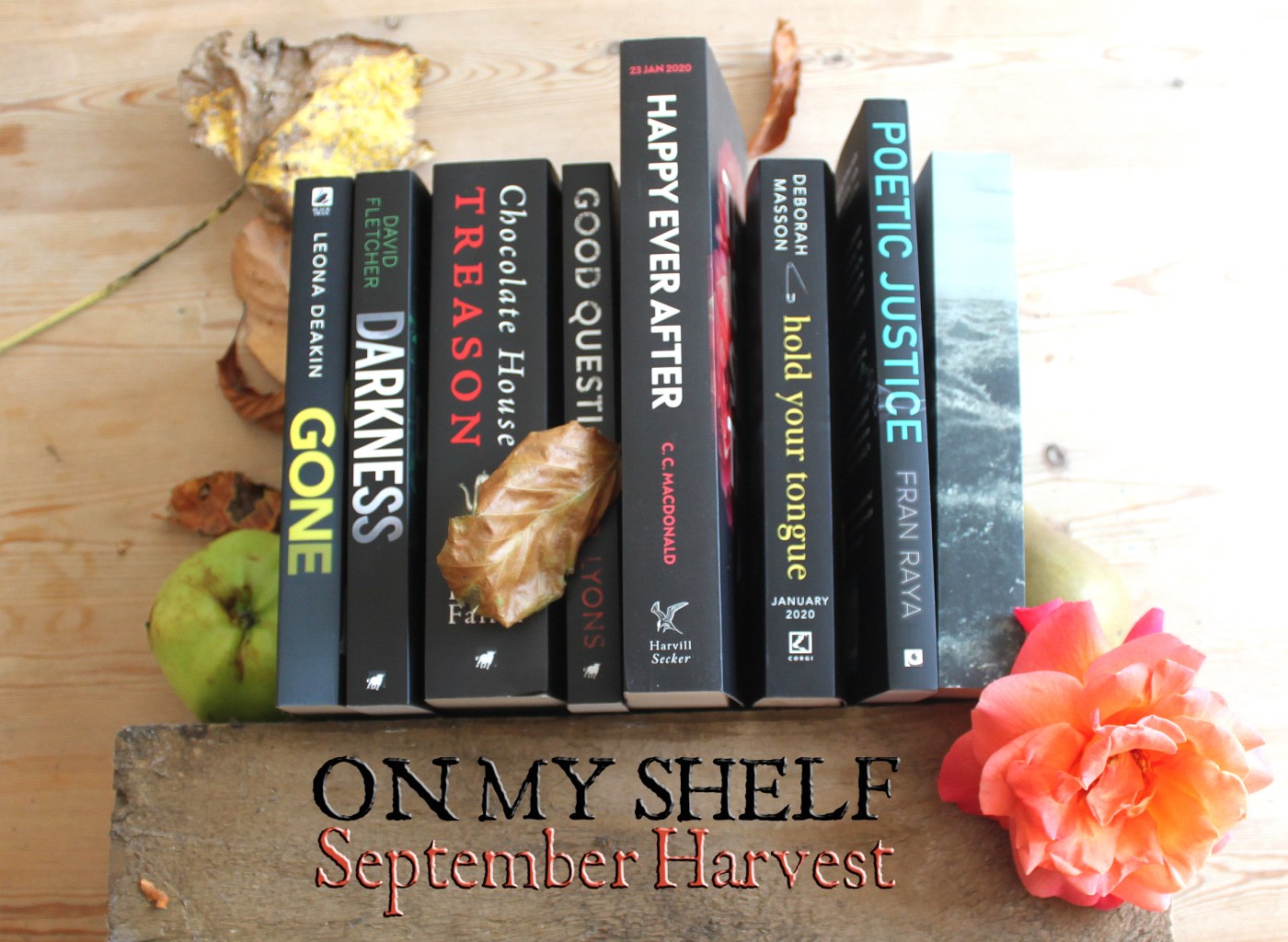

 There is a definite autobiographical seam in the character of Dr Augusta Bloom, who combines the careers of PI and psychologist. The author worked as a psychologist for West Yorkshire Police before writing this, her debut novel. She turns the serial abductor/victim trope on its head as Dr Bloom tries to convince a complacent constabulary that the alleged victims may be more to be feared that the perpetrator. This will be published by Black Swan
  As the enthusiasm for the recent film The Favourite shows, the life of Queen Anne, thought by history to be hitherto unremarkable, has become something of ‘a thing’. Professor David Fairer of Leeds University is an acknowledged expert on the 18th century and, in, particular, its poetry. How fitting then, that his novel is set in the London of 1708 where The Queen herself is subject to scathing sexual innuendo in the gutter press, and the capital seethes with political and criminal unrest. There are, inevitably, casualties and an unlikely trio of investigators seek to solve two murders and prevent a third. This enthralling historical mystery is available now, and is
  We could, once upon a time, refer to Africa as The Dark Continent without invoking the fury of The Woke. Working on the assumption that Africa was ‘darker’ the further you went into it, then the Congo was blacker than black. Conrad’s Heart of Darkness and Greene’s A Burnt-Out Case feasted royally on the remoteness of the Congo, and the consequent imaginings of a land where the moral code was either abandoned or perverted. David Fletcher’s Dan Worthington has suffered loss, heartbreak, and the almost surgical removal of his life spirit. A chance encounter offers him a renaissance and a reawakening, but there is a price to be paid. A flight to Brazzaville takes him to the divided modern Congo, and a sequence of events which will test his resolve to its core. Darkness is also a Matador title and came out in
 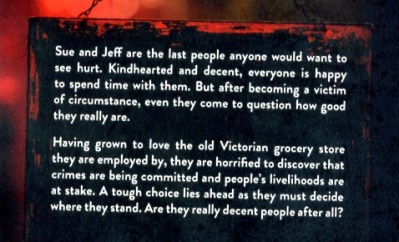 Sue and Jeff work in a grocery store that is something of a throwback. Old fashioned service, the personal touch, quality products – what could possibly go wrong? The pair are amiable, kind-hearted and loved by customers. This apparent Garden of Eden turns inexorably into a wasteland when the pair become involved in a grim criminal conspiracy which is none of their own making. Published by Matador, Good Question is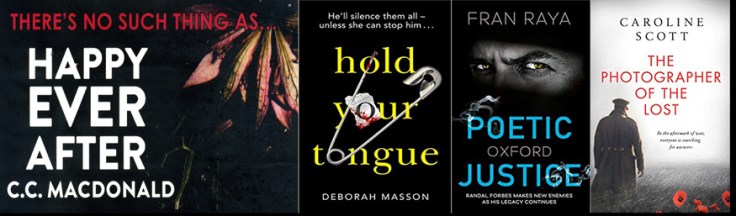
 Fans of comforting and anguish-free crime novels should probably look away now. This debut psychological thriller gnaws away at our anxieties and its mission statement seems to be that no fingernail should remain unbitten. Ostensibly privileged and happily married, Naomi falls both victim of – and pregnant by – an elusive and unscrupulous charmer. His disappearance is one thing, but the threat and menace hanging over her domesticity is something else altogether. Harvill Secker are the publishers here, but you will have to wait until
  Eve Hunter elbows her way into the crowded room containing fictional British Detective Inspectors, but she has a reputation to save, and a serial killer to catch. Deborah Masson (left) comes from The Granite City of Aberdeen, which is totally fitting as this, her debut novel, is as dark, flint-hard and gritty as her home town. Hold Your Tongue is due on the shelves on
  Randall Forbes has a powerful gift – or is it a curse? He is endowed with telepathy, which gives him formidable abilities as well as huge responsibilities. Set against the warm limestone and dreaming spires of Oxford, Jan Raya’s novel is a breathtaking account of how Randall Forbes challenges and frustrates the police, while sticking to his own code of conduct – slightly warpd though it may be. Musician and writer? Jan Raya is not alone, as fans of the band Fun Loving Crime Writers will testify! Fran Raya’s novel is out on 28th September and is published by
  The only obvious crime here is the disastrous waste of a generation of young lives on the killing fields of France and Flanders, but Caroline Scott’s novel explores the emotional wasteland of England in the 1920s, where countless women sought some kind of solace after the death of their fathers, husbands and brothers. The photographing of grave-sites and cemeteries was something of a huge commercial opportunity, as so many relatives were ill-equipped to make the journey across the channel to be reunited with their lost loved ones. Widowed Edie has resigned herself to mourning for husband Francis, but a random photograph sparks a search which may end in joyful reunion or shattered hopes. This book is an elegy to loss, heartbreak and the death of a generation. Out on 31st October,


 fullybooked2017