
Search

fullybooked2017

Tag

Historical Fiction

THE WHITE COMPANY . . . Classics revisited

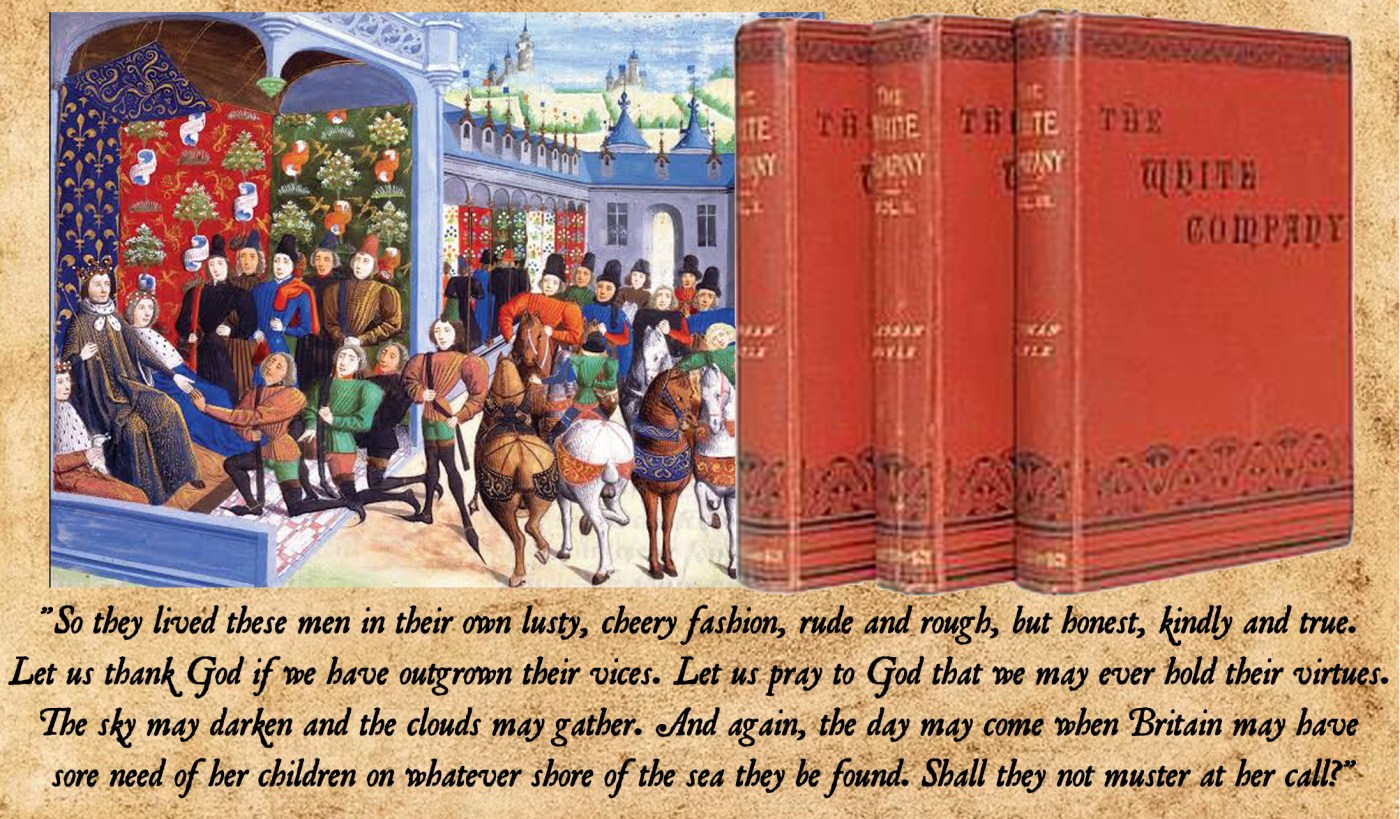
It is well known that Arthur Conan Doyle came to resent the immense commercial success of his greatest creation, Sherlock Holmes. Despite the wealth and fame he enjoyed as a result of those short stories and novellas, Conan Doyle was dissatisfied. Other full length novels were written. Micah Clarke (1889) was set in the Monmouth rebellion, while the Brigadier Gerard stories, boastful tales of a veteran of Napoleon’s army, began in 1894. The White Company (1891) was something quite different.The historical background to this novel is the 1367 campaign led by Edward (The Black Prince) to restore Peter (Pedro) as King of Spain.

The political allegiances are complex, and beyond the scope of this review. Suffice to say, the Prince’s forces in France are boosted by a body of men at arms and archers, led by Sir Nigel Loring, a Hampshire Knight, and his trusted retainers.Chief amongst these is Alleyn, a minor Saxon noble who has been educated by the monks of Beaulieu Abbey, and Samkin Aylward, a veteran archer. We follow these men across The Channel, and down through the battle scarred wastelands of South West France. I have no knowledge that Doyle ever visited the area for research purposes, but this is one of many magnificent descriptions of the terrain:

“The whole vast plane of Gascony and of Languedoc is an arid and profitless expanse in winter, save where the swift flowing Adour and her snow-fed tributaries, the Louts, the Oloron and the Pau run down to the sea of Biscay. South of the Adour, the jagged line of mountains which fringe the skyline send out long granite claws running down into the lowlands and dividing them into gavs or stretches of valley. Hillocks grow into hills and hills into mountains, each range overlying its neighbor until they soar up in a giant chain which raises its spotless and untrodden peaks, white and dazzling against the pale blue wintry sky.”

The biggest challenge facing writers of novels set in medieval times is dialogue and language. The earliest writer to come to terms with this was Sir Walter Scott. Many years later,  Doyle gave us his version. In the 1960s Edith Pargetter (Ellis Peters) and Umberto Eco had their four penn’orth and, more recently, Sarah Hawkswood and Diane Calton Smith have given us their versions. The bottom line is that none of these writers have the faintest idea how people spoke to each other back then. All they can do is create a style and stick to it. The dialogue in this novel is grandiose and florid, full of improbable imprecations such as, “By the Holy Rood,” and “By my ten finger bones,”

After a cataclysmic battle between the outnumbered White Company and thousands of Spanish knights, the book ends improbably, but with a sense of glory and noble sacrifice. Doyle went on to work with distinction as a Medic in The Boer War and his son, Kingsley, served throughout The Great War, only to die of influenza in 1918. The final words of this novel confirm that Doyle had a deep sense of connection with the idea of English heroism and sense of duty. Perhaps the final words of this novel have a sense of prophecy about them:

“So they lived these men in their own lusty, cheery fashion, rude and rough, but honest, kindly and true. Let us thank God if we have outgrown their vices. Let us pray to God that we may ever hold their virtues. The sky may darken and the clouds may gather. And again, the day may come when Britain may have sore need of her children on whatever shore of the sea they be found. Shall they not muster at her call?”

Some modern readers will certainly find the book overly romantic, and wonder at the seeming implausibility of the chivalric code of honour. Historically, the narrative owes much to the chronicles and poems of Jean Froissart, whose account of the times continued to inspire creative artists. Indeed, Elgar’s Froissart Overture was composed just a year before The White Company was published. For me, rereading the book after many, many years was a sheer joy, and serves as a reminder of just how good a writer Doyle was.


THE HOUNDING . . . Between the covers

For those who believe in geopsychology – the connection between place and the human mind – there is actually a place called Nettlebed. It is in Oxfordshire but not, as in the book, two hamlets, Little and Greater, divided by the River Thames. Given that the story mentions that, in living memory, older people remember the soldiers of the English civil wars, we e connection between Little Nettlebed and Greater Nettlebed is a simple punt ferry, operated by Pete Darling. Perhaps it is stretching things a little far, but the concept of the Ferryman in literature goes back into the mists of time and includes, of course, the mythical Charon, who carries passenger not across the placid upper reaches of the Thames, but a much darker river altogether. On one side of the river is the local ale house, frequented all too often by Pete Darling, and on the other bank, the farm owned by the elderly Joseph Mansfield. His wife is dead. His son and daughter in law are dead. All that remains are his five granddaughters – and his failing sight. Now, he lives as much by scent, touch and memory, as his milky eyes see only vague shapes and shadows.

Among the many joys of this book is the attention paid to the flora and fauna of the villages. My first thought was of the wonderful poem by Matthew Arnold, The Scholar Gypsy, where he writes, also of the Ofordshire landscape:

“Screen’d is this nook o’er the high half reaped field.
And here till sundown, shepherd, will I be.
Through the thick corn the scarlet poppies peep,
And round green roots and yellowing stalks I see
Pale pink convolvulus in tendrils creep;
And air-swept lindens yield
Their scent and rustle down their perfumed showers
Of bloom on the bent grass where I am laid.”

Xenobe Purvis gives us Agrimony, Figwort, Mignonette, Cow Parsley, Dog Roses, Foxgloves, Buttercups and  Camomile. Be not distracted, however. The Nettlebeds are no balmy rural paradise, no Arcadia. We see a brutal rural custom which involves the burial of a woman who has died in childbirth. Local custom decrees that the six pallbearers must be women who are pregnant, as if to warn them that their fertility has consequences. When Ferryman Darling believes he has seen the Mansfield sisters turn themselves into dogs, some dismiss his claim as the imaginings of a drunk but, crucially, some people are only too ready to see this as a perfect explanation for why the five young women are so strange, and so aloof.

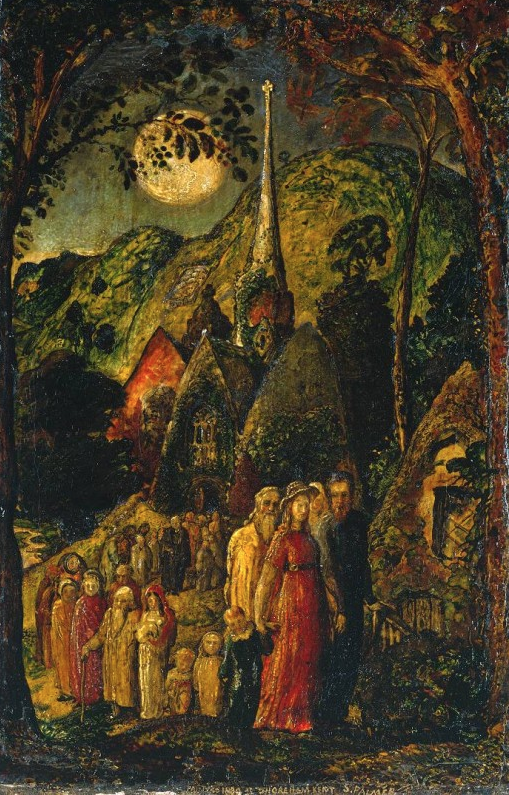
There are moments in this unsettling novel where I felt drawn into a Samuel Palmer painting. His England was full of mystery, a place where men and women were merely bystanders in an intense landscape of a setting sun sharing the canvas with a harvest moon, a land where thousand year-old traditions and phantom ancestors have a potent effect on present people.

The Ferryman is, perhaps, the key figure in The Hounding. As the river shrinks to a stream that people can easily wade through, his livelihood withers, and his daylight hours are seen through an alcoholic haze.  He is the lightning conductor which seems to channel all the negative energy hovering over the hamlets. He sees – or thinks he sees – the five sisters for what they are:

The fierce one, the pretty one, the tomboy, the nervous one, the youngest. That was what had frightened him the most: they were not mere doltish dogs. They were girls with teeth and claws.”

The novel ends with death and delusion, and the author, in narrative terms – and perhaps wisely – does not provide a definitive conclusion to the events in Little and Greater Nettlebed, but leaves us with the feeling we have after awaking from a strange and troubling dream. The Hounding is published by  Hutchinson Heinemann and will be on sale from 26th June.


THE WILD DATE PALM . . . Between the covers

In 1882, a group of Romanian Jews, fleeing religious persecution, bought land in Palestine and, with later help from the Rothschild family, founded the town of Zikhron Ya’akov. It is here in the years just before The Great War that we meet Shoshana Adelstein, elder daughter of a farmer whose vineyards contribute to the local wine making industry. After a love affair that ends unhappily, she marries a wealthy Turkish businessman, and moves to Constantinople.

1915 finds her bored, restless and stifled in a loveless marriage, but with her adopted country at war with Britain, France and Russia, she is anxious about her people in Palestine and, deceiving her husband, boards a train to Haifa. What she sees – displaced Armenian Christians being harried and beaten by Turkish soldiers –  as the train trundles over the Anatolian plateau, shapes the rest of her life. On her return to Zikhron Ya’akov and appalled by what she has witnessed from the train window, Shoshana envisages that after the Armenians, the Jews living across the Ottoman empire will be next, and she vows to take action.

Together with her brother Nathan and her lover, Eli, Shoshana creates an intelligence network to gather information on Turkish troop movements, defensive works, logistics and troop morale. Eventually, contact is made with the British administration in Cairo, but as Shoshana’s network expands, its vulnerability to betrayal increases exponentially. I can take or leave some of the more frothy romantic sections of this book, but when Shoshana reconnects (they had met briefly before the war) with a certain young army officer called Thomas Edward Lawrence, the spark (for me) was lit.

Lawrence is in Cairo with his colleague, archaeologist – and intelligence agent – Leonard Woolley, and they are determined to disrupt the Turks in every way possible. History hands us so many ironies: Lawrence and the Jewish intelligence agents have a common enemy in the Turks, of course, but look for totally incompatible outcomes. Lawrence has promised an Arab homeland to the tribesmen he leads, while Shoshana and Nathan want a land where Jews can prosper.

The best fiction closely shadows real life and, in both reality and imagination, the worst betrayals come from within. Not from a snarling enemy, but from those once thought to be friends. The Wild Date Palm is a chastening example of how easily loyalty can be corrupted. The title of the book is deeply significant as, in the last chapter, Diane Armstrong slows us that life can truly spring from death, and that despair can be the mother of hope.

The slaughter of Armenian Christians before and during The Great War is a matter of historical record,  Two decades later, another horrific act of genocide occurred and Danuta Julia Boguslawski, born in 1939 in Kraków, Poland, is well qualified to write about such things. She and her family survived the war and, in 1948, they emigrated to Australia. Now, writing as Diane Armstrong, with a long and successful career as a writer behind her, she has written a novel of great power and compassion, set in a time of turmoil and unimaginable cruelty. Published by HQ fiction, The Wild Date Palm is available now.

ARDEN …Between the covers

arden005 copy

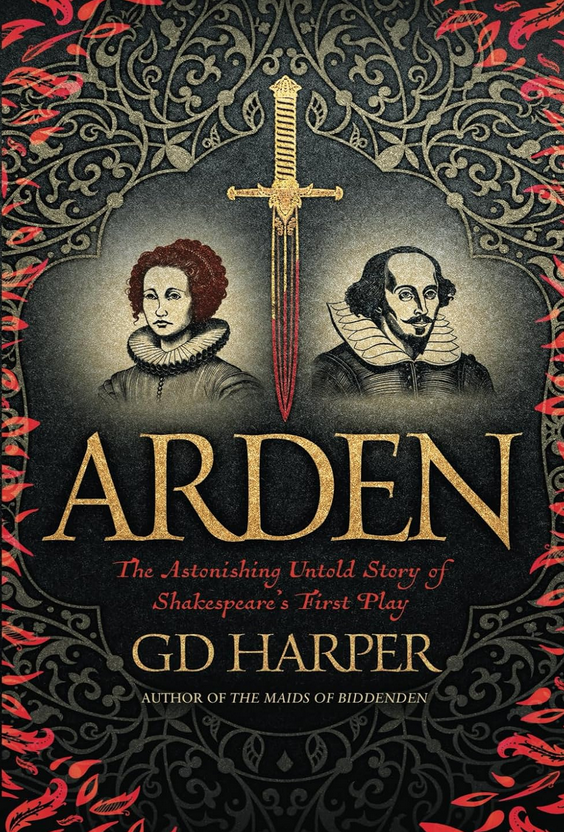
This cleverly crafted novel has two timelines. In the first, we follow the fortunes of Alice Arden, nee Brigandine. She is married to Thomas Arden, a Kentish merchant, and we are in the fourth and fifth decades of the sixteenth century, in the dying days of the rule of Henry VIII, and the brief reign of his son, the boy King, Edward VI. A young Warwickshire man, Will Shakspere*, who works as a glove maker in his father’s business, is the second subject. We are in the same century, but in its final two decades. On the throne is the daughter of Ann Boleyn, Elizabeth.

*I have retained the spelling of the surname used in the novel, rather than the modern alternative.

Alice has been married off to Thomas Arden, an unscrupulous merchant who, for all his cut and thrust in the business world, has absolutely no interest in Alice as a sexual partner. Her dismay is compounded by the fact that, before her marriage, she had an intense physical relationship with a local tailor, Tom Mosby. Thomas and Alice have moved to the town of Faversham, where Thomas has been made Mayor. When Mosby turns up and seeks to renew his relationship with Alice, she is drawn into a maelstrom of desire and wrong decisions that will have fatal consequences.

The dissolution of the monasteries, in the later years of the reign of Henry VIII, might be viewed as an act of cultural vandalism today, but for the secular world at the time, it provided endless business opportunities. The monasteries had huge land holdings and when Henry’s Treasury put these acres up for sale, merchants and investors sensed an unmissable business opportunity. Inevitably, rivals clashed, and two such were Thomas Arden and Sir Anthony Aucher. It is no exaggeration to say that they were sworn enemies.

As this rivalry blew hotter and hotter, Arden and his wife had come to an astonishing domestic arrangement. Tom Mosby had reappeared, and had sought out his former lover, Alice. Arden was still dependent on the patronage of Sir Edward North, Alice’s stepfather. Arden reluctantly allowed Alice and Mosby to carry on their passionate affair, metaphorically under his nose, but literally under his roof.

Years on from the events in Faversham, Will Shakspere is increasingly frustrated with his lot. He and his wife Ann and their three children rely on Will’s wage from his father’s glove business. Will is not a great craftsman. Profits are made by making the maximum pairs of gloves from any given hide, and Will botches more often than he succeeds. In a desperate attempt to provide meat for his table and leather for his workshop, Will tries to poach a deer from Charlecote Park, but he is caught by Sir Thomas Lucy’s gamekeepers, and is forced to flee Stratford to avoid serious punishment. He scrapes out a living in London as a bit-part actor, trying his best to send money home to Anne and his children.

The book’s title resonates throughout its pages, but in different ways. It was the dense forest that covered much of what is now the West Midlands in Roman times. It was the family name of Shakspere’s mother. They had once been noble, but had fallen from favour long ago. And of, course, it became Alice’s married name when she and Thomas were wed.

Will eventually makes his mark as a playwright in London, but before works such as The Taming of the Shrew made him rich and famous, he dramatises the events in Faversham fifty years earlier. However, as it contains obvious references to families who are still rich and powerful, it is never performed properly.

Aeschylean tragedy, used by Shakspere in such works as Hamlet, Othello and Macbeth, is based on the idea of men and women brought down not because they were inherently evil, but because of poor decisions, ambition, vanity, and human traits like jealousy. Thomas Hardy’s Mayor of Casterbridge is one such and, like him, Thomas Arden comes to grief when he offends one too many local officials and merchants, and loses all his power and authority. Alice Arden, another tragic figure, makes the mistake of trusting her lover, Tom Mosby, and becomes sucked in to a plot to kill her husband. It goes disastrously wrong and, within hours of the deed, she is arrested, thrown into jail, tried and burnt at the stake, but not before she is subject to an astonishingly vile act of revenge by the local authorities. Decades later, Shakspere learns of this and, now a celebrated and wealthy man, is determined to place on record the last hours of Alice Arden’s life.

Arden is beautifully written, with meticulous historical research. Alice Arden is a truly tragic figure, certainly not a heroine, but a woman brought low by her own desires and poor choices. I have not read a book that brings Will Shakspere to life with such energy since Anthony Burgess’s 1964 novel Nothing Like the Sun. Arden is published by Ginger Cat and is available now.

Screen Shot 2024-11-27 at 17.06.59

ONE FALSE STEP . . . Between the covers

OFS SPINE060 copy

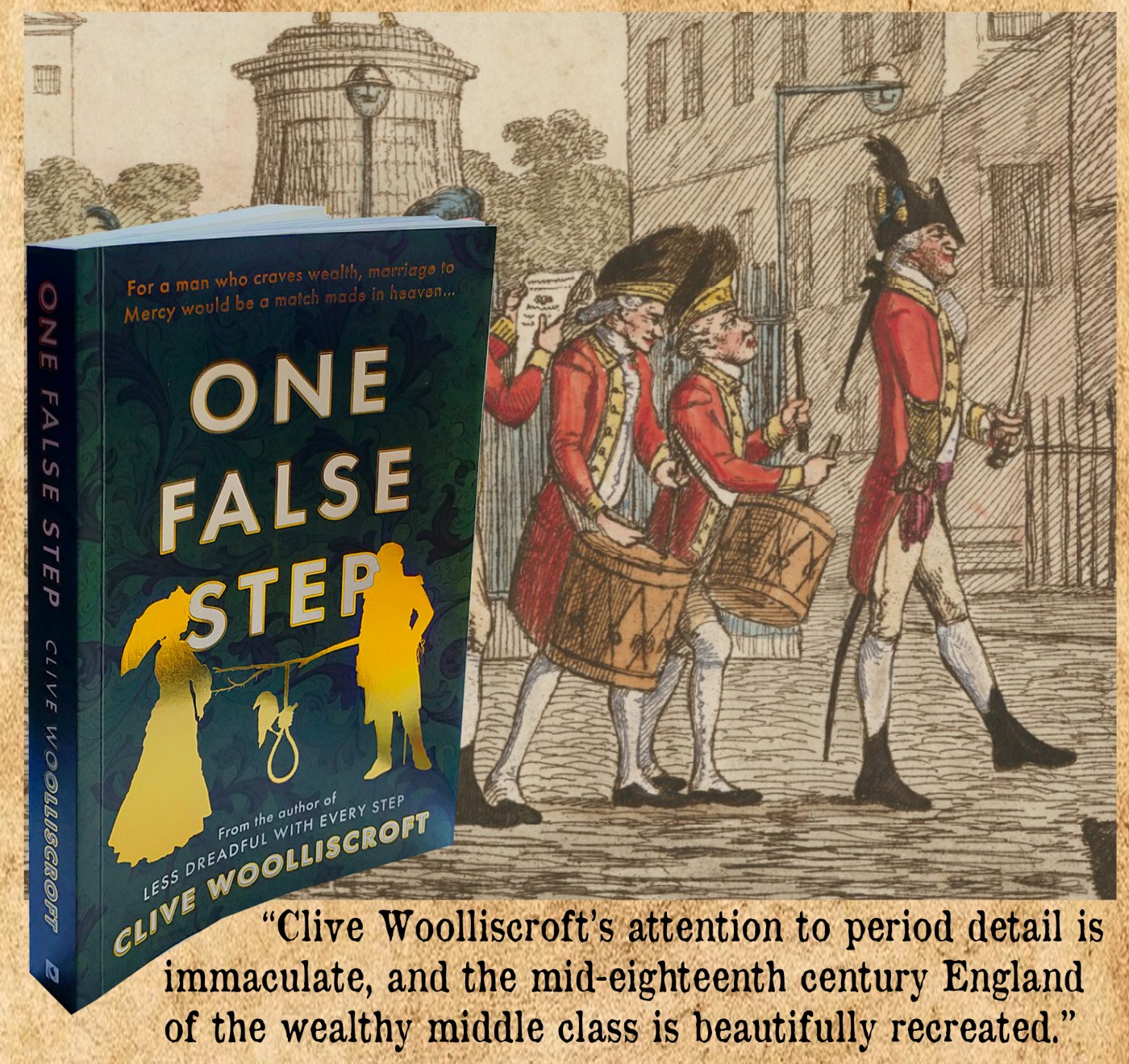
We haven’t had a resounding cad in popular fiction since George MacDonald Fraser took Harry Flashman, a relatively minor character in a little-read Victorian school novel, and had him bestride the 19th century like a colossus, meeting (and cheating) pretty much everyone from Abraham Lincoln to Otto von Bismarck. Now, Clive Woolliscroft introduces Lieutenant William Dunbar, an impoverished younger son of a Scottish nobleman – and utter bounder*.

* Bounder (noun, archaic): a man who behaves badly or in a way that is not moral, especially in his relationships with women.

Unlike Flashman, Dunbar doesn’t lack physical courage, and he fights with his regiment against Bonnie Prince Charlie’s highlanders at Culloden, so this places the events of the novel somewhere in the years after 1746. Dunbar, however, has neither the skills nor the family fortune to lead the rich man’s life he so desperately craves, and so he is on the look-out for wealth  by marriage. Can he find a suitable young woman, with a sizeable *tocher and generous annual allowance from her wealthy parents?

* Tocher (Scots, archaic): A dowry: a marriage settlement given to the groom by the bride or her family.

For the first 120 pages or so, we view events through the eyes of William Dunbar. Thereafter, the narrative switches between that of Mercy Grundy and Dunbar. Quite early in the book, Dunbar had secretly married a Scottish heiress, Ann Macclesfield, (for her money of course) and she had borne him a daughter. The financial part of his plan had collapsed, due to religious complications after the battle of Culloden, but Anne now refuses to dissolve the marriage, thus putting a major impediment in the way of Dunbar’s plans to marry Mercy, and get his hands on her family’s wealth.

Dunbar leaves the army, and begins to make something of a living in the world of finance, managing to build up cash reserves, thus lessening the necessity of marriage. He then sees a chance to become very rich indeed by buying a share in a ship engaged in what was known, euphemistically, as the African Trade. This worked in a brutally simple fashion. The ship leaves Britain loaded with manufactured goods which could range from bolts of cloth to firearms and anything in between. These were then bartered for human cargo – slaves – on the coast of West Africa, which were then taken and sold in the slave markets of the Americas. In theory, the ship would then return to Britain, laden with cash.

Unfortunately for him, Dunbar’s ship, The Archer, is destroyed by fire after a mutiny of the slaves and he is, once again, left with nothing. He decides to try his luck once more with Mercy Grundy, but finding her father totally in opposition to his plans, he dupes Mercy into a course of action which will end disastrously for her. This mirrors the real life tragedy the book is based on – the case of Mary Blandy who, in 1752, was put on trial for poisoning her father.

The author served as an Army Officer in Germany, worked as an international money market trader in London, was a Management Consultant in Prague and Riga and practised as a solicitor in London, Hertfordshire, and Staffordshire. This is his second novel. ‘Less Dreadful With Every Step’ was published in May 2023.

Clive Woolliscroft’s attention to period detail is immaculate, and the mid-eighteenth century England of the wealthy middle class is beautifully recreated. William Dunbar is an out and out villain, with none of the dubious charm possessed by Harry Flashman.  The book’s title is extremely apposite for poor Mercy Grundy. One False Step is published by The Book Guild, and is available now.

SOLSTICE . . . Between the covers

Solstice spine039 copy

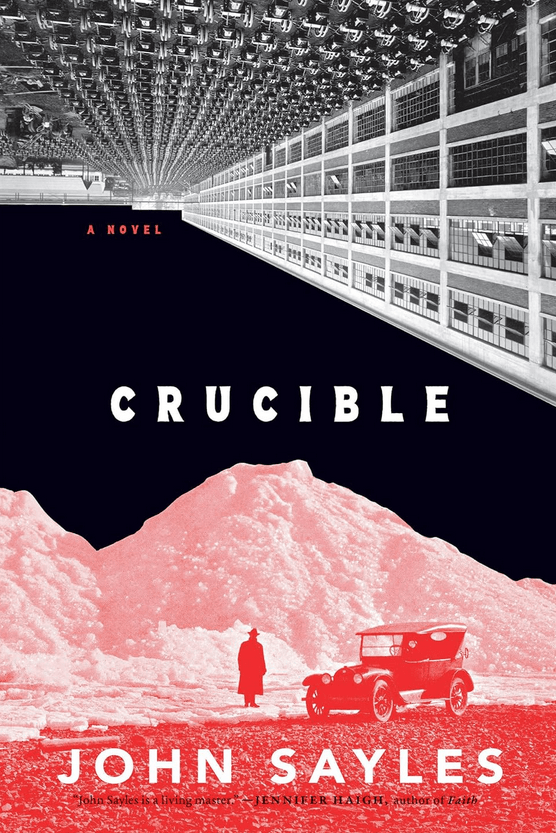
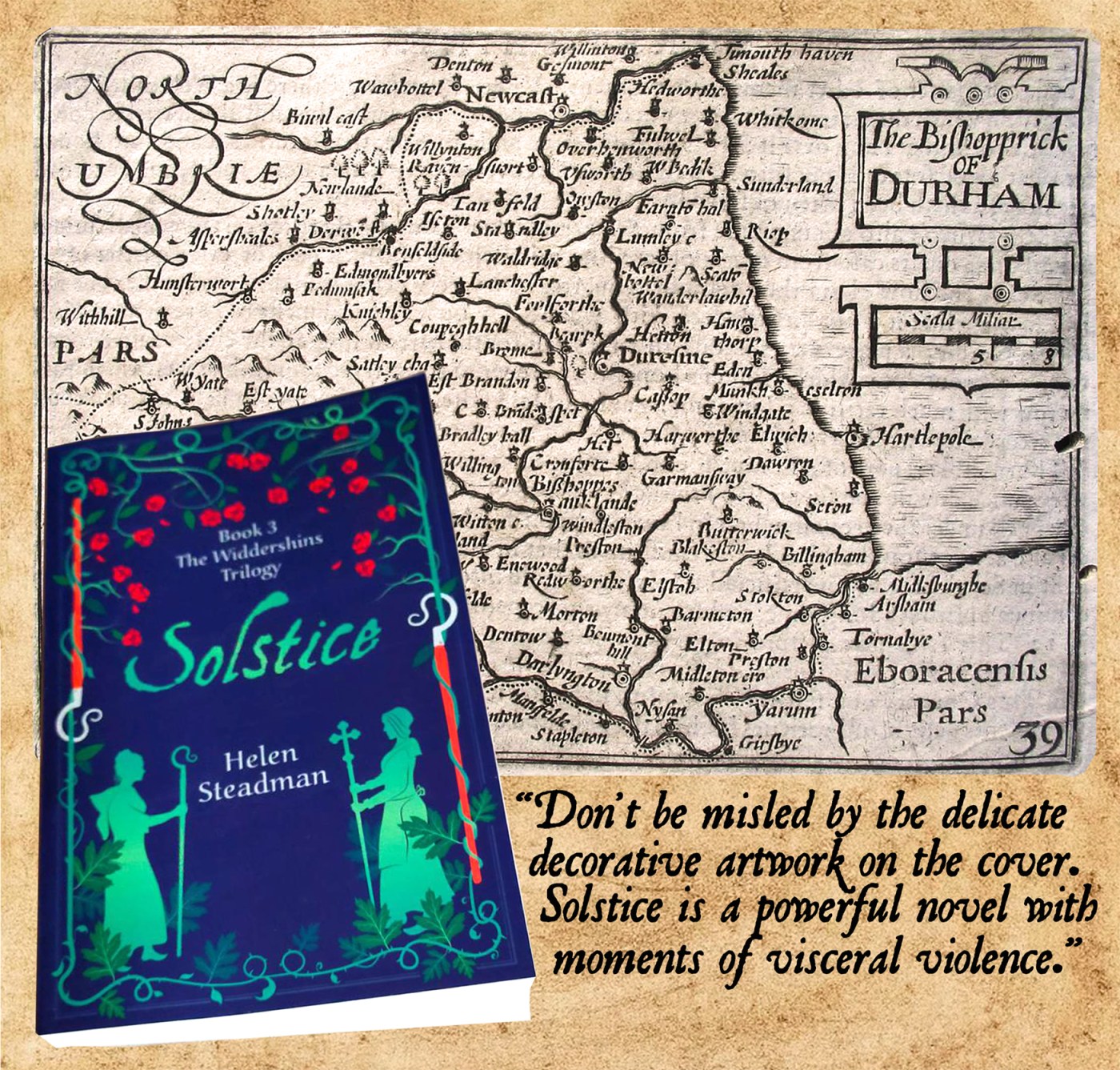
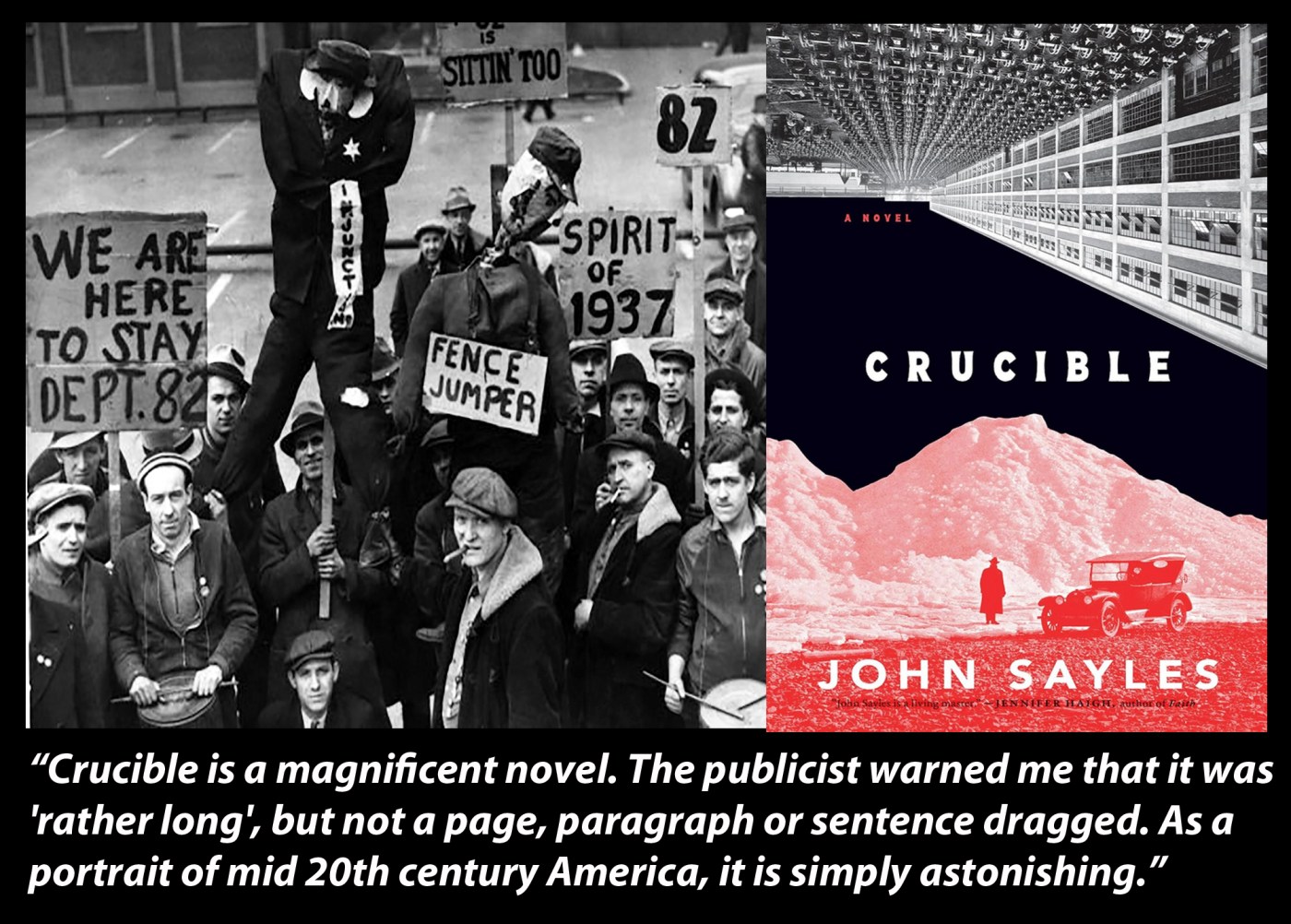
This is the final novel in the Widdershins trilogy, the previous two being Widdershins and Sunwise (both 2022). Most people with a smattering of historical knowledge will be aware of witch trials, perhaps most notably the events  in Massachusetts in the late 17th century, famously dramatised by Arthur Miller in his play The Crucible. Closer to home, of course, were the events at Pendle in Lancashire much earlier in that century, and lovers of Hammer films (and Vincent Price) will be aware of the work of Matthew Hopkins – The Witchfinder General – in East Anglia during the English Civil War. I was totally unaware that there had been a virulent campaign against so-called witches in and around Newcastle in the 1670s. This is Helen Steadman’s subject.

Screen Shot 2023-10-24 at 19.35.56Widdershins, by the way is a strange word. Some say it was German, others say it originated in Scotland. It translates as ‘against the way’, as in going the opposite way to the sun, which was an important part of many pre-Christian religions. The story plays out in the unlikely-sounding hamlet of Mutton Clog, in County Durham, and Helen Steadman (left) has created two dramatically contrasting female central characters. Patience Leaton is the daughter of an Anglican minister, who has been forced to leave his benign and comfortable living in Ely due to the shame brought on the family by his wife’s very public infidelity. Earnest, Patience’s twin brother – due to serve with the Royal Navy – has reluctantly accompanied them. In the opposite corner, as it were, is Rose Driver, the beautiful and passionate daughter of a local farmer, Andrew Driver.
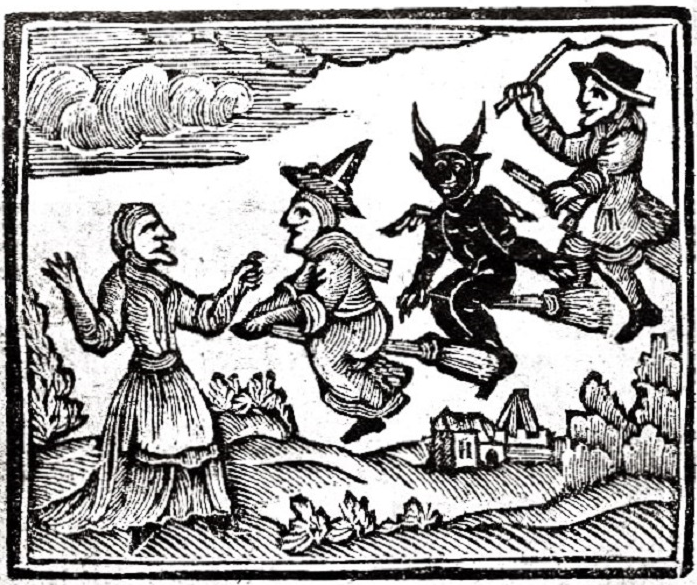
The liberal ideas and  laissez faire of the Restoration have clearly left Reverend Hector Leaton behind, as he is very Cromwellian in his distaste for anything resembling joy and pleasure, certainly where his church and its parishioners are concerned. Spurred on by the puritanical Patience, he is determined to put an end to any customs or celebrations in Mutton Clog that hint at England’s pagan past. He issues an interdict against any celebration of old customs like the equinox or the  solstice, and there is a poignant passage where Rose sits on a black hill top and gazes around at the Beltane bonfires burning joyfully in distant villages.

In Mutton Clog, however, all is dark, both literally and metaphorically. Rose and Earnest have fallen in  – if not love, then certainly lust – with each other, and when inevitable moment of passion is over Rose, ever in tune with her own body, senses that there will be dire consequences – a baby. Patience has been a scandalised witness of what took place, and informs her father. A hasty marriage is arranged, of which the only beneficiaries are Hector and Patience Leaton, and their sanctimony. As for Earnest, he is called to arms, and goes off to join his ship in the long running naval feud with the Dutch.

Rose is kept virtual prisoner in the Rectory, while the baby inside her grows. Very soon, however, comes news that Earnest’s ship has been sunk with all hands, and so she becomes Widow Leaton. Worse is to follow, as Patience tirelessly seeks to prove that Rose and her family are involved in witchcraft. She wants nothing more than to see Rose and her unborn child dead and buried, preferably not in the holy ground of Mutton Clog churchyard, and she uses the primitive criminal justice system of the day to sate her desire for justice against those who defile what she sees as ‘God’s Way’.

Screen Shot 2023-10-24 at 19.46.50

I can’t recall a  more vindictive and unpleasant fictional female character than Patience Leaton, other than Trollope’s Mrs Proudie. The wife of the long suffering Bishop of Barchester had, however, several volumes in which to become more nuanced. Over 232 pages, Patience Leaton is simply vile. Her  scheming does claim a life in the end, but not the one she was seeking.

Don’t be misled by the delicate decorative artwork on the cover. There is nothing twee about Solstice. It is a dark and disturbing read, with echoes of the kind of Aeschylean tragedy found in Thomas Hardy’s novels. Helen Steadman’s novel is a stark reminder of a more brutal time, when the English church was at the head of an army of bigoted zealots, determined to wage war on the simple and time-proven beliefs of ordinary people who were in tune with nature and the seasons. Solstice is published by Bell Jar Books and is available now.

THE FASCINATION . . . Between the covers

Screen Shot 2023-06-08 at 19.51.27

Essie Fox takes us back to Victorian times with her novel The Fascination. It is the late summer of 1887. Keziah and Tilly Lovell are twins, but they are far from identical. At some point, Tilly simply stopped growing and, as she gets older, she is a woman in a child’s body. They escape from the brutish attentions of their drunken father, and are taken on by a showman called The Captain who senses a financial opportunity in the diminutive Tilly. She has the looks and voice of an angel, made all the more alluring by her tiny body.

Their paths cross that of Theo Seabrook. Cursed by being a (literal) bastard he is brought up by his aristocratic but malevolent grandfather, who eventually disinherits him. He finds work as assistant to Dr Eugene Summerwell – a former physician, but now another showman – who runs a ‘Museum of Anatomy’ in London. Despite its lofty title it is just another opportunity to make money out of punters who pay to marvel at preserved freaks of nature and medicine, mostly contained in glass bottles and cases.

The Fascination is described by the publicists as a ‘Gothic novel’. Church buffs will be aware of the architectural term, insofar as it applies to the three great periods of English medieval architecture – Early English, Decorated and Perpendicular – but what does it mean when applied to a novel? Although Wikipedia is frequently wrong, its definition of Gothic Fiction isn’t far off the mark:

Gothic fiction is characterized by an environment of fear, the threat of supernatural events, and the intrusion of the past upon the present. Gothic fiction is distinguished from other forms of scary or supernatural stories, such as fairy tales, by the specific theme of the present being haunted by the past.”

The anonymous author might have added:

A fascination with human deformity, ever-present reminders of death, physical beauty ruined by excess, the darkness of human imagination – and a general absence of normality.”

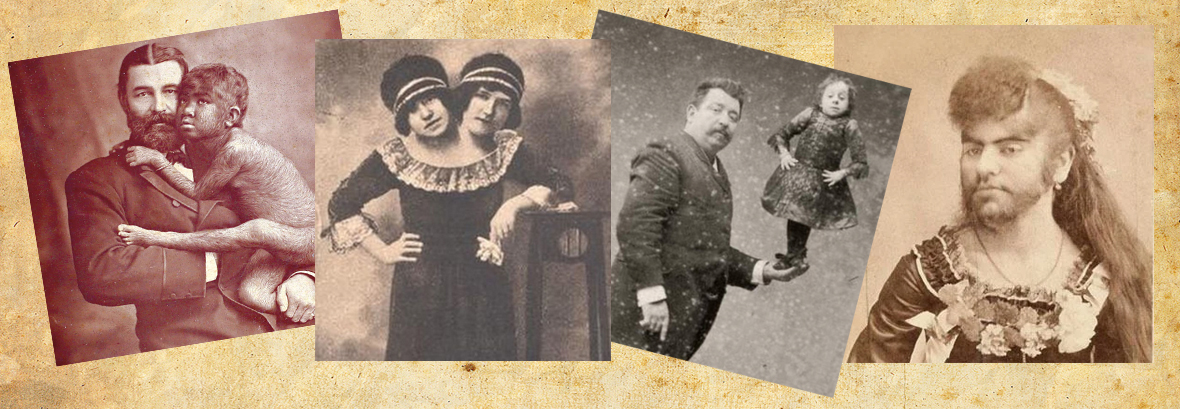
Away from the intriguing story – of which more in a moment – Essie Fox raises interesting questions about our age-old fascination with physical and mental differences in our fellow humans. I am old enough to remember traveling fairs in 1950s Britain, where people would still part with their hard-earned bobs and tanners to view The Bearded Lady, The Irish Midget or The Rat Woman. Most of these owed more to make-up than genuine deformity, but let’s not forget the 1932 American film (banned for many years) called Freaks. Directed and produced by Tod Browning. It was a melodrama set in a traveling circus. The basic plot was that a scheming female trapeze artist sets out to defraud a dwarf called Hans of a sizeable sum of money. In doing so, she invokes the wrath of Hans’s fellow ‘freaks’ – some of whom actually had severe physical deformities.

Screen Shot 2023-06-08 at 20.22.01

In these ‘enlightened’ days many enjoy a slightly more refined fascination with grotesques when they tune in to watch shows like Britain’s Got Talent and Love Island. Back in Victorian times, however, these pleasures were much more raw and face-to-face, and this is where Essie Fox places her characters. Few deviations from ‘the norm’ are excluded; in no particular order she offers us kidnap, prostitution, paedophilia, drug addiction, child abuse, grave robbing, pornography and debauchery.

FReaks
Under the skilful management of El Capitano, Tilly becomes a star of the London variety stage. It doesn’t hurt that she has a lovely singing voice, but the bottom line is that there is a sexual attraction, too. Essie Fox doesn’t lay this on with a trowel, but the fact is that Tilly is a nubile teenager, but one encased in the body of a nine year-old. It is this that brings her to the attention of Lord Seabrook, Theo’s syphilitic grandfather, and his scheming new wife. Tilly is kidnapped, and the intention is to use her as the central attraction at a Hellfire Club-style orgy in the crumbling mausoleum of Dornay Hall. After a daring rescue by El Capitano and his retinue of rather odd characters, Tilly’s virtue is saved, but not before several family skeletons are dangled in public view.

The Fascination is supercharged melodrama from start to finish and, on one level, gloriously over the top, but discerning readers will admire the many subtle counterpoints in the story, such as the intriguing relationship between Tilly and Keziah. The most telling twist only emerges in the final paragraph when the author reminds us that the proverbial ‘eye of the beholder’ is capable of powerful insight. This novel was published by Orenda Books on 22nd June.

THE POSTMAN DELIVERS . . . Fox & Parks

TPD HEADER NEW

THE FASCINATION by Essie Fox

Victorians loved a freak. Think of Joseph Merrick. Think of The Bearded Lady and The Crocodile Woman at traveling funfairs. Are we any better today? Think of Dylan Mulvaney, and I guess not. However, to the book. Twin sisters Keziah and Tilly Lovell are far from identical. They are both fifteen years old, but Tilly hasn’t grown an inch since she was five. Their father uses the pair to promote a fake elixir at his traveling show, but then he sells them to a mysterious Italian impresario, known as ‘Captain’, who senses an opportunity to make money. All roads lead to London, where within Dr Summerwell’s Museum of Anatomy, the twins meet a young man called Theo, and are drawn into a web of intrigue, deceit and criminality. This is published by Orenda Books, and will be out on 22nd June.

TO DIE IN JUNE by Alan Parks

The blurb says, “ONE LOST CHILD. TWO MEN DEAD. A MIDSUMMER NIGHTMARE. This is the sixth in the Harry McCoy series, which is new to me, but the book sounds a cracker. A word-association test using the word ‘Glasgow’ would, certainly among crime fiction fans, produce obvious results. Hashtags might include:

#grit #violence #deprivation #noir #murder #drugs #gangs #extortion #hardman

McCoy investigates the disappearance of a boy, whose parents are devotees of a a bizarre cult, The Church of Christ’s Sufferings. At the same time, reports come in of unexplained poisonings among the city’s down-and-out community. McCoy has a dog in this fight. His own father is one of the dispossed. Throw into this toxic mix a case of police corruption which McCoy cannot ignore, and you have a spellbinding police thriller. Published by Canongate Books, this will be available from 25th May.

SERGEANT SALINGER . . . Between the covers

Salinger009

This fictionalised biography of the life of JD Salinger certainly begins with a name-dropping bang. Within the first twenty pages, we are in Manhattan’s legendary Stork Club, and we are rubbing shoulders with – alongside the young writer himself – Ernest Hemingway, Walter Winchell, Merle Oberon, Peter Lorre, and the bewitchingly erotic daughter of playwright Eugene O’Neill, Oona, who would later – much to Salinger’s chagrin – marry Charlie Chaplin.

FA8rkugXIAMOsiBThis prelude takes place in 1942, but two years later Salinger is in literally much deeper and more dangerous waters. He is a sergeant in the American army’s Counter Intelligence Corps (CIC) and has been posted to Tiverton in Devon, where the 4th Infantry Division is preparing for the D-Day landings. Salinger has to count the corpses as the US Army desperately tries to cover up two separate disasters which result in the deaths of over nine hundred American servicemen. The Slapton Sands fiasco (Operation Tiger) is described here.

The novel follows Salinger’s progress as he survives D-Day and the push through Normandy. He finds himself busy in French villages where former Nazi collaborators are trying to reinvent themselves as patriots, and he witnesses the scenes in Paris where the population takes revenge on men and women who co-operated with the German administration.

By far the toughest part of Salinger’s war, in terms of physical danger, is what he calls ‘The Green Hell.‘ The American forces were held up in the autumn and early winter of 1944 as the retreating German army took up positions in the Hürtgen Forest – over 50 square miles of dense and mountainous woodland on the Belgian German border. With splinters from shell-shattered trees causing as many casualties as bullets, the Americans suffered huge losses and only took the area when the German Army was eventually defeated at what has become known as The Battle of The Bulge.

Worse awaits Salinger, however. Not in terms of his own physical safety, but through a dreadful discovery which was to scar the minds of many of those who were present. As the Americans advance into Bavaria, they come across Kaufering Lager IV – part of the Dachau concentration camp complex. All but a handful of camp guards and administrators have fled, leaving behind them a scene from hell.

“Sonny climbed down from the jeep. He saw several axes near the siding, axes covered in blood. The guards must have been in a great hurry. They’d slaughtered prisoners of the camp even while they were herding them into the cars. Sonny found several bodies without head, hands or feet. He could follow the path of their butchery, footprints etched in blood.”

He discovers that the stationmaster of the railway siding is still hiding in his house. He gives Sonny (Salinger) a kind of perverse and depraved guided tour.

“The stationmaster led Sonny to three barracks that were partly underground, like wooden bunkers, but these bunkers had been nailed shut and set on fire while still packed with ‘citizens’ of Kaufering, the camp’s slave labourers. Sonny had to wear a handkerchief over his mouth and nose, otherwise he would have fainted right in the Lager. He couldn’t understand how the stationmaster had survived the stench, the crippling acid of rotten flesh.
‘Open the barracks,’ Sonny said, ‘Every one.’
‘But that is impossible,’ the stationmaster said, ‘It is not my job. I am responsible for the trains.’
‘Open’, Sonny said, handing him a bloody axe, ‘Or I’ll execute you on the spot.’
The stationmaster saluted Sonny with a sudden respect. ‘Yes, Herr Unteroffizier.’
He chopped away at the wood, pried out the nails, and opened the barracks, one by one. Some of the charred bodies were still smouldering. They were packed so tight, skull to skull, covered in shreds of their own burnt hair, that they had a perverse, horrifying beauty, as if they’d been sculpted out of fire.”


Sallinger

This horrific experience, on top of so many other traumas, tips Salinger into a kind of temporary insanity, and he checks himself into a German psychiatric clinic, where he meets a young German doctor, Sylvia Welter. They have a strange, but doomed attraction to each other and, when, war ends, they marry. Eventually the couple return to New York but, as they set up a kind of home with Salinger’s Jewish parents, it is clear that the marriage is dead, and Sylvia returns to Germany.

Sergeant Salinger is both dazzling and disturbing, and Jerome Charyn has written a brilliant account of Salinger the soldier, Salinger the writer and – above all – Salinger the troubled but deeply compassionate man. It is published by No Exit Press and is available now.

Salinger010

Blog at WordPress.com.

Up ↑