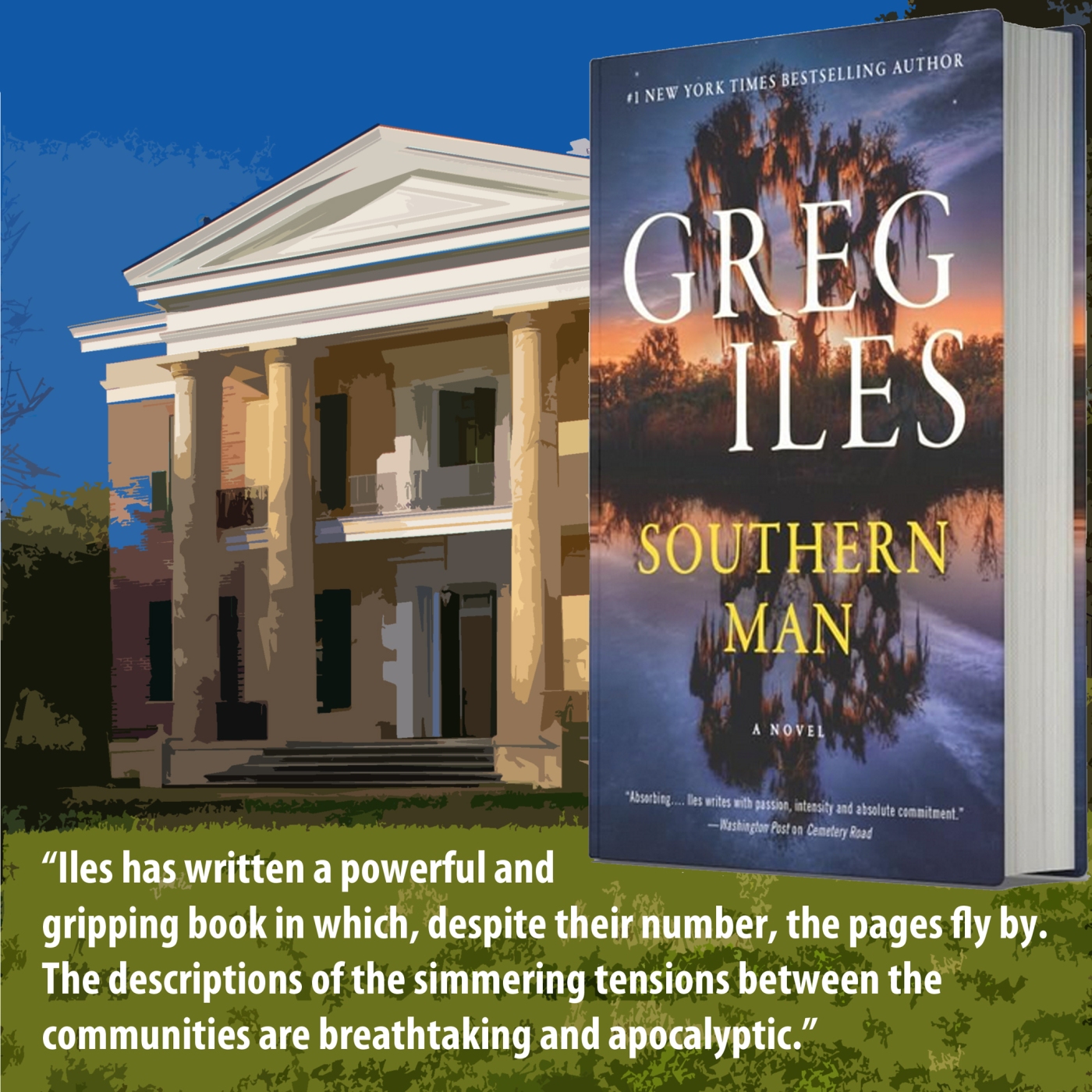

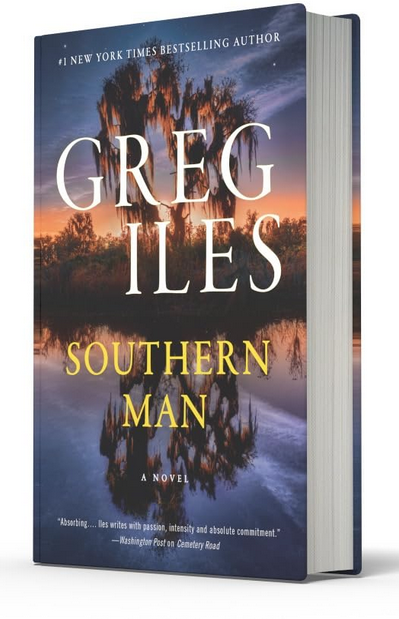
This is a massive book physically as it is over 900 pages long. Emotionally, it is huge, as it deals with suffering, death, revenge, remorse and corruption with relentless intensity. Politically it is intensely topical as it deals with the prospect of a Donald Trump second term as POTUS, and the mood of the voters who put him into the White House in the first place. Historically, it is deeply challenging, as it looks at the legacy of over two centuries of prejudice and cruelty in the southern states of America.
The title refers to a 1970 song by Neil Young where he excoriates the archetypal redneck southern male. The song may (or may not) have triggered a musical duel with Lynrd Skynrd, when their response was Sweet Home Alabama. The novel features Mississippi lawyer, politician and author, Penn Cage, who appeared in previous Greg Iles novels. Click the link for more information.
The back story here is complex, but in a rather large nutshell:
Penn Cage, has an obscure terminal cancer which is slowly killing his octogenarian mother.
Cage lost a leg beneath the knee in a road accident.
He is a civil liberties campaigner.
Dr Tom Cage, Penn’s father, a much respected physician, wrongly imprisoned, died in prison riot at Parchman Farm penitentiary.
Cage is a widower. His wife died of cancer and, much, later, his fiancée was murdered.
He has a twenty-something daughter called Annie, also a liberal minded lawyer.
The early narrative darts back and forth between current events and the days following Dr Tom Cage’s death in the prison riot. The reasons for Tom’s incarceration are complex, but Greg Iles spells it out with great clarity. Present day couldn’t be much more topical. Donald Trump is gathering momentum for a second bid for the presidency, but the almost unthinkable has happened. A charismatic war veteran called Robert Lee White is aiming to be the first independent candidate since Ross Perot in 1992, and he has a huge following via his Tik Tok videos and a very popular radio show. He came to national prominence when he led a special forces team searching for a notorious Taliban leader. They found him, and White administered the coup de Grace.
Present day. As Bobby White hones his media profile for TV audiences, he receives a boost. Attending a largely black music festival, he heroically rescues Annie Cage and several others, mostly black youngsters, who have serious bullet wounds after white Sheriff’s deputies open fire on the crowd after a shooting incident. However, Bobby White’s pitch for POTUS has a serious problem. He lacks the prerequisite adoring wife and clutch of tousle-haired children. Why? I can only direct you to the coded words at the end of many a Times obituary – “He never married.”
The deaths at the music festival have serious repercussions. Within days, a treasured pre Civil War mansion, is burned to the ground. and there is a calling card from The Bastard Sons of The South, apparently a militant BLM organisation. Penn Cage, as a white man, is thrust onto the horns of a dilemma. He is white with serious influence in political circles, but he is also widely respected with the black community, both for his own integrity, and the legacy of his late father. Can he prevent a bloodbath, as the calls for revenge lead to a disastrous polarisation on the streets between black and white factions?
The conflict is not just between black and white people. America has a bewildering number of layers of law enforcement. At the apex is the FBI. Their remit extends across the nation, irrespective of state boundaries. Then we have Sheriffs, appointed by vote. They and their deputies rule the roost over large state subdivisions, known as Counties. Large towns and cities will have their own independent police departments. Last, but by no means least, are the National Guard. They are volunteers, but basically members of the armed forces, and will usually have access to military standard weapons and vehicles. In Southern Man, each one of these agencies come head to head in the streets of Natchez, while the barge-trains and freighters battle against the Mississippi current, beneath the cliff top where thousands of black peace protestors stare in the muzzles of National Guard issue AR-15 rifles.
There is a substantive second story which emerges at different times in the novel. Penn Cage’s mother has been researching her family history, and has pretty much completed it. What it reveals is that Cage and his daughter are descendants of a woman who was the product of a union between a slave owner and one his female slaves. This document allows Greg Iles to explain the complex and often contradictory relationships between slaves (before and after emancipation), and their owners. He also makes the point that the members of the victorious Union army were all too often nothing like liberating saviours.
Cage’s declining health make him rather like Tennyson’s Ulysses:
Tho’ much is taken, much abides; and tho’
We are not now that strength which in old days
Moved earth and heaven, that which we are, we are;
One equal temper of heroic hearts,
Made weak by time and fate, but strong in will
To strive, to seek, to find, and not to yield.
With an increasing sense of frustration, he tries to get to the bottom of who seems to be manipulating the perilous situation on the streets, as rival groups – militant Black activists, peaceful protesters, far right militias, City police and Sheriff’s Deputies edge ever nearer to a cataclysmic explosion of violence.
Greg Iles just doesn’t take sides. He is scathing and abrasive about everything to do with the concept of the honourable South. He has little truck with historians like the late Shelby Foote, who, memorably, appeared several times in Ken Burns’ magisterial documentary The Civil War, and attempted to explain that a typical Southern Man of the Confederate era was not always a brutal redneck bent on raping and brutalising black people.
In several ways, Penn Cage mirrors the real life author.
Both lost part of a limb in a road accident.
Both had fathers who were doctors.
Both had mothers who died of cancer.
Both have a rare form of cancer.
This is a brilliant novel, for sure, which rolls a rock away, and exposes all manner of nasty creatures scurrying away from the light. Is there any room for nuance in the north v south controversy? Greg Iles doesn’t think so, and his superb writing underscores his argument. Me? I am on the fence, not because I approved of the concept of slavery, or the horrors meted out to its victims, but because when you severely punish a nation – which the South thought it was – there are unintended consequences, as The Treaty of Versailles proved in 1919. Post Appomattox 1865, a long lasting sense of grievance was born, and it has yet to die of old age. So-called White Guilt looms large in the novel, as my occasional visits to North Carolina suggest to me that it does in real life.
Aside from the politics, Iles has written a powerful and gripping book in which, despite their number, the pages fly by. The descriptions of the simmering tensions between the communities are breathtaking and apocalyptic. I only hope that in the months to come, they remain fictional. if they play out in real life, there will be a second War Between The States, and America will suffer grievously. Southern Man is published by Hemlock Press and will be out on 6th June.

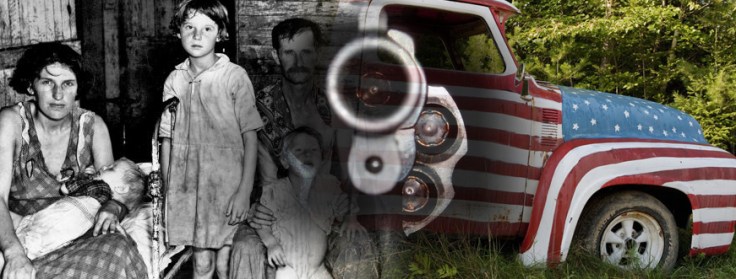
 Greg Iles was born in Stuttgart where his father ran the US Embassy medical clinic. When the family returned to the States they settled in Natchez, Mississippi. While studying at the University of Mississippi in Oxford, Iles stayed in a cottage where Caroline ‘Callie’ Barr Clark once lived. Callie was William Faulkner’s ‘Mammy Callie’ and different versions of her appear in several of Faulkner’s books. Iles began writing novels in 1993, with a historical saga about the enigmatic Nazi Rudolf Hess, and has written many stand-alone thrillers, but it is his epic trilogy of novels set in Natchez which, in my view, set him apart from anyone else who has ever written in the Southern Noir genre.
 enn Cage, though, has made his own money. He is a hugely successful author, long-time DA for the County and now, after a bitter political struggle, The Mayor of Natchez. He has made many enemies in his rise to fame, not the least of which are the corrupt Sheriff Byrd and the deeply ambitious and oleaginous public prosecutor Shadrach Johnson. Cage is not without his own ghosts, however, and he is haunted by the death of his wife Sarah, crippled and then tortured by cancer. He has, however, established an unofficial second marriage with the campaigning journalist, Caitlin Masters.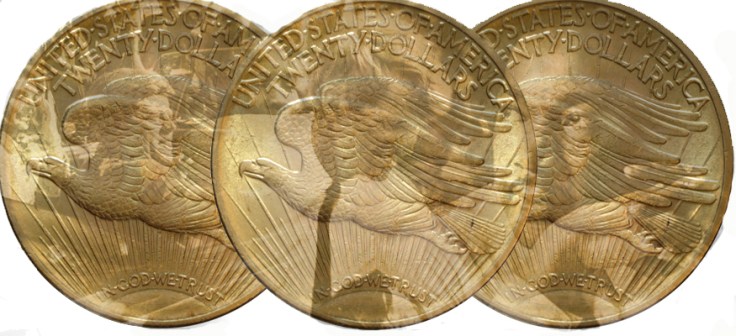
 f course, Iles takes a great risk here. We know – or think we know – who killed these three men. But do we? Iles is confident and fluent enough to turn history on its head and present a credible alternative truth. While the Double Eagles are concerned with matters of national importance, they also have time for vicious local issues. The bombshell which threatens to reduce to ruins the cosy edifice of the Cage family, is that Tom Cage fell in love with a black nurse who worked for him, fathered a son by her, but then sat back and watched as she fled north to Chicago in disgrace. When she returns to Natchez to die, riddled by cancer, what she and Tom Cage knew – and did – about the malevolent Double Eagles back in the day becomes a public shit-storm.
 o why are the books so good? Penn Cage is a brilliant central character and, of course, he is politically, morally and socially ‘a good man’. His personal tragedies evoke sympathy, but also provide impetus for the things he says and does. Some might criticise the lack of nuance in the novels; there is no moral ambiguity – characters are either venomous white racists or altruistic liberals. Maybe the real South isn’t that simple; perhaps there are white communities who are blameless and tolerant and shrink in revulsion from dark deeds committed by fearsome ex-military psychopaths who seek to restore a natural order that died a century earlier.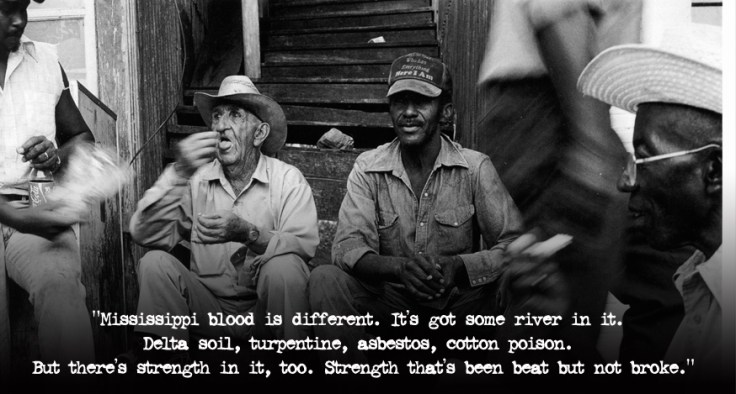
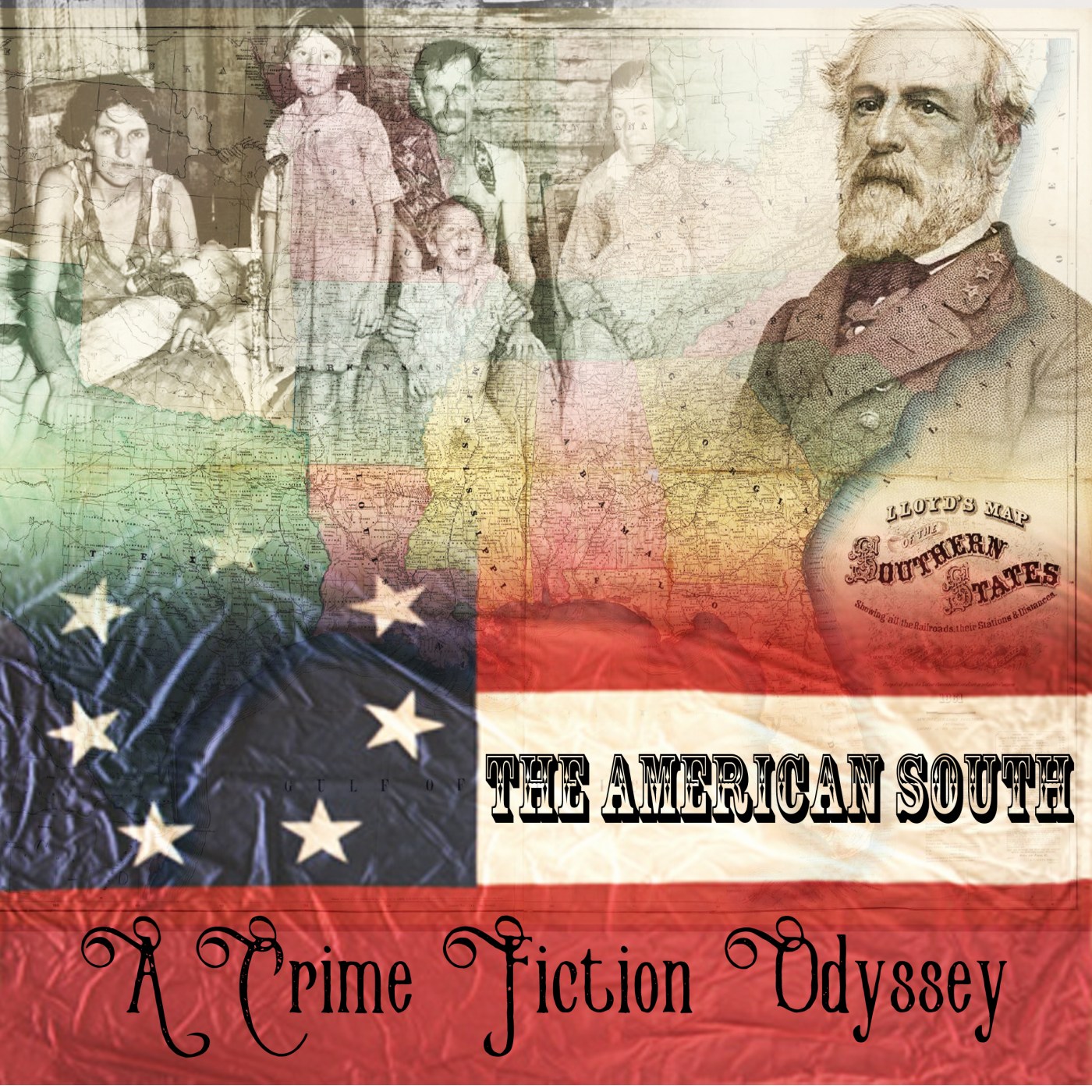
 t is starkly obvious to anyone with even a passing knowledge of international history that the most brutal and bitterly fought wars tend to be between factions that have, at least in the eyes of someone looking in from the outside, much in common. No such war anywhere has cast such a long shadow as the American Civil War. That enduring shadow is long, and it is wide. In its breadth it encompasses politics, music, literature, intellectual thought, film and – the purpose of this feature – crime fiction.
 There have been many commentators, critics and writers who have explored the US North-South divide in more depth and with greater erudition than I am able to bring to the table, but I only seek to share personal experience and views. One of my sons lives in Charlotte, North Carolina. It is a very modern city. In the 20th century it was a bustling hive of the cotton milling industry, but as the century wore on it declined in importance. Its revival is due to the fact that at some point in the last thirty years, someone realised that the rents were cheap, transport was good, and that it would be a great place to become a regional centre of the banking and finance industry. Now, the skyscrapers twinkle at night with their implicit message that money is good and life is easy.
 rive out of Charlotte a few miles and you can visit beautifully preserved plantation houses. Some have the imposing classical facades of Gone With The Wind fame, but others, while substantial and sturdy, are more modest. What they have in common today is that your tour guide will, most likely, be an earnest and eloquent young post-grad woman who will be dismissive about the white folk who lived in the big house, but will have much to say the black folk who suffered under the tyranny of the master and mistress.
 By contrast, a day’s drive south will find you in Charleston, South Carolina. Charleston is energetically preserved in architectural aspic, and if you are seeking people to share penance with you for the misdeeds of the Confederate States, you may struggle. In contrast to the spacious and well-funded Levine Museum in Charlotte, one of Charleston’s big draws is The Confederate Museum. Housed in an elevated brick copy of a Greek temple, it is administered by the Charleston Chapter of The United Daughters of The Confederacy. Pay your entrance fee and you will shuffle past a series of displays that would be the despair of any thoroughly modern museum curator. You definitely mustn’t touch anything, there are no flashing lights, dioramas, or interactive immersions into The Slave Experience. What you do have is a fascinating and random collection of documents, uniforms, weapons and portraits of extravagantly moustached soldiers, all proudly wearing the grey or butternut of the Confederate armies. The ladies who take your dollars for admission all look as if they have just returned from taking tea with Robert E Lee and his family.
 Six hundred words in and what, I can hear you say, has this to do with crime fiction? In part two, I will look at crime writing – in particular the work of James Lee Burke and Greg Iles (but with many other references) – and how it deals with the very real and present physical, political and social peculiarities of the South. A memorable quote to round off this introduction is taken from William Faulkner’s Intruders In The Dust (1948). He refers to what became known as The High Point of The Confederacy – that moment on the third and fateful day of the Battle of Gettysburg, when Lee had victory within his grasp.


 fullybooked2017