

This is certainly the longest title of the year, and the most poetic. I wondered if it was a quote from somewhere, but Google just directed me to the book itself. If any poetry experts can source the words, please let me know. There used to be an adjective used to describe long novels with a complex time structure – “sprawling”. I was never sure if it was entirely complimentary, but this book, with 425 pages and a time span ranging between 1985 and 2031 might fit the bill.
It is set in Libya, more specifically the ancient regions of Cyrenaica, Triplotania and Fezzan, which have been fought over almost since time began. Greeks, Romans, Ottomans, Italians, Nazi Germany, the British Empire – the sands are stained with the blood of fighting men.
Jack Meredith is the central figure in this saga. While working as a geologist in Libya in the 1980s he is thrown in prison but rescued by Bushra, a wealthy woman of Greek/Libyan parentage. Their relationship is not a happy one, however, and their twin children eventually go their separate ways, Emma to London and Stavros to Benghazi.
That was then, but Mayne imagines a future – 2024 – where a rampant Russia reclaims the Baltic states it lost and seeks to dominate the Mediterranean. A desperate United Nations cedes Cyrenaica to the Russians, who also control Greece The remaining parts of Libya are held by The European Defence Alliance.
Skipping ahead even further, to 2031, Jack and Bushra are temporarily reunited, with their grand-daughter Isabel and their son Stavros both become involved in resistance movements against the Russians.
The cover describes the story as “a novel of love, tragedy, and reconciliation.” It is published by The Book Guild, and is out on 28th June.


 oth of this week’s books are published by Matador, and they are both of the “what if?” variety. Ian James Krender’s book is actually set in the past – England in the 1980s – but an England that has been ruled by Nazi Germany since the end of WW2. Andrew Tudor’s premise is equally sinister, but we are in a a Britain of the future, and facing a rogue virus which threatens to engulf civilisation.
 The author admits to being influenced by
 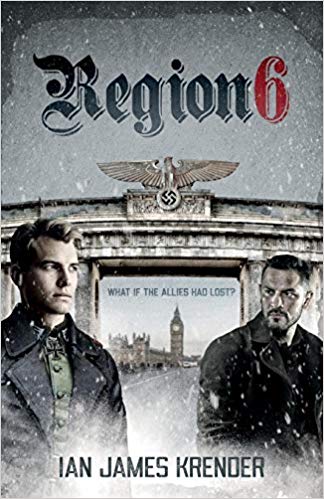 Another young man, Stephen, has nothing but praise for the government. They have treated his family well, he has graduated from Cambridge, and now has a job with the Gestapo. He says:
 ndrew Tudor is Senior Lecturer in Sociology at the University of York. He was film critic for New Society from 1975 to 1982 and has been chairman of York Film Theatre for more than ten years. In his chilling vision of a future world where population growth has spiraled beyond control, and dystopia threatens, Alison MacGregor, a Scientific Liaison Officer for the Scottish government, discovers evidence that a scientist, angry and disillusioned at the failure of world rulers to get a grip of the situation, has released a genetically engineered virus capable of wiping out whole societies. Together with a senior scientist, a security expert and a young journalist, McGregor battles aginst overwhelming odds to prevent a catastrophe. The Zeno Effect is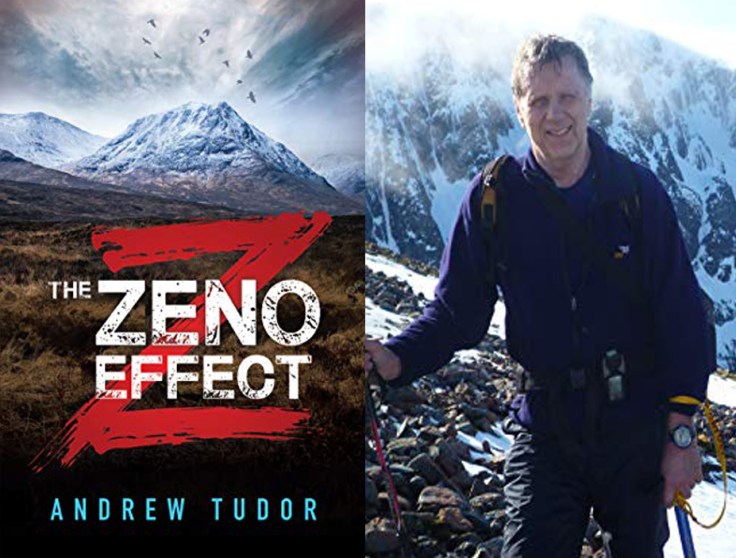


 fullybooked2017